The Elephant Who Came For Dinner / I’ll Love You Till The Crocodiles Smile

The latest of this fun series starts with the three friends, Wolf, Hotpot and Omelette strolling out one starry night when suddenly beautiful music fills the air above the woods. The three follow the spellbinding sounds further into the woods where the trees and bushes have been transformed into all sorts of animal shapes: but who was the maker? Badger (something of a know-all) insists the work was done by a spotty wood-warbler. The friends accompany Badger on a search for the mystery topiarist that Hotpot calls a ‘wobbler’.

However as the evidence emerges, it isn’t at all like smarty-boots Badger has led them to believe – far from it. Despite the confidence with which he asserted his ‘facts’ it was completely false information.

A great way to show children how important it is to interrogate whatever information they receive, no matter the source. Young audiences will love discovering the identity of the creative creature responsible for the singing and the shapes, who joins Hotpot, Wolf and Omelette for a post prandial sing-song that sends the friends off to sleep in the moonlight.

A bedtime tale with a difference. Jungle animals adult and offspring – kayaking crocs, shaking snakes on zip-wires, slow-crawling sloths sporting yoga pants and chimps sneezing because of clouds of globe-trotting fleas are among those featured in the gentle rhythms of Cristaldi’s gently rhyming text and Kristina Litten’s suitably humorous, mixed-media, digitally created scenes of the creatures preparing for the night. I love the giraffes that might ‘laugh at knock-knock jokes while taking a bath / and sipping sweet tea from a carafe.’

as well as the sneezing chimps – some holding tissues – attempting to extricate the fleas from each other’s backs.

Finally, silly antics over all is peace and quite in the forest with gentle snores emanating from the slumbering animals.

Young children will delight in exploring the various silly antics the animals are engaged in be they featured in the foreground or lurking in the background unmentioned in the words. Whether the story works as a pre-bedtime read rather depends on how much time little humans spend poring over the pictures: maybe two or three slow recitations of the text will do the trick.

Shadow Creatures

Providing insights into the history of what it was like to live under the Nazi regime in Norway during the second world war, this novel was inspired by Chris Vick’s own family history. The author has drawn on oral history passed down through generations and uses memories of those who lived at the time of the occupation to bring the reader’s attention to the resilience of ordinary people whose lives were affected in various ways by the experience.

The book begins with a scene in the present when a child, Georgy who is staying with her Bestemor (grandmother) Tove and Grandtant (great-aunt) Liva meet an old woman in the woods and asks to hear about what happened to the three of them many years ago. The story is then told from the viewpoint of Tove (twelve at the time of the invasion) and her sister Liva (then just eight) who are very different characters

I asked 12 year-old Emmanuelle her views on the book: here’s what she had to say:

Chris Vick’s new book, Shadow Creatures, is an incredible story of hope and bravery set during World War 2. Life is normal for Tove, Liva, Agma and Haakon in their small Norwegian village until the Nazis come. Nothing much changes in the beginning but it slowly becomes a place of rules, regulations and fear. They have to work together to help each other and the prisoners of the Nazis.
I really enjoyed this book and I think anyone would although it is particularly perfect for fans of adventure and historical fiction. It is filled with courage, adventure and has lots of exciting moments. The story is told from the viewpoints of Liva and Tove so it is very interesting to compare how they see and tell the different scenes of the book. In summary, this book is a brilliant read with a beautiful story and I would definitely recommend it.

The Spotless Giraffe

It’s Kipekee the giraffe’s first day at school but she doesn’t know which class she should go to. Some of the other animals offer to help: Hana Hippo suggests that with a brown coat, she should join the camel class; Azar Aardvark ties a false hump onto the giraffe’s back but it comes adrift during a swim; Azar then proposes Llama Class but Kipekee lacks a woolly coat and Hana Hippo’s offering of a woolly rug flies off in the wind. So maybe Zebra Class is the one for the giraffe

but no.

This leaves only Gazelle Class and despite having no horns Kipekee heads there sporting something given by Hana – uh-oh!

Eventually, having seen the sign for Giraffe Class, Kipekee takes matters into her own – err, neck and is soon settled in there. The class sign is suitably updated and come the end of the first week, a celebration is held.

This heart-warming story of embracing our differences, uniqueness, acceptance, friendship and inclusion is based on the true story of Kipekee, the first giraffe without spots born in the USA, in a Tennessee zoo in 2023. Alison Hawkins’ entertaining scenes of the events will help young children relate to the important message of the tale.

Mallory Vayle and the Curse of Maggoty Skull

After the death of her parents in a strange accident Mallory Vayle has moved in with her Aunt Lilith who lives in the ruined Carrion Castle and by masquerading as a psychic manages to scrape together just enough to get by.. Hitherto Mallory has kept her own psychic talents under wraps, preferring to read pony stories than think about dead people. Making matters worse, her aunt’s house is haunted by the evil spirit of an old hag, Hellysh Spatzl; said spirit snatches Mallory’s parents and threatens to bestow on them endless torture if Mallory doesn’t use her talents to bring the hag back to life.

Enter Maggoty, a haunted skull with a penchant for wigs of the dashing sort who blithely reveals that Mallory is not only a psychic but a necromancer. Moreover the skull is, to Mallory’s despair, the only being able to teach her how to make use of her necromancer’s skills. This is only on condition Mallory gets him the wonderful wig he so desires and promises to break the curse he’s under.
As Mallory embraces her powers, she’s troubled by the possibility of doing harm

but she and her aunt plan a Halloween spectacular. Can she defeat Hellysh and save her parents?
This atmospheric and chilling tale is infused with humour thanks in no small part, to Maggoty’s frequent use of such words as ‘Mallsy-Ballsy-Boooo-di-Buttcrack’, ‘bumcrack’ and ‘Wee-Wee Pants’. Enormously exciting it’s way too much fun to be read only around Halloween Readers will be eagerly awaiting further spine-tingling adventures of Mallory and Maggoty – such terrific characters these wonderfully portrayed in Pete Williamson’s stylish illustrations.

Body Detective!

Written by an occupational therapist, this board book presents interoception to very young children. It’s important for little ones to be able to know and name what they are feeling: to that end author Janet Krauthamer and illustrator Christiane Engel use clear explanations, bright illustrations with flaps to lift, tabs to pull and mindful actions.

A playful, interactive, fun learning exploration of the human body’s signals: little ones will enjoy being body detectives and learning by means of descriptive language that for example, a dry, sticky mouth and lips are signals from the body that the person is thirsty and need to drink water. Chattering teeth and goosebumps on the skin are body signals indicating a person is feeling cold.
The last two spreads provide more information about interoception, and relevant body parts and describing words including discombobulated – now there’s a great word for tinies to use.

Use at home and in an early years setting for promoting health and well-being.

Lola and Larch Make a Winter Wish / Mirabelle and the Baby Dragons

It’s approaching the end of term for Lola with both characters in team Lola and Larch preparing for a special date on their respective calendars. As the two walk through the snowy forest to celebrate Turningtide with the other fairies, Lola endeavours to explain to fairy Larch (who has no experience whatsoever of the Christmas celebrations of humans) what Santa does. Lola then talks of how excited she is about her class’s Christmas concert to which Larch has been invited. However Larch doesn’t approve of the way fairies are portrayed in the performance and so turns down the invitation, causing disappointment to Lola.

So angry is Larch that she wishes for Lola to know what being a fairy is really like. An unwise thing for sure, especially as Euphorbia was watching and heard her words.

The following morning both Lola and Larch wake up feeling peculiar; they’ve swapped bodies which means that Larch has to participate in the performance she’d refused to attend. This gives Euphorbia an opportunity to gain more power – a risky one for sure – and she seizes the fairy form of Lola from the concert.

Can Larch get back in time to stop Euphorbia doing something awful with her magic? What will happen about Lola’s role? Can Larch and Lola find a way to unscramble things and return them to normality?
Magical, albeit sometimes shocking, seasonal happenings, with lots of dramatic drawings by Rachel Seago.

There’s magic aplenty too in

Mirabelle and her family are invited by Mum’s witch friend Gladys to stay at her dragon sanctuary during half term week. A dream come true for Mirabelle, so she thinks, but her notion that she’s a dragon expert is about to be put to the test.
Mirabelle’s countless fans will delight in her latest adventure with its lesson about guidance from someone who knows better when it comes to undertaking a tricky task.

It’s Time For Bed

The queue for a special bus is long, so don’t delay:don those pjs and get ready to come aboard with a host of other sleepy heads. Dreamland awaits; here come the passengers singing their yawns away on a magical journey from one stop to the next till they finally reach Slumber Land with teeth already brushed and bedtime stories read.
An enchanting combination of Karl’s lulling rhyming text with its repeat refrains and Tim Budgen’s playful scenes of the dreamy journey that’s just right for getting human toddlers ready for bed and sending them calmly off to sleep.

The fourth in the Monsters series is a really fun pre bedtime read. In Laura Baker’s rhyming text and bold bright illustrations we follow the funky, mischievous monsters through their end of day, eventually somewhat sleepy, routine. (So glad I’m not the large story sharer shown in Nina Dzyvulska’s reading scene. Even wearing my teacher’s eyes everywhere hat, I think I’d miss some of the monster mischief going on there.)
Don’t be surprised if your own little human monster wants to spend a long time poring over every spread, relishing all the mischief as well as searching for the bat monster lurking in each vibrant illustration.

Also on the bedtime theme is:

Two young children describe the transition from their mother-annoying bedtime preparations to her thoughtful ruse of asking her offspring to help improve the evening situation before it gets out of hand. The children decide the steps they need and illustrate each with a picture. The pictures are then ordered and used to create a routine comprising bath (what kind would they choose), followed in turn by toothpaste, pyjamas, bed and finally, dream – what weird wonderful one would they want.
Young listeners can, having heard the story, help create their own bedtime routine.

When the Stammer Came to Stay

This story is based on the author Maggie O’Farrell’s personal experience of living with a stammer.
Meet sisters Bea and Min who are very different from one another. Bea is neat and tidy and likes order; Min is scatty and loves to get messy; she’s also very fond of chatting. They share an attic room at the top of a tall, narrow house and complement one another extremely well.
One evening as the girls, their parents and lodgers are playing a board game, Min begins to speak but suddenly finds she can’t get the words out of her mouth.

Still struggling to speak some days later, Min sees something weird as she looks in the mirror: above her shoulder floats a creature and it’s seizing the words as they rise to her lips and cramming them into its mouth. How dare it, she wonders though cannot say those words. Now Min doesn’t even make the effort to talk at school, but at the weekend Bea notices that something is wrong with her sister. Bea then surmises that Min has a stammer

and so writes messages to her in a notebook She also realises that the grown-ups need to know. So begins a journey of discovery, Min and Bea working together to get to understand this creature and to try to find a solution, or rather a way to live peaceably with Min’s stammer, and to love their differences – all of what makes them who they are.
A powerful, beautifully told, hopeful book imaginatively and sensitively illustrated by Daniela Jaglenka Terrazzini.

A Symphony of Stories

This stunner of a book is a companion to James’ Once Upon a Tune. Herein the author/artist features works by composers from different parts of the world that will be familiar to many – Saint-Saëns, Vivaldi, Debussy, Holst and Stravinsky – and also introduces a work new to me and I suspect many other readers, a famous Chinese piece by Chen Gang and He Zhanhao . As the author says in his introduction, ‘Most of the stories are retold from the original tales that inspired the composer.’

First, readers are invited to Saint-Saëns’ The Carnival of the Animals which is cleverly imagined with a regally-attired lion cheerily introducing the show in a sequence of riddling descriptions as the various creatures participate in a procession through the streets of Paris.

Next is Vivaldi’s The Four Seasons wherein the author uses his own research into the composer’s life imagining him being inspired by living in the countryside. Third, Claude Debussy’s The Sunken Cathedral has its origins in an ancient Breton myth and plunges us into a tragic love story.

The focus of The Planets (Gustav Holst) are stories of the Roman gods and goddesses that they were named for.

Also with its roots in tragedy, a Chinese legend of thwarted love The Butterfly Lovers tells of a girl who. to fulfil her longing to be educated, disguises herself in her brother’s clothes. On her long walk to the college clad in male attire she encounters a boy who offers to show her the way. The two become ‘sworn-brothers’ undividable: the boy, Shanbo forms a very deep bond with Yintgai but can the two ever be united?

Originally written for a ballet, Stravinsky’s The Firebird is the final piece, as engagingly told as the previous stories. Having visited magical realms, readers are brought back to reality with some musical notes from the author and the book concludes with some recommended recordings of the music to stream or download.

An absolutely terrific celebration of creativity through art, music and words. A book to keep and to give.

Hilda and Twig Hide From The Rain / Sidekicks

This is in essence a prequel to previously published books starring Hilda.
‘Be back in time for dinner’ comes the call from mum as Hilda and Twig, a deer fox, set out for a walk, destination to be decided until, down comes the rain and they make a dash for the woods. Therein they come upon a cave offering shelter. Also sheltering there are a host of other creatures that are puzzled by Twig. They go on to discuss what the place actually is and buried treasure, and a giant snake are mentioned; the latter surely isn’t real decides Twig.

Nonetheless he pops back outside to check and as a result of what he sees, Twig and Hilda become separated. Now it’s up to Twig to find his brave side and protect his friend from becoming a creature’s dish of the day. Can he do so and what of the treasure that was spoken of?

It matters not whether readers have already met the main characters before as this adventure can stand alone. It’s smashing fun and definitely one to offer reluctant older readers as well as younger primary children.

Captain Amazing, defender of Metro City is feeling old and has decided that he needs a trusty sidekick. When his moggy, Manny, ran away, he was left with Roscoe the dog, Fluffy the hamster and Shifty the Chameleon as pets. Unknown to the Captain, each one is eager for the sidekick role; he’s also unaware that his pets have already begun to develop superpowers, all bar Fluffy as yet. Then back on the scene comes Manny offering to assist Fluffy with some superpower training (and at one point, a peanut as a reminder of something lesson learned).

Meanwhile the Captain’s arch nemesis Dr Havoc is planning something sinister for him. It’s time for serious teamwork from the would-be sidekicks and quickly too, for Captain Amazing’s life could be at stake. Metro City cannot be allowed to fall. Can the pets be the victors?

So cleverly constructed, hugely engaging, well paced with plenty of action and crazy capers, this book will certainly win a large number of fans.

One Snowy Christmas Eve

It all begins one snowy Christmas Eve with a man lying in his bed who suddenly has a terrific idea. Up he gets and out he goes, down the hill and into the village in his wheelchair. So thick is the snow that its wheels gets stuck and the man, push though he does with all his might, just cannot shift his wheelchair.. Out come the villagers, lamps blazing to see a man whose whiskers have turned white asking for assistance. Perhaps if they put runners on his chair, it might be able to move and this they do,

also wrapping him in a thick red coat and hat and putting boots on his feet. They also inquire what the fellow is doing and then the children notice the sack of toys on the back of his chair. A note is sent into the town, the townsfolk appear to help him on his way but hauling a sledge is NOT easy; something else in the form of reindeer – rather a lot of them – might just do the trick though. At last with an enormous whoosh, the man and his present-filled sleigh take to the air ready to spread goodwill all over the world.
What a wonderful story of a differently abled Santa is this one.

The author has cerebral palsy, and a powerful imagination that he puts to good use generously sprinkling tenderness and humour through his festive rhyming narrative. Korky Paul, whose humorous detailed style many will recognise from Winnie the Witch books has created the vibrant scenes for this festive book – the perfect complement for the words. I look forward to seeing more from this debut author.

Maisie vs Antarctica

When eleven-year-old Maisie Macleod talks herself onto her eccentric self-help book writing father’s research trip to Antarctica, she has absolutely no idea of the amazing adventure that is to unfold. Dad’s next book, How to Survive in Antarctica, sounds absorbing but Maisie, who narrates this story doesn’t envisage needing to test the survival part. Almost immediately though after she and her dad have taken off in a tiny, old, propellor plane piloted by Spanish-speaking, Guillermo, he’s slumped over the controls and her Dad (who has never piloted a plane despite having written a book on aspects of the topic) is frantically pressing controls as the aircraft plunges to certain disaster and the death of those aboard.

What happens next though is that Maisie finds herself alive on the ice, her Dad seems fine but Guillermo is wounded. Before long, the girl starts wondering if there is something seriously weird about her dad. There are unanswered questions aplenty too: how, without any flying experience could he crash land that plane on the ice? Moreover how’s it possible to send a mayday message on a non-existent radio? How could Dad build an igloo in under half an hour? Most pressing though is, if nobody knows they are there, how can they be rescued? All these keep readers gripped, eagerly turning the pages as Maisie endeavours to uncover her Dad’s secret.

Packed with action and jeopardy, there’s lots of humour, a wonderful bond between Maisie and her dad, a secret emerges (two actually) and the author has drawn on his own time working in Antarctica to include plenty of authentic detail. A cracker of a book.

Where next for Maisie and Dad? I can’t wait …

For Baby’s Bookshelf

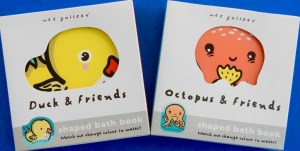
These bath books cleverly change colour when wet.
The first introduces a little green frog on the lookout for friends to leap with: there’s a dragonfly, a duck and an otter each of which will come to life on the squishy tactile pages as an adult speaks the dozen words of the text, possibly then adding some croaky sounds.
The second is a fishy shaped sub-marine offering wherein the titular fish and friends starfish, turtle, whale and seahorse assume their colour when immersed by tiny human hands.
Both books offer splishy, splashy tactile fun learning for the very youngest humans at bath time: peekaboo with a difference.

A loving father gently prepares a little child for sleep and in so doing, introduces listeners to parent and infant creatures – bears, possums, otters, cats, giraffes and birds all safe in their respective abodes also snuggling up in readiness for slumbering. Patricia Hegarty’s soothing rhyming words and Thomas Elliot’s endearing illustrations combine to lull little ones as an adult turns the cutaway pages of this goodnight charmer that is likely to become a bedtime favourite.

There’s parental love aplenty too in

The Midnight Mitzvah

Hanina Chipmunk loves collecting nuts and sharing them with her hungry friends; she knows that helping others is a mitzvah (good deed) but not everybody welcomes her thoughtfulness. One such person is Mathilda Squirrel; she rejects a nut offering from the puzzled Hanina. Then mouse Leon explains that Mathilda was herself a champion nut gatherer but now, on account of her waning ability to move around she feels embarrassed about needing help. Yes, it’s a mitzvah to help but so too is not embarrassing somebody while so doing.

Hanina ponders on the problem and finally, at night the answer comes to her: she’ll work under cover of the dark thus accomplishing both objectives.

Aware that she’s breaking the forest rules by going out gathering at night, Hanina is much more troubled by the thought of Mathilda going hungry that the possibility of angering the nocturnal creatures.

As she gathers nuts the little chipmunk is suddenly confronted by the Great Horned Owl; this night creature, a possible chipmunk predator, questions Hanina and having heard what she has to say, ends up sympathising with her explanation, calling the little creature kind and wise: “A gift given in secret is a very great mitzvah” says the owl.

Based on one of Judaism’s central texts, the Talmud, the tale has a sweet message concerning the real meaning of charitable giving, Tzedakah, as the author’s end notes tell us.

Beanie the Bansheenie

Classic Irish folklore receives a modern twist in this wondrous tale.
‘Everybody in Ireland knows that banshees are supernatural harbingers of doom.’ Called ‘bansheenies’ when young, these little beings develop in pods that grow on the underside of a fairy bridge and when each pod becomes transparent the bansheenie will bond with the first human they see. One day though, now knowing everything about their person including when they will die, the bansheenie’s job is to appear in front of their person and ‘howl the banshee’s howl at them.’ This allows the specific person to put things right with anyone they need to and to bid loved ones farewell.

The Beanie from this story sadly has a problem; she’s knocked from her pod into the water during that vital bonding phase and thus cannot bond with Rose, her human, and absorb the information needed. Beanie does however make friends with the fish but then realises that she needs to find out more information about Rose. Months pass during which Beanie gradually forms a deep connection with the girl

but also discovers from the fish that an imminent wild storm will destroy Rose and her family’s cottage.

Can she warn her of her family’s fate and help them escape a tragic death? If so, what will be the outcome?

Steve McCarthy’s illustrations predominantly executed using a Celtic green palette, are magical in the manner in which they complement Eoin Colfer’s text and move the narrative forwards to its glorious ending.

An enthralling read for anyone from around seven or eight, adults included.

The Search for Carmella

From the author and illustrator of The Search for the Giant Arctic Jellyfish, comes a follow-up featuring a marine biologist with a passion – this time it’s Dr Rose who studies the ocean and everything in it.

Ever since she was a little girl paddling in rock pools, Dr Rose started learning that there’s joy in the very act of searching: one’s end goal is not the be all and end all, rather it’s the journey that is so amazing, indeed it becomes her way of life. In this story she seeks a sea creature rumoured to live deep in the hidden ocean depths, possibly a myth or maybe a real marine animal – Carmella.

The doctor and her team of scientists and explorers descend to the dark blue-black depths in a submersible, seeking, searching, seeing a multitude of weird and wonderful creatures in an almost pitch-black world but not ‘Carmella-y-enough’ until … it’s time to resurface.

After so many hours however, have they found Carmella?

Full of the awe and wonder of possibility and reality, and stunningly illustrated, this is a unique, almost magical take on being a marine biologist. Share with a primary class and who knows …

Jack the Fairy: The Night Bigfoot Stole My Pants!

This is the second story of Jack the Fairy. Now having recently discovered that he as well as his mum and uncle Dave are actually fairies disguised as humans, the lad probably shouldn’t have been surprised at the sight of a hairy Bigfoot in his garden pulling his favourite yellow underpants off the line. Nonetheless it’s an ideal opportunity for Jack to undertake his first solo mission. But his decision to chase said Bigfoot down the High Street is a mistake, one that breaks every fairy rule according to his mum and uncle, especially the number one rule: don’t let humans find out that magic is real.

Having landed himself in big trouble, Jack turns to Charlie, his best friend and human for assistance in sorting out the mess. They’ve done some research on the Bigfoot subject but then they find out who the Bigfoot character really is.

Moreover Jack’s pants aren’t the only pair to get stolen: golden ones belonging to a troll are nicked too.

A hilarious tale, splendidly told, with a scattering of jokes and plenty of comical illustrations along with a vital message about accepting who you are, and a smashing ending to boot – or make that to disco dance. With pants featuring large, the book is bound to be a huge hit. Bring on Jack’s next adventure – SOON!

Moon Mouse

Mouse lives all alone on the moon and over time has grown accustomed to the silence. He occupies himself growing plants, baking and looking at Earth through his telescope (his particular interest being children’s birthday parties). Mouse also builds things from bits and pieces of space junk, a rocket being his current project.

One day as he peers through his telescope at a little boy’s party, Mouse notices that the child’s special red balloon has floated away and eventually as it drifts past him, Mouse catches hold of the balloon string. Thereafter he works as fast as possible on operation balloon delivery, destination one small human’s Earth abode.

Will he succeed in his plan to return one bright red balloon to its owner?

With themes of kindness, friendship and its joys, and bravery, this charmer of a rhyming story is written by Corrinne Averiss and illustrated with details aplenty by Lorna Hill. Young children will particularly love exploring the scenes showing Mouse’s lunar abode and that of the birthday boy’s bedroom.

Santarella

Suzy Senior has created a smashing seasonal twist on the Cinderella story telling in rhyme how Cinders comes to the aid of Santa Claus who has the misfortune of a pulled muscle in his back.

One evening Cinderella sits alone in the kitchen after her sisters have departed for the ball and as she stares miserably at her phone something causes the chimney to wobble. In the living room on the floor is Santa Claus complaining about his back and in desperate need of some help. No sooner has Cinders offered to assist than they’re up and away in Santa’s sleigh delivering gifts all around the world. The job is almost done in double quick time and on the brink of midnight they land on the palace roof with one final gift. A pair of party shoes for Santa’s special helper. Down the drainpipe goes Cinderella and peers into the ballroom.

However rather than going in to join the dancers she returns to Santa and asks for a lift back to her abode. She collects all her important belongings together and sets off to see the world, stopping at various locations to give assistance where required;

she learns a lot and makes friends with some unlikely characters. No matter where she is though, Cinders returns to help Santa in the run-up to the big day and on his Christmas Eve round.

I love fractured fairy tales and Suzy Senior delivers this one with panache. Accompanied by Lucy Semple’s funny scenes – watch out for the antics of the mice, the hoarding signs and other giggle-making details, this is a story to share at home or in the classroom in the weeks before Christmas.

Politics

In the latest of this excellent series, Eduard Altarriba guides readers through what can often be a confusing topic and not only for younger readers. Questions including What is power? Who has it and how do communities govern themselves? are explained in a step-by-step manner. There’s also a look at the origins of political thought, democracy

and forms of government going right back to Ancient Greece. What is democracy, what is the best form of government and how does a government operate are also covered, as is what are the responsibilities of a government, left and right politics, majority governments and coalitions

Corruption and Populism too are discussed and the book poses a What would you do question on the final spread. Readers are asked to don the hat of mayor of a town where a multinational company wants to build a factory on land very near the river.

Clearly and concisely presented using infographics and diagrams this is an illuminating introduction to a vital topic relating to how the world works for Y6 readers and beyond, adults included. Teachers will find class discussion topics aplenty here too.

One Wise Sheep

Originally published in German, this is a hilarious retelling of the nativity story unlike any other. It’s a chapter book with occasional illustrations that are perfectly appropriate for Ulrich Hub’s wryly humorous text.

Meet seven sheep, a small flock if ever there was one; it includes one that has a plaster cast on its leg, another that wears a bobble hat, one has its wool parted on the side, there’s one that wore braces but now has a retainer (in a case), one with a snuffly nose that means it needs to sleep away from the rest, one with an eye-patch, plus one more.

One night the sheep, unable to sleep see a bright star and the one with a bobble hat tells the others how it was woken up by a voice singing “ ‘I bring you good tidings’ … ‘And suddenly a host of angels appeared in our field singing praises. I think I even heard trumpets.” Where though are the shepherds? Certainly not kidnapped by UFOs, a goat (with attitude) assures snuffly nosed sheep, going on to say, “For unto us a child is born and you shall find it wrapped in swaddling clothes – “ This sheep reports back to the others, they all assume that the newborn is a girl and set off to find the town where this special baby is said to be.

All kinds of misadventures ensue

and eventually they arrive at their destination only to be told that the baby – a boy – and its parents have departed. The sheep are of course disappointed, especially after creating their own present: a song that begins, “Si-i-lent niiiight”—a song that they speculate is sure to be a hit. `’People will still be singing it in a thousand years.” However, they return to their fields (stopping on the way to pick up litter) and there a special treat awaits.

With a plethora of anachronisms (the shepherds have backpacks containing such items as spare socks and toothbrushes, UFOs, gift cards, wolves wearing mirrored sunglasses to name a few), this is a terrific read aloud (so long as audiences know the traditional Nativity story) to share in the classroom or with a family.
Type to enter text

Zac and Jac

Early in the school year, nine year old Jac’s teacher asked the class to write about their real-life heroes and Jac had chosen his dad, a lorry driver. That though is before Jac is asked to join the soccer team his good friend Zac belongs to. Thereafter things at home start getting uncomfortable.

Then comes the news from class teacher, Miss Parker: three professional footballers are coming to talk to the class the following day. They are members of an organisation and what they talk about is racism. As he listens, Jac feels extremely uncomfortable as he starts to realise that the dad he previously thought a hero is in fact, a racist, and that his best friend Zac and his father David, have been the subjects of some of Dad’s racist remarks.

Now with a heightened awareness of racism and how such prejudice is usually passed down from one generation to the next, Jac (from whose viewpoint the story s told) becomes determined to help make change happen in society, starting with his own family. His mum admits she’d been aware of his dad’s attitudes but hadn’t challenged them. Can he with the help and support of his friends and Mum show his Dad that people should not be judged simply by what he thinks they are?

Using football (a children’s local team) as a backdrop, Cathy Jenkins has created a powerful story, sensitively showing what an evil racism is and encouraging youngsters to challenge it whenever it raises its ugly head. That way lines a better future for everyone.

Gordon Starts a Band / Marv and the Alien Invasion

Both these are additions to series ideal for newly independent readers – thanks to the publishers Oxford Children’s Books for sending them for review.

Gordon the goose is back and despite being dubbed the meanest goose on earth, he’s still trying to be good: that’s thanks to his now best friend, piglet Anthony. However to say Gordon is a totally reformed character is perhaps over-stating things, despite his best intentions. After a day of kind deeds Gordon cannot sleep, so when he meets up with Anthony the following morning he’s in a honkingly bad mood thanks in no small part to the terrible noise that kept him awake all night. A noise so bad Gordon feels that unless he discovers what’s making the sound and can put a stop to it, he’ll revert to his former mean self.

So he and Anthony start to follow the noise until they reach the darkest part of the forest and in a nearby clearing there is the perpetrator. It’s Edgar the Moose and what he reveals to Gordon and Anthony shocks both the friends. However the former thinks he should try to put things right but this proves much more challenging than Gordon could ever have imagined. It even involves a rendezvous with members of the Meanest Goose Society so Gordon can enlist their help in a scheme he has. With a considerable amount of thumping and banging, la-la-ing strumming and singing, all ends on a high with Gordon slightly further along the road to redemption.

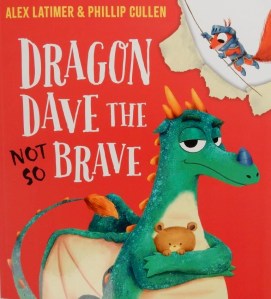
Alex Latimer serves up another slice of delightful wry silliness that will have young solo readers backing Gordon all the way to the final page whereon we see a blissfully sleeping goose – err?

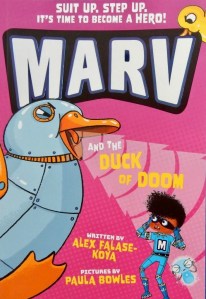
Marvin’s seventh adventure is set in a Space Centre that his class visits; it’s a trip involving an overnight stay. On arrival their tour guide Jessie greets the group and shows them where to leave their bags. This means that Pixel, Marvin’s tiny robot, will have to remain stashed in his backpack until all his classmates are asleep. First they go to the planet room where a display of the solar system’s planets hangs from the ceiling. Suddenly Jupiter falls from its fixing almost crashing onto Marvin’s friend Joe: was it mere accident or something else?

Next comes the rocket room wherein there stands a gigantic replica of a space rocket, alongside which is a life-sized replica of a control room. Unexpectedly the control panel lights up and starts beeping loudly -a loose connection? The final surprise before bedtime is when their guide dims the lights and projected onto the ceiling are the constellations. As they gaze upwards a potato hits Joe on the head and shortly after there appears the figure of supervillain Cosmic, and his little alien friends. Chaos ensues in the form of a food fight.

Time for Marvin to don his super-suit and morph into Marv the superhero. Out of Marvin’s bag too comes Pixel. But then Cosmic snatches up Pixel saying he’s going to take her to robot planet where she belongs and hauls her into the centre’s rocket. Can Marv do something before the rocket blasts off into space?

Another episode of MARVellous fun for those just taking off as solo readers from team Alex and Paula.

The Dinosaur Who Came to Dinner

One hot day, DING-A-LING! the intercom beeps and the little girl narrator opens the door to discover something extremely large, green and scaly asking to come in for a drink. Without waiting for a response, in marches a dinosaur promising not to overstay its welcome. Mum duly supplies a jug of lemonade and the dino. gulps down the lot, followed by tea, soup, honey and even ketchup. Then, complaining of the heat again the visitor decides to take a dip in the bathtub. Chaos ensues with bath toys flying every which way, the towel rail crashing down and bubble bath foam flying all over the bathroom.

Deciding to explore further afield, the dinosaur stomps through the block of flats right up to the top. He opens a door and there is a roof garden full of butterflies.

He then decides it’s dinner time and heads all the way back to the kitchen.

Having consumed everything, he departs with a thank you of sorts and a gigantic burp.

All this is told through Rachael Davis’s bouncy rhyming text and Mike Byrne’s zany scenes of an unexpected guest and a little girl’s ‘most amazing day’. With echoes of the classic The Tiger Who Came to Tea, this should be a satisfying story to share with young children: I envisage a second helping will be requested after the initial read.

My First Book of Evolution

The stellar pair, author Sheddad Kaid-Salah Ferrón and illustrator Eduard Altarriba present another important STEM topic – how all life came to exist.

Starting close to home, there are pages that look at both the family tree and the tree of life, the latter being defined as ‘the family tree of all living things that have ever lived on Earth.’ Then comes a spread on species comprising a definition and examples, mentioning that the definition doesn’t actually apply to everything in the natural world, including many bacteria.

Evolution itself is presented next

followed by the process of natural selection wherein it’s explained its connection with evolution using giraffes as examples. Charles Darwin is mentioned here and the voyage of the Beagle, Dawin’s observations and his ‘The Origin of Species’ are the subjects of two double spreads.

Heredity, Gregor Mendel and genetics including mutations are also explored; there’s a look at LUCA (the ancestral organism all living things are descended from) and the book ends on future possibilities.

Exciting and accessible, this is a great starter book for budding scientists at home or school, as well as adults who may not have learned about the topic previously.

The Faerie Isle: Tales and Traditions of Ireland’s Forgotten Folklore

In this collection of Irish folklore you will meet all manner of faerie beings each of which has an introductory fact page that precedes the story. For example Giant tells of.their enormous height, awesome strength and fights, mentioning such as Fionn mac Cumhaill and the tale Stomping Ground relates how two cow eating giants, seen by a boy and his grandmother, fall asleep in a field. In the next field the grandmother keeps her beehives and she engineers that her bees should attack the giants, sting them so badly that they never go anywhere near her place again.

Then there are the shapeshifters of which there is an abundance in Irish folklore called piseoaitthe (charm setters) . One I found particularly fascinating is The Charmer, a silver-tongued faerie said to be the most beautiful of all the ‘good people’.

Also known as the ‘love-talker’ this mystifying faerie with his seductive voice, (supposedly a member of the leprechaun family), is able to leave a person trapped by unrequited love as was red haired Nora in the story that follows. One evening we read, she encounters a mysterious handsome stranger who charms her completely only to vanish almost immediately leaving the girl devastated to the extent that, so the story goes, she still walks the road whereon she met him, searching for her faerie lover.

Selkies, mermaids, a banshee and sheeries also wait to enrapture readers between the pages of this Faerie Isle. Anyone with an interest in folklore, especially those with some Irish blood running through their veins will be fascinated and enchanted by Sine Quinn’s text that has been richly illustrated by Dermot Flynn whose portrayals of the faerie folk range from utterly spine-chilling to alluring.

Time Travellers: Secret and Spies / The Arctic Fox

These are both Little Tiger books: thanks to the publishers for sending them for review.

This story begins during the Easter holidays when friends Suhana, Mia and Ayaan are spending time together in Edinburgh. It’s not long before down comes the rain and the three head into the Museum of Scotland. Very soon though they are spinning back in time and their trip to Scotland becomes a trip to 1799 India: their mission being to ‘save the young princess’.

As they are wondering what exactly that entails they encounter young Imran wanting to know why they’re talking about The East Indian Company.. Dressed as a soldier, Imran tells the three that he’s preparing to join Tipu Sultan (the Sultan of Mysore) in battle. He then helps them explore the fort and palaces. They’d seen the date of the Sultan’s death in the Edinburgh museum so things are urgent; they split into two groups and Suhana and Mia head to the harem in search of the little princess. There they see a little girl, Casimebi, causing a todo about her doll and decide she must be the princess they seek. However the female guard is suspicious of their presence and the girls have to make a run for it and hide. This results in them discovering a secret passage in the harem grounds.

Slightly later they overhear a conversation between an army general and Tipu Sultan’s dewan who is planning to betray the Sultan. Perhaps it’s too late to save the Sultan from his fate but what about his family, especially the little princess?

Based on historical events, this dramatic story is an excellent way for readers to learn something about British Colonial history, a subject that should be more widely known. Make sure you read the author’s note after the conclusion of the story.

There’s time travelling of a sort in

Ellie is thrilled to be spending five days in Lapland during the Christmas holidays but before she goes, is horrified to learn on a school trip, that Arctic foxes were trapped for their fur in the early part of the 20th century. Her mum reassures her that this no longer happens and that it’s not likely they will see an Arctic fox during their holiday as these extremely rare creatures are very shy.

However soon after their arrival, Ellie looks out the cabin window and sees what she thinks is a fox. She worries about this fox when the family go to see the Northern Lights. In bed that night she’s woken by a sudden light and when she creeps outside to see the foxfire, she hears an eerie wail and tries to find its source.

The narrative then alternates between Essi (a dream character perhaps) and Ellie. A snow fox, Āppās, is freed from a trap but Ellie is a long way from her family and the cabin. The fox leads her through the snow but a lynx appears which Ellie manages to ward off with a pine branch and return safely to her cabin.

An exciting adventure with occasional illustrations by David Dean that younger animal lovers especially will love: it made me want to go and see the Northern Lights.

Fia and the Last Snow Deer

I deferred reading this, put off by the hype it’s had, but once I started, I was immediately drawn in by the author’s lyrical writing and magical storytelling, reading her verse novel in a single sitting.
The setting is Ireland in ancient times and it’s narrated by Fia whose village is trapped under a blanket of snow where after several unending winters the starving villagers are eagerly awaiting the return of the hunters, due to arrive before the next solstice.

However they come with barely enough for a couple of days and so the villagers gather to determine the fate of Fia’s snow deer, Solas (born under the same solstice as the girl thirteen years ago) not only for his meat but also for an ancient prophecy promise that an ultimate sacrifice will return sunlight and life to the world. However, Fia plots with her great grandmother to seek out the Deer Mother who wakes the world at the winter solstice thus saving the village and Solas. Then Fia and her cousin Mish run from the village with Solas, travelling through the harsh landscape, facing such perils as lurking shadows and hardship. They also meet a wolf.

During the journey Fia learns a lot about loyalty, love, family, friendship, jealousy and kindness, and readers find out more about both Fia and Mish, their relationship and standing within the village, as well as the expectations and pressures of birthright and of prophecies. Will they make it to the Deer Mother and ultimately, will Fia find the courage to make the sacrifice required to end winter and bring the sun back – a sacrifice she didn’t fully understand at the outset?

An integral part of the story are Dermot Flynn’s stunning illustrations which echo the transition from darkness to light, while highlighting the love, hardship and hope of the narrative.

A spellbinding read for chilly winter days, best enjoyed snuggled up while consuming a hot chocolate.

Scrap: The Good, the Bad and the Rusty

In this second story in the trilogy readers join Scrap, Paige and Gnat as they journey across Somewhere 513. The book opens with the three going on a quest to find the Pink-Footed Goose, supposedly it’s landed somewhere in the no-go Badlands of Elsewhere and it’s their only chance – so the children’s mother said – of getting off-world. There are perils aplenty but then they encounter Wired Bill who takes them to the wandering robot town of Mooch where the robots have rejected Mayor Highshine’s views, welcome the three visitors and make them feel at home.

Wired Bill is even more welcoming when he learns that Scrap and KI-NG are likely one and the same. Scrap then begins to think perhaps the three of them should abandon their plans to escape the planet and instead make their home with the folks of Mooch. Enter Newman desperate to know where the King’s core is and promising to help and keep the children safe in return.

Then Paige starts seeing visions of ghostly humans: now she can hardly wait to get away from the strange town. And when their gofer is fixed that’s what she’s determined to do but then agrees to stay another night, the result being an attack from glowsharks, one of which bites Paige. When they eventually depart for Tumbledown Canyon things get more perilous and suddenly Scrap learns something that rocks him to the very core. Events get progressively weirder, Gnat gets angry, but who can be trusted?

The book ends on a cliff-hanger with Scrap, Paige and Gnat taking the only chance they have and heading off in search of Newman’s ship which may or may not have been destroyed already. Brilliantly done with a scattering of splendid illustrations by Alessia Trunfio. Book three can’t come quickly enough for me and I’m sure Scrap’s countless followers.

Colours of Home

Told in rhyme and narrated by a young girl, this is a story of welcoming refugees, young children’s capacity for kindness and communication through play and pictures, and making strangers feel welcome and at home.

The child narrator tells how she does her best to dispel the obvious sadness that the newcomer feels as only after some time, she unpacks her few things onto the floor. These include some pens and paper, and this starts a pictorial exchange between the two children relating to their homes, families and other personal things. From one drawn by the refugee child it’s evident why she feels so sad.

Little by little through small acts of kindness – meeting her host’s friends at school, learning words from each other’s home language and a video chat with the newcomer’s family – she starts to feel better.

The narrator realises that she can’t make everything seem right but by standing beside her new friend at all times and showing empathy, she will feel upbeat for longer periods. Then another child, new to the country, joins their class looking very worried as he stands watching the other children enjoying themselves: you can guess who asks the boy to join her in play, someone who radiates colours -‘ Colours of life, that unite and restore.’

Grimm’s Fairy Tales

Inspired by her childhood in Germany, Sandra Dieckmann presents twenty of Grimm’s fairytales. most of which are well known, such as Sleeping Beauty, Rumpelstiltskin, Hansel and Gretel and Cinderella, others less so. The latter includes Jorinda and Joringel – about two lovers and a wicked sorceress, and one new to me, The Star Talers wherein a little orphan girl wanders the forest with just the clothes on her body and a piece of bread in her pocket. One day the lonely child meets a poor old beggar man asking for something to eat. She gives him the whole piece and then on coming upon a little girl who declares that she’s freezing, gives the little girl her hat. The third child she meets has no dress and the little girl gives hers to child three leaving herself clad in just an undershirt. Come nightfall, alone in the forest the kind girl stands staring up at the sky

and suddenly something magical happens: she’s clad in a new shirt of the finest linen and has sufficient gold coins to make her rich for life.

Strikingly illustrated throughout with a mix of presentations from a double spread devoted to a single picture of Sleeping Beauty to beautiful borders, with its subtle feminist twist, this is a wonderful book to buy, to treasure and to give.

Doctor Fairytale

This is a rhyming spin on favourite traditional tales wherein a young girl physician and her assistant spend a rainy day administering to popular fairytale characters. The first is Cinderella – poor thing, her feet are covered in large blisters and her toes red and raw; Goldilocks’ bum is full of splinters after breaking a wooden chair and her tongue scalded from porridge she consumed hastily.

The big bad wolf has some very nasty burns having tumbled down the three pigs’ chimney into a fire;

Snow White falls into a deep sleep after biting into a rosy apple but during the doctor’s visit it’s not the patient but the doctor who ends up feeling poorly.

After a hectic day the little physician gets caught in a heavy downpour and reaches home soaking wet and feeling really ill herself. She retires to bed and as she rests she gets a big surprise: all the patients who received her care during the day have come to pay her a visit, something she well deserves after giving each of them her kind consideration and tender care.

I love the playful treatment of the fairytales and the way Catherine Jacob cleverly adjusts some of their endings, something children will delight in I’m sure. Hoang Giang’s warm, slightly quirky illustrations range between double page layouts to vignettes and youngsters will enjoy all the playful details and spotting the additional fairy tale characters not mentioned in the text. A gem of a book to share with those who are already savvy with the original stories.

The Brighter I Shine

A young Armenian girl is celebrating her birthday and part of this celebration are the stories her mama tells her of how she came into the world – ‘a gift from our ancestors’ Mama says. As with many children, birthdays are a time for special baking and decorations. In this family though they are also a time for sharing stories about your homelands and ancestors. On this particular birthday the girl’s Mama recounts a story of how she felt their ancestral spirits filling the room as incense burned and her grandmother prayed for the infant’s safe arrival.

During their making of dough for mantuh (a traditional dumpling) there are further stories, one about a very old flour sifter carried from Beirut over the ocean by the child’s great grandma.

Others tell of the journeys of ancestors from homes they were forced to leave because of war.
With the aroma of dried herbs and cooking pervading the house, guests arrive and the birthday girl hears them talking of how they fear their stories and language will disappear now they are so far from their ancestral homes.

After everyone has left the girl discovers a card from her grandmother, containing a letter written in Armenian and as a result of her mama helping her to read it, she comes to see the family stories in a new light: ‘stories are like stars that I hold inside, so when I am in the dark and I feel lost, I can light my own way’ she tells readers.

After her narrative, the author has written a letter to readers in which she tells of her own Armenian ancestry, and offers some questions for exploration of their own history and ancestors.
Lusine Ghukasyan’s brightly hued scenes capture the joy of the birthday celebration and the girl’s connection to her family’s past beautifully. Altogether a moving book about discovering your identity through preserved memories and stories told by one’s ancestors.

You Only Spy Twice

Agent Harrier is back with another mission. First off he goes to collect his eagerly awaited spy car from Doctor Doppler at BARK’s gadget lab. What he’s given though is let’s say disappointing, though there are supposedly some useful gadgets that need slight adjustment before it’s ready. Off goes Harrier to see Patsy. Her reaction to his obvious feelings about the vehicle is to tell him, “The spy car does not make the spy”.

Time for the mission: apparently somebody from inside BARK has stolen Top Secret files, leaving behind a car with a symbol and Harrier is tasked with uncovering the double agent. The next thing Harrier knows is that his car has disappeared – stolen. The traitor perhaps? A chase is on with Patsy at the wheel and hair-raising, not to mention car raising it definitely is.

Following a near disastrous landing Harrier finds himself facing a carbon copy of himself – a doppelgänger no less. A weird conversation between the two Agent Harriers ensues but how will the whole mission end?

That would be telling; but I will let you know that the DIY reference made this reviewer both groan and splutter with laughter.
A second zany, punny graphic novel ideal for new solo readers.

Wonderful Words That Tell A Tale

Presented by word wizard Tom Read Wilson, this is another collection, alphabetically organised, of fascinating facts and anecdotal stories related to everyday words. There are four words for every letter of the alphabet and each starts with an amusing ‘star word’ poem/story after which come a definition, information about its origin, meaning and etymology.

Did you know for example that astronauts wore nappies during take off and space walks as it’s impossible to go to the loo, so instead they use what are called MAGs (Maximum Absorbency Garments).

What about those jeans you love to wear: the word denim is a contraction of ‘serge of Nimes’( a French city), serge being a heavy fabric from which lumberjacks’ workwear was made. I loved discovering this palindromic phrase – palindromes need not be single words, we’re told – is made up of seven words – ‘Murder for a jar of red rum’.

Assuredly a book to encourage children to enjoy language and words for their own sake as well as showing how the English language has evolved and continues to do so. Have a copy in your classroom collection: youngsters can have fun reading it, enjoy the humour in Ian Morris’s illustrations, then go home and impress their parents and siblings with what they’ve discovered.

Relic Hamilton Genie Hunter

Twelve year old Relic lives in London’s Soho with his grandfather who runs an antiques business under their home. From things we learn early on it’s evident that the boy is being bullied.

One day as he’s sorting through items in the basement, Relic comes upon a box containing brass oil lamps, six small ones in the middle of which is a larger one. As he starts to polish the large one Relic unleashes a genie – a powerful one of the evil kind that feeds on people’s hopes. “What do you wish for Relic Hamilton?” he asks Relic starts to feel strange and the next thing he knows his grandfather is lying on the floor beside him, unconscious. After that he loses consciousness again and wakes to discover that he is being whisked away in a jet called Aladdin with his grandfather who is lying in a bed. Also on board are two people, The Professor and Raphaela who tell him that they are members of the Hermitic Sodality of Genie Hunters and so is his grandfather.

Meanwhile, Ravenna, the genie Relic has unleashed is taking over Taya Porter, a girl with lots of wishes. Every time Taya makes a wish her power over herself diminishes. Seemingly such genies will stop at nothing to get what they want and to thwart the evil Ravenna, Relic is plunged into a thrilling but dangerous adventure that takes him back in time. He meets pirates and giant squid as he gradually discovers more about himself and the world, in his endeavours to save his beloved grandfather.

With creepy illustrations by Hyun Song We, this fabulously exciting story ends on a cliff hanger that will leave you eagerly awaiting Grandfather’s revelations and what they lead to in the next book. You’ll certainly never think of genies in the same way again

Totally Chaotic History: Roman Britain Gets Rowdy

Greg Jennings is a sure winner when it comes to bringing historical information to primary age children. Here, as with the previous book in this series, he is joined by an expert in the period, in this instance Dr Emma Southon whose discussions with the author, their banter and especially the Accuracy Alarm interjections add to the entertainment value for readers. These alarms introduce the important idea that information relating to history cannot be assumed to be fully accurate, certainty and historical accounts are often open for debate.

Now most people know that Gaius Julius Caesar was the first ever Roman to land on the shores of Britain (Britannia as the Romans called it). However, less know that he came and went, then returned a year later in 54 BCE and even that wasn’t a great success as invasions go. Indeed it wasn’t until the arrival on the scene of Emperor Claudius (who took just sixteen days to out perform Caesar), that despite the valiant efforts of Caractacus, Britain was largely conquered, though that took a few years.

The whistle stop ride through Roman Britain continues with the murder of Emperor Claudius by his wife, the rebellion of Queen Boudica who is eventually defeated in the Battle of Watling Street, the construction of Hadrian’s Hall (122CE),

the crowning of Constantine the Great, who then in 313CE makes Christianity legal in the Roman Empire, all the way through to 409CE when the Romans left Britain for ever.

Your brain will probably be in a spin by the time you reach the end of this book but you’ll have had a great deal of fun along the way and learned (or in my case re-learned) a fair bit of ancient history too. Rikin Parekh makes the book even more enjoyable with his zany cartoon-style illustrations.

One that KS2 readers will battle over I suspect.

The Snow Thief

Squirrel receives another practical lesson on the changing seasons with the help of his friend Bird. It begins as the bushy tailed rodent looks out onto – shock horror – no grass. Bird is on hand to explain all about snow and invites Squirrel to participate in a fun exploration beyond the tree, an invitation that receives a firm “No, thank you”. Later however into Squirrel’s home comes a snowball thrown by Bird in an attempt to get Squirrel to enjoy the possibilities snow offers.

Down comes Squirrel enthusiastically, over-reacting as you might expect as Bird explains that every snowflake is different. Squirrel’s next misguided response to the cold concerns “smoke coming out of my mouth”. As for ice-skating – let’s say a showy-offy performance results in

and so the concatenation of dramatic reactions continues with reference to missing hazelnuts, culminating in the disappearance of most of the snow –

surely the work of the titular snow thief, who has left one thing behind.

Farcical fun thanks to one character’s absurd pronouncements, comical facial expressions and body language in Nicola Slater’s boldly hued portrayal of Squirrel’s theatricality, and the clever use of different type faces. (In a final spread after her story, Alice Hemming gives explanations of a more scientific kind relating to snow and some of its effects.)

Oh Yes I Am!

Bobby’s world is one of grey – grey people going about their grey lives. Bobby appears grey too, on the outside at least, but inside he’s full of colour and sparkles. Occasionally he would forget himself and let his sparkly colours shine forth but naysayers who saw always shouted at him making Bobby lose his inner colour.

Desperate to show his true self he seeks help from his mum and she responds by taking Bobby to see a pantomime. This sparkling show makes the boy start feeling bright once more, particularly when he watches the pantomime dame getting the better of the baddy denying her colourfulness to the extent that the audience shout out in support. Suddenly it’s transformation time: the dame’s dress becomes a wonderful rainbow causing Bobby to ponder upon her power.

Back home he takes a towel, fashions it into a turban and to his delight, it appears that he’s discovered the source of the panto. dame’s magic. Can he now spread his own magic and revolutionise the world around him? Oh yes he can!

Drawing on pantomime memes, Mama G has created a magical story of self-belief, discovering and using your inner resources and having the courage to initiate change. A perfect match for the text are Toto’s scenes of the events that start almost entirely in greys and then burst forth into rainbow hues once Bobby has made his life-changing discovery.

How to be Silly Every Day of the Year

Once upon a time Harry Hill was a doctor but he gave up practising medicine and became a comedian instead. If you are looking for reasons for being silly then you can blame this guy for compiling a book that encourages readers to be silly for a whole 365 days. Alternatively if you fancy a short spell of silliness you can dip in and see what takes your fancy just for a few days at a time. Assuredly you will find some hilarious suggestions among the activities.

Want to impress your parents? How about turning yourself into a human hoover. to do so you will need several rolls of double-sided sticky tape to wrap around yourself. Then all you have to do is lie down on the carpet or a rug and roll around picking up whatever fluff and rubbishy bits are there.

Maybe you’d like to adopt a conker. If so, ask an adult to make a hole through it so you can thread it onto a string and then off you go for walks together. (One of my young relations adopted a pine cone of the longer kind. She named it Violet and wrote stories about it. I don’t think her intention was to be silly however.) And in case you find you’re forgetting to be silly then try creating a SILLY acrostic that you can stick in a strategic spot as a reminder.

With facts of the silly sort and lots of doodle drawings to jazz up its appearance, this is a book to brighten up those days of doom and gloom especially. “Being silly is a serious art,” I heard someone say on the radio recently: what do you think?

A Lot Of Silly

Herein we have almost forty pieces of silliness by Joy Cowley, all of which I think have come from her previous works and it’s terrific to have them brought together just waiting to make both children and adults giggle.

Doubtless everyone will have different favourites but some that especially appealed to me are My Tiger that tells what happens when a child takes his tiger that is suffering from toothache to the dentist. Following the fixing of the problem the dentist instructs, “Tell him he’s not to have cake again. … It’s bad for him.” The dentist goes on to say that the tiger should in future restrict his diet to “The same as other tigers,” You can guess what happens.

Also tickling my fancy was The Big Red Rose. This features Bubba, a little elephant that sniffs said rose; it goes right up her trunk and becomes stuck. A visit to the vet with Mother Elephant proves unsuccessful despite the fact that, ‘The vet got out his telescope, / a light, some pliers, a bit of rope’. Mother Elephant then resorts to an application from a sneeze-inducing condiment. Will that remove the blockage? Ah / Ah – ah / Ah- ah- ah … “ Hurrah!

There are a number of other poems and tales about elephants and you will also find such subjects as frogs, cats,

witches, a grizzly bear that gets stung by a bee and The Horrible Thing with Hairy Feet, intent on making a meal of a bunny rabbit.

Equally full of fun are David Barrow’s illustrations, which combined with the text make this a thoroughly enjoyable book to give or to share in a primary classroom.

Freedom Braids

Every morning, Nemy, a child on a plantation walks through the fields scattering seeds, pulling out weeds and stripping leaves. She watches Big Mother hard at work cutting sugar cane, cooking yucca roots and in the evening she listens to her stories before bed. Then one night Nemy follows Big Mother to a shack, outside which sit a group of women braiding one another’s hair. She too has her hair braided, by Big Mother, and it makes her recall her own Nana. Nemy feels part of the community of women that night as she too forms lines of plaits just the way her Nana has taught her and in so doing she evokes the smells of the oils and herbs her Nana used.

In the midst of her protective community, the girl learns how to braid maps, messages and information concerned with freedom into another’s hair;

even seeds were hidden in cornrows that would be planted once the wearers were free. This entailed keeping careful watch of their captors as they crept out into the forest once night fell, staying clear of danger thanks to the dark surroundings. This is what Nemy and her fellow group members did until finally they’d left behind the sugar fields, trudged through forests and finally found a place to establish a new home – freedom at last!

In a final spread, author Monique Duncan explains how her story is based on real life experiences of the enslaved, in particular those in Columbia ,and includes some fascinating information about the meaning of the various styles of hair braiding.

Despite the terribly unjust treatment of those sold into slavery, the enslaved courageously found their own ways of resisting and this poignant story is infused with hope. Oboh Moses’ digitally rendered, almost exclusively nocturnal scenes of the women capture their beauty and serenity, and his use of colour intensifies the drama particularly in the scene where the women are on the path to freedom.
A book that deserves, indeed needs, to be shared widely as a reminder of the courage shown by the enslaved during the centuries of the Transatlantic slave trade.

Tosh’s Island

This story told in graphic novel form was inspired by co-creator Linda Sargent’s real-life childhood beset by aches and pains which are eventually diagnosed as Still’s disease (an early on-set form of arthritis).

Like Linda did, Tosh is growing up in the countryside of Kent and often visits the county’s northern coast with her adoptive parents who farm hops. Tosh’s best friend is Millie, daughter of the postman and just before starting secondary school, Tosh is beset by pain. Pain that causes her to fall and be unable to grip properly, but which the doctor calls attention seeking and the result of an over-active imagination. Millie is supportive as are Tosh’s parents who agree to Tosh’s request for a day at Oyster Flats. It’s there as she sits gazing out to what she calls, “my island” that she notices close to the breakwater a boy drawing. He introduces himself as Louis and as it turns out, both of them consider the island is a magical place.

Then by means of Tosh’s stories and Louis’ drawing the friends share magical trips to the island: this enables Tosh to exchange her hurting legs for a mermaid’s tail. Before leaving, the two agree to write to one another and this gives Tosh something to feel hopeful about.

Back at school though, it feels as though Millie is leaving her best friend behind as she becomes involved with a group of girls some of whom are unkind to and about Tosh. Her illness develops further and following a reckless action, her father decides that something urgently needs to be done. Tosh is hospitalised and meets a very kind, supportive nurse and a doctor who gives her a diagnosis of juvenile arthritis, explaining that she’ll never get better as she’s been hoping, but will receive help to manage her pain.

The diagnosis brings about changes for the entire family, Tosh continues to write to Louis and eventually the two meet again on their special beach. There Louis reveals something sad he’s never before told Tosh and the friends agree to share everything as they prepare to face new adventures, real and imagined. One is left hoping that neither of them will ever feel isolated by pain – physical or mental – henceforward.

Hugely moving, this book with its powerful art is one that will linger long in the minds of those who read it. It’s an inspiring demonstration of the power of the imagination to heal and to offer hope in times of adversity.

Cactus Kid : Rumble At The Rodeo

Cactus Kid continues his search for someone to teach him the real wizarding skills he requires to be a proper wizard and as the story opens he’s heading off in search of Big Boulder, a mysterious dirt magic master he wants as his teacher. Having learned what he needs, the Kid hopes he can finally make his dad proud. He makes the mistake of stopping for snacks on the way and while so doing his trusty bike is damaged by what appears to be an earthquake but is actually a very large rock monster. He now requires a mechanic to fix it urgently, but there’s a problem. Rhyan the mechanic is participating in the three day New Moon rodeo event. While speaking to Rhyan, Cactus Kid sees a wanted poster for Big Boulder and is convinced that the wizard he needs is the one that beat him up. Is he right though?

Without waiting for his bike to be mended Cactus Kid sets out on foot but then discovers his compass is missing. Before long things have gone completely out of control. He’s in the muck mines with Ryan.

Not only is an army of wicked little baby spiders after the Kid but the very existence of the wizard Big Boulder that he’s searching for is called into question. Moreover the Spidermama is intent on destroying not just the mines but the whole town. Is there even a tiny chance that Cactus Kid can prove his father wrong, and save the day and the town?

A second madcap adventure: its ’to be continued’ ending means that Cactus Kid’s adventures are far from finished. Followers of the protagonist will zoom through this one and look forward to the next wacky tale.

King Alfred and the Ice Coffin

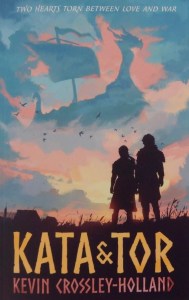
Prize-winning author Kevin Crossley-Holland and artist Chris Riddell join forces again, this time in a mythic re-imagining of a story set in Anglo Saxon times. We hear at the start of this rhythmic, dramatically told prose poem, how King Alfred of Wessex met a trading traveller with ‘a tale to tell’. The trader is Wulfstan of Ravenscar and he spins a story to the King, his wife and the royal household telling of adventure, shipwreck and love.

It tells how at an early age, Wulfstan became skipper of a small trading boat. A boat that after a violent storm eventually reached a jetty where he expected a hostile reception. However the people that helped them ashore were welcoming and assisted the traders in mending their boat.
One day after the death of the nearby town’s headman, the visitors learn of some of the people’s customs including their use of a hollowed out ice log as a coffin to preserve the man’s body

and the events that happened including a horse chase hunt for the headman’s wealth, leading up to placing of the body onto the funeral pyre. As for the treasure hunt, Wulfstan himself became the winner of a real treasure, the beautiful golden haired Eliza whose heart he had won.

Riddell’s rich illustrations are at first rendered in sepia tones but once the story of the sea voyage begins, change to blue tones, returning to sepia after Wulstan concludes his account.

This would make a good read-aloud for Primary School classes looking at Anglo Saxon history as well as a solo read those interested in that period.

The Not-So-Wicked Witch

This is a delightful play on the wicked witch trope with a young protagonist who puzzles the other little witches by not joining in with their trouble-making deeds that include such things as eating the very last biscuit in the tin and pinching one of your favourite socks.. Because of this, the baddy brigade decides that the littlest witch needs to be rescued from ‘all this icky, gooey goodness’.

The lessons in wickedness commence with upsetting children at meal times, which fails dismally. Next location is a birthday party – what better place for a spot of wickedness?

Our littlest witch is instructed to acquire various items for a potion that will enable them to steal all the marshmallows (their favourite ever food) from the party.

What happens however is rather different: the littlest witch concocts her own sweet recipe and sabotages the plans of the would-be marshmallow stealers.

The result is that the wicked little witches finally learn that ‘kindness beats wickedness’ …

With detailed illustrations of the enchanting kind, a thoroughly endearing little witch who doesn’t fit the mischief-making mould, a wealth of speech bubbles for the adult reader aloud to dramatise, young human listeners will delight in watching as the littlest witch teaches everyone that goodness is the way to go.

Fun with Pip and Posy & Bizzy Bear

These are all recently published Nosy Crow board books: thank you to the publisher for sending them for review.

The first book is part of the Where are you ? series and we join Pip and Posy playing a pre-bedtime game of hide-and-seek. Pip hides and Posy seeks but can she discover her friend’s hiding place? Yes, with the help of toddlers who will love looking behind the felt flap on each spread. They will also enjoy frog’s antics as the hunt progresses.
In the second story it’s Posy’s birthday and Pip has come to celebrate with her bringing a present. They have fun playing with Posy’s new toy bus and enjoy lots of party games – musical statues, keepy up balloons, hide-and-seek and pinning the tail on the dinosaur. After all the games the friends sit down for a birthday tea and Pip then goes to fetch a special surprise for Posy but as he approaches the table, he trips on the new toy bus and both he and the cake go flying. Oh goodness me! Posy looks a sorry sight with cake all over her head. After a quick clear up, Pip saves the day with the suggestion of making some new cakes. Yummy cakes for everyone out in the garden.
Both books are just perfect for the very youngest children.

In this Find and Follow book, Bizzy Bear pays a visit to the zoo. He arrives at breakfast time to feed the animals but needs some assistance to find his way around. First it’s the elephants’ turn for some of that yummy fruit from his cart but Bizzy Bear is in need of some help to find his way to the hungry pachyderms so toddlers can guide him and in so doing practise their fine motor skills. Then comes the turn of the crocodiles including the newly hatched babies

– more help needed by Bizzy, not only to find the baby crocodiles but also the penguins. He drives his off-road jeep to get to those and meets lots of other animals on the way; and then it’s time to go home. First though he needs to say goodbye to the pandas – toddler help required again.
In addition to the moving disc, on each double spread the verso shows small, brightly coloured, named items that little ones can enjoy searching for in the larger scene on the recto. They will enjoy too, joining in with the repeat sentence, ‘Bizzy Bear, which way to the __ ? ‘ on each double spread. With Benji Davies’ alluring scenes, there’s lots of fun learning between the covers of this one.

The Remarkables

Having made an initial introduction on the title spread, Clotilde Perrin then gives readers a scene showing the abode of each of the thirty eight remarkable children she’s chosen to feature. Thereafter we meet them one by one; some are fantastical whereas others are far closer to reality but each of them has their special talent(s) depicted as a superpower. You will probably find similarities between The Electric Child, the Thunder Child,

the Speedy Child and the Springy Child, each of whom has an excessive amount of energy. The same is true with the Sticky Child and the Rooted Child both of whom are reluctant to leave home though the former can get attached to friends whereas the latter always wants to remain close to its parents.
Imagine having both the Electric Child and the Thunder Child together in your home: they’d surely, as the latter says, ‘shake up the house’.

I found myself laughing at the comic strip style page of an encounter between the Immaterial child and the Diamond child whose home the former visited by passing through the wall, surprising the sparkly one and then inviting Diamond to a game of hide-and-seek.

I couldn’t resist choosing particular children I’ve taught over the years and then trying to match their personalities with characters portrayed in the book as well as immediately thinking of other individuals as I turned the pages: I’m pretty sure I’ve encountered each and every one of Clotilde’s Remarkables at one time or another.

Having met all thirty eight on the pages of this wonderfully quirky book, why not turn to the final spread and work out what type of child you are.

Oak: The Littlest Leaf Girl

Oak, the tiniest leaf girl of all lives with her parents in a large oak tree in the middle of the woods. She’s full of fun, has soft wings and bunches in her hair and spends her time playing with her family and her friend, Squirrel. One day though, there’s a chill feeling in the air: “Times are changing” Mama Oak says. “Soon, it will be time to leave the tree behind,” Papa Oak announces.

Oak is worried when she goes to bed that night, fearful of what might be waiting in the unknown wild.

Further changes in the weather take place and eventually with the branches of the oak tree almost stripped of leaves, despite Oak’s reluctance, it’s time for the family to leave. “All leaves must nestle into their winter acorn homes,” says her mother reassuring her daughter that they can return in the spring: even Squirrel says that it’s time for a long winter sleep, so what will Oak do. “ I trust you to go at your own pace and find the right moment to leap,” Papa Oak tells her.

Her parents both leave and go to an acorn home on the forest floor nearby; not Oak though. But then she starts to feel lonely and realises what it is that brings her real happiness, not the tree but her family.

So she closes her eyes, takes a slow deep breath and …

I’m sure the way Oak resists change and the unknown will resonate with young children – maybe they’re just starting school – and Lucy’s story with its fairytale woodland setting provides a warm, non-threatening way to demonstrate the importance of courage, accepting the need for change and taking it in your stride. The illustrations with the difference in colour palette for autumn and winter scenes enhance the telling.

Barnaby Unboxed!

The Fan Brothers (with Devin joining his older brothers for this story) take readers back to the recently reopened Perfect Pets store selling boxed creatures that have interactive personalities that have been genetically created. One such is Barnaby, ‘half mouse, half elephant’ and a tiny bit of flamingo to add the pink colour: he’s been on the shelf far too long and is eager for somebody to come in and choose him to be part of their family. Then one day, somebody does: a little girl who immediately falls for him.

Before long the two are inseparable: the girl reads him bedtime stories,

they watch the Saturday tv programme ‘Barnaby and Friends’ and go on walks together. Life is as near to perfect as possible until one Saturday morning everything changes: when they turn on the tv to watch their favourite programme Barnaby has been replaced by the new Rainbow Barnaby.. The following day the little girl asks her father to buy her a Rainbow Barnaby pet which he refuses to do. Barnaby is relieved but then notices a change in the girl’s attitude towards him as little by little she loses all interest in her playmate.

Now it’s the girl’s father who takes Barnaby on his Saturday walks and on one such, the little creature slips free of his lead intending to run away ‘just long enough for people to miss him.’ However as days turn to weeks and then months Barnaby is unable to find his way home; instead having had a narrow escape from a feline, he bonds with other lost pets, makes new friends including some squirrels that help him survive the winter. Come the spring the little girl, searching for her lost pet, comes upon a very bedraggled little creature: could it possibly be Barnaby?

She does various things to try and trigger his memories of their life together and now all she needs to do is to take him home and regain his trust: will she succeed?

Poignantly told and with its detail and varied viewpoints, an absolute delight visually, the story – longer than average for a picture book – has messages about accepting imperfection, responsibility, pets and long term commitment.