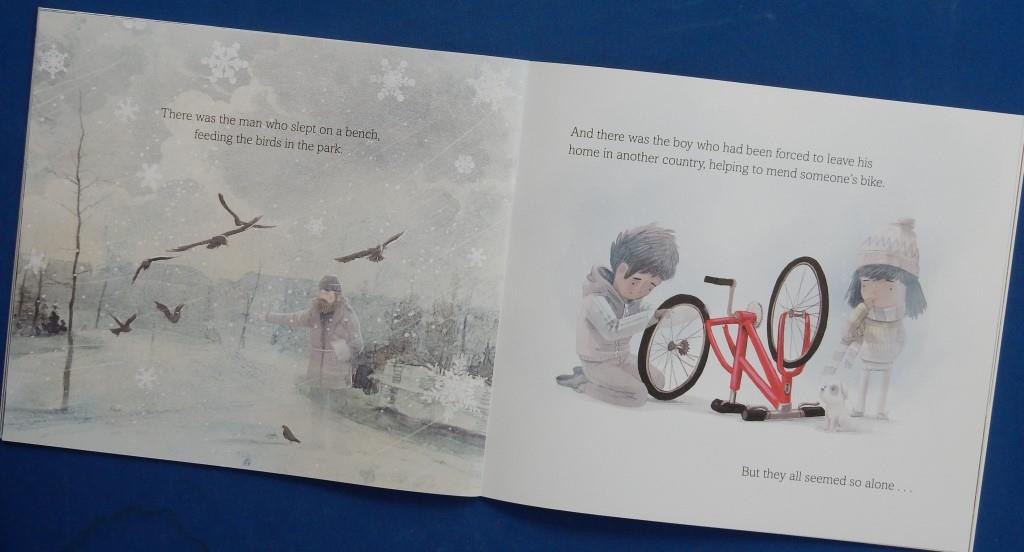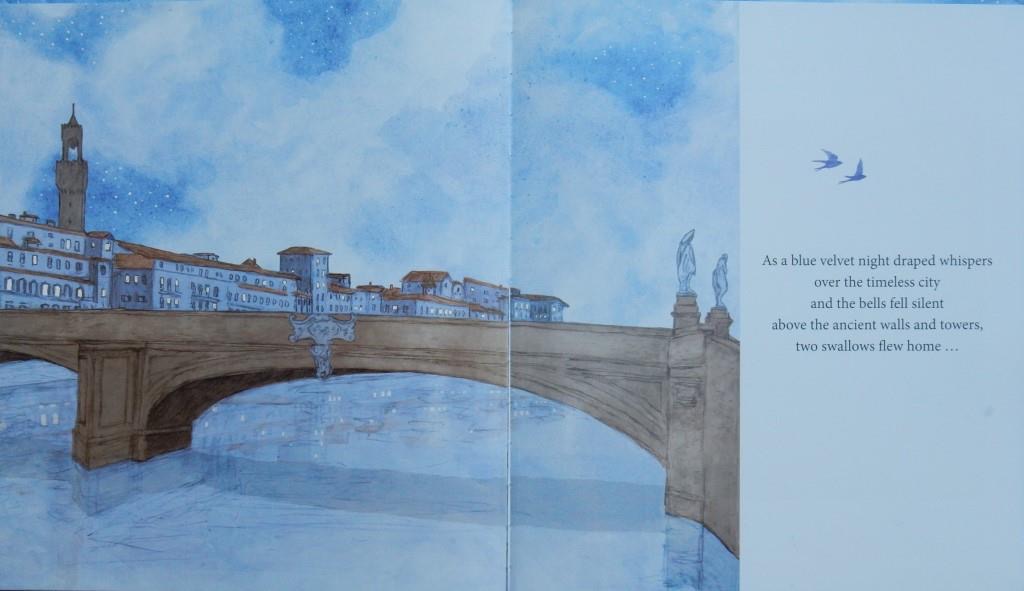
Santa Post

Santa Post
Emma Yarlett
Walker Books

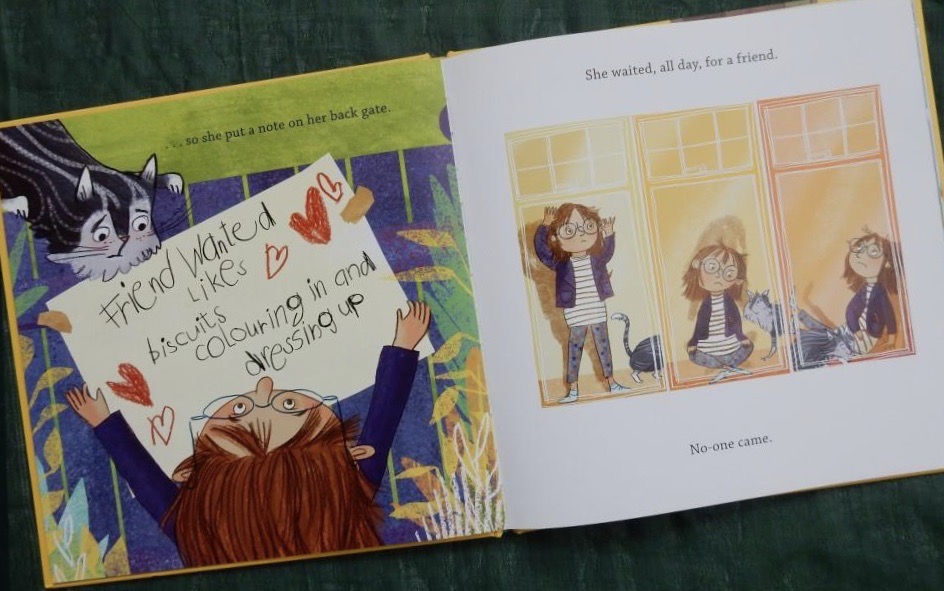
A few days before Christmas something comes whooshing down Santa’s chimney and into the fireplace. It’s a letter from someone signing herself Amy but the vital information about what she would really like for Christmas has been burnt away, leaving Santa puzzled but determined to discover what the missing words were.

There’s certainly one person he can turn to for the help he so badly needs: Head elf Elfalfa at the North Pole. With a letter duly dispatched all he can do is wait. Meanwhile at the North Pole the elves are exceedingly busy but Alfalfa issues a toy-making request to the only one of her helpers free to assist – Elf Boggins. The little fellow does his best with what little resources are left in the almost bare cupboard and Amy’s present is back to Santa, special delivery with an attached note of explanation. Imagine Santa’s reaction when he opens the parcel and sees this …

Still determined to find the perfect present, Santa decides to ask for further help from others of his North Pole pals.

Will he ever be able to deliver to Amy what she truly longs for?

With letters and parcels to open, this joyful festive offering from Emma is sure to delight. Her splendidly expressive illustrations combined with her deliciously quirky humour evident in both words and pictures, make this a seasonal treat that will be brought out and enjoyed year after year by teachers in classrooms, and families with young children.

Monster Clothes & Monster Food/ Twinkle, Twinkle, Little Star

Monster Clothes
Monster Food

Daisy Hirst
Walker Books

Here are two monstrously enjoyable board books from Daisy Hirst. The first introduces a host of delightful little monster characters to show little humans what they like to wear. There’s hat wearing Harriet, socks sporting Simon, pants parading Pauline, and Terrence with a tomato titfa’. That’s three out of four with their chosen garments upon their heads. 
Of the next four, three are relatively conformist in how they wear their gear but divergent Cassie chooses something completely unexpected … 

Then come Vera and Duncan, each conventionally clad, followed by leafy Lester, Beatrice with booted hands and feet, which leaves just Evie and she’s been unable to make up her mind and appears shall we say, somewhat over-dressed.
Love the alliterative descriptions of the endearing fashionistas as well as Daisy’s eye-catching, funky illustrations.

Monster Food sees nameless monsters devouring fruits, while others chew chairs – yes really – and some nosh on noodles or stew leaving one to chomp upon a shoe. 

Cereal is preferred by one, another breakfasts (unhealthily) on cake but I can’t see the allure of that rake, nor the mechanical items selected by some. Instead, they should take the advice of the child and her monster pal on the final spread and stick to putting food in their bellies. Nom, nomm exceedingly tasty fun – well mostly!

Twinkle, Twinkle, Little Star
illustrated by Yu-hsuan Huang
Nosy Crow

Yu-hsuan Huang populates her delightful version of the ever popular nursery song with small anthropomorphised animal, in particular a bear and a rabbit. These two cute-looking characters meet up and cycle off into the night. After parking their bikes, they walk until they find a suitable spot to make a camp and enjoy a sing-song under the stars,

before snuggling up for the night.

In addition to enjoying joining in the song, (there’s a QR code to scan for an audio version) little humans can have fun manipulating the sliders, talking about the details in the illustrations and following the story as it unfolds in Yu-hsuan’s beautifully coloured spreads.

Rashford Rules / Van Dijk Rules / Be Your Own Football Hero: Ronaldo

Rashford Rules
Van Dijk Rules

Simon Mugford and Dan Green
Welbeck Publishing

These two highly illustrated biographies are the first in a series of Football Superstarsand both author Simon and illustrator Dan are soccer fans themselves, supporting Ipswich Town.

Marcus Rashford has recently hit the headlines again with his superb campaigning for free school meals over the half-term holidays which received tremendous community support and certainly put the government to shame. The opening pages of the book acknowledge his national hero status both as an awesome goal scorer and as a charity campaigner. Readers are then told what makes him the brilliant player that he is, and can also discover some statistical information.
Divided into short chapters, there’s information on his Manchester childhood, early achievements, his debuts including a comment by Rashford’s hero Ronaldo. Then come his path to national England player 

and the final chapter focuses on his activist charity work during the Coronavirus lockdown. All this and he’s still only in his early 20s.
The book ends with a quiz and some key soccer words as does the companion book Van Dijk Rules

This follows a similar pattern, giving facts about achievements, his early life in the city of Breda in the Netherlands as a child who always had a football at his feet, and how he progressed from over-grown, sometimes troubled teenager with a part-time job washing dishes in a local restaurant, through his successes with Celtic 

and Liverpool, and as captain of the Dutch team. Both this and the previous title are enormously engaging for young soccer enthusiasts especially. Dan Green’s black and white illustrations capture the essence of the individuals and add additional detail and humour to Simon Mugford’s accessible writing.

Be Your Own Football Hero: Ronaldo
Matt and Tom Oldfield
Studio Press

The Oldfield brothers invite youngsters to don football boots and participate in a decision-making activity as they select one or other of the options presented at intervals throughout the book. There are many choices to be made in the world of a soccer professional such as Cristiano Ronaldo, some of which take the reader along the path taken by the real Ronaldo, others are would-be alternative realities – what might have beens.
Readers are taken back to Ronaldo’s childhood when as son of encouraging, soccer-enthusiast, hard-up parents. the football mad boy has his chance to go and play with his cousin at a Andorinha training session. It turns out to be something of a disappointment so what is your response when your dad asks if you enjoyed it? Time for that first decision …
And so it continues.

I’m not a football fan, but to readers from around six or seven, I can perfectly understand the allure of these books, written by the authors of the Ultimate Football Heroes biography series.

The Couch Potato

The Couch Potato
Jory John and Pete Oswald
Harper360

Here’s a spudalicious tale from popular duo Jory John and Pete Oswald who add a new veggie character to their entourage in the form of a potato, one wedded or should that be, welded to his sofa – almost – and by his own admission, the ap-peel of this comfy spot is irresistible. Especially when everything a spud needs is within easy reach.

Our dumpy narrator, like many humans during the on-going pandemic one suspects, has become well, a couch potato. Moreover this veggie has a huge number of screens for the purposes of watching favourite shows, playing video games, face to face conversations and more. He surely has everything under control, this spuddy guy.
But one day, disaster strikes; plugging in his latest device (mail order of course), causes the electricity to PEW-WWWWWWW resulting in darkness and, can you imagine, our potato leaving his favourite spot to look out the window. yes he can manage that!

With nothing else to do, he decides to go for a walk in the great outdoors, accompanied by his pooch Tater. This foray in the open air causes something of a cathartic release: there’s peace, nature and reality out there, liberating and sometimes exhilaratingly beautiful.

Time to make some permanent changes, thinks our starchy spud pal and yes, having found a happy medium, life is great …

Nature and the outdoors are things Covid hasn’t taken from us all; I certainly feel that in addition to books and reading, my well-being depends on getting outdoors and walking in the beautiful countryside around me, no matter the weather.

Love the humour inherent in both the punny writing and the illustrations of this book. There are intertextual winks, an abundance of genial spuds and the final spread with the hero enjoying a cuppa and reading The Catcher in the Fry is a delicious way to end a story that will appeal to both children and adults.

The Snowflake

The Snowflake
Benji Davies
Harper Collins Children’s Books

Benji Davies has created yet another heart-warming and absolutely beautiful picture book about on the one hand, a little snowflake and on the other, a little girl, named Noelle. The former, as the story opens, is in the process of falling, albeit rather reluctantly at first. Far below, the second is returning home through the city with her grandpa, Pappie, wondering as she walks about the possibility of snow that night.

As the snowflake falls, she wonders about where she will eventually land and where she truly belongs, but the choice isn’t hers to make as her fate is controlled by the wind that bears her drifting and swirling towards the bright lights as they get ever closer. Both child and snowflake are drawn by a wondrous sight – a large Christmas tree that glistens and sparkles in a window, the one wishing for such a tree for herself, the other wanting to be the star atop that tree.

Then close to home, Noelle finds the perfect little tree of her very own, while far above, the snowflake is still wondering where she might find to land.

Back home, Noelle’s mother gets out the decorations and together with Pappie, the child sets about adorning the little tree. 

Eventually Noelle puts it outside on her windowsill; but goes to bed feeling that the tree is lacking something special. But what? …

A magical, truly memorable, heart-warming Christmassy tale about finding your true purpose. It’s Benji’s art that really steals the show here: it’s full of glorious, festive details on the one hand and on the other, those wintry skyscapes are simply superb. When you share this, like the snowflake aglow on the final spread, everyone will be left with a wonderful glow within.

The Tooth Fairy and the Home of the Coin Makers / The Tooth Fairy and the Magical Journey / Dilwyn the Welsh Dragon

The Tooth Fairy and the Home of the Coin Makers
The Tooth Fairy and the Magical Journey

Samuel Langley-Swain and Davide Ortu
Dilwyn the Welsh Dragon
Samuel Langley-Swain and Jessica Rose
Owlet Press & The Royal Mint

The Tooth Fairy titles are a contemporary take on the tooth fairy tradition that divulges the fairy’s time-honoured teamwork with the original maker of coins.
In the first story we meet twins Grace and Ollie and their Grandpa at whose home they spend every weekend. The twins are thrilled when they both manage to get their wobbly tooth to pop out and rush excitedly to reveal their gaps to Grandpa an erstwhile employee at The Royal Mint. 

He explains that the tooth fairy will pay them a visit that night, exchanging the teeth for a coin apiece; he also makes little pouches to facilitate the exchange.

Excitement rules when the following morning the pouches both contain a gold coin, and then Grandpa shows the twins his own coin collection. He tells them how the Mint acts as a training school for the fairies and how once situated in London it has relocated to a Welsh valley. At the end of the story the twins lose another tooth each and cannot wait to share the news with their Grandpa.

In the second story, summer has come and the twins are losing more teeth. A sleepover at Grandpa’s is arranged. During the evening he regales the children with tales of a fairy, gold coins and a fearsome dragon; and tells them about his time as a Coin Minter for Her Majesty. Eager to learn how to fly, that night the twins set a trap for the tooth fairy but instead they’re visited by the Wensleydale Watch-Mouse and he’d spotted their trap.

When Grandpa, disturbed by all the noise, finds out what they’ve been up to, he’s far from pleased but asks the mouse to take them to his favourite place. Something magical happens and off they all go on an exciting journey of discovery …

Told in Samuel Langley-Swain’s rhyming text accompanied by Davide Ortu’s lively, funky illustrations of gappy-mouthed children, Grandpa and an entourage of fairies and more, these stories will fascinate youngsters especially, when they lose that first tooth.

For a slightly younger audience is Dilwyn the Welsh Dragon, another rhyming tale, set in the relocated Royal Mint in Wales. Here, one night among the golden coins an egg appears from which emerges a tiny dragon.
Next morning the coin makers discover the hatchling naming it Dilwyn (truth) and caring for him. They bestow on him the task of guarding the coins and one night his powers are put to the test when a pair of robbers break in …

This clever interweaving of a fun story with real history will entertain little ones and the book will make an especially worthwhile purchase should they visit Llantrisant where the story is set.

Clifftoppers: The Frost Castle Adventure / A Christmas in Time

Here are two gripping wintry stories from Nosy Crow Publishers:

Clifftoppers: The Frost Castle Adventure
Fleur Hitchcock

This is the fourth of the adventure series featuring Aiden, Chloe, Ava and Josh, who spend holidays at their grandparents’place. It’s coming up to New Year and as the story opens the cousins are trudging through the snow towards Frost Castle when a passing car spins out of control crashing into a snow drift. The children manage to extricate the driver, a young woman wrapped in several scarves, wearing a gold pendant and claiming to be cursed. It turns out that she’s a well-known actress who’s to play the lead in Frost Castle’s winter play – a murder mystery – and she also mentions an attempted break-in at her flat before she’d set off for the Castle.

Before long the four children are asked to help with the play. Despite talk of ghosts, they think they should stay and very soon that pendant goes missing. There must be a villain lurking in their midst.
Can the cousins use their skills and courage to discover what is really going on?

With her terrific storytelling skill, Fleur Hitchcock snares readers’ attention from the outset and keeps them involved and intrigued throughout. Whether or not they’re familiar with the previous books, children will thoroughly enjoy this one.

A Christmas in Time
Sally Nicholls, illustrated by Rachael Dean

This is the latest in Sally Nicholls’ time-slip series wherein Ruby and Alex fall through the mirror in their aunt’s house to discover they’re in a different historical period and have to undertake a task before returning to the present.

Now Aunt Joanna has broken her leg and the siblings are anticipating a Christmas doing chores when suddenly having gone through the mirror, they’re back in 1872 about to experience a Victorian Christmas instead.

As a result they meet Edith (8) who with no mother and a father soon to return to India, is about to be sent off to a horrible-sounding boarding school. Then Alex and Ruby realise that she’s being sent to the very place where in February 1873 a terrible cholera epidemic killed off two thirds of the children. Can they persuade her father – the far from pleasant Uncle Elijah – to send her elsewhere.

By all accounts it’s not going to be easy, but can they work some seasonal magic and turn things around for Edith? Or maybe she’ll decide to take matters into her own hands …

With plenty of action, a very interesting cast of characters (some rather eccentric), and details of a Victorian Christmas with singing,

parlour games, ice-skating and candles this is a smashing read, be it in the run-up to Christmas or at any time. I love Rachael Dean’s illustrations and Isabelle Follath’s cover art too.

Will You Be My Friend? / The Purple Puffy Coat

Here are two enormously enjoyable but very different books, each of which has friendship at its heart. Thanks to Walker Books who sent them for review.

Will You Be My Friend?
Sam McBratney and Anita Jeram

This gorgeous sequel to Guess How Much I Love You (now celebrating its 25th anniversary) comes with a touch of sadness as author Sam McBratney died recently. The new story continues on from the first with Little Nutbrown Hare venturing out to look for a playmate. Initially he finds only replicas – a reflection and a shadow of himself.

But then up on Cloudy Mountain he comes face to face with the real thing. It’s Tipps, the Cloudy Mountain Hare and she too wants a friend and playmate.

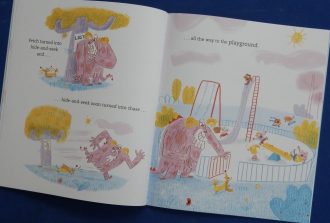
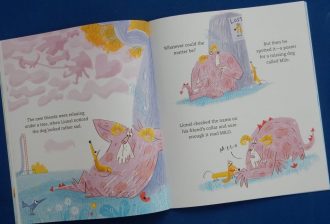
They play chase and engage in other fun activities, followed by a game of hide and seek. Tipps goes off to hide but will Little Nutbrown Hare ever see her again?

Another timeless treasure and classic to be, to add to family bookshelves and to share with early years children.

The Purple Puffy Coat
Maribeth Boelts and Daniel Duncan

With Stick Insect’s birthday just a week away, his pal Beetle just can’t wait to give Stick Insect his present. It’s a purple puffy coat, wonderfully warm and ideal for wearing when the two go out for walks together. There’s a slight snag though for Stick Insect is rather an introvert and isn’t sure this rather ostentatious coat is quite his style. However, Beetle insists that he dons the new garment and off they both go to show off this ‘generous gift’ around town. And so they do: Beetle boasts and Stick Insect keeps well out of the way.

And even when the former notices what’s happening, he’s adamant that that a daily outing in the coat will get his friend used to being looked at.

On the eve of the birthday, Beetle decides that he’ll give his friend a second gift. And it’s while preparing it that he realises what Stick Insect’s recent glum expression signifies.

Time to reconsider the coat situation and to fix things once and for all …

This wry lesson about respecting and understanding one another’s differences is delivered through a text that’s largely dialogue between the two friends and Daniel Duncan’s delightfully droll illustrations of the rise and fall of the purple puffy coat and those that either wear it or encounter it being worn about town.

Music: A Fold-Out Graphic History

Music: A Fold-Out Graphic History
Nicholas O’Neill & Susan Hayes, illustrated by Ruby Taylor
What on Earth Books

This large format, concertina book is published in celebration of the 150th anniversary of the opening of the Royal Albert Hall in London.

Essentially it opens up the entire world of music to all whether or not they have a specific interest in music and is written by Nicholas O’Neill, himself an acclaimed musician and composer and author Susan Hayes. Together with illustrator Ruby Taylor, they present a superb illustrated timeline that unfolds to double-sided 2.5 metres beginning in prehistoric times with the use of bones, gourds, and hooves, and culminating in contemporary music of Björk, Adele, Beyonce and Grime artist Stormsy.

Pretty much everything one can imagine relating to music as well as more that you can’t, is included in the densely packed pages. Truly international in perspective, the presentation begins with a world map showing prehistoric sounds emanating not only from instruments from the aforementioned materials but also perhaps, from wood.

We meet music makers of all kinds – maestros and more – mainly in national or period dress. There are pithy paragraphs about such things as written music from 1000 CE, the first printed music (1501), styles of music, the use of technology in playing and recording

and various innovations including the Chinabot platform that showcases Asian music both modern and traditional, as well as MuseNet – an online tool that uses AI so create songs of different styles.

The book covers orchestral music, opera, rock -‘n’-roll, protest music and there are some lesser known mentions such as opera founder Wei Liangfu; and American composer Amy Beach and English composer Ethel Smyth whose March of the Women became the anthem of the women’s suffrage movement.

Some musicians have a paragraph,

while the Beatles have a whole page devoted to them, and there’s a double spread entitled the Royal Albert Hall of Fame.

There’s no way you can read, let alone digest, the entire contents of this inclusive and highly visual offering in a single sitting. It’s engrossing; and in addition to the index and glossary, the authors provide personal notes and even, a final playlist. All in all, a truly amazing collaboration and a book to add to primary and secondary collections, as well as family bookshelves.

A Polar Bear in the Snow / In the Half Room

Here are two recent picture books from Walker Books kindly sent for review:

A Polar Bear in the Snow
Mac Barnett and Shawn Harris

In dramatic fashion a sleeping polar bear stirs, sniffs the air and sets forth on a walk the destination of which is known only to himself. Readers join him as he’s observed by seals, arctic foxes,

a human even

until, having traversed the snowy, icy landscape, he arrives at the startlingly blue sea.

Plunging in, the creature’s feeling playful as he enjoys frolicking amidst the fishes and fronds,

before clambering back onto the snow and continuing on his way.
Wither is he bound now? That is left for readers to ponder upon …

Splendidly playful: who can resist accompanying the polar protagonist in Mac Barnett’s spare narrative and Shawn Harris’s arresting torn paper art that’s cleverly layered to give the illustrations a three-dimensional effect, as the creature sallies forth on his walk.

In the Half Room
Carson Ellis

This is a somewhat surreal, enigmatic, rhyming bedtime book wherein Carson Ellis presents a moonlit room in which everything is carefully cut in half. We don’t see the entire setting initially; rather we’re shown a series of partial items – ‘Half chair/ Half hat / Two shoes, / each half / Half table / Half cat’.

Then, once the room has all the half items mentioned, comes ‘Half a knock on half a door’ and there stands the woman’s other half.

Having come together, she’s wholly ready to dash out to embrace the world beneath a starry sky.

Meanwhile, in through the door left ajar, comes half a cat

to participate with its other half in a half-cat fight’ after which the two entwine un-united, on the mat and fall asleep.

With bold images, this is wholly entertaining and intriguing though perhaps some youngsters will be left feeling just a tad bemused by such an offbeat offering.

Zombierella: Fairy Tales Gone Bad / Theodora Hendrix and the Monstrous League of Monsters

Zombierella: Fairy Tales Gone Bad
Joseph Coelho, illustrated by Freya Hartas
Walker Books

As a massive fan of fractured fairy tales, I couldn’t wait to read this and wow! do I love it. Told in the form of a verse novel by performance poet Joseph Coelho, it’s quite simply utterly brilliant, dark, funny and splendidly subversive to boot.

The Grimm version is the one Joseph has chosen as his starting point and right from the start he hooks readers in, holding them enthralled throughout as the plot twists and turns in unexpected ways.

We learn that our heroine has got her name because she carries her biological mother’s ashes with her in a locket. Now she is forced to live with her foul FAKE mother and her equally FAKE beautiful sisters who are living off the inheritance that’s rightfully Cinderella’s. Her one true trusted friend is her horse, Lumpkin but early in the story, he ceases to be and the poor girl has to bury him. But not before she comes upon a piece of drifting paper. It’s a flyer informing the reader of three balls on consecutive nights, on the final of which the prince will choose his bride. She assumes that said prince is moving into the old abandoned mansion atop the hill on the edge of Grimmsville.

Needless to say those FAKE sisters of hers are eager to go to the ball

but can’t abide the thought of Cinderella doing so and as well as leaving her with instructions to clean the house in their absence, they leave a trap for her at the top of the stairs. A trap that causes her demise. Enter The Fairy of Death and Cinderella becomes Zombierella, able to go to the ball, but for three nights only …

I’ll say no more on the tale but merely urge you to get hold of the book and relish every detail, gory and otherwise. Equally relishable are Freya Hartas’ illustrations that add to both the gloomy atmosphere and the humour; her use of space on the page is superb too

and make sure you look under the cover flaps.

I’m eagerly anticipating any further fairy tales Joseph chooses to turn bad with his magic pen.
More shivers and giggles in:

Theodora Hendrix and the Monstrous League of Monsters
Jordan Kopy, illustrated by Chris Jevons
Walker Books

Here’s a terrific mix of monsters, mystery, horror and humour: it all begins ‘just shy of Halloween’ in an abandoned graveyard cemetery on the edge of Appleton. There in an unmarked grave, seemingly just waiting to be discovered lies a small squalling human. And discovered it is by one George Hendrix, a zombie (along with his vampire cat, Bandit). What do they do with said baby? They take it to a mansion – occupied by the Monstrous League of Monsters (MLM) where Georgie is assured the infant will be well cared for. The carers are a group comprising a mummy, ‘Mummy’ to the infant, a vampire, a werewolf and cubs, a witch, the skeleton butler, an operatic ghost, a crow and more – I wonder …

They name the babe Theodora and surprisingly, fall for her charms, but she must be kept secret.

Full speed forward a decade and there’s Theodora thriving and loving life along with her loyal arachnid associate, a dapper tarantula named Sherman.
But then mysterious anonymous threatening letters start to arrive. Seemingly somebody or something has found out about the group and is determined to expose them and their secret to HQ. Theodora is equally determined to discover the identity of the letter writer; so too are the others.

But Theodora decides to fly solo and hatches her own plan. Can she (along with her very first human friend), solve the mystery or are her monster family members doomed to rot imprisoned in Transylvania? And what of her own fate if she succeeds? …

Told by a mysterious narrator this is a smashing story, with some laugh-out loud moments, an abundance of family love and loyalty that shows how diverse family and friendships can be.

Great for reading aloud or solo reading and made all the more fun by Chris Jevons delicious black and white illustrations

Wild is the Wind

Wild is the Wind
Grahame Baker-Smith
Templar Books

This is a story of a journey or perhaps, several journeys – that of young Cassi in her hot air balloon, that of the little swift she has nursed until its wings are strong enough to take to the sky and join its fellows on their path across land and sea, a journey of eight thousand miles, that takes three months to complete; and of course, there’s the path of the wind.

As the morning sun rises in Southern Africa, the world is temporarily on hold until a breeze stirs the leaves and the seeds in the butterfly trees. Then with the strengthening of the wind, it’s time to let go of the tiny winged creature and allow it to join its fellow travellers on a prodigious migratory journey

as a cyclone swirls, spirals and howls, whipping the waves into wild white horses.

Then on over deserts and rocky terrain sculpted by windstorms until at last, the swifts are nearing their destination on the other side of the ocean. And there, without pausing once, Cassie’s little swift and the others are greeted in China by Kûn who has long awaited their appearance.

There too, will they build their nests and rear their young until, once again the wild wind calls them to make their return journey to that little girl so far, far away on distant shores.

With Grahame Baker-Smith’s spare lyrical prose in combination with his equally lyrical, breath taking, powerfully atmospheric, detailed illustrations, Wild is the Wind is narrative non-fiction at its memorable best.

A Poem for Every Winter Day

A Poem for Every Winter Day
edited by Allie Esiri
Macmillan Children’s Books

I’m still relishing my daily reading of A Poem for Every Autumn Day as I start writing this review of Allie Esiri’s latest selection, the first month of which is December. The riches herein take us through, with two offerings per day, to the end of February, by which time one hopes, we’ll have a spring selection.

As in the previous book, Allie prefaces each of her selected poems with a brief introductory, background paragraph linking it to the date on which it appears.

You’ll surely find some of your favourites and take delight in making some new discoveries too: I was excited to find a fair few that were new to me and lots of familiar ones both traditional and new, from Coleridge to Wendy Cope and Robert Louis Stevenson to Benjamin Zephaniah.

Ist December remembers and celebrates Rosa Parks and all she stood for, with a poem by Joseph Coelho, and another by Jan Dean, both superb; also on the theme of Black American experience is Maya Angelou’s very powerful Still I Rise that follows straight after.

Wearing my teacher hat, I was enormously moved especially to discover spoken word artist, George Mpanga’s (aka George the Poet) The Ends of the Earth. It begins ‘A child is not a portion of an adult. It’s not a partial being. /A child is an absolute person, / An entire life.’ And concludes ‘Go to the ends of the Earth, for children.’ Equally moving and as pertinent now as when W. H. Auden wrote it in 1939 is Refugee Blues chosen here for 10th December which is Human Rights Day.

Inevitably snow features several times: there’s Brian Patten’s Remembering Snow that talks of the transformative effect on a little residential street and Snow in the Suburbswherein Thomas Hardy highlights its effects on animals. Then as expected there are a number of poems celebrating aspects of Christmas both secular and religious.

Strangely, three consecutive early January choices, Sara Coleridge’s The Months, A.A. Milne’s Lines Written by a Bear of Very Little Brain and Stopping by Woods on a Snowy Evening (Robert Frost) are poems I’ve learned by heart and can still recite – the first at primary school, the second at around the same age, at home, and the third at the beginning of secondary school.

What more uplifting way than Edward Thomas’ Thaw to look forward to the coming of Spring: ‘ Over the land freckled with snow half-thawed / The speculating rooks at their nests cawed / And saw from elm-tops, delicate as flower of grass, / What we below could not see, Winter pass.’

This superb seasonal celebration is an ideal companion for dark chilly evenings and bright days too, to read alone and to share with the family.

Lotta Says ‘No!’ / Lotta Makes a Mess

Lotta Says ‘No!”
Lotta Makes a Mess

Astrid Lindgren, illustrated by Mini Grey
Oxford University Press

The Astrid Lindgren reissues continue with two books starring young Lotta who is four in the first book. The episodes in the first are told from the viewpoint of her elder sister, Mary-Lou and seemingly, Lotta is a spirited child with a large personality who’s never far from trouble.

Lotta Says, ‘No!’ has nine brief chapters and in the first we see that really what Lotta wants is to make sense of the world she’s growing up in – “What’s it raining for?” she asks one wet day and later, “What’s dung for?” and her response that afternoon is to stand out in the middle of a dung heap in the pouring rain getting soaked. When asked what on earth she’s doing, she replies, “So I’ll grown and be as big as Joe and Mary-Lou.”

Other adventures in this book include a visit to the dentist for a tooth extraction; a crinkly wool incident while visiting neighbour, Mrs Berg,

a kind of honorary grandmother to Lotta and her siblings; and the occasion when Lotta adorns the tree in which they’re picnicking with pancakes. The others too are full of charm and gentle humour: Mini Grey’s black and white illustrations are really fun and highlight Lotta’s endearing nature as they do in Lotta Makes a Mess.

Now, our young protagonist has turned five and appropriately there are five stories herein, each one as convincing as the previous escapades. In the first, Lotta (having woken in a bad mood) has a disagreement with her mother over what she should wear, cutting up her itchy, scratchy sweater and decides to move out.

The second chapter sees her installed in Mrs Berg’s junk-loft where she remains until she discovers just how dark it gets at night. That’s the end of her stay forever plans and she’s more than a tad relieved when she hears her Daddy’s voice saying how unhappy her Mummy is without her – the perfect excuse to reassess her situation, the consequence of which is that what’s been a truly terrible day ends on an upbeat note.

Both books are ideal read-aloud material for pre-schoolers and those in the foundation stage who will assuredly fall under Lotta’s charms and relish her misdemeanours.

The Boy and the Gorilla

The Boy and the Gorilla
Jackie Azúa Kramer and Cindy Derby
Walker Books

Profound in its impact, this is a story of loss, mourning and grief told entirely in dialogue and through a sequence of absolutely beautiful, understated illustrations.

We see a young boy, his grief palpable, on the day of his mother’s funeral as he envisions a companion – a gentle gorilla

– that accompanies him through those dark hours ready to answer all the questions that the little child is reluctant to put to his father. The creature’s wisdom is demonstrated through its responses to ‘Where did Mum Go?’ ‘No one knows for sure.’ Can’t my mum come back home?’ ‘No but she’s always with you.’ ‘I wish my Mum was here to read to me.’ ‘It’s a good story. Your father might like this book too.’ 

And little by little, through this unlikely friendship, the boy starts to open up and express his feelings: ‘Sometimes I want to be alone.’ … ‘Mum and I loved baseball.’ He also begins to find comfort in such activities as biscuit baking and tending to the garden flowers: ‘The seeds you planted together are like your mother’s love, a gift to keep forever.’

What this gentle gorilla shows is the importance of being able to talk about what you’re going through, particularly with those (like dad) who will be feeling equally sad and alone, as yet unable to open up.

Eventually, we see father and son beginning to feel their way forwards together through sharing a story and planting new flowers

and finally, walking off together, taking those first steps on the path to healing.

Queens

Queens
Victoria Crossman
Scholastic

From pirate queens to elephant hunters, and spanning thirty centuries, this book is a celebration of strong, fearless women from all around the world who ruled in one way or another. There are some, such as the Indian Queen Nur Jahan, said to have saved a whole village from a man-eating tiger by shooting it, and the third century ruler in Japan, Empress Himoko believed to have been a magic practising shaman, who are the subject of folklore. Then there’s the mysterious Queen of Sheba (Queen Makeda) who is mentioned in the Qu’ran and the Bible with both Ethopia and Yemen claiming to be her birth country.

There are alternating focuses on an individual – the Queen of Sheba, Lady K’Abe; Mayan warrior queen whose rule was from 672 to 692

and Yaa Asantewaa who led a rebellion against British colonists trying to expand into Ashanti country (1840-1921) – for instance.

In between are topical spreads that include information about queens depicted on money, their clothing and footwear,

make-up, pets, hobbies and more. I was fascinated to discover Rani Lakshmibai reportedly had a pre-breakfast regime of weightlifting and wrestling, while Queen Rania of Jordan has written a children’s book.

The author’s style of writing is chatty and full of interesting facts, while the illustrations are inviting, vibrant and detailed.

The last few spreads are devoted to a visual timeline of the rulers, a world map showing their homelands, a glossary, and a list of places to visit should readers be interested to discover more about the featured women.

Olga: We’re Out of Here! / Judy Moody Goes to College / Zara and Moonbeam

Olga: We’re Out of Here!
Elise Gravel
Walker Books

Olga and her ‘adorable’ albeit rather smelly creature Meh (found in her rubbish bin) return with Olga – fed up with annoying humans – considering leaving Earth and moving to another planet. Perhaps they could even find Meh’s home planet.

Actually, there are several humans that Olga’s not fed up with including her pal, the dog loving Chuck and librarian extraordinaire, Ms Swoop. The latter might just be able to help with Olga’s possible foray into space.
But then Meh starts having digestive problems and before long is so poorly that Olga is truly concerned especially when she notices some unpleasant pimples on the creature’s belly.

Time to visit the library for a bit of investigation, but when Olga gets there she finds not the friendly Ms Swoop but the grumpy Mr Gumstrap on duty. Maybe a trip to the vet’s is a better option. Or is it? …
All ends happily however, and with some exciting news about Meh’s mystery ‘illness’.
Wonderfully quirky and with such an unconventional, research-loving outspoken protagonist, this illustrated notebook style story is such a fun read for primary children.

Judy Moody Goes to College
Megan McDonald, illustrated by Peter H. Reynolds
Walker Books

The latest story of Judy Moody finds the girl struggling with maths according that is to her sweet obsessed supply teacher, Mrs Grossman. The reason for this is that being unimpressed with said new teacher, Judy’s concentration is on anything but the measurement topic that’s being taught. Home goes a note to Judy’s parents who decide that their daughter needs a tutor. Stink, her little brother teases her talking of ‘baby flashcards’. Unsurprisingly Judy is not impressed with this tutor idea either but then she discovers that her tutor is a college student and that she too is going to college – sort of!

Pretty soon, Judy declares that having a tutor like Chloe is ‘crucial’ – ‘maths is everywhere. Maths is life.’ However, less impressed with this new-found enthusiasm of Judy’s are her school friends and it’s not long before she’s playing alone and lunching solo. Moreover, she finds herself sent to the attitude tent by Miss Grossman who’s finding her lippiness just a tad too much. Can Chloe help Judy sort this out too? Perhaps, with a bit of calming, peace-inducing yoga …

Huge fun whether or not the reader is an established Judy fan. I love Peter H. Reynolds illustrations.

Zara and Moonbeam
Julie Sykes, illustrated by Lucy Truman
Nosy Crow

Is this really the 15th magical story set at Unicorn Academy, the school on Unicorn Island where you meet your very own unicorn and have awesome adventures together. Now it’s Zara who is eagerly waiting for her unicorn to reveal her magic power. But Moonbeam keeps seeing pictures in her head and saying strange things: surely that can’t be connected to her magical power, or can it?

Suddenly who should appear but school inspector, Mr Longnose: could he perhaps be connected with the awful heatwave they’re experiencing? Zara and her friends are determined to find out. When Moonbeam keeps seeing the same images over and over she starts to think she can see into the future.

Then a school field trip is announced and after a while, Zara climbs an enormous rock and finds herself in trouble. Can Moonbeam find her magic power in the nick of time and save the girl?

With Lucy Truman’s black and white illustrations adding to the drama, Unicorn School enthusiasts especially, will devour this adventure, probably in a single sitting.

Glassheart / Brand New Boy / Vampirates: Demons of the Ocean

Glassheart
Katharine Orton
Walker Books

Prepare to be both chilled and enchanted, bothered and bewitched as you read this, the second of Katherine Orton’s stories. It tells of Nona who has lost all her family in the war (WW2) and of her adopted Uncle Antoni. This though isn’t a tale of war itself, but of its aftermath, as together they travel through the wilds of Dartmoor, each caring and protecting the other as a magical adventure unfolds. With echoes of folktale and legend, the landscape that the author crafts is wild, unpredictable – sometimes sinisterly nightmarish.

Her tale is one of power, fragility and also strength as the two walk side by side, stopping to replace stained glass windows, Nona with a small piece of magical glass in the form of half a heart reminding her of what once was, Uncle Antoni with his skill and artistry in stained glass.

With the girl as his apprentice, they undertake a mysterious commission that sees Nona face to face with her nemesis. But though fragile, Nona has an inner strength, loyalty and determination which drives her on in her endeavour to protect those she loves.

Truly evident is Katherine Orton’s understanding of suffering and the assuagement of grief.

Brand New Boy
David Almond, illustrated by Marta Altés
Walker Books

George joins an ordinary class in an ordinary school somewhere in northern England. Daniel is fascinated and watchful, especially when George’s ear falls off. It’s clear that this newcomer is far from ordinary. But then Daniel is actually not so ordinary either. He’s capable of doing extraordinary things: he’s caring, perceptive, questioning, open-minded and ready to accept somebody just a little bit different.

So, while he and his friend Maxie in particular go about their football and other activities at school, his mind is full of thoughts about the mysterious newcomer. But then just as suddenly as he came, two days later, George is there no more. Will he ever come back?

If ever there was a story to encourage children to think about what they are and to consider the true meaning of being human, and of freewill, then this is it.

Deceptively simple in its telling David Almond’s story has a quiet power while Martha Altés illustrations bring out the humour inherent in the tale.
Never underestimate children; all too frequently I see both teachers and parents so doing. They too should read this book.

Vampirates: Demons of the Ocean
Justin Somper
UCLAN Publishing

This is a reissue of a book (the first of a series) originally published some fifteen years back. It’s a swashbuckling tale of pirates and vampires set in the future in an attractive-sounding location – Crescent Moon Bay on the Australian coast.

We meet twins Grace and Connor, who are left entirely alone in the world when their lighthouse keeper father to whom so many owe their lives, suddenly dies. The children cast themselves off in his boat out to sea and all too soon are hit by a storm but they’re not to meet their demise in the ocean. Grace is rescued by Lorcan Furey, one of the vampire crew of a strange boat, Connor by friendly pirates.

The action then switches between the two as their stories unfold alternately with secrets emerging until at last, the two are reunited. With its lively cast of characters (depicted before the title page) this is an entertaining start to a sequence of further adventures for older primary readers and beyond.

The True Story of Zippy Chippy: The Little Horse That Couldn’t

The True Story of Zippy Chippy: The Little Horse That Couldn’t
Artie Bennett and Dave Szalay
NorthSouth Books

You’ll find it hard not to fall for the racehorse that stars in this true picture book story; I say stars because despite expectations Zippy Chippy never won a single race. Thoroughbred from champion genes, Zippy loved to run but his behaviour on the track was totally unpredictable: sometimes he merely stood and never ran at all, on another occasion he stopped dead in the middle of the track to enjoy the wonderful smells in the air.

After nineteen losses his owner trades him for a truck and then – new trainer not withstanding – fuelled by sweet goodies – Zippy is relegated to the second-rate races breaking the record for the most consecutive losses. However, Felix (the new owner/ trainer) doesn’t give up easily and a year later, Zippy (apparently a lover of being a racehorse despite his ineptitude) is given yet another chance and another and …

Winner he might not be, but Zippy certainly caught people’s attention including his trainer’s young daughter and later on, press sportswriters and the crowds that came to cheer him on. Determined to make the horse a winner, Felix sets up a race against a baseball player and guess who wins …

Down but not entirely out, Zippy comes in second in race number ninety-eight but come race one hundred, he brings up the rear – again! But does Zippy go out quietly and unobtrusively? Absolutely not, for after the starting bell, before taking a single step in the race, he entertains the crowd with a final farewell, bowing out gracefully to tearful onlookers.

A legend indeed, but what he showed not only those involved in horse racing, but readers and listeners too, as author Artie Bennett writes, ‘you can lose and lose and lose and still be a winner.’ Zippy’s attitude is ultimately what counts: you don’t need to be a winner to be loved, being best isn’t THE most important thing, taking part is. In other words, be true to yourself and don’t be afraid to walk your own path: such a great message to give children.

With their changing perspectives, Dave Szalay’s zany illustrations will surely make readers chuckle, capturing both the spirit of the horse, and the heartfelt humour, love and perseverance inherent in Artie’s writing about Zippy.

Ella’s Night Lights

Ella’s Night Lights
Lucy Fleming
Walker Books

Ella is a tiny, moth-like girl who longs above all else to see the sunrise; but she has to avoid the sun, so delicate are her feathery wings. Consequently, Ella leads a nocturnal existence collecting light from all that glows and glimmers by moonlight and sleeping by day. 

This light she would share with anyone who needed some help in the dark, while repeating her heart-warming chant “Here’s some bright light, here’s a night light. / A little ray to calm your fright.”
One night she bestows this light upon a little fox named Sable 

and the two become friends, searching together nightly for ‘shimmering light’.

Another night – a snowy one – she shines a calming light on a lonely little owl in a tree; then Luna joins forces with the light-givers, and the animals always ensured that little Ella was safely back before sunrise.

One night her animal friends decide that it’s time that Ella’s kindness is returned: together they create a very special gift to show their appreciation of her thoughtfulness and altruism, a gift to make her dreams come true.

Through both words and pictures, this story positively exudes charm, and sweetness – of the magical not the cloying kind. It’s a lovely warm-hearted book to share with youngsters especially now when we all need some light and kindness to help us through these difficult times.

Chitty Chitty Bang Bang

Chitty Chitty Bang Bang
Ian Fleming, adapted by Peter Bently, illustrated by Steve Antony
Hodder Children’s Books

This is a retelling of Ian Fleming’s classic tale by the popular picture book author Peter Bently, illustrated by Steve Antony of Mr Panda fame..

The Potts family – mum, dad (a clever inventor) and their two children Jemima and Jeremy – are a poor but happy family. That is, until one of dad’s inventions makes a fortune and off they go to buy a car. 

Unimpressed by any of those on offer at the garage, they’re about to leave when Dad notices something under a cover. Beneath that cover is a large and very much the worse for wear, racing car, destined the next day for the scrapyard.

Young Jeremy has great faith in his father’s ability to restore it to its former glory and after spending weeks shut away in his workshop, Dad introduces them to a splendidly shiny vehicle.

In climbs Dad and when he starts the engine, they hear this ‘CHITTY! CHITTY! BANG! BANG!’ before the vehicle rumbles into life. There’s only one thing they can call this car and you know what that is … Off they go for a drive to the beach and when they get stuck in a traffic jam, a mere push of a knob causes it to WHOOSH skywards as they take flight, 

destination a beach on a deserted island.

Fortunately, the car is better at spotting danger than the humans, and just before the tide engulfs them, Mum presses the flashing button and Chitty is transformed into a speedboat that takes them whizzing through the foggy waters to the coast of France.

What follows is an even more exciting part of their adventure involving a chase (of a famous robber and his gang) 

through the streets towards Paris where a hot-air balloon awaits the gold thieves. But they’d reckoned without a certain amazingly adaptable car …

Peter’s telling sweeps you along in the mounting excitement and Steve’s terrific, detailed illustrations provide readers with varying perspectives from which to witness the action. Together they’ve created a wonderful way to introduce youngsters to the original story.

Molly and the Mathematical Mystery

Molly and the Mathematical Mystery
Eugenia Cheng and Aleksandra Artymowska
Big Picture Press

There are challenges aplenty in mathematician and maths advocate and demystifier Eugenia Chen’s picture book for older primary children. In collaboration with illustrator Aleksandra Artymowska she presents a plethora of mind-boggling mathematical ideas in a creative and enormously alluring mystery story that involves readers who join Molly in a series of challenges as she ventures forth into a weird world where everything is other than it appears.

If you are one of those people who when somebody says the word ‘maths’, thinks of times tables and numerical problems, then this interactive journey will surely show you that it’s about SO much more, most importantly about imagination.

With letters to read, clues to find, flaps to explore, wheels to manoeuvre, and an absolute wealth of mathematical information at the end of the story, this incredible book will have you confounded, bemused, astonished and absorbed.

Aleksandra Artymowska has packed so much into every double spread scene, be it the impossible staircase,

the garden of hidden shapes with its tessellations, that hall of endless doors with their intricate patterns, the steam room with its plethora of pipes, wheels and vents, the room adorned with carpets of awesome designs. Then come the mixed-up library where you’ll love to linger among the books of all sizes, the beautiful symmetry garden,

the high-walled fractal garden or the scene that shows Molly all the places she’s visited or even her very own bedroom at home wherein the adventure starts and concludes.

Highly recommended for school and home.

There’s A Mouse In My House

There’s a Mouse in my House
Ross Collins
Nosy Crow

A tiny mouse has had the temerity to move into our Bear narrator’s residence so he tells us. Outraged, Bear is determined to oust his unwanted interloper by telling him ‘he has to go.’ But what he doesn’t know it that the little rodent has been taking lessons in taekwondo – of all things – and you can see who comes off worse in that encounter. OUCH!

So what about suggesting alternative spots Mouse might prefer to be – Luxembourg or Borneo perhaps. But it’s no go on that score. Apparently, the intruder is staying put and is making it known in no uncertain terms by usurping Bear’s chair.

Yes, Mouse might be a dapper dresser as well as being a diminutive creature but he has a gargantuan appetite and is eating his host out of house and home – literally. Then there’s the nocturnal noise pollution habit: how on earth is our narrator supposed to sleep with all that row? But it’s the bathroom disaster that’s just about the last straw …

Uh-oh! Someone’s come a-knocking on this snowy night. Who on earth would venture out right now? And why? …

Delivered with Ross’s characteristic rollicking rhyming panache and brilliantly droll scenes showing how in this sequel Bear gets repaid (to begin with anyway) for his misdeeds in There’s a Bear on My Chair. But it’s the clever interplay between text, illustrations and design that is SO well done.

AGAIN! I hear the cries from young humans, who will relish this delectable drama (along with the adults who read it aloud).

Snow Ghost / Snow Woman

Here are two super snowy picture books – the first new, the second, a reissue:

Snow Ghost
Tony Mitton and Diana Mayo
Bloomsbury Children’s Books

In a lyrical tale of hoping and searching, Snow Ghost flies through the snow-filled sky seeking a place that she can call home.
She swoops first towards a town all a-twinkle with its lights in shops and houses; but it doesn’t feel right, so it’s on through the darkness and into the woods. There though she meets shadowy darkness and that too feels unwelcoming.

Windblown to a hilltop it’s impossible to rest with those hostile murmurs telling her to go, the Snow Ghost drifts towards a small moorland farm.

There in the fields are a boy and a girl playing snowballs and seeming full of joy. Now here’s a place which might just afford the welcome that can end the Snow Ghost’s long search …

– a place she can finally call home.

Tony Mitton’s rhyming narrative flows with the grace and beauty of his subject, gliding perfectly off the tongue as you read it aloud. Diana Mayo’s equally lyrical illustrations that almost float over the pages are mesmerising; the colour palette pervades every spread with an ethereal quality, and oh wow! those endpapers are exquisite.

A memorable magical wintry book from cover to cover that’s destined to become a seasonal treasure.

Snow Woman
David McKee
Andersen Press

David’s wry look at the question of gender, Snow Woman, has recently been reissued. It tells of Rupert who informs his dad that he’s building a snowman, only to have his terminology corrected to ‘snow person” by dad. And of Rupert’s sister Kate who before embarking on her snow construction, tells her mum, it’s to be a snow woman. Mum accepts this.

The completed snow people stand side by side duly dressed and are photographed along with their creators, by Mum.

The following morning the snow twosome have vanished, along with their clothes. Kate makes a thoughtful observation about a possible reason and the two decide a to build instead, a snow bear – not a man or a lady -merely a bear, Rupert suggests.

Playful and pertinent still, McKee’s deadpan humour shines out of his illustrations all the way through to that seeming throwaway final line of Rupert’s. Make sure you study all the household décor and other ephemera lying around indoors, particularly the art adorning the walls; it’s hilarious.
This book will surely appeal to both children and adults.

David Roberts’ Delightfully Different Fairy Tales / Pippi Longstocking Goes Aboard

These are two special gift editions with Christmas in mind

David Roberts’ Delightfully Different Fairy Tales
written by Lynn Roberts-Maloney
Pavilion Books

This sumptuous edition brings together three of the brother and sister team’s fairy tales previously published as separate books, Cinderella, Rapunzel and Sleeping Beauty. Lynn’s texts written with enormous verve and David’s magnificent illustrations that set each of the stories in a different era combine to re-energise tales from way back making readers experience them with fresh eyes, ears and hearts.

For Cinderella we’re transported to the art deco 1920s, age of flapper girls and glamour, where Greta’s (aka Cinderella) stepsisters, are Elvira (the wicked one) and Ermintrude (she’s exceedingly dim).

Her fairy godmother is a fashionista and her stepmother is a stone cold-hearted bullying female who immediately evicts Greta from her room giving it to her own offspring instead.

Rapunzel is set in the 1970s when platform shoes were all the rage. The beautiful miss in this version has a red-haired stunner as its star and she resides in a tower block flat, (or rather is imprisoned by her Aunt Edna who owns a ghastly pet crow).

Edna insists that safety is the reason for her niece’s current incarceration, and she uses occasional gifts of second-hand records and magazines to placate the girl, promising to show her the city sights once she’s older. Said aunt is employed as a school dinner lady, one who almost force feeds her charges with such ghastly fare as lumpy custard. Enter stage left, young Roger, lead singer of the school band. Could he be the one to rescue the red-haired damsel?

Sleeping Beauty has an entirely female cast, a 1950s vibe and a science fiction loving young lady Annabel who on her first birthday, falls under the evil spell of spiteful witch Morwenna, and wakes many more years later than the sixteen she’d first thought.

If you know somebody (or several people) who love fairy tales, then buy them this totally brilliant book: I’m going to have to invest in several copies this season. And, KS2 teachers just think of the potential this offers in the classroom.

Pippi Longstocking Goes Aboard
Astrid Lindgren, illustrated by Lauren Child
Oxford University Press

This bumper book with superbly spirited, full-colour illustrations by Lauren Child (who better to illustrate this Pippi 75th anniversary edition?) is an ideal present for a lively child with an inquiring mind, and a cracking way to bring Pippi, fellow residents of Villa Villekulla, monkey, Mr Nilsson and her horse – the one she can lift with her super strength – (strictly speaking he lives on the veranda), and her next-door friends, Annika and Tommy, alive to a new generation of readers and listeners.

The episodes herein include that where Pippi gets a trifle carried away when she goes on a shopping spree with a pocketful of golden coins. The consequences are pretty unlikely (unless you’re Pippi) with a bit of bother over a false arm and whether or not the particular shop is self-service. She also gets carried away in the sweet shop buying rather an excessive amount of sugary confectionery, and uses her common sense in the pharmacy.

Another time there’s an addition to the school role, though only briefly; Pippi also livens up the school outing;

has an encounter with a rather large ’kitty’, she gets shipwrecked and almost leaves her ‘more organised’ Villa Villekulla life and sails away with her father to live a thoroughly disorganised one.

Hours of pleasure visual and verbal, lie between the two covers of this gift edition.

The Puffin Keeper

The Puffin Keeper
Michael Morpurgo, illustrated by Benji Davies
Puffin Books

National treasure and author Michael Morpurgo has written this story about puffins with Puffin Books’ 80th birthday in mind. Michael is the son-in-law of Allen Lane the founder of Puffin Books whose metaphorical lighthouse lamp definitely illuminated my childhood. Here he has interwoven his own family history, the Scilly Isles, a threatened bird and his fascination with lighthouses, to create a truly memorable read for all ages.

The extraordinary tale begins one dark stormy night just off the coast of the Scilly Isles when bound for Liverpool from New York, a four-masted schooner with its masts broken and sails in tatters, starts to sink with thirty passengers and crew aboard. The event is watched from high up in his lighthouse by the keeper, Benjamin Postlethwaite who risks life and limb to rescue everyone including the story’s narrator, then five years old, and his widowed French mother.

Making several journeys in his tiny rowing boat this brave man rows back and forth five times until everyone is safely on the island. Then in his lighthouse, he silently brews pot after pot of tea, ensuring that all the rescued were kept warm. The boy, an observant lad, is amazed by the paintings of boats done on cardboard scraps and bits of wood each one signed merely BEN, that adorn the walls. The following day when those from the ship are taken from the island, Benjamin gives the boy a painting of a four-masted schooner similar to that from which he’d been rescued.

The boy and his mother then go to live on Dartmoor with his mother’s dour in-laws. Among the horrors the lad has to cope with are Miss Duval (or Devil) a cruel nanny cum governess; following his ultra-strict grandfather’s regime, and at age eight being sent to boarding school where cross country running meted out as punishment becomes a pleasure

and then a medal-winning success. The boy also discovers the joys of painting and reading storybooks but never does he forget Benjamin Postlethwaite.

Having come across an article about the rescue in an old magazine, the boy writes to Benjamin asking if he’d mind a visit from him one day. Around the address he paints a copy of the picture he’s been given. But no reply does he receive.

One day, informing his mother that he’s going on a journey of exploration, he leaves (with her approval) on his bike.

Where is he going? …
That’s nowhere near the end of this wonderful tale but if you want to discover what happens, then get yourself a copy.

In Michael’s prose no matter what his subject, there’s a simple eloquence and perceptive pitch-perfect beauty; and this story with its soft-spoken conservation message and themes of hope and fresh beginnings is, ultimately, uplifting. I can think of no better artist for the book than Benji Davies, whose illustrations with their subtle shades, somewhat reminiscent of Ravilious, truly bring to life the characters, the various settings and the feelings evoked in the text.

A book to have, to hold, to share and, to treasure.

A Thing Called Snow

A Thing Called Snow
Yuval Zommer
Oxford University Press

This wonderful book has classic written all over it. It’s absolutely gorgeous from cover to cover; but one has come to expect nothing less from Yuval who puts his heart and soul as well as that of the natural world into every book he creates.

The story tells of arctic creatures Fox and Hare; springtime born, they grew up during the summer, and come autumn were best friends. Expert at sniffing distant things, Fox finds joy in leaping and bouncing while Hare – also a lover of leaping and bouncing has superb hearing ability.

One day Fox’s nose twitches and Hare’s ears prick: ‘Winter’s on its way,’ Tern tells them, pausing on its journey southwards, going on to talk of ‘this thing called snow!’ wherein the friends can jump, leap and bounce. 

But what on earth is snow?

Off go Hare and Fox into the forest to try and find out. Bear’s answer to their question provides information as to it its colour, while Caribou adds that snow’s cold and Salmon tells them it’s fluffy like their tails. Having heard from Goose that it also sparkles, the friends still haven’t found the complete answer they seek, though they have had some misconceptions corrected. They’re also cold and tired, and as darkness starts to descend they stop beside a lake, too far from home to return. 

Snuggled up together they fall fast asleep. Next day they awake to a ‘cold, fluffy, sparkly’ surprise; but that’s not the only surprise they get that joyful sparkling morning. 

Despite the chilly season of this story’s setting, a feeling of warmth emanates from many of its pages on account of the kindness of the forest animal community. 

With a pleasing circularity and true harmony between words and pictures, it’s a real treasure. Yuval breathes life into his characters with those trademark eyes, yet every one of the animals shows his love of and respect for, nature. 

With its sparkling, tactile dust jacket, this book is a must have this season.

Kindness / Moo-Moo, I Love You

Kindness
Helen Mortimer and Cristina Trapanese
Oxford Children’s Books

This is one of the publisher’s new ‘Big Words for Little People’ series that aims with carefully selected ‘feature’ words embedded in a short narrative,, to help young children develop an understanding of how by means of words, they can best deal with their emotions and first experiences.
Kindness starts with a welcoming word – ‘hello’ perhaps and a welcome smile to help newcomers feel at ease.
Sharing,

Giving, Understanding (especially another person’s feelings), Listening, Helping, Caring (for the natural world as well as other people and ourselves), Being thankful, Loving (by reaching out with kind words and actions), Taking turns, being Thoughtful, showing Kindness are each given a double spread illustrating the action with stylised youngsters and a brief descriptive text.There’s also a final spread giving helpful guidance to adult users and a short glossary.

A useful addition to a preschool setting for both personal, social and emotional development, and language development, or for family use.

Moo-Moo, I Love You!
Tom Lichtenheld and Amy Krouse Rosenthal
Abrams Books for Young Readers

What a delectably adorably moo-vingly mood-uplifting way to tell your little one how mooch you loove them, is this moo-cow monologue (almost) directed at her little moo (who actually has the last word – or actually, four words).

Amy Krouse Rosenthal’s word play is crazily comical and exuberantly expressed, becoming even more comical when combined with Tom Lichtenheld’s thickly outlined cow characters clearly relishing being in each other’s company as they share their love of pizza, popcorn and farm hu-moo-r;

the adornment of their residence so it morphs into a moo-seum …

and a moo-se moo-ve-ment. Ma moo even states her readiness to launch herself loo-nar-wards to express her fondness for her little moo.

This crazily moo-ving manner in which a moo-ma shows her infant moo how much it’s loo-ved could also work as a valentine, especially if your partner’s into word play and you think they’d find it a-moo-sing.

Diamonds

Diamonds
Armin Greder
Allen & Unwin

Thought-provoking, enormously powerful and definitely not for little ones, this picture book begins with a girl, Carolina, watching her mother put on a pair of diamond earrings in preparation for an evening out. She asks how much they cost receiving the response, “I don’t know. You’d have to ask Uncle Winston. He bought them for me. … because he loves me very much.” Carolina is an inquisitive child, so the questions continue: where did the earrings come from? What is mined? Where are diamonds mined?
After receiving a cavalier reply to her question about their maid Amina’s lack of diamonds despite like the gemstones, coming from Africa, Carolina is left in the care of the maid, and her mama departs.

Then comes a series of wordless spreads beginning with Amina seeing Carolina into bed. 

There follows a nightmarish account documenting the journey of these conflict diamonds from their source to the giving of the earrings. Greder shows how the miners extract the gems from the ground while being brutalised and perhaps worse by overseers. 

They are then passed through a corrupt chain of middlemen until they reach an up-market jeweller’s shop to await purchasers.

The book ends with Amina comforting a tearful Carolina who has woken from her horrendous dream.

Hugely unsettling, made particularly so by the sombre, haunting charcoal images in the wordless scenes, this important book raises highly pertinent issues of social injustice, exploitation and human rights, and of human consumption and greed. The clever juxtaposition of concerns about Amina’s role as a domestic servant in a wealthy home with those of the exploitation of the mine workers, as well as Carolina’s mother’s attitude towards her daughter’s probing about the diamonds, ensure that this book truly packs a powerful punch, leaving the reader with a determination to endeavour to ensure they have no part in any oppression of other human beings.

A book to discuss – with the aid of the three afterwords that talk of conflict diamonds and The Democratic Republic of Congo – with upper primary children and beyond.

Mr Dog and a Deer Friend

Mr Dog and a Deer Friend
Ben Fogle and Steve Cole, illustrated by Nikolas Ilic
Harper Collins Children’s Books

This is the latest story in the deservedly popular Mr Dog young fiction series by explorer and TV presenter Ben Fogle, co-written with Steve Cole.

It begins early one chilly morning with Mr Dog hearing a distant cry for help. Having emerged from his tree stump shelter, the animal rescuer extraordinaire follows his nose and discovers that the source of the cry is a young fawn stuck in a frozen lake. Having extricated the little creature from the water and warmed her up a tad, Mr Dog learns that the fallow deer fawn – Bobbin by name and with an odd way of walking – was looking for her missing mother and in so doing decided to risk a short cut across the ice.

Immediately Mr Dog offers to help in the search and off they go into the forest estate to find Betty, the deer with three legs. Soon they come upon some aggressive deer fighting over food and one tells them that the lord of the manor has got rid of ‘the one with three legs.’

What has really happened to her? Can Mr Dog discover the answer and keep them all safe as well?

As readers of the series know, you can always count on Mr Dog if an animal is in trouble …

Scattered throughout with deer facts and puns (plus the occasional D- O- G acronym), the story – inspired by Ben Fogle’s own experience – is gently humorous and just right for new solo readers, especially those who like an environmental strand to a tale. Nikolas Ilic’s black and white illustrations add to the pleasure of reading and help to break up the text for less confident readers.

Fact and Fiction for your Early Years Bookshelves

All Kinds of Families
Sophy Henn
Red Shed (Egmont)

No two human families are exactly alike but assuredly each of them is special in its own way. So it is for animal families and that’s what Sophy explores in this picturebook as she portrays various ways of parenting in the animal kingdom.

Orang-utan mothers are solely responsible for looking after their young and look after their offspring longer than any other animal parent. In contrast, it’s the emu father that tends the eggs and raises the chicks. 

Clownfish males and females share the care of the little ones – sometimes a mother can lay as many as 1000 eggs, so it’s no easy task, and that’s alongside keeping the home clean for the eggs.

I was interested to learn that in a Long-tailed tit family as many as twenty birds might live together with older infants helping to care for the younger ones. Come winter they can all snuggle together to keep warm. 

Elephants do things completely differently living in large family groups. A senior female takes charge, sharing her knowledge with younger members of the family and all the elephants look after the babies.
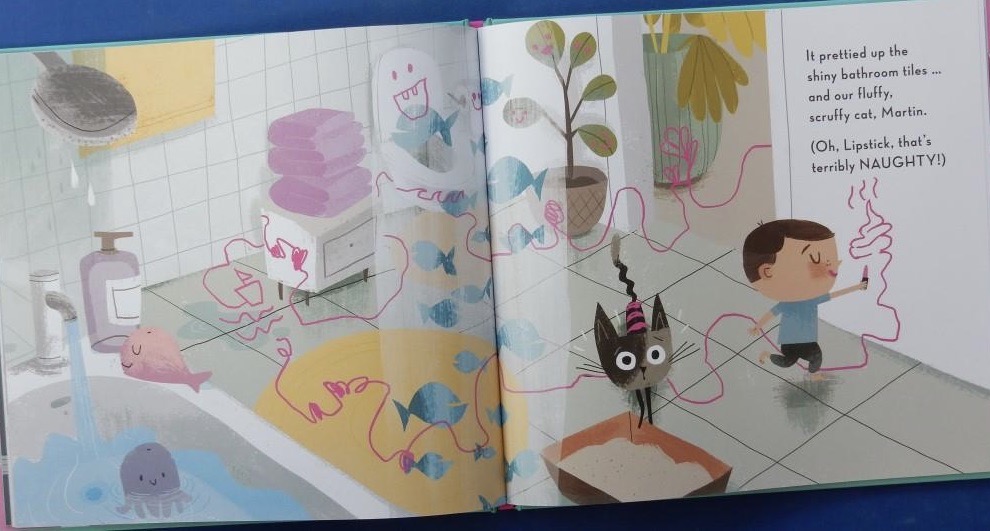
Young humans will also find information about the long-living Orca whale families, learn that sometimes two female albatrosses pair up and raise chicks, as well as that for example among cheetahs, little ones without a family might be adopted and reared by two males 

and that Meerkats live in communities.

The final spreads are devoted to first a family portrait gallery and then a double page giving a factual paragraph about each of the animals whose family has been featured. Sophy emphasises that love is key, no matter what in this gorgeously illustrated, first celebratory look at the diversity of family life.
Recommended for foundation stage settings and families with young children.

The Golden Treasure
Marie Voigt
Simon & Schuster Children’s Books

As young Max considers whether or not to take his soft toy dog, Toffee to school for show and tell, he spies something glowing high up on the ‘Unreachable Shelf’. It looks like a treasure chest and having wished he could reach it the boy finds himself and Toffee embarking on a magical quest to reach the Golden Treasure. First they convince a knight of their worthiness to continue on their way through the Land of the Brave, 

then comes a challenge by a racing car driver in the Land of the Fast, followed by another from a scornful unicorn in the Land of the Shiny. 

With Toffee’s morale-boosting support and his own bravery, the two finally reach the chest and open it. Then comes a surprising revelation: the greatest of all treasures isn’t what Max was expecting. Now though he has no doubt as to what he’ll be taking for that show and tell session.

This simple fantasy is essentially a tale of friendship, valuing and appreciating what you already have, self-belief and not letting others influence your confidence to make your own decisions. Marie’s glowing illustrations are suffused with warmth, light and a feeling of magic. Young listeners will especially enjoy the various characters Max and Toffee encounter on their journey.

Lottie Luna and the Fang Fairy

Lottie Luna and the Fang Fairy
Vivian French, illustrated by Nathan Reed
Harper Collins Children’s Books

Despite her pa, King Lupo’s initial reluctance, young werewolf extraordinaire. (Princess) Lottie Luna, she of the super-speed, super strength and X-ray vision, is allowed to join her classmates on a camping expedition. Also on the trip are Agatha Claws (Aggie) who’s a touch above herself, and Larry who announces on the coach that he’s got a very wobbly tooth and hopes to receive a silver coin from the fang fairy when it comes out so long as she can find where to leave it.

On arrival they have to agree on sleeping arrangements and once that’s done everyone gathers around the campfire for supper followed by a bedtime story telling session. Poor little Larry gets frightened by some of what he hears.


Next morning Lottie discovers footprints close to her tent and even more around Larry’s. Is somebody trying to scare the cub or is it something more sinister? Lottie is determined to find out; but of course, she doesn’t want any of her classmates to find out about her special skills.

After breakfast it’s time for a hike: everyone is put into groups. The aim is to get to the top of High Hill and en route the cubs are asked to find ten or more plant and animal varieties – a chance for Lottie to reveal one of her superpowers by accident if she isn’t careful. Then comes a realisation – Larry has gone missing; it’s time to tell the grown-ups.

They do; and Lottie, Wilf, Marjory and Aggie are sent as a search group sans teacher and as you’d expect, Aggie has equipment for every eventuality in her rucksack. On the way though she storms off after a tiff, so it’s two not one person the others have to look for. Then Marjory reveals something to Lottie which changes things somewhat, but this search is all about teamwork;

and there are footprints to follow. Where will they lead and what about that tooth of Larry’s?

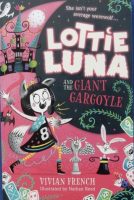
Lottie Luna is a hugely loveable character – suitably dignified and princessy? errr … and this, with its themes of friendship, being true to yourself and forgiveness, is, as one expects of Vivian, another fangtastic story (book 3 in the spooktacular series). Adding to the delights are Nathan Reed’s splendidly atmospheric black and white illustrations that augment the gentle comic feel of the whole. (I love the tiny winged onlookers guarding the page numbers.) Looking forward to the Giant Gargoyle story …

Where Snow Angels Go

Where Snow Angels Go
Maggie O’Farrell and Daniela Jaglenka Terrazzini
Walker Books

‘Have you ever woken suddenly, in the middle of the night, without knowing why?’ So begins Maggie O’Farrell’s debut picture book wherein it’s young Sylvie who wakes unexpectedly to find her bedroom pulsing with a glimmering light, her curtains disturbed and a chill in the air. Suddenly a breathtaking sight meets her eyes, glowing white with a shimmering outline and an enormous pair of snow-white feathery wings. Before her an angel is creeping across the room muttering softly to himself.

Amazed that Sylvie can see him, he says that he’s her snow angel, there to look after her: Sylvie, he insists, is not as well as she thinks. He also reminds her that she has, despite what she says, heard of a snow angel, having made one the previous winter.

Assuring the girl that he’ll always be there watching her, the being disappears.

Many months later, after a long illness, Sylvie is feeling much better and recalling the visit, longs to see the angel again, for it was he who saved her life. Now she has a lot to tell him and even more she wants to know but of the snow angel there is no sign. Sylvie decides risk taking and putting herself in danger might precipitate his return, but throughout the summer nothing works. Then, as summer draws to an end, there are occasions when she feels he’s responsible for saving her life, but still she doesn’t see her angel.

Determined that those she loves – family and friends – have their very own protector, the girl tries asking if they too have ever made snow angels. Maybe if she calls on her Snow Angel to grant her a very special wish, something truly amazing can happen …

Maggie O’Farrell together with artist Daniela Jaglenka Terrazzini, have created their own small miracle in this powerful, exceptionally beautiful book that is essentially a 21st century fairy tale about a little girl, bravery, wishing and love – and of course – the wonders of snow. Daniela’s illustrations are hauntingly ethereal at times, at others superbly realistic, but always full of charm and in perfect harmony with Maggie O’Farrell’s compelling, suspenseful story weaving. (I love the circularity of her telling.)

Destined to become a seasonal classic assuredly. Make some hot chocolate, snuggle up and read with family this winter.

Who’s Driving? / What a Ship Sees

Who’s Driving?
Leo Timmers
Gecko Press

Toddlers and pre-schoolers will absolutely love playing this matching /prediction game wherein Leo Timmers invites them to guess ‘Who’s driving …’ – in the first instance the fire-engine – from the animal character line up on the verso each clutching a key and hastening towards the vehicle shown on the recto. Turn the page ‘wheeooh wheeooh wheeooh’ and the answer is revealed along with the vehicle’s destination. (Sharp-eyed youngsters will likely have spotted some of the clues as to the driver on the first spread.)

A different four animals appear as possible drivers for each of the new vehicles depicted – the limousine, the racing car,

the tractor, the convertible, the jeep and finally, the aeroplane.

There’s an element of the Hare and the Tortoise fable here too, though probably only appreciated by adults. Little ones will love the explosive onomatopoeic, sound-making opportunities that seemingly make the vehicles whizz right off the pages; and the unlikely drivers depicted in Timmers’ acrylic illustrations. Both visual skills and observation skills will certainly have been stretched too after sharing this.

What a wealth of learning potential there is in this fun little book: it’s a must for nursery/preschool settings and enormous fun for home too.

What A Ship Sees
Laura Knowles and Vivian Mineker
Welbeck Publishing

In this cleverly designed concertina book, we follow the journey of a little red ship as it sets out from the jetty on a voyage across the sea. This is no smooth journey though as a storm blows up shortly after the boat has passed a desert island, but all is well and the sailors pause for a while to help remove some of the floating plastic litter before continuing to move north to chilly waters and finally reaching home shores once more.

During the unfolding trip guided by Laura Knowles chatty style narrative, youngsters can enjoy spotting in Vivian Mineker’s illustrations, various sea craft – fishing vessels, a tanker and an enormous cruise ship, as well as dancing dolphins, a shoal of flying fish,

and the changing weather.

There’s a wealth of talk and story-telling potential in the 2.5 metre long unfolding drama, on the reverse side of which is a cutaway of the little red boat, as well as individual elements of the journey along with further information about each one be that ocean fauna, nautical communication,

safety, or ships and boats.

Super Happy Magic Forest and the Portals of Panic

Super Happy Magic Forest and the Portals of Panic
Matty Long
Oxford University Press

I know a large number of young readers who are eager to get their teeth into this, the second of Matty Long’s fiction series featuring those five brave forest warriors including unicorn Blossom and red and white mushroom, Trevor.

Suddenly into that normally Super Happy place of picnics and frolicking there appears a puzzling porthole that threatens the peace of the forest dwellers’ existence. Even more troubling, a small and voraciously hungry monster has flown from the cavity and seemingly desires to gobble up everything that crosses its path including Gnomedalf’s breakfast waffles (not that they actually did cross it).

Off go the five heroes (beast in tow) to Wizard City in search of wise wizard Barnabus five-hats to seek his assistance. En route, the monster – now named Chompy – has the audacity to take a nibble at Trevor leaving him just a tad light-headed.

En route too, comes a surprising revelation from Gnomedalf concerning the cause of his own reluctance to proceed with the quest.

There’s another sign of weird things being afoot, in the form of bow and arrow wielding elves who just might turn them into stone,

the Wood Elf Queen and her moose Strawberry. And that’s where I’ll leave the merry adventurers

and say no more other than that the plot takes many wacky twists and turns including more portals, one leading to a spell in prison for some of our heroic bunch, a bake-off episode, and all ends happily – eventually!

Fans will surely devour this in a single sitting, relishing the wealth of wizardry, waffles, and Matty Long’s totally bonkers humour – visual and verbal – throughout. Bring on the next adventure.

Isadora Moon Goes to a Wedding

Isadora Moon Goes to a Wedding
Harriet Muncaster
Oxford University Press

Isabelle Moon the half fairy, half vampire child is mega-excited. Her Aunt Crystal is to be married and Isadora can hardly contain herself when she learns that she (along with little Honeyblossom, and cousin Mirabelle) will be bridesmaids. “A frosty and flowery wedding” so her mum tells her. Isadora’s excitement increases further when she tries on her bridesmaid’s dress. The siblings, thinks Mum, will be “the most wonderful vampire fairy bridesmaids that anyone’s ever seen.”

On the wedding morning (after a yummy pancake breakfast courtesy of Oscar) what should draw up outside the family residence but a fairy sledge – how else would they get to the winter fairy realm? And off they whizz … destination the Ice Hall.

There to greet them is mischievous cousin Mirabelle and her family.

After the marriage itself, the meal and speeches get under way and the youngsters grow increasingly bored, so Isadora’s mother suggests the cousins and Honeyblossom go off to the entrance hall and play. There Mirabelle spots the wedding cake

and that’s when the mischief starts (and the shrinking).
Now it’s down to Isadora to try and make sure that even if not everything goes exactly to plan, there’s a happy ending.

Fans (as well as those new to the smashing series) will relish this new story and love to try out some of the activities at the end of the book – a book made even more special with its silver edges and sparkly cover.

Little Bunny’s Book of Thoughts

Little Bunny’s Book of Thoughts
Steve Smallman
Graffeg

This is exactly what we all need right now: a little book to have to hand when everything is getting on top of us, the pandemic news is getting worse day by day, and the thought of not seeing friends and relations looms large. It’s so easy to start feeling like Little Bunny at the start of this book – lost and alone, all at sea.

But as the little creature slowly, slowly discovers through mindfulness, that looking at things from a different perspective,

perhaps by something as seemingly simple as looking outwards instead of inwards, it’s possible to turn those negative thoughts into positive ones.
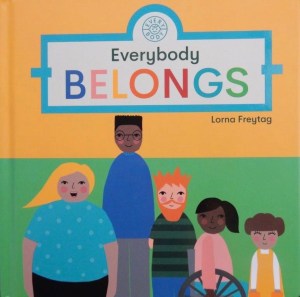
Yes, better days will surely come and in the meantime, it’s wise to return to Bunny’s reminder as he shares his thoughts in a rhyming narrative, that ‘life’s not as bad as it seems’.

I was fascinated to read how this book of Steve’s developed as he was experimenting with a new technique using a soft pencil. The outcome is a pocket /handbag size book that is assuredly one to give and one to keep. I will certainly be doing both in the coming weeks.

The Adventures of Harley and Lucy: The Marshland Rescue / The Cat and the Captain: Trim the Cat & Matthew Flinders

Here are two recent fiction books from Little Steps Publishing kindly sent for review

The Adventures of Harley and Lucy: The Marshland Rescue
Maria Atlan, illustrated by Adriana Santos

We meet Harley on his first day as a retired military service dog, about to embark on a new life with the Laceys. He knows that he’s going to miss his long-time companion Sergeant Garcia. However, Mamie and Greg Lacey appear amicable enough, but one thing Harley hasn’t anticipated is the presence in his new home of tiny moggy, Lucy. It seems Harley might need recourse to Sergeant Garcia’s advice: ”Be strong, be true, be brave.”

Soon comes news of a plan to pull down the historical Ashley Place, wherein live Lucy’s feline aunts, and replace it with a huge modern development. This is of great concern not only to the kitten but also to the Laceys, as it threatens both the marshland environment with its wealth of wildlife and the safety of their own homes. Despite a successful meeting addressed by Mamie and a vote to put paid to the planned project, they learn that the vote was a formality and the enterprise will go ahead after all. Or will it? If they combine their skills, perhaps an alliance between Lucy and Harley can help matters. But time is running out.
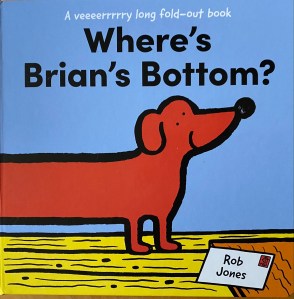
The author’s passion for conserving the environment is evident in her storytelling and readers are swept along with Harley, Lucy and the Laceys in their bid to halt a potentially catastrophic development. Occasional black and white illustrations by Adriana Santos inject some gentle humour into the tale.

The Cat and the Captain: Trim the Cat & Matthew Flinders
Ruth Taylor

Having been the subject of a picture book, Trim the cat now features in a novel for older readers. Born aboard, HMS Reliance, a sailing ship bound for Botany Bay, the kitten, after falling overboard while the ship’s anchored, is adopted by Matthew Flinders and accompanies him on all subsequent expeditions.

The two brave a leaking ship, stormy seas, illness and other disasters till by the time Matthew is twenty-nine, he’s in a very bad way and so is Trim. The man starts to despair of ever accomplishing his goal of mapping the western coast of Australia, but despite many lives being lost, and a shipwreck, his determination never leaves him.

Then one fateful day having reached Mauritius, Matthew is accused of being a spy by the Île de France (Mauritius) officials and put into prison. It’s while in captivity that he learns of Trim’s disappearance, and he never sees his faithful cat again.

Matthew doesn’t get finally back to England and his wife, Ann, until he is thirty- seven, having been parted from her for nine years; and sadly they only have three years together before his death.

This gripping piece of history is retold by the author Ruth Taylor who, while researching the role of ships’ cats in pest control at the National Maritime Museum in Greenwich, came upon Matthew’s tribute to his beloved Trim and decided to tell the story for children. With illustrations by David Parkins, this is an accessible and fascinating story for upper primary/lower secondary school readers.

Supertato Super Squad

Supertato Super Squad
Sue Hendra and Paul Linnett
Simon & Schuster Children’s Books

Everybody is in need of kindness right now as we enter a second UK lockdown and our favourite spud and his super veggie squad are here to show the way.

When Supertato tells his friends that he needs their help to teach Evil Pea a lesson, needless to say they are ready to spring into action right away.
Pineapple provides the box their leader requests, Carrot supplies the string – rather an excess of the stuff …

and Broccoli and Cucumber – chefs extraordinaire – bake a batch of delicious cupcakes adorned with sprinkles.

With box duly packed, the preparations are complete and it’s time to sneak up on their arch enemy, the little green spherical EP. By now Supertato’s pals are a tad confused but he knows exactly what he’s doing and Evil Pea is certainly in for a big surprise …

Sue and Paul have created a splendid, large format cutaway board book treat for little humans that introduces some of the key Supertato characters and in so doing offer an important lesson about helping one another, kindness and collaboration.

Who will you and your little ones surprise over the coming weeks?

Judge Juliette / Bling Blaine Throw Glitter, Not Shade

Here are two recent picture books from Sterling Children’s Books:

Judge Juliette
Laura Gehl and Mari Lobo

Juliette is a girl with a dream – to become a judge; meanwhile she dons her mum’s old black skirt and uses her grandpa’s old mallet to play at so being. Already she’s the person those in her locality increasingly turn to for decisions of what is fair from bedtimes to bat losses.

This causes her parents to decide that their daughter has proved herself sufficiently responsible to be allowed that much wanted pet.

But then who should walk into her courtroom but mum and dad: Mum thinks she should get a dog, Dad pins his hopes on a cat and each parent has plenty of evidence to back up their side of the argument. Moreover, both are prepared to try a little bit of bribery on their daughter. This is going to be tricky to say the least.

How can Juliette possibly make a fair decision in this Cat vs Dog case?

Youngsters, many of whom will already have a strong sense of fairness, will enjoy this story with its bold illustrations, especially the finale, and during the course of a book sharing will likely learn some legal terminology.

Bling Blaine Throw Glitter, Not Shade
Rob Sanders and Letizia Rizzo

Make no mistake Blaine is into all things sparkly; he adorns his school uniform, his book bag and cap with glittery things. He’s popular, spreading happiness wherever he goes, is a sporting star and extremely bright. Most people are accepting of his predilection

but a few lack understanding and eventually those hurtful words begin to take effect on the boy especially when someone calls him ‘Sissy!”
Next Monday he arrives at school sans sparkles and this continues through the week and by midweek the entire school has lost its shine. Something has to be done and so his classmates take action: the following morning several children show up defiantly sporting sparkly items of clothing.

This precipitates a change of heart in others, and after some discussion between the pro- and anti-sparkle individuals,

things change: a small gift is given, and a decision is made: everyone is free to be themselves, at least at this school.

A gentle lesson, with expressive cartoon style illustrations, on the individual’s right to be him/herself, and on being an ally. (the final spread talks about what the latter entails).

Curious EnCOUNTers / I Spy ABC: Totally Crazy Letters! & I Spy 123: Totally Crazy Numbers!

Curious EnCOUNTers
Ben Clanton and Jessixa Bagley
Little Bigfoot

A child shares with readers the sights, sounds and smells she encounters on a hike through the woody countryside. Setting off, who knows what might be there to observe or ‘where the trail will lead’. Pretty soon though it’s clear that this is not to be a calm peaceful appreciation of nature. Rather, it’s a series of tallies from 1 to 13 of somewhat crazy outdoor antics, each leading on from the previous one, and each being described through an alliterative sentence – ‘2 Raccoons reading and rocking out,

Six squirrels sporting sweaters through to ‘13 Thirteen seagulls soaring and searching’ and a final invitation to join the frolicking friends for a fabulous feast whereat not all the animals are forest dwellers. The story eventually comes full circle as the final page shows the child, now sitting hidden behind an abundance of foliage, and seemingly sketching the animals.
Throughout there are playful, punny conversations between the creatures featured, “I overheard you were c-lamb-ering for wool.”; “It was wool-y great of ewe to give us all this wool!”; “What a wonderful way to unwind.” “Shear is!”

A comical counting book and an adventure too that provides both fun and plenty of learning possibilities.

I Spy ABC: Totally Crazy Letters!
I Spy 123: Totally Crazy Numbers!

Manuela Ancutici and Ruth Prenting
Firefly Books

Make no mistake, these two visually incredible, stimulating books are not intended for little ones who are just learning the alphabet or to recognise numerals/numbers and to count. It’s the ‘I Spy’ part of the title that is key, for what the letters and numerals are doing is to act as templates onto which themed items are arranged and to which the text directs users to look for various objects relating to that theme. Each page or spread is introduced by the words, ‘Can you see what I can see?’ immediately engaging users young and not so young.

On the gorgeously autumnal coloured C we’re to search for ‘a long snake, a starfish, a beetle, and yellow lizard (tricky to locate); then there’s a turtle supposedly on the move along the letter, as well as eleven or so pinecones, fourteen shells, a walnut, five soft feathers and finally, five acorns. Phew!

Among the thematic materials used (sourced largely from flea markets) are toy vehicles, gorgeously coloured flowers, beads, food, art materials, nesting dolls and sewing. In no way does the text cover the wealth of items included for each letter or number and that leaves the way open for adult and child to play their own games of I-Spy thus adding to the countless hours of enjoyment and potential for visual development offered by the books.
With the numbers book, after 10, the double-digit numbers featured get a double spread each rather than a single page,

while the ABC allocates a single page for each letter.

There’s a wealth of learning opportunities between the covers of both the ABC and 123 and each offers countless hours of fun too. And just in case you’re stuck on any of the searches, the final pages provide solutions.
Great for both home and school use.

Otters’ Moon / The Tipple Twins and the Gift

Otters’ Moon
Susanna Bailey
Egmont

I was hooked by this story from the very first page; there’s something magical about Susanna Bailey’s lyrical prose that gently draws you in and keeps you turning the pages right through to the end. The narrator is Luke, led by his mother to believe that holidaying on a remote Scottish island with his photographer mother is just the thing to help them get over a break-up with Luke’s dad. The place promises outdoor summer delights, she tells him.   

The boy’s first reaction is far from favourable – the island children seem hostile, but he does strike up a conversation with a girl who introduces herself as Meghan -Meg for short – and says she lives in a dilapidated boathouse on the beach. He later hears of her absent parents – marine biologists – and that she’s residing with her Grandad who seems rather muddled, calling the boy David, mistaking him Meg says for her own father. A puzzle for sure, thinks Luke. Even more puzzling is when Grandad later says, as he looks skyward, “Remember laddie … Remember the Otters’ Moon.”

Next day, despite her instructing him not to, Luke follows Meg to a distant rocky outcrop where there are puffins. Displeased at his appearance, she realises Luke is determined to stay at this hidden place and tells him that there are also otters in Puffin Bay, although nobody but she knows of their return. She tells him too that her parents both disappeared without trace off this coast.

With a hint of hostility, a friendship develops between the children, Luke also raw about the absence of his father, becomes more observant of and concerned for, his mum; and he wonders whether Meg’s situation, with its strange secrets, is as bad as his own. Slowly, slowly he starts to change his mind about the island: perhaps it isn’t quite the boring place he first thought.

Then the two children (“city boy” and “island girl”) manage to rescue an injured orphan otter pup, incapable of surviving on its own and they name it Willow. But it’s no easy task taking care of the creature and preparing her to go it alone in the potentially dangerous waters.

Just to complicate matters, Luke learns that his new baby sister is very poorly and needs an operation to survive. Shortly after though, it’s Luke’s survival that is in question and there’s only Willow to depend upon.

As the wonderful, poignant story ends, the visitors prepare to leave the island, but we see that some things endure: hope, friendship and love can transcend the most challenging circumstances.

The Tipple Twins and the Gift
Michelle Cordara
Matador Children’s Books

The Tipple twins are the only identical twins in England, all other twins having mysteriously disappeared never to be seen again. Also mysteriously disappeared is the twins’ elder sister Caitlin, whom nobody has seen for two years.

Suddenly, out of the blue, who should arrive but their Uncle, Aunt and their daughter. The parents announce that they’re off to to Egypt, demanding that Beatrice stay with her cousins as she’s been discovered using magic at school, hence the hasty exit.  Then comes the news: all three girls are to start at Chumsworth School, a very dark place so Boo, their ‘pet’ ghost informs the twins.

On arrival they’re greeted with warnings about avoiding a certain room thirteen, the whereabouts of which nobody seems to know. They quickly learn that the head, Miss Snippings, has a particular aversion to identical twins.  With the feeling of a hidden presence watching them things get increasing strange . Then Miss Snippings announces that the end of term play will be about the Salem Witch Trials. When she discovers that identical twins have just joined the school, Jenna and Jessica know that big trouble lies ahead. Already they’re being victimised by their head teacher; but who is she really? And what does she want with the twins?

Occasionally nightmarish, but not overly so, this atmospheric story is full of foreboding but there’s some humour too; for KS2 readers who like their fiction dark and mysterious.

All Because You Matter

All Because You Matter
Tami Charles and Bryan Collier
Orchard Books (Scholastic)

This wonderful, empowering celebration of young Black lives is for everyone, not just those with black or brown skin. Herein author Tami Charles’ lyrical prose poem, an ode to a ‘dear child’ spoken by a parent reads like a love letter to said infant whom we watch in Bryan Collier’s sequence of tender, mixed media portraits, grow from new born infant, to toddler taking his first steps, to story sharer,

to school child, mocked on occasion by cruel classmates.

The author uses ‘matter’ as both verb – ‘The words and pictures / coming together like / sweet jam on toast / … sun in blue sky … / all because you matter.’ And as noun: ‘But in galaxies far away, / it may seem that / light does not always reach / lonely planets, / covered moons, / stars unseen, / as if matter no longer exists.’

Ancestors are recalled – queens, chiefs, legends – but the focal point is always the child being addressed. Yet, this book reassures all youngsters that no matter what, they are loved and cherished ‘strength, power, and beauty lie within you’.

Affirming, awe-inspiring, and acknowledging and remembering those victimised by racial violence – teenager Trayvon (Martin), 12 year old Tamir (Rice) and young man Philando (Castile),

as well as for me, the not mentioned young Damilola Taylor who lost his life in the UK twenty years ago to the day as I write, when just short of eleven years old. What we have here is a great starting point for a conversation that puts forward the notion that Black Lives Matter, indeed, All Lives Matter at all times in their homes, in their community, in the entire universe.

Everyone is an amazing individual; everyone has something to offer whoever and wherever they are; but it starts with children … Parents know that, we teachers know that; it’s up to us to make sure youngsters know that. One way so to do is to share this book at home and in classrooms.

Detective LB and Hopper: The Case of the Missing Chocolate Frogs

Detective LB and Hopper: The Case of the Missing Chocolate Frogs
Janey Gaston and Anil Tortop
Little Steps Publishing

It’s hard to resist a picture book with chocolate in the title especially when the cover’s as alluring as that drawn by Anil Tortop.

Meet Detective LB, a ladybird mystery lover and her best friend and side-kick Hopper, a lively, sometimes overly sugar-fuelled bunny with a special skill at solving mysteries. Clearly a well-matched duo and on the Tuesday in question, they’re both fired up and ready for a new case, so are thrilled when there’s a loud banging on the door signalling somebody outside with a mystery that needs solving.

In comes Mr Poppy (cat) owner of Poppycat Candy Company announcing that he suspects someone is stealing his packages of ‘extra-special, extra-yummy chocolate frogs’ destined for his Grandma Rose which, for the last couple of weeks, have failed to arrive.

So, who has been stealing said items; comic book addict Hopper, and LB, are on the case immediately; the enterprising two must amass information and search for clues in order to crack this tasty case. Perhaps Hopper’s penchant for superheroes can be utilised;

and maybe the thief has a motive that just might be a mitigating cause.

A pacy, full of fun adventure and with Anil Tortop’s comical scenes of animated animals and chocolatey clues, highly entertaining with a not very subtle message about owning up to one’s errors.

Mouse & Mole: A Fresh Start

Mouse & Mole: A Fresh Start
Joyce Dunbar and James Mayhew
Graffeg

This is the fifth book in the enchanting series that stars close friends Mole and Mouse. Now though, in the first of the three stories, the two decide that perhaps they’ve become just a little too close and are taking one another for granted. In order for their friendship not to pall they agree to avoid one another for an entire day, however challenging that might be. Then their friendship can start all over again.
Mole insists the manner of Mouse’s execution of the plan is kept to himself.
The following morning Mouse receives an invitation to visit Hedgehog for elevenses so, making sure to avoid Mole, off he goes leaving a note as to his whereabouts. Mole meanwhile is late to rise – as usual and on discovering no sign of Mouse, is disturbed.

An exhaustive search of their home reveals no sign of his best pal. Distraught at the possibility that Mouse has forsaken him and found a new friend, he drives off to pay a call on several other of the woodland animals leaving a message for Mouse with each. The last call he pays is to …

Hip-Dip-Dip sees Mole spoilt for choice when Mouse decides to buy his bestie the much-wanted toy sailing boat he’s seen in Hare’s toyshop window. Mole’s original longing was for a blue boat with a white sail but when they discover there are other possibilities, Mole gets into such a tizzy that they leave without making a purchase.

The following day is perfect for boat sailing on the pond so it’s back to the toyshop where Hare informs them that a mystery buyer has bought the blue boat over the phone. Oh dear! Now what will happen …

In the final tale A Bolt from the Blue, the two friends get caught in a thunderstorm. With the possibility of a lightning strike, should they or shouldn’t they take shelter under a large tree? Or is it better to make a dash for home. Perhaps neither is the best way to deal with a sudden downpour, if so what will Mouse and Mole decide to do?

The magic still holds good in these latest short stories; surprises, warmth and gentle humour abounds and there’s that characteristic element of surprise in each episode which brings such delight to readers and listeners alike. James’ delectably detailed illustrations combined with Joyce’s seemingly effortless storytelling offer a perfect snuggle up on a dark evening story share delight.

How to be a Bug Warrior

How to be a Bug Warrior
written by Stephanie Stahl, illustrated by Loyal Kids
Little Steps Publishing

Young Danny Dino is fed up. His mum insists that if he wants to go and play with his pals in the park, he must wear a mask since many Dinoville residents have been ill recently. Off they all go: his friends don masks but not so Danny who claims he is uncomfortable and he can’t breathe.
Then along comes another friend who sneezes sending her germs all over the other little dinosaurs.

Back at home Danny’s Dino Mummy serves up some yummy chocolate muffins; his pals all go off and wash their hands; Danny merely starts stuffing cake into his mouth.

A few days later, Danny feels poorly – he’s sneezy, feverish and has a sore throat. Dr Pterosaur pays a call and hears about Danny’s maskless foray to the park. Flu is his diagnosis and a stay in bed to rest.

Once he’s somewhat recovered his friends pay a visit as does the doc. who explains why it was only Danny who caught the virus. He goes on to tell them all about the importance of correct hand washing – the ‘seven-step super handwash’ and other ways to help prevent the spread of any viruses that might be circulating. After a week Danny is up and about and determined to stick to his hand-washing regime.

After the story – yes, it’s didactic – but extremely important and full of wise words, come several spreads about viruses,

with reference to Covid-19 as well as a quiz and a page of tips on protecting oneself and others.

With those sure to be popular characters, and a highly relatable story, this is a book to share with youngsters both at home and in foundation stage classrooms and nurseries.

Timeline: Science & Technology

Timeline: Science & Technology
Peter Goes
Gecko Press

If you’re looking for a book that presents the scientific accomplishments of humankind, from Paleolithic times to the present day, then this large format offering should fit the bill. Concisely written, it’s absolutely packed with exciting information starting right back in the Stone Ages when mankind learned how to make fire, moving on to the Copper or Chalcolithic Age (copper being the first metal humans made use of) when people were starting to develop farming techniques such as crop-growing, and when towns began.

Then come the first civilisations and Peter Goes shows the contribution of each to the evolution of technology and science. There’s Mesopotamia with a medical manual from ancient Babylon,

the Americas, the Indus Valley civilisation or Harrapan Culture – when there were some large cities with brick houses and sophisticated sanitation and drainage systems. (I was pleased to see this having once visited and written about, the Lothal site in India’s Gujarat state.)

There’s a look at Ancient Egypt, the first Chinese, Greek, Roman and Byzantine empires with both general information and some closer detail about each era.

By now some readers might be thinking, surely technology is about computers, mobile phones and satellites? But the roots of all these technological wonders lies way back in the Stone Age.

Each double spread displays an era, century or, once we get to the 20th/21st centuries, a decade,

ending up with a look at the development of artificial intelligence (AI).

With each spread having a different colour background, Peter Goes’ graphic art is alluring and playfully immersive, making it overall more of a visual history presentation. It’s good to see a fair number of women included such as German astronomer Maria Margaretha Kirch (18th C), mathematician and first computer programmer Ada Lovelace (early 19th C), Rachel Carson, Rosalind Franklin (1950s) and Stephanie Kwolek (1960s). (Wish there’d been an index.)

Recommended for home and school use. Browse for hours: You’re sure to learn something wherever, whenever you stop.

Rain Before Rainbows

Rain Before Rainbows
Smriti Halls and David Litchfield
Walker Books

My first thought on seeing the amazing cover of this book was the first song that I learned to sign, the foundation stage favourite, Sing a Rainbow. As I turned the pages, I felt that both Smriti and David truly are singing a rainbow in this awesome book that was originally released as a free download during the summer in partnership with Save the Children’s #SaveWithStories campaign.

On the opening spread we’re in the company of a girl as she follows a fox through a rainstorm, ‘Rain before rainbows. Clouds before sun,’ we read as Smriti’s lyrical rhyming text takes the child to the departing day as she pauses, illuminating the fox with her lantern under a star strewn sky.
The walking continues and we read of mountains to climb, ‘Journeys to take.’ …

until it’s time to rest under the now star-filled sky and dream hopeful dreams.

Yes, there are likely to be dark days when worries beset us; days when storms rage both within and without,

but somewhere there’s light and footsteps to follow, friends who care, to guide us all through troubled times, out of the dark and into the light where new life will always come, little by little seed by seed, flower by flower,

bringing hope and cheer, and the promise of better things beyond that darkness, under that rainbow …

Both author and illustrator have clearly put heart and soul into this breath-taking book. Smriti’s reverie of resilience is honest and reassuringly uplifting, while David’s dazzlingly spreads are out-of-this-world gorgeous. Every single one is a place to pause, reflect, imbibe its beauty (even the dark ones), and only then to move on, empowered and full of hope.

The Kiosk

The Kiosk
Anete Melece (translated by Elīna Braslina)
Gecko Press

Imagine living and working your entire life in a small kiosk – impossible you might be thinking – but so it is for Olga the protagonist of Anete Melece’s picture book. She has customers aplenty and lots of friends among them as she spends her time selling, chatting, assisting others and generally being a good, kindly person going about her daily routine. Come evening when the crowds have gone, Olga remains stuck inside her small domain, reading of faraway places and dreaming of distant sunsets.

One morning though, after a chain of unfortunate incidents, disaster strikes and the kiosk topples right over taking Olga with it. Physically unhurt, up she gets and off she goes walking within her erstwhile fixed abode and for a while all is well. But then comes a canine encounter which precipitates a fall –

and Olga, kiosk and all are pitched off the bridge and into the river.
After several days afloat in her mobile home,

Olga arrives at the seaside where enterprisingly she sets herself up in a new business … and each evening from her beach vantage point she enjoys the sun setting – ‘splendidly’.

Yes it’s hard sometimes to make changes, but sometimes it’s good to step right out of your comfort zone and just to “go with the flow” seeing what life brings and embracing new things with an open heart. It’s never impossible if you really want to find a way …
That’s what Anete Melece shows us with humour and heart.

Molly and the Lighthouse

Molly and the Lighthouse
Malachy Doyle and Andrew Whitson
Graffeg

This is the fourth title in the splendid series featuring young island dweller Molly.

One night she wakes up and realises that something is very wrong: the lighthouse has stopped working, the harbour and sea are in darkness and the fishing boat aboard which both her own father and her best friend Dylan’s, is out at sea. Worse still a storm is raging: how will the boat find its way safely back to the harbour without a guiding light? One night she wakes up and realises that something is very wrong: the lighthouse has stopped working, the harbour and sea are in darkness and the fishing boat aboard which both her own father and her best friend Dylan’s, is out at sea. Worse still a storm is raging: how will the boat find its way safely back to the harbour without a guiding light?

And what has happened to Old Jamesie, the lighthouse keeper – something must be wrong with him or he’d never have allowed the light to go out.

Having alerted her mother, who heads off to the harbour to make a fire to guide the boat safely home, Molly (plus her doll Megan) and Dylan set out to check on the old man in the lighthouse.

Full of dramatic excitement, this is a superbly told, heart-warming tale of teamwork, determination, the consideration of others and finally, heroism. Equally superb and in real harmony with the telling are Andrew Whitson’s illustrations. The drama and tension is heightened by his use of varying perspectives, textures and a changing colour palette.

A smashing book to share over and over, and for those interested in finding out some information about lighthouses, the inside cover contains 10 interesting facts about them.