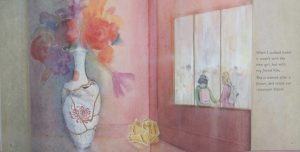
Kindness / Moo-Moo, I Love You

Kindness
Helen Mortimer and Cristina Trapanese
Oxford Children’s Books

This is one of the publisher’s new ‘Big Words for Little People’ series that aims with carefully selected ‘feature’ words embedded in a short narrative,, to help young children develop an understanding of how by means of words, they can best deal with their emotions and first experiences.
Kindness starts with a welcoming word – ‘hello’ perhaps and a welcome smile to help newcomers feel at ease.
Sharing,

Giving, Understanding (especially another person’s feelings), Listening, Helping, Caring (for the natural world as well as other people and ourselves), Being thankful, Loving (by reaching out with kind words and actions), Taking turns, being Thoughtful, showing Kindness are each given a double spread illustrating the action with stylised youngsters and a brief descriptive text.There’s also a final spread giving helpful guidance to adult users and a short glossary.

A useful addition to a preschool setting for both personal, social and emotional development, and language development, or for family use.
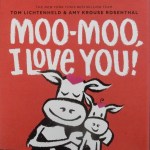
Moo-Moo, I Love You!
Tom Lichtenheld and Amy Krouse Rosenthal
Abrams Books for Young Readers

What a delectably adorably moo-vingly mood-uplifting way to tell your little one how mooch you loove them, is this moo-cow monologue (almost) directed at her little moo (who actually has the last word – or actually, four words).

Amy Krouse Rosenthal’s word play is crazily comical and exuberantly expressed, becoming even more comical when combined with Tom Lichtenheld’s thickly outlined cow characters clearly relishing being in each other’s company as they share their love of pizza, popcorn and farm hu-moo-r;

the adornment of their residence so it morphs into a moo-seum …

and a moo-se moo-ve-ment. Ma moo even states her readiness to launch herself loo-nar-wards to express her fondness for her little moo.

This crazily moo-ving manner in which a moo-ma shows her infant moo how much it’s loo-ved could also work as a valentine, especially if your partner’s into word play and you think they’d find it a-moo-sing.
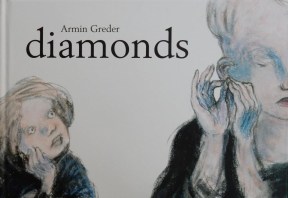
Diamonds

Diamonds
Armin Greder
Allen & Unwin

Thought-provoking, enormously powerful and definitely not for little ones, this picture book begins with a girl, Carolina, watching her mother put on a pair of diamond earrings in preparation for an evening out. She asks how much they cost receiving the response, “I don’t know. You’d have to ask Uncle Winston. He bought them for me. … because he loves me very much.” Carolina is an inquisitive child, so the questions continue: where did the earrings come from? What is mined? Where are diamonds mined?
After receiving a cavalier reply to her question about their maid Amina’s lack of diamonds despite like the gemstones, coming from Africa, Carolina is left in the care of the maid, and her mama departs.

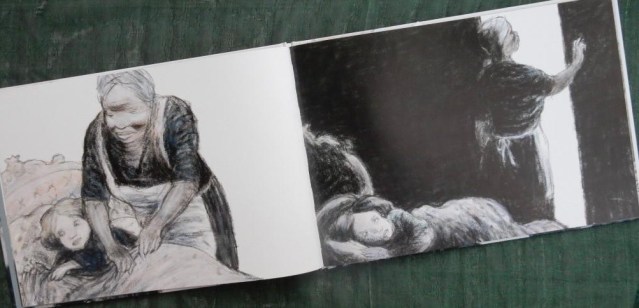
Then comes a series of wordless spreads beginning with Amina seeing Carolina into bed. 

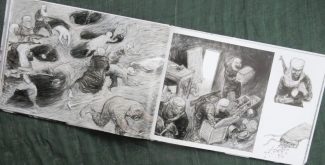
There follows a nightmarish account documenting the journey of these conflict diamonds from their source to the giving of the earrings. Greder shows how the miners extract the gems from the ground while being brutalised and perhaps worse by overseers. 

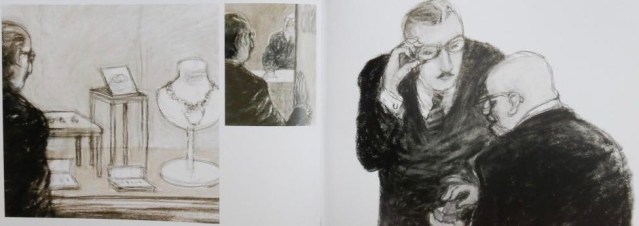
They are then passed through a corrupt chain of middlemen until they reach an up-market jeweller’s shop to await purchasers.

The book ends with Amina comforting a tearful Carolina who has woken from her horrendous dream.

Hugely unsettling, made particularly so by the sombre, haunting charcoal images in the wordless scenes, this important book raises highly pertinent issues of social injustice, exploitation and human rights, and of human consumption and greed. The clever juxtaposition of concerns about Amina’s role as a domestic servant in a wealthy home with those of the exploitation of the mine workers, as well as Carolina’s mother’s attitude towards her daughter’s probing about the diamonds, ensure that this book truly packs a powerful punch, leaving the reader with a determination to endeavour to ensure they have no part in any oppression of other human beings.

A book to discuss – with the aid of the three afterwords that talk of conflict diamonds and The Democratic Republic of Congo – with upper primary children and beyond.

Mr Dog and a Deer Friend

Mr Dog and a Deer Friend
Ben Fogle and Steve Cole, illustrated by Nikolas Ilic
Harper Collins Children’s Books

This is the latest story in the deservedly popular Mr Dog young fiction series by explorer and TV presenter Ben Fogle, co-written with Steve Cole.

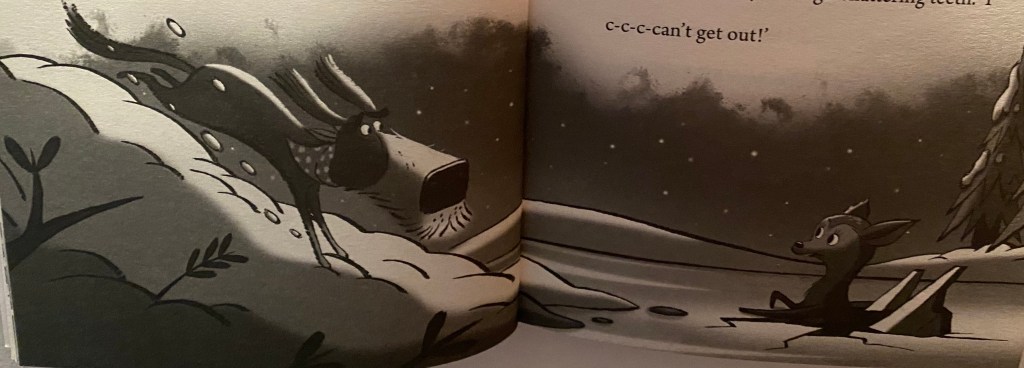
It begins early one chilly morning with Mr Dog hearing a distant cry for help. Having emerged from his tree stump shelter, the animal rescuer extraordinaire follows his nose and discovers that the source of the cry is a young fawn stuck in a frozen lake. Having extricated the little creature from the water and warmed her up a tad, Mr Dog learns that the fallow deer fawn – Bobbin by name and with an odd way of walking – was looking for her missing mother and in so doing decided to risk a short cut across the ice.

Immediately Mr Dog offers to help in the search and off they go into the forest estate to find Betty, the deer with three legs. Soon they come upon some aggressive deer fighting over food and one tells them that the lord of the manor has got rid of ‘the one with three legs.’

What has really happened to her? Can Mr Dog discover the answer and keep them all safe as well?

As readers of the series know, you can always count on Mr Dog if an animal is in trouble …

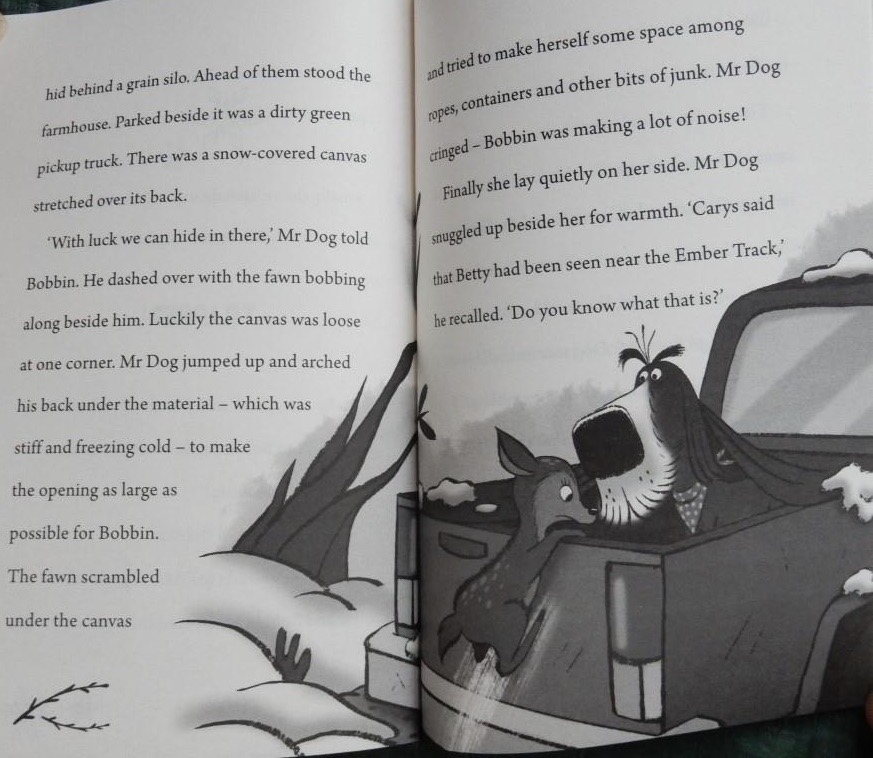
Scattered throughout with deer facts and puns (plus the occasional D- O- G acronym), the story – inspired by Ben Fogle’s own experience – is gently humorous and just right for new solo readers, especially those who like an environmental strand to a tale. Nikolas Ilic’s black and white illustrations add to the pleasure of reading and help to break up the text for less confident readers.

Fact and Fiction for your Early Years Bookshelves

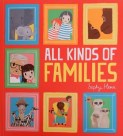
All Kinds of Families
Sophy Henn
Red Shed (Egmont)

No two human families are exactly alike but assuredly each of them is special in its own way. So it is for animal families and that’s what Sophy explores in this picturebook as she portrays various ways of parenting in the animal kingdom.

Orang-utan mothers are solely responsible for looking after their young and look after their offspring longer than any other animal parent. In contrast, it’s the emu father that tends the eggs and raises the chicks. 

Clownfish males and females share the care of the little ones – sometimes a mother can lay as many as 1000 eggs, so it’s no easy task, and that’s alongside keeping the home clean for the eggs.

I was interested to learn that in a Long-tailed tit family as many as twenty birds might live together with older infants helping to care for the younger ones. Come winter they can all snuggle together to keep warm. 

Elephants do things completely differently living in large family groups. A senior female takes charge, sharing her knowledge with younger members of the family and all the elephants look after the babies.

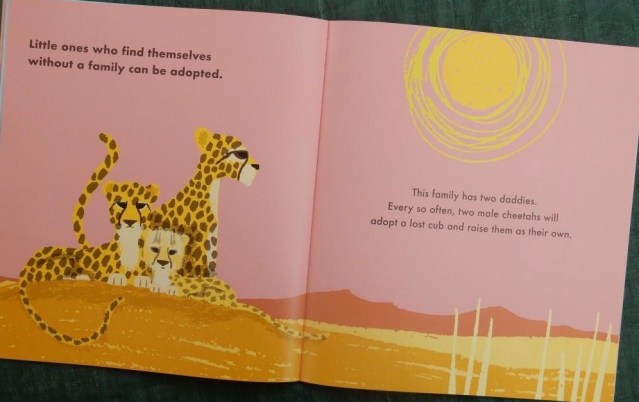
Young humans will also find information about the long-living Orca whale families, learn that sometimes two female albatrosses pair up and raise chicks, as well as that for example among cheetahs, little ones without a family might be adopted and reared by two males 

and that Meerkats live in communities.

The final spreads are devoted to first a family portrait gallery and then a double page giving a factual paragraph about each of the animals whose family has been featured. Sophy emphasises that love is key, no matter what in this gorgeously illustrated, first celebratory look at the diversity of family life.

Recommended for foundation stage settings and families with young children.

The Golden Treasure
Marie Voigt
Simon & Schuster Children’s Books

As young Max considers whether or not to take his soft toy dog, Toffee to school for show and tell, he spies something glowing high up on the ‘Unreachable Shelf’. It looks like a treasure chest and having wished he could reach it the boy finds himself and Toffee embarking on a magical quest to reach the Golden Treasure. First they convince a knight of their worthiness to continue on their way through the Land of the Brave, 

then comes a challenge by a racing car driver in the Land of the Fast, followed by another from a scornful unicorn in the Land of the Shiny. 

With Toffee’s morale-boosting support and his own bravery, the two finally reach the chest and open it. Then comes a surprising revelation: the greatest of all treasures isn’t what Max was expecting. Now though he has no doubt as to what he’ll be taking for that show and tell session.

This simple fantasy is essentially a tale of friendship, valuing and appreciating what you already have, self-belief and not letting others influence your confidence to make your own decisions. Marie’s glowing illustrations are suffused with warmth, light and a feeling of magic. Young listeners will especially enjoy the various characters Max and Toffee encounter on their journey.

Lottie Luna and the Fang Fairy

Lottie Luna and the Fang Fairy
Vivian French, illustrated by Nathan Reed
Harper Collins Children’s Books

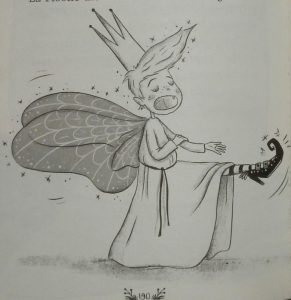
Despite her pa, King Lupo’s initial reluctance, young werewolf extraordinaire. (Princess) Lottie Luna, she of the super-speed, super strength and X-ray vision, is allowed to join her classmates on a camping expedition. Also on the trip are Agatha Claws (Aggie) who’s a touch above herself, and Larry who announces on the coach that he’s got a very wobbly tooth and hopes to receive a silver coin from the fang fairy when it comes out so long as she can find where to leave it.

On arrival they have to agree on sleeping arrangements and once that’s done everyone gathers around the campfire for supper followed by a bedtime story telling session. Poor little Larry gets frightened by some of what he hears.


Next morning Lottie discovers footprints close to her tent and even more around Larry’s. Is somebody trying to scare the cub or is it something more sinister? Lottie is determined to find out; but of course, she doesn’t want any of her classmates to find out about her special skills.

After breakfast it’s time for a hike: everyone is put into groups. The aim is to get to the top of High Hill and en route the cubs are asked to find ten or more plant and animal varieties – a chance for Lottie to reveal one of her superpowers by accident if she isn’t careful. Then comes a realisation – Larry has gone missing; it’s time to tell the grown-ups.

They do; and Lottie, Wilf, Marjory and Aggie are sent as a search group sans teacher and as you’d expect, Aggie has equipment for every eventuality in her rucksack. On the way though she storms off after a tiff, so it’s two not one person the others have to look for. Then Marjory reveals something to Lottie which changes things somewhat, but this search is all about teamwork;

and there are footprints to follow. Where will they lead and what about that tooth of Larry’s?

Lottie Luna is a hugely loveable character – suitably dignified and princessy? errr … and this, with its themes of friendship, being true to yourself and forgiveness, is, as one expects of Vivian, another fangtastic story (book 3 in the spooktacular series). Adding to the delights are Nathan Reed’s splendidly atmospheric black and white illustrations that augment the gentle comic feel of the whole. (I love the tiny winged onlookers guarding the page numbers.) Looking forward to the Giant Gargoyle story …

Where Snow Angels Go

Where Snow Angels Go
Maggie O’Farrell and Daniela Jaglenka Terrazzini
Walker Books

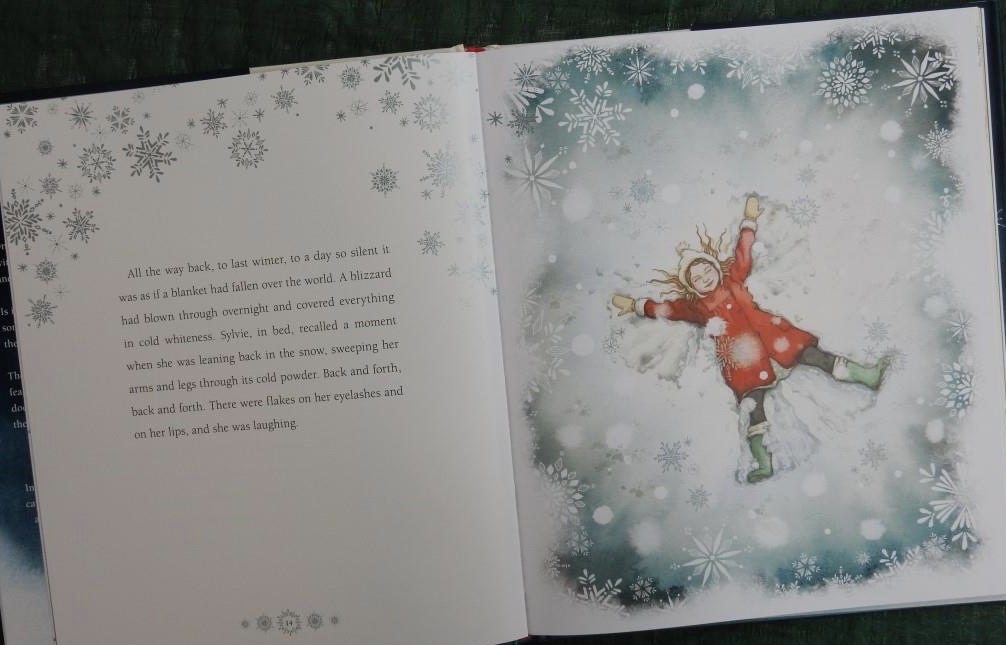
‘Have you ever woken suddenly, in the middle of the night, without knowing why?’ So begins Maggie O’Farrell’s debut picture book wherein it’s young Sylvie who wakes unexpectedly to find her bedroom pulsing with a glimmering light, her curtains disturbed and a chill in the air. Suddenly a breathtaking sight meets her eyes, glowing white with a shimmering outline and an enormous pair of snow-white feathery wings. Before her an angel is creeping across the room muttering softly to himself.

Amazed that Sylvie can see him, he says that he’s her snow angel, there to look after her: Sylvie, he insists, is not as well as she thinks. He also reminds her that she has, despite what she says, heard of a snow angel, having made one the previous winter.

Assuring the girl that he’ll always be there watching her, the being disappears.

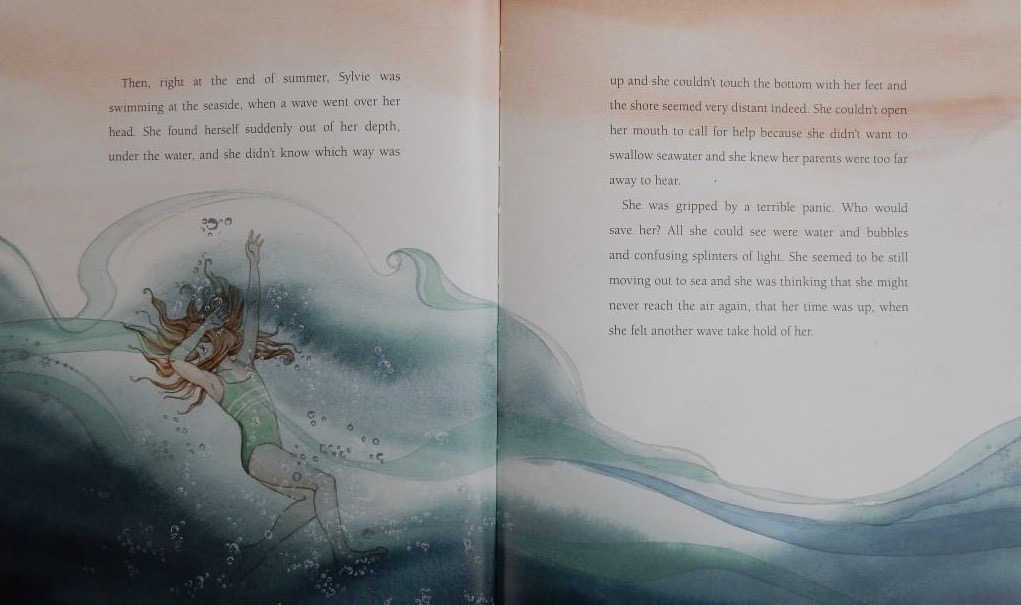
Many months later, after a long illness, Sylvie is feeling much better and recalling the visit, longs to see the angel again, for it was he who saved her life. Now she has a lot to tell him and even more she wants to know but of the snow angel there is no sign. Sylvie decides risk taking and putting herself in danger might precipitate his return, but throughout the summer nothing works. Then, as summer draws to an end, there are occasions when she feels he’s responsible for saving her life, but still she doesn’t see her angel.

Determined that those she loves – family and friends – have their very own protector, the girl tries asking if they too have ever made snow angels. Maybe if she calls on her Snow Angel to grant her a very special wish, something truly amazing can happen …

Maggie O’Farrell together with artist Daniela Jaglenka Terrazzini, have created their own small miracle in this powerful, exceptionally beautiful book that is essentially a 21st century fairy tale about a little girl, bravery, wishing and love – and of course – the wonders of snow. Daniela’s illustrations are hauntingly ethereal at times, at others superbly realistic, but always full of charm and in perfect harmony with Maggie O’Farrell’s compelling, suspenseful story weaving. (I love the circularity of her telling.)

Destined to become a seasonal classic assuredly. Make some hot chocolate, snuggle up and read with family this winter.

Who’s Driving? / What a Ship Sees

Who’s Driving?
Leo Timmers
Gecko Press

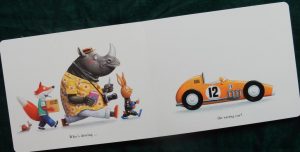
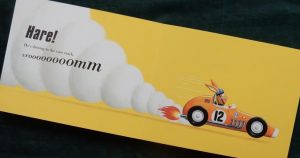
Toddlers and pre-schoolers will absolutely love playing this matching /prediction game wherein Leo Timmers invites them to guess ‘Who’s driving …’ – in the first instance the fire-engine – from the animal character line up on the verso each clutching a key and hastening towards the vehicle shown on the recto. Turn the page ‘wheeooh wheeooh wheeooh’ and the answer is revealed along with the vehicle’s destination. (Sharp-eyed youngsters will likely have spotted some of the clues as to the driver on the first spread.)

A different four animals appear as possible drivers for each of the new vehicles depicted – the limousine, the racing car,

the tractor, the convertible, the jeep and finally, the aeroplane.

There’s an element of the Hare and the Tortoise fable here too, though probably only appreciated by adults. Little ones will love the explosive onomatopoeic, sound-making opportunities that seemingly make the vehicles whizz right off the pages; and the unlikely drivers depicted in Timmers’ acrylic illustrations. Both visual skills and observation skills will certainly have been stretched too after sharing this.

What a wealth of learning potential there is in this fun little book: it’s a must for nursery/preschool settings and enormous fun for home too.

What A Ship Sees
Laura Knowles and Vivian Mineker
Welbeck Publishing

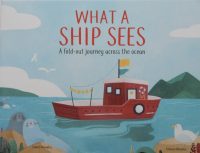
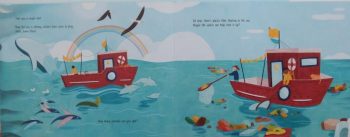
In this cleverly designed concertina book, we follow the journey of a little red ship as it sets out from the jetty on a voyage across the sea. This is no smooth journey though as a storm blows up shortly after the boat has passed a desert island, but all is well and the sailors pause for a while to help remove some of the floating plastic litter before continuing to move north to chilly waters and finally reaching home shores once more.

During the unfolding trip guided by Laura Knowles chatty style narrative, youngsters can enjoy spotting in Vivian Mineker’s illustrations, various sea craft – fishing vessels, a tanker and an enormous cruise ship, as well as dancing dolphins, a shoal of flying fish,

and the changing weather.

There’s a wealth of talk and story-telling potential in the 2.5 metre long unfolding drama, on the reverse side of which is a cutaway of the little red boat, as well as individual elements of the journey along with further information about each one be that ocean fauna, nautical communication,

safety, or ships and boats.

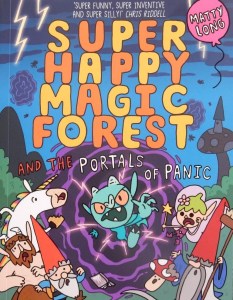
Super Happy Magic Forest and the Portals of Panic

Super Happy Magic Forest and the Portals of Panic
Matty Long
Oxford University Press

I know a large number of young readers who are eager to get their teeth into this, the second of Matty Long’s fiction series featuring those five brave forest warriors including unicorn Blossom and red and white mushroom, Trevor.

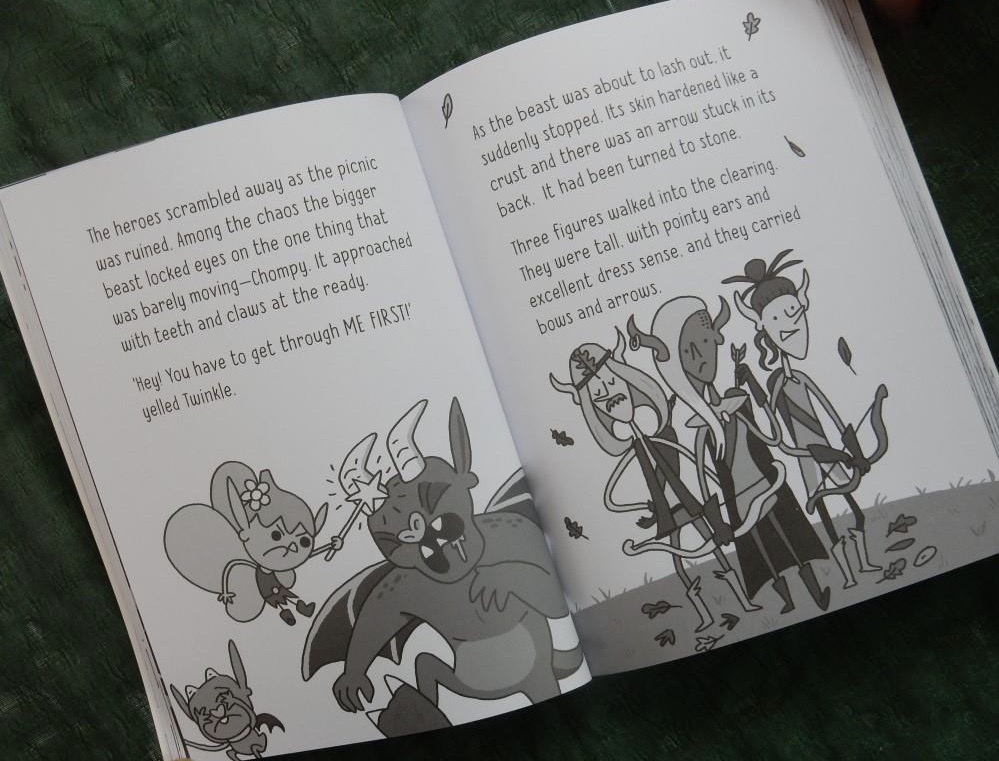
Suddenly into that normally Super Happy place of picnics and frolicking there appears a puzzling porthole that threatens the peace of the forest dwellers’ existence. Even more troubling, a small and voraciously hungry monster has flown from the cavity and seemingly desires to gobble up everything that crosses its path including Gnomedalf’s breakfast waffles (not that they actually did cross it).

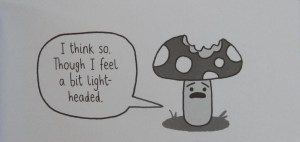
Off go the five heroes (beast in tow) to Wizard City in search of wise wizard Barnabus five-hats to seek his assistance. En route, the monster – now named Chompy – has the audacity to take a nibble at Trevor leaving him just a tad light-headed.

En route too, comes a surprising revelation from Gnomedalf concerning the cause of his own reluctance to proceed with the quest.

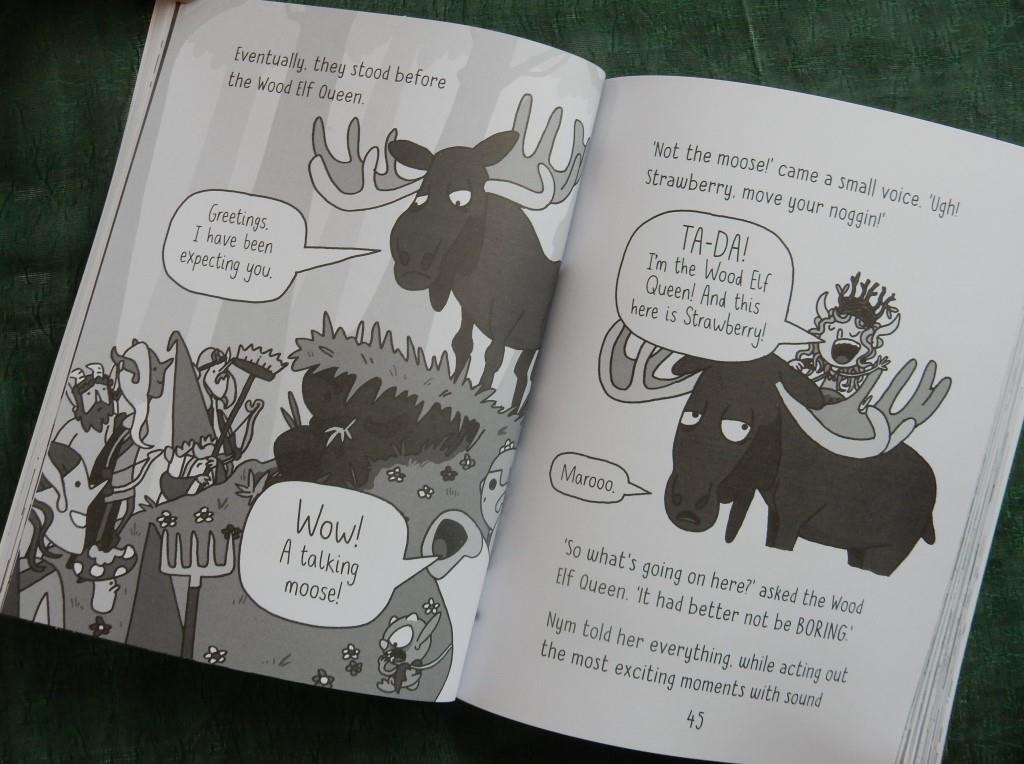
There’s another sign of weird things being afoot, in the form of bow and arrow wielding elves who just might turn them into stone,

the Wood Elf Queen and her moose Strawberry. And that’s where I’ll leave the merry adventurers

and say no more other than that the plot takes many wacky twists and turns including more portals, one leading to a spell in prison for some of our heroic bunch, a bake-off episode, and all ends happily – eventually!

Fans will surely devour this in a single sitting, relishing the wealth of wizardry, waffles, and Matty Long’s totally bonkers humour – visual and verbal – throughout. Bring on the next adventure.

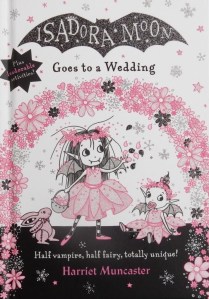
Isadora Moon Goes to a Wedding

Isadora Moon Goes to a Wedding
Harriet Muncaster
Oxford University Press

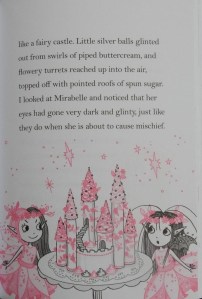
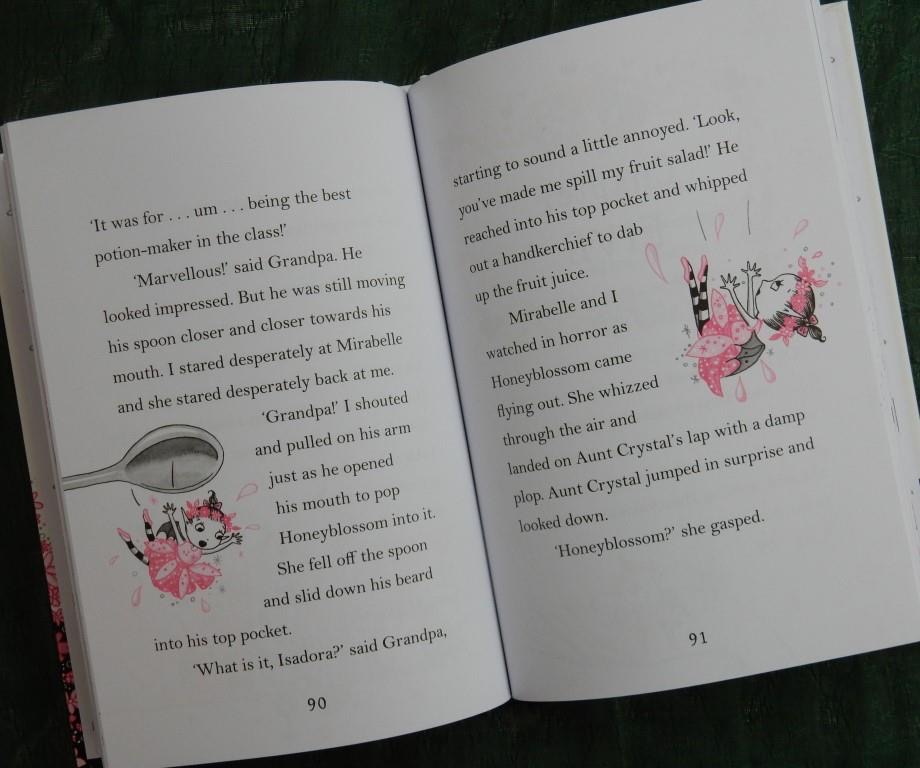
Isabelle Moon the half fairy, half vampire child is mega-excited. Her Aunt Crystal is to be married and Isadora can hardly contain herself when she learns that she (along with little Honeyblossom, and cousin Mirabelle) will be bridesmaids. “A frosty and flowery wedding” so her mum tells her. Isadora’s excitement increases further when she tries on her bridesmaid’s dress. The siblings, thinks Mum, will be “the most wonderful vampire fairy bridesmaids that anyone’s ever seen.”

On the wedding morning (after a yummy pancake breakfast courtesy of Oscar) what should draw up outside the family residence but a fairy sledge – how else would they get to the winter fairy realm? And off they whizz … destination the Ice Hall.

There to greet them is mischievous cousin Mirabelle and her family.

After the marriage itself, the meal and speeches get under way and the youngsters grow increasingly bored, so Isadora’s mother suggests the cousins and Honeyblossom go off to the entrance hall and play. There Mirabelle spots the wedding cake

and that’s when the mischief starts (and the shrinking).
Now it’s down to Isadora to try and make sure that even if not everything goes exactly to plan, there’s a happy ending.

Fans (as well as those new to the smashing series) will relish this new story and love to try out some of the activities at the end of the book – a book made even more special with its silver edges and sparkly cover.

Little Bunny’s Book of Thoughts

Little Bunny’s Book of Thoughts
Steve Smallman
Graffeg

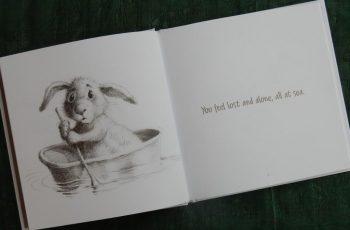
This is exactly what we all need right now: a little book to have to hand when everything is getting on top of us, the pandemic news is getting worse day by day, and the thought of not seeing friends and relations looms large. It’s so easy to start feeling like Little Bunny at the start of this book – lost and alone, all at sea.

But as the little creature slowly, slowly discovers through mindfulness, that looking at things from a different perspective,

perhaps by something as seemingly simple as looking outwards instead of inwards, it’s possible to turn those negative thoughts into positive ones.

Yes, better days will surely come and in the meantime, it’s wise to return to Bunny’s reminder as he shares his thoughts in a rhyming narrative, that ‘life’s not as bad as it seems’.

I was fascinated to read how this book of Steve’s developed as he was experimenting with a new technique using a soft pencil. The outcome is a pocket /handbag size book that is assuredly one to give and one to keep. I will certainly be doing both in the coming weeks.

The Adventures of Harley and Lucy: The Marshland Rescue / The Cat and the Captain: Trim the Cat & Matthew Flinders

Here are two recent fiction books from Little Steps Publishing kindly sent for review

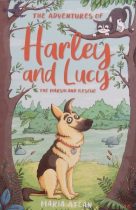
The Adventures of Harley and Lucy: The Marshland Rescue
Maria Atlan, illustrated by Adriana Santos

We meet Harley on his first day as a retired military service dog, about to embark on a new life with the Laceys. He knows that he’s going to miss his long-time companion Sergeant Garcia. However, Mamie and Greg Lacey appear amicable enough, but one thing Harley hasn’t anticipated is the presence in his new home of tiny moggy, Lucy. It seems Harley might need recourse to Sergeant Garcia’s advice: ”Be strong, be true, be brave.”

Soon comes news of a plan to pull down the historical Ashley Place, wherein live Lucy’s feline aunts, and replace it with a huge modern development. This is of great concern not only to the kitten but also to the Laceys, as it threatens both the marshland environment with its wealth of wildlife and the safety of their own homes. Despite a successful meeting addressed by Mamie and a vote to put paid to the planned project, they learn that the vote was a formality and the enterprise will go ahead after all. Or will it? If they combine their skills, perhaps an alliance between Lucy and Harley can help matters. But time is running out.

The author’s passion for conserving the environment is evident in her storytelling and readers are swept along with Harley, Lucy and the Laceys in their bid to halt a potentially catastrophic development. Occasional black and white illustrations by Adriana Santos inject some gentle humour into the tale.

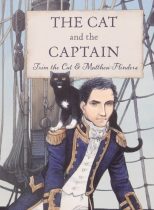
The Cat and the Captain: Trim the Cat & Matthew Flinders
Ruth Taylor

Having been the subject of a picture book, Trim the cat now features in a novel for older readers. Born aboard, HMS Reliance, a sailing ship bound for Botany Bay, the kitten, after falling overboard while the ship’s anchored, is adopted by Matthew Flinders and accompanies him on all subsequent expeditions.

The two brave a leaking ship, stormy seas, illness and other disasters till by the time Matthew is twenty-nine, he’s in a very bad way and so is Trim. The man starts to despair of ever accomplishing his goal of mapping the western coast of Australia, but despite many lives being lost, and a shipwreck, his determination never leaves him.

Then one fateful day having reached Mauritius, Matthew is accused of being a spy by the Île de France (Mauritius) officials and put into prison. It’s while in captivity that he learns of Trim’s disappearance, and he never sees his faithful cat again.

Matthew doesn’t get finally back to England and his wife, Ann, until he is thirty- seven, having been parted from her for nine years; and sadly they only have three years together before his death.

This gripping piece of history is retold by the author Ruth Taylor who, while researching the role of ships’ cats in pest control at the National Maritime Museum in Greenwich, came upon Matthew’s tribute to his beloved Trim and decided to tell the story for children. With illustrations by David Parkins, this is an accessible and fascinating story for upper primary/lower secondary school readers.

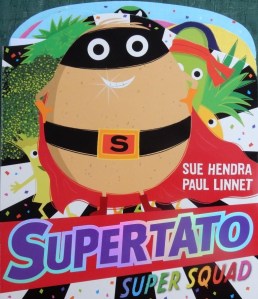
Supertato Super Squad

Supertato Super Squad
Sue Hendra and Paul Linnett
Simon & Schuster Children’s Books

Everybody is in need of kindness right now as we enter a second UK lockdown and our favourite spud and his super veggie squad are here to show the way.

When Supertato tells his friends that he needs their help to teach Evil Pea a lesson, needless to say they are ready to spring into action right away.
Pineapple provides the box their leader requests, Carrot supplies the string – rather an excess of the stuff …

and Broccoli and Cucumber – chefs extraordinaire – bake a batch of delicious cupcakes adorned with sprinkles.

With box duly packed, the preparations are complete and it’s time to sneak up on their arch enemy, the little green spherical EP. By now Supertato’s pals are a tad confused but he knows exactly what he’s doing and Evil Pea is certainly in for a big surprise …

Sue and Paul have created a splendid, large format cutaway board book treat for little humans that introduces some of the key Supertato characters and in so doing offer an important lesson about helping one another, kindness and collaboration.

Who will you and your little ones surprise over the coming weeks?

Judge Juliette / Bling Blaine Throw Glitter, Not Shade

Here are two recent picture books from Sterling Children’s Books:

Judge Juliette
Laura Gehl and Mari Lobo

Juliette is a girl with a dream – to become a judge; meanwhile she dons her mum’s old black skirt and uses her grandpa’s old mallet to play at so being. Already she’s the person those in her locality increasingly turn to for decisions of what is fair from bedtimes to bat losses.

This causes her parents to decide that their daughter has proved herself sufficiently responsible to be allowed that much wanted pet.

But then who should walk into her courtroom but mum and dad: Mum thinks she should get a dog, Dad pins his hopes on a cat and each parent has plenty of evidence to back up their side of the argument. Moreover, both are prepared to try a little bit of bribery on their daughter. This is going to be tricky to say the least.

How can Juliette possibly make a fair decision in this Cat vs Dog case?

Youngsters, many of whom will already have a strong sense of fairness, will enjoy this story with its bold illustrations, especially the finale, and during the course of a book sharing will likely learn some legal terminology.

Bling Blaine Throw Glitter, Not Shade
Rob Sanders and Letizia Rizzo

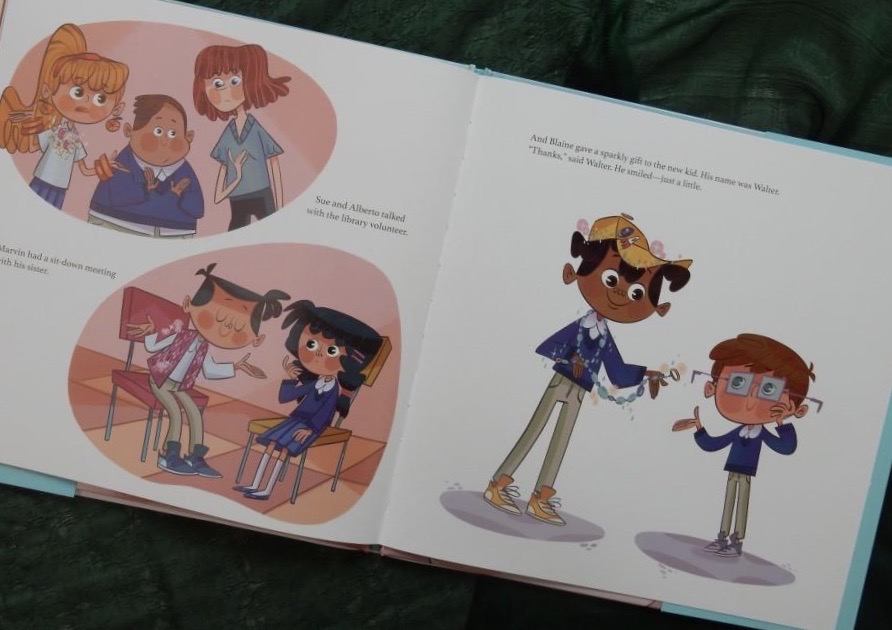
Make no mistake Blaine is into all things sparkly; he adorns his school uniform, his book bag and cap with glittery things. He’s popular, spreading happiness wherever he goes, is a sporting star and extremely bright. Most people are accepting of his predilection

but a few lack understanding and eventually those hurtful words begin to take effect on the boy especially when someone calls him ‘Sissy!”
Next Monday he arrives at school sans sparkles and this continues through the week and by midweek the entire school has lost its shine. Something has to be done and so his classmates take action: the following morning several children show up defiantly sporting sparkly items of clothing.

This precipitates a change of heart in others, and after some discussion between the pro- and anti-sparkle individuals,

things change: a small gift is given, and a decision is made: everyone is free to be themselves, at least at this school.

A gentle lesson, with expressive cartoon style illustrations, on the individual’s right to be him/herself, and on being an ally. (the final spread talks about what the latter entails).

Curious EnCOUNTers / I Spy ABC: Totally Crazy Letters! & I Spy 123: Totally Crazy Numbers!

Curious EnCOUNTers
Ben Clanton and Jessixa Bagley
Little Bigfoot

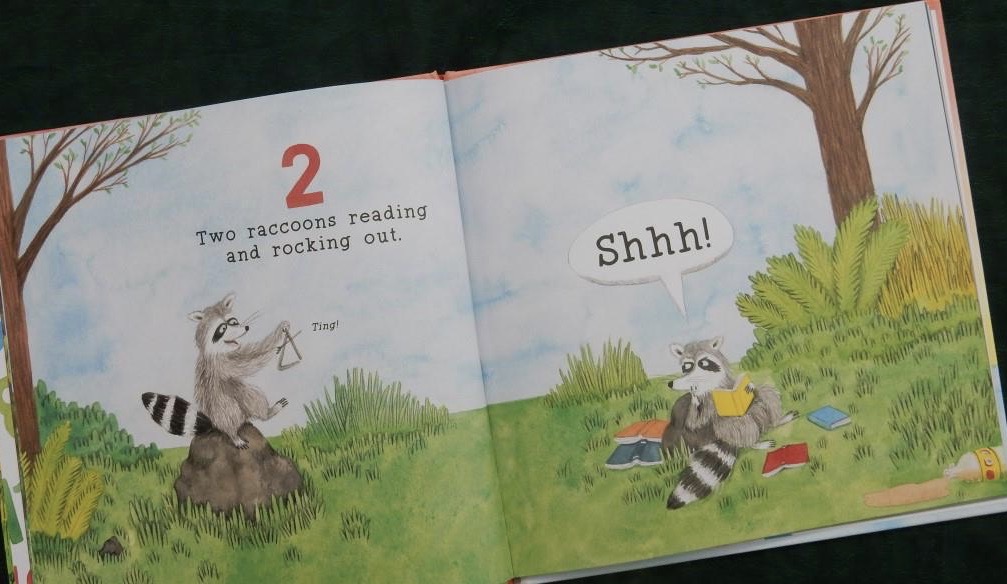
A child shares with readers the sights, sounds and smells she encounters on a hike through the woody countryside. Setting off, who knows what might be there to observe or ‘where the trail will lead’. Pretty soon though it’s clear that this is not to be a calm peaceful appreciation of nature. Rather, it’s a series of tallies from 1 to 13 of somewhat crazy outdoor antics, each leading on from the previous one, and each being described through an alliterative sentence – ‘2 Raccoons reading and rocking out,

Six squirrels sporting sweaters through to ‘13 Thirteen seagulls soaring and searching’ and a final invitation to join the frolicking friends for a fabulous feast whereat not all the animals are forest dwellers. The story eventually comes full circle as the final page shows the child, now sitting hidden behind an abundance of foliage, and seemingly sketching the animals.
Throughout there are playful, punny conversations between the creatures featured, “I overheard you were c-lamb-ering for wool.”; “It was wool-y great of ewe to give us all this wool!”; “What a wonderful way to unwind.” “Shear is!”

A comical counting book and an adventure too that provides both fun and plenty of learning possibilities.

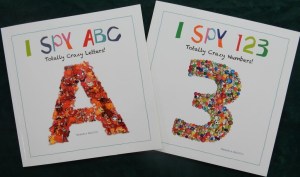
I Spy ABC: Totally Crazy Letters!
I Spy 123: Totally Crazy Numbers!

Manuela Ancutici and Ruth Prenting
Firefly Books

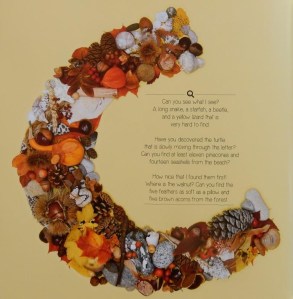
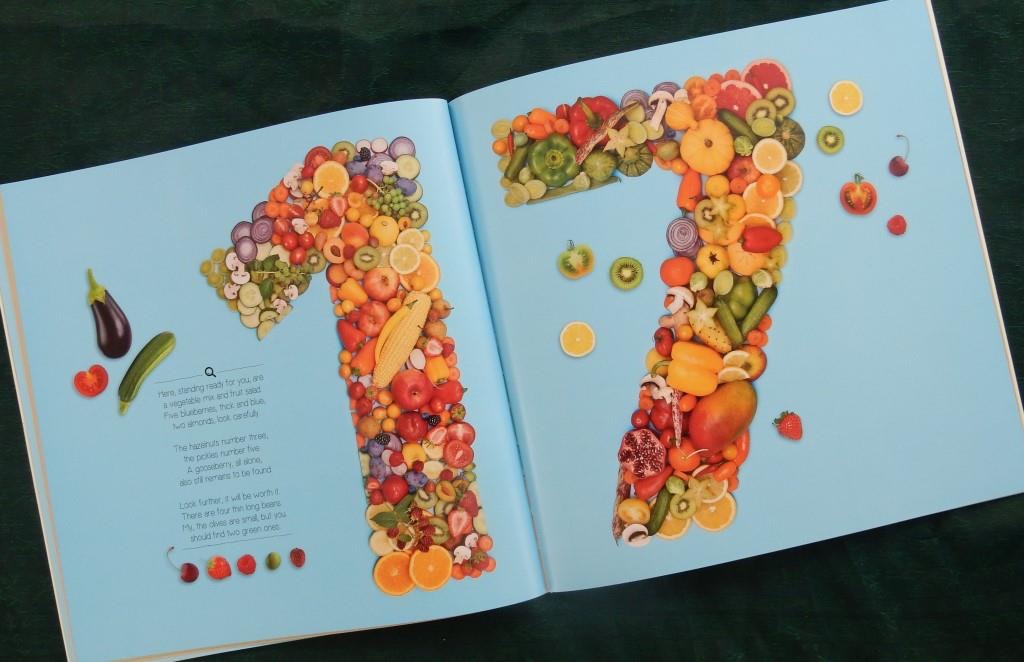
Make no mistake, these two visually incredible, stimulating books are not intended for little ones who are just learning the alphabet or to recognise numerals/numbers and to count. It’s the ‘I Spy’ part of the title that is key, for what the letters and numerals are doing is to act as templates onto which themed items are arranged and to which the text directs users to look for various objects relating to that theme. Each page or spread is introduced by the words, ‘Can you see what I can see?’ immediately engaging users young and not so young.

On the gorgeously autumnal coloured C we’re to search for ‘a long snake, a starfish, a beetle, and yellow lizard (tricky to locate); then there’s a turtle supposedly on the move along the letter, as well as eleven or so pinecones, fourteen shells, a walnut, five soft feathers and finally, five acorns. Phew!

Among the thematic materials used (sourced largely from flea markets) are toy vehicles, gorgeously coloured flowers, beads, food, art materials, nesting dolls and sewing. In no way does the text cover the wealth of items included for each letter or number and that leaves the way open for adult and child to play their own games of I-Spy thus adding to the countless hours of enjoyment and potential for visual development offered by the books.
With the numbers book, after 10, the double-digit numbers featured get a double spread each rather than a single page,

while the ABC allocates a single page for each letter.

There’s a wealth of learning opportunities between the covers of both the ABC and 123 and each offers countless hours of fun too. And just in case you’re stuck on any of the searches, the final pages provide solutions.
Great for both home and school use.

Otters’ Moon / The Tipple Twins and the Gift

Otters’ Moon
Susanna Bailey
Egmont

I was hooked by this story from the very first page; there’s something magical about Susanna Bailey’s lyrical prose that gently draws you in and keeps you turning the pages right through to the end. The narrator is Luke, led by his mother to believe that holidaying on a remote Scottish island with his photographer mother is just the thing to help them get over a break-up with Luke’s dad. The place promises outdoor summer delights, she tells him.   

The boy’s first reaction is far from favourable – the island children seem hostile, but he does strike up a conversation with a girl who introduces herself as Meghan -Meg for short – and says she lives in a dilapidated boathouse on the beach. He later hears of her absent parents – marine biologists – and that she’s residing with her Grandad who seems rather muddled, calling the boy David, mistaking him Meg says for her own father. A puzzle for sure, thinks Luke. Even more puzzling is when Grandad later says, as he looks skyward, “Remember laddie … Remember the Otters’ Moon.”

Next day, despite her instructing him not to, Luke follows Meg to a distant rocky outcrop where there are puffins. Displeased at his appearance, she realises Luke is determined to stay at this hidden place and tells him that there are also otters in Puffin Bay, although nobody but she knows of their return. She tells him too that her parents both disappeared without trace off this coast.

With a hint of hostility, a friendship develops between the children, Luke also raw about the absence of his father, becomes more observant of and concerned for, his mum; and he wonders whether Meg’s situation, with its strange secrets, is as bad as his own. Slowly, slowly he starts to change his mind about the island: perhaps it isn’t quite the boring place he first thought.

Then the two children (“city boy” and “island girl”) manage to rescue an injured orphan otter pup, incapable of surviving on its own and they name it Willow. But it’s no easy task taking care of the creature and preparing her to go it alone in the potentially dangerous waters.

Just to complicate matters, Luke learns that his new baby sister is very poorly and needs an operation to survive. Shortly after though, it’s Luke’s survival that is in question and there’s only Willow to depend upon.

As the wonderful, poignant story ends, the visitors prepare to leave the island, but we see that some things endure: hope, friendship and love can transcend the most challenging circumstances.

The Tipple Twins and the Gift
Michelle Cordara
Matador Children’s Books

The Tipple twins are the only identical twins in England, all other twins having mysteriously disappeared never to be seen again. Also mysteriously disappeared is the twins’ elder sister Caitlin, whom nobody has seen for two years.

Suddenly, out of the blue, who should arrive but their Uncle, Aunt and their daughter. The parents announce that they’re off to to Egypt, demanding that Beatrice stay with her cousins as she’s been discovered using magic at school, hence the hasty exit.  Then comes the news: all three girls are to start at Chumsworth School, a very dark place so Boo, their ‘pet’ ghost informs the twins.

On arrival they’re greeted with warnings about avoiding a certain room thirteen, the whereabouts of which nobody seems to know. They quickly learn that the head, Miss Snippings, has a particular aversion to identical twins.  With the feeling of a hidden presence watching them things get increasing strange . Then Miss Snippings announces that the end of term play will be about the Salem Witch Trials. When she discovers that identical twins have just joined the school, Jenna and Jessica know that big trouble lies ahead. Already they’re being victimised by their head teacher; but who is she really? And what does she want with the twins?

Occasionally nightmarish, but not overly so, this atmospheric story is full of foreboding but there’s some humour too; for KS2 readers who like their fiction dark and mysterious.

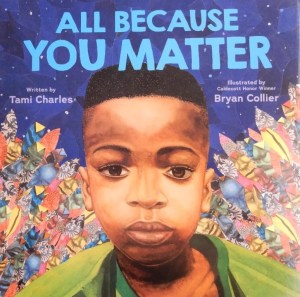
All Because You Matter

All Because You Matter
Tami Charles and Bryan Collier
Orchard Books (Scholastic)

This wonderful, empowering celebration of young Black lives is for everyone, not just those with black or brown skin. Herein author Tami Charles’ lyrical prose poem, an ode to a ‘dear child’ spoken by a parent reads like a love letter to said infant whom we watch in Bryan Collier’s sequence of tender, mixed media portraits, grow from new born infant, to toddler taking his first steps, to story sharer,

to school child, mocked on occasion by cruel classmates.

The author uses ‘matter’ as both verb – ‘The words and pictures / coming together like / sweet jam on toast / … sun in blue sky … / all because you matter.’ And as noun: ‘But in galaxies far away, / it may seem that / light does not always reach / lonely planets, / covered moons, / stars unseen, / as if matter no longer exists.’

Ancestors are recalled – queens, chiefs, legends – but the focal point is always the child being addressed. Yet, this book reassures all youngsters that no matter what, they are loved and cherished ‘strength, power, and beauty lie within you’.

Affirming, awe-inspiring, and acknowledging and remembering those victimised by racial violence – teenager Trayvon (Martin), 12 year old Tamir (Rice) and young man Philando (Castile),

as well as for me, the not mentioned young Damilola Taylor who lost his life in the UK twenty years ago to the day as I write, when just short of eleven years old. What we have here is a great starting point for a conversation that puts forward the notion that Black Lives Matter, indeed, All Lives Matter at all times in their homes, in their community, in the entire universe.

Everyone is an amazing individual; everyone has something to offer whoever and wherever they are; but it starts with children … Parents know that, we teachers know that; it’s up to us to make sure youngsters know that. One way so to do is to share this book at home and in classrooms.

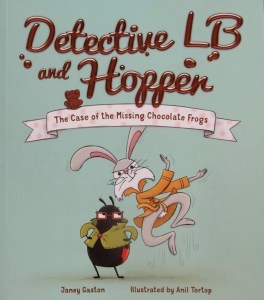
Detective LB and Hopper: The Case of the Missing Chocolate Frogs

Detective LB and Hopper: The Case of the Missing Chocolate Frogs
Janey Gaston and Anil Tortop
Little Steps Publishing

It’s hard to resist a picture book with chocolate in the title especially when the cover’s as alluring as that drawn by Anil Tortop.

Meet Detective LB, a ladybird mystery lover and her best friend and side-kick Hopper, a lively, sometimes overly sugar-fuelled bunny with a special skill at solving mysteries. Clearly a well-matched duo and on the Tuesday in question, they’re both fired up and ready for a new case, so are thrilled when there’s a loud banging on the door signalling somebody outside with a mystery that needs solving.

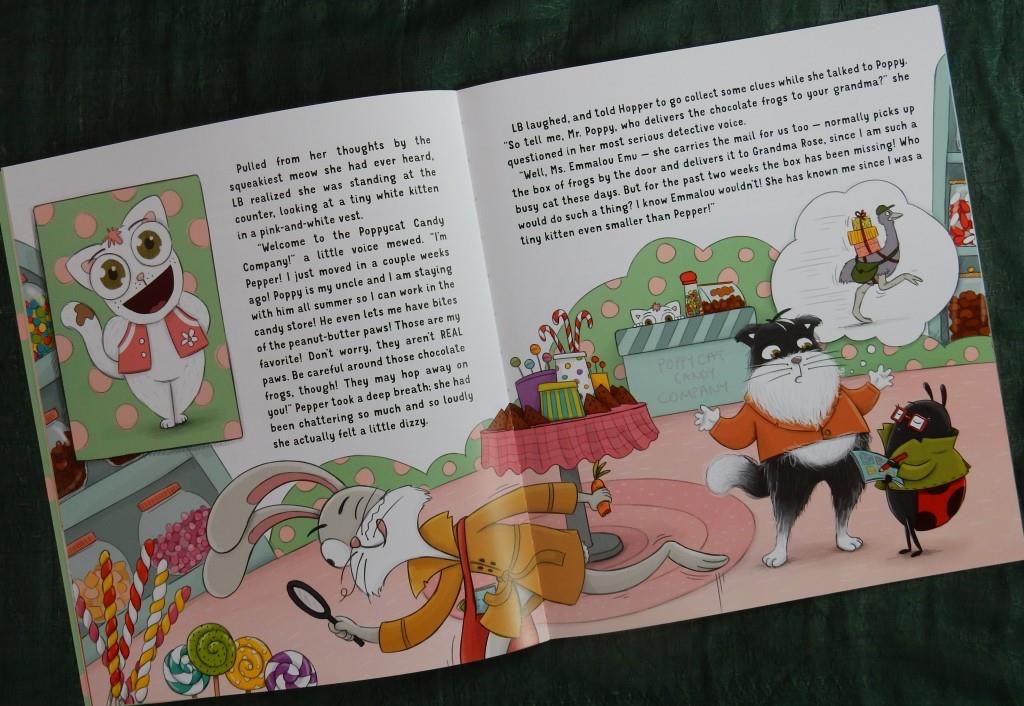
In comes Mr Poppy (cat) owner of Poppycat Candy Company announcing that he suspects someone is stealing his packages of ‘extra-special, extra-yummy chocolate frogs’ destined for his Grandma Rose which, for the last couple of weeks, have failed to arrive.

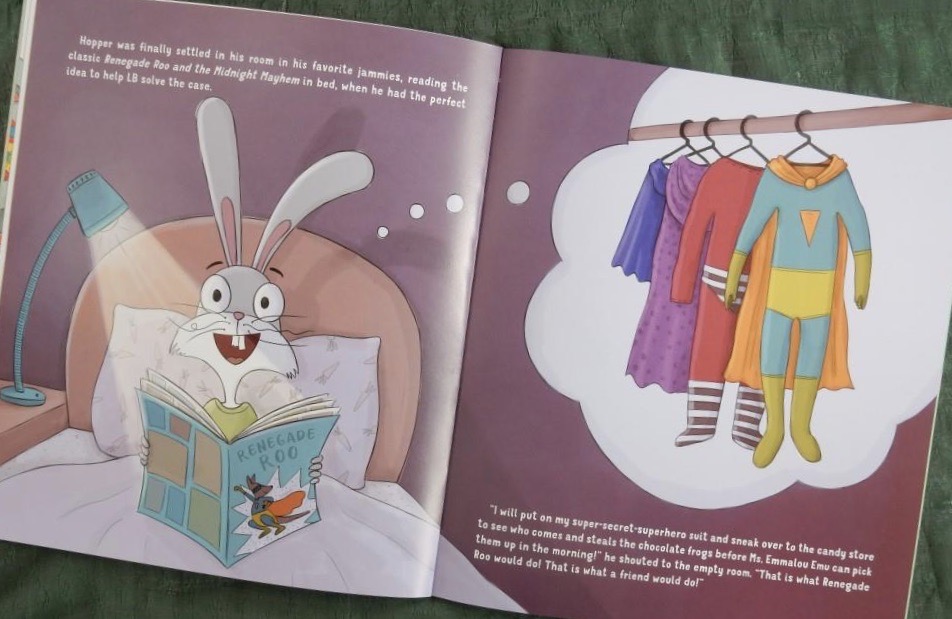
So, who has been stealing said items; comic book addict Hopper, and LB, are on the case immediately; the enterprising two must amass information and search for clues in order to crack this tasty case. Perhaps Hopper’s penchant for superheroes can be utilised;

and maybe the thief has a motive that just might be a mitigating cause.

A pacy, full of fun adventure and with Anil Tortop’s comical scenes of animated animals and chocolatey clues, highly entertaining with a not very subtle message about owning up to one’s errors.

Mouse & Mole: A Fresh Start

Mouse & Mole: A Fresh Start
Joyce Dunbar and James Mayhew
Graffeg

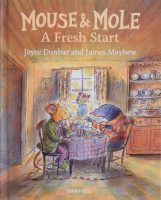
This is the fifth book in the enchanting series that stars close friends Mole and Mouse. Now though, in the first of the three stories, the two decide that perhaps they’ve become just a little too close and are taking one another for granted. In order for their friendship not to pall they agree to avoid one another for an entire day, however challenging that might be. Then their friendship can start all over again.
Mole insists the manner of Mouse’s execution of the plan is kept to himself.
The following morning Mouse receives an invitation to visit Hedgehog for elevenses so, making sure to avoid Mole, off he goes leaving a note as to his whereabouts. Mole meanwhile is late to rise – as usual and on discovering no sign of Mouse, is disturbed.

An exhaustive search of their home reveals no sign of his best pal. Distraught at the possibility that Mouse has forsaken him and found a new friend, he drives off to pay a call on several other of the woodland animals leaving a message for Mouse with each. The last call he pays is to …

Hip-Dip-Dip sees Mole spoilt for choice when Mouse decides to buy his bestie the much-wanted toy sailing boat he’s seen in Hare’s toyshop window. Mole’s original longing was for a blue boat with a white sail but when they discover there are other possibilities, Mole gets into such a tizzy that they leave without making a purchase.

The following day is perfect for boat sailing on the pond so it’s back to the toyshop where Hare informs them that a mystery buyer has bought the blue boat over the phone. Oh dear! Now what will happen …

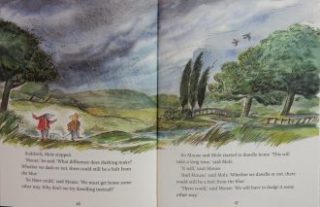
In the final tale A Bolt from the Blue, the two friends get caught in a thunderstorm. With the possibility of a lightning strike, should they or shouldn’t they take shelter under a large tree? Or is it better to make a dash for home. Perhaps neither is the best way to deal with a sudden downpour, if so what will Mouse and Mole decide to do?

The magic still holds good in these latest short stories; surprises, warmth and gentle humour abounds and there’s that characteristic element of surprise in each episode which brings such delight to readers and listeners alike. James’ delectably detailed illustrations combined with Joyce’s seemingly effortless storytelling offer a perfect snuggle up on a dark evening story share delight.

How to be a Bug Warrior

How to be a Bug Warrior
written by Stephanie Stahl, illustrated by Loyal Kids
Little Steps Publishing

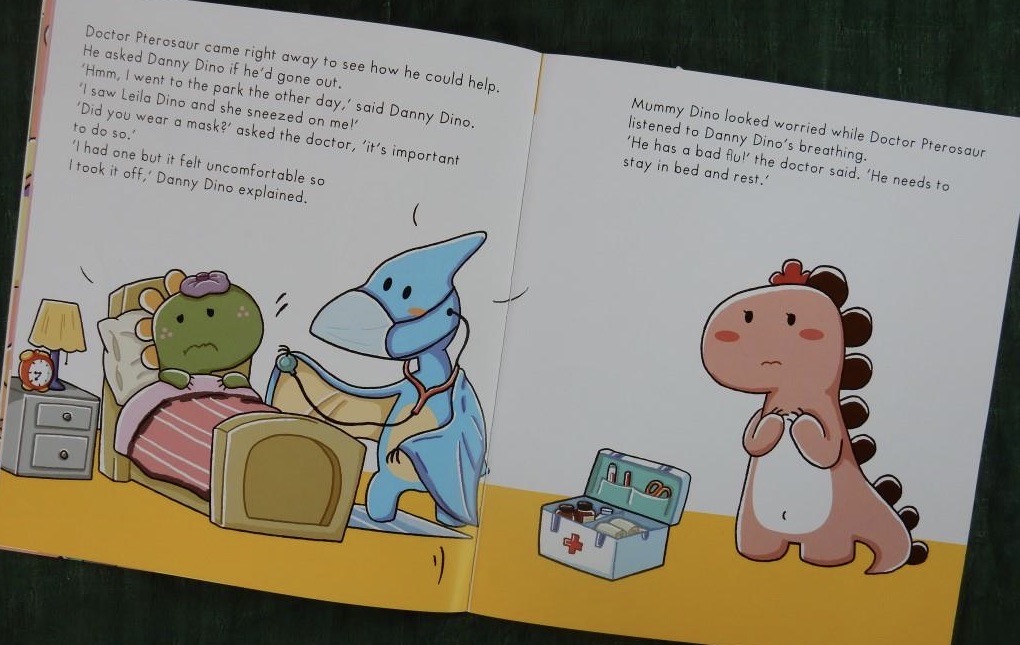
Young Danny Dino is fed up. His mum insists that if he wants to go and play with his pals in the park, he must wear a mask since many Dinoville residents have been ill recently. Off they all go: his friends don masks but not so Danny who claims he is uncomfortable and he can’t breathe.
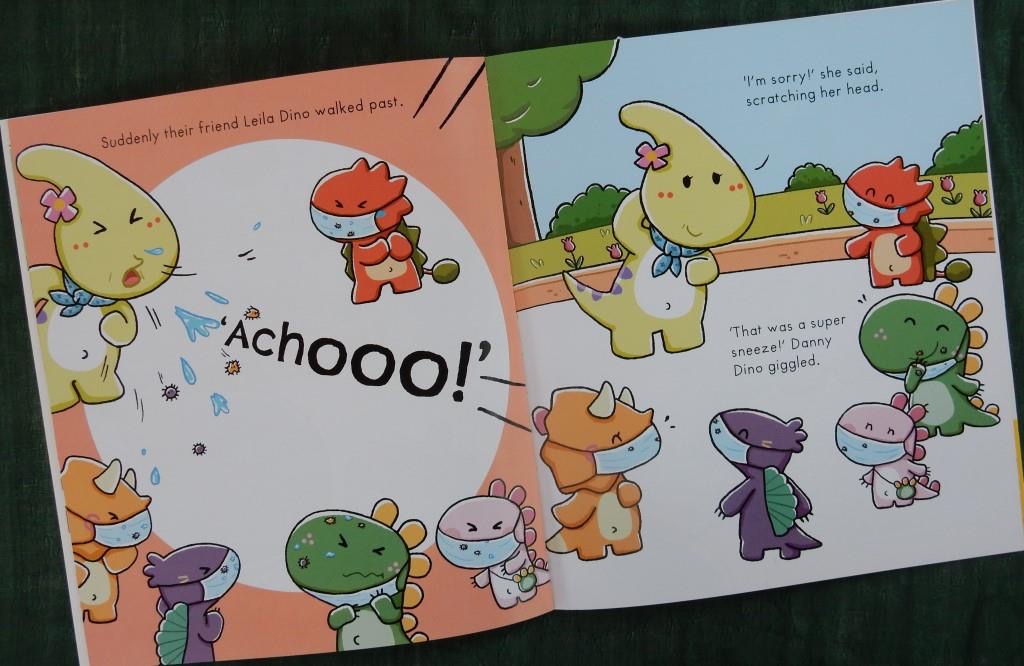
Then along comes another friend who sneezes sending her germs all over the other little dinosaurs.

Back at home Danny’s Dino Mummy serves up some yummy chocolate muffins; his pals all go off and wash their hands; Danny merely starts stuffing cake into his mouth.

A few days later, Danny feels poorly – he’s sneezy, feverish and has a sore throat. Dr Pterosaur pays a call and hears about Danny’s maskless foray to the park. Flu is his diagnosis and a stay in bed to rest.

Once he’s somewhat recovered his friends pay a visit as does the doc. who explains why it was only Danny who caught the virus. He goes on to tell them all about the importance of correct hand washing – the ‘seven-step super handwash’ and other ways to help prevent the spread of any viruses that might be circulating. After a week Danny is up and about and determined to stick to his hand-washing regime.

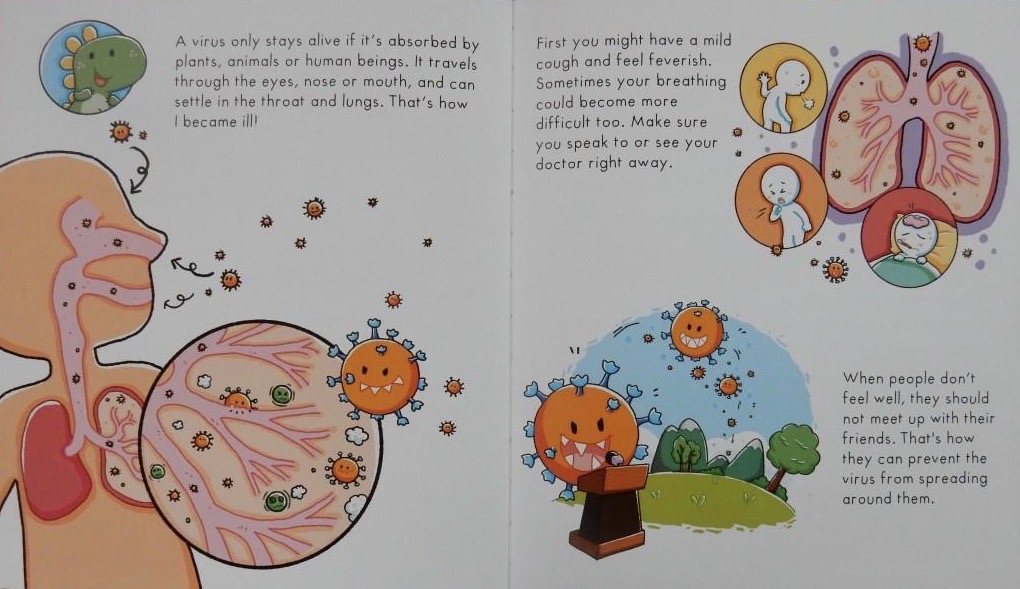
After the story – yes, it’s didactic – but extremely important and full of wise words, come several spreads about viruses,

with reference to Covid-19 as well as a quiz and a page of tips on protecting oneself and others.

With those sure to be popular characters, and a highly relatable story, this is a book to share with youngsters both at home and in foundation stage classrooms and nurseries.

Timeline: Science & Technology

Timeline: Science & Technology
Peter Goes
Gecko Press

If you’re looking for a book that presents the scientific accomplishments of humankind, from Paleolithic times to the present day, then this large format offering should fit the bill. Concisely written, it’s absolutely packed with exciting information starting right back in the Stone Ages when mankind learned how to make fire, moving on to the Copper or Chalcolithic Age (copper being the first metal humans made use of) when people were starting to develop farming techniques such as crop-growing, and when towns began.

Then come the first civilisations and Peter Goes shows the contribution of each to the evolution of technology and science. There’s Mesopotamia with a medical manual from ancient Babylon,

the Americas, the Indus Valley civilisation or Harrapan Culture – when there were some large cities with brick houses and sophisticated sanitation and drainage systems. (I was pleased to see this having once visited and written about, the Lothal site in India’s Gujarat state.)

There’s a look at Ancient Egypt, the first Chinese, Greek, Roman and Byzantine empires with both general information and some closer detail about each era.

By now some readers might be thinking, surely technology is about computers, mobile phones and satellites? But the roots of all these technological wonders lies way back in the Stone Age.

Each double spread displays an era, century or, once we get to the 20th/21st centuries, a decade,

ending up with a look at the development of artificial intelligence (AI).

With each spread having a different colour background, Peter Goes’ graphic art is alluring and playfully immersive, making it overall more of a visual history presentation. It’s good to see a fair number of women included such as German astronomer Maria Margaretha Kirch (18th C), mathematician and first computer programmer Ada Lovelace (early 19th C), Rachel Carson, Rosalind Franklin (1950s) and Stephanie Kwolek (1960s). (Wish there’d been an index.)

Recommended for home and school use. Browse for hours: You’re sure to learn something wherever, whenever you stop.

Rain Before Rainbows

Rain Before Rainbows
Smriti Halls and David Litchfield
Walker Books

My first thought on seeing the amazing cover of this book was the first song that I learned to sign, the foundation stage favourite, Sing a Rainbow. As I turned the pages, I felt that both Smriti and David truly are singing a rainbow in this awesome book that was originally released as a free download during the summer in partnership with Save the Children’s #SaveWithStories campaign.

On the opening spread we’re in the company of a girl as she follows a fox through a rainstorm, ‘Rain before rainbows. Clouds before sun,’ we read as Smriti’s lyrical rhyming text takes the child to the departing day as she pauses, illuminating the fox with her lantern under a star strewn sky.
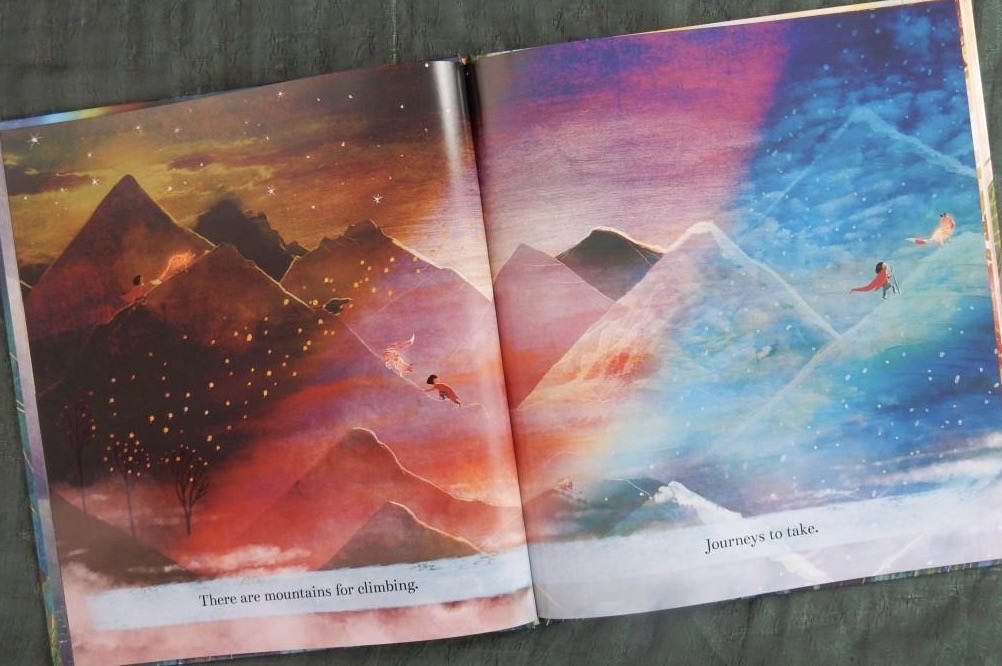
The walking continues and we read of mountains to climb, ‘Journeys to take.’ …

until it’s time to rest under the now star-filled sky and dream hopeful dreams.

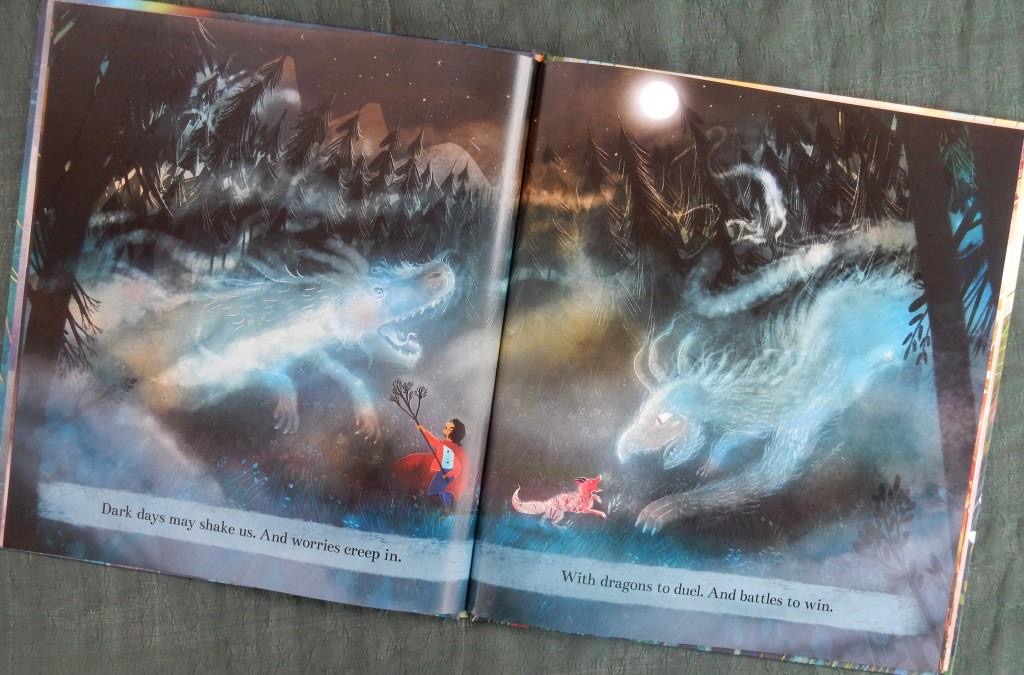
Yes, there are likely to be dark days when worries beset us; days when storms rage both within and without,

but somewhere there’s light and footsteps to follow, friends who care, to guide us all through troubled times, out of the dark and into the light where new life will always come, little by little seed by seed, flower by flower,

bringing hope and cheer, and the promise of better things beyond that darkness, under that rainbow …

Both author and illustrator have clearly put heart and soul into this breath-taking book. Smriti’s reverie of resilience is honest and reassuringly uplifting, while David’s dazzlingly spreads are out-of-this-world gorgeous. Every single one is a place to pause, reflect, imbibe its beauty (even the dark ones), and only then to move on, empowered and full of hope.

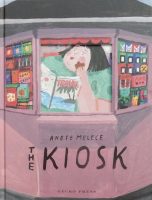
The Kiosk

The Kiosk
Anete Melece (translated by Elīna Braslina)
Gecko Press

Imagine living and working your entire life in a small kiosk – impossible you might be thinking – but so it is for Olga the protagonist of Anete Melece’s picture book. She has customers aplenty and lots of friends among them as she spends her time selling, chatting, assisting others and generally being a good, kindly person going about her daily routine. Come evening when the crowds have gone, Olga remains stuck inside her small domain, reading of faraway places and dreaming of distant sunsets.

One morning though, after a chain of unfortunate incidents, disaster strikes and the kiosk topples right over taking Olga with it. Physically unhurt, up she gets and off she goes walking within her erstwhile fixed abode and for a while all is well. But then comes a canine encounter which precipitates a fall –

and Olga, kiosk and all are pitched off the bridge and into the river.
After several days afloat in her mobile home,

Olga arrives at the seaside where enterprisingly she sets herself up in a new business … and each evening from her beach vantage point she enjoys the sun setting – ‘splendidly’.

Yes it’s hard sometimes to make changes, but sometimes it’s good to step right out of your comfort zone and just to “go with the flow” seeing what life brings and embracing new things with an open heart. It’s never impossible if you really want to find a way …
That’s what Anete Melece shows us with humour and heart.

Molly and the Lighthouse

Molly and the Lighthouse
Malachy Doyle and Andrew Whitson
Graffeg

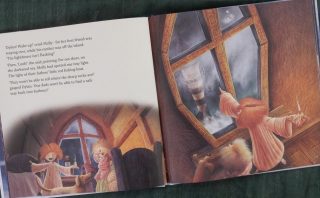
This is the fourth title in the splendid series featuring young island dweller Molly.

One night she wakes up and realises that something is very wrong: the lighthouse has stopped working, the harbour and sea are in darkness and the fishing boat aboard which both her own father and her best friend Dylan’s, is out at sea. Worse still a storm is raging: how will the boat find its way safely back to the harbour without a guiding light? One night she wakes up and realises that something is very wrong: the lighthouse has stopped working, the harbour and sea are in darkness and the fishing boat aboard which both her own father and her best friend Dylan’s, is out at sea. Worse still a storm is raging: how will the boat find its way safely back to the harbour without a guiding light?

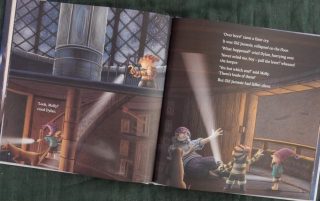
And what has happened to Old Jamesie, the lighthouse keeper – something must be wrong with him or he’d never have allowed the light to go out.

Having alerted her mother, who heads off to the harbour to make a fire to guide the boat safely home, Molly (plus her doll Megan) and Dylan set out to check on the old man in the lighthouse.

Full of dramatic excitement, this is a superbly told, heart-warming tale of teamwork, determination, the consideration of others and finally, heroism. Equally superb and in real harmony with the telling are Andrew Whitson’s illustrations. The drama and tension is heightened by his use of varying perspectives, textures and a changing colour palette.

A smashing book to share over and over, and for those interested in finding out some information about lighthouses, the inside cover contains 10 interesting facts about them.

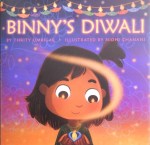
Binny’s Diwali

Binny’s Diwali
Thrity Umrigar and Nidhi Chanani
Scholastic
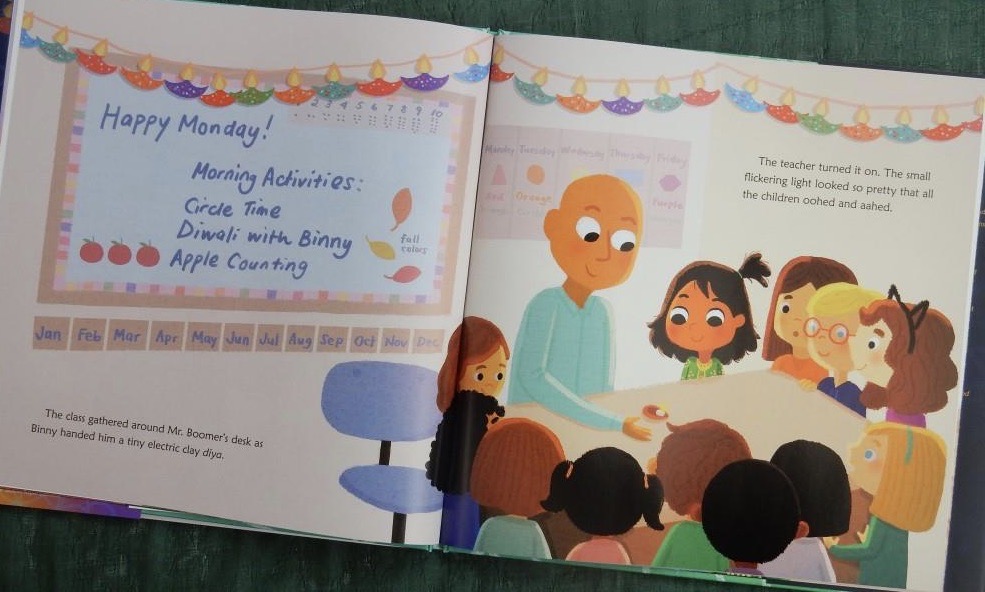
‘All over the world, Diwali marked the victory of goodness and light.’ So young Binny’s mother tells her, and surely more than ever right now we could all do with goodness and light to help us through the coming months that promise little of cheer.

Binny is due to talk to her class about the celebration of this important Hindu festival; she’s wearing her new clothes, has eaten a sweet breakfast and can’t wait to tell her friends about Diwali at circle time. But when it’s her turn to speak, she gets an attack of nerves and can’t get her words out. Her fear is almost palpable but then so too, is her delight and enthusiasm when she finds her voice after some reassurance from her teacher. She tells of her favourite holiday, of how people light diva lamps and put them outside their front doors to chase away the dark and guide the light and good fortune to their homes.

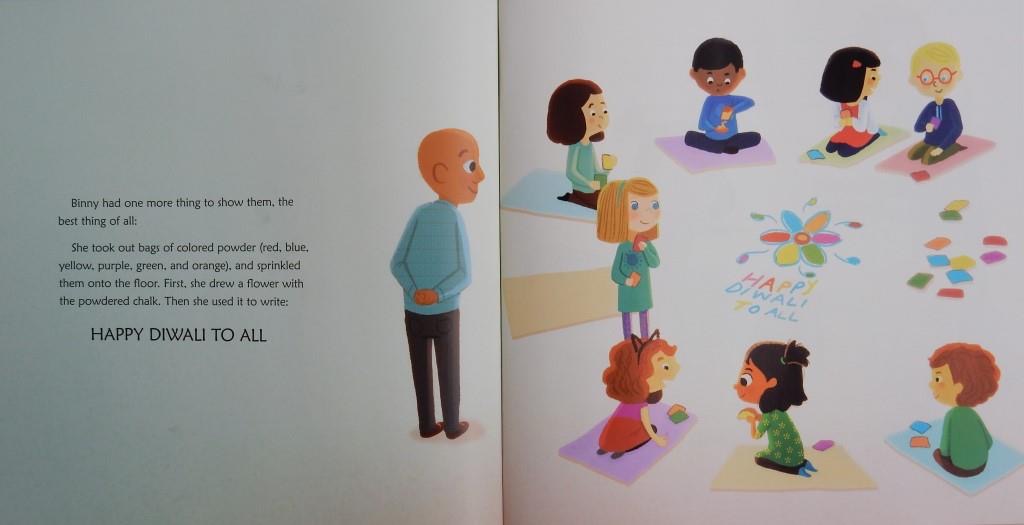
She explains how the festival lasts for five days and how fireworks colour the air (not often now though at least in some countries on account of the pollution), and best of all she creates her own rangoli pattern on the classroom floor using the bags of coloured powder she’s brought specially.

Then after sharing a box of sweets with everyone she feels that after all she’s done Diwali proud in her classroom. Then walking back home she’s able to feel that in her class she’s celebrated her very ‘own victory of goodness and light’.

I especially love Nidhi Chanani’s beautiful diva endpapers reminding me how much I will miss celebrating the festival in India this year. I’ll be interested to hear how my friends there do so during the pandemic; no doubt many be they Hindus or from another of the faiths followed there, they’ll find a way. Yes, Diwali is a Hindu festival but many Indian friends who do not share a Hindu worldview, also celebrate (and that’s despite the current political climate).

Thrity Umrigar (herself from a Zoroastrian family) provides a brief account of the Diwali story – the triumph of good over evil – at the back of the book along with an explanation of the five days of the festival.

This is a lovely, uplifting, colourful book to share with youngsters in KS1 classrooms as well as in a family.

Tiger, Tiger, Burning Bright!

Tiger, Tiger, Burning Bright!
selected by Fiona Waters, illustrated by Britta Teckentrup
Nosy Crow

I love getting poetry anthologies to review, for despite owning a iarge bookcase crammed with books of poems (for both adults and children) and having compiled a fair number of the latter myself, I always make some exciting new discoveries.

What joy then, to have a bumper compilation such as Fiona’s offering, an animal poem for every day of the year, with a stunningly beautiful illustration from Britta gracing every spread.

Name an animal and more than likely you will find it featured somewhere in this collection; and you’ll find a creature (sometimes several) for almost every letter of the alphabet with the notable exceptions of q – this has Tony Chen’s Question: ‘As asphalt and concrete / Replace bushes and trees, / As highways and buildings / Replace marshes and woods, / What will replace / The song of birds?’ , u (there is a poem but it’s an extract from John Bunyan’s Upon a Snail) and x is not represented at all.

Whether your preference is for creatures great or creatures small, feathered, scaled, smooth-skinned or spiney you will be satisfied. Having seen the bird she writes of standing in the rain on my walk yesterday I absolutely loved discovering this new to me poem of Roberta Davis: ‘Perfectly still / in the falling snow / grey heron’

I also heard on that same walk but didn’t see, a Woodpecker, the subject of John Agard’s wonderful poem – another new discovery for me, the first verse of which is ‘Carving / tap/tap / music / out of / tree trunk / keep me / busy / whole day / tap/tap / long ‘

Despite summer now being over for this year, there are still plenty of bees, wasps and other small insects about including the bees that George Szirtes writes of in The Bee’s Knees: ‘Great hairy knees bees have as they squat / in the flowers then push off with a spring, / all six knees pumping and shoving. With so much power they’re soon airborne, resilient, / muscular, adrift. // The bee’s knees. // Brilliant. ‘ And brilliant that surely is. Henceforth I’ll look anew at bees.

There’s more about minibeasts and their knees in Dorothy Aldis’ Singing: ‘Little birds sing with their beaks / In the apple trees; / But little crickets in the grass / Are singing with their knees. ‘

Interestingly October has four wasp poems though I’m less well disposed towards those buzzers as I have a wasps’ nest all a-buzz outside one of the bedroom windows; so I really appreciate the opening lines of Carol Ann Duffy’s The Wasp: ‘Help me to love the wasp, / help me to do that thing – / to admire the raspy buzz / of its wings, to grow fond / of its droning whinge.’

Having spent most of this review talking of creatures small, I should finish with a poem about a large one and a favourite of mine – the subject of another new delight for me; it’s Liz Brownlee’s An Elephant is Born: ‘Night holds them safe / the moon cloud gleams, / deep in the darkness / of soft breath and dreams, // the elephant mother / greets her new son, / with a tender and gentle, / low, soft hum, // strokes his face / the night-left long, / and sings her newborn / elephant song.’

Finally, I must endorse what Nosy Crow’s Louise Bolongaro says in her introduction, ‘Poems and reading “matter” more than ever but so does the natural world. If this book can nurture a love of the animal kingdom, then maybe it will also help create the conservationists of the future.’ If that isn’t a reason to go out and buy a copy to give as well as one to keep, then what is?

Too Much Stuff!

Too Much Stuff!
Emily Gravett
Two Hoots

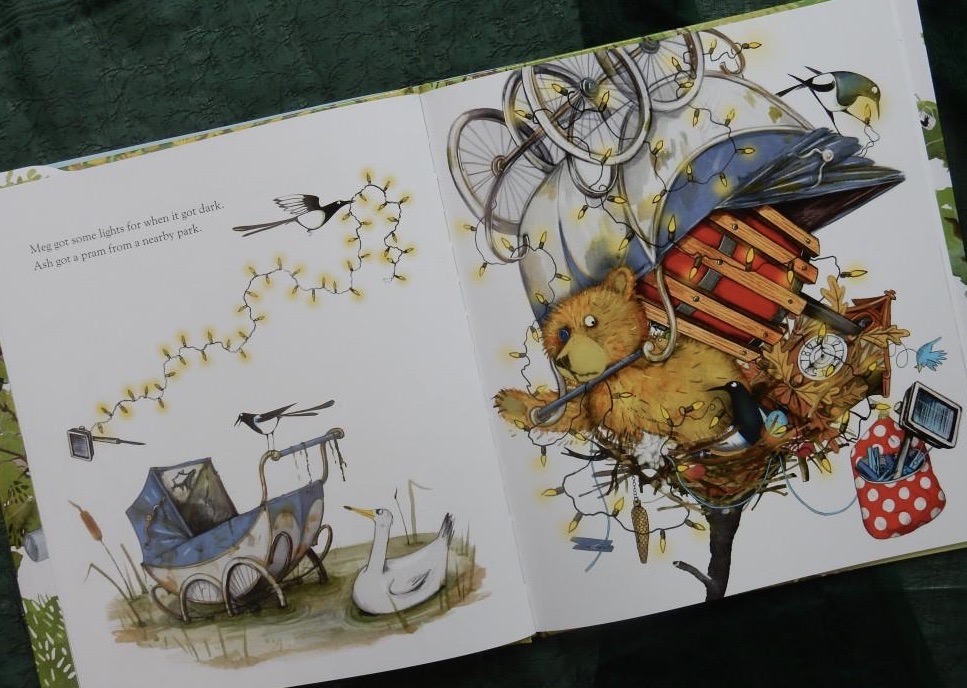
I suspect that since the start of the pandemic a large number of us would be finding that we, like Meg and Ash the pair of magpies in Emily Gravett’s funny rhyming story have Too Much Stuff.

The two birds create a wonderfully snug nest in the tallest tree and before long Meg lays four bright blue eggs therein. Everything is perfect surely? But not so in the opinion of the parents to be; to make that nest the best, more stuff is needed.

From the ground below the forest creatures watch in astonishment (as do readers and listeners) as Meg and Ash take turns to collect items that their chicks are ‘really going to NEED.’ Really?
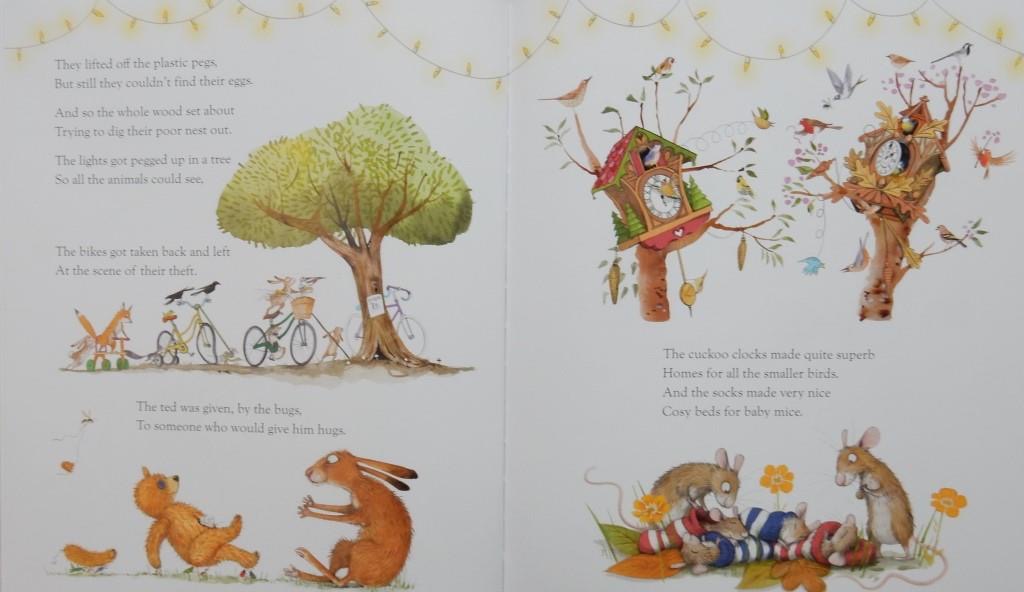
In come clocks, socks, blue plastic pegs, a dilapidated ted, a bin complete with rubbish, a pram even;

the pile gets ever higher until of the nest there is no sign. All that’s visible is a near-to-toppling tower of acquisitions those chicks might like one day.

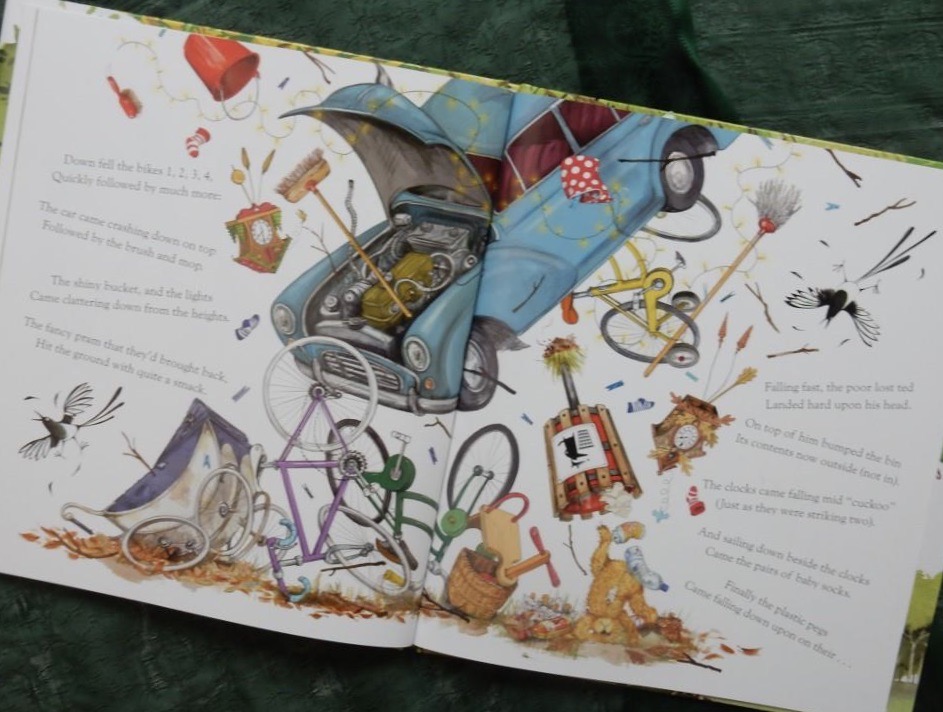
Inevitably disaster strikes – CRACK – down comes the entire teetering tree tower …

right on top of those precious blue eggs.

It’s fortunate that all the animals are willing and able to rally round and assist with operation clear up. Between them all they manage to find a use for everything; the rubbish becomes homes, a vehicle, or is otherwise utilised.

And those eggs? They too have become something else …

This is a terrific way to introduce children either at home or school, to the idea of waste, recycling and re-using. It’s great entertainment with that build up and anticipation of the impending catastrophe and there’s SO much going on in Emily’s detailed illustrations, every one of which is a mini-story in itself.
Make sure you look carefully at every single part of this book: the ‘STUFF magazine’ endpapers are enormous fun. I love the library ad. And the FOUR ‘R’s’ of RECYCLING’ demonstrated by the squirrels. Children will relish spotting the items from the story in the ads.
Definitely a book to add to your collection – however large! Of books you cannot have too many.

A Clutch of Activity Books

Here’s a selection of activity books kindly sent for review by GMC distributors

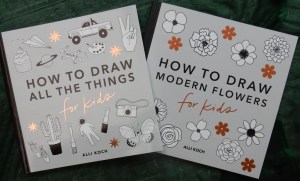
How to Draw All the Things for kids
How to Draw Modern Flowers for kids

Alli Koch
Blue Star Press
All young children are creative but as they get older they become inhibited and want things to ‘look right’, no matter what we teachers say in their early years.
Now here are two books by Alli Koch that will help them to draw confidently. The first is a general one with items such as vehicles, items of clothing, animals such as a hedgehog, cat or dog, a whale and a turtle, a dragon even.
The second features flowers from lavender to lotus, and marigold to magnolia. (I like the way each flower is assigned a meaning – a marigold is ‘the flower of creativity’, lotus the flower of patience, anemone the flower of ‘being true’, for instance. There are separate spreads for leaves, houseplants and more. Each of the featured items is drawn in eight, easy to follow steps and make the learning process both achievable and fun.

For younger children are:

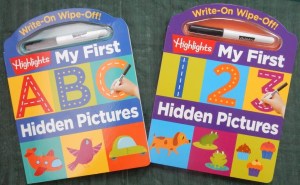
Write-on Wipe Off My First ABC Hidden Pictures
Write-on Wipe Off My First 123 Hidden Pictures

Highlights
These two sturdily built board books come with marker pens so that little ones can develop their letter and number writing skills on the wipe-clean pages as well as have fun with solving the various puzzles, finding the hidden items in a scene or adorning items such as a cake. There are mazes, matching games and looking for items starting with a specific letter sound in the ABC book. Both uppercase and lowercase letters are presented with directional arrows above the humorous illustration on each page.
The numbers book has a double spread allocated to ‘let’s learn’ and ‘let’s find’ from 0 to 10 so for instance a child has to trace and write the number 4, count and circle 4 oranges and 4 bananas on the verso and locate the 4 cats, find and circle the four illustrated items within the big picture as well as searching for other groups of 4 therein. They’ll surely enhance both fine motor skills and observational skills with these two playful books.

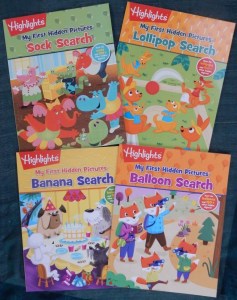
Balloon Search, Banana Search, Sock Search, Lollipop Search
My First Hidden Pictures series

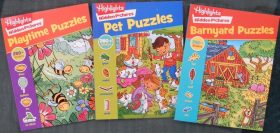
Playtime Puzzles, Barnyard Puzzles, Pet Puzzles
Hidden Pictures series
Highlights
Ideal for filling the odd few minutes, either on a journey, on holiday or on a dark, chilly evening are these search-and -find books.
The first series My First Hidden Pictures for the youngest age children have in addition to the thematic hidden objects to find, simple word games, drawing activities, dot-to-dots, colouring and drawing, matching and more.
The Hidden Pictures series includes pages of stickers that relate to the pages indicated and each has more than fifty hidden picture puzzles and a total of 500 objects hiding in plain sight in the themed pages that includes such funky spreads as Frosty Farm with sledging animals, Fiddling Frogs and a Community Garden among the Barnyard Puzzles. Pet Puzzles offers such zany activities as a host of felines in a beauty salon all desirous of ‘Purr-fect Nails’ (no social distancing or mask wearing here!) to colour and adorn with stickers. Meanwhile in Playtime Puzzles you can find a pair of octopuses playing table tennis with several bats, each inviting users ‘Let’s Play’ whereas ‘Catch of the Day’ has a comical coloured scene of two turtles fishing from a rowing boat bordered by small pictures of items to search the scene for.
There are hours of immersive screen-free fun between the covers of each book.

All Cats are on the Autism Spectrum

All Cats are on the Autism Spectrum
Kathy Hoopmann
Jessica Kingsley Publishers

This book is an updated version of the author’s 2006 All Cats Have Asperger Syndrome and since then what is considered acceptable terminology has changed and the author says in her note for this edition that people’s views are not all the same and that she hopes ‘readers will see past the finer details of disagreement and join me in celebrating, and deepening our understanding of, the richness and diversity of the autistic community.’ You can’t say fairer than that.

Essentially the book shows a sequence of photographs of cats/kittens in various situations accompanied by a sentence relating the visual to an element of being on the autism spectrum or as I prefer to say, neurodiversity. Thus the book opens with a shot of a kitty wrapped in a scarf and wearing a woolly hat introduced by ‘The first signs of autism are usually picked up very young.’ Now I could from my own experience challenge that for several reasons, but will say no more other than it’s generally truer for boys than girls, and remember the author’s words on her introductory page.
What I think Kathy Hoopmann is intending to present to readers how a child with autism might view the world: thus we have ‘Autistic people often have exceptionally good hearing, and loud sounds and sudden movements may scare them.’ 

and ‘Daily rituals comfort them, and they get worried if their schedules or surroundings are changed.’ 

as well as ‘When they are spoken to, they may refuse to make eye contact. When they talk, they go on and on about the same topic or ask the same questions over and over again …’

It’s great to read the acknowledgement that ‘with their unique perspective on life, their eye for details that others often miss and their passion for researching something they love, many will reach the top of their chosen fields … those on the spectrum are just like everyone else. They need love, encouragement and a purpose for life … and then everyone can sit back and enjoy the unique individuals they become.’

Poignant at times, funny at others, this book is a useful resource for teachers, parents, siblings, therapists; indeed everyone could benefit from reading it.

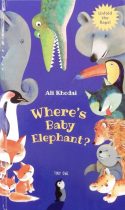
Where’s Baby Elephant?

Where’s Baby Elephant?
Ali Khodai
Tiny Owl

Here’s a gorgeous, interactive book – the first with unfolding flaps published by Tiny Owl – that involves readers/listeners in a search for a missing Baby Elephant.

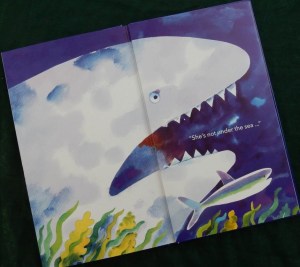
Stunningly illustrated, the journey takes us to meet all kinds of animal families by means of the cleverly designed double fold on every double spread. In the first sequence there’s a majestic lion and cubs, a hedgehog and hoglets, an orangutan and her little one. The missing infant pachyderm is “not under the sea …

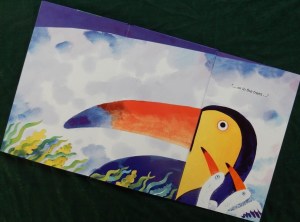
“or in the trees …”

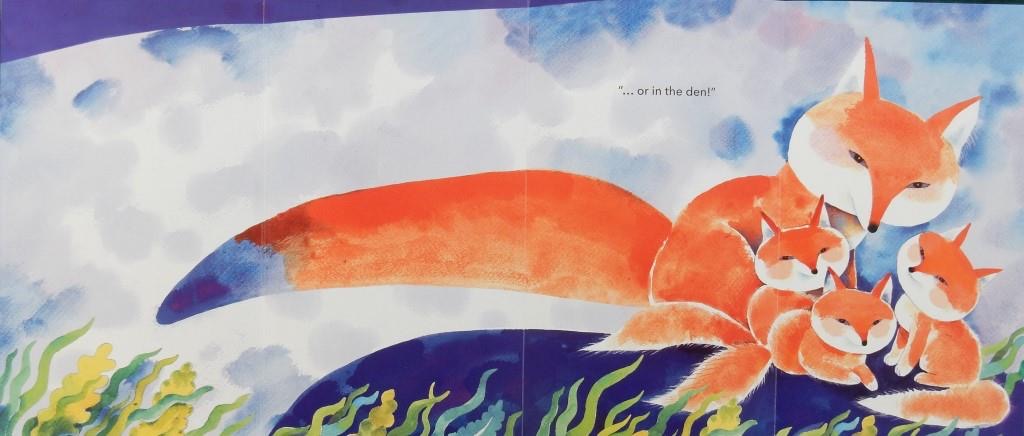
nor with a fox and her kits in the den,

nor with that snappy crocodile and its offspring, nor the bird with its nest of hatchlings. It’s far too chilly in the Antarctic but joy of joys, the bear finally knows where that elephant baby is …

Little ones will absolutely love unfolding the flaps to reveal the various animals and their young, but I especially loved the ingenious, innovative way in which illustrator Ali Khodai seamlessly blends the animals together.

What a wealth of fun learning lies between the covers of this smashing book. It’s as well it’s so sturdily produced as I’m certain it will become an oft read favourite among tinies fascinated both by the animals, and the way the book brings the animals to life as they manipulate the pages.

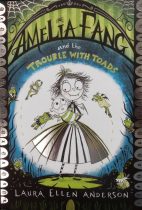
Amelia Fang and the Trouble with Toads

Amelia Fang and the Trouble with Toads
Laura Ellen Anderson
Egmont Books

This has been such a terrific series with smashing characters and I’m sad to learn that it’s the last of the Amelia Fang books; so too will countless young fans of the stories.

In this adventure, (I was laughing out loud by page three) we get to meet Vincent, Amelia’s very stinky, very snotty and very bothersome baby brother. As the story opens Amelia is excitedly preparing to join the gang of friends at Grimaldi’s birthnight celebrations. But then she learns that her mother Countess Frivoleeta (along with others in the household) has been struck down by Frankenflu and if Amelia is to go to the birthnight party then so too must her revolting little brother. A frustrating dilemma, but that much wanted time for herself is about to be sacrificed for the greater good.

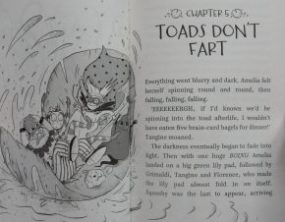
Fortunately, Squashy, Grimaldi and Florence are on hand to help with the babysitting but it’s not long before Vincent has done a vanishing act, rolling himself into a mysterious, somewhat threatening land; the place to which all squished toads go. Unless he’s to be toadally and irrevocably lost, Amelia and friends must go after him.

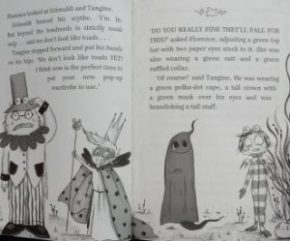
Fortunately they have recourse to that pop-up wardrobe of Grimaldi’s so they’re able to don toad disguises and head to somewhere completely off limits unless you ARE a toad.

Moreover, toads don’t fart …

There’s SO much to relish in this tale: that the friends follow a snot trail; how Amelia truly loves her baby brother despite everything; the way the friends pull together as a supportive team no matter what, sharing their feelings at just the right time; Florence prancing and pirouetting across that cave floor; the terrific character that is Furgus; how much Amelia and other characters learn about themselves and each other during the course of the story, not forgetting, Tagine’s shoe revelation.

And the ending is just perfect – except that it IS the end. Except for Amelia’s favourite memories gallery which is a fangtastic finale.

A complete triumph both visually and verbally for Laura. I can’t wait to see what she’s got coming next.

Who Pooed in My Loo?

Who Pooed in My Loo?
Emma Adams and Mike Byrne
Scholastic

I know from considerable experience that young children LOVE toilet humour so I have absolutely no doubt that Emma and Mike’s tongue in cheek offering will go down very well with listeners.

Herein one morning, the boy narrator is desperate to discover who has deposited a rather large and unsightly dump in the family’s loo and thoughtlessly left it for all to see. He contemplates various possible culprits – a stomping romping, plonking dinosaur,

a jaw snapping, tooth gnashing shark annoyed over the lack of floss of an appropriate thickness and strength, a fire-breathing dragon in need of a hasty early morning poop. Or, could it have been a giant with a belly-ache? He’s quickly ruled out on account of the deposit being insufficiently gigantic.

What about a clunking pachyderm who stopped for a bath too; possibly even a sore-bottomed lion suffering from an excess of breakfast. Surely it wasn’t a Christmas elf in festive garb who left that rather whiffy aroma along with his poo;

so maybe – on account of the rainbow – a unicorn stopped by … No magic though, so no unicorn visitor.

The determined lad runs through all the rejected candidates and then – lightbulb moment – there’s a possible of the human kind living right alongside our narrator … maybe somebody who needs a bit of guidance and encouragement when it comes to bathroom etiquette…

Silly? Decidedly so, but also great fun, a timely reminder of the importance of bathroom hygiene and dare I suggest, likely to become a much- requested book in foundation stage settings as well as families in a similar situation to the young narrator of this rhyming saga. Youngsters will relish both Mike Byrne’s hilarious scenes of potential bathroom visitors performing their morning rituals at a convenient place, and the opportunities to join in with some, stomping, sploshing, shaking and roaring.
Counting Creatures

Counting Creatures
Julia Donaldson and Sharon King-Chai
Two Hoots

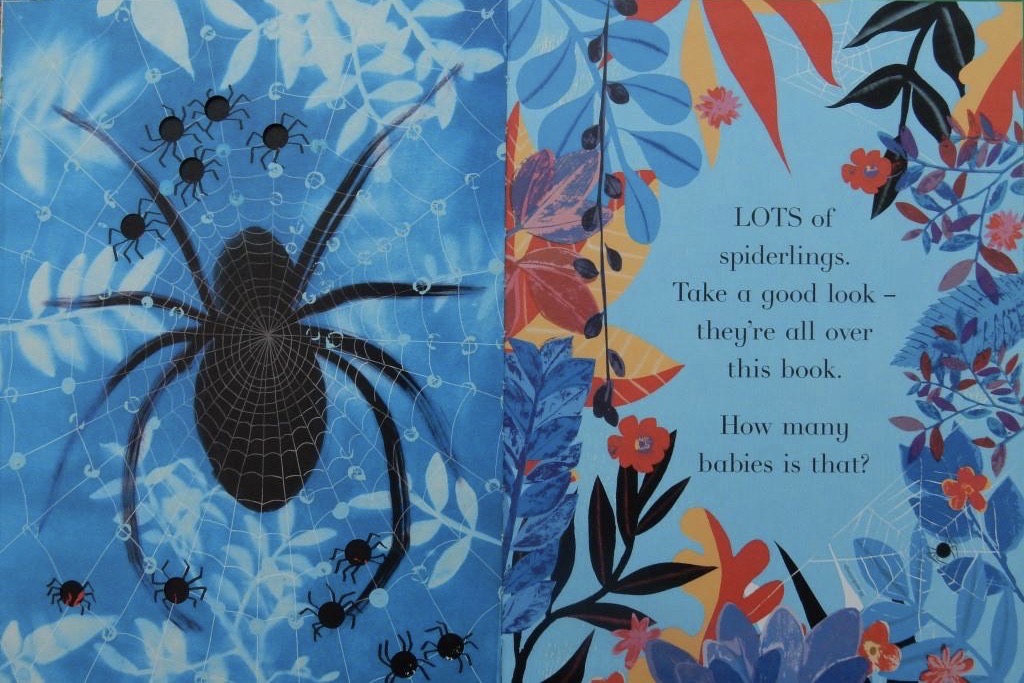
Gorgeous illustrations of adult animals and their young by Sharon King-Chai accompanied by an expertly constructed rhyming narrative by Julia Donaldson make for a terrific book to share with young humans who will want to spend ages pouring over the wonderful details on every spread. There are cut-away pages, die-cuts, fold-outs and flaps that are part and parcel of such scenes as the flying bat with a wing covering just 1 baby, a sheep with 2 baby lambs (one eating, the other bleating), a leopard with 3 tottering, swaying, punching, playing cubs.

Particularly striking is the seemingly lone wild dog behind which are hidden 4 pups, two nosing and nestling the other two writhing and wrestling.
Having reached 10 (piglets) the numbers go up in 5s, so next comes a turkey with 15 poults either peeping or cheeping and the question (repeated each time), ‘Who has more babies than that?’. In this instance the answer is ‘This butterfly’ whose wings cover 20 munching caterpillars, followed by a frog on a lily pad where beneath another there are 25 wriggling squiggling wiggling tadpoles.

The final two spreads serve to send readers hunting back through all the pages to locate ‘LOTS of spiderlings that Julia informs are ‘all over this book.’ (Surely not literally! I hear you cry!) Plus another quite challenging question to answer.

Hours of pure pleasure for adult sharers and their young ones, who will certainly need no persuading to peruse the pages that show the various animals, their habits and their habitats, as well as doing the intended counting on their wildlife journey.

The Bear in the Stars

The Bear in the Stars
Alexis Snell
Puffin Books

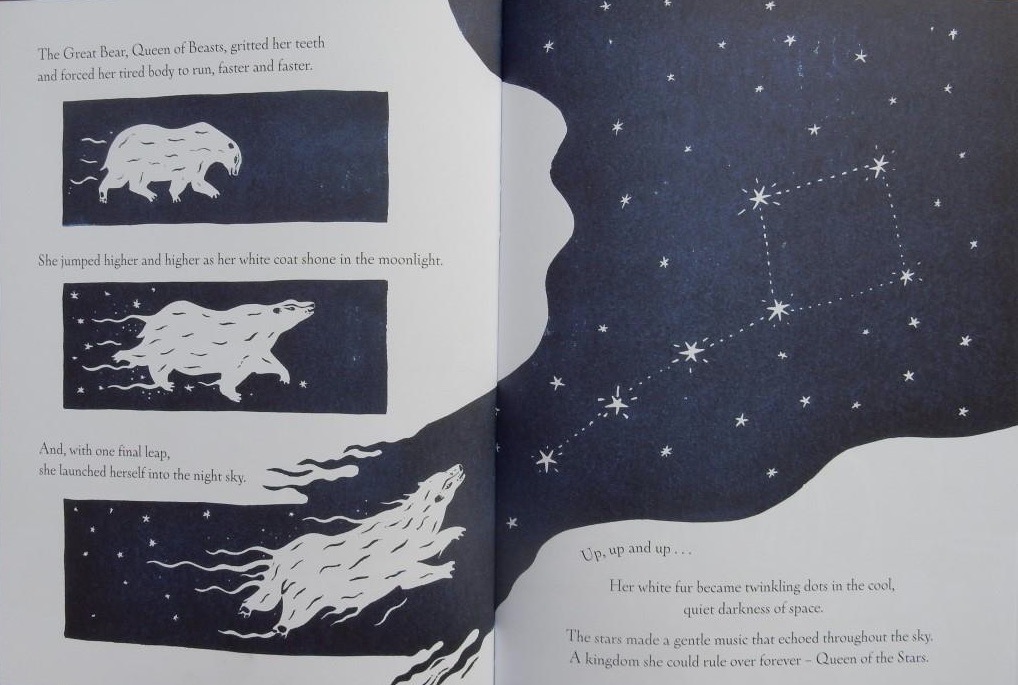
Accompanied by a series of stunning lino-cut prints, Alexis Snell tells the story of a polar bear, forced to leave the ‘cold, glistening place’ that is her home, on account of climate change.

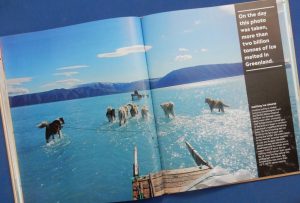
In this fable we learn how over the years as the ice gradually disappeared, one by one, other animals have had no choice but to move on and seek new places to live. Now it’s the turn of the Great Bear to leave her natural abode and search for another safe location.

Swept across a raging sea, she finds a likely-seeming place

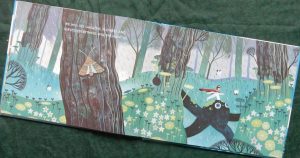
but it’s only temporary and then she’s swept on again down a rushing river upon the banks of which she encounters another bear – black and kindly – that tells her of a cool lake with fish aplenty.

Off she goes again and having sated her appetite, is briefly happy, but then the sun comes and off she goes to look for somewhere cooler. Now over-hot in her thick white fur, all she can find are lemon trees – no food for Bear these sour fruits. Her only solace is the stars in this changed world and with the morning a troop of monkeys come to her aid guiding her towards a ‘place that may help you’. Many hours later they reach a ‘human town’ and there, having settled her in a cool building, the monkeys leave her to sleep – long and deep.

On waking however, it’s not long before she learns that in this increasingly hot human world, it’s only the temperature that is growing ever warmer: human hearts remain cold and unwelcoming … until one single, small act of kindness changes everything … most certainly for our ursine traveller;

but what about those humans? One can but remember, wish and hope … and …

Using a changing colour palette from blues to reds, and then as the world recovers, to greens, Alexis’s is a tale of hope for a future that is better. That’s the vital message that one wants youngsters to take from this beautiful book. That and the determination to be part of the change that MUST be made by every single one of us.

A book for all, everywhere.

Why? / It Isn’t Rude to be Nude

Why?
Billy Dunne and Rhys Jeffreys
Maverick Publishing

Young children are innately curious about the world around them, always asking questions and wanting to discover new things. So it is here with the girl who is out walking with her dad when he points out a rainbow in the sky saying, “You get them when the rain has passed and the sunshine comes instead.”
“Why?” comes the girl’s softly spoken response. This precipitates a sequence of further questions “Why?” followed by explanations from Dad who speaks first of colours in a light beam being split when they pass through rainy weather;

then the fact that blue light bends a little more than red.
The next “Why” invokes an explanation of this fact. The girl’s whys intensify and Dad moves on to more sophisticated talk. After which the poor fellow is feeling somewhat frazzled and in need of a rest. But still comes another “Why?”

What the guy says in response gets right to the crux of the complex matter but story spoiler I won’t be, so I’ll leave you to wonder or ponder upon this – unless of course you’ve sufficient knowledge of physics to answer for yourself. Whatever the case, his daughter is delighted, and all ends satisfactorily – just about!
Just right for youngsters eager to find out about their world (rainbows in particular) and their weary adult responders.

Billy Dunne’s rhyming narrative making accessible some tricky science, is easy to read aloud (great final throwaway comment from the daughter) and is well complemented by Rhys Jefferys’ illustrations. I love the way he shows the changing expressions of the father as he does his utmost to keep up with and ahead of, his daughter’s “Why”s and his wordless spread showing ‘The complex composition of the photon field’ is a complete contrast to the relatively spare previous ones.

It Isn’t Rude to be Nude
Rosie Haine
Tate Publishing

Open this debut book of Rosie Haines and almost immediately you’re faced with this spread with bums

after which we see nipples (normal things), ‘willies’ (not silly) and vulvas. Thereafter come changes to some parts – boobs might grow, and hair (don’t be scared).
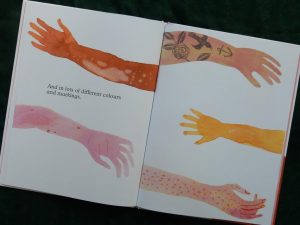
On view too are bodies of all kinds and a variety of body colours and markings

as well as hair (or lack of it). We’re shown people whose bodies stand, sit, or leap and dance, and sometimes strut across the spreads

all with one object in mind – to promote body positivity and to show how bodies change over time as we grow and get older.

Children for the most part do have a positive and healthy attitude to nudity; it’s often the attitudes of adults that trigger those feelings of shame about the naked form and being naked. So, it’s three rousing cheers for Rosie’s book illustrated with a wonderfully warm colour palette and a pleasing fluidity of line.

One Girl

One Girl
Andrea Beaty and Dow Phumiruk
Abrams Books for Young Readers

A little girl sits outside her home one night looking somewhat dejected when all of a sudden from the sky there falls a book, aglow like a falling star. It lands close to her feet. ‘One Girl. One spark.’ On opening it a flaming flower springs forth from the pages, igniting a spark that the girl follows to a wonderful land of possibility. As she continues her allegorical journey her lonely world is transformed into a bright place full of wonder and opportunity.

So impassioned is the girl that she takes her book into school to share with her classmates. Then, further inspired, she takes a pencil and her imagination takes flight as her own, original words flow through her writing, creating a story she also shares with her class.

This kindles a spark in them too and they appear not only to find their own voices but to discover joy and wonder in reading.
Now they too have a burning desire to share their wonderful new discovery with others and thus they send forth

‘Words like comets through the night. / Blazing streaks of blinding light. / Seeking out the darkest dark …’ and thus, the story comes full circle and another girl’s life begins a transformation.
This beautifully written and illustrated book spoke so powerfully to me. I could have been that girl whose life was totally transformed by the magical power of books as was the child in Andrea Beaty’s spare rhyming text, a text wherein every word is chosen for maximum impact. In my case though it was thanks not to what happened in my school, but to my wonderful father who took me every Saturday to our local library and also enrolled me in a book club at a young age, so I received new magic every month. It’s also a spark that in my role as a teacher, I’ve always strived to ignite in every single child I’ve ever worked with, and will continue to do so ad infinitum …

Although there’s complete harmony between the words and pictures, Dow Phumiruk’s radiant illustrations convey much of the story illuminating with their details the transformational power of books, of writing and of education.

Leaving much to the reader’s interpretation, this is a book to share widely, to ponder upon, to discuss, and one hopes, one that will ignite that spark in all who are open to the might of their own potential.

Poems to Save the World With

Poems to Save the World With
chosen and illustrated by Chris Riddell
Macmillan Children’s Books

I fell head over heels with Chris Riddell’s Poems to Fall in Love With and now comes this third of his anthologies, published at a particularly challenging time for everyone, whoever and wherever they are. I received my copy on the day the announcement came of restrictions changing AGAIN, which has meant having to revise plans to visit relations with 3 young children. I felt I needed to dive straight into the book to look for some poetic solace, and headed first to the Lockdown section where unsurprisingly I found much that spoke to me immediately. First, Brian Bilson’s Serenity Prayer that begins ‘Send me a slow news day, / A quiet, subdued day, in which nothing much happens of note, / save for the passing of time ’.

Actually, every one is a gem, not least Chris’ own Lockdown that made me well up. In contrast, Roger McGough’s The Perfect Place that opens thus: ’The world is a perfect place to be born into. / Unless of course, you don’t like people / or trees, or stars, or baguettes.’ … and concludes ‘About the baguettes, / that was just me being silly.’ that end really made me chuckle.

New to me but already oft read are Nikita Gill’s Kindness that has four incredible illustrations by Chris and Neil Gaiman’s What You Need to be Warm written originally to support the 2019 UN Refugee Agency winter appeal with these final lines, ‘Sometimes it only takes a stranger, in a dark place, / to hold out a badly knitted scarf, to offer a kind word, to say / we have the right to be here, to make us warm in the coldest / season. // You have the right to be here.’

and also from the Everything is Going to be OK section, Rachel Rooney’s Battle Call that will surely spur readers into action.

Among the classical poems Wordsworth’s Travelling ‘This is the spot: how mildy does the sun / Shine in between the fading leaves! The air / In the habitual silence of this wood. / Is more than silent:’ illuminated my woodland walk with my partner the previous day. More than silent it surely was, as our peace was shattered by a very young boy (a modern day Max) out with, I think his dad and , both of whom were howling like wolves for several minutes – stress release I suspect – but very amusing to us in our previously silent wood.

In the same wood on that same walk there’s what I call a troll bridge (made of logs) so I loved finding A.F. Harrold’s wonderful Troll Song made even more so by Chris’ drawings of the troll narrator whose concluding thoughts include, ‘I read a lot of books. They contain other worlds. / For a time I can imagine I’m not living under a bridge.’ Books have certainly been key in keeping this reviewer sane during the challenges of the pandemic.

From the section The Elephant in the Room, is John Donne’s No Man Is an Island that seems even more ironic with this weekend’s announcement of the likelihood of a catastrophic BREXIT no-deal.

In one or more ways, every poem herein helps illuminate the huge challenges we all face, individually and collectively, if we are to make our world a better place for everyone; and what better way to conclude than with Nikita Gill’s uplifting, ‘This is me checking in / sending you the moon as a poem, praying and wishing for us all / a speedy recovery. // And if nothing else, / There will always be poetry/ We will always have poetry.’ from Love in the Time of Coronavirus.

Superbly presented, exquisitely, often intricately, illustrated and enormously uplifting, this is a must for sharing, for giving and for keeping.

Ollie’s Lost Kitten / The Grinny Granny Donkey


Ollie’s Lost Kitten
Nicola Killen
Simon & Schuster Children’s Books

Ollie returns for an autumnal tale that is every bit as enchanting as her previous stories.
One crisp, blustery autumn morning Ollie, sporting her cat suit and pursued by her beloved moggy Pumpkin, head outdoors. Suddenly Ollie, about to jump into a leaf pile sees that it’s moving and then a sudden gust of wind reveals, hiding among the leaves, a tiny shivery kitten.

Having warmed it up, Olllie and two felines frolic in the leaves, catching them and playing forest explorers until they’re tired out. Before long the little kitten is ready for more play so Olllie joins in, totally forgetting about Pumpkin still slumbering beneath a tree.
The two dash off deeper into the woods where they spot lots of ‘lost kitten’ posters.

The girl knows she must try to find the kitten’s home so off they go, following a path revealed by the leaves, all the way to a little cottage where the kitten lives.

It’s a somewhat tearful Ollie who heads back, suddenly realising that her very own Pumpkin has been left alone. Feeling sadder still, she sits in the dark, lost and a bit fearful, till all of a sudden, she hears a rustle,

and then an extremely welcome ‘miaow’ that she recognises …

Gently suspenseful and beautifully illustrated, Nicola’s gorgeous graphite scenes with pops of orange and occasional cut-outs, give the story an autumnal feel making it ideal for sharing with little ones, just now especially.


The Grinny Granny Donkey
Craig Smith and Katz Cowley
Scholastic

Here’s a tooth-troubled addition, in the form of Grinny Granny, who joins Wonky Donkey and Dinky Donkey in the daft donkey family delights related by Craig Smith and beguilingly illustrated by Katz Cowley.


No grey lady is this one with her swanky styled titfa and adornments of the jewelled kind.

There’s nothing this granny donkey likes better than to sit playing her banjo, sipping a cup of her favourite brew and dunking in her biscuits,

but there’s a snag of the dental kind; her false teeth just won’t stay in her mouth.

Occasionally however she does get a bit down in the mouth, not on account of her teeth (those can be put back pretty niftily) but when her family fail to visit for a seemingly long time. That makes her grumpy and cranky, until up trot her son Wonky and her granddaughter Dinky. Then back comes that toothy smile and it remains, lighting up her donkey countenance for weeks and weeks – hee haw how splendid is that!

Herein with its wonderful sounding dunks, plunky-plinks,

clunks, clinks, clanks and zonks, Craig’s ‘Hee Haw’ -ing cumulative narrative plonks along nicely in time with Granny’s banjo strumming; adorably depicted in Katz’s scenes of this gentle grinning granny jenny.

Little ones will love it especially when read by their own grannies. It’s great for developing awareness of rhyme and sound/symbol associations to boot (or maybe hoof).

Timelines From Black History

Timelines from Black History
Dorling Kindersley
illustrated by Lauren Quinn

In her foreword to this powerful and important book, Mireille Harper states, ‘Black history has been overlooked and minimised in every area of society, and even worse often erased. Yet, the contributions of Black people to society influence every part of how we live, from the art and culture we consume,

to the rights we have.’ How true and how shameful that our society has allowed the continuing hostility, racism and discrimination to continue; thank goodness then for the Black Lives Matter movement and for all the awesome people featured and celebrated in this book. Now more than ever it’s time for change and we can all be a part of that change.

What an absolute wealth of information is packed between the covers of this inspiring book that features both the people and the vital events that have shaped and embody, Black History.

We start right back at the origins of the human race with information explaining how the whole human story began in Africa and the journey takes us from this prehistory through to modern times.

Did you know for example that, thanks to the exceptionally brave empress, Taytu Betul, Ethopia was one of only two African countries not colonised? Or that inventor, engineer and writer, Lewis Howard Latimer invented and patented a carbon filament that allows a light bulb to last much longer than did the paper one used in Edison’s design? (That was something I learned from this book).

There are more than thirty visual biographical timelines that present writers, scientists, activists, royalty, singers and musicians, sportsmen and sportswomen some famous, others less so, as well as those explaining the experiences of black people in the United States and in Africa through to post-colonial times. You can find out about some of the achievements of ancient African kingdoms as well as those of the Civil Rights movement in the United States including the father of that movement, Frederick Douglass. Some of my all-time heroes such as Nelson Mandela, Barack Obama

and Wangari Maathai are included.

This is a book that should be used in all KS2 classrooms and secondary school history departments.

Everything is Mine

Everything is Mine
Andrea D’Aquino
Tate Publishing

Meet Marcello Von Cauliflower Bonaparte Jackson, usually called Marcello by friends. He is, so he says, kind, clever and very loyal. There’s one snag however, out narrator pooch considers that everything belongs to him – yes everything.

A pink fluffy slipper? Definitely his – one’s surely enough for his ‘mum’. The pork chop on that plate? His assuredly (there’s no label saying it’s Leo’s after all.)

Ditto Squirrel’s acorn and even that tree. That’s sticks for the rest of Marcello’s life sorted. Indeed, the whole park is his so it’s his rules that must be followed.

So what about the entire universe? You guessed: that’s Marcello’s too. It’s on his ‘my stuff’ list.

It looks as though Marcello and his acquisitive nature are totally out of control.

Is there any chance that Leo might, just might show him what truly matters?

Perhaps owning ever more things isn’t really THE most important thing in life after all. This is definitely something that so many of us have worked out for ourselves during the on-going pandemic. Whether this fun story with its vital message was conceived pre-covid I’m not sure, but it’s certainly a timely one. The funky collage illustrations are superb, brilliantly expressive and I love the various footnotes – oops sorry paw notes – asides and comments by the bit part players. Great endpapers too.

Sofia Valdez and the Vanishing Vote

Sofia Valdez and the Vanishing Vote
Andrea Beaty, illustrated by David Roberts
Amulet Books

The Questioneers – Sofia and her friends – return in a new chapter book adventure and just in time for the USA election. It’s also time for Sophia and her classmates to have an election to select what animal should be their class pet – another one of their teacher, Miss Greer’s ‘Learning Experiences’.

Clearly there won’t be a perfect candidate that everyone wants so the ‘best one’ will have to do, so says Abuelo as they walk home together; moreover, the pet must be small enough to fit (inside its home) on the bookcase. Eventually the list of possibles is whittled down to five contenders and then just two.

When Sofia is put in charge of managing the election (as election commissioner) things are tricky, as the candidates backed by two of her best pals are against each other.

Pretty soon Sofia learns that being i-c a fair election is more than a little challenging. It’s fortunate however, that she has both Abuela’s wise advice and assistance from the local library to act as guidance.

Highly entertaining and superbly explained, Andrea Beaty’s story contains a number of messages about classroom relationships and community, as well as imparting vital points about freedom of information, good journalism, a boycott, fake news, and that about there never being a perfect candidate in an election. And if things haven’t got spicy enough, there’s even a baking tip or two included and of course, all those smashing illustrations and diagrams from David Roberts.

The Bear and the Moon

The Bear and the Moon
Matthew Burgess and Cátia Chien
Chronicle Children’s Books

A little bear wakes after a long sleep and spies something floating in the sky. At first it’s just a red dot, but as it comes closer he notices more; ‘red as a berry / and round like the moon / with a silver string drifting brightly in the breeze.’ Being of an investigative nature the bear goes to discover what he can. The two are soon engaged in a pas de deux

lasting till evening when the bear stops to eat and then settles down with his companion in the glowing moonlight.

Next morning though the two are soon up and about once more with bear rolling, sitting and cavorting with his new friend until … disaster. An over-enthusiastic bear hug ends the balloon’s life rendering it a scattering of red pieces, one attached to the silver string.

As evening comes Bear is left devastated. And full of guilt: ‘Bad bear, / he thought. / Bad, bad bear.’ With the night though as he swims miserably across the creek,

comes another gift from the sky to bring comfort and cheer as it ‘reached down to him and gently stroked his fur.’ And all is well once more: loving memories endure …

Written in spare, gentle words, Matthew Burgess’ poetic allegorical text is both potent and poignant, highlighting the power of friendship, and of loss. In artist Cátia Chien he has the perfect collaborator. Her mixed media illustrations with those changing viewpoints and colours, are sublime, and finely tuned to the changing moods of bear, from the delight of discovery right through to mourning and finally, acceptance (of self and of loss), and healing. Simply, beautiful.

Celebrating Nosy Crow Board Books

Peekaboo Bear
Peekaboo Apple

Camilla Reid and Ingela P Arrhenius

Toddlers and babies absolutely love to play peekaboo, especially when there’s a mirror involved, so these two books will be winners on both counts. Add to that Camilla Reid’s playful rhyming couplets that introduce equally playful, adorably illustrated animals, some of which are revealed by manipulating the sliders in Ingela P Arrhenius’s brightly coloured, patterned spreads, (as well as the occasional human in the Apple book)

and you have two sure fire winners for several more reasons. Exuberant language, alluring art, manipulative skill development and most importantly, sheer fun: what more can one ask of books for babies?

Listen to the Carnival of the Animals
Marion Billet

With its six sound buttons embedded in the spreads, tinies can listen to the Royal March of the Lion, The Elephant (and maybe stomp along too), bounce in time to Kangaroos, imagine floating neath the Aquarium water, enjoy the flutes emulating bird song in an Aviary and finally, glide gracefully across the lake like The Swan. Each animal (often along with minibeast bit-part players) is allocated a double spread brightly and engagingly illustrated and introduced with a sentence to maximise engagement such as “Does the bouncy piano sound like a kangaroo?’

or ‘Isn’t it magical under the water?’and there’s a final page asking “Which animal was YOUR favourite?’
A lovely introduction to Saint-Saēns’ classic The Carnival of the Animals for the very youngest listeners (with music played by two famous orchestras)

Who’s Hiding in the Snow?
Katharine McEwen

In five beautifully illustrated double spreads we visit a variety of chilly locations wherein to discover the answer to the titular question. First, we’re in the Asian tundra in the early morning to hunt for the climbing and flying animals that have hidden themselves under the snow (lift the flaps to find the amur leopard, the ermine, a Siberian squirrel, a Siberian tiger and a snowy owl.) Next stop is the icy Antarctic to search for swimming creatures, a bird that hops on one foot and a chinstrap penguin creche. Afternoon in the Eurasian mountains shows some animals while others –including an alpine marmot and sleeping wild boars are hiding.

A snowy Arctic evening depicts animals on the move and others such as the walrus, resting . It’s night-time when the final destination is reached and the northern lights shine to reveal the ears of grey wolves (the rest being hidden) as well as a moose lurking behind snow-capped rocks and some very sleepy dall sheep. Brr!

A considerable amount of information about the various animals is given on the inner side of the flaps under which the animals are hidden offering interactive learning of a fun kind for young children.

The Museum of Me / Like A Giant


Here are two picture books kindly sent for review by Tate Publishing:


The Museum of Me
Emma Lewis

‘Everyone says I’m going to love the museums,’ so says the little girl narrator in this delightfully quirky book as we accompany her on a journey wherein she travels by bus, to a variety of museums, showing us what they are, and what each has to offer.


Therein she finds all manner of objects that fascinate her such as ancient toys very similar to her own, pottery,


strange birds and giant bugs, contemporary artworks and lots more besides.

Then there are museums outdoors too, sometimes in gardens,


and our narrator even contemplates the possibilities of a museum in space.
Finally, she takes us to see The Museum of Me – her very own collection of favourite things.
Now that’s a fantastic starting point, once you’ve shared with youngsters this smashing look at the delights that museums have to offer. I love the distinctive, collage style illustrations that imbue the entire book with a sense of the importance of individual responses to museums, indeed to the whole of life.

Why not suggest children create and curate their own personal museums featuring items from their lives and experiences? Such an activity offers both a personal response and a demonstration of the way in which museums the world over have often been created out of the lives and experiences of ordinary as well as extraordinary people. For now I’m going to start thinking of items for my museum of me, restricting it to (desert island discs style) ten.


Like A Giant
Marc Daniau and Yvan Duque

Take a giant – just awoken, a city child – ready and waiting, and a journey; those are the key elements of this picture book that is a wonderful celebration of the power of childhood imagination. Said journey takes the adventurers across the ocean, then moving at high speed beside a railway track, on up towards a wonderful mountainous region abundantly green where it’s time to slow down, stop and relish the serenity of the scene spreading out before them.

Then comes a soaring ride through the skies – snow softly falling – to see deserts, islands, hills and valleys, lakes and more. There’s a place to sate the travellers’ hunger, wonderous verdant gardens and woodlands to enchant and delight.

They’ll travel through all kinds of weather

and through a whole day and night, but though that entire trip has lasted just a short time, it has been an unforgettable, life-enhancing experience for the hero large and the hero small.

With incredibly powerful scenes by Yvan Duque and a travelogue commentary in the imagination of a small child by Marc Daniau, this is an awe-inspiring book to share slowly and meditatively, perhaps at bedtime.

Climate Emergency Atlas

Climate Emergency Atlas
Dan Hooke et al.
DK (Penguin Random House)

There is no getting away from it: Planet Earth is facing a horrifying climate emergency and we humans have only a few years in which to act before the destruction we are wreaking is irreparable.

Divided into four sections, it’s first explained to readers How Earth’s climate works, this is followed by a look at the causes of climate change; then comes the impacts of climate change. This part really is a wake-up call with pages such as those on the Burning of fossil fuels (though it’s good to read that Germany’s emissions of greenhouse gases have decreased over the last 30 years).

We also see the effects of extreme weather in both humans and the natural world where sea levels are rising, and with the oceans getting warmer there’s devastating coral bleaching and danger to enormous numbers of marine fauna and flora.

There’s a spread on the Australian bushfires, another looking at and locating endangered ecosystems the world over, while Livelihoods in peril explores the impact of climate change on countless numbers of people who are forced to leave their homes on account of storms, drought, rising sea levels and fires.

The final section, Action on climate change, demonstrates that there is much we can do to halt this catastrophic climate change, stressing that we have to act quickly to cut greenhouse emissions, not only at a government level but also as individual humans. We can all play our part by becoming activists, changing to diets that help reduce agriculture’s carbon footprint, (there’s a Planet-friendly eating spread) by recycling and reusing rather than buying new unnecessarily, by planting more trees (the right kinds) and much more.

I was awed by reading about what the city of Copenhagen has done and is doing as part of it mission to be the first carbon-neutral capital by 2025. The book ends with a look at how by saving energy, growing green, and other acts we can all play our part. All is not lost; it’s both our individual and our collective responsibility; with a foreword by environmental scientist, Liz Bonnin, this book is surely another rallying cry to ACT and keep on acting today, tomorrow and every day …

Both primary and secondary schools need at least one copy.

The Secret Explorers

The Secret Explorers and the Comet Collision
The Secret Explorers and the Lost Whale
The Secret Explorers and the Tomb Robbers
The Secret Explorers and the Jurassic Rescue

S J King, illustrated by Ellie O’Shea
DK (Penguin Random House)

These four books, ideal for newly independent readers, feature seven children from different parts of the world, each with a special interest and expertise in a particular STEAM subject. Whenever their help is required, they receive a signal alerting them that they’re needed for a mission.
In The Comet Collision it’s space expert Roshni with Ollie (his expertise is the rainforest) who are called to the Exploration Station to undertake a mission and it’s truly out of this world. Tasked with fixing the space probe that’s orbiting Jupiter before it’s hit by a comet in less than two hours, the chosen two whizz off in a spaceship leaving the other team members to monitor the mission and communicate via control monitors. As the clock ticks Roshni prepares to undertake her first spacewalk – but that is only part of the story …

With a South Pacific Ocean setting, The Lost Whale sees Connor (marine expert) teamed with Roshni, a seeming unlikely partner but as in all the stories, the role of the less expected one is revealed during the course of the mission. Connor and Roshni set out in a submarine in an attempt to save a pod of humpback whales that have lost their way by steering them back onto the right track. However, those whales need air every 45 minutes and there are lots of boats in the waters likely to make things difficult. And difficult it soon is particularly when one of the whale calves gets separated from the pod. Will the Secret Explorers’ mission end in success?

Once again there’s plenty of action (love the rap) and a wealth of information is given in the course of the story – here it relates to marine life, threats to ocean ecology and climate change; and like the other books, after the story are further facts and diagrams relating to the themes, plus a quiz and a glossary.

It’s Gustavo with his expertise in history and engineering expert Kiki who pool their skills in The Tomb Robbers adventure. They find themselves travelling back in time to ancient Egypt on a mission to save the Cairo museum in their own time from having to close on account of lack of treasures to attract sufficient visitors. That entails preventing tomb robbers from plundering the Great Pyramid for artefacts. As ever teamwork is key though it’s not easy for Kiki and Gustavo to work out who is and who isn’t to be trusted. This time, readers will learn a fair bit about life in ancient Egypt during and after the story.

Paleontology expert Tamiko, together with geology expert Cheng already have a fair bit in common and it’s they who undertake The Jurassic Rescue, going back in time 150 million years. There’s a precious Archaeopteryx egg to be rescued but in order to do so the two must hold off a group of predatory allosauruses. What with an earthquake, a landslide and the unexpected hatching of that egg, things are anything but easy, especially as so another of the team informs them, if they look too long at the hatchling, it might think Cheng and Tamiko are its parents. Will they ever manage to reunite it with its mother?

Dinosaur addicts in particular will love this one and enjoy the relevant back matter after the exciting adventure.

If you know or teach readers who are starting out on chapter books and like a good, well-illustrated story but want some facts too, then this series is a great starting point.

The Runaway Pea Washed Away

The Runaway Pea Washed Away
Kjartan Poskitt and Alex Willmore
Simon & Schuster Children’s Books

The small green spherical runaway vegetable has already achieved VIPea status so far as this reviewer is concerned thanks to his cracking first outing in The Runaway Pea. Now he returns in a second delicious escapade starring himself but equally for me, his co-adventurer, the little spider that he encounters and proceeds to rescue having met same after being washed down the plug-hole and into the drain along with all the slime and mess. This, surprisingly, doesn’t spoil his fun; indeed, pea positively relishes his surroundings. It’s when he’s so doing that he comes upon the spider all of a panic that’s doing anything but enjoy the lack of a spot on which to stand its eight legs.


This image has an empty alt attribute; its file name is dscn4920-2.jpeg
However, the rescue effort quickly turns into an exciting experience – for one of the two anyhow – when they emerge into a stream. As they drift along, optimistic pea wants to take the opportunity to make some new friends; spider on the other hand, proffers several pieces of sage advice that do nothing to dampen pea’s spirits.

This image has an empty alt attribute; its file name is dscn4921-2.jpeg
Will the two ever see dry land and safety again?

This image has an empty alt attribute; its file name is dscn4922-2.jpeg
Actually it’s a case of yes and no, for the tale, rather like that water down the plug-hole, twists around perfectly to a wonderful conclusion that leaves things wide open for yet more adventures.


Bring it on say I and so will countless young listeners who will doubtless be delighted by pea’s unsquashable joie de vivre. Author Kjartan Poskitt and illustrator Alex Willmore have dished up another cracking rhyming tale with wonderful characters so cleverly given real personalities despite comprising mere spheres and (in the arachnid’s case) the odd few single lines. HapPEA reading.

Count On Me

Count On Me
Miguel Tanco
Tate Publishing

The little girl in this story wherein every one of her family members has a passion, struggles to find hers – at first that is. Her dad loves to paint, her mum loves entomology, her brother is a budding musician but none of these find favour with our young narrator.
Nor do those activities she tries – dancing, cooking, singing or sports, for instance:

not a single one arouses passion in her, worthy though they might be.

All else has failed but what about maths? Now there’s something that really fuels her enthusiasm – a passion at last! Yes maths is amazing

and it’s everywhere once you start looking: there’s an abundance of geometric shapes in the playground, at the lake,

in the block buildings she constructs. There are perfect curves to be discovered; number conundrums to solve over a family meal; then there’s symmetry in making a paper plane, as well as the excitement of launching and tracking its trajectory once complete.

As the girl reminds us, being passionate about maths can be strange to some people – hard to comprehend in fact – but as she says in conclusion, ‘ there are infinite ways to see the world … And maths is one of them.’
Seeing the world through the lens of a mathematical mind can most certainly seem well-nigh incomprehensible. It certainly was to this reviewer whose amazing dad (a Cambridge mathematician), maths puzzle solver extraordinaire, and for whom maths was inherent in his job, failed to understand how it was my least favourite subject at secondary school, and one I couldn’t wait to drop after O-level.

It’s great for those with a maths aversion as well as to demonstrate the power and importance of passions, whatever they are. I love the way in which Tanco shows readers the world through that mathematic lens, illustrating so many different concepts in his watercolour spreads of everyday activities, while also introducing mathematical vocabulary in the girl’s narrative. I love too the final ‘My Maths’ notebook that explains and illustrates the mathematical terms and concepts that are part and parcel of the story. Perhaps if I’d had this gem of a picture book as a child who knows …

The Secret Life of Trees

The Secret Life of Trees
Moira Butterfield and Vivian Mineker
Words & Pictures

Oakheart the Brave, oldest tree in the forest wherein it stands, acts as narrator of this revealing look at what happens beneath the bark and ‘neath the branches, below the roots even, of trees –arguably THE most important life form on our planet. Some of what we read contains truth in the form of fiction, some is fact.

To begin this fascinating book, Oakheart tells of how a marauding mouse seizes the acorn containing the very seed from which emerges the little shoot that is to become our enormous narrator.

He goes on to regale readers with arboreal tales including a version of an Indian one, The Banyan Tree, as well as The Sky-High Tree from Hungary

and some season-related stories: from Scotland comes The Fairy Tree, from Norway, The Summer Storm and with its autumnal setting we have The Tree of Life from Persia, while the final tree tale Magic in the Forest comes from Britain and is a legend about the wizard , Merlin.

There’s plenty of science too, relating to photosynthesis;

facts and figures about the oak’s growth; information about its animal inhabitants – small and very small; how trees communicate; seasonal change is discussed and much more, concluding with the all-important How to be Tree-Happy that explains briefly how to care for our precious trees and how you might grow one yourself.

Moira’s mix of information and story works wonderfully so the book should have a wide appeal; every spread offers an exciting visual experience too. I love the different viewpoints and clever ways of presenting information such as that of Secrets Inside Us.

Thank you Oakheart for your special gift.

The New Girl

The New Girl
Nicola Davies and Cathy Fisher
Graffeg

Softly spoken, sensitively rendered and enormously moving is Nicola and Cathy’s latest picture book narrated by a member of the class into which the new girl arrives ‘wrapped up like a parcel’ and not understanding a word that was said by her classmates.

Almost unbelievably, the newcomer is set apart to eat her lunch on account of its ‘funny’ smell and as school ends she walks away quite alone. This cruel behaviour continues day after day as winter arrives bringing with it dark and dreariness.

Then one day into that dark something wonderful appears on the teacher’s desk.

Each day after that another one appears somewhere in the classroom bringing with it feelings of warmth and cheer until the beautiful objects stop coming.

At their teacher’s suggestion, the children start trying to make their own paper flowers, the narrator unsuccessfully … until the new girl shows her how.

Flower making isn’t all that’s learned in that classroom on that particular day though; so too is a new language and the importance of accepting difference, of understanding and of friendship …

Cathy Fisher’s illustrations are startlingly realistic, full of feeling and atmosphere – the ideal complement to Nicola’s text.

Primary classrooms should definitely add this to their collections.

Fearless: The story of Daphne Caruana Galizia

Fearless: The story of Daphne Caruana Galizia
Gattaldo
Otter-Barry Books

In this book paying tribute to his friend Daphne Caruana Galizia the fearless journalist assassinated in Malta in 2017, illustrator/artist Gattaldo has created his first children’s book.

Herein he shows her as a lover of stories and reading from an early age. A person whose reading taught her to think for herself, no matter what.

A person unafraid to expose wrong doing in her journalism.

A person whose belief that peaceful protest could change people’s lives and resulted in her being arrested during a protest gathering and put in a dark cell for two nights. A person who, despite being called a witch and having other awful things done to her by those fearing exposure, continued through her journalistic writing, to fight for what she believed in, and to make the world a better place.

Cognisant of the fact that children love to read about fictional detectives and investigators as he did as a child, Gattaldo’s powerful illustrations and succinct writing style capture the spirit of his friend effectively making this, not only a tribute to one person, but also a contribution to the importance of freedom to choose for ourselves and to freedom itself.

Part of the book’s aim is to promote good journalism to children through the story of this inspiring investigative journalist, the investigation into whose untimely death is still ongoing. Children are always asking questions: it’s how they find out about the world in which they live: here’s something that will, hopefully, inspire them to continue so to do.

(Additional biographical details and some family photographs are included in the back matter.)

Both Amnesty International and Reporters Without Borders endorse this book; it’s an important one that should be in every primary school collection.