The Week Junior Guide to the Environment

Environmental issues seem to be at the forefront of everyone’s agenda with global warming being the burning concern and conflicting views being held by the world’s politicians and scientists. With the prospect of the voting age for children in England being lowered to sixteen, the publication of this book aimed at KS2 readers by Dr Sai Pathmanathan, a science education consultant is a timely one. Herein children are told at the outset not to panic, rather they should look for ways that they as individuals can take action.

First though they need to know something of the science behind climate change, which is the subject of the first chapter. Nine further chapters follow covering the weather and natural disasters, pollution, biodiversity, the interconnectedness of the health of all living things, food and farming, leisure and entertainment, fast fashion, travel and finally money and power.

Yes, there is a fair amount of cutting edge science information, but what I like most are the practical suggestions that anybody can adopt. For instance we’re told that the majority of mobiles become fully charged within two hours so if you’re guilty, stop leaving yours to charge overnight: in the UK alone nearly £50 million is wasted each year by overnight charging.

How many emails have you got stored on your mobile that you’ll never read again? If we all deleted just ten emails that would save 55 million kilowatts of power – sufficient to power five thousand homes for a year.

Then what about fast fashion? It’s appalling to discover that three out of five fast fashion items end in landfill within just a year: try charity shops instead is the suggestion. In addition, buy clothes made from sustainable materials that you’ll get a lot of wear out of; buy from shops rather than ordering lots on line, keeping just one item and sending the rest back; and definitely avoid anything with glitter.

Greta Thunberg isn’t the only young activist you’ll meet herein. Among others is Marinel Samoa Ubaido who lived through Typhoon Haiyan, a campaigner for bans on single-use plastics and the reduction of carbon emissions; she has successfully taken the biggest polluters in the Philippines to court.

A smashing little book that should be on every family bookshelf and in every class collection: think of the difference a whole class or school taking action could make.

Gina Kaminski Rescues the Giant

Gina Kaminski, the book’s narrator, is a wonderful character and she’s back sorting out the errors in another fairy tale.

She and her classmates are on a school trip to a large art gallery, one Gina deems is rubbish as it’s too big, too brightly lit and lacks an obvious place for her to eat her lunch. On the first spread readers will notice she’s carrying a card with emojis and is accompanied by her helper, Anya. Realising Gina is stressed Anya takes her to the reading room, and selects two books asking the girl to choose but this is also stressful and so Anya decides on Jack and the Beanstalk.

Straightaway, Gina’s analytical mind gets working and she points out that the book has ‘three massive mistakes’. She picks up her teddy, Lady Wiggles, puts it in her backpack and off they set to fairy land to sort out the mistakes. First comes getting a better deal in exchange for the cow: Gina negotiates two cakes in addition to the three magic beans.

Second, why actually plant the beans – that will put paid to any beanstalk. However, as she sits eating her cake a beanstalk grows, seemingly by itself.

Gina gets going on plan B: she warns the giant, confronts the villagers making them drop his harp and most special hen, deals with the beanstalk and bids farewell to the giant. 

She then returns to the Reading Room – job done, Gina informs Anya. Meanwhile Anya has found a map of the gallery which they use to find the place to have their lunch before taking Gina to an exhibit of everyday giant items that meet with her approval as well as causing her to reconsider her initial judgement of the school trip.

Practical, inventive and a hugely engaging hero – that’s Gina Kaminski; she’s also neurodivergent and looks at things in her own way as readers who have read her previous story will know, and others will likely have worked out.

Craig Barr-Green has carefully chosen his words for Gina so as to present her as someone who feels safer in an orderly, rational environment. Illustrator, Frances Martin’s illustrations ensure that in the busy opening scene, we readers share Gina’s unease, which continues until she gets to the reading room, then gradually become more relaxed as she takes control of the events.

Altogether a smashing book to share with KS1 children especially; they will love the protagonist and her alternative version of a favourite fairy tale.

First Friends: Colours, First Friends: Opposites / Don’t Ever Mess with a Monkey

Colours begins with the nursery children and their teachers heading outside to play. The instruction is, ‘Look high, look low. / Look all around!// So many colours/ to be found.’ There are black ants marching across the sand, pink worms wiggling on two children’s hands, a red slide, a blue swing and a purple bar to swing along, as well as a wonderfully messy opportunity to use mud and leaves to create mudpie faces. Meanwhile at the water tray a floating and sinking activity has yellow, orange and white objects to test. Then just before snack time everybody blows bubbles with rainbow colours. The final spread encourages interactive learning with a ‘can you find’ showing all the coloured items featured throughout the book.
In Opposites, we join the children preparing for a rest time with some winding down movements that involve stretching high and low, then yawning, mouths open and sleepy eyes closed. When everyone wakes up, some are smiling, others frowning as they stack the mats up and take down the toys.
During the remainder of the session the narrative builds in other opposites – empty/full, small/big, behind/ in front and the final spread asks listeners to act out eight pairs of opposites.
Both books have bright, inclusive illustrations that show a diverse cast of characters.

The latest in the Don’t Ever pop-up series features five wild animals that live in the savannah region. Readers/listeners are warned against riding a zebra, boxing with hyenas, question the decision of rhino, rob an ostrich or give a monkey food that isn’t to its taste. For sure, the results will be far from pleasant for anyone who ignores the warning on each spread.
Harriet’s rhyming text accompanies David Creighton-Pester’s dramatic scenes, each of which includes one or more bit part players that young children will enjoy spotting

No More Mr. Mice Guy

This was originally published almost a decade ago as Hyde and Squeak, which may give today’s readers a clue as to the story it’s based on. This book features a young mouse, Squeak, that lives with Grandma and loves to enter competitions. We first meet them as Squeak has won another competition, the first prize being a rather large wobbly jelly, with so we read , ‘a whiff of something monstrous.’ Disgusted by it Grandma throws it in the bin straightaway but that doesn’t prevent Squeak from thinking about his slimy prize.

That night once Grandma is fast asleep, he creeps downstairs and tastes the squidgy thing. Big mistake! He grows and grows transforming into Hyde, a horrifying monster mouse. Said mouse consumes everything it can lay its paws on, clearing out the fridge and cupboards completely. Desperate for more food Hyde storms into the town and as he grabs a string of sausages his stomach starts aching and POOF! Hyde reverts to Squeak.

Grandma meanwhile wakes to find no food in the house and just as she’s setting out to buy something for breakfast another jelly desert prize is delivered.

The process starts over again but now as there’s no food Hyde decides to make a Mega Munch Machine that will turn everyday objects into food. Back comes Grandma to a find a slimy mess and nothing much else besides a sleeping Squeak who remembers nothing. The police are called but it’s Grandma who saves the day by means of a very large fruit. To say what happens would make me a story-spoiler so I‘ll say no more.

Presented in comic book style, there’s tension and craziness in both words and pictures making this a fun read, but beware, you’ll never again want to eat green jelly.

Score Like A Striker

Have you ever imagined yourself scoring the vital goal in the soccer World Cup final, if the answer’s yes, this first title in the author’s Football Skills series is likely to be the ideal book for you; it’s written by Ben Lyttleton, a former soccer scout, now broadcaster, football club co-owner and penalty coach.

The author showcases and analyses the techniques used by brilliant goal-scorers such as Lionel Messi, Harry Kane and Chloe Kelly (she who scored the winning penalty against Spain in a thrilling penalty shootout which secured England the UEFA Women’s Championship a few days back); showing readers what is necessary to become a shining star on the pitch. First you need to love the game for its own sake, but in addition to skill, a great deal of practice, dogged determination and resilience are necessary; so too is a willingness to learn from your own mistakes.

The chapters are kept short, the facts are punchy, there’s humour in the writing and the illustrations are detailed, so whether readers want to sharpen their footie skills or just read yet more about their favourite sport, then they should get hold of a copy.

Up Close and Incredible: Dinosaurs

Dinosaur fans will delight in joining a team of tiny, diverse palaeontologists in this interactive investigation. First though you’ll need to release the 3x magnifying glass from the cover and grab whatever tools you think necessary – dental probes and rock hammers for instance – and you’re ready to explore an array of dinosaurs both living and fossilised. You’ll look inside and out: Huang lists the details of ten significant anatomical features to spot on each spread starting with a T.Rex’s head and jawbone. Therein you’ll find what the author calls the ‘lethal bananas’ (very long side teeth) in its mouth; just right to slice through the tough skin of its prey.

If feet are more your interest then head to the spreads with claws in the title. Thereon you’ll encounter both the claw bones – unguals to be more scientific – of Therizinosaurus; these were the longest of any animal ever. Then there are the ‘killer claws’ of Velociraptors (the second toe on each foot and they’re curved like a sickle). Look out for the other kinds of toes a velociraptor had too.

Well known dinos are of course featured, as is Archaeopteryx with its bird-like features, but unless you’re an expert you may well come across a new name. I’d never heard of Parasaurolophus, (one of the duck-billed dinosaurs) before reading this book

A scientific search-and-find adventure bursting with facts and visual jokes, gently humorous but also included are timelines, a size comparison spread and a glossary.

Aguirre’s zany illustrations are full of hilarious details that readers will want to return to over and over again

Changing Tides

Lula and her dad are going on holiday to the seaside, Lula’s favourite place, but for the first time Theo and his mum, Simone, are coming too. Lula isn’t at all sure about this; even though her dad reassures her that they are now part of the family. Having a big brother is something new for Lula.and she’s far from pleased when Theo gets her bucket and spade and puts them in the car.

Once they reach the seaside, Lula dashes straight down onto the shore but Theo is reluctant to go near the water. Simone suggests the two children make a sandcastle together and as they do so, they begin to bond

and by the end of the day, having co-created a wonderful sandcastle, they are good friends despite the stormy water destroying the castle. As they walk back to the caravan together, the children are already making plans for the next day.

So realistic are Júlia Moscardó’s soft illustrations you can almost feel the sand between your toes, smell the salty sea and hear the waves breaking on the shore as the two children – full of life and enthusiasm – go about their play.

With its theme of adapting to change, and particularly relevant to blended families, this is a lovely book to share with young children at home or in the classroom.

Paddock Grove: A Pony To Own

Georgia Harris (George) is thrilled she’s been awarded a scholarship to Paddock Grove, an elite equine boarding school. She’s far less thrilled though when instead of her beloved Timmy, the horse she’s already bonded with, her parents, (unable to afford Timmy) have bought her Bear, a mischievous horse also from the local riding school. Bear loves to get muddy all over and even does so on the day George is to start at her new school but that’s just the start of her troubles. When she arrives at the school parking area, Mrs Hawksworth, the headteacher of Paddock Grove greets her with the words “Miss Harris. You and your pony have made quite the entrance.” Fortunately though, soon after, Katie arrives on the scene and her kind manner as she shows George around, makes the newcomer feel a lot better.

She discovers that she’ll be sharing a room with three other girls one of whom is Katie. The others are Tabitha (who seems a tad cautious but has a big heart) and Lili whose home is on a small island near Fiji.She appears to be keeping things about her family life to herself but has a playful nature and is very enthusiastic about riding. The four roommates make a great team. But can George and the mischievous Bear become a team too? That is a vital if George is to keep her place at the school and there’s definitely one girl who does not want that to happen.

This first of an equestrian series is really well crafted and the storylines cleverly interwoven. I’d not read any other books by J.P. Rose; now I’m eagerly awaiting Riding For Gold, the next in this series.

The Lost Book of Undersea Adventure

This begins with the author inspired by his grandmother’s stories, embarking on a quest to find the legendary sea nomads of the Coral Triangle. Five days later something terrifying happens. Having stumbled upon their dangerous cargo it’s the intention of three smugglers to silence him by killing him. He’s tossed from the ferry and struggles to stay afloat until eventually he reaches land – a deserted island. Utterly alone and initially exceedingly frightened, but having found his journal and pencils, he decides to start the journal he’d promised his siblings he’d write. He also puts his survival skills to the test and after a couple of days, he’s made a camp, a hammock, fishing spear and found a way to make fire.
A couple of weeks later he sees that the island is split into two and that something leaps from the water in the middle of the lagoon – a ray perhaps. Not long after he notices a moving light reflected on the water: it’s time to investigate. The following day having finished building a raft it’s time to go. But the waters are extremely dangerous and the next thing he knows is that he’s in a stilt house. Woken by voices and three pairs of staring eyes, they’re not smugglers but children, the adventurer realises.

Prepare to be transported to distant seas and a coral reef with incredible marine life,

discover ancient legends of sea spirits, face unimaginable perils and meet with some amazing people in this exhilarating story of survival and friendship.

Utterly engrossing, the book is presented in the form of an artist’s journal/log with diagrams, close-ups of marine creatures and more.

Enchanted Beach

A boy shares with readers the joys that each season brings him and his family when they visit the beach, not just in the summer when he relaxes on the sand, shell to his ear listening to the musical sounds, but in the winter, the spring and autumn too. ‘When autumn’s here I fly my kite. / Chase the seagulls. hold on tight. / Typhoons, whirlpools, fog, a gale. / A rainbow when the sun meets hail.’

You can almost feel the chill of the seawater on winter days as they all plunge into the waves with a shriek and then beat a hasty retreat back to the shore.

The sing-song narrative is mostly in rhyming verse and for the most part reads well aloud though I don’t advise sharing it sight unseen as there are a few bumpy bits.

Emma Chinnery’s detailed scenes are a delight and beg to be lingered over; the more you look the more you see. Young children might create their own stories using a picture, be it large or small, as the starting point: Emma Chinnery’s style reminds this reviewer somewhat of Simon James’ watercolour illustrations.

When The Storm Comes

One rainy day, with considerable reluctance four children, Mali, (who narrates the story) Fara, Jonesey and Petey find themselves together in the school library after lessons. They’ve been chosen by very pregnant teacher, Ms Devine, to form a book group panel and she joins them to explain what this entails. Meanwhile, the weather has deteriorated and a fierce thunder storm brings floods. Leaving for home is now impossible as the doors are jammed. Worse, they’re unable to make contact with the outside world so bedding down for the night appears to be their only option. What to do about food soon becomes an issue with Petey keen to have more than his fair share and this contributes to the worsening mood of them all.

Suddenly a man appears: it’s Lowly, the school caretaker and he’s been on site all the time. As things become increasingly perilous, the children begin to realise that they must all trust one another and pull together. Then Jonesey is injured by a falling branch and loses consciousness. Can they escape from the terrible danger? Mali will have to give it his all if he’s to find a way through to the outside and get the aid of emergency services.

With the issue of climate change rearing its head, this is a thrilling, thought-provoking story, full of tension wherein the four children learn much about themselves and one another.

To Catch A Ghost

Young Sam has recently started at a new school and now must contend with her first Friday show-and-tell. Anxious to make a good impression, she decides to bring a ghost. Gumption is what’s needed for the task, Sam tells readers and plans the entire operation out in three easy steps: find the ghost, observe and get to know it and finally, catch it.

Having donned a hat with attached camera, Sam hunts everywhere in the playground until whoppee! A ghost. Time to get to know the presence. This Sam does by playing hide-and-seek, watering plants and sharing a pizza.

Then comes cage building (done while the ghost is having forty winks) and when complete Sam baits the trap.

By now though Sam has come to think of the spectre as a friend and so trapping it feels all wrong. Off comes the padlock and the ghost is free. Sam sits and weeps briefly but what will happen at show-and-tell? A disaster or a rewarding experience? That you must find out by getting your own copy of this deliciously quirky book. It’s penned in the second person and the interplay between the words and the wonderfully expressive chalky illustrations exudes a gentle humour that will delight both young readers and adult sharers.

How To Train Your Teacher

From its title you anticipate this will be a fun story and so it is. Having taught both nursery children and reception classes for a considerable time I found it particularly amusing.

Our narrator is a member of a class of lively reception pupils and she is very welcoming and reassuring from the outset, for the teacher, Miss Piper, is in need of a lot of help. First she’ll struggle to remember names so needs to use a special list – the register and that’s before activities begin – activities such as ‘washing up’

and ‘make and build’. Alternatively you can opt to work outdoors and perhaps serve Miss Piper with her favourite snack.

As the day progresses she’ll definitely need help with her maths (numerical sequencing) as well as her favourite thing – really! – ‘making funny sounds’ aka phonics. No wonder she needs a ‘play’ at lunchtime while the children get their well-deserved rest from their jobs, especially as she’s likely to have to contend with some ‘difficult situations’

Come the end of the day, the children help an exhausted Miss Piper relax by listening intently to her as she reads a story.

This is vital as she’ll need lots more assistance the following day by which time, more than likely, she’ll have forgotten what she’s learned.

Bethany Walker’s carefully chosen words in combination with Sophie Kent’s scenes of young children clearly having a great time make this a highly reassuring book to share with young children, especially those transitioning from a nursery setting to a reception class.

Five Little Friends

What a treat for anybody who wants to get young children moving their hands, arms and sometimes their whole bodies, and using their imaginations too. This collection of thirty five short rhymes that cover all manner of topics both of the everyday and those full of drama, from tree climbing to teeth brushing, a bubble to a bike and a snake to snow.

There’s a wealth of lovely, playful language such as this from The Waterslide – ‘I’m sliding, sliding, sliding, / in a slipping, speeding flash. // Then I’m out the end / and ready for the … SPLASH!’

I had to laugh to myself as I read On My Phone that encourages young children (for the duration of the rhyme I hasten to add) to imitate the adults around them: it includes the lines ‘On my phone I listen music / and hear messages from my boss’ and concludes ‘I am on my phone so much / I think it’s stuck to my hand …’

The way Fiona Woodcock has incorporated visual cues to suggest actions for the rhymes into her mixed media illustrations is nothing short of genius. See how she presents The Wind –


Totally different but equally clever and highly effective is the Snake portrayal –

Teachers, librarians and carers have long used finger plays and action rhymes with young children; this new collaboration from Sean and Fiona offering hours and hours of enriching fun is a must have.

Totally Chaotic History: The Stone Age Runs Wild!

In this third book of the series, author Greg Jenner is aided and abetted by Dr Brenna Hassett, archaeologist and biological anthropologist whose voice is a great complement for Jenner’s chatty style.

Almost immediately many readers will find that what they thought they knew about the Stone Age is actually wrong. For starters scientists don’t use the term ‘Stone Age’, rather they divide it into eras and so we read, ‘there were loads of different species of hominids appearing, dying out, exploring new lands, inventing new technologies and experimenting with new ways to live.’

You’ll discover amazing buildings such as Gôbekli Tepe – the world’s first stone temple, and visit the Catalhôyûk,

neither of which I’d heard of before.

My head was spinning long before I finished this, which is no surprise because as the author tells us near the end, things were constantly changing during the time they were writing the book and they had to rewrite things on five occasions as new discoveries were made.

Bursting with facts, the whole thing is hugely amusing from cover to cover, made all the more so by Rikin Parekh whose illustrations are splendid. If this fails to engage children, then I’ll spend a night on that luxurious-looking stone bed. Ouch!

Millie Fleur Saves The Night

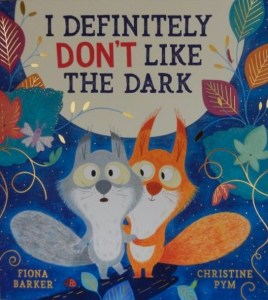
Those living in Garden Glen fear the dark and come nightfall, everybody switches on their lights and keeps them on until daybreak. Everybody that is except Millie Fleur La Fae; she loves the dark and since moving to the locality has missed all the nocturnal creatures that stay away from all the lights. To try and bring them closer, she plants a moon garden. Her mum removes the bulb from the streetlamp outside their home and this displeases the local committee whose members claim that’s dangerous and scary. Millie assures them that dark isn’t scary, “You just need to get to know her.” she says.

The girl embarks on a new plan: she makes moon pies and takes them out to the edge of the woods where she meets the Dark

and then the two of them lead the night creatures to her garden. There plants spring to life, their delicious aromas wafting towards the homes of her neighbours who decide to follow their noses and are drawn to Millie’s garden eager to see what lies therein.

Millie Fleur tells them all to be brave, extinguish their lanterns and leave them behind, which they do; their path being lit by glowworms, fireflies and plants with delightful names such as ‘snoozing sugarplum’ and ‘forty-winks fern’. In the sparkling light the visiting children soon discover that the Dark offers amazing new experiences not found in the light.
Consequently, the lights around Garden Glen are switched off, magical moon gardens spring up and start to flourish as the nocturnal creatures settle in.

Finally, thanks to Millie Fleur the townsfolk have embraced the dark.

A magical bedtime tale that should help reassure children who are frightened of the dark. Christy Mandin’s illustrations of flora and fauna of the darkness evoke a sense of wonder that will enchant both young listeners and adult readers aloud.

Live Like A Tudor

Primary age readers with an interest in history can step back in time, at the invitation of eleven year old Mary who lives with her family in an English manor house and has a sister who is a maid of honour to Queen Elizabeth 1st.

The latest in the ‘Live Like A … ‘ series covers a wealth of topics including the jobs people did, family life and childhood, education (the poorest children were not even taught at home but had to work instead), religion, trade and exploration when the seeds of the transatlantic slave trade were sewn.

There are spreads on a typical Tudor village, a look at a townhouse both inside and out,

health and medicine, crime and punishment, games, sports and entertainment and fashion as worn by workers and nobles. In Elizabethan England, those who were able to a afford it wore a ruff and so doing was a sign that you were sewn sufficiently wealthy not to have to undertake any hard physical tasks and had servants to look after your ruffs, some of which were very elaborate. One of the craft activities in the book gives step by step instructions to make a ruff and matching cuffs.

Did you know that England’s first theatre was built in 1576 in London and was soon followed by others including the Globe Theatre where William Shakespeare’s play were performed?

Tudor Christmases were celebrated across twelve days and readers can join young Mary and her family and discover what they might have done.

The final spread asks “Could you have lived like a Tudor? and the author poses several questions to discuss. There’s also a glossary.

An engaging book that helps bring the era to life; it’s worth adding to to KS2 class collections, and to home bookshelves if you have a child interested in the past.

The Tour at School (Because You’re the New Kid!)

As the young narrator/guide informs us, ‘When you show a New Person around, it’s called giving them The Tour.’ The aim of this really important job is to make the new arrival feel welcome. As you might expect the tour begins with the toilets – a vital place of course but our guide feels things need to be made more fun with some additional facts such as, “The soap smells like strawberries” and there’s an ‘amazing-zing-zing’ echo when you sing (lots of people love to sing in the toilets after all).

The next most important task is to decide on an ‘Emergency Meet-Up Place’

but it’s hugely important too to show off the best places – the playground and the library and to tell inviting stories about them but not to take too long.

Sensitivity is key so our guide considers introducing the newcomer to someone she knows, however this sensitive guide doesn’t notice everything especially that the new person is looking increasingly alarmed, overwhelmed even and may just have gone missing. (of course readers/listeners will have noticed).

Fortunately our guide tries putting herself in the new person’s shoes and also recalls ‘how it feels not to know anyone.’ This experience she shares with the new person whom she finds in the Emergency Meet-Up Place before proceeding to answer the all important question, “What happens when the Tour is over?” For any newcomer, the response cannot be better.

A smashing story that captures so well those collywobbles that many children feel when starting a new school. Equally it’s reassuring to know that an empathetic someone will be there to help. Both author, Katie Clapham and illustrator Nadia Shireen clearly understand how it feels to be starting something new. Nadia’s choice of colour palette is great and her illustrations are hugely expressive and in tune with the words. The use of capitalisation and font size make the book a terrific read aloud to share with a class or group.

The Last Pebble

This story is set in the seaside town of Bognor on the south coast and we follow a boy named Trader who struggles to make real friends at school but is fascinated by rocks and loves spending time beachcombing with his Grandfather.

One day Trader finds a very special pebble associated with which there seems to be a mystery. Grandfather helps him clean it up but it appears that the old man knows more about the pebble than he’s letting on. “This stone will change everything,” he tells Trader as the two part company for the day. There are only a few days before Trader leaves his primary school but he manages to get through it and starts to forge a friendship with Charlotte, a relative newcomer to his school. Hopefully she will be interested in his find, Trader says to Grandpa who seems far, far away.

The next day Trader shows the pebble to Charlotte but there’s no time to tell her all about it, something he wants to do. Meanwhile Grandpa disappears returning a few days later with a piece needed to fix the stone tumbler.

Then when Charlotte and Trader are on the beach together, Charlotte shows Trader a bottle that she’s found containing a message. Who could have left such a strange message and the subsequent ones? The Mystery deepens. Can the two friends get to the bottom of it?

A compelling story, gentle and thought-provoking, a story of family, friendship and loyalty that is beautifully crafted and ideal for summer reading.

The Sleeper Train

A little Sikh girl relates what happens when she and her family take an overnight trip on a sleeper train.
Having settled into their carriage and briefly look through the window. it’s time to open their bunks and get ready for bed. Mum and Dad are soon fast asleep but not so the little girl; she’s way too excited. She decides to bring on a sleepy feeling by remembering all the places she has slept starting with her parents’ room. She also recalls sleeping in a seaside hotel bedroom, a sleeping bag in a tent in a field, staying overnight in hospital for an operation and sleeping over at her grandparents home.

Seemingly by this time only the narrator and the train driver are still awake but eventually, lulled by the rocking of the train, the little girl goes off to slumberland. Come morning, the family dress, have breakfast and look out through he window until the train reaches its city destination.

There the family spend an enjoyable time with friends. Now the little girl has another memory to recall should she be unable to sleep on future occasions.

A warm-hearted tale of family love and togetherness. Baljinder Kaur’s vibrant scenes have lots of images that anybody who has visited India will recognise and the motifs in framed borders on many of the pages are reminiscent of block-printed designs.

Try sending your little one(s) off to sleep with this soothing bedtime story.

Will Wolfheart


Will loves his dog, Whiskers, more than anything and is devastated when, having moved house, Whiskers goes to live with Will’s grandma, Gran-Mishti, meaning he only gets to see Whiskers at weekends. Then on one of these eagerly awaited weekends, Will is suddenly transported to a magical world wherein Whiskers is a wolf and the two can speak to one another. This world is Wolf World: enchanted and exciting yes, but danger is never far away.

The author’s portrayal of the relationship between Will and Whiskers is superb but equally so is that captured in Adam Beer’s illustrations. However there are a number of other memorable characters too: not least Clara, a human girl and members of the adversarial wolf packs, some of which are friendly towards humans, others far from it; and the wild, magical setting wields a power of its own: I really loved the descriptions of the changing skyscapes. I loved too the support Will’s Dad gave him at a crucial point in the story when the boy was showing great stress.

Animal lovers will certainly relish the tale with its perils aplenty and powerful messages about belonging and ways of loving . However you definitely do not have to love dogs to enjoy this book; I’m petrified of them having been attacked by an Alsatian as a child and was captivated by the story. It would make a terrific read aloud to share with KS2 classes but make sure you show the final illustration of Gran-Mishti’s gate.

Every BOTTY Burps

A fantastically silly but reassuring book about those rear end fizzling flatulences that tend to trump forth, often at the most embarrassing times. As the author reassures readers, ‘It’s just what bottoms do!’ We all break wind …” and she then proceeds in rhyme to give a host of examples from penguins’ popping parps to sharks’ silent but sometimes violent whooshing poots and elephants’ mega-trumps to the mini put-putts of mice; and if you can believe it, the pointy parps that shoot forth from the butt-butts of porcupines.

I could go on but then who wants to spoil the fun for anyone wanting to get their hands on a copy of the book.

Alex Patrick has certainly illustrated each of these examples and the others with an abundance of humour and should I say enthusiasm (he probably had some kind of air freshener to hand as he worked).
As for enthusiasm, this topic is one that seems to get young children thoroughly enthused whenever it crops up in a picture book and I’m sure Becky and Alex’s presentation will do so. I foresee cries for repeat renditions when you share this comical collaboration with an individual, group or class.

Blue, Barry & Pancakes: Mount Choco Meltdown / Supersize Squirrel and the Attack of the Zombears

In this third instalment featuring three best friends, worm, Blue, is excited to show Barry (frog) and Pancake (rabbit) a poster about an ice-cream sundae contest. They take some persuading but eventually agree to participate but they have just one hour to create the sundae and win the much coveted trophy – something to put in Barry’s empty trophy room. He decides that the way to win is to get a tub of chocolate ice-cream from Mount Choco. The trouble is its location is closely guarded by a giant, razor-toothed yeti.

There are obstacles in their way – the Sea of Sea Sickness to cross, sunglasses to extricate from a very tricky place, not to mention performing some funky dance moves to impress the yeti and each of the three friends is key in overcoming an obstacle. But will they make it back in time to present their creation to be judged and if so what will the outcome be?

Absolutely absurd but young fans of graphic novels will gobble it up and enjoy the ingredients that comprise the back matter.

Despite being billed as a supersized hero of the forest and starring in two previous books, this is my first literary encounter with Sonny aka Supersized Squirrel and his sidekick Blaze Bunny.

Their third mission is full of action and we see the two facing a very spooky zombear mystery in the middle of a storm in the dark dark woods: surely their most chilling challenge ever. Squirrel calls it the Zombi-pocalypse. Scary as it is after an unexpected encounter, he insists they plus their old enemies the F.A.R.T. ‘march into this challenge with our weird superpowers and our heads held high.’

Can they together get rid of the poisonous pollution unthinkingly dumped into Bear Pond that’s at the heart of the trouble, restore the zombears to ordinary bears and put everything back to normal? And what of that movie in the Warren: can they catch the ending?

Silly, satisfying and fast moving with friendship and super-heroic feats at its core..

Heave Ho

After a bad night, Cub is so full of big feelings that there’s no room left inside his mind and body for anyone or anything else. As a result he lets fly at his friends and classmates refusing to allow them to participate in activities and even tosses Mo’s teddy bear way up into a big tree when she offers it to him to cuddle. Then having stamped and stomped around he begins to swing on a bendy tree branch that is even stronger than his feelings.

Gradually as he does so, with each pull and push, Cub’s big angry feelings begin to get smaller and smaller and he starts to feel he’s going to a good place. Eventually his friends Ossie, Flick, Rhu, Mo and Nook feel able to come and swing with him on the branch and they set off on a flight of fancy to an imaginary world far from their classroom: joy and happiness have replaced Cub’s inner turmoil and all is well once more.

A story that young children can relate to as they watch and hear how Cub responds to his big feelings that push him over the edge. If shared in a nursery setting or EYFS classroom, it could be followed by a circle time discussion.

Bad United Fast As Lightning / Guardians of the New Moon: The Year of the Ox

These are both additions to popular series from Little Tiger – thanks to the publisher for sending then for review.

Having achieved two wins, Bad United are starting to attract a fair bit of attention, so much so that Hoof the unicorn declares ‘We’re famous’.
When manager, Serena Winter announces a visit to the spa, it’s no surprise that one team member is far from enthusiastic: Bolt (cheetah) considers yogic breathing a complete waste of time; he’s the best striker so why bother, he thinks. But whether the experience has had the desired effect of bringing the whole team back together ready for anything as Hoof hopes, we’ve yet to find out when they begin training for the next match, which is against Storm. Pretty soon though, it appears that it’s not the case with Bolt.

On match day Serena reminds them all to focus on their happy places but with all the other players waiting on the pitch, team Storm hasn’t shown up. What happens thereafter is I suspect, the strangest ever match that commentators, Waffle and Cyclops have ever witnessed, so much so that Serena immediately asks for a rematch. Will Bad United emerge victorious, this time? And has Bolt finally learned about team play? If so, fans will be cheering extra loud.

Shocked that his son Xiao Nioh has been wasting his time working on a dance he was going to perform to usher in the Year of the Ox, Lord Chiyou is finding it very difficult to understand his son’s creative performance involving a sword and a long coloured ribbon. Frivolities is what he calls it and in an effort to make his son brave, at the suggestion of the Jade Emperor sends Xiao Nioh off on a quest accompanied by the Guardians of the New Moon, Ming and Miaow. They must deliver a message about farming techniques and one more matter – the crops and the whole valley must be protected from the nian, a fierce magical one-horned beast with a massive appetite. With the help of the Guardians, can Xiao Nioh prove himself without having to abandon his dancing dreams, or will the Year of the Ox be a huge let down?

With plenty of action and humour too, this third book in the series is as exciting as the previous Guardians stories.

Shoot For the Stars

Both empowering and full of information, this is written by double Paralympic gold medallist and five times world champion in archery, Danielle Brown MBE. She hopes to encourage girls from around twelve years old on to keep participating in sport instead of dropping out of physical activities, which often coincides with the onset of puberty when among other things, girls start menstruating and they sometimes see this as a barrier to sporting activity.
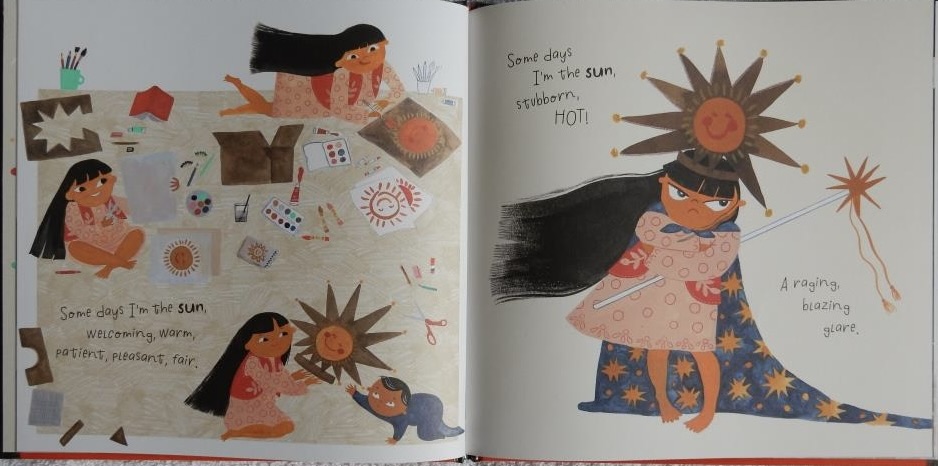
This and other perceived barriers are discussed in a matter of fact manner, be it feelings of discomfort in school PE kit, ideas of body image or worries about controlling one’s temper when one’s performance is adversely affected by hormones. It’s particularly good to see the spread featuring Chinese swimmer, Fu Yuanhui, who openly discussed the impact of starting her period on her performance at the 2016 Rio Olympics.

The dress code of bikini bottoms for women’s beach volleyball was not altered until 2021 when he Norwegian team took action by wearing shorts instead. They were fined for so doing but public outrage precipitated the change. It was not until 2023 that the all whites rules for underwear for women players at the Wimbledon Tennis Championships was changed.

A stand was also taken by Kulsoom Abdullah, a weightlifter. She was invited to compete in the national championships, but against her religious beliefs, wasn’t allowed to cover her limbs or to wear a hijab, so she didn’t participate. However she did take her story to the media with them behind her to the International Weightlifting Federation. The outcome was that the rule was changed and so Kulsoom represented Pakistan that year at the World Championships.

Accepting feedback and applying what you’ve been told is vital for making progress and improving in any sport, and indeed other aspects of life and a chapter is devoted that topic: all those who brief biographies are included must certainly have done that.

I was listening to a discussion on the radio this morning about the increased number of people who are over weight and how this can lead to ill-health. Food was the subject under discussion but I couldn’t help thinking that being physically active is equally important and Danielle’s book encourages readers to do just that whether or not they end up going further and becoming sporting competitors.

Illustrations by Jayde Perkin and Filigrana de Ideas and colour photos of renowned women sports stars add to the enjoyment of the book.

George and Lenny Are Always Together

George, a brown bear and Lenny, a grey rabbit, are inseparable friends, something they discuss as they play on the swings in the playground. George seems one hundred per cent enthusiastic about this whereas Lenny wonders out loud what it would be like to be alone. ‘what if being alone is just as much fun as being together?’ he suggests but George feels this is impossible, saying so as he zooms down the slide. However, Lenny is determined to find out and tells his playmate that he’s off to find somewhere quiet to be alone.

When George offers to accompany him, he gets a flat refusal and eventually decides to try going it alone as well. Off goes Lenny to test his plan

and savvy George allows his friend sufficient space to practise some solitude. It’s fun, decides Lenny: ‘I can draw! I can build! I can blow bubbles! … Read a book! I can even just sit and think.’ He can also think about George and wonders if he’s found a good place to be alone: but where is his bestie? Has he too found the perfect place and if so where is it?

Told entirely in dialogue and through Agee’s characteristic images outlined with bold black strokes, this portrait of togetherness and a little bit of that vital me-time, is a powerful demonstration that it’s possible to have too much of a good thing, but that’s something everyone needs to discover for themselves.

A Box Full of Murders

Janice Hallett adopts a similar style for this, her first children’s story, as she does for her adult crime/mystery books, making clever use of letters, diary entries, press cuttings, police reports and emails.

Siblings Ava and Luke live in different homes with parents who have separated; Ava lives with Mum and Luke with Dad. Both children keep in touch via their mobiles and when Luke discovers a box marked ‘Top Secret’ in Dad’s loft, he shares its contents by means of text messages, quickly realising that it tells the story of a crime that took place at a Scout and Guides’ summer camp in 1983 – the last to be held at that location as the campsite land has been bought for questionable reasons. Because of this the leaders of each tent group have been asked to write diaries about their experiences. These groups have names like The Fun Girl Three, Hunky Dory, Ventures, Duran Spandau – apt for the times.

As the siblings read through these diaries they are introduced to the campers, the Scout and Guide leaders, some mysterious strangers lurking in the forest and rumours of a shrieking ghost. Along with Ava and Luke, we readers see events at the camp playing out and every so often there’s a Progress Report summarising the information so far to help in solving the case. Things become very dangerous for the campers when two bodies are discovered, one of a botanist, the other his assistant, and even more alarming when one of the guides goes missing.

Luke and Ava work diligently through the clues and it becomes clear that this whole mystery is not something left in the past; the murderer is still at large and perhaps nearer than they think.

A pacy, gripping read with a multi-layered plot, some humour, two terrific characters in Ava and Luke and an ending that hints of more to come. I can hardly wait.

Netta Becker and the Timeline Crime

Combining adventure, friendship of an unusual kind and a Greek myth retold feminist style, this is an intriguing story.

Netta Becker, eleven, is spending the holiday with her younger, history obsessed brother, Remy and their parents. It was his turn to pick the destination – a rather run-down villa in Crete near King Minos’ palace – but it’s definitely not the kind of place Netta anticipates enjoying at all. Moreover she’ll miss an important swimming gala.

However, soon after arriving she starts having very realistic dreams that drag her back four thousand years to Ancient Greece and the palace of King Minos. In one she’s seen by Princess Ariadne (Ari) who thinks she’s some kind of spirit that’s she’s called up – ‘tricky muse’ she calls her.

As she spends more time in the distant past, her connection to the present begins to weaken and she gets increasingly distant, sulky even, something her parents fail to notice. Soon she starts to question her own reality: why has she been drawn way back to ancient times and is it possible she can alter the course of events in history? The more time Netta spends with Ari, the more she gains insights into the king – his arrogance and murderous nature.

Others have stories that may well be worth telling – those of the children and women – that appear to be of no significance to the powerful males. This belief is about to be challenged by Ari and Netta who want to show that ‘being unseen in history doesn’t mean life wasn’t worth living.’

A hugely engaging book: I love the way the author has looked at traditional stories in a completely different way: you don’t need to be familiar with Greek myths to enjoy this, though there are explanatory notes giving more detail about some of the references included after the narrative.

Board Book Trio

If you’ve read anything about Hank, then you’ll already know that he likes to make trouble for others. Now he’s not honking but pecking and at the request of a small rodent, little humans are immediately involved in the story by keeping an eye – preferably both – on what he gets up to on the farm. Oh dear! The first thing he does is to stick his beak into the trampoline on which the chicks are bouncing. What a pesky creature. As you might expect though he just cannot keep that beak to himself: next he sticks it right into the limo holding a trio of pigs. Surely that’s enough sticking his beak where it’s not wanted so he’ll leave the old sheep in peace to get on with her knitting. Oh NO! spoke too soon, but Mouse has said he must take time out and consider the error of his ways. Apparently temptation gets the better of him however as he struts past the bull without heeding Mouse’s warning. Has he learned his lesson at long last? I wonder …

Hank’s preposterous behaviour is wryly depicted by Duncan Beedie and Maudie Powell-Tuck’s text offers plenty of opportunities for sound making and action from young listeners who will enjoy emulating Hank’s pecking and the sounds made by the animals he upsets.

With flaps to lift and tracks to finger trace, this alphabet book clearly illustrated will immediately get little learners involved. They can trace the capital letters with the help of the arrows and then lift the flap on each page and discover something else starting with the same letter, this time written with a lower case starting letter. Better still, children can try to guess what is hidden before opening the flaps. Simple, playful interactive learning and on the back cover are some hints for parents/carers.

This is the second in a series of board books encouraging healthy eating from new publisher Post Wave.
Sturdily built to stand up to numerous readings, it’s told through a simple, jaunty rhyme and bold, bright illustrations with a clever die-cut on each double spread. The small children we meet in the book love to eat bananas in various situations and forms including as a smoothie slurped through a straw, sliced up for breakfast or lunch, to fill a hungry tum during a car journey or as a pre-bedtime snack. It’s good to see that even such young children know that the skin from a banana needs to be disposed of properly – in the bin, not tossed aside onto the pavement as a potential slip-hazard.

The Lucky House Detective Agency

Living in Leighton-on-Sea, eleven year old Felix and his best friend Isaac absolutely love detective stories and both boys spend a lot of time helping in Felix’s family’s Chinese takeaway, called Lucky House Takeaway.

One evening during a specially busy time the family’s lucky money plant brought from Hong Kong – Optimus Prime they call it – crashes to the ground. Mum is devastated and so the boys decide to use their detective skills to find out who knocked over the precious plant and prevent bad luck from befalling the Lee family. Their initial list of suspects comprises everyone in the takeaway at the time, including regular customers and Felix adds Nina Ding his cousin and nemesis ‘know it all Nina’ they call her.

As they’re repotting the plant, the boys find an old coin with Chinese characters and begin asking around about it. Could the accident by any chance have anything to do with a long lost Chinese treasure? They ask Mr Tsui, who tells them about an old box linked to a visit from Li Hung Chang, a Chinese diplomat from the 1800’s. A vital clue or a red herring?

With an interesting cast of characters, a wealth of information about British-Chinese culture and incidents aplenty, this well-plotted, exciting story is a fun mystery for KS2 readers that will certainly keep them guessing. With Felix’s final “The Lucky House Detective Agency is open for business. Let’s roll.” I wonder what mystery will come their way next?

Go Go Dodo!

This is one of those “look out he’s behind you’ stories and I can almost hear children’s voices shouting out from the moment Dodo decides to take that evening stroll through the ‘gentle jungle’ with a big cat hot on his trail. His perambulations take the bird across the ‘friendly swamp’ tip toe, tip toe,

then up the ‘peaceful hill’ and right down to the ‘soothing sea’, from where having been suitably soothed by its waves, Dodo proceeds into the lovely long fairly dangerous grass. Therein he suddenly becomes aware of the presence of a human with a net and a pith helmet – very dangerous for sure. That’s when realisation dawns

and our Dodo decides to beat a hasty retreat and then make his way back home to the safe haven of his bed. “Absolutely nothing to worry about.” we read on the penultimate page but there comes a delicious final twist …

The interplay of words and pictures as the drama unfolds is what makes this book such a winner.
Not only is it a terrific, suspenseful read aloud but with its short, patterned text, it’s also ideal for beginner readers to try for themselves, once they’ve heard it read aloud of course.

The Hug Button

On Matilda’s first day at The Meadows she wakes up excited at the prospect of starting school and her upbeat mood continues all the way to the school door as she and her Mummy sing together, jump over bubbles and count birds. However when they arrive Matilda’s tummy feels ‘all squirmy’. Her mum gives her a reassuring hug but Matilda finds saying goodbye very difficult. Moreover, she’s at a loss to decide what to play when her teacher, Miss Cartwright, asks. Eventually she plays with small world dinosaurs with Ana and draws pictures beside Leo but nothing stops her missing her mum.

The following day Matilda is anything but excited as she leaves home to walk to the Meadows and clutches her mum’s hand tightly at the door. When asked what is wrong, she tells her mum that she doesn’t like saying goodbye and misses her when she’s in school. Her understanding mum finds a pen in her bag, draws something on Matilda’s wrist and the same image on her own. “This is a hug button,” she tells her daughter and explains how they work. This helps her feel better as she goes into class. There are times during the day when she needs to use her special button and it definitely helps with her tummy wobbles. She even forgets the button as she has a fun time at the water tray

but then needs it at story time only to discover that it’s washed off. Tears start welling up but Matilda remembers that her mum had said that love is always there, even if the person you miss isn’t. Can she send her Mummy hugs without that button and will her mum know? And will that help button continue to work its magic until it’s no longer needed. When a new boy starts and Matilda sees him clinging to his dad at the gate, what do you think she does?

Starting nursery or school is often a tricky, anxious time for young children and the idea of a special hug button is definitely worth trying. The story is one that will help a beginner feel confident as they take those first big steps

Pernickety Boo

Let me introduce Pernickety Boo, an umbrella, not an ordinary one, though he started out that way. Then an absent-minded sorcerer used him to stir a magic potion, the result being the umbrella acquired magical powers. However his creator left him on an underground train and at Baker Street station he was handed in to the lost property office where he stayed for five whole years.

One day he’s taken, along with other interesting items, to a sale and there he meets young Sylvie Moonshine and a life of adventure ensues. Pernickety Boo can understand cat, has a particular predilection for gloves, especially those made of soft leather, and an ability to time travel, all of which make him extra special.

Totally delightful are his time travels with Sylvie as are those with Jimjam her cat; so too are the encounters with the pushy journalist Ada Moore who is desperate for a scoop.

What an absolutely wonderful, innocent character Sally Gardner has created in her inimitable way. Equally wonderful are Chris Mould’s pen and ink illustrations and together they make a book that exudes humour and is a joy to read from beginning to end. I truly hope that with Pernickety’s ‘See you soon’ on the final page we’ll hear more about him. Read aloud or read alone, you can’t get better than this.

The Fierce Little Woman and the Wicked Pirate

In days of yore there lived a fierce little woman in a house at the end of a jetty. She spent her days knitting woolly socks to sell to sailors, or walking along the jetty playing her bagpipes or swimming beneath the jetty. Winters were more restful and she’d sometimes sit by the fire fishing through the trapdoor in her floor.

One day a storm blows in and with it comes a pirate who taps at the window of the woman’s house as she sits knitting. She spurns his persistent demands to be allowed to enter and he retaliates with threats

several times over.

Eventually as darkness falls he tries a different approach and admits that’s he’s very frightened of the dark. Seemingly this pirate is more scared than scary; the woman relents, lifting her trapdoor and allowing him to come through into her cosy abode. As they talk, it becomes clear that each in their own way is vulnerable and they have things to offer one another.

After an initial refusal of his hand in marriage, the woman agrees, they get wed and raise a family together.

With her scenes from various perspectives Miho Satake skilfully brings out the quirkiness of Joy Cowley’s text and the battle of words that takes place between the two protagonists.

Riverskin

Green-yeller skinned Tess lives in the turns, beneath the River Tees with her guardian, darker green-skinned, spine-finned Aunt Peg and her Unkle Darkwater. So dangerous is he that he’s chained up in a pit and her aunt gives him slumber mix to keep him under control, but he’s an-ever present threat. Tess feeds on raw fish in a home furnished with ‘dry-folk stuff’ such as a ketul and other bits and pieces salvaged from the water. However Aunt Peg is getting older, becoming mind-slippy and mood-swirly so Tess can’t any longer rely on her for protection. Moreover, she starts having doubts about her true origin.

When Unkle Darkwater breaks free Tess is helped by Chris, a dry-folk boy she saved from drowning as well as extricating his bike from the nook. Now at last she begins to learn more about both herself and her true origins. When she finds out the truth though, what will she do?

I took a few pages to get used to Tess’s unique lyrical manner of telling her story but once I’d done so the drama and the world of the turns sucked me in and swept me along as I became more and more fascinated by her character and her fate.

With its roots in Teeside folklore, Mike Edwards’ debut book is exceptional and I eagerly await what comes next.

UNICO Hunted

In the second episode based on the work of Japanese cartoonist and animator Tezuka, the little unicorn finds himself in a grim abandoned city with no memory of how he got there. He’s rescued by a kindly mouse, Garapachi that takes him home to meet his wife and family. There he learns of Chiko, a blue-eyed little girl living in the house who is desperately ill; she and her grandfather, Yoji, are the last two remaining humans in the city and Garapachi takes the unicorn to see them. He also shows him the massive factory that is dominating and polluting the entire town while armed drones patrol the streets. In the factory lives Mother, a controlling robot and when Unico is summoned to meet her, he learns of her origins and real albeit, now warped, purpose: what a sad story it is.

Underground, where Unico finds himself after a tumble. he finds Garapachi again and they discover the beautiful home of the fey and soon after, the prince of the underground fey. He with the other fey have been driven underground by Mother but can Unico persuade Prince Halian to help them despite his misgivings?

In the meantime, Venus, the evil goddess, coveter of Unico’s horn summons from the ‘deathly garden’ Iver, an interstellar hunter of the reptilian kind, with instructions to find Unicorn and cause suffering to him and those around him.

Ending once again on a cliff-hanger, this exciting story, with lots of weird settings is another winner that will delight fans.

Chronicles of a Lizard Nobody: The Hat of Great Importance

At the start of this second in Ness’s wry series, when Zeke the monitor lizard’s best friend Daniel turns up at the school bus stop wearing a large pink hat, Zeke is deeply disturbed. Surely it’s only birds – the top of the pecking order – that wear hats.

However, things get stranger still with the very tall tower – the Death Ray of Death – so Daniel surmises, is being built exactly where Pelicarnassus and his mum live. Does she intend to melt the school or focus it on Zeke exclusively? Plus Zeke learns that his buddies, Alicia and Daniel are visiting the Guidance Counsellor and have been told to spend their time exclusively with one another. Poor Zeke feels alienated and persuades himself that someone is out to get him.

Then the bus doesn’t turn up the following morning, melted by the Death Ray of Death and replaced by a van driven by a shrew. When the same shrew arrives on a bike after school, saying that the van was melted in his driveway, Zeke is certain it’s not the shrew that’s the real target of the Ray of Death, (rather it’s himself).
With the focus on the dynamics of friendships and themes of mental health and the willingness to share emotions, the author also further explores social inequality especially that between the lizards that live in the poorest part of town and other creatures in the school.

Once again Tim Miller’s illustrations are as droll as the words and are sure to bring plenty of smiles to readers’ faces.


The World’s Worst Alien

This is a slice of life as lived and narrated by Sky, an alien student who has somehow created planet Earth for her school project. However, rather than the dinosaurs she hoped to find living thereon, it’s the age of humans and they appear to be doing a very good job of ruining the entire planet. Bang goes the good grades she’s desperately wanting. Sky decides to change her form and spend time on Earth, in in order to sort things out, without she hopes, having to do too much work before returning from whence she came.

On arriving in London, she experiences cold for the first time and the attire she’s wearing is modelled on the gear worn by YouTube influencers and so totally inappropriate for the climate. But as well as having no name and no place to live, she has no clothes to change in to and off she goes to school straight to a year six classroom where the other pupils are led to believe she’s from Antarctica There she makes friends (kind of) with a girl named Zana to whom she confides that she wants to be an influencer on You Tube without having the first clue about the topic of her videos. Zana invites her new friend to stay the night with her, telling her mother that she’s an exchange student but the school forgot to book her accommodation.

From then on things get progressively more crazy and chaotic: there are unfair doings going on around her (giraffes to release from the zoo) as well as local environmental causes to become involved with.

A funny story that looks at humans from the perspective of an outsider: what though will Sky’s impressions of we Earthlings be by the time she’s completed her project? Alice Primmer’s debut children’s novel gives readers plenty to ponder on, laugh at and talk about, and there’s a plethora of Fred Blunt’s zany illustrations to accompany the silly situations Sky et al find themselves in.

Feel Your Happy

Emily Coxhead has created another uplifting book overflowing with positivity. Its narrator is a small, very endearing sloth that offers lots of practical strategies to use when things get too much. ‘When I hear a noise that hurts my ears, I find somewhere quiet to be still and calm’, is one. ‘When the world seems too bright, ‘I ask someone to read me a story’ is another

and ‘when somewhere new smells different or strange, I take my softest teddy to snuggle so it smells of home.’ – all of these will appeal to young children and help them to ‘feel their happy’. I love the reassurance given at the end of the book: ‘Your feelings are part of what makes you, YOU! Just remember to be proud, be yourself …”

Using the five senses to manage feelings really helps to make things accessible to very young children, especially when the text is accompanied by warm bright, joyful illustrations with humorous details that are as positive as the words and enable little ones to feel involved.

All children find it difficult to manage their emotions at times, so this is a book to have in home and early years/foundation stage collections.

Our Pebbles

The young narrator and his Grandad loved going to their favourite place. They’d make their way through Wonky Woods, , stop briefly to wave to people on passing trains and to chat with spotty dogs, then climb over the stile when ‘Silly old Grandad’ would always say, “Careful you don’t hit your head on the sky.” Eventually they would arrive at the a place called Pebble Beach and here they’d spend the best of times together. The narrator recalls seeing a seal, playing pirates, eating ice cream while fending off marauding gulls and on every visit before leaving they’d each pick a pebble,

sit themselves in an abandoned boat – The Jolly Dancer – take out their paintbox and decorate their pebbles. These they’d add to those they’d already amassed (we see the collection depicted from above).

One day though Grandad moves away and inevitably the narrator misses his ritual, which becomes evident to his mother. She suggests the narrator takes her to see Pebble Beach and once at the favourite spot, the child selects two pebbles to take to Grandad when they visit him in his new home. There Mum gets out the paints and next time the narrator visits The Jolly Dancer there are two new pebbles to add to those displayed therein.

A beautiful, poignant demonstration of how joyful experiences can eventually become abiding, treasured memories. Jarvis’s illustrations are the perfect complement to his wonderfully warm words.

The Sun Thief

Team Hemming and Slater’s Squirrel is back and as the season is changing he’s once again confused about what is happening. When his friend Bird declares that it’s bedtime Squirrel disagrees, professing that he could never fall asleep when it’s still light. What he says and what he does though are two different things.

Then come bedtime a few weeks later there’s further confusion when he brushes his teeth as it’s dark when he expected it to be light. Squirrel insists to Bird that the dark is due to there being a sun thief, especially as he heard a peculiar “Hoo’ sound. This he’s told was merely an owl and the following morning just as Bird explained to him, joy of joys, the sun is back shining.

A similar thing happens as Squirrel is languishing in his bath the next evening but he tells himself it cannot be the sun thief. Venturing outside onto a branch with a torch he gives Bat a bit of a fright. “The sun thief just crashed into my tree” he shouts to Bird who explains about Bat being nocturnal.
Still unconvinced that a sun thief isn’t lurking somewhere Squirrel sets an early alarm that only serves to further convince the rodent that there IS a thief,. he wakes his friend before sunrise

and the ever patient Bird explains yet again. At last, Squirrel understands.

The final spread takes elements of the story – why the hours of darkness change throughout the year and the difference between diurnal animals including Squirrel and Bird, and nocturnal ones such as Bat.

Funny and gently educative,. Young children will thoroughly enjoy Squirrel’s over-reacting to a seasonal happening and delight in Nicola Slater’s close-ups that serve to enhance his verbal histrionics.

Nature Heroes

The author’s follow-up to Earth Heroes, published in collaboration with the University of Cambridge, is an inspiring collection of twenty short stories that celebrate pioneers who are working with nature to save the world.

‘Biodiversity – the rich variety of living things on earth – is being eaten away by habitat destruction, climate change and pollution. ‘ So says Lily Dyson in her introduction wherein she issues a challenge ‘Together we can rewild the world.’ But is this an impossible task?

Not so think lots of individuals, men and women, from all over the world who have dared to stand up for nature; their amazing efforts related herein show that change definitely is possible. A photograph/illustration and an inspiring quote introduce each of them.

Heroes new to me include Titouan Bernicot

who at sixteen years old, when out with his brother, was so horrified by the ghostly whiteness of the coral in his favourite surf spot in the Pacific Ocean near the island of Mo’orea in French Polynesia that he was unable to ignore what was happening. Having been introduced by his father to a marine biologist who had started coral gardening, Titouan offered to help, eventually launching ‘Coral Gardeners’ an organisation he hoped would save their island’s reefs. Today they have seven coral nurseries across French Polynesia and their team of fifty, many of whom are his childhood friends, have planted tens of thousands of corals.

It was great to learn of Elizabeth Wathuti. Liz, as she prefers, was shocked to see that after several years, the trees she and her seven year old classmates had planted had been cut down.

Her mum told her that sections of the forest were felled for timber and new tea plantations. Devastated, she had to do something and ended up with an award, the money from which she founded the Green Generation Initiative aiming to give every child in Kenya the opportunity to plant and care for a tree.This and much more resulted in her appointment as a United Nations Water Commissioner.

These are just two examples of ways in which when we stand together, we can start changing the world. What can you do?

The Woodland Badger

Poppy loves to visit her mum’s allotment very close to their home where there are butterflies and bees aplenty. One day after school she accompanies her mum who is hoping to collect some strawberries for their tea later that evening. However Mum discovers that most of them have been nibbled, most likely by slugs. Fred, another allotment holder, offers them some of his strawberries and also tells them of his pre-bedtime method of keeping the marauding slugs at bay. During their chat he also mentions that hedgehogs eat slugs and they and other wild creatures live in the nearby woods. Mum suggests they stay a bit longer and see if any show themselves. At dusk, first a fox appears and then a badger; the two watch the badger, spellbound.

The following day Poppy talks excitedly about the badger to her teacher, Mr Finch and he responds enthusiastically. Then Poppy and her friend Grace use the school library to do further research and that night Poppy is allowed to sleep out on their balcony in the hope she can get another sighting of Diamond, as she names the badger. She is excited to see not one but two badgers, Diamond and another smaller one she names Ruby.

But then comes some alarming news from Fred: the woodland has been sold to developers and they plan to clear it and build houses, which put the badgers’ home at risk. Poppy and her mum know they must do something. In collaboration with their neighbours, they launch a campaign showing everybody the importance of protecting natural areas and the wildlife residing therein.

Empowering and gently educative, this story shows readers how food chains work in addition to giving information relating to the diet, habitat and behaviour of badgers. A great story for lower KS2 readers.

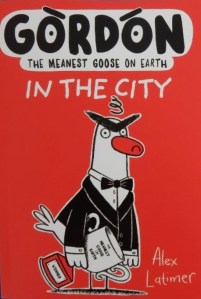
Gordon Wins It All

Another honker of a tale about a goose – the meanest goose on earth – who continues with his endeavours to be a good goose. The trouble is he starts to fantasise about being so good that he becomes Mayor of Grover Gardens. As a result it only takes a kind deed by Mrs Elephant, followed by the unexpected appearance of one of his old cronies from the Meaneest Goose Society to make him start to regress. He organises the first ever Grand Tournament for Grover Gardens residents, planning to win every single event and maybe, just maybe, helped by Anthony’s training schedule, if things go as he hopes, he’ll soon have that mayoral chain of office round his neck. The trouble is the other contestants in the events are rather better at their respective sports than Gordon anticipated.

Has the goose got the prowess at long jump, sprinting and javelin throwing to win, or will he fall victim to temptation and cheat his way success?

With a vital message about honesty, this is a very funny story with Alex Latimer’s superb illustrations adding greatly to the humour: Gordon’s facial expressions and laugh-out loud eyebrows are simply splendid.

A Natural History of Bums

If you’ve been to Margate (Kent) in the last three or four years then you’re probably aware of its most unusual and popular tourist attraction, the award winning Crab Museum.. As well as giving visitors an insight into the lives of crabs, it also examines vital topics such as climate change and evolutionary history and it does all these things with humour. This same humour is present in this book written by one of the museum’s co-directors, Bertie Williams aided and abetted by illustrator Inga Ziemele and two crab narrators that act as guides for readers, taking us from the ancient patooties of around 800 million years ago to the mud chutes of modern times.

Having cleared up the matter of the role bums play, the author moves to the tricky question ‘But what is a bum?’ and thereafter that vital word evolution crops up and we leap into the bum Time Vortex at the invitation of the crab duo and are taken on a fascinating journey from bumbles’ prehistory through the many billions of years of life on Earth, following the changing shapes and functions of patooties. Said patooties are, we read, ‘pretty recent inventions and as the narrators retrace the 560ish million year story through to the present ‘Age of the Anus’ heaps of fascinating snippets emerge.

One some readers may be familiar with is that a wombat uses the plates of bone in its bum to protect itself from predators and a wombat’s poos emerge from said bum in cubes, and – wait for it – ‘in relation to body size, humans have the ‘biggest bums on Earth. Moreover, ‘if a blue whale was shrunk down to the size of a human, the human would win in a big booty bum-off.” Plus, human bums allow us to walk on two legs, thanks to the muscles found in our bum cheeks.

As you’ve probably gathered, animals have a vast variety of bottoms but possibly none so interesting as the human one; it makes the glowing bum of a fungus gnat pale into insignificance.

This is bound to be a winner.

I Hear The Trees

From her opening words, ‘when I walk/ wide-eyed/ through today/ yesterday is forgotten/ tomorrow faraway’ Zaro Weil asks readers to be in the moment and to immerse themselves in the natural world as they join her in this poetry extravaganza.

It’s impossible to do anything else in the opening poem, I Hear The Trees which involves engaging several senses – hearing ‘I hear the trees / gather in sunbeams’ , smelling ‘I smell the orange / crinkle of leaves\ and feeling ‘feel the brushes of tiny beasts burrowing inside swells of / rough bark.’ looking ‘ I watch autumn glow / through still warm trunks’.

A number of different feelings and emotions are evoked, from utterly joyful to sad; there’s humour aplenty and lots of alliteration and other word play. I can almost taste the Bamboozled Berries, those ‘bunches of bounteous berries / brimming bright balls’, which get gobbled up by birds.

Zaro writes about a wide variety of subjects from snakes to space, frogs to fungi and flowers as well as dinosaurs and a play wherein some cultivated flowers at Kew Gardens gang up on a Dandelion calling it a ‘good-for-nothing weed’ and Dandelion goes on to explain to them the benefits of having it in their community.
There’s sure to be something that will appeal to almost everyone herein and the author ends with a vital message, ‘hold tight to your world / for your world is my world / your planet my planet.’ – conservation in a nutshell.

With Junli Song’s print style illustrations throughout and some activity suggestions for educators, parents and children from the Centre for Literacy in Primary Education, this is a book for both class and home collections.

Naeli and the Secret Song

Naeli’s passion and her greatest talent is playing her treasured violin given to her by her father. An English doctor, he returned from India to his homeland years back when his own father was seriously ill, since when nobody has heard from him. So when her mother dies from malaria, Naeli is left completely alone, except for her ayah, Vanya, and spends her time playing her violin and learning the sitar.. After a year, she still misses her mother every day,.

Then one day her ayah brings her an unsigned letter with the name Naeli Harwood on the envelope. Inside the envelope is some money, a ticket to travel to London and instructions to bring her violin. Has her father made contact at last? Determined to find out she knows she must undertake the three month long journey from Calcutta port. As she boards the ship, she encounters a boy who introduces himself as Jack; he’s on his way to his hated boarding school and soon becomes Naeli’s friend.

On arrival Naeli is hoping to get a carriage with Jack but she’s met by a man saying he’s been instructed to take her to a lodging house and she’s put to work in a pie shop. Eight days later Naeli is sent to her Uncle Daniel’s home and on his return he tells her that her father went missing some time back and is presumed dead. This uncle, she discovers, was the person who sent her the ticket and he’s extremely interested in her violin and even more interested in hearing her play it. over and over and over. until she can’t play any more. Naeli is very frightened by his behaviour; she flees her uncle’s home and goes to Westminster School to seek out Jack.

She persuades him to go with her to her ancestral home in Northumberland. What they discover there is almost unbelievably shocking but they’re determined to try and get sufficient evidence to prevent a terrible miscarriage of justice from prevailing. The problem is that it’s exceedingly dangerous especially when Uncle Daniel appears on the scene – a real-life adventure – as Jack says in the penultimate chapter of this utterly compelling historical novel.

With its themes of identity and grief, it will surely appeal to older readers with an interest in history, adventure or music; and with lots of personal connections with India, I absolutely loved it and read it in a single sitting.

The Best Jollof Rice Ever!

Meet Kamsi and Kwame, best friends, each of whom declares that jollof rice is their favourite food and that their respective mums make the best jollof. Jollof is a yummy, spicy rice and vegetable dish that originated in West Africa and is now known and enjoyed all over the world. To settle the matter Kamsi has a suggestion. “Let’s each make our own jollof and see which is really the best … “ Off they dash into the garden to start collecting ingredients. They both like playing tricks and each chooses judiciously, selecting items with that in mind. Kamsi adds some nettles to Kwame’s mix and Kwame puts a bright green caterpillar into Kamsi’s pot and both continue adding other ingredients – muddy puddle water, ants for spice and dried-up chewing gum.

A mess they each create for certain. Did they forget what the competition was supposed to be about – not the worst jollof assuredly.
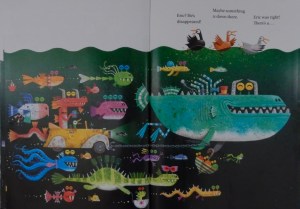
Meanwhile the mums have been busy in the kitchen creating the boys’ favourite dish and invite them to come inside and assist.
This they do and then everyone sits round the table to share a meal. Mmmmm! It’s the best ever jollof. “See, alone we make good jollof …” Kwame’s mum says. “But together we make the best jollof! declares Kamsi’s mum. The boys agree – working together is THE way to go; even though playing an occasional trick on one another is fun.

Vibrantly illustrated, this is a truly tasty story cooked up by Onyinye Iwu for whom it’s her first book as author/ illustrator. My mouth’s watering at the thought of that collaborative dish. I’ll have to try the recipe on the final page.

Welcome

Try to imagine what it would be like if you’d had to flee your home and look for another country to live in.

The animal characters in this book do their utmost make the three new arrivals feel welcome and wanted. Their intention is to make sure that nobody is left out because everyone helps to make a happy world. Axel’s illustrations show very different characters playing together, painting together, strolling together hand in hand, having tea together and much more. They communicate visually with the newcomers who speak a different language and allow them to choose games to play.
Equally, allowing the newcomers to be the helpers makes them feel part of the community,

as are shared games and stories. Of course there will be occasions when somebody gets upset and cross but if everybody apologises, these friendships become stronger.
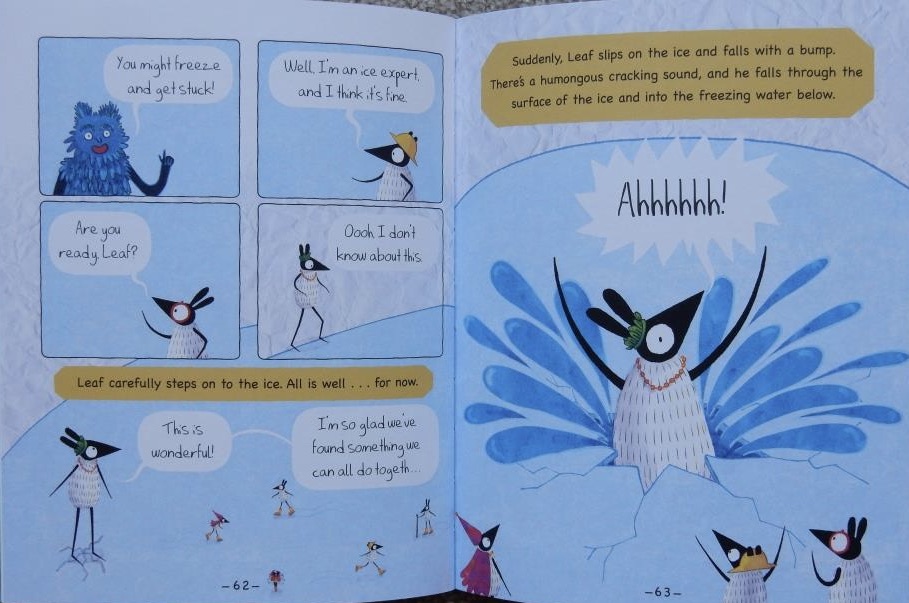
‘Now, imagine if the whole world was like this book – if everyone was kind and helpful and welcomed everyone else. Doesn’t that sound good? “

It most certainly does but sadly it isn’t the case for all humans yet: would that they could all feel like that animal community – kind, open-hearted and ready to make a difference.

An uplifting celebration of empathy, kindness and togetherness. Anyone who buys a copy of this book is helping to make a difference because a donation is made to Three Peas charity (www.threepeas.org.uk) for every copy sold. Teachers and parents, get a copy for your class or family, enjoy sharing it and then talk about possible ways to be as open-hearted as Axel and Alison’s characters.