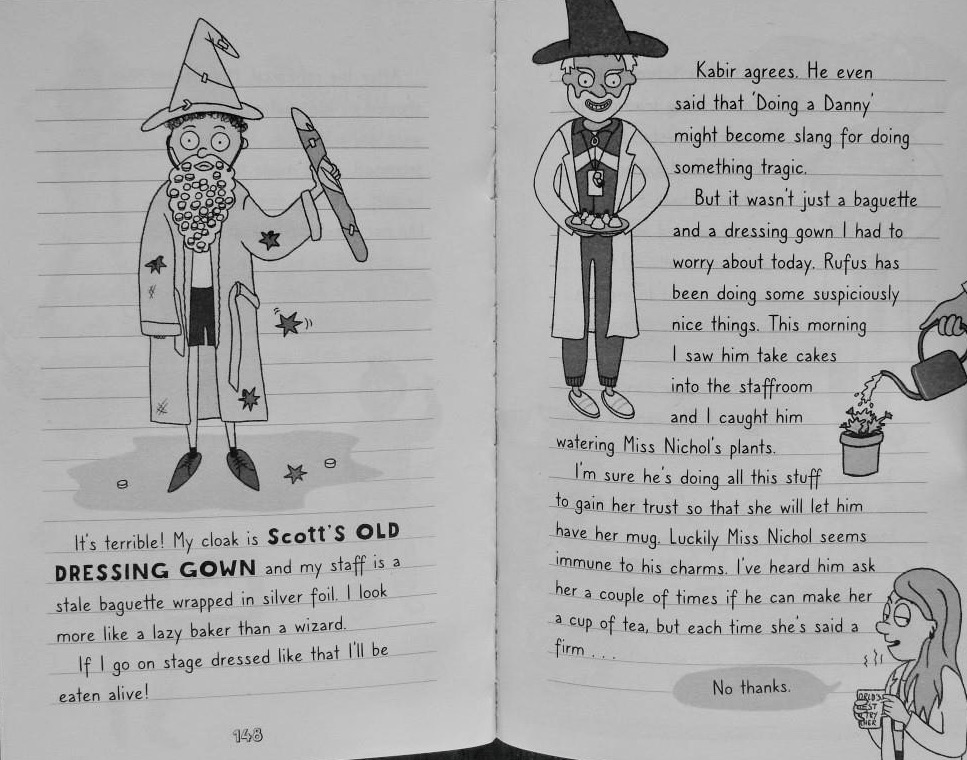
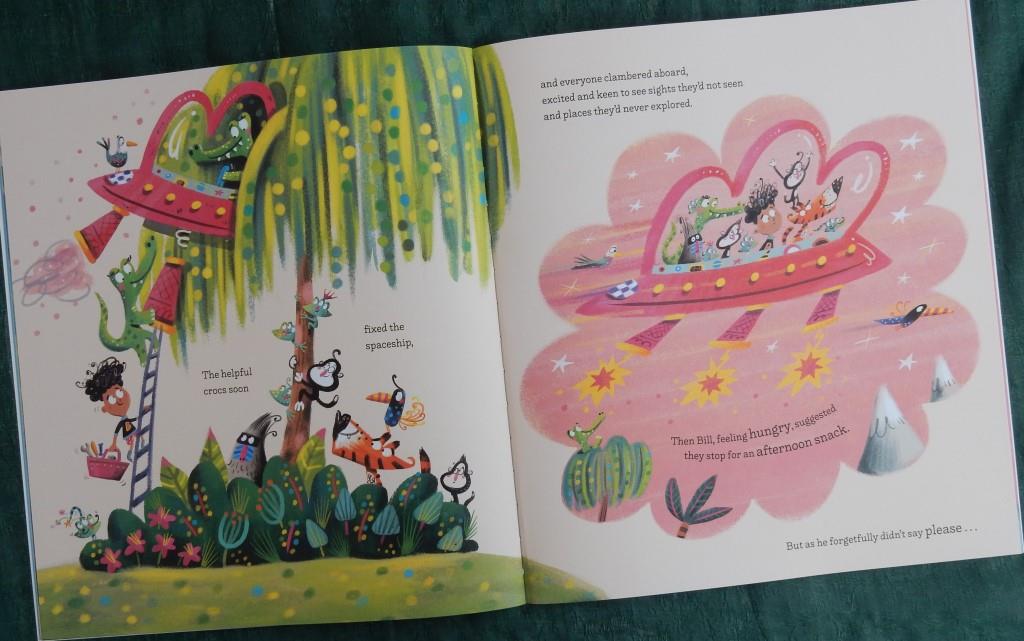
Time Travelling with a Tortoise

This is the brilliantly inventive sequel to Time Travelling with a Hamster wherein Al (Albert Einstein Hawking Chaudhury) and his hamster, Alan Shearer, time travelled into the past to prevent the accident that would prematurely end his father’s life.

This has set everything back the way Al thinks it should be: no infuriating stepfather and no thoroughly annoying stepsister, though somehow it isn’t so. The laws of spacetime are set up to have the last laugh, as Al’s Grandpa points out.

But then an accident in his tuk-tuk for which Al blames himself, leaves Grandpa Byron – he of the truly amazing memory – struggling to remember things. Consequently Al decides to risk another trip back in time, taking with him two companions and they find themselves in a prehistoric dimension where dinosaurs roam. To say things don’t quite go as intended is putting it mildly; they’re way more complex than he ever expected and include that titular tortoise.

Readers will be swept away as Al grapples with the unintended aftermath of his actions; we too feel his guilt, determination, and fear as he navigates the ramifications of his choices.

What a brilliant mix of poignancy, humour and gripping excitement Ross Welford has created once again; but at the heart of everything, quantum physics and all, is the enduring power of human love. I thoroughly endorse Grandpa Byron’s philosophical comment as he and Al sit together at the end, “Sometimes… not getting exactly what you want turns out to be the best luck of all.”

The Bunny Who Came to Breakfast

This unlikely tale is narrated by a small boy who, while relaxing with a book, suddenly hears a thump, thumping at the door. Young listeners will likely guess the thumper from the clues in Mike Byrne’s first illustration without needing to turn the page on which further clues in vignette form are offered. The visitor is of course the titular Bunny looking totally cute with a twinkle in her eye, a basket in her paws and one suspects, a rumbly tum. The boy and his grandad invite Bunny to sit at their table, and to say that she has a rather large appetite is a huge understatement. Having consumed slices of bread spread – thickly no doubt – with sweet confectionary items, followed by a whole bunch of carrots as well as goodness knows how many eggs served up in various ways, said Bunny then spies through the window, a trampoline. Claiming to be an expert, out she dashes and proceeds to demonstrate her skills. How she doesn’t throw up is anyone’s guess but having smelled something irresistible, she heads for the chicken coop.

Did I mention a basket? It’s soon full to the brim and rather than saying thanks and cheerio, the visitor proceeds to go back indoors and there Grandad mixes up and presents an enormous stack of further treats. She shares these with her young host but despite declaring herself ‘stuffed’, Bunny hasn’t quite sated her appetite. Only after consuming another of Grandad’s culinary delights, does she announce it’s time to leave, followed can you believe, by another request.
It’s the hosts though who have the final word as they bid their chaos creating visitor farewell.

With a nod to Judith Kerr’s The Tiger Who Came To Tea, this delightfully silly saga delivered through Rachael Davis’ bouncy rhyming text and Mike Byrne’s mouth-watering scenes will have young listeners, in Bunny fashion, calling for more.

The Armadillo Who Came For Dinner

The latest creature to win the affection of Hotpot in this sixth book featuring the unlikely friends, Wolf, Hotpot and Omelette rolls up one summer’s afternoon when the three are enjoying a relaxing picnic. Having sent the rest of their food flying every which way, what appears to be a boulder crashes into a tree. Surprised at hearing what she thinks is inanimate, crying “Ouch!”, Hotpot goes over to investigate and offer a sympathetic hug. Somewhat disgruntled at having been addressed as Mr Boulder, the thing tells Hotpot that it’s an armadillo – a tough one at that. The tough armadillo’s response to Hotpot’s ‘What’s your name?” is a rather wobbly “I’m … Dizzy.” This prompts Wolf to invite ‘Dizzy’ home with them for dinner and some TLC.

The following morning Dizzy is much better; not so Wolf’s house; that’s a real mess on account of Dizzy’s roly-poly sleeping. Once again Hotpot offers a hug but Dizzy turns her down saying, “I don’t need hugs!” Instead they head outside for a game of football. Dizzy proves surprisingly adept at soccer but having kicked the ball with considerable force,

it goes missing and instead the friends head off to the fair, accompanied by a very enthusiastic Dizzy. So excited is the armadillo that he wrecks the fair and receives a good telling off from Badger. Suddenly Dizzy’s exuberance is gone and off he goes towards some trees.

Is that the last the others will see of the armadillo or will he, as Wolf reassures Hotpot, come back? And if so, what of that oft-refused hug?

Joëlle’s illustrations be they panels, double spread scenes or vignettes exude warmth and gentle humour making every turn of the page a delight and the ideal accompaniment to Steve’s text wherein he makes clever use of alliteration. Those familiar with previous titles in this series will welcome the return of Wolf et al. but equally, anyone new to the threesome will thoroughly enjoy their armadillo adventure.

Chicken Little and the Very Long Race

Chicken Little returns in a third episode and at the outset she’s feeling bemused. Why the great ado about an announcement that the local record holder, Hare, is to compete in an upcoming marathon, she wonders. The hens have turned the barnyard into a training zone and it seems there’s no getting away from the event. Even though Chicken Little is not by nature a competitive creature, she begins to wonder whether she too should take part. Until that is a certain book penned by Hare appears and her gullible feathered friends start following it to the letter: smoothies aplenty, special ‘Hare-Brand’ sneakers, headbands, self belief in bucket loads, but nothing that might enhance one’s stamina.

Surely not, thinks Chicken Little who tries getting her pals up and doing some preparatory running but they dismiss her concerns, suggesting she prove her running prowess by participating herself, and so she signs up

and starts training, slowly and steadily.

Come race day, Hare is immediately the focus of attention for every chicken, save one. When the race begins it’s soon evident to Chicken Little that the other hens are having serious problems and before long there are only two contenders left in the running. Which one will be first past the post: fame obsessed Hare or our determined little avian competitor?

The combination of Sam Wedelich’s hand-lettered text, speech bubbles and chuckle-inducing digital illustrations make for another fractured fable with an important lesson for humans, as well as for the characters herein.

Huge fun to read aloud to a KS1 class or for solo reading.

Little Chick / Little Bunny / One Little Tadpole

Vibrant artwork with cutaway pages and cleverly placed die-cuts, together with simple question and answer texts, will captivate little humans as they follow the titular animals through their simple stories.
The setting for Little Chick is the farm where she encounters in turn, a pig, a smily cat, a large cow and a tiny mouse, before suddenly emerging onto unfamiliar ground where a friendly horse assists the feathered infant in finding its mother, a mother that is also looking for her little one.


Little Bunny’s adventure takes place in the woods. There are lots of birds to spot as well as a friendly brown bear, but in the bushes lurks a red fox that scares the little leporine. Happily though a kindly owl leads the way to the safety of Mummy rabbit’s outstretched paws.

With his trademark glowing colours, Petr Horáček’s interactive ‘peep-through’ books will be enjoyed by adult sharers and the very youngest listeners. No child is too young for books such as these.

For an older audience is

With more than thirty flaps there is plenty of exploring to be done between the covers of this large board book. Besides the life cycle of the frog there is information about the birds, insects, fish, mammals and the flora likely to be encountered in or around a pond. However, not all the creatures – for instance the two frog species illustrated on ‘The Circle of Life’ spread’ – are ones that UK readers would come across. Nonetheless this is a book that encourages children to use all their senses when exploring in the real world and to this end includes a spread on pond dipping.

It’s also good to see, on the final spread, the suggestion that readers create a miniature pond of their own as a way of helping nature to thrive.

Some of the illustrations give only an impression of the animal rather than an accurate means of identification so, having sparked a child’s interest, one would need to refer to a field guide rather than rely on this book’s visuals.

Clever Crow

Who would have thought that crows would have the power to captivate but that is just what they do in this unusual non fiction nature book.

In a text that flows along, encompassing everything from feathers to flight techniques and feeding, and more besides, readers will discover that despite not having a melodic song or flashy plumage crows are very clever creatures.

For example these problem solving, tool users are able to extract delicious bugs from between cracks and crevices in the ground using their feet and tough beaks. Moreover, should they have spare food, they dig holes and are able to remember some while later, where it’s hidden.

These birds are playful too and in a manner similar to humans, use play to learn new things. You never know, perhaps you might look out one snowy day and see one or two sliding down a snowy roof.

Unassuming they might be, but these amazing avians can, just like humans, greet one another, tell each other where to find food and warn their fellow crows of danger.

Olivia Lomenech Gill’s mixed media illustrations are realistic yet have something of a magical quality about them and in combination with the words, offer young readers a wonderful and wondrous introduction to crows.

How to Cuddle a Crocodile

This image has an empty alt attribute; its file name is dscn9963-1.jpg

When choosing a pet, a crocodile wouldn’t be at the top of most people’s list but after careful consideration and taking into account that her dad has allergic reactions to many creatures, our young narrator makes the decision and advertises for a croc. Before long, it’s enter one large scaly, snaggle-toothed reptile with a large grin. Now the carer of such a pet has a lot to learn: it needs regular exercise – that’s challenge number one. Game playing comes next but best avoid ball games,

This image has an empty alt attribute; its file name is dscn9964-1.jpg

and hide-and-seek might prove a tad too protracted, not to mention alarming for others in the vicinity.


Pre bedtime tooth cleaning requires assistance from avians and fortunately this particular crocodile (in common with many of her kind) likes to sleep a great deal. Is she a keeper though, or might it be better to bid one another farewell – by mutual consent of course – and hope something more suitable turns up? Err …


This silly story is followed by a spread of crocodile facts, some of which might come as a surprise to young listeners and adult sharers. Wildly imaginative and sure to bring on some giggles, this is a fun-filled follow up to Sam and Sarah’s How to Feed an Elephant.

For fans of the Move and Play series, illustrated by Pintachan there are two new titles this month:


This image has an empty alt attribute; its file name is dscn9959-1.jpg

I Want to be a Frog and I Want to be a Penguin. These are certain to get your little humans hopping, splashing, huddling and sliding, complete with their masks made from the cut outs provided inside the front covers`.

Mae and Gerty and the Matter With Matter / Let’s Build / Weather

This image has an empty alt attribute; its file name is dscn9939-1.jpg

Science and story come together in this picture book.


Mae and Gerty are sisters but they are very different. Mae, the elder of the two becomes increasingly annoyed when her parents constantly talk about their notions that Gerty is showing a scientific bent at so young an age; indeed the very first word she said was ‘madda’. Dad is forever drawing attention to her actions: “Look at all the ways she can manipulate matter: pushing, pulling and colliding!” he comments one bath time.

Gerty certainly does love mess making,

This image has an empty alt attribute; its file name is dscn9940-1.jpg

trying things out, constantly asks questions. These are exactly the things scientists do and during the story, both siblings discover that this is so, for Mae decides to show her mum and dad that she too can do all that Gerty does. They start exploring together and soon they become a true science team taking every opportunity to experiment, asking Why? Why? Why?

This image has an empty alt attribute; its file name is dscn9941-1.jpg

Some of their experiments in the kitchen produce matter of a very tasty kind but most important of all is that with their parents’ encouragement the siblings’ eyes and minds are always open to the scientific possibilities the world offers.


After the narrative, the author provides some questions adults might discuss with young listeners and there’s also a bubble recipe. Erica Salcedo’s wonderfully expressive scenes of the girls’ interactions with matter really brings out the importance of letting children explore the world with all their senses.

There’s more science in


This image has an empty alt attribute; its file name is dscn9898-1.jpg

These are both additions to the Science Words for Little People series.
In Let’s Build, the children are going to make a car wash and the book takes us through the stages involved in its construction from drawing up a plan to the finished building. The simple text is split between a straightforward narrative and speech bubbles containing the child constructors’ comments. Key words – materials, invent, tinker, forces, magnets, strong foundations, machines, movement solving problems, energy are used as headings for each of the twelve spreads, the twelfth being ‘all about building’ whereon readers are asked leading questions to get them thinking about their own projects.
The final spread gives ideas to adults to help them get the most from this book and Weather.
Similarly organised, the latter uses key terms including meteorology, atmosphere, various cloud names, cyclones, hurricanes, tornadoes and hurricanes in the brief narrative that has spreads on sun, clouds, rain, a rainbow, wind, storm, snow, seasons, weather watching and climate.


Visually and verbally engaging with a diverse group of child characters, both titles are worth adding to early years collections.


STEMville: The Bee Connection

STEMville town is populated by creatures of all kinds, though there are no humans, and this story unfolds in Bug Borough where a solitary bee, Mason B. Chandler (love the name) has recently set up her new private detective agency. She is eagerly awaiting a case when she hears a loud CRASH! outside. There she discovers that the Bug Borough traffic – vehicular and pedestrian – has come to a halt; everything is stuck in a golden sticky goo. Mason tastes the stuff – it’s sweet and immediately she feels an energy boost. Honey, she thinks, but how has it got all over town?

Using the device of a private eye investigation, Ben Newman imparts a great deal of information about insects and the apian world in particular. We learn that there are three kinds of bees – solitary bees like Mason, bumblebees and the social honey bees (the ones that make honey). Bee anatomy is illustrated,

and how bees differ from wasps and hoverflies. The secrets of the hive are revealed, its architecture, layout, the various different roles of its occupants

and the intricacies of the waggle dance whereby bees communicate where to find the best nectar sources, as well as just how important they and other insects are in the pollination of the plants that provide us with the food we eat.

Mason solves the mystery of the honey spill: it was all down to that careless bee-keeper bear who eventually confesses to dropping the jar.

In Flying Eye tradition, Ben Newman’s book is all a-buzz with information presented through explanatory panels, lively cartoon style illustrations and diagrams. A smashing way to introduce children to a vital topic; it concludes with some brief bee friendly suggestions for readers.

Fairytale Ninjas: Two and a Half Wishes

In this third story of Goldie, Snow and Red aka the fairytale ninjas residents of Hobbleton in the magical kingdom of Waybeyond, the three friends encounter what looks like one of the new guests from Goldie’s parents’ hotel, out wandering in Shadowmoon Forest. Having spoken to her, Goldie suspects Miss Raven is up to no good. Why is she carrying that empty jam jar? And why is she not concerned about the possibility of encountering a troll?

Seemingly this is a villainous enchantress: why else would she have a book about spells, something Goldie discovers later in the day when taking clean towels to Miss Raven’s room. That and a row of glass bottles on the chest of drawers set alarm bells ringing. But then Goldie hears a strange noise coming from one of the drawers and inside she finds that jam jar wherein is a very frightened fairy flying around. Goldie unscrews the lid and out bursts the fairy. Back comes Miss Raven at almost the same moment that Goldie’s Dad appears in the doorway. The next thing Goldie knows is that the woman is chanting a spell and her father is turning into a duck.

Goldie realises that, with the help of her friends, she must outwit this evil enchantress and thanks to the fairy she released, the girls have been granted three wishes. One of these can surely be used to turn her dad back into his normal self.

Young fractured fairytale enthusiasts, be they acquainted with Fairytale Ninjas or not, will enjoy this book with its magical setting, three strong girl protagonists who can perform ninja moves and mythical creatures, though I recommend new readers read the previous books beforehand. Plenty of Mónica de Rivas’ black and white illustrations break up the chapters.

An Elephant in the Garden

This image has an empty alt attribute; its file name is dscn9988-1.jpg

First published some ten years ago, it’s good to see this tale now made available to a new audience. It was inspired by a real life rescue of an elephant during World War 2.


From her bed a frail old lady named Lizzie, resident of a Canadian nursing home, relates her story to her nurse and the nurse’s son, Karl, who reminds Lizzie of her young brother.


During WW2, Lizzie, then sixteen, her pacifist mum, Mutti, and her younger brother Karli lived in Dresden. Their peace-loving Papi was called to fight, Mutti went to work at the Dresden Zoo with the elephants. She had seen a small elephant born and named him Marlene. Rather than have the creature subject to mercy killing like the other zoo animals, should Dresden be bombed, she had persuaded the zoo keeper to let her take the baby elephant home to her back garden and care for it.


When Dresden comes under heavy bombing in 1945 and the city is destroyed. Lizzie, her mum and Karli decide to escape into the country and head with the elephant, towards Uncle Manfred and Aunt Lotto’s farm. At first they think the place is empty but in a barn they come upon Peter, a Canadian flyer who has bailed out of his plane. What does one do when encountering an enemy combatant? Mutti is conflicted but Lizzie is immediately drawn to the young man. Together they all make their way on a perilous trek towards the American lines, helped at one point by a Countess who asks them to take a homeless school choir along with them. As they journey Lizzie becomes ever closer to Peter.


Eventually, despite Peter’s best efforts, Mutti and the children are sent to a camp along with other displaced Germans and Peter returns to Canada promising to come back and marry Lizzie. Is he able to keep that promise? And what of Lizzie’s Papi? Does he survive the war?


A gripping, enormously moving tale that offers an unusual perspective on what was a horrendous time for countless numbers of people. I read it in a single sitting.

Can I Sit in the Middle? / Can You Catch the Bunny?

This image has an empty alt attribute; its file name is dscn9949-3.jpg

A child sits on the sofa to read with Hamster. The enthusiastic creature alerts the other animals – zebra, cat and lion – to join them. Just before the story starts Stork arrives, but then Cat decides to try and take possession of the cushion and Hamster gets up, fetches Fish and hurrah! Let the story begin. Or maybe not: some rearrangement of listeners is demanded and then the patient story reader can share the book. Oh! I spoke too soon for Rhino has mislaid a pair of slippers.

This image has an empty alt attribute; its file name is dscn9950-3.jpg

The large pachyderm upends the sofa to retrieve said slippers and OOPS! They all tumble into a heap. Does that mean no story? Happily thanks to a deft rearrangement of furniture and something else that Cat had found under the sofa, a perfect book sharing situation is created and finally, whoopee! it’s story time at long last.


As this drama unfolds small children will enjoy watching the chain of events, delighting in the details in the gently humorous illustrations and wondering who next is coming through that door to be part of the audience on the sofa.

This image has an empty alt attribute; its file name is dscn0001-1.jpg

Addressing the target audience of very young children directly, the author asks that they assist little Bunny in finding his way first through the vegetable patch and then out into the forest and from there around the garden and the orchard until finally he reaches the safety of the burrow wherein the rest of his family are waiting. With a wealth of treasures collected on his adventure, little Bunny is more than ready to share his spoils with his fellow rabbits.


Little humans will certainly hone their fine motor skills as they use a finger to touch and trace the trail on each spread as well as develop their powers of observation when with the help of an adult sharer, they look at the details – vegetables, other small creatures, fungi, flowers, mammals, and lots more besides, in each of Linda Tordoff’s scenes.

Stitch Head: the graphic novel

This image has an empty alt attribute; its file name is dscn0003.jpg

Stitch Head is a not quite human, long forgotten lonely little creation made by a mad professor in the sinister Castle Groteskew. Stitch Head stays around the castle endeavouring to ensure his master’s other creations be they with multiple limbs or missing eyes, don’t go wild in the nearby town and bring punishment down on his eccentric master.

After years of working behind the scenes, Stitch Head’s life is upended when Fulbert Freakfinder’s Travelling Circus rolls into his home town of Grubbers Nubbin and the owner and ringmaster demands entry. He’s on the lookout for further freaks to join his show and says he will make Stitch Head a star.

This image has an empty alt attribute; its file name is dscn0005-1.jpg

What will be the response from Stitch Head? Will he venture beyond the castle walls or not?


Darkly monstrous fun and sometimes a tad gruesome, bursting with weird beings this spooky graphic novel version will appeal to those who prefer stories presented in a highly visual format. Many children are predominantly visual learners and so the new form will likely attract a different audience from the original book although I suspect established fans of Stitch Head will also enjoy this. Pete Williamson has done an absolutely amazing job with the art.

Seven Days / Dread Wood: Fright Bite

The author’s debut young adult novel about families and grief is set in Bristol and takes place over seven days ((apart from an epilogue one year on). The book is told from the viewpoints of Noori and Aamir, both of whom have recently lost those closest to them. Noori’s older cousin and best friend died while in Lahore and Aamir’s mother has died eight months ago and he has fallen out with his father. In a few days despite her own father’s disapproval, Noori plans to fly off to spend some time in Pakistan, staying with her aunt in the hope of getting some kind of closure .The seemingly more troubled Aamir has just been beaten up and robbed while on a train from Cardiff to see his older brother Bilal.

Their first encounter is on a park bench and Noori mistakes the boy for a university student as he’s holding a book of Rumi’s poems. The following day, she heads to the park and there lying on the bench is Aamir. Is he homeless after all, she wonders. They start talking and Noori offers him chai. He accepts her offer and rather than taking him to a cafe, Noori takes him to her home. She also calls her disapproving friend and neighbour, Mai, to join them and tells her mother that Aamir is a cousin of Mai’s.

Strangely, Noori feels drawn to him and their meetings continue. Aamir, meanwhile keeps going to his brother’s home but nobody ever answers the door so he is forced to sleep on the bench. Gradually the two reveal things to one another that they won’t share with anybody else.

But then the day before Noori is due to fly off to Lahore, an ailing Aamir has a fall and is rushed to hospital and into intensive care and may well not survive.

I won’t reveal how the book ends but I was swept up in the story of these two teenagers – a story of first love – as I’m sure many readers of around Noori’s age will be. I look forward to more from Rebeka Shaid; this is an intensely moving debut novel.

When Club Loser members learn of the plan Colette’s mum and Mr C have set in motion for the gang to celebrate Colette’s thirteenth birthday, which includes a kitty for ‘noms and spends’ it seems that they’re about to experience the best night ever. Neon Perch, here they come. Nothing can possibly go wrong, can it? After all the dastardly Latchitts are in prison so it’s safe to say the friends can enjoy Battle Karts, pizzas at Uccellino’s and, highlight of the excursion, the Project Z escape room experience.

Highlight it definitely isn’t however. With such things as scritchy scratchy, slime dripping creatures on the prowl, and the reappearance of their arch enemies, it would appear that the escape room knows the greatest fear of each player. Assuredly this is one birthday Colette won’t forget in a hurry.

At once scary and funny, older readers will find themselves gripped by Jennifer Killick’s fast-paced, twisting narrative, ticking clock, gigantic poisonous rats and all.

The Cat who Couldn’t Be Bothered

Greg, at least that’s what his feline friends call him, has no wish to do anything at all. He seems totally disengaged and turns down each offer made to join in with what could be a fun or exciting activity. So, it’s no to chasing a string ball, no thanks to a party,

joining an exploration doesn’t appeal and as for going to Mars, it’s a case of ‘I can’t be bothered.’

Then one of his moggy pals asks the all important, ‘What’s up, Greg?’ and eventually our Greg calls for all their suggestions to cease. He goes on to explain the reason behind his naysaying of all their offers. His empathetic friends then proceed to demonstrate just how much they understand.

The author’s narrative, both written and visual conveys simply and beautifully Greg’s friends’ learning journey. It’s an important life lesson: rather than making assumptions or imposing an idea on a friend, be there, listen and only then respond to their needs.

We all feel sad from time to time and this book shows the importance of understanding and doing nothing together. Definitely a book to share with a group or class and an excellent way in to a circle time discussion on responding to emotions. I wonder what they will make of the story’s final twist.

Factology: Romans / Factology: Dinosaurs and other prehistoric creatures / Factology: Robots & AI

Each of these new titles in the series offers a fact-packed, fast paced introduction to the topic. Individual readers will choose according to their interest or perhaps on account of a current subject focus in their school. For instance the key stage 2 national curriculum requires that children learn about the Roman Empire and its impact on Britain.

Like the other titles, Romans is divided into three chapters. Each has full-colour photographs and illustrations together with an accessible, easy-to-follow, bite-sized text that offers a good introduction to its subject, explaining key concepts and highlighting significant events in a manner that is both clear and entertaining. Did you know that those ancient Romans were extraordinarily fierce? For instance, a gladiator fight ended only when one of the combatants died or cried for mercy. Those who did survive sometimes became very rich. The Romans were also well-known for their inventive skills and you will also encounter all-powerful emperors, some worse than others, superb architecture, an impressive network of roads and much more.

Although Dinosaurs and other prehistoric creatures are not specifically included in the primary curriculum, huge numbers of children are fascinated by them and so teachers often find ways to incorporate them into thematic work.

As for Robots & AI, this is an area that all children will increasingly need to be informed about. Moreover a robotics topic brings together all the STEM areas and could be an exciting way of so doing with older children. It was absolutely fascinating to read of the number of ways robots are used in medicine.

I would advocate including all three books in both primary and secondary school collections.

Lunar New Year / The Lucky Red Envelope

This image has an empty alt attribute; its file name is dscn9965-1.jpg

A special fifteen day holiday, the Lunar New Year, is fast approaching and young Ling, our narrator explains clearly the traditions she and her family follow. They clean the house thoroughly, “We sweep away bad luck and evil spirits, “ and polish the statue of the Kitchen God before painting honey onto his lips so he reports only sweet things to the heavenly Jade Emperor. The family fills their home with fragrant blooms; Ling makes special red signs to welcome visitors and it’s customary to wear new clothes, so they go shopping for those as well as red lanterns and favourite foods. The foods will be cooked and shared at the big New Year’s Eve family reunion dinner.


This image has an empty alt attribute; its file name is dscn9966-1.jpg

The symbolism behind each tradition is presented: “We eat dumplings for wealth, noodles for long life and turnip cakes for good luck …” Ling says. She also recounts the legend of the New Year beast and offers descriptions of the New Year’s parade, kite flying, and the Lantern Festival that ends the celebrations. Best of all though, Ling enjoys being surrounded by her family.


Jingting Wang’s illustrations are bursting with bold, brightly coloured images and back matter gives additional information on the history of the holiday, New Year greetings in Cantonese and Mandarin, information on the Chinese zodiac, riddles, a recipe for dumplings, how to make a lucky money envelope, examples of how Lunar New Year is observed in other cultures, and a quiz.


An accessible and broad introduction to an important holiday for many Asian cultures.

This image has an empty alt attribute; its file name is dscn9967-1.jpg

There are over 140 flaps to explore in this interactive, large format book with stiff card pages. It features Yue, her Mama and Baba and baby brother, Ru, for whom it’s his first ever New Year. By following what Yue and her family do each day in Vikki Zhang’s busy scenes as well as the written narrative, readers will learn the meaning behind the various objects and symbols. There are rich colours, gorgeous patterns and an abundance of detail to feast the eyes on at every turn of the page: the candles lit for the kitchen god, the offerings the family will make to their ancestors, the red wall and door hangings, as well as the food spread out ready for the family reunion dinner, Yue’s beautiful new red cheongsam,

This image has an empty alt attribute; its file name is dscn9968-1.jpg

the lucky red envelopes containing money and finally, the lighted lanterns.


The main text is in paragraphs written in a lively style (it’s good to see an acknowledgement that “ People celebrate Lunar New Year differently in different countries”,) and smaller captions ask the reader to look for specific objects – the yin-yang symbol for example, or draw attention to particular symbols such as Yue’s traditional dress.

There are a dozen flaps on every double spread helping to ensure that this is a comprehensive look at the holiday and a book that children will want to immerse themselves in over and over.

Add both books to class libraries from foundation stage upwards.

The Code of Life

This image has an empty alt attribute; its file name is dscn9957-1.jpg

The author of this fascinating book opens with a look at the history of genetics beginning as you might expect with the work of the Austrian monk Gregor Mendel in the 19th century. One of the first to experiment with cross-pollination, he used pea plant varieties with different colour flowers, meticulously writing down all his findings. It wasn’t until after his death that the importance of his work was recognised and he became known as the ‘father of genetics’.


From Mendel to Crick and Watson and beyond, via Darwin and evolution, this remarkable book charts the journey of scientists to unlock to secrets of life and where that journey may take us into the future.

This image has an empty alt attribute; its file name is dscn9955.jpg

The work of these and numerous other pioneers in the field and their discoveries in the fields of chromosomes, genes, cell division, the DNA double helix and much more, are recounted and explained. Everything is elucidated clearly in an engaging manner and supported with a wealth of visuals, both diagrams and illustrations; and there’s a page at the end encouraging readers to do some research of their own (answers supplied).


A high quality publication and one I would strongly recommend for older readers.

Star Friends: Dream Shield / The Firefighter’s Kitten

These are additions to popular series for younger readers: thanks to the publishers Little Tiger for sending them for review.

In case you’ve not met the Star Friends, Maia, Lottie, Sita and Ionie before, they share a special secret – they have magical animal friends – Star Animals – who help them learn magic and fight evil!

There’s excitement in Westcombe: the village is hosting a scarecrow competition and the Star Friends, along with lots of other residents are participating. Strangely though soon after, lots of people in the village start feeling very sleepy and completely lacking energy. Could it be some kind of weird bug that’s doing the rounds: the friends think otherwise. It’s down to dark magic, is what they think. They really need to do something to stop it but that’s going to be a challenge on account of their own sleepiness. It’s something to do with Shades, but where are they hiding?

Can the girls solve the Shade mystery and make things right again? The story ends on a cliff hanger, which will leave readers eagerly waiting the next episode in this deservedly popular series.

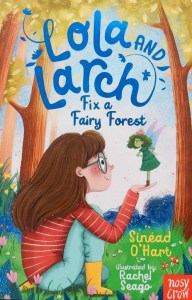
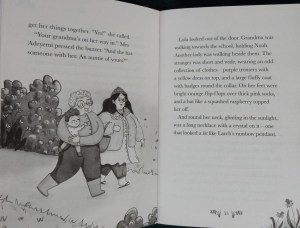
Lola’s mum has a new job as crew manager of a team of firefighters. This means that the family has moved to a new town where Lola doesn’t have any friends and must start at a new school. On the positive side their house has a garden and her parents have agreed that once they’ve settled in, they will get a cat.

As Lola walks to school on her first day accompanied by her dad, a boy calls to her, introduces himself as Noah and tells Lola that they will be in the same class. Noah has three cats and that prompts Lola to tell Noah about her cat hopes. Next day as they walk to school the two children see a tiny kitten huddled high up in a tree. On their way home, the kitten is still there and so too are a crowd of people, a fire-engine and to Lola’s surprise, her mum.

Eventually Lola’s mum rescues the creature but nobody knows where it belongs and the animal shelter is completely full. It appears that there’s only one place the kitten can go that night … Lola quickly develops an attachment to the newcomer but will he stay?

With themes that children will immediately relate to: moving house, making new friends and having a new pet, this latest in the prolific author’s animal stories, although slightly predictable will appeal to readers from around six who will love Sophy Williams’ visual portrayal of the kitten.

Pablo and Splash

Pablo and Splash are penguin pals living in Antarctica. Pablo, a home-loving creature, is perfectly satisfied with life; he loves the cold climate, the ice and consuming krill at every meal. Splash is more adventurous and yearns for a holiday in a warm sunny destination. After puzzling about how to get to a new exciting place, the two cascade into a scientist’s laboratory. The owner clearly has designs on them but they make a getaway thanks to her TimeBender machine,

next stop not sunny Fiji, the Bahamas or the Costa del Sol and fortunately not the sun (though that destination is a narrow miss); rather they find themselves in the Cretaceous Period. There aren’t any mocktails or water slides as Splash was hoping; instead the sandy terrain is full of very hungry dinosaurs and other prehistoric creatures. Fortunately the friends succeed in evading the beasties. Not so the TimeBender however; this is badly damaged by the dinos.

Can the penguins manage to fix the ailing machine or are they doomed to be forever stuck far far from their lovely icy home? As always it looks as though it will be down to Pablo to come up with a solution.

This crazy comedy is Sheena Dempsey’s first graphic novel creation and what fun it is. The penguins’ facial expressions are a hoot and their bubble speak full of giggle-inducing ‘krilly’ word play. I suspect you’ll find it hard to resist this one. Let’s hope we see more of this delectable duo.

Are You A Sleepy Monster?

This image has an empty alt attribute; its file name is dscn9891-1.jpg

It’s time for bed and Karsten’s lovable monster is back, pyjama clad, inviting little ones to join a ‘Sleepover for Monsters’. In case you’re wondering where you’ll sleep, it will be under the bed along with your slumber host. Did I hear a protest – something about sleeping ON the bed? Surely not. Away from malodorous, noisy little humans is to be your place of slumber especially as Monster has even gone to the trouble to provide you with a pair of PJs for the occasion.


This image has an empty alt attribute; its file name is dscn9892-1.jpg

Was that a case of naysaying to being under the bed and an insistence on your scary host climbing up and joining you for a lie down atop the bed? Well, it would appear that the bed is invitingly soft and there’s even a cuddly teddy provided: ZZZZZ …

Time to pull up the duvet and turn out the lights as you, the reader gets in and puts your head on the soft pillow next to your host. Sweet dreams.


With its chatty interactive text, monstrous twist and delectable illustrations, this is certain to be a winner of a bedtime tale. It certainly was with this reviewer.

Diary of an Accidental Witch: Magic Ever After / The Story Shop: Detective Dash / Nikhil and Jay Flying High

This image has an empty alt attribute; its file name is dscn9922-1.jpg

The Easter holidays are fast approaching for Bea Black. First though she needs to discover what is wrong with her Dad. In addition there’s the upcoming annual Eggastraordinary Eggy Day and Bea is still working on improving her spelling. To keep her sweet, Bea is helping at Taffy’s teashop and being paid in cakes. You may be surprised to learn that Bea’s Dad is also working obsessively on his spells, which makes his daughter suspect that something is up.


When Taffy takes Bea into her confidence things become clearer but she’s charged with keeping Taffy’s proposal plan a secret, which is far from easy. Why, Dad wants to know, can’t he wear his favourite scruffy jumper to the venue; after all it is supposed to be a newt-watching trip..


Despite near disaster, the couple agree to get married and then there’s just the matter of a wedding and all that entails, to focus on. Bea is definitely going to need lots of help from friends and family.
Without giving too much away, let’s just say that Bea’s final diary entry in this book starts ‘BEST.NIGHT.OF.MY.LIFE’.


You can’t ask for more and readers will certainly be more than satisfied. Team Cargill and Saunders have again created a winner.

This image has an empty alt attribute; its file name is dscn9918-1.jpg

When shopkeeper Wilbur and his assistant, Fred Ferret arrive in their shop early one morning they’re puzzled to hear a strange sound. It turns out that a ferret has fallen asleep and is snoring. Once awake she introduces herself as Snoozy Suzy saying she’s eager for an adventure.

Suzy elects to be a detective, Fred adds some ingredients to the Story Pot, stirs the mix, and POP! the two of them find themselves in The Museum of Wonder where they learn, a robbery has taken place. Suzy informs the strange man, Ivar Plan busy with a display of lamps, that they’re there to solve the case of the cursed teeth. It turns out that Ivar is actually a robber and the lamps are part of his clever plan to steal priceless articles from the museum. Can Suzy and Fred save the day?


In episode two I S-Pie Trouble!, the pair are at the seaside where one of the posh hotels is in uproar due to the disappearance of Chef Humble who is supposed to be presenting his delicious new creation, the ‘Whatever You Wish For Pie’ at a banquet that coming Friday. After a night’s sleep Fred and Suzy peruse the clues they’d found the previous day and are about to have breakfast when they learn that a new chef has turned up offering to step in and save the banquet – at a price. Things seem decidedly fishy to the detective duo. Will they find the real chef in time for the Friday night banquet?


The riverside village of Watery Bottom is where the third episode is set. Here Suzy and Fred are tasked with discovering the truth about the Demon Duck of Doom. To do so they need to participate in a Doomseeker Expedition led by young April Button. But what is she up to and why?


Full of surprises, this fourth Story Shop book with its wealth of fun illustrations is again just right for younger readers.

This image has an empty alt attribute; its file name is dscn9938-1.jpg

The fourth book in the charming series for new solo readers starts one rainy day when Appa goes out to the shed to retrieve to board so the boys can play Dayan but the cat distracts him, he takes a tumble and injures his ankle. Can several rounds of the game, together with a cup of tea and a packed of frozen peas on his foot make him feel better?


Three further stories about the everyday life of Nikil, Jay and their parents follow. They participate, somewhat reluctantly at first, in the local Clean and Green Club at the neighbourhood park and then decide it’s a more enjoyable way to spend a Saturday than they’d anticipated.
Next comes a day of kite flying though they unexpectedly have to make the kites themselves as those that had been ordered aren’t delivered in time and finally, Jay gets himself in a stew about tidying up and soon discovers that doing things without his brother is far less enjoyable than doing them together.


As always bold, cheerful black and white illustrations by Soofiya complement Chitra’s telling of these tales, which are based on her own upbringing.

A Horse Called Now

This image has an empty alt attribute; its file name is dscn9956-1.jpg

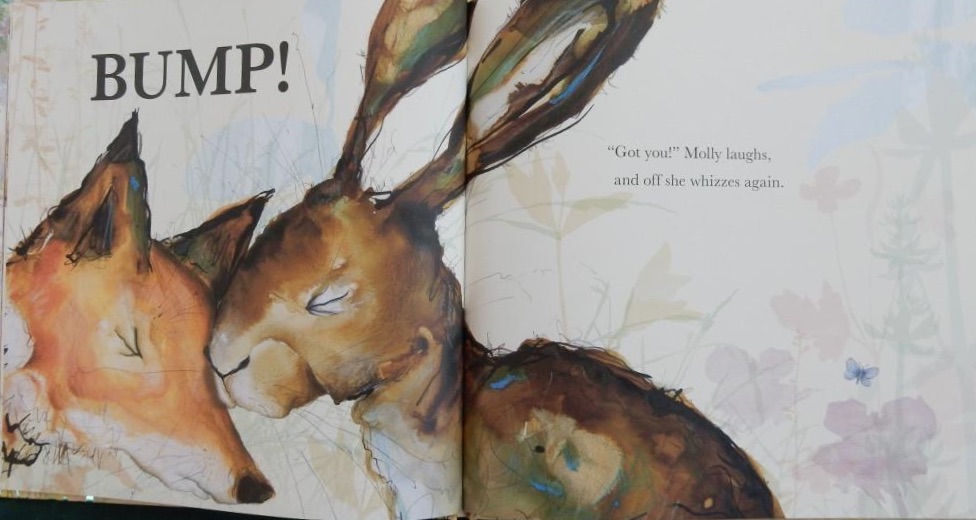
Now, the white horse stands in a field enjoying the sights and sounds of the natural world: buds bursting forth, dragonflies dancing, the singing of the birds, the chattering of the crickets. Suddenly her peace is disturbed by a mother rabbit and her offspring, fearful of being chased by a fox. Then come Hen and her chicks, terrified by the possibility that the swooping bird is Magpie after her little ones. Sheep and her lambs are worried about New Dog, imagining him to be wild like a wolf.

This image has an empty alt attribute; its file name is dscn9952-1.jpg

In turn, Now allays each of their fears and then there comes a loud BANG! of thunder and down comes heavy rain.


Calmly, Now leads all the animals to shelter inside a barn but other creatures are already there so out they all dash leaving the horse to investigate. What she learns is then passed on to her fearful friends outside and having seen Fox, Magpie and New Dog for themselves

This image has an empty alt attribute; its file name is dscn9958-1.jpg

and listened to Now’s words of wisdom, ”When I am afraid, I breathe in … and out … and let the feelings come … and then let go.Nothing lasts forever”, they realise that the creatures they so feared are not as scary as they’d imagined.


Ruth Doyle’s sensitively written text is reassuring and full of warmth; she has clearly chosen every word with great care and Alexandra Finkeldey’s rustic illustrations portray the fearfulness and subsequent relief of the animals very effectively.


We’re all beset by fears from time to time but young children may find themselves unable to cope: reading this story with a supportive adult offers an opportunity for opening up about their own worries and a good starting point for talking about living in the moment.

Find Peace in a poem

Twenty poets and four illustrators have contributed to the latest Little Tiger collection, this one being a celebration of mindfulness. Mindfulness I see as the state of being wholly in the present, completely awake and aware of each moment, fully engaged in one’s surroundings and accepting that experience without judgement.

The range of poets here is contemporary and interesting, and included are new poems and some previously published ones. such as Michael Rosen’s The Rhythm of Life and, Zero Weil’s Hide and Seek. Therein she describes looking for quiet and after going to the woods and the sea, concludes ‘I found quiet / it must have been hiding / the whole time / inside my words / inside of me’.

I’ve loved that one since discovering it in Cherry Moon.

Each poet in their own way takes an everyday object or occurrence and transforms it into something memorable and in so doing is asking the reader to look anew at the world. Two poets call on readers to put pen to paper, to preserve (Carter) or let go of (Wakeling) their thoughts. In James Carter’s How Easily, he reminds us how special ’moments disappear like sand.’ Moments such as the sight of raindrops sparkling on a lake and ‘The night / you tried to count the stars.’

Kate Wakeling suggests if you’re feeling down or troubled by your thoughts, settling wherever you are, taking a pen and without stopping or thinking, allowing it to explore, in words or pictures, squiggles even. In so doing you may well find ‘some bright new / thoughts begin to / grow.’ It’s certainly worth trying The Ink Cure next time you feel your brain knotting up.

So too is Nikita Gill’s A Lesson from the Trees. Offering not words or thoughts but a reassurance ‘they will listen to you too, / and show you that the answer / to all life’s storms / is to be patient / and stand strong.’

Each double spread is beautifully presented and the four illustrators have been mindful of not overwhelming the words with their images.

Add to your poetry collection be that at home or in the classroom.

Thumbsucker / I am an Autistic Girl

Eliza Fricker is a neurodivergent author and illustrator who didn’t receive an autism diagnosis until she was an adult. In this moving book she writes about what it was like as a girl who grew up in the 1980s feeling different and constantly beset by worries.

She was called among other things, fussy, a hypochondriac, fickle, spoilt, contrary, gullible, a freak, a chatterbox, a wimp and a weirdo, some of these labels being given to her child self by other people, and some perhaps were self dubbed.

She takes each one and in graphic novel style presents a vignette exemplar.

Fiercely honest, humorous and affecting, it reinforces my feeling that all teachers and others who work with children or young adults should have training on how neurodivergence presents itself in childhood, especially in girls and how best they can support neurodivergent learners. This book is an excellent, albeit salutary starting point for anybody involved with the welfare of the young.
A copy should definitely be in every school staff collection.

This is an updated edition of I am an Aspie Girl published several years ago, which was reviewed on this blog in 2016.

Little Bear / Little Dragon

This image has an empty alt attribute; its file name is dscn9929-1.jpg

If you’re a parent or carer who is having trouble getting a young child off to sleep then these, the first two in a series of calming Sleep Stories intended to help young children prepare for a good night’s sleep, are worth trying


In the first we join a restless Little Bear as he sallies forth from Old Slumber Tree in search of the perfect sleeping place. During his meanderings he discovers several possible spots: there’s the reedy banks of Hush-a-bye-River, on the edge of Snoozy Shore, the sand dunes of Moonlit Meadow for instance but in each place there’s something preventing the bear from falling fast asleep. Eventually he comes to Rockabye Treehouse wherein resides a wise owl. Owl’s question proves just the right thing to send the wandering Little Bear to the place most suitable for a cosy night of slumbers.


One night in the Misty Mountains way up high Little Dragon is also beset by wakefulness. His friend Bedtime Bird accompanies him off on a search for the perfect sleep-inducing hug. First stop is the Lullaby Trees but the tree trunks can’t provide a ‘squeeze hug’ so the dragon continues alone along the woodland path to Starlight Hollow and thence to Rainbow Falls where he encounters some bubble blowing music making frogs. Could one of their bubbles transport Little Dragon to slumberland?


Calming and reassuringly written, with a wealth of descriptive language by Sarah Cordingley and illustrated in luminescent hues by Kamala Nair, these gentle stories are just right for the very young.
Both are preceded by a yoga breathing exercise and some tips for adult sharers and end with a mindfulness activity. (There’s also a QR code to scan for an audio version of the story, mindfulness exercises, a soundscape and a lullaby.)

The Shape of Rainbows

There’s a zippy zing to the poems herein – nearly fifty in all – and they simply cry out to be read aloud to, and by, primary children. Although on second thoughts that excludes Breakfast unless you are a pronunciation wizard and can say ‘Greg / Gges / Segg / Ggse’ as well as R a ndo m because how it looks on the page is part of the fun.

There’s one poem where every single word (and there are rather a lot) begins with the letter A either in its lower case or capital form. It’s title is Adam’s Apple and it tells of a boy who consumed nothing but apples until something unpleasant happened to him and then, on the advice of adults, he changed his diet.

When I was a classroom teacher, be that in the foundation stage, KS1 or KS2, we had a daily ‘together time’ session for children to share their ideas, things they’d made etc and I always shared a poem. Neal’s latest collection is one I would definitely add to my ‘go to’ books of poems to use in such sessions. What child wouldn’t want to hear The Day I Ate My School wherein the young narrator apologises for having consumed a most unlikely school dinner, or learn of an Interstellar Mum and I would certainly encourage everyone to Grab a Book and as Neal says in the opening lines ‘Open it / Relish it / Ogle it / Cherish it ‘ …

Will Hughes adds to the fun of every spread with one of his zany black and white illustrations.

Bunny vs Monkey: Bunny Bonanza / Groosham Grange: the graphic novel

This image has an empty alt attribute; its file name is dscn9935-1.jpg

If you’ve yet to make the acquaintance of Bunny et al. these wacky short stories (‘strips’) of the woodland dwelling creatures including the megolomaniac Monkey first appeared in The Phoenix comic. David Fickling Books published several compilation books of these and then bind-ups of which this is the latest.


As the new year begins down in the woods, all is well except that Bunny is inexplicably missing. We join the gang on their search for their floppy-eared pal. As they hunt high and low they encounter several imposters: there’s Robot Bunny, Neanderbunny, Old Bunny aka Algernon Withersnap the Third, Bunny Law, Shadow Bunny and even weirder, Not Bunny: Maybe Bunny is merely suffering from acute amnesia or are these other leporine forms due to some other phenomenon. Most important, having gone right through the year, will the real Bunny return to take possession of his residence?


Anarchic, brim full of high jinks (and some decidedly low ones), frenetic and with a plethora of giggle-inducing surreal happenings, this bumper volume left this reviewer’s head spinning.

This image has an empty alt attribute; its file name is dscn9934-1.jpg

One of Horowitz’s classics is transformed into a hilarious graphic novel version.
We follow David Eliot from the time his parents, despairing over the fact that their son has been expelled from his school Beton College, decide to send him to Groosham Grange, an establishment in a gothic castle on Skull Island with a reputation for sorting out rebellious pupils.


Not long after his arrival David overhears a conversation taking place in the headmaster’s study to the effect that something very nasty is going to happen to him and possibly the new friends Jill and Jeffery whom he met on the train..


They discover that every night the other pupils go to the library and then disappear. The three really must make an escape plan though it may not be possible for anyone to escape Groosham Grange.


Full of thrills and spooky chills, this is weird and strangely gripping.

Wild Song

This brilliantly written book is a companion to the author’s Bone Talk. It transports us back to 1904 and is set in the same world but herein the focus is on Luki and it’s her voice that tells the story as if she’s speaking to her mother who has been dead for a year.

Having lived her life in the mountains of the Philippines with her people, the Bontok tribe, Luki has reached the age where it’s expected by the tribal elders that she should marry her best friend Samkad. However, instead she wants to be a warrior. So, she decides to leave her village home and accepts Truman Hunt’s offer to go to America to be part of the World Fair in St Louis. Missouri. It will be a grand adventure, she tells herself.

However, despite America being called the land of opportunities this isn’t the case for everyone and after an arduous journey by train and by foot, Luki is effectively trapped in the Igorot Village. She’s made to feel dehumanised by having to perform serious rituals as entertainment: we Bontok people are exhibits, she realises losing her trust in Truman Hunt and strongly suspecting he’s only interested in making money out of them.

It really feels as though we are inside Luki’s head living her aspirations, her doubts, her reluctant acceptance of the truth about those she meets including someone she thought had become a close friend. I felt myself gripped by such emotions as hopefulness, fear, shock, disgust, horror and shame. Shame because although this book is set in America in the last century, here in the UK even now, people who are considered ‘different’ for whatever reason be it way of life, appearance or skin colour, are subjected to appalling racial attitudes.

Utterly compelling, this novel will maintain its intense grip on you be you an adult reader or a youngster. Girls especially will understand the dilemma of those among them who, like Luki, try to balance a respect for their cultural and religious traditions with the constraints these may impose on them in today’s world.

Unmissable! And make sure you read the ‘What happened next’ pages at the back of the book.

Stitch / Jane Eyre

This image has an empty alt attribute; its file name is dscn9913-1.jpg

Stitch, a boy made from bits and pieces stitched together, and his friend, Henry Oaf, live in a castle with the Professor who brought them into being from dead things, so they discover from the Professor’s notes – ‘a mishmash of parts of other people’ is what Henry later reads about himself.


Unexpectedly the Professor’s wicked nephew, Giles Hardacre, arrives and takes over his laboratory. Not long after, Alice, the nephew’s ‘adopted’ assistant tells Stitch that his uncle has gone for ever; he’s died. It soon becomes evident that the professor’s nephew wants to use Henry as the subject for his next experiment: clearly to him lives such as that of Stitch and Henry, who are ‘different’ are worth far less that those of ‘normal’ people. Alice however disapproves of her master’s ideas.

Henry sabotages the experiment and the three of them in turn make a break for it. Inevitably, troubles lie ahead, however Stitch’s innate goodness keeps him going, intent on doing the right thing no matter what or to whom.


Finally, having always wanted to be an explorer, Stitch now has the opportunity to be one. But will he go alone?


Exploring difference, prejudice, acceptance and what it means to be human, this is such a powerful, highly accessible fable with gothic chills running through it; especially moving is the friendship between Stitch and Henry. It would make a terrific, thought-provoking read aloud for older KS2 classes as well as a gripping book for individuals whether or not they pick up any echoes of Frankenstein.

This image has an empty alt attribute; its file name is dscn9928-1.jpg

Expertly abridged, yet staying true to Charlotte Bronte’s classic novel, this skilfully written first person narrative, is a splendid introduction to the original. Patrice Lawrence’s fresh prose maintains Bronte’s powerful atmosphere and key themes while considerably shortening the length of her book making it a highly accessible way of introducing older primary readers (or older students for whom English is an additional language) to ten year old Jane’s journey from that ‘haunted’ room in Gateshead Hall to finally becoming a wife.

Taxi, Go! / Oops! Rabbit

These are both new titles from Walker Books: thank you to the publishers for sending them for review.

Courtesy of Patricia Toot’s rhyming text and Maria Karipidou’s vibrant illustrations, we join a smiley red taxi for a busy working day in town, driving through all kinds of weather, as it stops to pick up fare-paying passengers – in turn a business woman, shoppers and children going to play football, a couple going to a dance,

theatre visitors and finally our busy cab heads for the airport to collect a family returning from their travels abroad. With them safely home, it’s back to the depot for a well-deserved night’s rest.

There is so much to see in the child-friendly scenes, you will likely need to share this several times to allow your young audience to enjoy the action and linger over all the details including the town’s diverse residents.

Parents/carers might choose to read this at bedtime to encourage their little one(s) to join Taxi as it dims the light and slips off into the land of slumbers.

This is another striking succession of playful misadventures in the life of Jo Ham’s silhouette leporine character. Herein, Rabbit wields a paintbrush creating a mural until ‘Oops!’ the chair Rabbit is standing on topples and it’s then ‘Rabbit off’ and paint splashing all around. A large wave destroys the sandcastle in the second misadventure. Then comes bath-time with further mishaps due to an excess of bubblebath and finally, tempted by the sight of a cake atop the table, Rabbit finds a creative use for an umbrella.
Small humans will enjoy following the four sequences and joining in with the repeated, ‘Rabbit on … Oops! … Rabbit off’ text.

Remembering Sundays With Grandpa

It’s Sunday morning and Henry has woken up feeling sad.. His Grandpa died just a short while ago and the boy goes downstairs to share a hug with his mum. She responds to Henry’s “Why did he have to die?” question by saying that Grandpa’s body had become too frail but his love will live on forever. She goes on to show the boy how she knows this is so. First she suggests he should sit in the rocking chair and having shut his eyes, Henry is able to feel Grandpa’s presence when they read stories together.
Out in the garden the cucumber vines offer another reminder, this time of how Grandpa got hiccups when he ate their fruits.

Back indoors they continue looking: Henry finds other reminders – a crab hat, Mum’s musical jewellery box and she in turn sees Grandpa in Henry’s features. Most importantly though, they both know that Grandpa is always in their hearts and Henry then thinks of another place they’ll always find Grandpa’s love, which leads to a special ritual every Sunday henceforward …

A gentle story of loss that reminds readers that although a person is no longer physically present, their love lives on forever and always.

I Love You to the Moon and Back All Year Long / I Love You

The thoroughly appealing bears – adult and cub – return in a fourth book by team Hepworth and Warnes. This time we follow the two through the year as they enjoy the changes each season offers, from a snowy winter, shoots heralding the arrival of spring, the warmth of summer, the scrunchy autumn leaves and the return of winter’s snow when the bears snuggle up together in the cave that gives them shelter.

Amelia’s gentle, lyrical text tells what the adult bear loves doing with the little bear be that watching the sun melt the snow, holding paws, cavorting in the river’s sparkling water,

meeting friends or holding the little one aloft beneath the swirling snowflakes of a winter sky at night. “I’m grateful for the love we share / that shines the whole year through.”

So too does the shared love between adult and child, which is captured beautifully in Tim’s playful seasonal scenes. These sometimes include other creatures such as a heron, frogs, furry woodland animals and other bears. Share at bedtime whatever the season.

How many ways are there to say, ‘I love you’? We follow a pair of pandas, one large, one small, as they spend time together discovering ever more ways they can show their love – from a bowl of juicy berries to building bricks, and pebbles in a pail

to a picnic on a blanket. The author uses lots of playful language, especially alliteration as the two characters make the most of one another’s company

Employing similes inspired by their activities and surroundings, the text is written in rhyme and illustrated with a minimal colour palette that makes the images stand out from the mustard yellow pages, this is an anthem to love. I wouldn’t advise picking this up and reading it sight unseen to a young child, as it’s important to get the rhythm right to do justice to the phraseology.

There is certainly plenty to talk about and enjoy with little ones who are likely to have their own ideas to add to those of the pandas.

The Adventures of Invisible Boy

In this rib-tickling graphic novel Stanley aka the Invisible Boy is the new kid in town. Stanley just loves to experiment and invent things: his parents though, would much prefer his spare time was spent on building with Lego.
En route to school with his elder sister and stressing about being the new boy, he encounters Gene (short for genius so he says) carrying an entry for the school science fair. More stress for Stanley but his teacher offers him materials to build his own entry. He makes a robot and his enthusiastic teacher places it alongside the other entries on display.

All Stanley wants is to vanish there and then, so instead of remaining by his exhibit he takes a wander around.. Meanwhile classmate Gene reveals his green ‘stain remover’: turns out that it can remove rather more than the grape juice in his demonstration. Oops! Spillage! Could it be the world’s original disappearing serum?
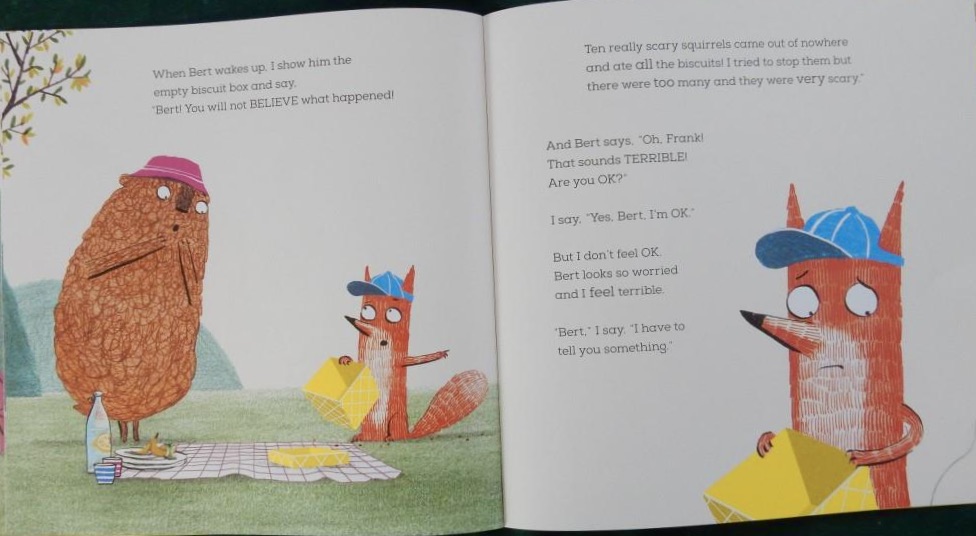
Stanley leaves school and heads downtown to take advantage of his invisibility. He certainly has a lot of fun but on returning home discovers that not everyone is so enthusiastic about his newfound power.

After a night alone, Stanley too has lost his pep. Time to seek out the stain-remover’s creator and start to put things to rights. Villain or friend, which will he prove to be?
The zany illustrations and speech bubbles are littered with Horner’s laugh-inducing humour but he also pays due attention to the characters’ anxiety, especially Stanley’s.

Have You Seen Mikki Olsen?

Penguin appears to spend much of the time each day carrying out the three tasks listed on the To Do List that is fixed to the wall – fishing, chopping lots of wood, and buying sticky icky fish. No matter where he goes or what he does, the penguin has his much loved pink teddy Mikki Olsen as his companion.

One day a sticky icky fish gets stuck to Mikki Olsen’s posterior and when the penguin then sits on the teddy, Mikki sticks to his bottom, unbeknown to the weary penguin who goes home and falls fast asleep.

The following morning the penguin realises his teddy is missing so he searches here, there and everywhere including inside a whale’s mouth. (Children will relish being in the know about where the teddy is at every turn of the page).

Come nightfall the exhausted searcher flops down on his back in the snow and in so doing creates the means for him to discover Nikki Olsen’s location. All’s well when, having greeted his lost teddy and promised to be a better carer henceforward, the two return home for some well-earned shut eye.

The combination of spare text and snowy scenes with amusing details make Alex Macdonald’s debut a delight for sharing with young listeners.

Signs of Survival: A Memoir of the Holocaust

This is a true story of two sisters, Renee (age ten) and Herta (age eight). It’s based on video testimonies of the Jewish siblings born and living in Bratislava, the capital of what was then Czechoslovakia, during World War II. Both the girls’ parents and Herta are deaf, so they all communicate by means of sign language with Renee acting as the family’s ears. The book opens in 1943 with Renee’s voice and then alternates between hers and Herta’s.

By then, so adept has Renee become at recognising the sound of soldiers’ boots beneath the windows of their apartment that she’s able to warn other family members of danger, ie Nazi soldiers rounding up fellow Jews in the town.

Having been sent to a farm for safekeeping by their parents, the sisters eventually find themselves the last Jews in Bratislava and they give themselves up to the Slovak police. The police put the girls on a train bound for Bergen-Belsen, to join their parents so they were told. However what the girls didn’t know was that their parents had been sent to Auschwitz.

We read vivid accounts of the horrors the siblings witnessed, but what stands out is the power of the relationship between the sisters and Renee’s protectiveness that sustained them through horrendous ordeals.

When the war ends, the sisters are sent to Sweden where they learn their parents are dead; there they spend three years. The final part tells of the girls’ post war lives in the USA, where with the help of the Red Cross, they arrived to live with American relatives residing in New York in 1948.

Then follows a poem written by Renee, an epilogue written by Joshua M.Greene giving historical background relating to the Holocaust, and some photographs.

Simply told, this compelling, enormously moving story will linger with you long after you close the book.
It’s a must read for primary children especially those learning about World War Two in their history lessons.

I Love You More / Love is in the Little Things / I Turtley Love You

Parental love and the wonders and beauty of the natural world come together one bedtime when Rae’s Mum attempts to tell her daughter just how much she loves her. Clare’s lyrical text in combination with team Howdeshell, the illustrators, convey the heartfelt message effectively, showing that such love is unconditional and life long.

Herein we encounter among other creatures, waddling penguins and snoozy seal pups atop the ice, gliding eagles, desert dwelling camels and lizards, various marine creatures ,

majestic big cats and pandas as well as celestial bodies – ‘sparkly planets shining brightly in the night’ and more. As the two finish counting the stars in the sky, Rae realises the enormity of her Mum’s love, .
a love that even then Mum feels she’s not expressed sufficiently strongly- and we see the two snuggled lovingly together.

The mixed media illustrations of the animals in their home environs suggest that the way is left open for Rae to change as she too explores beyond her immediate home and surroundings.

Small – a human child and Big – a large bear love one another very much, but how do they show that love? Stella Jones’s first person text and Jane Massey’s heart-warming watercolour illustrations show that essentially as Big says, ‘ love is made from the little things’ – every day things such as holding hands, making and taking tea together, a goodnight kiss, hugs, saying sorry,

extending a helping paw or hand. As Little realises as they look skywards, “Love is made of ALL the little things. Just like the trillions of tiny twinkly stars make the forever of the deep blue sky.’
Gentle, reassuring, and sometimes exciting like those ‘tingletastic, tummy jumbling, giant-enormous glorious fireworks and starbursts.’

This board book takes readers beneath the ocean waves where, through Harriet’s gentle rhymes and Bryony’s engaging illustrations they will encounter several ocean creatures and their little ones. There are turtles, seahorses, clownfish, jellyfish and more either playing or snuggled up together. The emphasis on each spread is the love the adult gives to the little one.
With cut-outs and stand-outs on each spread, little humans will enjoy the tactile opportunities offered by interesting watery, collage style visuals. Some adults might find the words slightly too sugary.

You Stole My Name

Through stunning illustrations with details meticulously painted and four lined poems, Dennis McGregor introduces readers to sixteen pairs of animals that share names but not anatomy..
Similarities and/or differences are highlighted, depending on which animal voice is speaking. Thus, fish and fowl share rainbow hues but the parrotfish that speaks flies through the sea whereas the parrot it addresses flies through the skies, something the fish envies.
In contrast, the Cowbird comments in alliterative style, ‘Fashion choices I prefer / feature feathers over fur.’ when talking to the black and white cow upon whose back it perches.

In the opening poem the Kangaroo and the kangaroo rat have much in common and so the marsupial doesn’t mind that the little rodent shares its name. Turn the page and thereon the chicken is rather less enthusiastic about sharing her name with the predatory chicken hawk.

Next, addressing the catfish through the glass of its tank, a moggy comments somewhat resentfully thus: ‘You don’t meow or even purr. / You have no paws, you have no fur. / I guess it’s whiskers we can blame / for the stealing of my name.’

A book that will appeal most to both art lovers and animal enthusiasts from around seven years old.

The Infinity Rainbow Club: Viola and the Jurassic Land Exhibit

In this, the second in The Infinity Rainbow Club series, the focus is on Violet. Readers of the first story will recognise her as Nick’s friend and classmate who is learning to manage her OCD. Now the two are partners at a dig being undertaken by palaeontologists including Violet’s mum who works at a natural history museum and her dad, a botanist.. The teacher in charge of the Infinity Rainbow Club. Ms Daisy has arranged for all members plus families to join the dig at Paleo Park over the weekend.

No sooner have the children begun work than Violet and Nick discover what could be a dinosaur bone and sure enough, straightaway Violet’s’s intrusive thoughts start up. She constantly checks her work and worries that how ever carefully she does everything, something will go wrong. What she needs to do is to find how to trust what she’s doing and to enjoy enjoy the Jurassic Land exhibit that is the outcome of all the effort she and the others – Nick especially – have put in.

Jen Malia once again provides a child-friendly picture of a neurodivergent child and her supportive family that includes the wonderful Lao Lao, her grandmother.

A book to share with younger KS2 children who will gain a valuable insight into obsessive compulsive disorder and how one individual manages anxiety, intrusive thoughts and repetitive behaviours.

Poppy the Pea

Herein we meet a pea that’s ‘one of a kind’; her name is Poppy and the author describes her as “The most unlikely pea you’re likely to find.’ When first we meet her, Poppy is somewhat conflicted: she dreams big but her fears always prevent her taking that vital first leap to follow her dreams. Dreams inspired by tales of one, Percy the Great, a pioneering pea from back in the day

But then something happens that changes things. One lunch time she finds herself, along with her pals, on a plate but whereas they sing of going to a cosy space of a ‘tummy-tum-tum, Poppy resolves that like her hero Percy, she will now take charge of her own fate. It’s time to take that giant leap of faith and go after that dream.

Yes, she faces setbacks but happily during her adventure she encounters a friendly, encouraging character who helps her get back on track … Freedom awaits.

Each page of the rhyming text ends with an italicised refrain that offers an opportunity for discussion, though the entire book is one that is likely to prompt discussion on topics including feeling scared, facing your fears, being brave and the timely help of a friend.

Amusingly illustrated by the author, (who as a young child fled Iran to the safety of the UK with his family during the Iran-Iraq war) this is a quirky, pocked-sized book, for anyone who might need a gentle nudge to take that vital first step, especially.

Kites and Lemonade

This image has an empty alt attribute; its file name is dscn9874-1.jpg


Leena has recently moved into a new apartment in Riyadh with her mum and dad who has a new job on a construction site in the city. On account of her selective mutism (a complex childhood anxiety condition that makes her unable to speak in new social situations) she knows that meeting new people will be an enormous challenge. However, lying in bed on her first night she focuses on what her grandmother said just before the move: “Don’t be afraid of change, Leena. Embrace it. Make new friends and, you’ll see, exciting things will happen.” Suddenly she hears soft meowing outside and there in the courtyard looking up at her is a gorgeous honey-coloured cat.


The following morning Leena is starting her new school but things begin badly for she’s unable to return the greeting from JoJo, when the two encounter one another.. However she soon meets Rima who is blind and before long she feels sufficiently relaxed to talk to her. Rima tells her that she sees with her imagination and does her best to make Leena feel welcome and thus a new friendship begins.
In the classroom their teacher informs the children of a kite festival being held in two weeks; then Rima continues, talking of a kite-making workshop when her mum’s special lemonade will be on sale to raise money for the charity both her mother and Leena’s work for. But on the Saturday of the workshop somebody sabotages some of the lemonade by adding salt. Who would do such a thing?


During the next few days, Leena and Rima decide to make a kite for the festival together, the cat makes several more appearances, Leena wakes one morning to find an old rusty key on her pillow, the two girls decide to ask JoJo to join them in making the kite, a confession is made and JoJo shares her second secret. This results in the discovery of an old underground workshop beneath their building containing inventions, books and even a robot.


When the girls’ kite is ready for testing they go to the park and there encounter a boy who is very disparaging about their effort and continues to be antagonistic when they’ve made adjustments to the kite. With very little time before the big day, it begins to look as though the girls will not be able to participate after all. But then they make another visit to the underground workshop: what will be the outcome?


Understanding, forgiveness and resilience are key in this story of friendship that will keep readers rooting for the girls as they learn more about themselves and each other throughout the book.

The Infinity Rainbow Club: Nick and the Brick Builder Challenge

This, the first of a new series, follows Nick, who like the book’s author is neurodivergent. This means that he experiences the world differently from many of his primary school classmates who do not have autism.

When teacher, Ms Daisy, announces to members of the Infinite Rainbow Club that the children are going to participate in the very first Brick Builder Challenge and asks them to choose partners, Nick realises that with eleven in the group, one person will be left without a partner and he hopes it will be him. He prefers working alone. However, he’s then told he will partner a new girl, Ruby who is joining the club the following week.

We stand behind Nick’s head as he endeavours to get on with his siblings, share his friends with others and, having qualified for the finals of the Brick Builder Challenge, heed the warning he must do better in working collaboratively if he and Ruby are to win the district competition.

Can Nick manage to do this?

Having taught quite a lot of neurodivergent children in my time as a primary school teacher, I know that in each one, the condition manifests itself differently. Jen Malia shows this so well in the story: I love the way Ms Daisy addresses the group as ‘Brilliant buzzing brains’. I also love the way his empathetic mother gently supports Nick, especially when his emotions overwhelm him. Woven into the story too are ways in which the children learn and use coping strategies – breathing techniques, fidget toys, wobble cushions and spend time in the sensory gym – a helpful insight for neurotypical readers.

With engaging illustrations by Peter Francis, this is a book to include in KS2 class collections.

Ice Journey of the Polar Bear

This addition to the excellent Protecting the Planet series is written by conservation biologist, Martin Jenkins. In this book, the author has deftly woven into his narrative the crucial importance of conservation: like those written by Nicola Davies, as well as a story, this is a rallying cry to youngsters to act as stewards for our precious plant and its wildlife now and for future generations.

Here we follow an adult polar bear as she undertakes an arduous and challenging journey

through a stunningly illustrated Arctic landscape during which she gives birth to twin cubs, one male, one female.

During her travels it becomes alarmingly evident to us, the readers, how climate change has negatively impacted, not only upon the polar bears but upon the Arctic environment. This means that the future for these cubs, which we hope will survive to become awesome animals like their mother, is an uncertain one.

As the author says in a note at the end of the story, ‘as the climate warms the bears are now spending more time on land than before. So far they seem to be coping and polar bear numbers are keeping quite steady, but as things get worse the population will probably start to decrease.’ This underscores the vital importance of our role as individuals and communities.

An important book to add to KS1/2 classroom collections and family bookshelves.

Casander Darkbloom and the Threads of Power

P.A. Staff certainly had me enmeshed in her authorial threads of power from the book’s opening chapters.
When first we meet him, Casander wakes every morning outside Crane’s Curiosities shop in London. He has no memory and like the author, experiences random surges of uncontrollable energy in his limbs (a movement condition known as Paroxysmal Kinesigenic Choreoathetosis.) Nobody takes much notice of him until one rainy morning he’s invited into the shop where unaccountably, he brings a stuffed raven to life.

Almost the next thing he knows, Casander is running for his life along with the girl from the shop; her name is Warrior. She leads Casander into the Balance Lands – a world that mirrors the normal one – and to Wayward School, the place that Warrior calls home. Once safely inside away from the Heretics, she takes him to one, Dr Bane, and informs him that Cas is “The One we’ve been looking for.” In short he’s the Foretold, who it’s prophesised will defeat the malevolent Master of All.

Under the school’s protection, where for the first time, Cas feels a sense of belonging, he must learn to master his magical abilities. However it’s not long before he discovers that not all may be quite as it seems. Indeed the boy will need to take control of his destiny if he’s to find the strength to fight and overcome the powers of evil. In so doing he has an ally in Mrs Crane, the librarian and makes some wonderful friends in the Abnormies. As well as Warrior: there’s Paws who uses a wheelchair, Fenix, and a few others who accept him for who he is and are willing to help him learn about this new world

This is an enormously exciting, wonderfully imagined fantasy that celebrates difference, be that a physical disability, neurodivergence or whatever, showing how what makes each person unique is their greatest strength. With its brilliant final twist, readers will be left eagerly awaiting what comes next for Cas et al.

UltraWild

This image has an empty alt attribute; its file name is dscn9806-1.jpg


Subtitled An Audacious Plan to Rewild Every City on Earth, this large format book is truly mind-blowing. One can only feel wonder at the brain of its creator, Steve Mushin.


Perusing the endpapers of this book brought to mind the work of Leonardo da Vinci and W. Heath Robinson. Both let their imaginations run wild, the former designing machines like the helicopter, submarine and bicycle centuries before their time; and the latter, any number of odd and outlandish contraptions to perform simple tasks. Steve Mushin, an industrial designer, inventor , illustrator and teacher from Down Under invites his readers to think outside the box and employ their talents to the task of rewilding our cities.

This comic-style book is crammed with his own ideas. There’s a prologue, ‘Ludicrous ideas are bootcamp for brains’, fourteen chapters presenting more than one hundred inventions/projects ranging from mechanical megafauna,

This image has an empty alt attribute; its file name is dscn9807-1.jpg

3D printer replacement birds, converting every lamp post into armoured luxury hotels for native animals,

This image has an empty alt attribute; its file name is dscn9808-1.jpg

the sewer sub, to extreme flying mountain bikes and compost cannons.


Truly thought provoking; there is huge potential for STEAM learning at every level and countless hours of entertainment. Packed with accurate scientific and technical information, most importantly it is concerned with saving our planet. Why not take up the challenge presented in the epilogue, “Over to you for the greatest design project in history.’


Back matter includes acknowledgements, a select bibliography, glossary, index and an afterword from the author. Brilliant!


Unseen Jungle

This book is all about microbes, microbes of all kinds. Microbes as defined herein are ‘any living creature that’s too small to see’, many of which live either in or on our bodies, in our homes, on pets and in the food we eat, in our toothbrushes even; pretty much anywhere you can think of. Some however, you would probably not want to think of at all; but rest assured, the majority are beneficial. No matter, the entomologist author introduces them in such a chatty, humorous manner that you are most likely to become fascinated before you finish House, the first of four parts into which the book is divided.

For example, most of us find houseflies annoying and so might be particularly interested in learning of a fungus (Entomorphthora muscae, if you want to impress your friends) that could land on an unsuspecting fly, makes a tube through the fly’s body, grows roots (hyphae) and starts digesting its organs, eventually reaching its brain and from there is able to control the fly’s behaviour, eventually causing its death. The cycle though begins all over again thanks to a multitude of spores that spill out of the zombified fly’s body.

Also included in this section is an interview with a public health vet that will allay the fears of anyone pregnant that has a dog: apparently one microbe found in dogs and other pets is linked to lower rates of allergies in children. Interviews with other scientists with different specialities are scattered throughout the book.


Also scattered through the book are Rob Wilson’s small, comical illustrations that further add to the joys found between its covers.

Did you know that without termites and their power farts we would not have rainforests? This is just one of the mind-blowing things I discovered as I read part one.


I will leave you to discover the delights of the book’s other parts – Yard, Food and You. With its extensive bibliography and even a drawing lesson (a comic style E. coli), it’s definitely worth adding to KS2 collections and family bookshelves.

The Great Reindeer Rescue

There will be laughs aplenty when you read this hugely funny seasonal adventure.
A new recruit to Santa’s team of reindeers, Dave, yes that’s really his name, is thoroughly fed up. He’s taken over from Blitzen and is suffering from nerves that make him chatter non-stop too, made much worse on account of Rudolph’s constant bragging about his number one status.

Meanwhile, elsewhere Holly is wide awake, partly because she’s excited it’s Christmas Eve but also
due to exceedingly bright light flooding her bedroom thanks to the decorations with which her Christmas fanatic father, Simon, has festooned the outside of their home as a tribute to Holly’s Mum.

Just as the sleigh draws near to Holly’s abode, with Dave desperately trying to stay awake, Rudolph lets off an enormous fart right in his face. The result is that Rudolph becomes detached from the rest of his retinue and Santa’s sleigh makes an emergency landing on Holly’s pitched roof and out go all the lights. Up goes her Dad, Simon, to investigate and before long there’s a huge explosion that scatters the reindeers all over the world. And of Holly’s dad there is no sign.

With just a few hours before the dawning of Christmas Day, having sorted out the not insignificant matter of retrieving Santa’s magic box, Dave needs to fly with Holly rescuing reindeer from bizarre situations, first stop Cupid atop the Empire State Building in New York.

Thereafter they visit the icy Arctic, alarmingly close to a hungry polar bear, a beach in Tahiti where a relaxing Dasher is totally against being collected,

and then other locations around the globe. A hectic hunt it certainly is, but can they possibly find all the missing characters and save Christmas?
Included in the unlikely cast are the wonderful twins, Dorothy Dithers and Griselda Dithers who will surely make readers smile.

Drama and humour abound in this romp, added to by the illustrations of Anita Mangan, sister of the author. Read aloud or read alone.

The Biggest Mistake

“It’s time for you to catch a gazelle on your own.” So says Papa Lion to his cub one morning. Having located his prey, the little lion convinced that his task will be easy, hides behind a bush, waits and leaps. However, the gazelle escapes. Little lion tries again … and again

but none of his strategies are successful. His prey escapes every time and to make matters worse the other gazelles gather to laugh at his attempts.

Ashamed, with his ego dented, the little lion hides away leaving gazelle basking in her triumph. A triumph that is short lived however as it soon gives way to boredom.

The gazelle hunts for a long while for the little lion but her search is unsuccessful until at sunset, she spies him.. She creeps closer and closer but now it’s her turn to make a mistake , a very big one and she’s captured. Is this the end for the nimble creature?

A tongue-in-cheek tale with a fun final twist, deftly translated from the original Italian by Debbie Bibo. With a focus on the animals’ movements, Camilla Pintonato’s bold. dramatic illustrations use the creatures’ eyes to great effect, ensuring that young humans stay engaged and amused throughout.

The Puppets of Spelhorst

This story has three acts. It begins with a lonely old sea captain, Spelhorst by name. One day when walking in the city, he comes upon a toy shop. Hanging on display in the window are five puppets: there’s a king, a wolf, a girl, a boy and an owl. Immediately the man is drawn to the girl puppet for it reminds him very much of someone he loved and lost long ago. The shopkeeper however, refuses to sell him just one puppet: they’re in a story and must be bought together he insists and so Spelhorst takes them all. That night, thinking sadly of his lost love, he writes for a long time, folds the letter and tosses it in the trunk with the puppets. He then dies in his sleep.

The trunk containing the puppets is sold to a musical rag and bone man, who sells it to a young man and it eventually ends up in the home of his two nieces, Emma and Martha. Emma, the elder of the sisters ranges them on the mantlepiece and later starts writing a play about them. Meanwhile significant misadventures happen to each of the puppets: two of the wolf’s teeth are wrenched out by Martha; later the maid flings the puppet out the window and she’s taken by a fox running to its den in the woods (running through the woods fulfils her greatest wish).The boy that longs to ‘do a great deed’ is seized by a hawk and dropped in the branches of a tree …

Tension mounts as we join the puppets in wondering if they will ever be together again. Eventually they are reunited and Emma’s play is performed. “We did something wondrous, important,” says the boy afterwards.

Wondrous and wonderful too, is this hauntingly illustrated novella of desires, belonging and identity that demonstrates the power of stories and their role in living one’s life and fulfilling one’s dreams.
The author’s ending elegantly puts all the pieces together, and I found myself reaching for tissues.

We Could Fly / Is This Love?

As a mother and daughter sit together outside on the edge of a wood, the child looks up and points out a sparrow that she sees. Why can’t I fly like the sparrow, she wants to know. Her mother then speaks of Granny Liza and how she used to fly every night, searching for the promised land.

The trembling that the child feels through her arms, her mother tells her is like a connection to her grandmother. The two continue talking until the child says that she feels it’s time for them both to
join the journey and together they take flight, searching for the promised land far away across the ocean.

After the lyrical verses and stunningly beautiful skyscapes and landscapes, we read the author’s note wherein she reveals her inspiration came from the final story in the classic folktale collection, The People Could Fly, retold by Virginia Lee Hamilton, illustrated by Leo and Diane Dillon.

A mesmerising book, wonderfully warm that deserves to be shared widely.

This new title in the series based on the lyrics of iconic reggae musician, Bob Marley, is again adapted by his eldest daughter, Cedilla. Here, she uses the repeat refrain of his song “Is This Love” to tell a story of sibling love.

We meet the siblings when the younger one is not long born and follow their loving relationship as they grow and engage in all kinds of shared activities. Big sister acts as a supportive teacher and playmate. Together they enjoy block building, bike riding, building a blanket den and visiting the playground to use the equipment.

Alea Marley’s bold, richly hued scenes have a tropical setting, with both daytime and evening activities being shown, some of which include the entire family, whereas in others we see just the two sisters.

The unique relationship shared by siblings is the key theme, but abiding warm, loving family bonds are also a vital element of this book. A book that can serve as an introduction to Marley’s music for young children, while also making adult sharers feel uplifted and nostalgic. It would make a smashing book to give a family as a welcome to a new arrival.