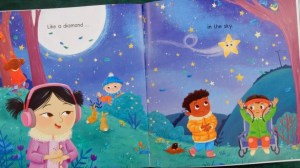
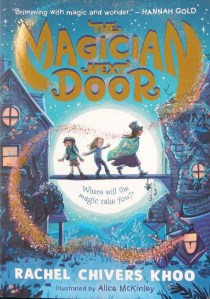
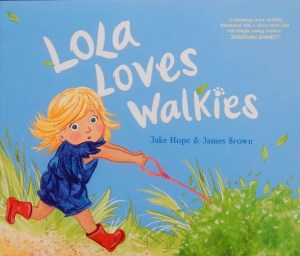
The Boy Who Loves To Lick The Wind

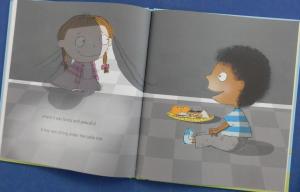
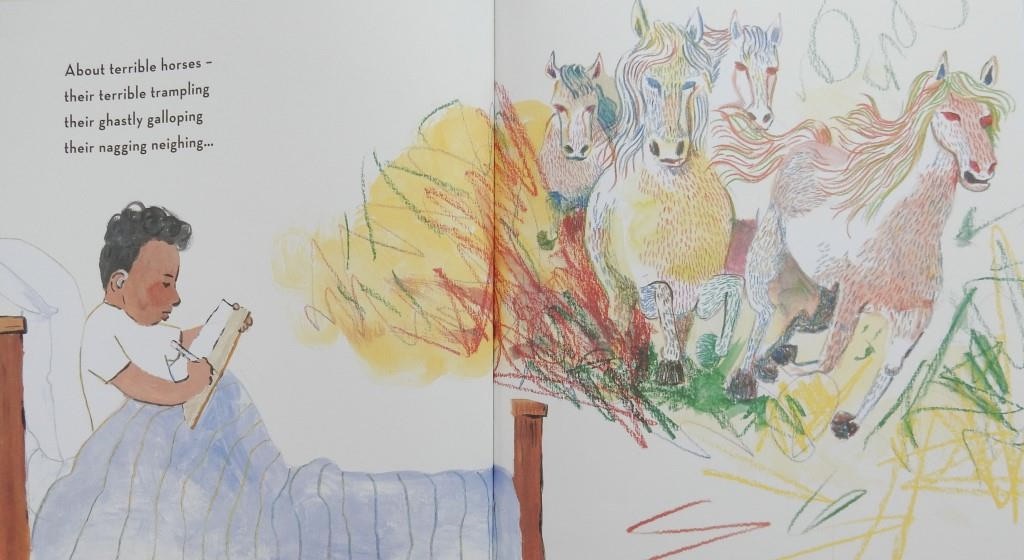
This story features two boys – the narrator who is dark haired, and his blonde neighbour. Puzzled by the blonde boy’s behaviour, the narrator speaks to the boy’s mother who responds thus, “He’s licking the wind. You should try it.” She goes on to invite the inquirer to join them on a visit to the beach, the place where the best winds can be found. Off they go with ‘the boy next door showing his excitement by his actions and the sounds he makes. Once at the beach he dashes onto the sand stands still and begins his licking ritual, ignoring an invitation to collect shells, Instead he picks up a stone and tosses it into the water.

The two boys then spend time throwing stones until mum calls them for lunch. The boy bites into his sandwich, tosses it away and shows distress, which his mum deals with calmly.
Meanwhile the narrator starts collecting smooth stones and using them to make a castle. Just as he finishes the boy next door runs up, grabs the top stone and hurls it into the sea. The boys then take turns dismantling the castle splash by splash till nothing remains. They jump, spin and yell into the wind till Mum calls to give her son a five minute warning before it’s time to return home. This prompts both boys to dash into the sea and dance around.
The beeper sounds indicating it’s time to leave, which causes the boy to cover his ears and cry. Again Mum is empathetic and they head towards the car but before they reach it, both boys give one final tongue swirling lick of the wind. How wonderful it feels.
The following day in school the narrator tells his class during a circle time session about their day at the beach; his friend demonstrates and then they all lick the wind together.

Some child listeners and adult readers aloud will understand from the outset that the narrator’s new friend is neurodivergent. That means that his brain works in such a way that he experiences and interacts with the world differently from neurotypical people. The story, related and illustrated with great empathy, is an ideal way to introduce neurodivergence to primary school children.

Adventuremice: Mice on the Moon / Dream Weavers: Roar of the Hungry Beast

Strap yourselves in ready to blast off into space for another Adventuremice experience.
It begins one spring night as Pedro et al are sitting on deck watching the moon rise when suddenly a beetle arrives with an important message from Millie’s uncle, Professor Bernard Quartermouse summoning the Adventuremice to his laboratory right away. Off they go to Scrabble Island and almost before you can say, ‘space capsule’ Pedro, Millie and Fledermaus are in a rocket shooting into the sky, destination the moon. Supposedly, but that’s not quite what happens.

Instead they crash land on what they learn from Pontiki, another mouse who crash landed months earlier, is the minimoon, and was helped by those she calls starmice. These mice are welcoming; unlike Earthmice, they have green fur and pointy ears and offer their visitors a delicacy they call moonflower cheese as well as singing to them.

However, this place does not appeal at all to the Adventuremice who soon despair of ever seeing their homeland again. Then a realisation dawns: perhaps there is a way back after all … Time to make contact with Ground Control and inform them of their possible return to Earth. Will they make it safely back to Mousebase?

Another immersive addition to a super-silly series characterised by not too dangerous, pacy adventure told with gentle humour by Philip Reeve and delicious colour illustrations by Sarah McIntyre.

Tito and Neena are now firm friends and Tito loves to spend nights dreamweaving with Neena. He enjoys seeing how his dreams come to life – they seem so real. But now something isn’t right. The teachers at their school are acting strangely and are uncharacteristically cranky. Could this be anything to do with that dastardly Bhoot. Should the friends enter the dreams of a teacher to find out why school is becoming nightmarish? Yes they decide and first it’s to be Ms Branberry’s dream – and it’s not a good one, as they find out; neither is that of headteacher Mr Tulley. In both there’s a very loud growling and the appearance of a huge, wolf-like beast.

After Tito’s encounter with the beast and his head injury, it seems to him that the veil between the dream world and the waking world has started to break down, which is exactly what the Darkweavers want. Nevertheless Tito knows that it’s up to him to face up to the beast and make sure it goes back from whence it came? Can he do so? Possibly, with the help of Neena and her cousin in Pakistan, a portal could be created.

This dramatic tale ends on a cliff-hanger indicating that Tito and Leena will be back to continue the fight against the Bhoot.

Come Out, Come Out, Chameleon!

“I have a pet chameleon,” announces the white-haired man standing outside his home on the first spread. Beside him is his dog whose gaze is directed towards a rooftop weathervane whereon, as observant readers/listeners will see, is said chameleon. Turn over and the chameleon’s owner tells us, “The only thing is … I’ve never actually seen him.” Surely this guy needs new specs.

He continues sharing with us his possible sightings, each of which he immediately dismisses: “I thought I caught a glimpse of him among the flowers. But it must have been a trick of the light.”
All the while the chameleon is hiding in plain sight: the dog can see it, so too can we readers. On one spread the creature is sitting in the fruit bowl disguised as a banana;

turn the page and he’s lurking among the socks strewn across the bedroom floor.

Audiences will delight in both the playful way the pastel illustrations contradict the words and the dog’s attempts to help the man spot his chameleon: canine body language and facial expressions speak volumes. Eventually the owner succumbs to the possibility that his chameleon doesn’t actually exist. This prompts the dog to come up with a way to solve the chameleon conundrum and hurrah! it works – for a while at least.

Brilliant interactive fun for the very young and their adult story sharers. The simple text also makes this a good book to offer children in the early stages of their reading journey

Can You Find My Eid Presents?

Panic sets in when, on the day before Eid-ul-Fitr, while her Mum is busy with preparations for the festival, Hana is sent up to her parents’ bedroom to collect the Eid presents ready for the family visit to Nani’s the following day. Having searched high and low in places both likely and unlikely, she hasn’t found a single one. Could they be outside in the garden, she wonders going out to check; but no luck. Without gifts this will be the worst Eid ever, she thinks to herself that night.

In the evening when her dad comes back in the car she rushes to ask him what to do, but is told to go and ask her Nana for help instead. Off she goes next door and …

As the story unfolds and young listeners join Hana in her present hunt, they will sense her mounting panic at her failure to locate them; this is captured in Junissa Bianda’s expressive illustrations of the little girl.

With Eid coming up in April, this book, with its search-and-find element, is one to share with young children at home or in an educational setting prior to the celebrations. You might also consider buying it as an Eid gift for a youngster you know who will be celebrating the festival.

The Secret Life of Bugs

In the latest of The Secret Life series Luna the ladybird takes readers on a journey into the world of insects that includes traditional tales as well as information. She begins by presenting her own life story starting when she was one of a cluster of tiny eggs on the underside of a leaf through her metamorphosis until she became a bright red ladybird with seven black spots. I was surprised to learn that there are over 5,000 different kinds of ladybirds in the world. On the next spread, using herself as exemplar, Lily presents the body parts that are similar in all insects as well as talking about some of the differences such as mouthparts. Did you know ladybirds and many other insects smell by means of special organs on their feet?

After this is a traditional tale (one of the five included in this book) How the Butterflies Got their Colour, based on a legend told by native American People living in the Arizona desert.

Insect homes, night fliers, nesting habits are the topics of the next three spreads.

I laughed as I read The Puzzle of the Honey Tree, a traditional tale from southern Europe wherein the bees and the wasps in a woodland kingdom argue over the ownership of a honeycomb containing yummy honey. The idea of the rival factions having to go before an arbitrator really amused me.

Other spreads offer facts on swimming bugs, noisy ones, very large and very small bugs, how bugs see,

some insect ‘superpowers’ and more, concluding with pages encouraging young readers to get involved in helping insects survive so they can continue their vital work on our planet. There are also bug stories from Ancient Greece, Brazil and South America.

In my experience most young children are fascinated by insects; this book will surely further fuel their interest in and understanding of, these important creatures.

Lola and Larch : Fix a Fairy Forest

Lola’s mum is a forest ranger and during the working day she and her little brother Noah are often looked after my Grandma. One stormy night on the way home from Gran’s in Mum’s car, something causes Mum to brake suddenly, something that looks like a rabbit but has a kind of shine to it. They take the little thing home to care for it overnight and the following morning the rabbit isn’t in the cage, instead there’s a tiny fairy wearing a rainbow pendant … a tree fairy, albeit with mixed up magic, and she urgently wants to get back home. This sometimes rabbit, sometimes fairy tells Lola that she’s called Larch Mugwort, she’s lost and must protect the other fairies from Euphorbia Spurge, the “baddest fairy in the forest”. Larch is also a bit of a rebel and having seen a strange dark thing the previous night in the forest, suspects it’s something malevolent to do with Euphorbia. Meanwhile Lola’s mum has started putting up ‘FOUND’ posters of a rabbit in the hope of finding Larch’s owner.

Next day Lola takes Larch to school in her bag and it will come as no surprise that at her teacher’s behest, Lola’s Gran comes and collects the creature; the problem is she arrives with a strange woman who claims that Larch belongs to her.

Lola has to think quickly to avoid having to give up Larch and once they’re back at Gran’s, Larch tells Lola that the stranger was in fact Euphorbia Spurge.

There follows a lot of shape changing, the marching of a beetle army, a pitting of wits, a coming together of fairies, a confrontation between Euphorbia and King Ash (Larch’s father) and more. However all ends satisfyingly with a declaration by Larch about being different and a final picnic.

With friendship and magic aplenty, this is funny, sweet and a great start to a new series for younger readers. Rachel Seago’s plentiful black and white illustrations are a quirky delight and help break up the text for the less confident. Anyone for pancakes?

My Friend Andy

Fluffy the dog, narrator of this story tells how every day s/he walks through the city to the park with best friend Lilly and her Mum. Each morning they walk past Andy, another dog but Fluffy is never allowed to stop and play with him.

One day though, Fluffy chases a ball out of the park and gets completely lost in the city. In all the hustle and bustle Fluffy’s cries for help are drowned; but then Andy comes along with his Dad. Realising that the little dog is lost, Andy’s Dad takes Fluffy in his arms and they walk to a quiet place for a sing song that eventually lulls them all off to sleep.

Next morning they start searching for Lilly and having spent the whole day so doing as night descends on the city, Andy’s Dad spots a ‘Missing’ sign giving Fluffy’s address tacked to a lamp post.

So they head straight there and a joyful reunion takes place. Sadly Andy is not asked in to play and as Fluffy and Lilly snuggle together in bed it’s clear to Lilly that something is still upsetting the dog. Fluffy tries to explain but is unsure Lilly’s understood. However, the following morning on their way to the park something special happens …

Emma Chinnery’s poignant story will surely make readers aloud especially, think deeply about how they view homeless people. Non-judgemental child listeners I suspect, will be more intent on rooting for Fluffy, hoping for a reunion with Lilly and later with new friend, Andy. Emma’s watercolour scenes of everyday life in the busy city capture so well what is never said about how people perceive the homeless.

Be My Sunflower

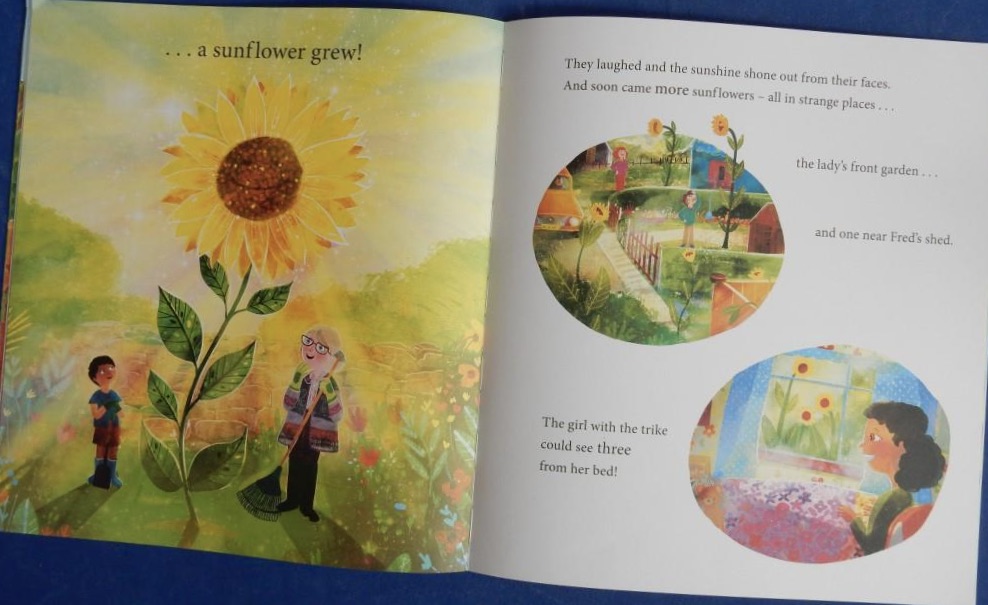
Vernon is a sunflower seed, one of many in the packet Miss Okoro has for the children in her class to plant. All Vernon’s fellow seeds are excited about being released into the world, a world Vernon knows a considerable amount about – scary things like birds, slugs and stormy weather – and thus he feels apprehensive.

Come the next morning a little girl named Carla is given Vernon. Her enthusiastic response , “Be my sunflower” makes the seed feel somewhat more relaxed. Time passes; Carla waters Vernon, the sun shines, warming him and it’s so snug and safe in the soil. Meanwhile the other seeds have begun to germinate

and they encourage him to do likewise, extolling the delights of the stars. Their enthusiasm makes Vernon curious: perhaps he could just have a teeny peep. The stars glitter in the night sky but just as Vernon is reconsidering his opinion of the big wide world, something large swoops by, scooping him up and then dropping him way way down into a sandpit. There the frightened seed stays all night. In the morning a little boy picks him up and hands him to Carla. Carla immediately recognises Vernon and puts him back in his pot.

By the end of the week, Vernon is the only seed that hasn’t sprouted. Carla feels devastated and cries lots of tears right over his flowerpot. The ungerminated Vernon knows that he must act: he spends the night pushing through the soil. Is he brave enough when morning comes to remain exposed? For Carla, yes he is and she is overjoyed. So begins a new way of being in the garden: Vernon grows and flowers and yes, he still knows about the scary things, but now he also knows about some of the wonderful things the world offers, the most important of all being a very caring little girl.

What a lovely story about finding the courage to emerge from your comfort zone and take on the world. Its warmth and reassurance shine through like the sun that sends its rays down to Vernon. Young children will be amused at the seeds having names and the way they talk to one another; will certainly empathise with Vernon and be rooting for him to emerge and reach for the sky. Rosalind Beardshaw’s mixed media, digitally worked illustrations of the personified plants are such fun.

Counting Sheep

Sheepdog Sam has had a tiring day and he’s more than ready for sleep. Not so the sheep; they’re still way too lively. Sam suggests they should try counting sheep ie themselves to make them nod off. He starts “One, Two …”; the sheep try to continue but clearly need lots more practice, so Sam notices as he dashes off towards other wakeful animals. He gives the horses the same ‘count yourselves’ instruction, which results in Sam feeling more drowsy and the horses uttering letters of the alphabet.

It soon transpires that all the farm animals are still wide awake even the cows and Sam leads them into the barn urging them to demonstrate the sleep-inducing counting to the entire farmyard contingent.

The result is only a lot of mooing: it’s time to visit the hen house to seek an answer to the wakefulness epidemic. It’s there that Sam finally discovers the insomnia explanation; it’s also another counting opportunity for the other animals.

Michelle Robinson’s comical bedtime story and counting book with a difference, in combination with Nikki Dyson’s wonderfully expressive illustrations of the farm animals, will surely make wide awake young children giggle. It also offers lots of counting occasions – albeit sometimes slightly chaotic ones – on almost every spread.

My Mother’s Tongues

Sumi’s mother speaks two languages, Malayalam because she grew up in Kerala and English because she learned it at school and having emigrated to the USA ten years back, continues doing so now sometimes using both when she talks to her daughter. Sumi the narrator was born in the United States, uses Malayalam at home with her family and as a result of listening carefully to others at school and around the neighbourhood, describes herself as having two tongues like her mother. She goes on to say that when she visits Kerala with her family each summer she uses Malayalam with her relations and her ability to understand and speak it is improving.

She explains that as her family tell her, if she stops using a language she might forget it. I know that to be true with my speaking of Hindi. The more languages a person learns and speaks, the more people s/he is able to converse with: Sumi’s aunt for example is able to use Malayalam, English, Hindi and Spanish.

But imagine how many opportunities a person might have who is multilingual: that’s what Sumi aspires to. I love that she concludes by saying ‘Having a tapestry of tongues will be my superpower.’

This celebration of learning and using new languages is superb, showing how it helps overcome differences and borders of all kinds as we connect with people from all over the world.

Using canvas backgrounds and quilted textures, Jomepour Bell emphasizes the weaving theme of Uma Menon’s lyrical text in this illuminating book. Everybody should read this especially those who say such things as ‘English is spoken all over the world, so why bother to learn another language.’

Kevin the Orange

Thank you to Alan and Little Door Books for inviting Red Reading Hub to be part of the blog tour for this picture book:

One day Kevin the orange’s best fruity friend Brian the pear – a wise bibliophile by nature – discovers that Kevin is having a colour crisis. Fed up with a life that seemingly lacks fun, he’s decided to turn blue. But how? Brian suggests that by visiting the North Pole and immersing himself in the snow for some time, he will become blue. Suitcase in hand, off goes Kevin.

On arrival he selects a suitable spot, sits in the snow and waits. BRRR! Yes he turns a blue hue but quickly realises it’s not for him. Back he goes, seeks out Brian and asks his advice once more. Now red is his must-be colour. You can probably guess what he’s told to consume to make him sufficiently hot for that to happen. And oh my goodness! it certainly has a powerful effect but not a pleasant one.

Kevin continues consulting his friend and trying other colours

until eventually after a series of further mishaps, he realises there’s really only one colour that’s right for him.

Being true to yourself and the best version of that self you possibly can is an important life lesson for children to learn. Alan’s funny story together with Olla Meyzinger’s zany, exuberant scenes of Kevin’s colourful capers will induce giggles aplenty when you share this with young children.
Four year old Faith with whom I shared the book (several times at her request), was particularly tickled at the sight of a pink Kevin sporting his swimming trunks and arm bands as he pedals off to join the jolly grapes in their swimming pool. 

Be sure to check out the other posts in the blog tour.

Future Hopes: Hopeful stories in a time of climate change


‘… dreams and stories are the real seeds of change.’ So says Nicola Davies in her foreword to
this book, a collection of nine compelling short stories edited by Lauren James, the theme being the climate crisis.

First we have Eyeballs, Tentacles and Teeth by Oisin McGann’s exciting tale of plastic eating bacteria and geoengineering with its unintended consequences – there’s a giant squid in this one. Next comes Tolá Okogwu’s Saving Olumide, a tale of community food production using a farm created on the roof of an apartment building, family love and neighbourly kindness. All the stories are thought-provoking and each has its own appeal. I laughed at Louie Stowell’s playful comic strip They Came Back with its rewilding theme and fanciful elements; but I think my absolute favourite is M.G. Leonard’s Food of the Future which tells how two friends win their school competition which asks that pupils create a sustainable, preferably innovative dish; the Bug Burgers that Borneo and Francesca make are assuredly that, but they taste delicious too.

Lauren James follows each story with a summary and the facts behind the fiction, together with observations and ideas about how each of us, through our lifestyle choices, can make a difference. In so doing, having read this optimistic book, one hopes today’s children feel galvanised and sufficiently empowered to become part of the change that saves our precious planet Earth. With its terrific cover art by David Litchfield, it’s a must have collection that needs to be in every upper primary and secondary class collection.

Maisy Loves Bees / Maisy Loves Trees

Young children’s favourite rodent Maisy Mouse has turned green – not literally of course: rather, she’s become a champion of helping to protect our precious planet.
In these Maisy’s Planet interactive board books, little humans are invited to join Maisy as she finds out about two of the most important organisms of the natural world. Maisy Loves Bees begins in her garden where she learns the basic characteristics of those stripy little insects and discovers why bees are so vital, what they need, what’s their role in nature. She also visits a beehive, finds a honey bees’ nest and finally invites her friends to join her in the garden where they all watch the bees busy at work.

In Maisy Loves Trees, she finds out what a tree is, how it grows, investigates different varieties of leaves, learns about seasonal changes through the year, discovers that not all kinds of trees undergo these changes and visits the park with Cyril the squirrel and Tallulah the chick to see examples of trees from all over the world.

With bold, bright illustrations, a final fold-out scene and simple explanatory texts, these are just right for encouraging tinies to become lovers of nature. Share and then go and do some investigating outdoors.

Keep Up, Duck!

Puck , the smallest of Mamma Duck’s brood has trouble keeping up with the others as they make their way to the lily pond. By the time they reach the boating lake Puck is way, way behind so Mamma calls, “Keep up, Duck!” Puck looks around at the boats and being an astute little thing, comes up with a solution that sees him hopping and plopping to rejoin the rest of his family.

However he soon falls behind again and again he responds to the titular “Keep up, Duck1” from Mamma by hop, hopping onto a skateboard, then a child’s seat on an adult’s cycle and plopping back with his siblings. But then barking dogs cause another distraction

so Puck hop hitches a ride from one dog then another until with a final plop! he reaches the lily pond at last. And guess what: despite being smaller than all his siblings, diminutive duckling Puck has become the speediest.

Told using a repeat pattern text with a wealth of onomatopoeia and splendidly expressive watercolour and pen scenes of the adorable ducklings and their journey, this problem-solving tale is a delight to read aloud to young children. I suspect it will become a storytime favourite with foundation stage listeners. It would also be a great book for early readers to try for themselves.

We, the Curious Ones

Story and science and their unlikely interconnectedness help us all find meaning in human existence. This symbiotic relationship is explored in the author’s lyrical prose and the two illustrators’ dreamy cut paper art in this book. They take readers on a sweeping journey through time that looks at our evolving understanding of the universe starting from creation mythology …

right through to our current and still growing understanding and knowledge.

We see that to humans, Earth was once considered the centre of the universe, then it was thought of as a planet that revolves around the Sun, next the Sun was considered to be one of billions of stars

and eventually, Earth became seen as one of numerous planets, a medium sized one ‘circling an average star in an ordinary galaxy in an unimaginably vast universe’ a universe that is ‘mostly dark and seems almost empty.’ The designer’s considered choice of a small font might be seen as a metaphor for how very tiny human beings are in this universe and the whole book invites us to think deeply, ask big questions and keep an open mind as new ideas continue to emerge. Awe and wonder – yes but so much more.

There’s a lengthy afterword that finishes thus: ‘We are the storytellers. / We are the curious ones.’ May it ever be so. A book to share and discuss with readers in primary classrooms and beyond, as well as in the home.

Snack Please!

Along with many little humans (including some of my relations), Gertie mouse has gone from an eager devourer of all kinds of food to a constant demander of snacks – many varieties of snacks especially her favourites. The result is that she feels too full when it comes to meal times and the sharing of the delicious meal her daddy has so painstakingly prepared.

And, no matter what she and Daddy do together, Gertie would always say, “Snack, snack”. Feeling totally frustrated her dad decides something must be done so he takes his little snacker to see Grandma at the community garden. Surprisingly little Gertie gets so involved with helping the workers there that she barely even thinks of snacks. Moreover, when her gran asks what Gertie would like to do with the fruits of her labours, she surprises her dad with her idea.

What a delicious celebration of preparing and sharing food: any parent who has a snack fanatic like Gertie would do well to get their hands on this fun story that looks at young children’s food habits.
Georgie Birkett’s illustrations are full of wonderful details that both adult readers aloud and young children will enjoy exploring; and her mouse characters are SO endearing.

Zooming the Zoo

There are over sixty poems in this splendid collection. Most are light-hearted in tone but nonetheless the author often uses humour to put across serious ideas, my most favourite being Just Let Me Read, which wearing my teacher’s hat, is spot on and absolutely in the spirit of a recent Guardian report about the joy having been sucked from the education system by the present government. The poem begins thus: ‘Just let me read / Without counting commas / Identifying idioms / Noticing nouns / Analysing analogies // Just let me feel a sense of wonder / / Without asking me to wonder / How it was achieved.’ Himself an ex-teacher, Dougherty doesn’t say that this should never be done, rather that it should not be the raison d’etre for asking children to read something.

I’m sure children will be amused by When You’re a Kid about them being able to sit on a loo seat the wrong way round and pretending to be riding a motorbike, whereas teachers cannot do this. I guess it rather depends where the loo happens to be: this teacher is able to do so in the privacy of her own bathroom.

Another poem I particularly like is the three-liner In the Library, which says so much in so few words. Another is Learning to Walk about the importance of risk-taking in learning.

The author’s early life in Ireland is the subject of both Taking My Children to Larne in which he recalls a time during The Troubles when bombings were as he says ‘normal’. It’s also mentioned in The First Time I Went to Scotland wherein he remembers being searched before entering shops in Northern Ireland.

Finally, I suspect everyone will be amused at the titular poem about a Zoom meeting that doesn’t quite go to plan on account of animal mishaps.

Whatever your children’s feelings about poetry, it’s definitely worth sharing some of John’s work with them; I’m sure you’ll find poems to please everybody. Individual readers will enjoy Tom Morgan-Jones’ black and white illustrations.

The Dolls’ House

When Mia finds an abandoned dolls’ house in the street near to her new home, she immediately decides to take it back to her house. Once there she straightway begins operation renovation by giving it a coat of bright yellow paint and because the paint hasn’t dried by bedtime, Mia has to leave it outside overnight.

Next morning to her surprise she sees a boy looking at the dolls’ house and he asks to play with her. Mia agrees and she and Aaron spend the day making things for the dolls’ house. The following day Aaron appears again, accompanied by his sister who has an offering for the house and also wants to play.

Gradually that dolls’ house becomes a meeting place where lots of children enjoy playing together – the whole summer long.

Then one evening Mia notices a face briefly staring out from behind the curtains of the house opposite and during the rainy autumn days she waves at the boy who merely smiles. As winter approaches Mia’s mum suggests bringing the dolls’ house indoors but although Mia agrees, she asks to leave it outside for just one more night. She carefully positions an umbrella over the house – just in case – and the following morning the precious dolls’ house is in rather a state. Then she hears a sound and there is the boy from behind the curtain offering shyly to help her fix the house. In his outstretched hands he holds something special.

But Mia too does something special …

With themes of friendship, sharing and empathy, this is a wonderfully heart-warming story to share. If you read it aloud to a class, make sure you have plenty of time for your listeners to explore the details in Claudia Ravalli’s illustrations, large and small. The final fold-out spread of the house interior shows the fully furnished dollhouse with its diverse residents – a visual treat – and a reminder of the enduring fascination of small world play for children.

The Princess and the Pee

This is a modern fairy tale wherein young Princess Amma struggles with a problem that will resonate with lots of families: she wets the bed and is constantly fretting about so doing. The Queen, the King, and the palace staff all have ridiculous suggestions: eating dry toast just before bedtime to soak up all the pee, sleeping with lemons beneath her pillow, and putting feather dusters by the loo so that the princess can “giggle all her pee out before she goes to bed.” Needless to say none of these work: the princess’s worries remain and she wakes to a wet bed every morning.

Fortunately wise Grandma Grace is much more supportive in her approach; “Let’s take our time. Let’s be steady. / She’ll stop when she is good and ready.” is what she urges.

One morning having shooed the other adults out of Princess Amma’s bedroom, Grandma gives her a bubble bath, then sits beside the child and with an encouraging smile tells her, ““My darling Amma, a little bit of pee will NEVER come between you and me.” That evening Grandma Grace snuggles beside her granddaughter and together they let their imaginations grow into magical stories

after which Amma is lulled into slumberland by her Grandma’s calming singing. Come the morning Amma’s bed is to her delight, dry. The palace residents are surprised. other than Grandma Grace, of course; she knows that Amma’s journey to dry nights has just begun and that eventually it will become the norm.

This is a delightfully whimsical, lighthearted way to approach a tricky, often embarrassing issue for younger children, the humour and fantasy nature of which should help make it easier to cope with. Juanita Londoño Gaviria’s textured illustrations are splendidly expressive and convey the changing mood of the story well throughout. I love the portrayal of the supportive relationship of Grandma Grace towards Amma: just what any child in a similar situation needs.

Wanna See A Llama? / We’re Going on an Egg Hunt

In this equally entertaining sequel to Wanna See A Penguin? the same young animal expert, so she says, now includes llamas in her field of expertise. She invites her friend to accompany her on a llama-spotting expedition around the city. As they walk, they encounter all manner of creatures – humped, scaly, furry with spots, shelled,

very long-necked, soft and woolly, but a llama? Not around here declares our self-dubbed expert who evidently hasn’t noticed any of the posters advertising a parade as she leads her long suffering friend who identifies each animal, on a wild-llama chase.
Asserting on the penultimate spread, ‘There can’t be any llamas round here’ our leader heads homewards.

Young listeners will delight in the final spread whereon Ian shows a Llama Parade just behind the two children. Those same listeners will also have enjoyed spotting a llama (or two) in the background of every other double page illustration.

Unashamedly using the nursery favourite ‘We’re Going on a Bear Hunt’ as the basis, Goldie Hawk sends her three young child protagonists, springing into action in search of eggs, baskets in hand. As they walk, the children encounter pecking, clucking hens, munching-crunching bunny rabbits, hopping frogs,

rustling-swishing plants until eventually – yippee! They discover ten eggs. Having loaded their baskets, it’s time to make the return journey back the way they came, arriving just in time to take part in a joyful Easter parade.

Angie Rozelaar’s vibrant scenes with splashes of day-gio pink and luminous green convey the freshness and joy of springtime and of the search. Just right for sharing with very young children as spring and Easter approach. I suggest buying to give instead of an Easter egg; its pleasures will last SO much longer.

High-Five Me! In the Jungle / High-Five Me! At the Farm / Ancient Greece Pop Ups

These are the first two in a new board books series. Each has five double spreads, a simple, bouncy rhyming narrative written by Jess Hitchman and a sequence of vibrant, uncluttered scenes by Carole Aufranc.
In In the Jungle little ones will meet Tiger, Chimpanzee, Parrot

and Sloth, each one peeping from a large flap waiting to be high-fived by a young child and the final one has a mirror hidden beneath its flap. This will encourage little humans to high-five themselves.
Equally playful, At the Farm, Horse, Cow, Sheepdog, and Sheep await a little human’s high-five and sometimes introduces the sound the animal makes.
These are just right for the very youngest children; they will love the playful nature of the books and I suspect, want to share them with an adult (or older sibling) over and over again.

For much older children is:

Ancient Greece often forms part of the upper KS2 history curriculum for it gives children an opportunity to gain some understanding of the culture of an ancient civilisation and how this has influenced the way life is lived today. In Ancient Greece for instance, only Athenian men aged 18 and over were able to make laws by debating and voting; neither women nor slaves could participate in decision making in the direct democracy practised in Athens.

Elements of Greek mythology are also taught to 10/11 year olds and this too is the subject of two of the dramatic pop-up spreads in the book. Included as well are brief facts relating to Athens (circa 500 BCE), trade, war and heroes. With its diorama style art by Javier Joaquin, primary teachers may like to include this in their resources to whet the appetites of learners.

Rudy and the Ghastly Gathering / Press Start: Super Rabbit Boy Blasts Off!

When Rudy and Femi are invited to Edie’s birthday party they are warned that ghost parties are ‘a little different’. It’s in a haunted house after all, but why has Edie been keeping the event under wraps? Nevertheless the two are determined to make it her best birthday so far. Come Saturday the friends skate their way to Edie’s home taking with them her special present, a present they decide won’t compete with the super bike her dad conjures up. As expected Edie wants to try it out at the Skateway immediately, so off they go, with Edie’s little spirit-sister Holly tagging along.

Once there Holly straightway starts drawing attention to herself pretending to vanish and it becomes difficult to tell which disappearances are pretence and which real. It’s down to the friends to work out what’s what and find Holly before she’s washed away by raging river water. Can they do so and what about Edie’s birthday party? Will a spookily special celebration be shared by all?

This latest exciting adventure wherein friendship and teamwork are vital will be eagerly seized by fans of the series. Those who have yet to discover the joys of Paul Westmoreland’s gothic-inspired early readers, powerfully illustrated by George Ermos, would be better to read the first story Rudy and the Wolf Cub beforehand.

I know many Super Rabbit enthusiasts who will want to join Sunny and Super Rabbit Boy on another adventure. As the book opens a party is under way in Animal Town in celebration of the dastardly King Viking having gone away for ever, destination outer space. But suddenly in the middle of town a rocket lands from which disembarks a green alien calling itself Glob Glorp. The message is that King Viking and his army of robots is causing a lot of trouble in outer space. The alien lends Super Rabbit Boy his Level 1 rocket and off zooms the rabbit to deal with things.

Tasks entail overcoming mega Rocket Robots and their bosses and saving lots of aliens including Flobs and Roo-Roos, in order to upgrade his rocket to higher levels, till he has a Level 10 rocket, but he still hasn’t found the evil King Viking. Eventually with a Level 11 rocket, Super Rabbit Boy lands and comes face to face with the being he thinks is the one he seeks. But could it be somebody else? If so, then what?

This fifth episode moves at a rapid pace that will please young video game enthusiasts as well as fans of the series. It’s also a good one to offer older reluctant readers.

Sounds Good!

Over fifty musical instruments including the voice and computer are introduced in this book originally published in German and here translated by Melody Shaw.. Each one is allocated a double spread whereon there’s an amusing illustration of an animal instrumentalist, the instrument is briefly described and there are additional details sometimes on its origin, sometimes about how it’s played. Many of those featured – the guitar, violin, recorder, piano, triangle, castanets,

drums – will be familiar to young children and I suspect they will be fascinated with some of the others – pan pipes, accordion, concertina, and the sheer size of the organ, for instance.

Young readers may also be surprised by the inclusion of the computer and four different types of human voice.
Each spread also includes a QR code which, when scanned, links to a short music clip composed by Hans Könnecke—sufficient to give a taster of the range, mood and power of the particular instrument. All the instruments can be heard together by scanning the QR code on the book’s back cover.

I love Ole Könnecke’s quirky comical illustrations of the instrumentalists be they strumming, plucking, blowing, drawing a bow, tapping sticks or whatever. Who wouldn’t be amused by a snake playing a glockenspiel or an otter entertaining a snail by playing a concertina?

A clever combination of learning and listening: what a fun way to introduce young children to music be that in the classroom or at home.

I Love Books

On the last day of term, the girl narrator along with her classmates receives this parting comment from her teacher, “Enjoy your holidays, and don’t forget to read a book!” This girl, we then learn is a total bibliophobe. Nonetheless she’s duly taken to the library but nothing there appeals in the slightest

so it’s left to mum to make the choice for her.

Back home, the girl makes herself comfortable and reluctantly, opens the book. To her surprise, she’s almost immediately drawn into the story, a wonderful adventure story wherein she meets a furry guide

who leads her on a search for special ingredients. And what are these ingredients for? The most powerful of all spells …

If ever a child needs convincing of the magical power of books and stories – give them this, Mariajo’s new picture book that has everything you could want – adventure, magic, a demonstration of the power of the imagination and terrific illustrations with clever colour changes. I love the sneaky insertion of the author’s previous two picture books on the class bookshelf on the first spread, as well as a certain polar bear who, along with several other book characters, appears on the final page. Don’t miss out on the endpapers either. As a life-long bibliophile, I love everything about this story.

Once Upon A Storytime / Grandmas are the Greatest

These are both Bloomsbury Children’s Books publications – thank you to the publisher for sending them for review.

Every night Nia and her mum lose themselves in a bedtime story, usually featuring the story components Nia likes most. One night after the story ends, Nia asks, “What if I get lost, like the children in that book?” She describes a scary scenario from a fairy tale, going on to ask if her mum would rescue her and her mum explains just how she’d rescue her. Nia continues conjuring up scary scenes and for each one her mum describes a rescue operation prefacing her plan with a reassuring “Yes, always!”

Nia comments on how brave her Mum is.

Mum then turns things around asking Nia, “But what if I was lost?” Her daughter responds positively and having established that they are both brave and always there for one another, it’s time to switch off the light, Mia safe in the knowledge that their adventures will always have a happy ever after ending.

With dragons, unicorns, wicked witches,

brave princesses, treasure and faraway lands, this is an enchanting bedtime book and one that shows young children stories can empower them. Natelle Quek’s scenes call forth wondrous images and with her clever use of dark and light hues, truly bring the nicely flowing story to life. Young listeners will love identifying the classic fairy tales from which Nia gets her storylines.

Taking little ones through every type of brilliant grandma, author Ben Faulks and illustrator Mia Tudor’s elevating book is a heartfelt celebration of intergenerational love. Prompted by a question from one small child to her Grandma, readers are introduced to all kinds of grans, each one special in her own way. Among others we meet an actor, a gardener, an ambulance driver, an acrobat and a mountaineer, there’s even a secret spy grandma. The important thing though, is that every one of them shares a relationship with her grandchild that is as precious and dependable as the Grandma who responds to the opening query.

Joyfully written and illustrated, this is a delight for any Grandma to share with her own grandchild or grandchildren.

Fairy vs Wizard

Eleven year old Danny, has just started at a new school and, so he writes in his diary, he’s desperate for people there to think he’s cool and funny. The problem is that when he opens his lunch box what does he discover inside but fairy, Stink. She says she’s returned to the Humanyworld for a short break and will go home the following day.She does so but only briefly; next day when Danny returns from school there she is sitting on his bed crying. Danny decides to let her stay till the weekend and so begins another spectacularly silly story.

With an agreement by Stink to keep three simple rules, off go Danny, his friend Kabir and Stink to school next morning and almost immediately on arrival Stink breaks one of the rules causing embarrassment to Danny. Then comes news from Danny’s teacher, Miss Nichol, that his form group is to do an assembly and she has written a play for them to perform. It’s called Nelly the Element and the Wizard of Doom and everybody wants to be the wizard.

However a Stink initiated disaster happens in a different assembly and Danny gets labelled as Disco Danny by his classmates, as well as a lot of others when a video of his dance goes viral. As compensation, Miss Nicol tells Danny he’s to play the wizard and by so doing earn a new title, Danny the Wizard. Then comes an announcement from Stink: her good deed is to invite her wizard friend Rufus Nobeard, to come and give Danny wizarding lessons.

With the revelation that Rufus has changed, and on account of crimes committed is now a wanted wizard, things get increasingly chaotic. (I won’t spoil things and reveal what happens thereafter.) Amazingly though, everything ends happily, but I hope, not, ever after, as the series is such fun. I found myself giggling at every turn of the page and so will primary school readers of this second hilarious book of daft diary entries liberally sprinkled with author Jenny’s comical black and white illustrations.

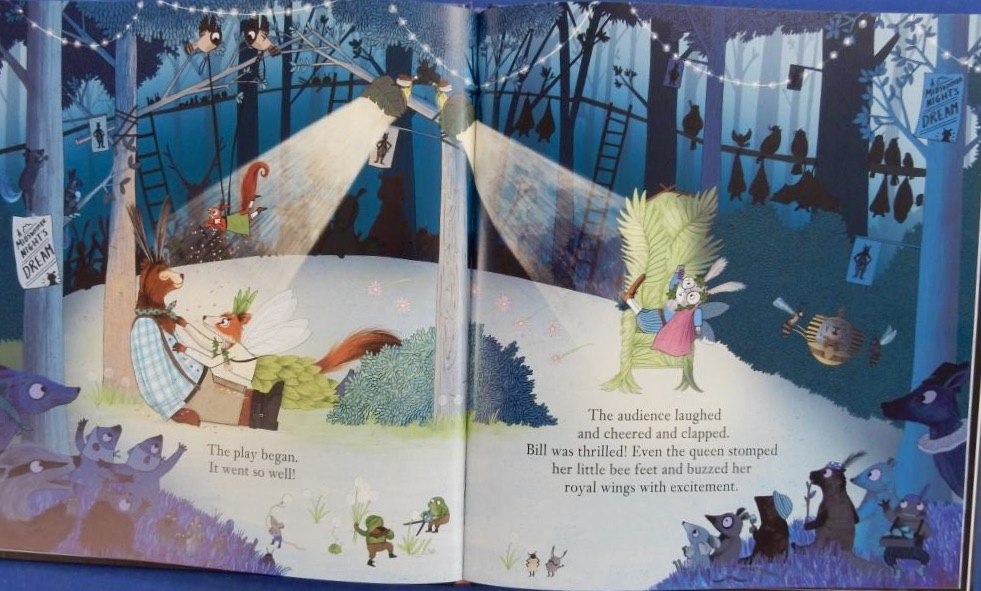
Please!

Deliciously anarchic and utterly bonkers, this is the story of what happens to young Bill who stops at an ice-cream van, forgets to be polite and say please. He’s kidnapped by alien toads and taken into their spaceship, which crashes in the middle of a jungle. Surprisingly the crocs that lurk therein fix the spaceship, climb aboard too and off they go again.

Soon Bill feels hunger pangs and wants to stop for a snack but guess what: he forgets to say the vital words and oops! they all tumble on top of a yak. Will he ever learn to be polite? Not before the yak charges into a fairy-tale land with witches, knights, wizards and others, some decidedly bellicose …

Further chaos follows of a very wet kind, which seems to jump start the politeness cells in Bill’s brain: “Just stop this now, PLEASE!” he yells. Lo and behold, almost before you can say farewell, the lad finds himself back where he started, beside Mr Simon’s ice-cream van where again he now knows to say please. However, there’s another very important little word that he forgets to use. Uh-oh! …

Simon Philip’s hilarious text and Nathan Reid’s equally hilarious scenes of Bill’s lesson-learning journey will certainly have children and adult readers aloud, laughing at every turn of the page and the former one hopes, will not be forgetful when they request lots of re-readings of the book.

This Book Will Make You an Artist

Author and art historian, Ruth Millington, has created a truly inspiring book. Together with illustrator Ellen Surrey, she takes readers through the essential steps towards becoming an artist. First she looks at where our artistic endeavours might take place, then presents various tools and materials that artists use and introduces the colour wheel. Thereafter come the spreads that showcase individual artists, their techniques and examples of their creations.

Ellen’s superb illustrations will surely invite readers to experiment with hand printing in the style of a cave painter, use tiny tessera to design a mosaic like an ancient Roman, experiment with block printing in the style of Katsushika Hokusai, emulate Moses Williams by cutting a silhouette portrait,

have a go at pointillism, the technique used by George Seurat or, inspired by seeing the illustration of Yayoi Kusama’s work, even try making a polka-dot pumpkin. Maybe you’d rather get crafty and wrap a string sculpture like Judith Scott: I learned from this book that as well as wrapping many everyday items, she also covered herself in ribbons, scarves and fabric to make a sculpture of her own head. Also showcased among others, are Frida Kahlo, Andy Warhol, Liu Bolin aka ‘the invisible man’ – a total of twenty five in all.

Back matter includes a glossary of terms and a short paragraph about both author and illustrator of this excellent book, one I’d suggest isn’t only for children. Anyone interested in art will find this a valuable resource.

It’s Time to Hush and say Goodnight / Our Gorgeous Baby

Both picture books are Walker Books publications: thank you to the publishers for sending them for review.


Inspired by old Indian lullabies, Chitra’s rhyming narrative and Sandhya’s nocturnal scenes that begin in a small child’s bedroom and then transport both the toddler and readers through lush dreamscapes – whistling caves, watery worlds, past weird and wonderful monsters, across the starry sky and more,

– as the parent’s words conjure wondrous images into a fabulous quilt of dreams. All the while as the illustrations show, the father is coping with a gamut of infant emotions before peace descends and all is quiet, the child sound asleep in bed in his father’s arms.

With its oft repeated refrain, ‘ Count the stars that twinkle bright. / It’s time to hush and say good night.’ this is a smashing book to share with a little one just before bedtime; it’s infused with love and the magical images of possibilities inspired by the interplay of the verbal and visual.

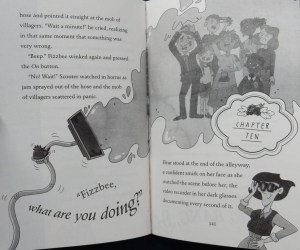
Yesterday Crumb and the Tea Witch’s Secret

This image has an empty alt attribute; its file name is dscn0031-1.jpg

This third instalment of Andy’s series is every bit as full of enchantment as the previous adventures starring apprentice tea witch Yesterday (Essie), Miss Dumpling et al. As the story starts, Yesterday and her best buddy, confectionary witch Jack, are together in the tearoom and Jack is testing his latest product, Gravitational Gumdrops on himself. Yesterday’s delight at Jack’s success however, is quickly replaced by renewed concerns about her evil stepfather, Mr Weep’s unknown reasons for restoring Jack to life; she feels certain it will have undesirable consequences for both of them.


Suddenly as she’s pondering this, a not-badger arrives with a letter for her. It’s from her mother, Nuala Quirk. Having located her whereabouts and paid her a visit, Yesterday, somewhat unsure her mother is to be trusted, is more determined than ever to put a final stop to Weep’s evil intentions, so she calls on her fellow tea witches for help. However the Lord of the Dead is already a step ahead as, one by one her potential allies become victims of a strange flower that turns their hearts cold and sets them against one another. War is surely brewing.


Now in her greatest challenge yet, Yesterday must work out a way to defeat the malevolent flowers, prevent Mr Weep from executing his wicked plans and finally end his dark reign. And her mother: what will be her fate?


Along I suspect, with a considerable number of adult reviewers, and countless child readers, I have loved the opportunities to escape into the superbly crafted magical world of possibilities that is Dwimmerly End, watch Yesterday find there a host of wonderful friends and with determination, grow through some decidedly dark events, towards reaching her full potential.

What a superbly satisfying conclusion to the trilogy. I will truly miss the eccentric characters with their quirks and know that in the near future I will go back, sit with a mug of hot chocolate and relish all over again, the previous stories.

One Goose Two Moose / Ten Little Ducklings

Under the direction of a rather bossy goose named Simon, a queue, no make that two queues, are forming outside an ice cream shop. There’s a goose line and a moose line. The trouble is the customers are having trouble getting in the assigned lines. Should I say it’s mainly the Moose that keep getting it wrong to the considerable annoyance of Simon Goose.

Whether it’s intentional or down to the fact that none of the queuers can read the signs, it’s somewhat chaotic. Eventually though after a lot of angst on Simon’s part, there is a line with seven geese, one behind the other. Are those in said line now about to take turns to make a purchase of some delicious frozen confection of their choice?

Look carefully in the bottom right corner of Nicola’s spread showing the seven; there’s something lurking that might just sabotage the entire system. I wonder who gets the last laugh …

Debut author Kael Tudor’s text is huge fun with some cheeky counting opportunities included, and illustrator Nicola has clearly enjoyed herself creating snazzy attire for the moose and geese. Young listeners will delight in the daftness of the whole thing and demand “Read it again” each time you share the story.

‘The sun is up, / it’s a brand new day. Ten little ducklings / want to play.’ And play they surely do in this delightful, interactive, rhyming game of hide-and-seek. First they splash around in the pool, swimming, diving, floating and fishing. Thereafter they zoom around on their scooters, take to the sky in hot air balloons, frolic in the farmyard, explore the jungle, have a snowball fight, attend a chaotic birthday tea, spend time on the beach and eventually tire themselves out ready for bed.

Before Lucy Rowland’s rhyming text begins, is a spread whereon each duckling is named and there’s a never mentioned eleventh character, a little mouse that triumphantly calls, ‘I see you, duckling!’ on every spread bar the final one whereon we assume, he reads the weary ducklings a bedtime story. Aki’s bright scenes have just the right amount of detail for little children who will have great fun finding whichever duckling is hiding in plain sight in every playful situation. I wonder if they might, on a second reading, go back and try naming the one they need to find each time.

What the Worm Saw / Christopher Nibble

Meet Earthworm,’ long, pink and wriggly’ is how it describes itself (earthworms are hermaphrodites) and in common with fellow earthworms is an important part of a garden ecosystem, helping to create and maintain healthy garden soil; and thus performing a vital role in the natural world. Talking directly to an intended young audience, the narrator Earthworm explains that it spends most of the time deep down in the soil, sometimes surfacing to nibble at old fallen leaves and petals from plants, It’s not always safe to do so however as a hungry hedgehog

or bird on the lookout for it’s next meal might want to slurp it up in a similar way that an earthworm consumes soil, pooping out what it doesn’t need; or maybe, a human foot might tread on it and squash the Earthworm.

This fun narrative way of informing young children about the vital role earthworms play works well, especially with Hannah Peck’s engaging illustrations. There’s a final page giving some earthworm facts and the book is published in collaboration with the Royal Horticultural Society (RHS). It’s one to share with young children at home or in an educational setting.

Along with numerous other guinea pigs resident in Dandeville, Christopher Nibble loves dandelion leaves; indeed his favourite activity is munching them. Then one day the joyful sound of munching starts to wane indicating that these leaves are in short supply. Those which are available are being sold online at an extortionate price so instead, the guinea pigs have to make do with cabbage leaves. Dandeville is suddenly a much less happy place.

One day there’s just a single dandelion left in the town and as it’s growing right outside his bedroom window, Christopher Nibble is the only one that knows about it. Oh how his mouth waters but he knows he must resist the temptation to gobble it up and he must ensure than nobody else does so. Resolving to find a way to restore the town’s favourite snack, Christopher Nibble heads to the library where he finds a large book that could be just what he needs. Having read it carefully from cover to cover, can he use his new found knowledge to make Dandeville the cheerful community it once was?

With his patterned shorts Christopher Nibble is a delightful character and a green hero at that. Young children will be rooting for him as he endeavours to turn a crisis into a cultivating craft.

A tale with a timely message about caring for the natural world that is even more pertinent than it was when the original book was published around fifteen years back.

L is for Love

‘L is for Love and L is for Lemons.’ So begins this wonderfully warm story wherein Mama, Baba and three young children set out from their village very early one morning with baskets of lemons bound for the market in Lagos city where they hope to sell all their fruit. It’s a very long way and with limited light, one of the children trips over a large log lying across the path, hurts a leg and starts limping.

As luck would have it, along comes a lorry and the kind driver stops and picks them all up. Having driven through stormy weather the lorry emerges into daylight where most of the wild animals still seem to be sleeping.

Eventually they reach their destination, the sprawling bustling city of Lagos that is full of sounds and bursting with life. There in the market place the family lay out out their stall and set to work selling their produce.

Then comes lunch and after that it’s time to start the very long journey home. Finally, late in the evening, they arrive to find Gran and Grandpa awaiting with outstretched loving arms to hug the travellers.

Joy abounds in Angela Brooksbank’s vibrant scenes that amplify Atinuke’s cleverly constructed alliterative sentences each of which (except one) starts ‘L is for …’ and take both the family and readers on a journey through the panoramic West African landscape. Rich in sensory experiences, this is a wonderful opportunity for young children, be they at home or in the classroom, to discover something about a culture which to the majority will be new.

L most definitely is for love where this reviewer is concerned.

Mo’s Best Friend

This story was inspired by an amazing discovery almost thirty years ago, of footprints – one of a child, the other a dog – by archaeologists working in the Chalet cave in France.
Mo and her family live in the Stone Age, the little girl’s main role being to watch over baby Babba, her fast crawling sibling who isn’t yet aware of danger. Mo has a favourite place away from the rest of her family, a kind of den where she takes her food and listens to the sounds around.

One day when so doing, she hears an unfamiliar YIP YIP coming from a bush. Despite what she’s been told about wild creatures being dangerous, Mo goes to investigate and discovers a small animal, all by itself. When it starts yelping, she looks closely and finds a thorn in its paw. Having had the thorn removed, the little animal wants to play and the two form a friendship, playing together all afternoon.

Then comes a call from Ma summoning her daughter and Mo decides to introduce her new friend to the family. Their reaction is one of horror and they scare the little creature off. Almost simultaneously they realise Babba is missing and a search begins with Mo leading the way. Suddenly Mo notices a footprint and then they hear a ‘WOOF WOOF!’ It’s her new friend and to almost everyone’s surprise, he’s protecting little Babba from a hungry lynx.

Henceforward, its’s not only Mo who has a new friend. I wonder what they decide to name him …

Bridget Marco’s scenes of the simple hunter/gatherer lifestyle of the family group are executed in gouache, and the ochre hues employed are true to the archaeological evidence and cave paintings from 25 thousand years ago. Back matter provides a spread showing stone-age survival skills including flint knapping, and there’s also reproductions of the photos of the human and dog footprints found in the cave.

Marnie Midnight and the Moon Mystery

Having loved both of Laura’s Amelia Fang and Rainbow Grey series, I was probably predisposed to like this, the first in her magical new series set in a world of minibeasts. It most certainly lives up to my expectations.

Meet Marnie Midnight; she’s just metamorphosed into a moth and is mega excited about going to Minibeast Academy for the first time, especially as her hero, Lunora Wingheart is, or possibly was, an alumna. On the journey to school she meets not quite a bee, Floyd (an A not a bee, so he tells Marnie). Marnie is eager to learn about the moon and especially the moon magic in the book of Moon Spells that Lunora told the world about before her disappearance.

However when she asks her form teacher, Mr Atlas, whether the moon is in the first year curriculum she receives the response. “There will be no talk of the moon in this school.” She soon finds that other teachers and many pupils don’t believe in moon magic. Why? Marnie wonders.

Another of the first year pupils is Star Vonstrosity, an ant princess who snubs Marnie initially. During their lunch break while Marnie and Floyd are exploring, they come upon first an old tunnel entrance with the words ‘Entry For Den’ and then a no-longer used area with a sign saying Moon Club on the door. When they enter, there is Star and a new friendship develops.

Very soon Marnie senses that something extremely weird is going on and she’s determined to discover what. With her two allies, Marnie begins a thrilling quest, a quest that before long, leads them to a realisation that Mr Atlas has destructive plans where the moon is concerned. Can the three friends pull off Operation save the moon?

This is a fast moving story told with humour (“Never trust an earthworm with a jetpack” is a line I won’t forget), a degree of tension, and lots of charm. With her unique imagination Laura has created another fabulous world with a cast of wonderful characters: Marnie is determined, brave, loyal and not afraid to say what she thinks; Star is full of surprises and Floyd a dapper delight. The illustrations are brilliant with lots of fun details. Seamlessly woven into this wonderful world are real life minibeast details and facts. What more can any young reader want? A happy ending maybe – we have that too.

Feather

This is the fourth and final book in what has been an absolutely brilliant series, a series that celebrates friendship, bird watching and the natural world. Herein the Twitchers find themselves
on the trail of a gang of ruthless rare artefact thieves as well as protecting somebody who may have been involved in the crime.

The story begins when Ava is on an end of term class visit to the Swan natural history museum. An alarm sounds and hearing a rustling, she delays leaving and by chance is present when, what turns out to be a daring and well-executed robbery of rare, vintage bird ‘skins’ takes place. Who would want such things – a fashion designer perhaps?

Once outside the museum she encounters an unusual girl with a pet raven waiting at the bus stop opposite. Does she know anything, Ava wonders. With the school trip suddenly curtailed, and a possible clue in her bag, rather than going back home early, she messages her friends and she decides to head off to Briddvale and seek the help of the other Twitchers. Needless to say, the Twitchers are immediately onto this, especially as it involves rare avian specimens of historical importance.

Ava takes the lead in this adventure and some of her actions are exceedingly risky, especially as she is soon as anxious to help Rae (the bus stop girl), who is clearly in need, as she is to get to the bottom of the feather heist, though the two strands are intertwined.

M. G. Leonard includes an amazing amount of detail about bird species and the history of scientists such as Wallace and Darwin; and she clearly respects her audience showing rather than telling lots of the story. Inspired by a true crime, this tension-filled mystery is a superb conclusion to the seasonal quartet and perfect for deep thinking nature-loving readers.

There’s A Gorilla At The Door!

Daphne and her Mum have just moved in with Anthony; Daphne really misses her friends and so the grown-ups decide to have a family party. Daphne has initial concerns about being bored but is even more concerned at the attire she is expected to wear. to meet the “ wacky bunch1” Anthony calls them, insisting that her help is required.

First to rock up is Aunt Gertrude with a troupe of lively little cousins that Daphne gets on with immediately. These are followed by in turn a bouncy marsupial with a pouch full of popcorn, a fair few flying mammals led by Grandpa Bruce,

a pachyderm on roller skates and a veritable menagerie of family members large and small, feathered, furry and smooth skinned. Things get rather out of hand

and despairing, Daphne cries in alarm, “Can’t we get along? … This doesn’t feel like a happy family party!”

Anthony responds with an idea: will it solve the situation or will it further ferment the family fiasco?
With language play aplenty, the spirited text presents a recently blended family with a host of totally unlikely relations whose antics are sure to amuse young listeners. So too are Sam Caldwell’s scenes of the creatures’ crazy capers.

Habitats

We visit six different locations in this journey around the world. The first stop is a tropical rainforest in Borneo where brief descriptions together with Isobel Lundie’s split page style illustrations introduce four or five animals and plant residents of every level from the canopy to the forest floor, each opposite to a scene in which animals are depicted.

From there we move on to in turn the Namibian desert in south-western Africa; a location off the eastern coast of Australia where we visit every layer of the ocean including the Great Barrier Reef home to thousands of different species including what is thought to be the only reef manta ray discovered in the world.

Germany’s Black Forest is the next to be explored; it’s home to badgers, red foxes, hedgehogs, peregrine falcons, adders, barn owls and pygmy owls as well as bark beetles that lay their eggs beneath the bark of spruce trees causing considerable damage to the trees.
Then it’s on to The Andes, a part of the world rich in bird species including the Andean condor, black-chested buzzard eagles and water birds such as Chilean flamingos and Darwin’s rheas, the males of which do the early caring of the chicks. There too lives the Patagonian dragon, an insect with antifreeze in its blood that allows it to live on the glacier ice.
The final stop is Florida’s natural springs where you might catch sight of a raccoon or a nine-banded armadillo.

With facts aplenty and vibrant collage style art, this engaging book will be enjoyed by young budding naturalists who will surely agree with Hannah Pang’s concluding statement ‘… animal habitats connect together into one amazing home. … Our Earth.’

Secret Agent Mole

Anarchic nonsense in graphic novel form, this story introduces readers to secret agents in training Max Mole, Helena Hippo and June Bug, an unlikely trio if ever there was one. Under the watchful eyes of the judges, these friends are on a mission – their very first – to go up against the nefarious Dr Nude. However having done so, one of the three doesn’t satisfy the judges, which means that despite the other two passing with flying colours, the whole team fails the test. They still have two chances left though.

Then comes news of another case: the First Bank of New York has just been robbed and Interpol need their assistance. Eric Goldfishfinger and his pufferfish partner in crime have stolen 10 million $ in gold bars. Catching them is the next mission for the three trainees. The chase is on … Can they catch the fishy thieves before they get that priceless solid gold fish finger?

You never know: they might even live up to the new name agent Walrus has put forward for the agency: The Official International League Exterminating Terrorism with its inevitable acronym.
What will the judges back at HQ have decided about granting Max, Helena and Bug’s secret agent licences?

With a fair degree of TOILET humour, flushings of puns and other sizeable servings of silliness, this will get young readers giggling (and groaning) from start to finish.

Yomi and the Power of the Yumboes / Mirabelle and the Midnight Feast

Starring Yomi and her younger brother, Kayode, this is the second in an exciting series that is based on African mythology. The siblings, now in Senegal, are officially members of the Sacred Beast League and Yomi is getting bored with sorting her uncle’s paperwork; what she wants to be doing is having another adventure, one that involves finding a Yumboe, the most powerful of African fairies so Uncle Olu’s Beast Atlas says. When she asks her uncle about them he tells the siblings that although the SLB has been looking for these fairies for years none have been found although the Beast Hunters are always on the watch for them.

That night Yomi is woken by a sound coming from the kitchen. Down she goes to investigate and there before her is a Yumboe sampling the contents of the fridge. The little fairy has a damaged wing. She introduces herself as Safari and tells Yomi that she’s been looking for her and needs Yomi’s help in protecting the Yumboes’ secret city from the destructive Beast Hunters.She also says she’s on a mission to find the Yumboes’ most treasured possession, a moonstone, and that nobody else knows she’s asking humans for help.This is just the kind of adventure Yomi has been waiting for so she promises that she and Kay will do their utmost to help. And so they do. But can they possibly outsmart the Beast Hunters? They’ll most definitely need to make use of all their skills, not to mention some special silver energy from that wonderful silver star.

Having faced perils aplenty, this thrilling, fast paced quest with Adam Douglas-Bagley’s powerful illustrations, ends in a way that sets things up for Yomi and Kay’s next mission: South Africa here they come. Bring on some more fascinating African folklore.
For slightly younger readers is

In this story starring the young narrator with a witch mum and a dad who is a fairy, Mirabelle, is excited that she’s going to be spending time in a witchy environment when she goes for a sleepover, and hopefully a midnight feast, at her best friend Carlotta’s home on the other side of town. The friends have been given strict instructions to stay out of Carlotta’s big sister Edith’s bedroom, not to use any magic and under no circumstances to touch Edith’s new Witch-Twitch-Supreme potion kit. However big sister has gone out for the evening and surely it wouldn’t hurt to sneak into her bedroom and have a look around, so long as they stay well away from that special potion kit. But Mirabelle just can’t resist the allure of Edith’s crystal ball and disaster strikes when it slips out of her fingers, through the window and ends up in pieces on the patio.

Despite their best efforts at repairs, they don’t fool Edith, but it’s Carlotta who gets blamed for the breakage. Will Mirabelle find the courage to own up and if so, then what?

I know a great many followers of this enchanting series whose eyes will be all sparkly when they get their fingers on the tenth book wherein friendship, sibling solutions and the importance of owning up are key elements.

Kwame’s Magic Quest: Rise of the Green Flame / Future Hero: Battle For Sky Kingdom

This image has an empty alt attribute; its file name is dscn0072-1.jpg

Eight year old Kwame wakes feeling super-excited: today he will start Nkonyaa School and finally learn some calabash magic. That means finding out his magic type: maybe he’ll be a Weather Handler like his mum, or perhaps a Time Bender like his Dad. However, when his turn comes to stand before the Nkonyaa Tree and tap his head against its trunk, things don’t exactly go as anticipated for a red light pulses forth – something it’s never done before according to elder, Ms Dofi. She takes the calabash that falls, explains the procedure to Kwame and enters the hut, leaving him waiting outside. It transpires that his calabash hasn’t reacted like those of other students. Kwame fears something is wrong with it. When it’s time to be assigned rooms, Kwame is put with a boy named Fifi and before they go to sleep, the two have become friends.


Next morning things still aren’t going right for Kwame: his calabash isn’t accepting his gift. Kwame begins to fear he’ll be kicked out of the school but as the day progresses, Fifi is subjected to bullying, after which there’s more trouble. Can Kwame finally discover his magic power and help his friend?


Wow! The author has packed so much into such a short adventure, I suspect young readers will devour it a in a single sitting. With its themes of friendship and helping another in need, there’s a fair amount of Ghanian culture woven into the tale. In addition, back matter includes a spread giving additional information about Ghana and its ethnic groups. Natasha Nayo’s black and white illustrations break up the text and add further interest to the story.

This image has an empty alt attribute; its file name is dscn0071-1.jpg

This is the final story in the thrilling Future Hero fantasy quartet. With the astounding revelation that he is the Future Hero of the oppressed people of his ancestral land of Ulfrika – a land ruled over by Ikala, an evil sorcerer – young Jarell’s life has changed forever.  


Now he must make a final visit – via the barber’s shop mirror – to Sky City to stop Ikala getting his hands on the Iron Eagle, the last remaining animal from the Staff of Kundi.. That means Jarell must win the deadly gladiatorial competition to find Ulfrika’s greatest warrior, for which the Iron Eagle is offered as the prize. Fortunately though, he won’t be travelling alone; some friends, one of whom is young warrior Kimisi, are also making the journey.


Fraught with danger from the outset, is the battle he faces a challenge from which Jarell can emerge victorious? Followers of the series who will be rooting for Jarell, will certainly be satisfied with how the saga ends, but if you haven’t read any of the previous books, I recommend you do so before plunging into this one.

Green: The Story of Plant Life on Our Planet

Starting with a single tree, team Nicola and Emily take readers on a journey through the natural world focusing on the vital importance of plant life. In so doing such topics as the process of photosyntheses

and the opposite process, respiration, are elucidated in the author’s carefully considered prose, She takes us right back to 4.5 billion years ago when earth’s air was toxic, moving forward a billion years when the very first plant microbes began to release oxygen into the air and more diverse life forms became possible. We learn how over millions of years the remains of forests were turned into the fossil fuels coal, gas and oil within which were enormous stores of carbon dioxide and energy from sunlight, this energy being used by humans for their various needs It’s terrible to realise that in so doing we have caused the formation of a thick blanket of CO₂ around the Earth thus stopping heat from escaping, the consequence being global warming.

All is not lost though for plants continue to do their work, giving shade, releasing water to create rain as well as using their ‘greenness to trap energy from sunlight and locking CO₂ in their leaves, branches and roots. Plants however need to work with other living things such as animals and fungi to do this, as well as working with each other in communities that Nicola calls ‘great green nations’

This is why it is vital everybody, the world over, stops destroying forests and polluting the oceans and focuses on protecting all things green.

Once again Nicola’s passion, knowledge and understanding shine through her carefully chosen words: the text in combination with Emily’s captivating, detailed scenes have created a book which gives us all hope that it’s not too late for our precious planet.

One Sweet Song

Across the city, its diverse residents stay within the confines of their homes. On a balcony a woman plays a note on her flute – ‘One note trills … / floating in the air.’ It’s heard by a child nearby looking through her window who picks up her triangle, steps onto the balcony and ‘rings a chime,/ soft and true./ One note trills, and/ now there are two.’ This prompts another neighbour to play his violin and then other people and their instruments including a saucepan and spoon,

a cello, a ghatam, a morsing, and bottles join as the music rises until the rhyming text reaches ten, voices young and not so young, sing out and the entire area feels connected and alive with a harmonious sound. “One sweet song that fills the space, / one sweet song, / a warm embrace.’ Then slowly, one at a time the instruments come to rest once more,

leaving everyone at peace with themselves and the world.

Powerful rhythms and lilting rhyme combined with spirited illustrations that have coloured swirls and musical notes weaving in and out of the homes, make a once separated community united by joy.
Author Jyoti and illustrator Sonia have together created a wonderful celebration of the healing power of music and its capacity to bring people together even in difficult times such as the recent pandemic.

Keisha Jones is a Force of Nature / Time Travellers: Adventure Calling

This image has an empty alt attribute; its file name is dscn0007-1.jpg

The story’s narrator, young activist, eight year old Keisha Jones truly is a force to be reckoned with.  In this book she extends her force field to a second cause, one inspired by her great-aunt Bee and her fight to keep a green space popular with the local community, out of the hands of a property developer. When she learns of the vital importance of trees to life itself (VITs as they become following a talk with teacher, Mr Logan,) she is immediately fired up.

Even more so when she hears of the mayor’s plan to have all the trees in Olive Meadows felled and the land turned into a car park for the mall. Keisha has less than three weeks to formulate a plan. Of course she needs to enlist the other members of the Bee Squad as well as Grandpa Joe, and reporter Rosie Parker, especially when Operation VIT isn’t quite going according to plan. For a start Mayor Branch won’t answer any of Keisha’s phone calls and she’s running up an enormous mobile bill causing Mum to revoke her phone privileges as well as treats. HMM!


Next move a protest at the site on Timber Teardown day. What will happen there: success or failure? And then … As Grandpa Joe says on World Environment Day, “ There’s something inside you, Keisha. A light. It makes the world a better and brighter place!”

Another winner for author Natalie Denny and illustrator Chanté Timothy: readers around Keisha’s age will be rooting for her and her cause right from the outset. Hopefully they too will be inspired to do some tree planting in their own local area.

Suhana, Ayaan and Mia are among the short-listed pupils in an art competition and as a consequence, along with children from other schools, have been invited to visit the Houses of Parliament. Having been given a tour by Mike, one of the guides, they are given worksheets to do in threes on the associated history and the winners will receive book tokens. Suhana, Mia and Ayaan quickly become fascinated by what they discover and unexpectedly Suhana’s mobile phone mysteriously transports them to 1911!

Almost straightaway they are confronted by a police officer demanding to know what they’re up to and talking of a coronation. The children know they have just a few hours to explore so they need to make the most of the situation. Soon they find themselves in what Ayaan thinks is a suffragette march that includes to Suhanna’s surprise, some Indian women. One of them tells her that they are actually not suffragettes but suffragists, explaining the difference: suffragists believe in non-violent action. This was Lolita Roy, one of a group of South Asian women living in the UK at that time who played an important role in getting women the right to vote.

Having started this adventure considering herself something of an outsider, by the end, Suhana feels that she is part of a team with two new friends: the Time Travellers.

As well as a dramatic adventure, this enormously readable book offers a great introduction to how politics works and the role MPs are supposed to play in society. I strongly recommend it for KS 2 readers and look forward to the next adventure of those Time Travellers.

Meet the Dinosaurs

Countless young dinosaur devotees will doubtless be eager to clamber into the jeep along with the child driver and her canine friend, belt themselves in securely and set off on a dinosaur safari that, after a visit to a modern day museum, zooms back in time to when the dinosaurs roamed the Earth many millennia ago.
On arrival, the visitors park the jeep, climb out and onto the back of a massive Brontosaurus that is ready and waiting to take them off to meet lots of other dinos. Some, such as the chatty Stegosaurus Diplodocus and Triceratops with its eight hundred teeth, are hospitable, giving the visitors information about themselves and their lifestyle. Others including Allosaurus,

Spinosaurus, the Velociraptors and Tyrannosaurus are ready to talk about themselves but far from friendly, indeed they’re fearsome carnivorous beasties. Not so however, those Pterodactyls that swoop above the jeep as the visitors realise it’s time to head home once more.

Caryl Hart has included a wealth of fascinating facts in her ebullient rhyming narrative that reads aloud really well and in combination with Bethan Woollvin’s instantly recognisable, bold, bright scenes, equally alive with detail, make this action packed adventure one that listeners will want to embark on more than just once or twice.

Ramadan and Eid al-Fitr / The Best Eid Ever

Raya, a little Muslim girl invites readers and listeners to meet her Mama and Aba (who come from different cultural backgrounds) and share what happens during Ramadan and the celebration of Eid al-Fitr, especially in their family. By means of both Sarah Khan’s narrative and Nadiyah Suyatna’s richly coloured illustrations, young children will discover that Ramadan is a month of fasting during the day from dawn to sunset, doing good deeds and being kind and patient to everybody and showing mercy to others.

Then comes Eid-al-Fitr. Raya wears her best bright clothes when she accompanies her parents to the local park where they will join in the Eid prayer, wish one another Eid Mubarak, play games and have a wonderful time. Later there is a big family feast where all Raya’s relations sit down together and share tasty food, both savoury and sweet. This is followed by game playing and a late night. It’s no surprise that Raya tells readers that Ramadan and Eid al-Fitr are her favourite time of the year.

The book concludes with ‘fun facts’ including a presentation of the Five Pillars of Islam, a spread on the lunar calendar and a recipe. Informative and easy to understand this is spot on for KS1 class sharing.

This story starts on the day before Eid al-Fitr with the sighting of the crescent moon signifying the end of the month of Ramadan. Eid al-Fitr is eight year old Aisha’s favourite festival and she’s excited at the prospect of receiving Eid gifts. This year these have been hidden and in order to find them, Aisha and her brother, Samir, must solve a sequence of clues.

Before that though, there are other traditions to complete. Mum decorates her daughter’s hands with beautiful henna designs; there are decorations to hang up, but Aisha doesn’t help as the henna takes two hours to dry by which time it’s sleep time.

Next morning Aisha again starts asking about hunting for those gifts. First though, wearing their new clothes, the family go to say their Eid prayers at the mosque, after which they say, “Eid Mubarak!” to all their family and friends. Back at home, the two siblings take homemade sweets to all their neighbours

and once that’s done, everyone sits down for lunch. At long last Aisha gets the first clue to finding her gifts and the treasure hunt gets under way.

After the story there’s a page of Eid related facts, and a final glossary.
Young listeners will enjoy hearing of Aisha’s eagerness for that treasure hunt, which crops up frequently throughout the narrative. They’ll also enjoy the details and rich patterns in the vibrant illustrations. Personally I’m not keen on digitally created facial features, especially eyes; they remind me too much of those ‘googly eyes’ sold in craft shops. Nonetheless this book is certainly one to include in class collections for sharing with KS1 children before Eid.

Heroes / I Survived The Battle of D-Day, 1944

This image has an empty alt attribute; its file name is dscn0030-1.jpg

In this gripping story we follow best friends Frank and his Japanese American buddy Stanley who live in Pearl Harbour Hawaii. Frank’s father is a Navy fighter pilot and Stanley’s works at the Naval Air Station, with both families living on the base. It’s December 1941 and the two boys are sailing across the harbour brainstorming their own superhero comic book character (Frank is the writer, Stanley the illustrator) as the book opens. Frank is hiding a secret anxiety of getting hurt as a result of what he calls ‘The Incident’ but it becomes evident when he avoids helping Stanley confront bullies, which prompts Stanley to ask, “How do you think you can write about heroes if you can’t be one yourself?” At this time the war in Europe seems distant to the boys until that is, Frank’s sister’s boyfriend, Brooks, who is in the navy is showing the boys around a battleship and suddenly planes start dropping bombs on all the battleships.. They realise this isn’t a drill, it’s an attack by the Japanese.


As a consequence, the boys witness horror after horror. Then there’s the issue that Stanley appears Japanese and has Japanese ancestry meaning that he is suddenly subjected to racism. This causes the Japanese Americans to start digging holes in the yard to bury any relics or heirlooms relating to their ancestry. However the situation does ultimately allow Frank to address the episode that has long haunted him relating to friendship, loyalty and his own mental health. Can he overcome his fears and stand by his best friend even when they have to part? Before so doing though they agree to continue working on the comic. And so they do: the final chapter of the novel is followed by the two boys’ ten page comic, The Arsenal of Democracy.


Well researched, totally gripping, albeit heartbreaking where we read of those who perished in the attack and the responses of those who help the injured. Back matter includes a map of Pearl Harbour December 7 1941 and an author’s note, both of which are important.


Equally affecting, with a French setting and presented in graphic novel form is:

This image has an empty alt attribute; its file name is dscn0065-1.jpg

As the book opens Paul Colbert is walking in the rain through the Normandy village where he lives with his mother. It’s been under Nazi occupation for a long time but he’s trying to forget this and the fact that his Jewish best friend is missing and focus on his mother’s birthday. He follows a pigeon and discovers a US army paratrooper, Sergeant Victor Lopez, caught in a tree having jumped from his plane. Paul helps to free him and rather than let him fall into enemy hands, he leads the man to a nearby abandoned castle.

Or so he thinks, for the building is actually being used as a resistance hideout. And, to his joy there he discovers his old teacher, Mr Leon, whom he thought was dead.

This image has an empty alt attribute; its file name is dscn0063-1.jpg

Paul finds himself drawn into the underground organisation, playing a vital part in the Allies secret plans to cross the English Channel and land on the beaches of Normandy with the hope that France can be liberated.


Primary age readers, like this adult reviewer will be enthralled by this, especially the bravery shown by the Resistance and the military forces, and of course Paul. With the D-Day 80th anniversary this summer, this is a must for KS2/KS3 resources. (The author includes a timeline and other historical notes at the end of the book.)

I Really Really Need A Poo

The adorable Bush Baby created by Karl and Duncan is back with another piece of toilet humour.

The trouble here is that a poo really needs to be done in private and the little animal is having a great deal of trouble finding a suitable place to do her dumping. She hunts high and low, has several near messy mishaps

and produces a fair few farts until eventually she wiggle walks her way to a truly palatial building consisting of what appear to be purpose built creature compartments.

Joy of joys, one of them is vacant so in goes Bush Baby.

Yes, the toilet is rather on the large size for so small a user as our furry narrator but nonetheless she gets busy. While seated however, she spies beneath the door a pair of furry feet; but Bush Baby needs to finish her business before she makes an exit.

Having relieved herself at long last, she opens the door and there before her is a very large ursine character who is desperate to use his personalised facility. So desperate that he ignores Bush Baby’s warning and heads right inside … PHOAH! Anyone have any air freshener?

Karl’s increasingly tense rhyming text together with Duncan’s hilarious illustrations of the ever more anxious Bush Baby are certain to induce plenty of giggles when adults share this with little ones be that at home or in the nursery or classroom.

The Brilliant Brain

I wonder how many young children realise just how crucial a role the brain plays in controlling what happens in the human body. When I asked nearly four year old Faith where her brain was, her reply “In my tummy” (as her mum is a GP, I think maybe she was joking) it made me realise we had better start sharing Dr Roopa’s guided tour around the brain and its amazing workings, aimed at young children.

Having confirmed that the brain’s location is in her head, how big it is and its role as a kind of ‘control room’, we explored the rest of the book. Herein it’s explained that our brains are responsible for our thoughts, feelings and memories,

as well as for telling our legs to walk and our lungs to breathe. It’s good to see the author doesn’t shy away from using such anatomical terms as cerebrum and cerebellum

as well as naming the various lobes, the spinal cord and nerves, each of which is defined.briefly. I like too, the way she explores in gently humorous, age appropriate language, the interconnectedness of the body’s systems. Her enthusiasm for her subject is evident and in a final author’s note, Dr Roopa shares some tips on how to look after the brain. Throughout, Viola Wang’s bright illustrations with just the right degree of detail, elucidate the author’s text, making this an ideal book to read with foundation stage children both at home and in an educational setting.

I look forward to further titles in Dr Roopa’s Body Books series.

Who Rules the Rockpool?

Who rules the rockpool is the subject of strong disagreement between the book’s narrator, Crab, and Prawn, so the former sets out to explain his thinking to his friend. There’s his courage and strength and that makes him rule supreme. Toughness is not sufficient to ensure one’s survival, insists Prawn; one needs to be smart and not take unnecessary risks as well.

All of a sudden an enormous wave washes the two pals into a much deeper pool where Crab, who naturally wants to rule this new abode, cannot resist challenging the creatures residing therein to a show of strength. To Crab’s surprise, not a single one of the animals is the least interested in a fight. Rather in turn, they give him clues about the rockpool ruler’s identity.

It is many limbed, has the ability to move both in the water and on land, and is brilliant at camouflage. During his search for the ruler Crab becomes absolutely convinced it’s him they’re talking of and because of that, he places himself in a life-threatening situation. Will he survive to tell the tale? And what about that titular question now?

With Matty Long’s characteristic comical, cartoonish art, witty speech bubbles, jokes and splendidly silly scenarios, this subaquatic story will keep young readers entertained for a considerable while. Its three final pages provide some fun facts and an illustrated list of ‘colourful critters’ to send readers searching back through the book as well as onto the seashore to investigate rockpools.