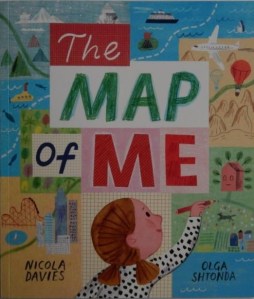
The Map of Me
Nicola Davies and Olga Shtonda
Templar Books
The little girl narrator has just moved to a new home in a new country and inevitably everything feels strange and unfamiliar. ‘… the streets outside were like a jumble of spaghetti. I got lost every time I went out. The world seemed big and much too scary,’ she tells readers. Her thoughtful Mum helps her draw a map to help her navigate her way around: included are such things as the roads, the supermarket, the school, even the flowers by the traffic lights on the corner. However, some important things from before aren’t included – Granny and Joe-Dog for instance.
Mum’s comment that the map isn’t large enough prompts her daughter to extend the map so it fills the entire wall.
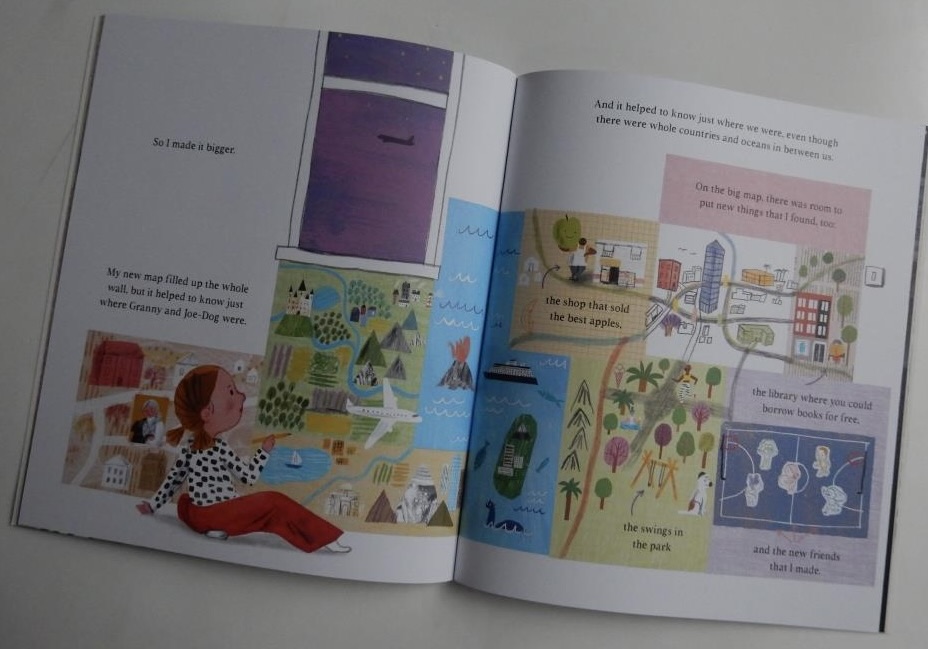
Now she can add new things as she found them – the swings in the park, the free lending library and her new friends for instance. On seeing the girl’s map those friends add things of their own and gradually the distance between everyone and everything seems to shrink. Her new house finally begins to feel like home. But then two sad things happen: Joe-Dog becomes poorly and dies and the girl’s favourite tree is cut down: even though they’d been on the map they weren’t safe.
That night the narrator cries herself to sleep but the following morning there on the kitchen wall is another map – a large one drawn by her dad – and it shows how things were once. Both the narrator and her friends like this map and go to find out more about the past and then add other places where their families have lived in the past.
The girl then ponders upon how things change – some are for the better but not all. She draws a map showing a future with trees on every street, parks not car parks, Granny now living close by and a puppy. This is a world without fear, without wars; yes it’s massive but it’s ‘full of love and wonder’. That’s the world we all long for and should be working towards.
With its empowering message, this is a story both for children experiencing big change in their lives and for sharing with a primary class to encourage discussion on belonging and relating to others.
 Red Reading Hub - Jillrbennett's Reviews of Children's Books