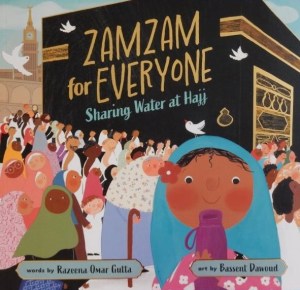
Zamzam for Everyone
Razeena Omar Gutta and Bassent Dawoud
Barefoot Books
Mariam, the narrator and her parents are among the throng on their Hajj, a once in a lifetime pilgrimage to Makkah. “Mariam, Hajj is a time to do good, share and be thankful. …” Mama tells her daughter. After filling her bottle with Zamzam water, Mariam ponders upon what her good deed could be. Eventually she decides that sharing the Zamzam with others is the best idea and she proceeds to do so cup by cup. Each sharing is a learning experience for Mariam: having helped an old lady find a seat and given her some Zamzam, the lady responds by saying “Shukriya”, giving her some dates and telling her that she’s from Pakistan. Next Mariam asks two sisters if they too would like Zamzam: “Terima kasha,” comes the reply. The sisters are from Indonesia and they share some sweet pandan cookies.
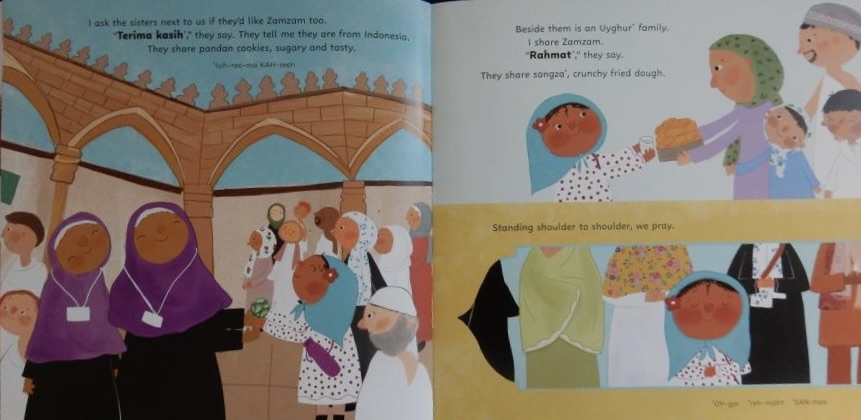
Besides them, an Uyghur family say, “Rahmat”, when they receive Zamzam from Mariam and share with her some crunchy fried dough, sangza.
Throughout Mariam’s umrah, she learns ways to express thanks in different languages and samples tasty foods like syrupy koeksisters from South Africa in return, as the pilgrims she meets from many different lands each respond in their own language and share some traditional food, mostly sweet.
Eventually it’s time for the journey to begin and off they set. Mariam is concerned whether or not she’ll have sufficient Zamzam for everybody. What about their bus driver?
Kindness, generosity to others and thankfulness are key in this heartwarming story, which together with Bassent Dawoud’s digital, collage images show the rich cultural diversity and comradeship of those undertaking Hajj, the fifth pillar of Islam.
One to add to primary school book collections.
 Red Reading Hub - Jillrbennett's Reviews of Children's Books