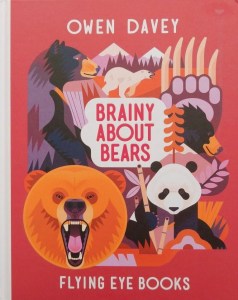
Brainy About Bears
Owen Davey
Flying Eye Books
This is the ninth in Owen Davey’s deservedly popular non-fiction animal series. At the start is an overview that mentions there are eight distinct bear species and possibly around fifty subspecies from various parts of the world from Arctic regions and tundra to tropical jungles.
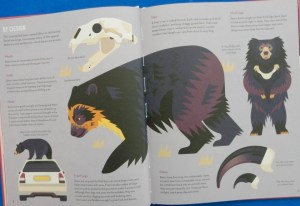
Featured in By Design, the spectacled bear, native of South America, is so-named for its facial markings, has an immensely powerful bite, sharp, fang-like canine teeth, good eyesight and sense of hearing but mostly explore the world through their excellent sense of smell, which so we read, is over 2,000 times better than a human’s. Did you know that bears are able to smell a bar of chocolate stashed away in a locked car? Hopefully they can’t use their long claws to pick car locks but stick to using them for purposes such as digging, climbing, fighting and catching prey.
Amazingly, the earliest modern bears -the dawn bears – lived about 23 to 5.3 million years ago whereas modern day humans have been around less that 1,000,000 years.
With regard to movement, bears normally walk on all four legs, all have the capacity to outrun Olympic sprinters, use their claws to climb trees for such purposes as finding food, escaping enemies or perhaps hibernating. They are also able to swim and like being in water, polar bears being the best swimmers; this last fact you will discover on the And the Award Goes To spread.
When it comes to nutrition, almost all bears tend to eat anything depending on what is available, not so giant pandas, which stick almost exclusively to bamboo, the result being they are now classed as a vulnerable species as few areas have sufficient bamboo to satisfy their needs.
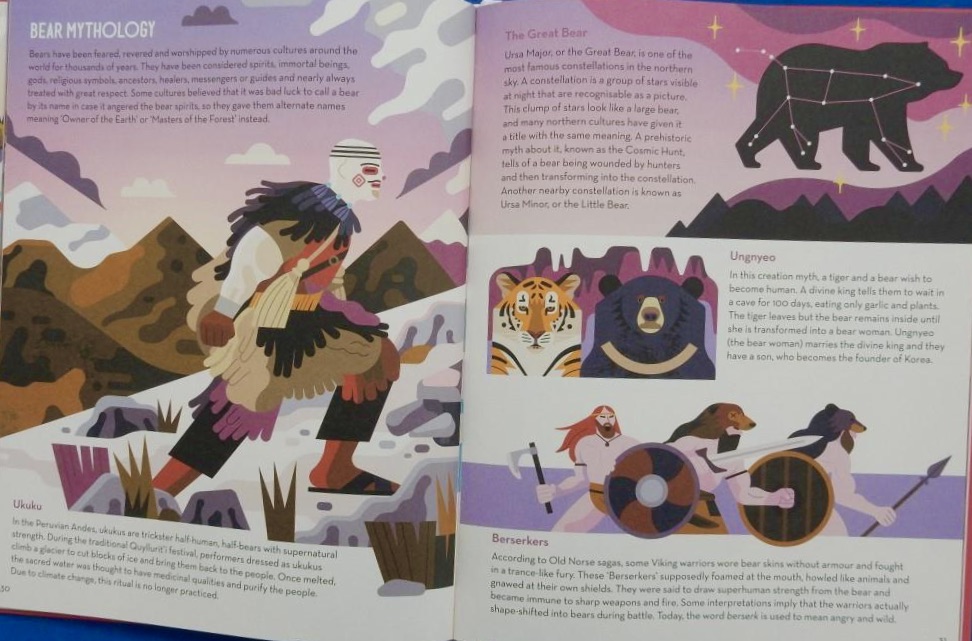
Bears feature in the mythology of many cultures around the world and have been thought of as such diverse things as healers, spirits, religious symbols and guides.
The final spread mentions giant pandas and polar bears as reminders to readers. of the damage we humans do to the planet and the hope of giving greater priority to the protection of bears and their habitats in the future.
Characteristic of this series is the vast amount of facts presented in a well organised, lively and entertaining manner. The information level is spot on for primary school readers and the illustrations are as always, superb.
 Red Reading Hub - Jillrbennett's Reviews of Children's Books