
The Observologist
Giselle Clarkson
Gecko Press
I learned a new term to describe my partner from the first page of this playful book. He’s an observologist, someone who, as Giselle Clarkson says herein is a person ‘who makes scientific expeditions every day’ … ‘they notice interesting details in the world around them’ … and are ‘expert at finding tiny creatures, plants and fungi.’ Not a day goes by when he doesn’t share some of his observations when we’re out walking, no matter where that is; it’s not surprising we make such frequent stops. And he certainly doesn’t feel embarrassed about turning over large stones or lumps of wood.
The book has five main sections, the first being concerned with the principles and practice of observology that include such important topics as taxonomy and anatomy.
We then visit four places the author suggests are ideal for observological expeditions: a damp corner, a pavement, a weedy patch and behind the curtains.
In the damp patch you’ll likely find the likes of slugs, snails, centipedes and millipedes and my favourite, woodlouse. This small crustacean has many other names including chuggie pigs, used by most children in schools where I mainly live, in Gloucestershire.
In the pavement section you can explore the world of ants, bird poo, lichen,

minibeast droppings and eggs and learn all about worms. (These annelids have three spreads devoted to them.)
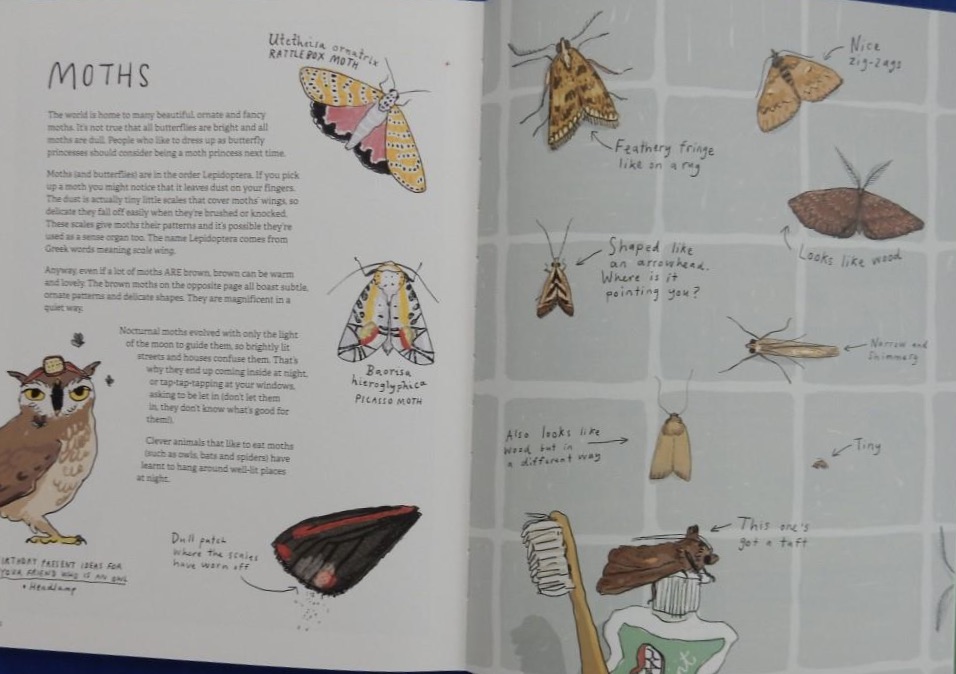
The weedy patch is where you will encounter bees and wasps, cicadas and caterpillars, seeds and surface tension. While, behind the curtain there may lurk cockroaches – yuck! – flies, spiders and moths.
There are several useful ‘how to’ pages, one such is ‘how to get a fly to go outside (at night)’, another is ‘how to relocate a spider’ – I’ve done this one many times.
This smashing book is absolutely brimming over with information, whimsical details -verbal and visual. I envisage countless children completing the ‘required course of study’ and receiving the observologist qualification’ award on the penultimate spread. I wonder if they will all have noticed the 13 spider mites running through the book though.
 Red Reading Hub - Jillrbennett's Reviews of Children's Books