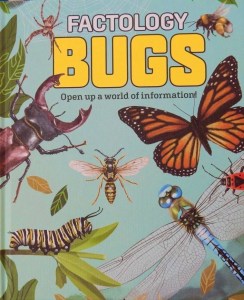
Factology: Bugs
Button Books
Absolutely brimming over with minibeast-related information, photographs and diagrams: spend a few hours with this book and you’ll surely come away knowing a lot more about creepy crawlers, fliers, hoppers, wrigglers and jumpers than before. Did you know for instance that it’s thought that 90% of our planet’s life forms and the most diverse group are bugs? Or that bugs have existed on Earth for 470 million years and predate dinosaurs. Wow!
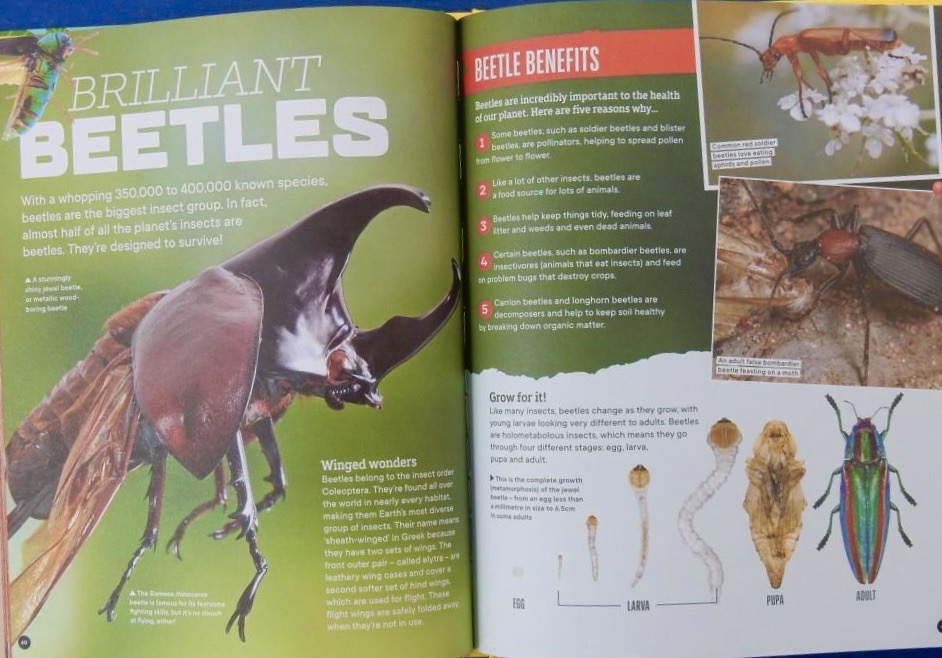
Insects with their chitinous exoskeletons and three-section bodies, form the largest group of arthropods. There are spreads presenting life cycles, habitats; you can dive into a bee hive as well as learn about how honey is made, meet all sorts of beetles and find out why some are so important to the health of the planet.
Not insects but included in this buggy extravaganza are spiders, comprising around half of the arachnid species. You might be surprised to learn that unlike we humans, spiders have blue blood; this is on account of the oxygen being transported around their bodies by haemocyanin, a copper-containing protein.
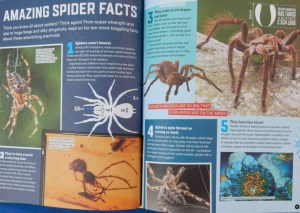
Watch out for tarantulas, several varieties of which are presented on one of the spreads in this book. So too are ten highly dangerous bugs that can cause serious damage to unwary or unfortunate humans.
In the chapter ‘Bugs and Us’ is a spread detailing how to build a bug hotel and another offering ways to create an insect-friendly garden and there’s a final quiz, should you want to test your acquired knowledge. Back-matter includes a glossary and index.
Also available in this new series are Factology: The Human Body, Factology: Space and Factology: Ancient Egypt, each of which provides a pacy, highly illustrated introduction to the subject,
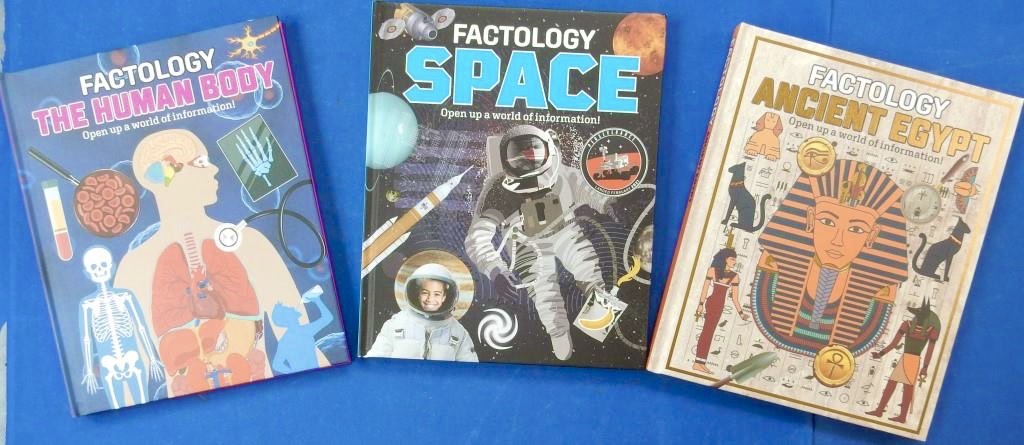
so if you know children with a budding interest in human biology, space science/astronomy or ancient history, these are a good place to start. They’re ideal for school libraries too.
 Red Reading Hub - Jillrbennett's Reviews of Children's Books