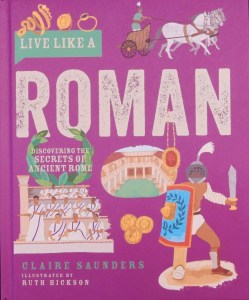
Live Like A Roman
Claire Saunders, illustrated by Ruth Hickson
Button Books
Do you know a primary child who is studying Ancient Rome or the Romans, has an interest in ancient history or just wants to find out more about life in Roman times, then this a book for them especially.
In addition to a wealth of information on a wide range of topics starting with Who were the Romans?, there are a number of practical activities for children to try. For instance alongside the facts about maths including Roman numerals, there are instructions for making an abacus. Having read the spread about childhood and family life, children can try making their own set of knucklebones and then play a game with them. Or what about making a wax tablet similar to those used by Roman children instead of the expensive papyrus paper. What really astonished me was to read that only about half of all Roman children made it to their tenth birthday.
We meet a fictional child named Tito, a slave, who appears at various places in the book; we join him at the chariot races,
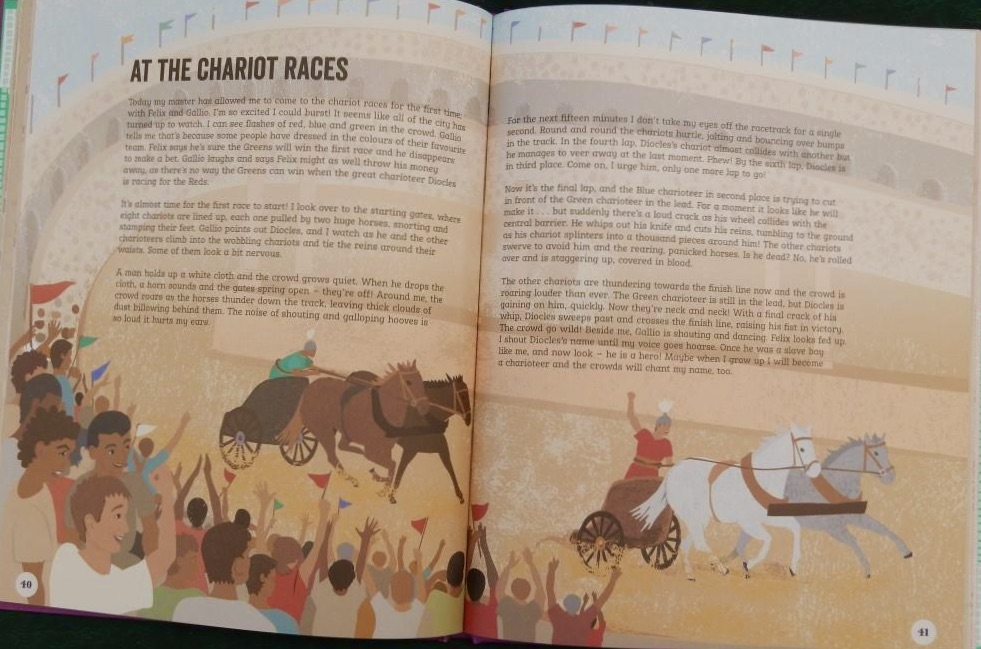
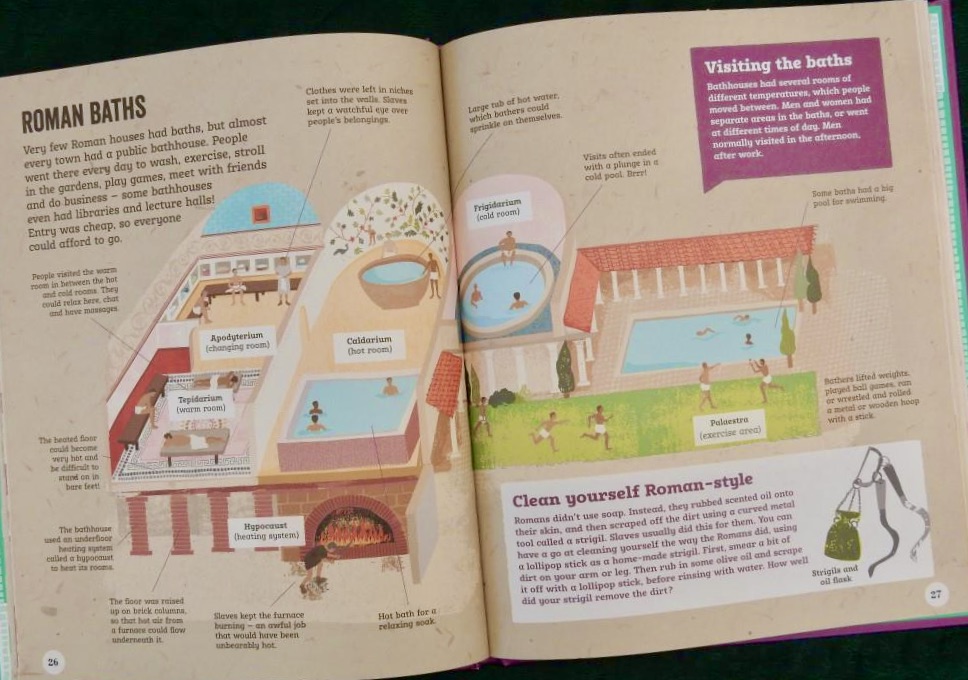
when he accompanies his master to the bathhouse and at the banquet his master hosts especially for an important guest.
The Romans are famous for their public baths, some of which are still in use today, but I’m not sure I’d want to try the Roman means of cleaning my skin by making a tool – a strigil – similar to those they used. The author suggests using oil and a lollipop stick.
Three double spreads are given to in turn food and drink, banquets and roman recipes; the honey cake sounds pretty tasty especially as instead of sugar, the Romans used runny honey; indeed honey was used in lots of recipes.
The final spread before the glossary poses the question: Could You Have Lived Like A Roman? This reviewer would not have survived long in a school: there were no opportunities for creativity and rote learning was the norm. However, the author appreciates the importance of creativity for today’s young readers and asks them to invent three new Roman gods or goddesses for things that are important to them and to give them names.
Ruth Hickson brings all this and much more to life in her detailed illustrations, large and small, helping to make this an altogether fascinating book for individual or primary classroom use.
 Red Reading Hub - Jillrbennett's Reviews of Children's Books