Ming the Panda

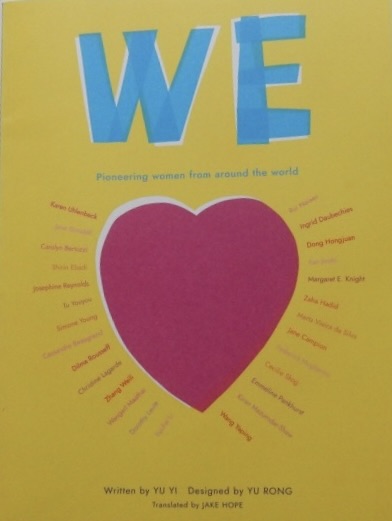
When a young child is unable to sleep, Mama tells a story about a very special panda who brought love and hope to millions of people. It’s the real-life story of Ming, the first baby Giant Panda to be brought to London Zoo in 1938, who became a wartime symbol of courage and hope. The little panda began its life in the mountains of China. As she grew in size, she also grew in bravery and one day she began a journey that took her all the way to London Zoo. There she was looked after by a kindly zookeeper – his very first panda – that he named Ming (a Chinese name that means Brightness).

People came from near and far to visit the panda and they even wrote her messages and sang to her. One very special visitor was a young princess, who later became Queen Elizabeth. Ming’s fame spread all around the world but then war broke out and bombs fell on London. Despite this, brave Ming helped those who visited her until one day, transported in her mind to the snowy Chinese mountains. she died. However, her memory continued to act as a shining light bringing hope to the people.

Ming’s inspiration also brought hope at worrying times to the little child hearing her story and it is to be hoped to other children who need help to be resilient whatever trouble they face.

Jake Hope’s sensitively told narrative – a story within a story – reads aloud well and together with Yu Rong’s beautiful illustrations, a combination of Chinese folk art paper-cutting and pencil drawing, make this a child-friendly way to start discussing issues such as war and animals being kept in captivity.

The Boy Who Loves To Lick The Wind

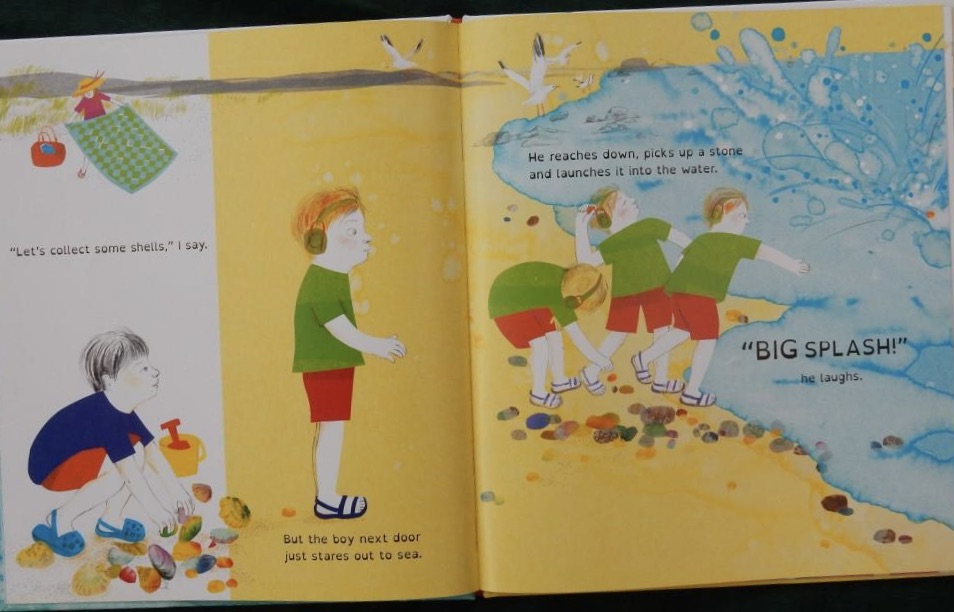
This story features two boys – the narrator who is dark haired, and his blonde neighbour. Puzzled by the blonde boy’s behaviour, the narrator speaks to the boy’s mother who responds thus, “He’s licking the wind. You should try it.” She goes on to invite the inquirer to join them on a visit to the beach, the place where the best winds can be found. Off they go with ‘the boy next door showing his excitement by his actions and the sounds he makes. Once at the beach he dashes onto the sand stands still and begins his licking ritual, ignoring an invitation to collect shells, Instead he picks up a stone and tosses it into the water.

The two boys then spend time throwing stones until mum calls them for lunch. The boy bites into his sandwich, tosses it away and shows distress, which his mum deals with calmly.

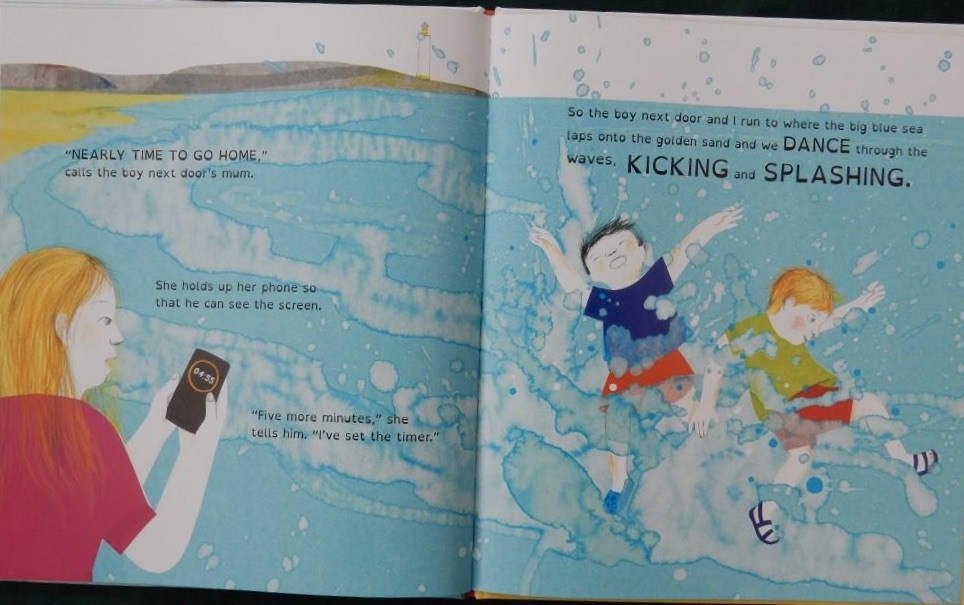
Meanwhile the narrator starts collecting smooth stones and using them to make a castle. Just as he finishes the boy next door runs up, grabs the top stone and hurls it into the sea. The boys then take turns dismantling the castle splash by splash till nothing remains. They jump, spin and yell into the wind till Mum calls to give her son a five minute warning before it’s time to return home. This prompts both boys to dash into the sea and dance around.

The beeper sounds indicating it’s time to leave, which causes the boy to cover his ears and cry. Again Mum is empathetic and they head towards the car but before they reach it, both boys give one final tongue swirling lick of the wind. How wonderful it feels.

The following day in school the narrator tells his class during a circle time session about their day at the beach; his friend demonstrates and then they all lick the wind together.

Some child listeners and adult readers aloud will understand from the outset that the narrator’s new friend is neurodivergent. That means that his brain works in such a way that he experiences and interacts with the world differently from neurotypical people. The story, related and illustrated with great empathy, is an ideal way to introduce neurodivergence to primary school children.

The Visible Sounds

The Visible Sounds
Yin Jianling and Yu Rong (translated by Filip Selucky)
UCLAN Publishing

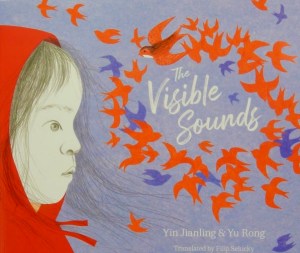
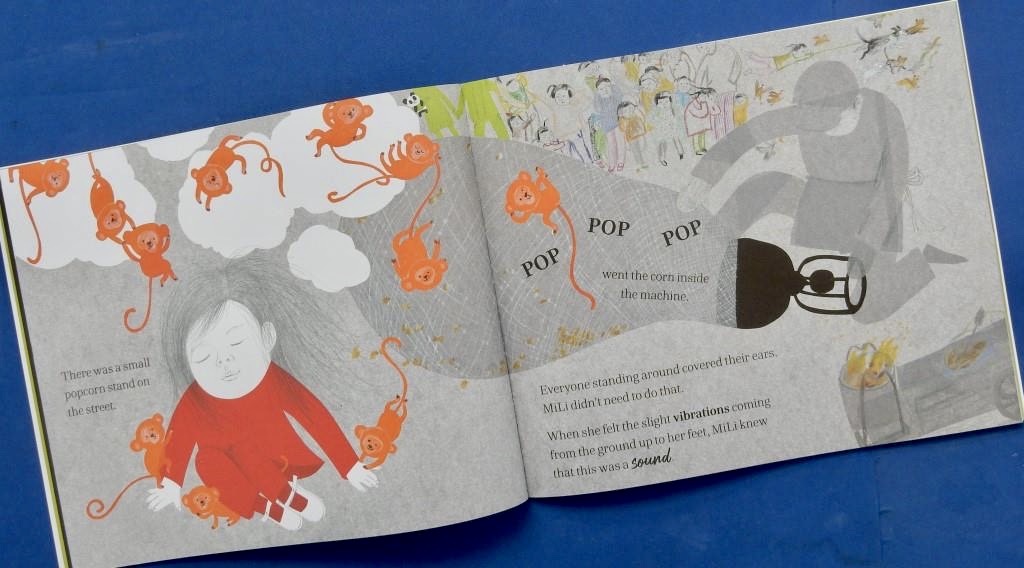
This is the powerfully affecting picture book, based on the true story of Chinese dancer Lihua Tai. It tells of MiLi, who as a little girl of two, suffers an illness and loses her hearing as a result. Initially frustrated, anxious, and alone in her world of silence, MiLi uses tears to express how she feels. Doctors are unable to cure her but then one day MiLi realises that although she’s unable to hear sounds, she is able to perceive them in other ways: sound can be felt within, touched, and seen through understanding and interpreting vibrations and movements in the world.

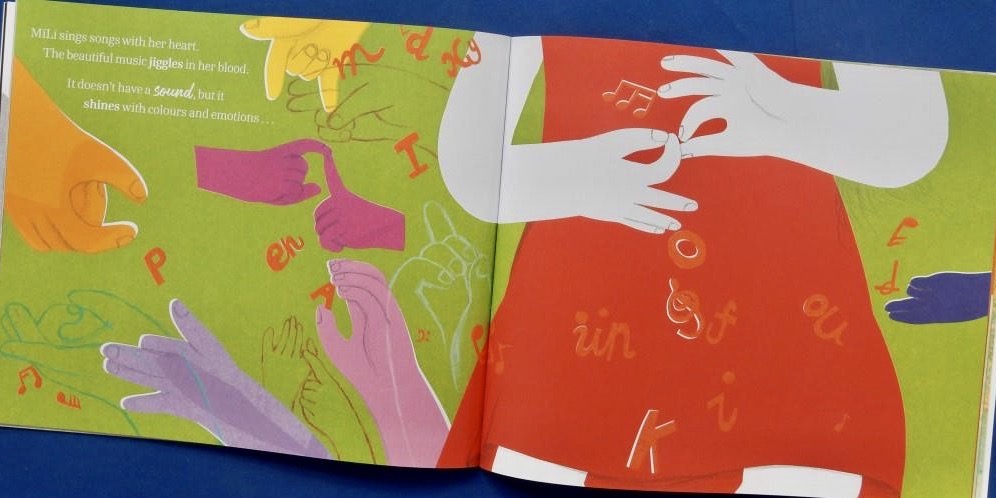
The author expresses the child’s realisation through a plethora of sensory musical phrases: ‘Sounds are waves when fish pass through water, like the lightest of kisses.’ … ‘Sound is the bright sunshine flowing into one’s blood, beaming with rays.’ … ‘Language is a river, flowing and flooding into MiLi’s body.’ … ‘The beautiful music jiggles in her blood. It doesn’t have a sound, but it shines with colours and emotions …’

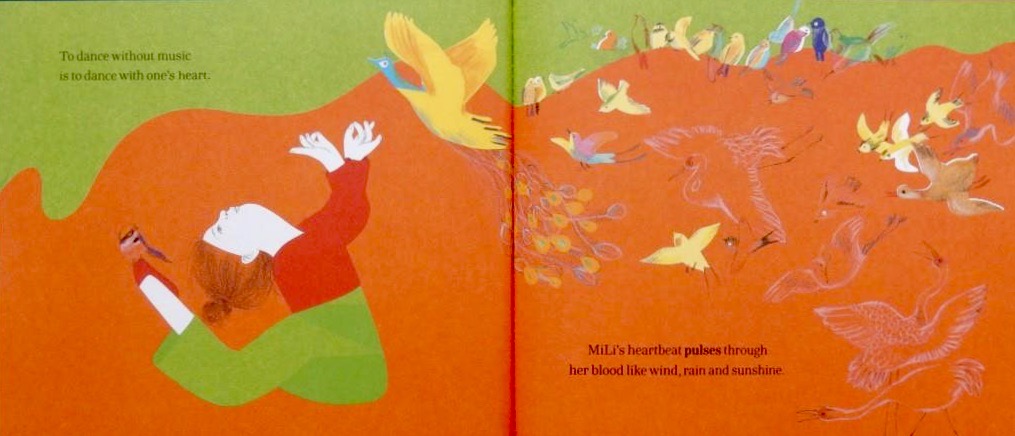
Perfectly complementing the beauty of the text are Yu Rong’s illustrations with their synthesis of striking graphic style, detail and blending of colours and greyness.

This is a book, that with themes of aiming high and being our very best selves,

while offering a message of hope to differently abled youngsters, surely speaks to us all. It concludes with a note on sign language and a page about Tai Lihua.

A must have for schools, and for family collections.

Shu Lin’s Grandpa

Shu Lin’s Grandpa
Matt Goodfellow and Yu Rong
Otter-Barry Books

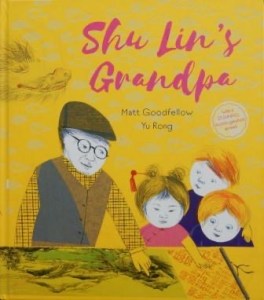
Shu Lin has recently come from China and with very little English, is struggling to fit in at her new school.

At lunchtime the other children are fascinated as they watch her tuck in to her little boxes of food. On the way home, one of her classmates recalls when he too was a newcomer but it’s not until Shu Lin’s grandpa visits the class with his Chinese paintings that anything really changes.

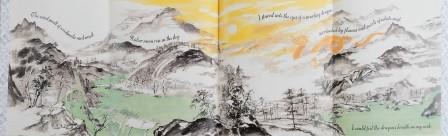
No words are needed as the children look in awe at his scrolls with their amazing scenes.

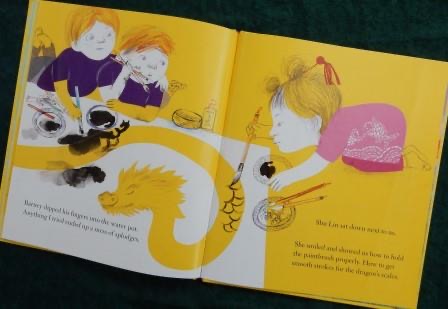
Then as silently as he arrived, Shu Lin’s grandpa leaves the classroom. That afternoon, the class teacher gives the children the opportunity to try painting their own pictures in response to what they’ve seen.

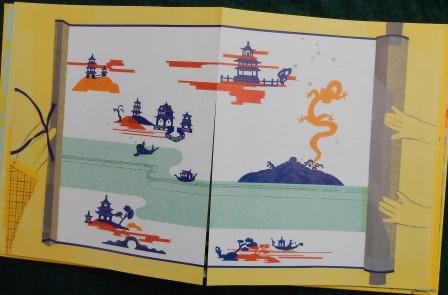
Matt Goodfellow’s text is presented through the narration of one of Shu Lin’s classmates and this is highly effective in that the boy relates his own experience to that of the newcomer showing understanding throughout the book, while Yu Rong’s illustrations, including a gate-fold that opens to reveal a remarkable Chinese scene, are absolutely superb.

That art is a hugely effective way of helping to develop empathy with other cultures comes across with a quiet power in this story that celebrates the imagination while demonstrating the importance of reaching out to others.

An important book to include in primary school class collections.

Snowflake in My Pocket

%0a

Snowflake in My Pocket
Rachel Bright and Yu Rong
Walker Books
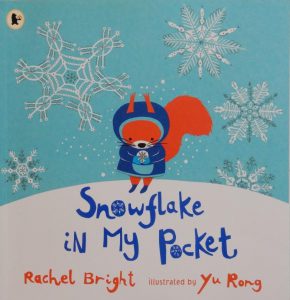
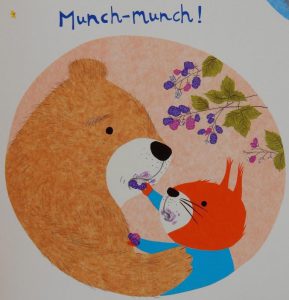
This is one of those stories that leaves you with a wonderful warm glow inside. It centres on the loving relationship between two woodland characters, a very old Bear and a very young Squirrel. Nothing the two do together is new to bear but doing it with Squirrel makes every experience ‘brand new’ for Bear.

%0a

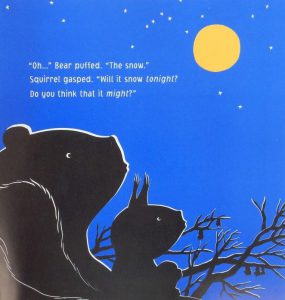
One night Bear feels the first chills of winter and as the friends stand looking at the moon, he forecasts snow is on its way.

%0a

Next morning an excited Squirrel rushes to his window and having cleared a peephole through the frost looks out on a magical white world …

%0a

Bear meanwhile has a very nasty chill and needs to stay snuggled up in bed. Off goes Squirrel alone but without Bear to share it with him, even his fun-filled morning is less than perfect. The little fellow decides to take a snowflake home to give his friend and having caught ‘the perfectest one’ he puts it into his pocket and heads home. Now youngsters who have done the same will already be anticipating the outcome; and sure enough, when Squirrel puts his paw into his pocket, there’s no snowflake.
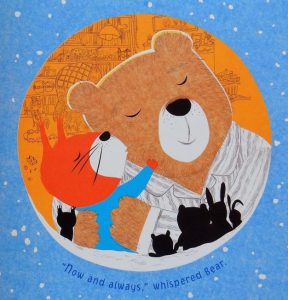
No matter, Bear tells him. “Snow comes and snow goes … but one thing lasts forever.” And Squirrel knows exactly what he means …

%0a

How beautifully author and artist capture that joy of experiencing snow for the very first time. Share this one with early years children particularly after a snowfall and let them try taking snow indoors. Share it at home snuggled up with a young listener or two, and follow with a mug of hot chocolate.