A Child Like You / People Power: Peaceful Protests that Changed the World

A Child Like You
Na’ima B. Robert and Nadine Kaadan
Otter-Barry Books

Beautifully illustrated and presented, speaking directly in a sensitive, heartfelt manner to young readers, author Na’ima and illustrator Nadine celebrate the four children featured, whose actions will surely act as a rallying cry for all children, showing that no matter what, there is always hope.

Inspired by young campaigners and activists, Greta Thunberg, Yusra Maardini, Marley Dias 
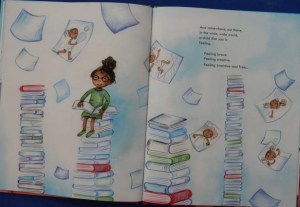
and Iqbal Masih, the book highlights the issues of climate change, the refugee crisis, the under representation of black girls in children’s stories, child labour and enforced slavery. 

These four youngsters show the way that other children too – children like them – can also be the change, make the change happen and inspire others to make changes, to speak out strongly on behalf of the dispossessed and the oppressed – to stand up for human rights and make our world a better place for everyone.

A book for all KS1 classrooms.
People Power: Peaceful Protests that Changed the World
Rebecca June, illustrated by Ximo Abadia
Prestel

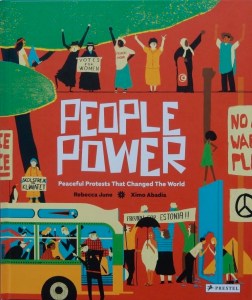
Rebecca June and Ximo Abadia provide readers with a close up look at thirteen revolutionary movements that protested peacefully in various parts of the world, allocating two spreads to each one.

It’s amazing to think that in the UK women have had the vote for less than a century; ‘Votes for Women’ was the battle cry of the women’s suffrage movement on a march through the streets of London one rainy, wintry day in 1907 in what became known as the Mud March; but it took more than twenty years of protesting to achieve their goal.

It was women too, who campaigned peacefully by surrounding the US airbase in the English countryside where nuclear cruise missiles were stored. Their actions were an inspiration to anti-nuclear movements throughout the world.

There are examples of people power from other continents such as the Montgomery Bus Boycott where in 1955, Rosa Parks refused to give up her seat to a white woman and the boycott, which lasted a year, forced the city to change its rules on racial segregation on its buses. Sadly racial discrimination is still with us, both in the USA and throughout the world; hence the necessity for the Black Lives Matter demonstrations prompted by the unlawful killing of the African American, George Floyd by a police officer.

Environmental activists too have a place in this book with Greta Thunberg and her Fridays For Future movement involving young people; but new to me are the ‘Defenders of Pureora Forest’ whose protests against deforestation of this New Zealand tropical rainforest, an important site in Maori culture, saved the forest and led to the ending of felling by the New Zealand Government of all native forests owned by the state.
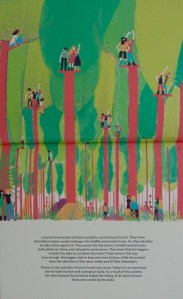
These and the other movements featured are described in Rebecca June’s straightforward, engaging but never preachy text, and Ximo Abadia’s stylised, often arresting illustrations, both of which convey the message that peaceful protest can effect change, every single voice matters and nobody is too young to start getting involved to make the future better for all of us; what’s needed is optimism, determination and a strong sense of hope.

An important book for primary classrooms everywhere.

The Stardust That Made Us

The Stardust That Made Us
Colin Stuart and Ximo Abadía
Big Picture Press

Written by Colin Stuart, Fellow of the Royal Astronomical Society, and illustrated in Ximo Abadía’s show-stopping surreal style artwork, this visual exploration of chemistry is the third STEM collaboration by this pair.

Despite chemistry being one of my a-level subjects I was totally bored most of the time and certainly never really got to grips with the periodic table: I certainly could have done with this book back then: the author’s explanations and the visuals really bring the elements and that table to life. I love the way he defines them as ‘ingredients’ in nature’s ‘unseen cookbook full of recipes for making everything …’ from fish to fingernails.’ Now that’s the way to get children intrigued. These ingredients aka chemical elements are currently 118 in number, some of which occur in nature, others – the synthetic ones -26 we read, were made by scientists during experiments.

Nor did anyone ever tell me that the inventor of those bunsen burners we used in so many lessons were invented by Bunsen the German scientist who also discovered two alkaline metals as well as a spectroscope. This information is part of the ‘alkali metals’ spread on which we also read that caesium, one of the elements Bunsen discovered is important in our everyday lives: it plays a crucial role in GPS satellites, and caesium clocks are used in our mobile phones.

All this is getting a bit ahead of things though. The very earliest element came into existence when the Big Bang occurred almost 14 billions years ago, followed very quickly on account the fusion process, by helium, lithium and beryllium.

No matter which spread you read, you’ll surely find something exciting and much of the information is presented with a gentle humour that makes it all the more enjoyable. I laughed at the paragraph about making the synthetic elements being incredibly difficult – ‘Aiming the particles at the target is a hard thing to get right – a bit like trying to throw marshmallows into someone’s mouth.’

Despite the significant part women played in the discovery of elements, only two are named after women, one being curium (after Marie Curie and her husband), the other meitnerium named after Lise Meitner.

This enormously engaging book is an excellent one to give to older primary children and beyond; it will surely inspire them, and who knows where their enthusiasm might lead – perhaps one of them will add a new element to the five heavy elements discovered in the last 20 years; especially once they discover, as the title says, it’s stardust that made us..

I Can’t Sleep

I Can’t Sleep
Gracia Iglesias and Ximo Abadía
Templar Publishing

How many people at the moment go to bed with their heads buzzing with thoughts – “I’m missing school,” … “I want to see my friends” and so on, and the consequence is that, like the little girl narrator of this story, that all important restorative sleep just won’t come.

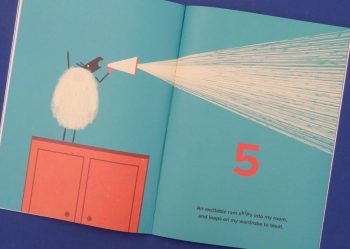
She starts counting sheep to help her drop off and as she starts to count slowly 1 … a sheep emerges from beneath the bed and begins to devour the rug. Then a second sheep drops down the chimney (no prizes for guessing what colour it is).

The counting continues and soon there are fluffy sheep doing all kinds of interesting, though not sleep inducing things, both inside her house

and out.

It’s not until she reaches 9 and a very tiny lamb comes that sleepiness descends upon the little girl and she’s fast asleep before she can count to 10. Zzzzzzz

With Gracia Iglesias’ chucklesome counting text this is great fun for bedtime sharing with little ones, and Ximo Abadía’s illustrations are a delight. Created with graphite, wax and ink with digital colouring, they’re bold, quirky and playful: who can fail to smile at the sight of cuddle sheep number six cavorting across the bedcover

or the wisest old, guitar-playing sheep.