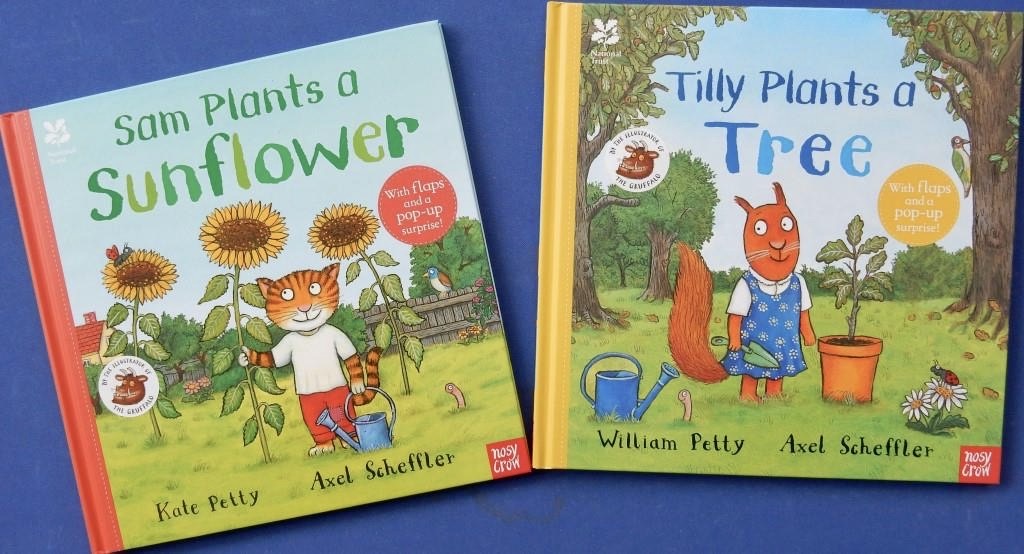
Sam Plants a Sunflower
Kate Petty and Axel Scheffler
Tilly Plants a Tree
William Petty and Axel Scheffler
Nosy Crow
Published in collaboration with the National Trust, these lift-the flap books each with a strategically placed pop-up are just right for helping young children discover the delights of growing things for themselves.
As Sam cat basks in the sunshine a passing ladybird responds to his “Why can’t the sun shine every day?”with a suggestion that he should plant sunflowers. We then follow the process as he chooses a suitable day, a suitable spot in his garden, plants and waters his seeds and waits. And waits … Beneath the soil (and a series of flaps) an earthworm watches adding comments until a few days later, Sam discovers a row of sprouting leaves. As it gets hotter Sam worries about how to help his sunflowers grow and receives advice from the ladybird. The plants continue getting ever taller until eventually buds appear but still Sam waits for his big yellow sunflowers until at last there to his delight, that of his friends and of readers, they are.
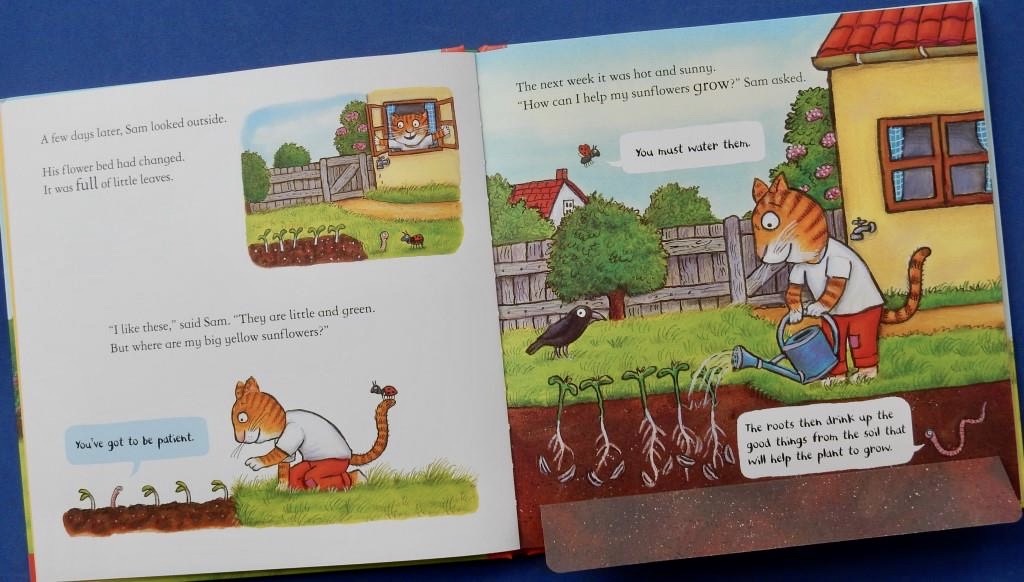
As summer ends the petals fall, the leaves wither and there again is the reassuring ladybird telling Sam to remove the seeds, share them with his pals and plant them the following spring.
If by chance, the story hasn’t made youngsters eager to plant sunflowers, there’s a final page of helpful tips.
Tilly, the main character in the second story is a squirrel. One day she rushes home from school with exciting news; everyone in her class is going to grow an oak tree. Grandma takes Tilly to a woodland full of majestic oaks and beneath Grandma’s special tree the little squirrel finds an acorn. Gran knows just what to do to get the acorn to germinate and after more than a year, with the help of ladybird and worm too, Tilly’s sapling is ready to be planted out in the wood near her Grandma’s.
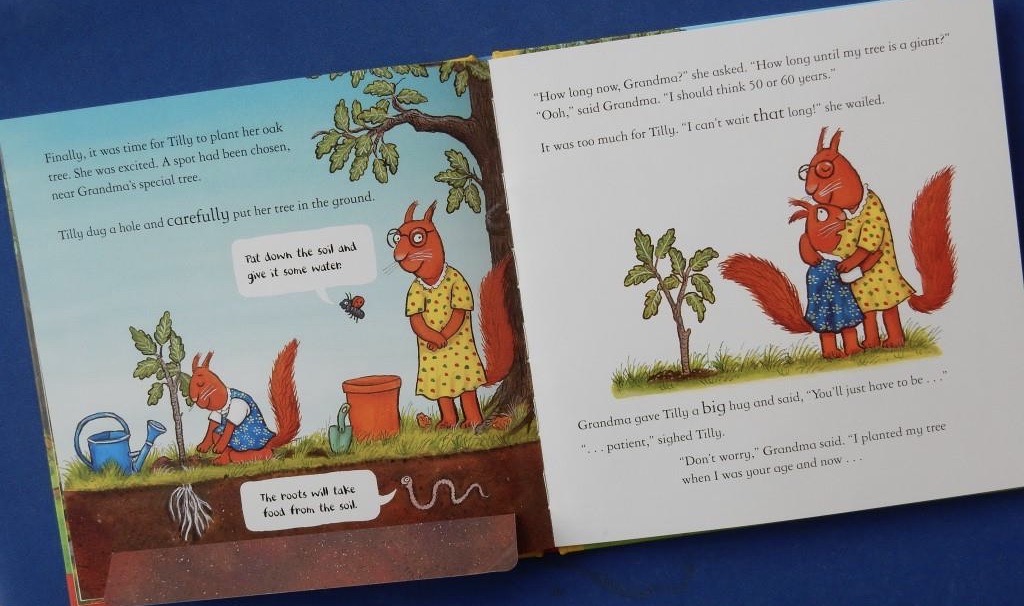
With its straightforward explanatory narrative and a final page of tips I’m sure many little humans will be eagerly collecting acorns for planting this autumn.
Ideal for sharing with foundation stage children and for home use, both books have bright, expressive illustrations from Axel Scheffler that young children and readers aloud will enjoy.
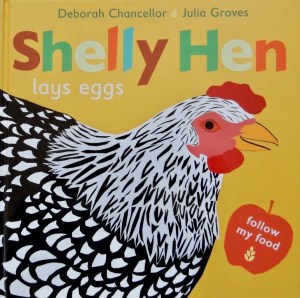
Shelly Hen Lays Eggs
Deborah Chancellor and Julia Groves
Scallywag Press
This is the third in the Follow My Food picture book series aimed at helping young children understand where their food comes from. We join a little boy as he watches Shelly a free range hen as she takes a dust bath to get rid of mites, feeds on bugs in the grass and herbs she comes upon, clucks with her friends in the flock, returns to her coop at sundown, settles down in the nesting box and at dawn, lays an egg ready for the helpful little boy narrator to collect along with the other eggs later in the morning. It might even be the one he eats for his tea.
After Deborah Chancellor’s straightforward narrative accompanied by Julia Groves’ bright, cut paper illustrations comes a trail-type quiz based on the facts of the story, where youngsters match words and pictures. There are two further information pages with paragraphs on ‘Happy Hens’, ‘Tasty Eggs’ and Chatty Chickens’.
Food is a popular theme in foundation stage settings so this would be a useful book to add to school and nursery collections.

 Red Reading Hub - Jillrbennett's Reviews of Children's Books