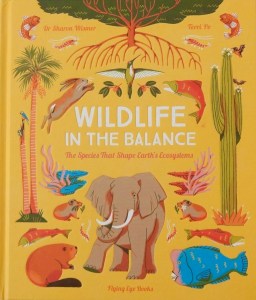
Wildlife in the Balance
Dr Sharon Wismer and Terri Po
Flying Eye
In this latest Flying Eye natural history offering author Dr Sharon Wismer introduces readers to the concept of keystone species and their impact upon various ecosystems.
There are introductory spreads explaining ecosystems, food chains and webs, and outlining the work of Professor Robert Paine whose experiments along the Washington State coastline in the 1960s demonstrated how the removal of a top predator from rock pools resulted in the collapse of the biodiversity of the ecosystem. He identified the ochre sea star as top predator and keystone species responsible for the biodiversity of the rock pools.
We learn that apex predators are not the only keystone species: herbivores, plants, prey, insects and habitat modifiers can also be keystone species maintaining the ecosystem in which they live.
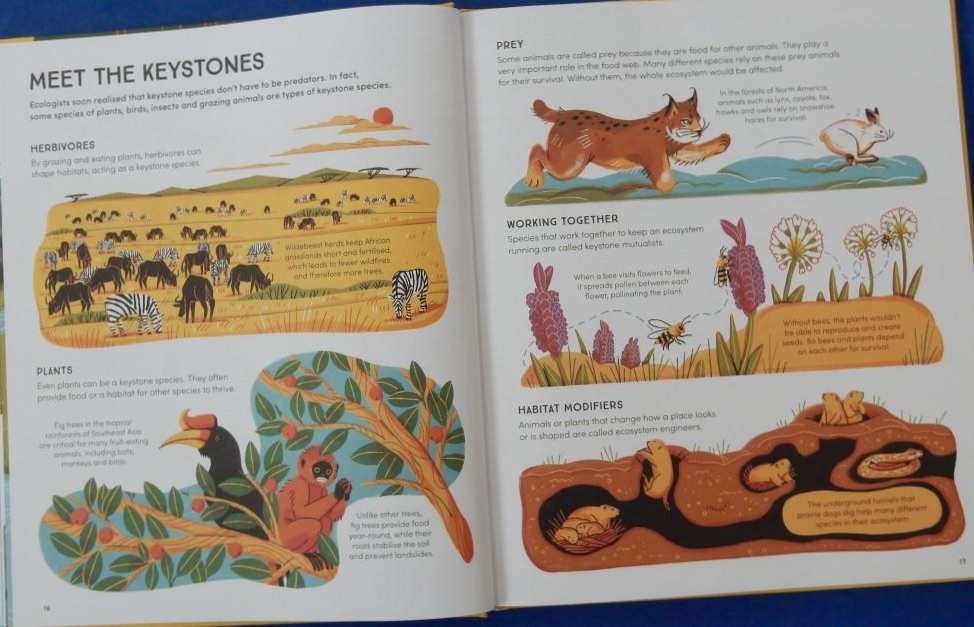
Readers are then introduced to a dozen keystone species across the globe’s five major biomes: aquatic, desert,
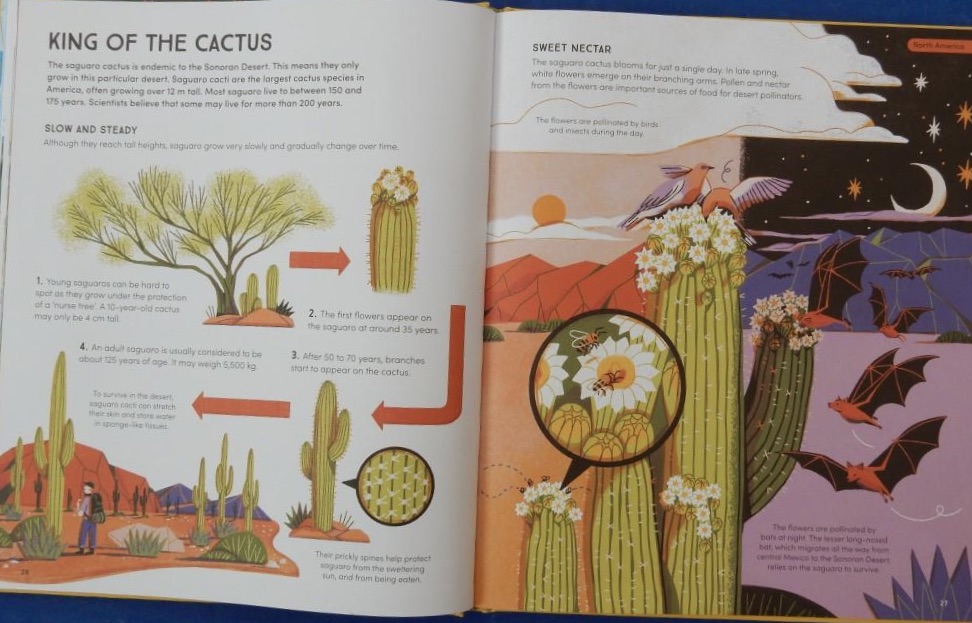
grassland, forest, and finally, tundra. These include salmon, the saguaro cactus, European rabbits of the Iberian peninsular, green-backed fire crown hummingbirds and krill.
Terri Po’s illustrations of the landscapes, flora and fauna are at once stylish, arresting and informative and expand and make accessible, the considerable scientific information conveyed by Sharon Wismer in her text, which concludes with a spread on how humans can help these vital keystone species. Backmatter comprises a glossary and index.
Altogether a fascinating book for KS2 readers and beyond..
For readers with a particular interest in the underwater worlds or for reference in a cross-curricular ocean topic is:
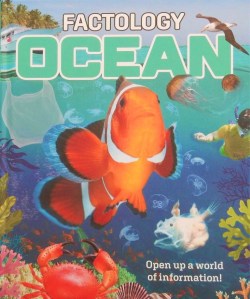
Factology: Oceans
Button Books
This highly visual book presents a wealth of facts about the ocean and its flora and fauna. In addition there is information on various topics such as the history of exploration and how people navigated their ships, subaquatic exploration of the ocean depths in the hope of finding treasure among the sunken wrecks.
Readers visit coral reefs and submarine volcanoes, see some of the wonderful deep-sea fishes and other creatures – giant squids, anglerfish, blowfish and the spooky-looking barrel eye fish and the fang tooth fish that has the largest teeth of any ocean species, find out how tides work, why the sea is salty and discover how tides and currents work. There’s a gallery of deep-sea deities and a spread introducing marine monsters such as the Kraken and a look at some of the horrendous outcomes of marine pollution
All this and much more, so imagine yourself into a submersible and take the plunge..
 Red Reading Hub - Jillrbennett's Reviews of Children's Books