100 Endangered Species

100 Endangered Species
Rachel Hudson
Button Books

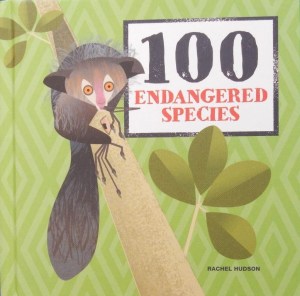
It’s alarming to think that there are so many creatures on the endangered or threatened list; the author/illustrator of this chunky book teamed up with the People’s Trust of Endangered Species to illustrate one such animal every day for 100 days.

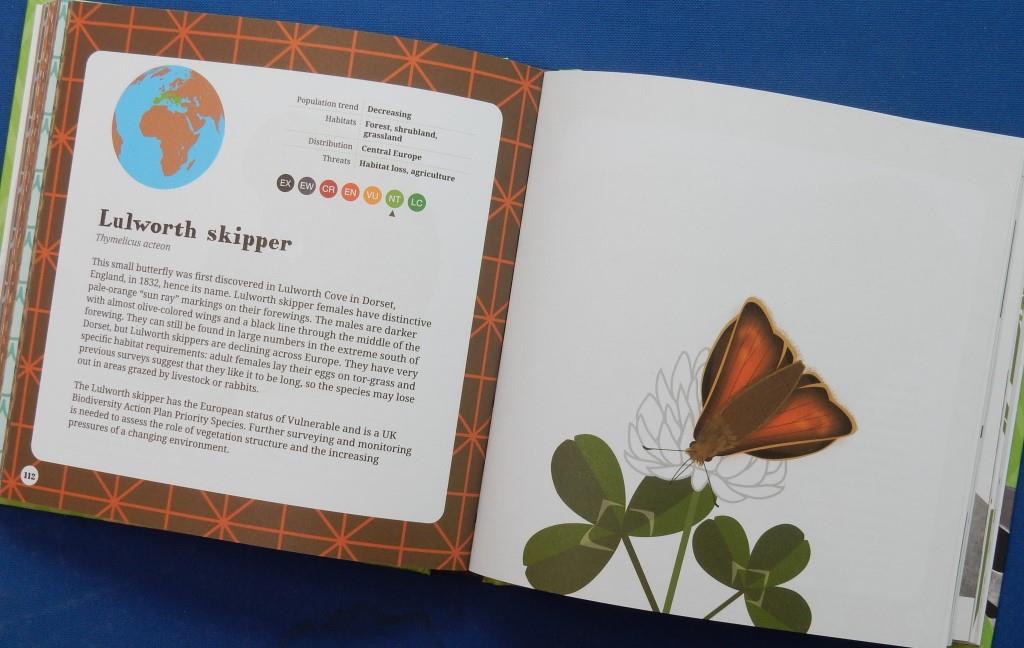
Those chosen come from all over the world and each has undergone evolutionary adaptations to suit its environment, be that the Red pandas found in China, Nepal and Bhutan; the Madagascan Aye-ayes, and the Indris that live in the northern and central rainforests of East Madagascar; the Sumatran tigers; the Little spotted kiwis of New Zealand; the Lulworth skipper butterfly first found in Dorset and now on the decline across Europe; 
or those magnificent polar bears whose Arctic Circle habitats are at risk both from destruction due to oil exploration work, and rising temperatures resulting from climate change.
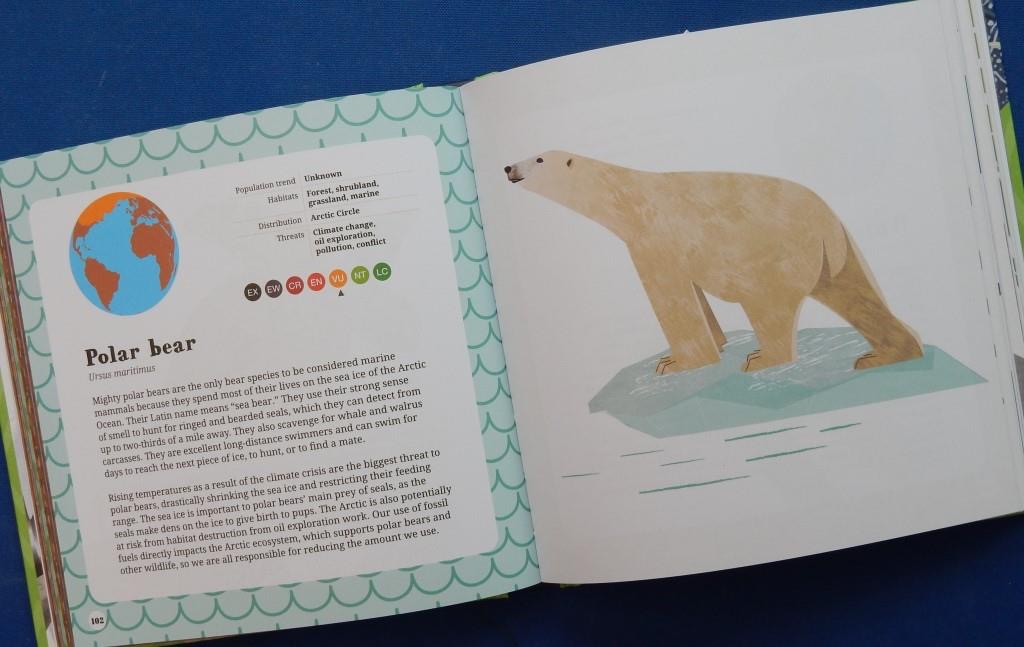
Each of the animals depicted is on the International Union for the Conservation of Nature’s Red List (explained at the beginning of the book) and is thus a conservation priority. Opposite each gently amusing illustration is a descriptive paragraph (or two) giving interesting facts, as well as saying why the species is currently at risk and often, what is being done, or needs to be done, to protect it. There’s also a world map showing distribution, and listing habits, threats and population trend which is given, with very few exceptions, as ‘decreasing’. 
However, it’s heartening to see that numbers of the African elephant, the little spotted kiwi, the whooping crane, the greater one-horned rhino and the giant panda are on the increase as are those of the Eurasian beaver.

Readers who feel inspired to become involved in conservation issues/initiatives – hopefully that is all of them – can find a list of organisations and projects at the back of the book, as well as a glossary; and there’s a foreword by broadcaster and naturalist Brent Westwood. Give this book to a child and who knows, you might inspire a life-long passion for conservation.
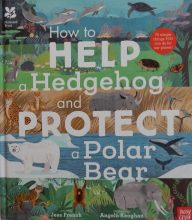
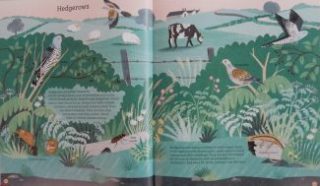
How to Help a Hedgehog and Protect a Polar Bear / Terrific Tongues!

How to Help a Hedgehog and Protect a Polar Bear
Jess French and Angela Keoghan
Nosy Crow

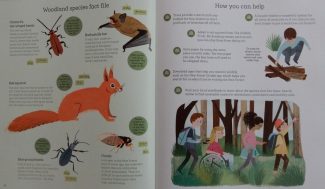
It’s never too early to get your children interested in, and involved with, conservation and helping to care for our planet and the amazing creatures that share it with us.

Jess French, a zoologist, naturalist and vet, demonstrates that small-seeming actions can be significant and each one contributes to the whole huge conservation task. For each of the dozen habitats – gardens, hedgerows,

heathlands, woodlands, highlands, wetlands, bodies of freshwater, coastlines, oceans, savannahs, jungles and mountains, she suggests straightforward everyday things we can all do to help protect these precious ecosystems and contribute towards making them places where the fauna and flora can thrive.

We might for instance create a bee-friendly wild part of our garden or build a log pile so lizards or insects have a warm, safe place to survive the winter chills.

Or perhaps when out and about we might participate in a butterfly or dragonfly count in a local wetland area. All these things can make a difference to the bigger picture as well as being thoroughly enjoyable.

Angela Keoghan’s splendid illustrations add to the pleasures of this absorbing and inspiring book that’s just perfect for young aspiring conservationists either at home or in school.

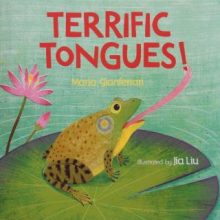
Terrific Tongues!
Maria Gianferrari and Jia Liu
Boyd Mills Press

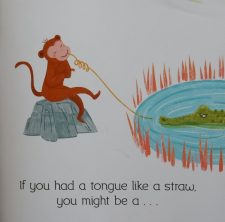
Here’s a smashing little book that demonstrates the enormous versatility of animal tongues presenting the information in a really fun interactive way for young children who will delight at being asked, as they are on the opening page to ‘Stick out your tongue!’ as well as trying to imagine it as a straw, a mop and a sword.

Courtesy of a monkey presenter, we follow the creature as it tries out the various possibilities: for instance a sword-like tongue, as used by a woodpecker, becomes a sharp tool with which to stab insects especially beetle larvae that burrow beneath the tree bark.

The pages work in pairs with the recto asking the question and using a common object

and the verso providing an illustration of the kind of animal with that particular sort of tongue as well as some interesting relevant facts.

The final pages look at human tongues with some amusing things to try, as well as further information on the animal tongues featured (I love the rhyming spread) and where the creatures live.

The entire book is great fun to use with a group who will eagerly anticipate what’s coming; and its patterned text also makes it a great one for learner readers to try themselves. All will enjoy Jia Liu’s playful digital illustrations.

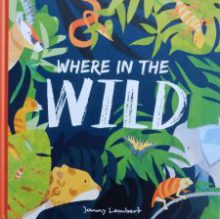
Where in the Wild

Where in the Wild
Jonny Lambert and Poppy Bishop
Little Tiger Press

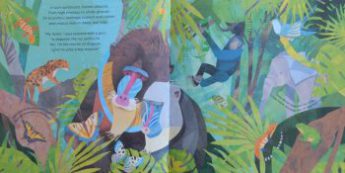
Poppy Bishop gets poetical in her passion for wildlife and its protection in this visual and verbal evocation of the world’s animal habitats and how crucial it is to save these wonderful wild places from further destruction by human actions.

She takes us to meet creatures of the land and sea as we visit nine different faunal homes, the first being the river where otter speaks out.

We also spend time in the tropical rainforest alive with screeching monkeys, beautiful butterflies and other insects and a leopard introduces itself.

The hot savannah comes next, home to elephants, leopards, vultures, bats and scorpions: here a tunnelling meerkat tells of his digging prowess.

Scorpions are also found in sun-scorched desert regions, the next stopping place; home also for snakes, mice, lizards and the camel that describes its flat feet.

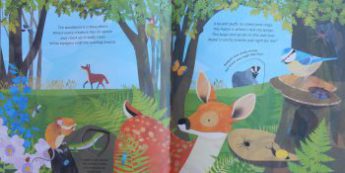
Next to cooler climes and a beautiful woodland inhabited by roosting jays, a bluetit sings about its home and diet,

and badgers roam both here and on grassy plains.
Thereon too reside wolves, buzzards, deer and other birds of prey.

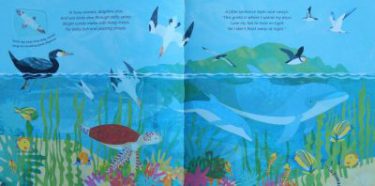
Evergreen forests, the Arctic tundra and oceans are the three final locations, each with its own array of wonderful creatures large and small.

Strategically placed die cuts and a related question cleverly provide a link between habitats on each spread.

The last page and inside back cover are a rhyming plea for readers to act as advocates, speaking out for and doing whatever they can to save these precious places and their creatures; and short paragraphs about special adaptations, destructive human actions and a last plea to care for what we have for the sake of the animals.

Heartfelt, beautifully illustrated with Jonny Lambert’s fantastic collage style art, this is I hope, a book that will stir young readers and adults alike to play their part in the preservation of our precious planet.