Terrible Horses / When I Feel Brave

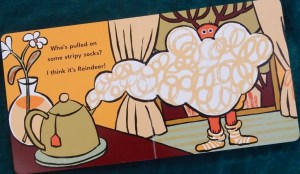
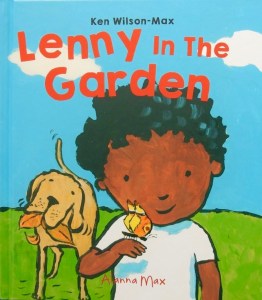
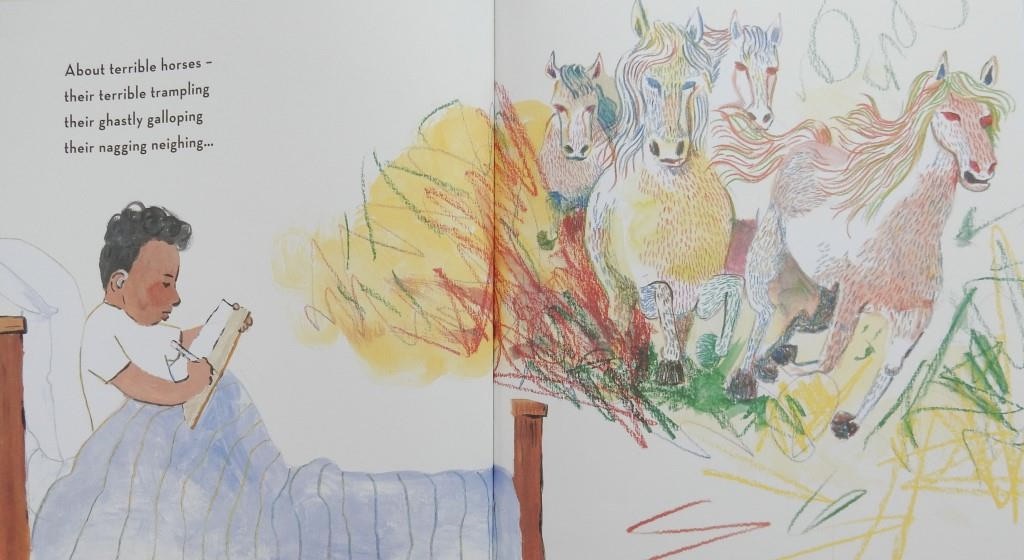
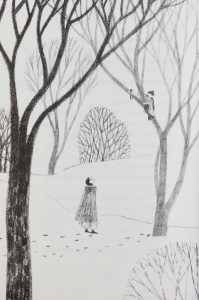
Narrated by the younger of two siblings, a small boy talks of how he feels about his sister, the ways they react to one another and to sharing their things. From the boy’s viewpoint, big sister is a cool character but she causes the pair to fight one another physically, rather than verbally. To release the tension within himself, the boy goes to his room and writes stories featuring terrible horses, with himself as a lonely pony.
Then there’s another fight on account of the narrator taking things belonging to his sister without asking her permission, which triggers further actions that fuel the aggression. Once again the boy retreats into his bedroom, fashions a horse story that includes showing himself as the pony neither able to speak or sleep. Surprisingly though sleep he does and when he wakes the terrible horses book is missing. Who do you think has it now and what will be the outcome?

Raymond Antrobus has penned a seemingly simple tale of sibling rivalry, but it’s one that conveys feelings relating to discord and empathy, both of which Ken Wilson-Max captures so adeptly in his illustrations of humans and of horses.

Another feelings centred picture book is

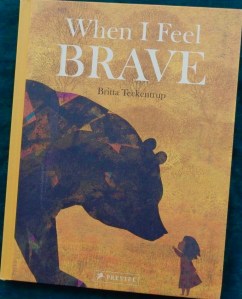
Having presented a girl’s feelings about being angry in When I See Red, Britta Teckentrup examines equally thoughtfully, a girl’s fear and what it means to be brave. By means of the author/artist’s rhyming narrative and evocative collage style illustrations, readers follow a child wandering through a forest who is startled by a huge bear that is initially terrifying, but as she continues her journey, becomes first companion

and by the time they emerge into the light, friend. ‘I can finally see … / that courage and fear / are both part of me’ the child concludes. An important insight indeed and a book that offers child readers and listeners a way of understanding one of their own basic emotions and how bravery allows them to take charge of this emotion.
Try using this first person story as a starting point for a circle time discussion.

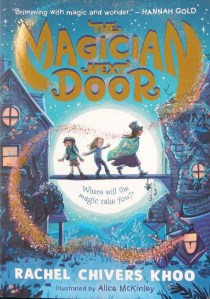
The Magician Next Door

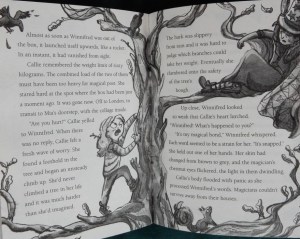
Callie and her father have moved out of London to a mountainous area of Northern Ireland; she feels far away from her friends and her memories too. One night sleepless and struggling to settle into her new life, as she stares out of her window there comes a loud BOOM! An upside-down house has appeared in her back garden. Next morning no house is there, so despite the large crater on the lawn as well as a piece of tile, she decides it must have been a dream. Then the boy from across the fields appears and he knows her name as she does his; Sam believes what she says about the previous night’s strange occurrence but Carrie remains unconvinced until that is, some weeks later she finds a mysterious paper aeroplane on her duvet on which is a message from Winnifred Potts, a magician from the strange house who is urgently asking for her help.

Carrie meets her at midnight and learns that Winnifred’s Wanderlust, the adventure magic that protects her house from attack by magical beings is lost and she begs Carrie to go and bring it back.
Can Callie and her new friend, Sam, who has hidden himself away and overheard the conversation, provide the help Winnifred and her house need?

Not only that but will she be able to transcend the overwhelming sense of loss she feels after her mother’s untimely death and her homesickness for her London community? With the help of new friends and different experiences, can she find hope for her life in the future?

With a sprinkling of Irish folklore, some great characters, and lots of sensitivity, Rachel Chivers Khoo has written a wonderful tale of magic and mayhem, with a vital message about the true meaning of home. To add to its spellbinding nature are liberal scatterings of Alice McKinley’s delightfully quirky black- and-white illustrations. A great read for children from Y2 and beyond.

Molly, Olive and Dexter: You Can’t Catch Me! / Dance with Oti: The Turtle Tango

These are both new titles featuring popular characters from previous stories: thanks to the publishers Walker Books for sending them for review.

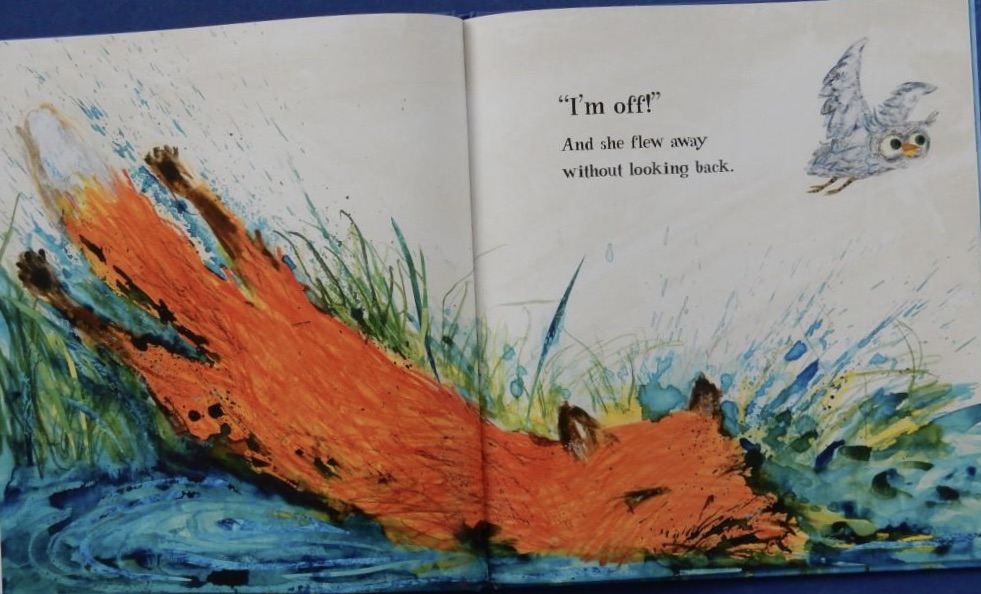
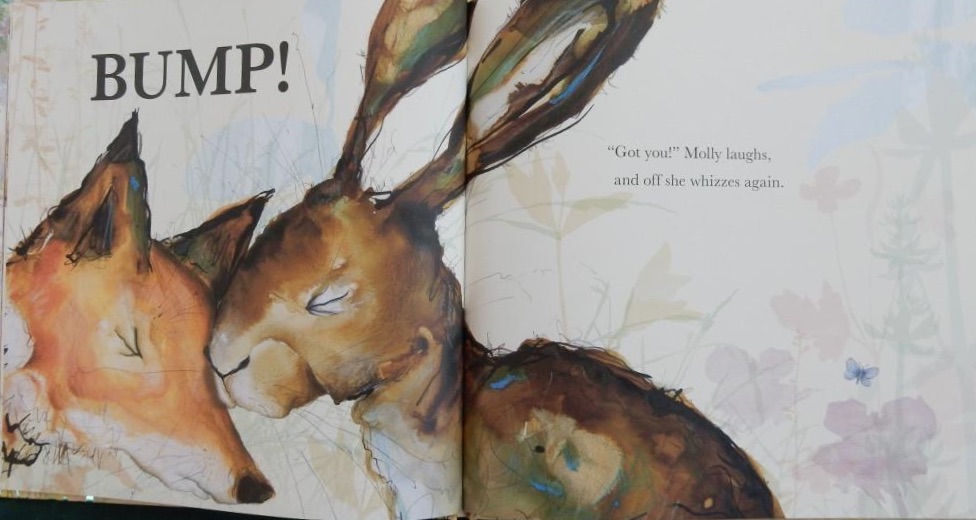
In this third episode in the lives of a trio of residents of a garden oak tree, Molly the hare, Olive the owl and Dexter, the fox, Dexter asks his friends to participate in a game of chase. First to be ‘it’ is Olive but she’s super speedy and soon catches Molly. When she’s the chaser, Molly finds her fast feet and before long she’s got Dexter, well and truly.

The bump leaves the fox feeling all dizzy and after a bit of chasing in a tired tizzy too. Determined to do something to show his vulpine prowess, he does something that perplexes his pals and in so doing proves he too is a worthy participant in the game of catch.

And the winner? What do you think? …

As always, Catherine’s watercolour scenes are superb; every spread makes the reader want to slow right down and linger over it. Young listeners too will appreciate the artistry as well as enjoying the playfulness of the chase.

Having learned to dance the Bird Jive, the Lion Samba and the Penguin Waltz, Mrs Oti’s pupils have a new challenge.

Prior to their performance at the grand opening of the aquarium, Mrs Oti takes the members of her dance class to see the marine creatures that are kept in its watery world. They enjoy watching the rainbow fish, wobbly jellyfish, scuttling crabs, the enormous shark and the turtle family. One of the class, Poppy, is concerned about the baby turtle and it’s the turtles that give their teacher an idea for the performance.

Back at the dance studio, the children enjoy emulating the fin flapping fish, the wobbly wobbly jellyfish and hear some sound advice from Mrs Oti. Advice that proves to be particularly important come the big day on stage when there’s a mishap just before the titular Turtle Tango grand finale.

After the show, along with congratulation from their teacher, each of the performers receives a special surprise thank you present.

After enjoying the vibrantly illustrated story, listeners too can learn the finale dance by following the step by step instructions on the last double spread..

Skylar and the K-Pop Headteacher

Skylar and her best friend, Dana, are obsessed with K-Pop, in particular AZ8, but when they’re about to launch a video comeback, her parents ban her from anything to do with the group for a whole week. During the lunch break at school as she’s telling Dana, a furious Skylar grabs her light-up dancing bunny ears from her rucksack and dashes off. But she forgets to remove the hat as she sets off to her next class and encounters the head teacher, Ms Callus who shouts at her and confiscates the precious hat.

Later she makes an excuse, leaves the classroom and confronts Ms Callus. Having grabbed her hat back, Skylar declares that she’s fed up with grown-ups telling her how to live her life. “I wish I was in charge,” she says twice. With that something weird starts happening: green lights flash and Skylar and Ms Callus swap bodies. Skylar is now the 71 year-old, mega-strict headteacher with a new role to try and get used to. When she turns to Dana for advice about what she needs to learn the response is.”something to do with empathy and walking in the other person’s shoes.” But how long will Skylar be like this, neither girl knows, certainly longer that the day and night they first thought.

Alongside this AZ8 announce they’re holding a competition and anyone who goes viral with their version of the ‘Hot Feet’ dance routine will win free tickets to their upcoming gig, and there’s an emergency inspection of the school to contend with. Chaos indeed.

Is it even possible that Skylar and Ms Callus can develop empathy towards one another and their lives, and if so can it be done in time for the weekend gig? It does’t help that Skylar has upset her bestie and the two have fallen out. And what about the inspectors; will they like what they see? Will Skylar repair the rift with Dana?

With lots of laugh-out-loud moments, this is a hilarious tale, at the heart of which is the importance of seeing things from another person’s viewpoint, friendship, self-belief and being true to yourself. Older KS2 readers will love it.

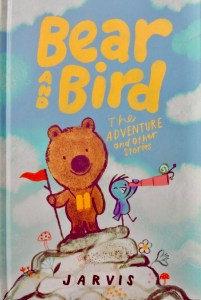
Bear and Bird : The Adventure and Other Stories

The first of the four short episodes about best friends Bird and Bear – The Nothing – takes place on a Tuesday, the pals’ usual day for spotting clouds but on this particular Tuesday Bird is poorly, so instead Bear endeavours to make his friend feel better. However she declines his offers of chewy things and other foodie favourites; it’s also a no to a story, a new wonky stick and dancing. ‘Nothing” is all Bird wants. Bear is on his way out when Bird calls him back with a request. Can you guess what it is?

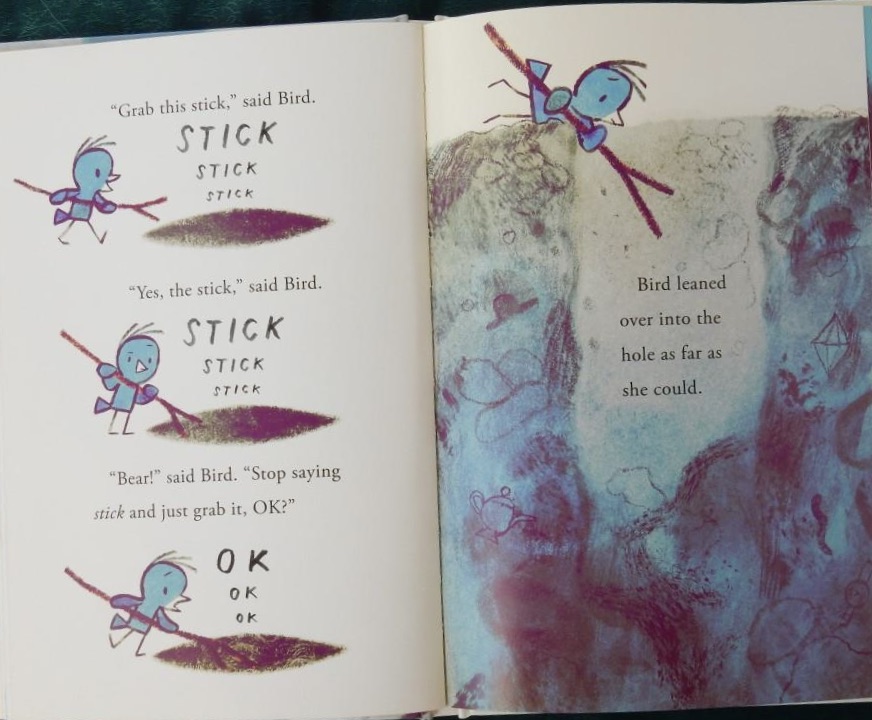
With Bird feeling somewhat better, the two set off for some cloud searching when they come upon a sign, DO NOT GO IN THE HOLE, Bear reads. Off they go again, Bear with his mind on clouds, Bird preoccupied with wondering what his friend is thinking about. Suddenly Bear realises he’s lost Bird and vice-versa. Bird thinks of The Hole. Could Bear be stuck down there? Bird goes to look and finds a stick that’s just right for a rescue.

But who rescues whom?

Episode three sees Bear and Bird at Leaky Lake where they come upon The Mole, a creature whose jokes Bear finds funny. Soon Bird starts to feel left out and so she decides on a get rid of Mole plan. However, things don’t quite go as she hopes as it’s Bear who feels upset. Can they remain bestest
friends or will Mole come between them?


In the final episode Mole is still waiting when the two return to the lake and he has a surprise in store: a little boat – just the thing for The Adventure under Mole’s captaincy. No matter if they encounter such things as pirates and sea monsters, they’ll surely keep each other safe.

As with previous titles in the series, this delightful duo will amuse both emergent readers and young listeners with their ups and downs and silliness that are beautifully captured in words and pictures by the inimitable Jarvis.

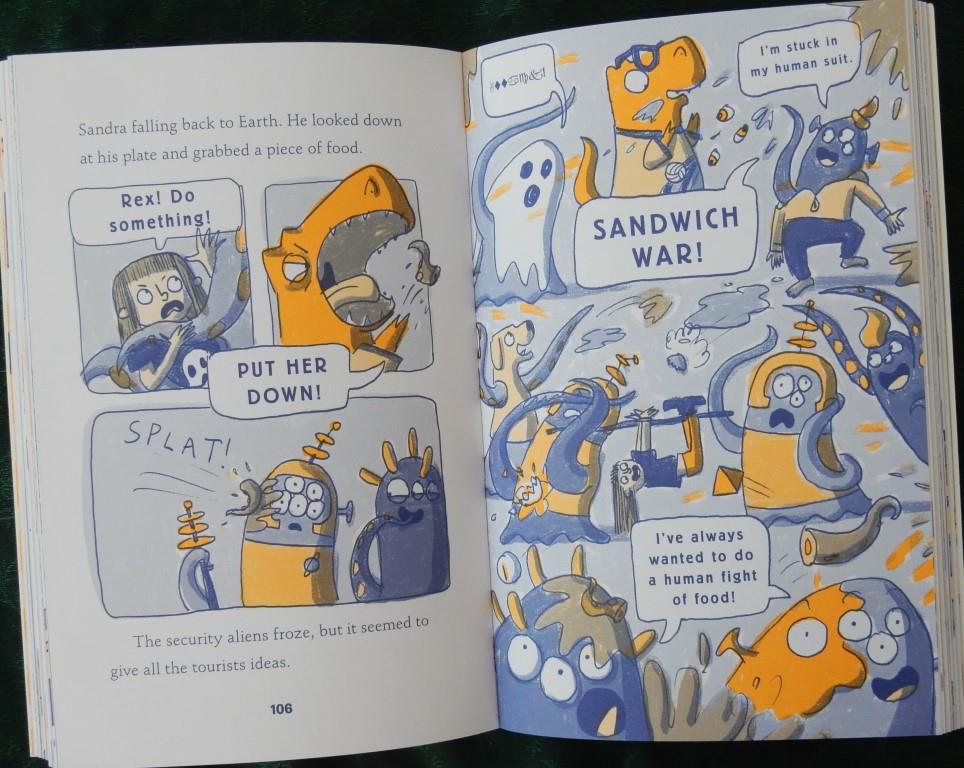
Rex Dinosaur in Disguise: Undercover Alien

Life is going well for dinosaur Rex, now a P.E. teacher, but then he upsets a human participant over a decision he makes at a competition. This is soon followed by the disappearance of every single one of the guinea pigs … ‘Ninny pig(s)’ … ‘Grumpy pig(s)’ … ‘Gwent squid(s)’ from the school pet show as a result of an accident when Rex was trying to be helpful; you can guess who gets the blame.

With the anti- monster humans determined to prove him guilty and Rex (undercover) and his friends Sandra, Anish and Bigfoot determined to prove his innocence by solving the case of the missing guinea pigs, this mission is not going to be a walk in the park, especially as it soon transpires that further guinea pig vanishings are happening all over the city. The crux of the matter is discovering who really is to blame, first stop a meeting with mayor, Jimmy Prigg: a surprise revelation awaits. The next stop is for coffee …

There follow further encounters with disguised creatures, a daring intergalactic undertaking and fyet more wild adventuring back on Earth.

Like this reviewer, I’m sure child readers will laugh out loud all through this crazy caper with its hilarious dialogue, fantastic illustrations and chapter headings such as BUM CRAC (you’ll need the book to work that one out). Let’s hope there’s a third story in the offing soon.

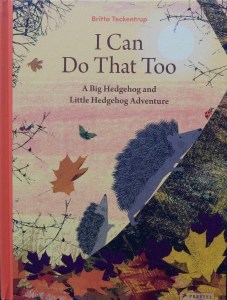
I Can Do That Too / No, Nancy, No! a Dog Chase in New York

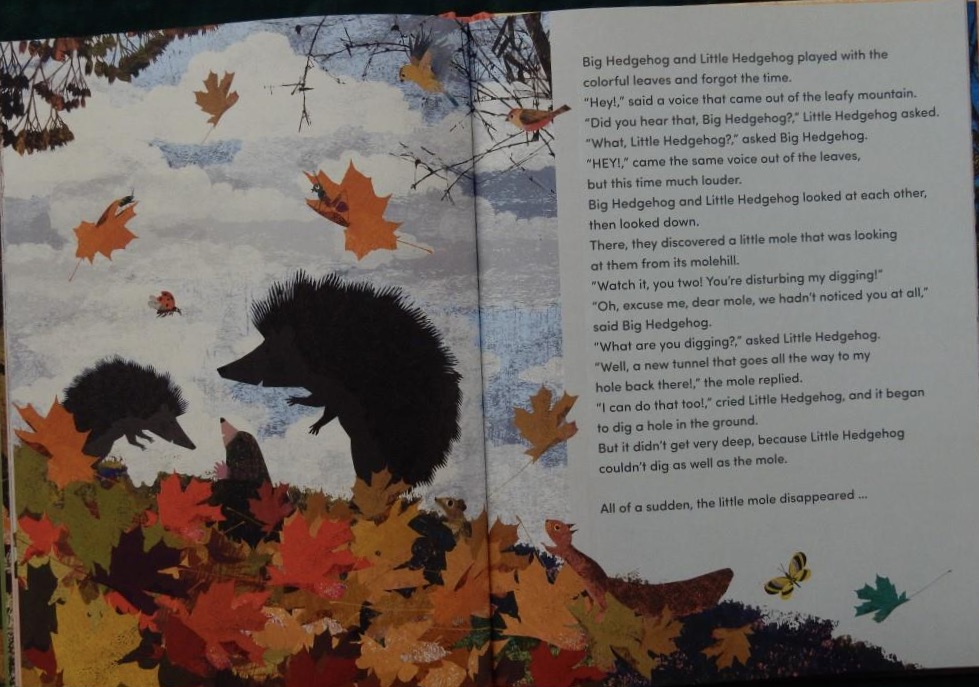
The delightful Hedgehog duo return in a new story.
Eager to do everything Big Hedgehog does, Little Hedgehog enthusiastically helps gather all the fallen leaves. Having collected a huge pile there’s just one leaf remaining and that’s on a high branch of a tree. Unable to reach it by leaping, Big Hedgehog decides to climb up the trunk. “I can do that too!” cries Little Hedgehog. However Big Hedgehog is back on the ground with the leaf by the time Little Hedgehog reaches the top branch. Thereon is a ladybird and of course Little Hedgehog unable to resist copying the insect’s actions launches itself skywards.

This is only the first of the animal actions Little Hedgehog tries and before long a whole host of animal friends starting with a mole,

have been shown what the little prickly creature can do, including swimming in the lake. That’s where during an afternoon of fun, Little Hedgehog learns that not all animals have the same set of skills and abilities. Come nightfall, it’s fortunate that the turtles are willing to offer a lift all the way home to the Hedgehogs’ residence where an owl’s hoots send Little Hedgehog off to sleep but not before a final “I can do that too!”.
Beautiful, textured scenes in Britta’s characteristic style and a gentle tale show little humans that it’s good to be eager to embrace new things but equally, it’s fine to discover that you’re not quite ready to accomplish all you try.

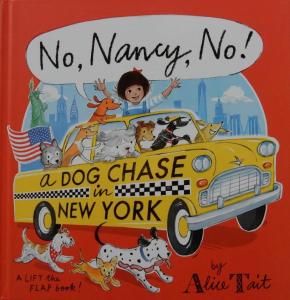
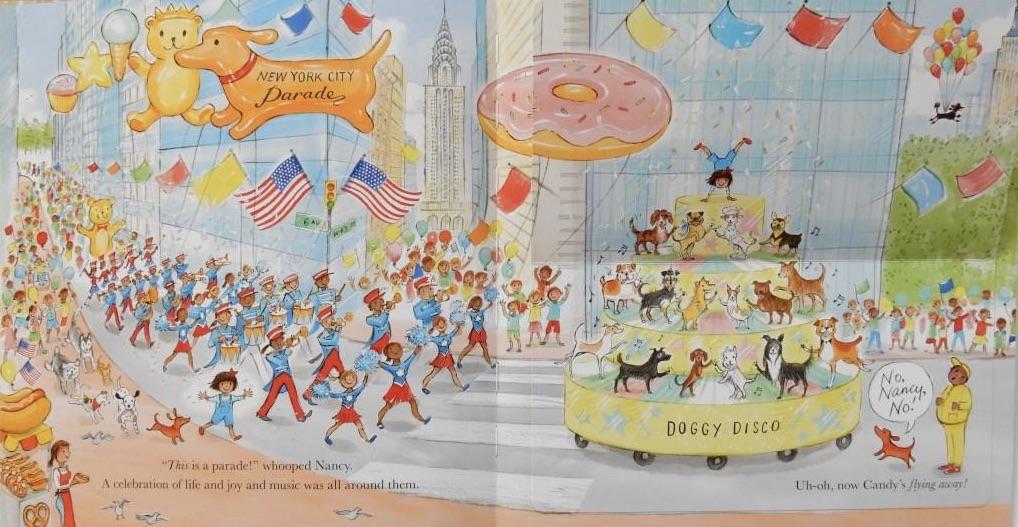
Nancy and her canine best pal Roger are in New York ready to head off to the theatre to see Dogs! The Musical. On arrival Nancy spots Candy the star of the show on a lead outside and in her enthusiasm she accidentally unravels the lead and off goes Candy … through the city and into a cab destination Central Park. Nancy and Roger chase after her but Nancy can’t resist stopping several times as they pursue her into the zoo, past a parade and downtown to the Hudson River where Candy has been blown attached to a bunch of balloons. Eventually she ends up dangling from the Statue of Liberty.

As ever more of the dogs of the city join the chase young followers of the story will enjoy adding their voices to that of the long-suffering Roger with “No, Nancy, No!”

and amused to discover the total chaos Nancy has caused by her thoughtless action. Can she possibly succeed in scaling the heights, rescuing Candy and getting her back in time for the show? Happily with lots of assistance, she can and that night Candy (stage fright overcome) isn’t the only one in the spotlight.
With a final fold out map, lots of famous landmarks, a surprise pop-up, a plethora of flaps and a wealth of detail in the busy scenes, there’s plenty for youngsters to explore in this interactive travellers’ tale.

Be My Sunflower

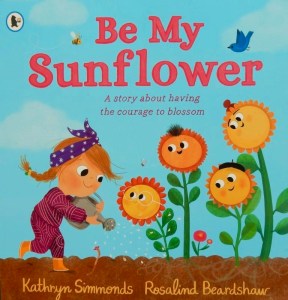
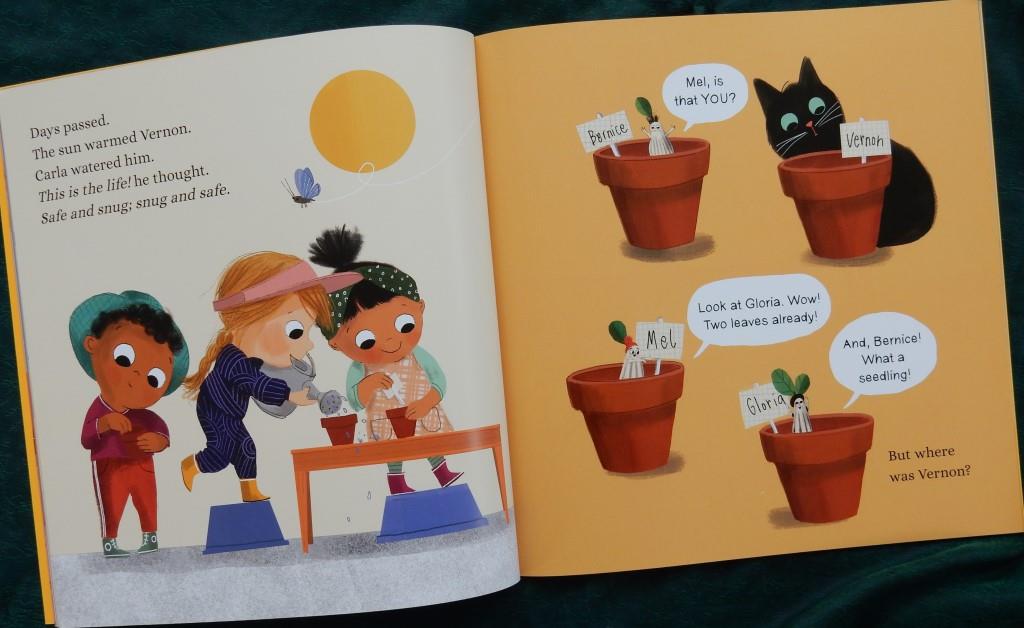
Vernon is a sunflower seed, one of many in the packet Miss Okoro has for the children in her class to plant. All Vernon’s fellow seeds are excited about being released into the world, a world Vernon knows a considerable amount about – scary things like birds, slugs and stormy weather – and thus he feels apprehensive.

Come the next morning a little girl named Carla is given Vernon. Her enthusiastic response , “Be my sunflower” makes the seed feel somewhat more relaxed. Time passes; Carla waters Vernon, the sun shines, warming him and it’s so snug and safe in the soil. Meanwhile the other seeds have begun to germinate

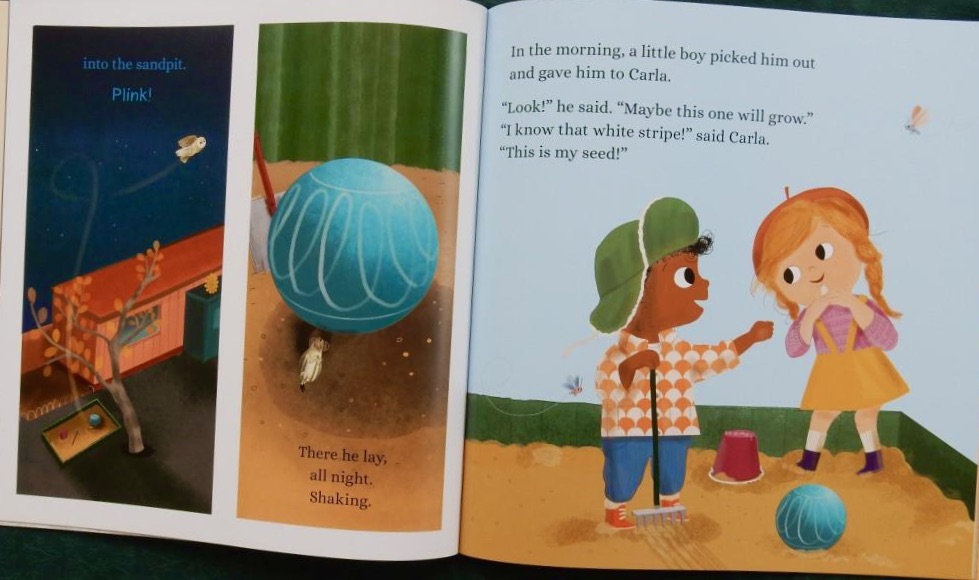
and they encourage him to do likewise, extolling the delights of the stars. Their enthusiasm makes Vernon curious: perhaps he could just have a teeny peep. The stars glitter in the night sky but just as Vernon is reconsidering his opinion of the big wide world, something large swoops by, scooping him up and then dropping him way way down into a sandpit. There the frightened seed stays all night. In the morning a little boy picks him up and hands him to Carla. Carla immediately recognises Vernon and puts him back in his pot.

By the end of the week, Vernon is the only seed that hasn’t sprouted. Carla feels devastated and cries lots of tears right over his flowerpot. The ungerminated Vernon knows that he must act: he spends the night pushing through the soil. Is he brave enough when morning comes to remain exposed? For Carla, yes he is and she is overjoyed. So begins a new way of being in the garden: Vernon grows and flowers and yes, he still knows about the scary things, but now he also knows about some of the wonderful things the world offers, the most important of all being a very caring little girl.

What a lovely story about finding the courage to emerge from your comfort zone and take on the world. Its warmth and reassurance shine through like the sun that sends its rays down to Vernon. Young children will be amused at the seeds having names and the way they talk to one another; will certainly empathise with Vernon and be rooting for him to emerge and reach for the sky. Rosalind Beardshaw’s mixed media, digitally worked illustrations of the personified plants are such fun.

Counting Sheep

Sheepdog Sam has had a tiring day and he’s more than ready for sleep. Not so the sheep; they’re still way too lively. Sam suggests they should try counting sheep ie themselves to make them nod off. He starts “One, Two …”; the sheep try to continue but clearly need lots more practice, so Sam notices as he dashes off towards other wakeful animals. He gives the horses the same ‘count yourselves’ instruction, which results in Sam feeling more drowsy and the horses uttering letters of the alphabet.

It soon transpires that all the farm animals are still wide awake even the cows and Sam leads them into the barn urging them to demonstrate the sleep-inducing counting to the entire farmyard contingent.

The result is only a lot of mooing: it’s time to visit the hen house to seek an answer to the wakefulness epidemic. It’s there that Sam finally discovers the insomnia explanation; it’s also another counting opportunity for the other animals.

Michelle Robinson’s comical bedtime story and counting book with a difference, in combination with Nikki Dyson’s wonderfully expressive illustrations of the farm animals, will surely make wide awake young children giggle. It also offers lots of counting occasions – albeit sometimes slightly chaotic ones – on almost every spread.

My Mother’s Tongues

Sumi’s mother speaks two languages, Malayalam because she grew up in Kerala and English because she learned it at school and having emigrated to the USA ten years back, continues doing so now sometimes using both when she talks to her daughter. Sumi the narrator was born in the United States, uses Malayalam at home with her family and as a result of listening carefully to others at school and around the neighbourhood, describes herself as having two tongues like her mother. She goes on to say that when she visits Kerala with her family each summer she uses Malayalam with her relations and her ability to understand and speak it is improving.

She explains that as her family tell her, if she stops using a language she might forget it. I know that to be true with my speaking of Hindi. The more languages a person learns and speaks, the more people s/he is able to converse with: Sumi’s aunt for example is able to use Malayalam, English, Hindi and Spanish.

But imagine how many opportunities a person might have who is multilingual: that’s what Sumi aspires to. I love that she concludes by saying ‘Having a tapestry of tongues will be my superpower.’

This celebration of learning and using new languages is superb, showing how it helps overcome differences and borders of all kinds as we connect with people from all over the world.

Using canvas backgrounds and quilted textures, Jomepour Bell emphasizes the weaving theme of Uma Menon’s lyrical text in this illuminating book. Everybody should read this especially those who say such things as ‘English is spoken all over the world, so why bother to learn another language.’

Future Hopes: Hopeful stories in a time of climate change


‘… dreams and stories are the real seeds of change.’ So says Nicola Davies in her foreword to
this book, a collection of nine compelling short stories edited by Lauren James, the theme being the climate crisis.

First we have Eyeballs, Tentacles and Teeth by Oisin McGann’s exciting tale of plastic eating bacteria and geoengineering with its unintended consequences – there’s a giant squid in this one. Next comes Tolá Okogwu’s Saving Olumide, a tale of community food production using a farm created on the roof of an apartment building, family love and neighbourly kindness. All the stories are thought-provoking and each has its own appeal. I laughed at Louie Stowell’s playful comic strip They Came Back with its rewilding theme and fanciful elements; but I think my absolute favourite is M.G. Leonard’s Food of the Future which tells how two friends win their school competition which asks that pupils create a sustainable, preferably innovative dish; the Bug Burgers that Borneo and Francesca make are assuredly that, but they taste delicious too.

Lauren James follows each story with a summary and the facts behind the fiction, together with observations and ideas about how each of us, through our lifestyle choices, can make a difference. In so doing, having read this optimistic book, one hopes today’s children feel galvanised and sufficiently empowered to become part of the change that saves our precious planet Earth. With its terrific cover art by David Litchfield, it’s a must have collection that needs to be in every upper primary and secondary class collection.

Maisy Loves Bees / Maisy Loves Trees

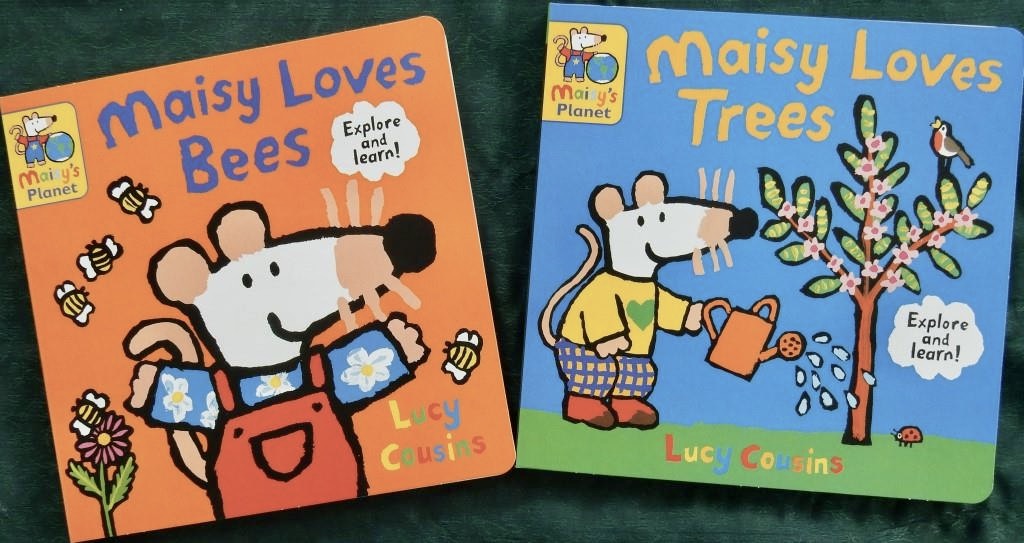
Young children’s favourite rodent Maisy Mouse has turned green – not literally of course: rather, she’s become a champion of helping to protect our precious planet.
In these Maisy’s Planet interactive board books, little humans are invited to join Maisy as she finds out about two of the most important organisms of the natural world. Maisy Loves Bees begins in her garden where she learns the basic characteristics of those stripy little insects and discovers why bees are so vital, what they need, what’s their role in nature. She also visits a beehive, finds a honey bees’ nest and finally invites her friends to join her in the garden where they all watch the bees busy at work.

In Maisy Loves Trees, she finds out what a tree is, how it grows, investigates different varieties of leaves, learns about seasonal changes through the year, discovers that not all kinds of trees undergo these changes and visits the park with Cyril the squirrel and Tallulah the chick to see examples of trees from all over the world.

With bold, bright illustrations, a final fold-out scene and simple explanatory texts, these are just right for encouraging tinies to become lovers of nature. Share and then go and do some investigating outdoors.

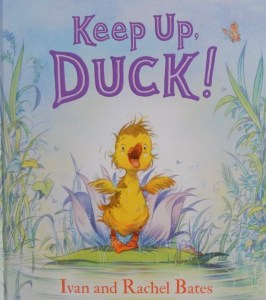
Keep Up, Duck!

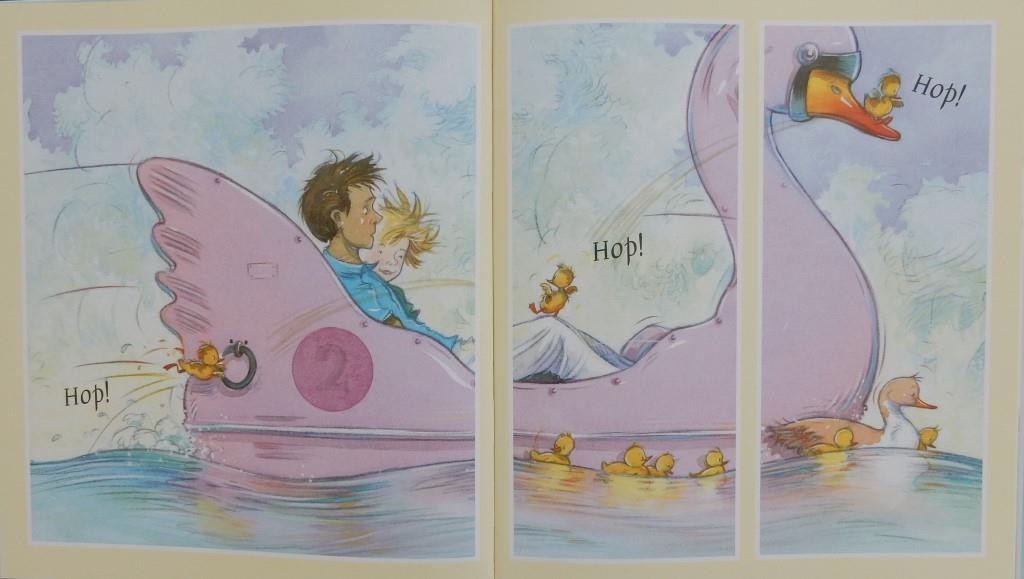
Puck , the smallest of Mamma Duck’s brood has trouble keeping up with the others as they make their way to the lily pond. By the time they reach the boating lake Puck is way, way behind so Mamma calls, “Keep up, Duck!” Puck looks around at the boats and being an astute little thing, comes up with a solution that sees him hopping and plopping to rejoin the rest of his family.

However he soon falls behind again and again he responds to the titular “Keep up, Duck1” from Mamma by hop, hopping onto a skateboard, then a child’s seat on an adult’s cycle and plopping back with his siblings. But then barking dogs cause another distraction
so Puck hop hitches a ride from one dog then another until with a final plop! he reaches the lily pond at last. And guess what: despite being smaller than all his siblings, diminutive duckling Puck has become the speediest.

Told using a repeat pattern text with a wealth of onomatopoeia and splendidly expressive watercolour and pen scenes of the adorable ducklings and their journey, this problem-solving tale is a delight to read aloud to young children. I suspect it will become a storytime favourite with foundation stage listeners. It would also be a great book for early readers to try for themselves.
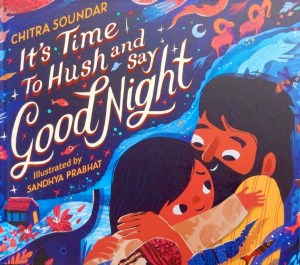
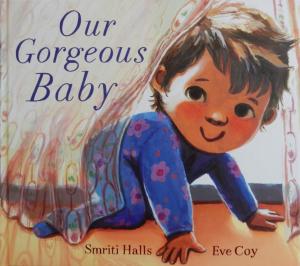
It’s Time to Hush and say Goodnight / Our Gorgeous Baby

Both picture books are Walker Books publications: thank you to the publishers for sending them for review.


Inspired by old Indian lullabies, Chitra’s rhyming narrative and Sandhya’s nocturnal scenes that begin in a small child’s bedroom and then transport both the toddler and readers through lush dreamscapes – whistling caves, watery worlds, past weird and wonderful monsters, across the starry sky and more,

– as the parent’s words conjure wondrous images into a fabulous quilt of dreams. All the while as the illustrations show, the father is coping with a gamut of infant emotions before peace descends and all is quiet, the child sound asleep in bed in his father’s arms.

With its oft repeated refrain, ‘ Count the stars that twinkle bright. / It’s time to hush and say good night.’ this is a smashing book to share with a little one just before bedtime; it’s infused with love and the magical images of possibilities inspired by the interplay of the verbal and visual.

L is for Love

‘L is for Love and L is for Lemons.’ So begins this wonderfully warm story wherein Mama, Baba and three young children set out from their village very early one morning with baskets of lemons bound for the market in Lagos city where they hope to sell all their fruit. It’s a very long way and with limited light, one of the children trips over a large log lying across the path, hurts a leg and starts limping.

As luck would have it, along comes a lorry and the kind driver stops and picks them all up. Having driven through stormy weather the lorry emerges into daylight where most of the wild animals still seem to be sleeping.

Eventually they reach their destination, the sprawling bustling city of Lagos that is full of sounds and bursting with life. There in the market place the family lay out out their stall and set to work selling their produce.

Then comes lunch and after that it’s time to start the very long journey home. Finally, late in the evening, they arrive to find Gran and Grandpa awaiting with outstretched loving arms to hug the travellers.

Joy abounds in Angela Brooksbank’s vibrant scenes that amplify Atinuke’s cleverly constructed alliterative sentences each of which (except one) starts ‘L is for …’ and take both the family and readers on a journey through the panoramic West African landscape. Rich in sensory experiences, this is a wonderful opportunity for young children, be they at home or in the classroom, to discover something about a culture which to the majority will be new.

L most definitely is for love where this reviewer is concerned.

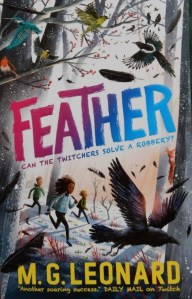
Feather

This is the fourth and final book in what has been an absolutely brilliant series, a series that celebrates friendship, bird watching and the natural world. Herein the Twitchers find themselves
on the trail of a gang of ruthless rare artefact thieves as well as protecting somebody who may have been involved in the crime.

The story begins when Ava is on an end of term class visit to the Swan natural history museum. An alarm sounds and hearing a rustling, she delays leaving and by chance is present when, what turns out to be a daring and well-executed robbery of rare, vintage bird ‘skins’ takes place. Who would want such things – a fashion designer perhaps?

Once outside the museum she encounters an unusual girl with a pet raven waiting at the bus stop opposite. Does she know anything, Ava wonders. With the school trip suddenly curtailed, and a possible clue in her bag, rather than going back home early, she messages her friends and she decides to head off to Briddvale and seek the help of the other Twitchers. Needless to say, the Twitchers are immediately onto this, especially as it involves rare avian specimens of historical importance.

Ava takes the lead in this adventure and some of her actions are exceedingly risky, especially as she is soon as anxious to help Rae (the bus stop girl), who is clearly in need, as she is to get to the bottom of the feather heist, though the two strands are intertwined.

M. G. Leonard includes an amazing amount of detail about bird species and the history of scientists such as Wallace and Darwin; and she clearly respects her audience showing rather than telling lots of the story. Inspired by a true crime, this tension-filled mystery is a superb conclusion to the seasonal quartet and perfect for deep thinking nature-loving readers.

Green: The Story of Plant Life on Our Planet

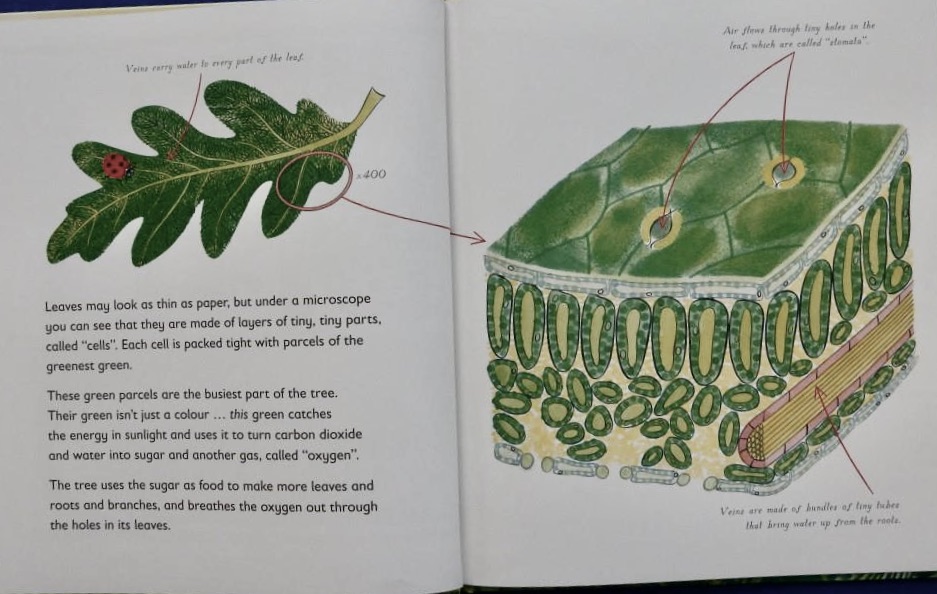
Starting with a single tree, team Nicola and Emily take readers on a journey through the natural world focusing on the vital importance of plant life. In so doing such topics as the process of photosyntheses

and the opposite process, respiration, are elucidated in the author’s carefully considered prose, She takes us right back to 4.5 billion years ago when earth’s air was toxic, moving forward a billion years when the very first plant microbes began to release oxygen into the air and more diverse life forms became possible. We learn how over millions of years the remains of forests were turned into the fossil fuels coal, gas and oil within which were enormous stores of carbon dioxide and energy from sunlight, this energy being used by humans for their various needs It’s terrible to realise that in so doing we have caused the formation of a thick blanket of CO₂ around the Earth thus stopping heat from escaping, the consequence being global warming.

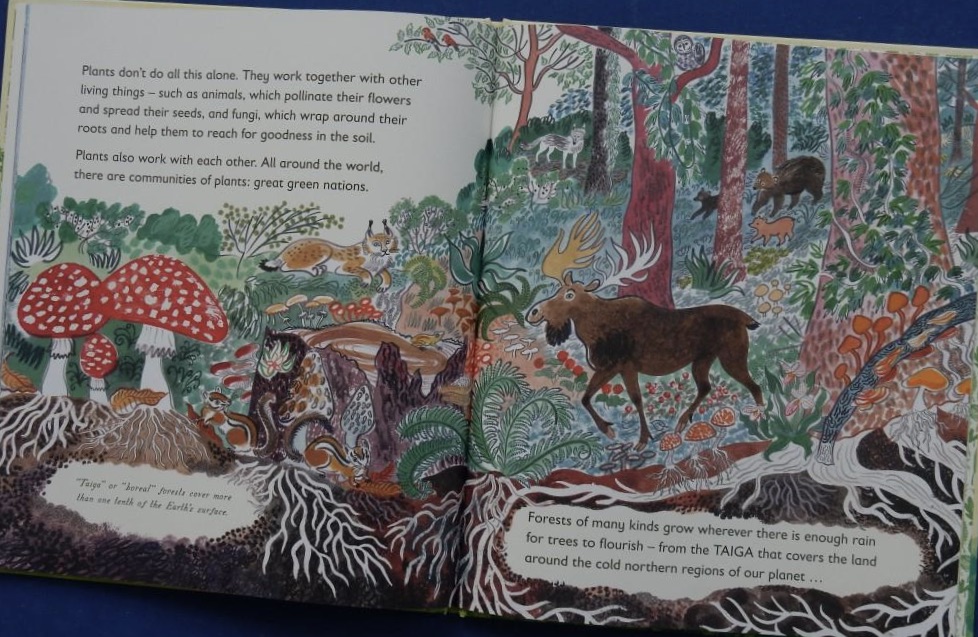
All is not lost though for plants continue to do their work, giving shade, releasing water to create rain as well as using their ‘greenness to trap energy from sunlight and locking CO₂ in their leaves, branches and roots. Plants however need to work with other living things such as animals and fungi to do this, as well as working with each other in communities that Nicola calls ‘great green nations’

This is why it is vital everybody, the world over, stops destroying forests and polluting the oceans and focuses on protecting all things green.

Once again Nicola’s passion, knowledge and understanding shine through her carefully chosen words: the text in combination with Emily’s captivating, detailed scenes have created a book which gives us all hope that it’s not too late for our precious planet.

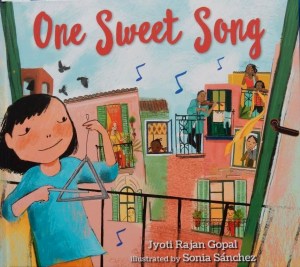
One Sweet Song

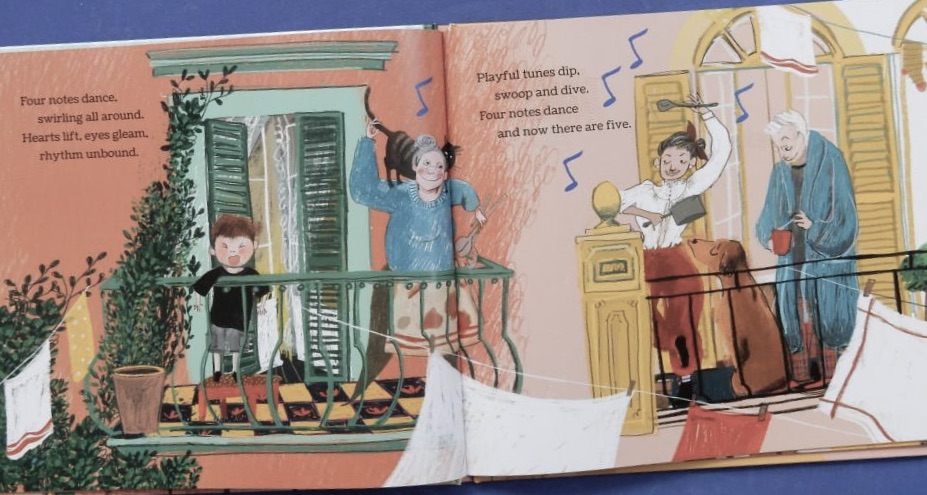
Across the city, its diverse residents stay within the confines of their homes. On a balcony a woman plays a note on her flute – ‘One note trills … / floating in the air.’ It’s heard by a child nearby looking through her window who picks up her triangle, steps onto the balcony and ‘rings a chime,/ soft and true./ One note trills, and/ now there are two.’ This prompts another neighbour to play his violin and then other people and their instruments including a saucepan and spoon,

a cello, a ghatam, a morsing, and bottles join as the music rises until the rhyming text reaches ten, voices young and not so young, sing out and the entire area feels connected and alive with a harmonious sound. “One sweet song that fills the space, / one sweet song, / a warm embrace.’ Then slowly, one at a time the instruments come to rest once more,

leaving everyone at peace with themselves and the world.

Powerful rhythms and lilting rhyme combined with spirited illustrations that have coloured swirls and musical notes weaving in and out of the homes, make a once separated community united by joy.
Author Jyoti and illustrator Sonia have together created a wonderful celebration of the healing power of music and its capacity to bring people together even in difficult times such as the recent pandemic.

The Brilliant Brain

I wonder how many young children realise just how crucial a role the brain plays in controlling what happens in the human body. When I asked nearly four year old Faith where her brain was, her reply “In my tummy” (as her mum is a GP, I think maybe she was joking) it made me realise we had better start sharing Dr Roopa’s guided tour around the brain and its amazing workings, aimed at young children.

Having confirmed that the brain’s location is in her head, how big it is and its role as a kind of ‘control room’, we explored the rest of the book. Herein it’s explained that our brains are responsible for our thoughts, feelings and memories,

as well as for telling our legs to walk and our lungs to breathe. It’s good to see the author doesn’t shy away from using such anatomical terms as cerebrum and cerebellum

as well as naming the various lobes, the spinal cord and nerves, each of which is defined.briefly. I like too, the way she explores in gently humorous, age appropriate language, the interconnectedness of the body’s systems. Her enthusiasm for her subject is evident and in a final author’s note, Dr Roopa shares some tips on how to look after the brain. Throughout, Viola Wang’s bright illustrations with just the right degree of detail, elucidate the author’s text, making this an ideal book to read with foundation stage children both at home and in an educational setting.

I look forward to further titles in Dr Roopa’s Body Books series.

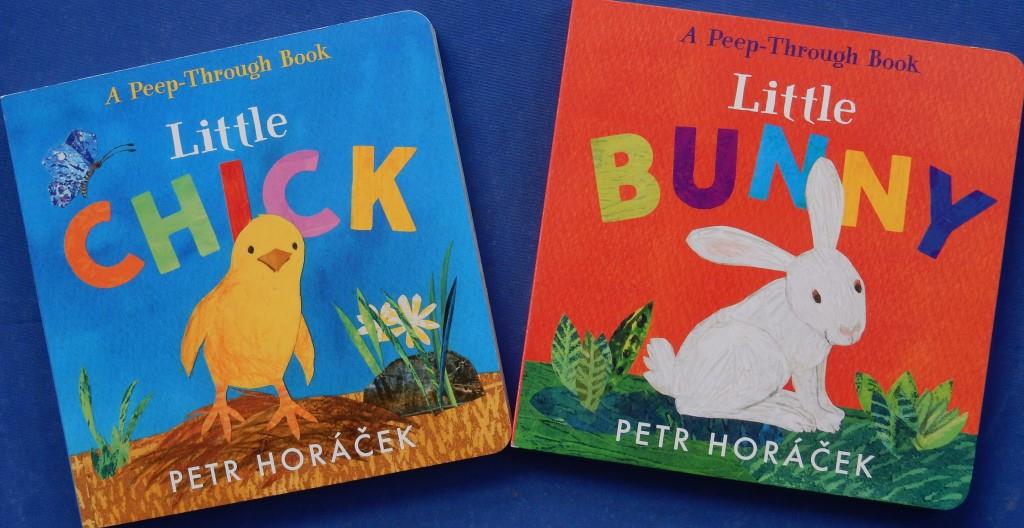
Little Chick / Little Bunny / One Little Tadpole

Vibrant artwork with cutaway pages and cleverly placed die-cuts, together with simple question and answer texts, will captivate little humans as they follow the titular animals through their simple stories.
The setting for Little Chick is the farm where she encounters in turn, a pig, a smily cat, a large cow and a tiny mouse, before suddenly emerging onto unfamiliar ground where a friendly horse assists the feathered infant in finding its mother, a mother that is also looking for her little one.


Little Bunny’s adventure takes place in the woods. There are lots of birds to spot as well as a friendly brown bear, but in the bushes lurks a red fox that scares the little leporine. Happily though a kindly owl leads the way to the safety of Mummy rabbit’s outstretched paws.

With his trademark glowing colours, Petr Horáček’s interactive ‘peep-through’ books will be enjoyed by adult sharers and the very youngest listeners. No child is too young for books such as these.

For an older audience is

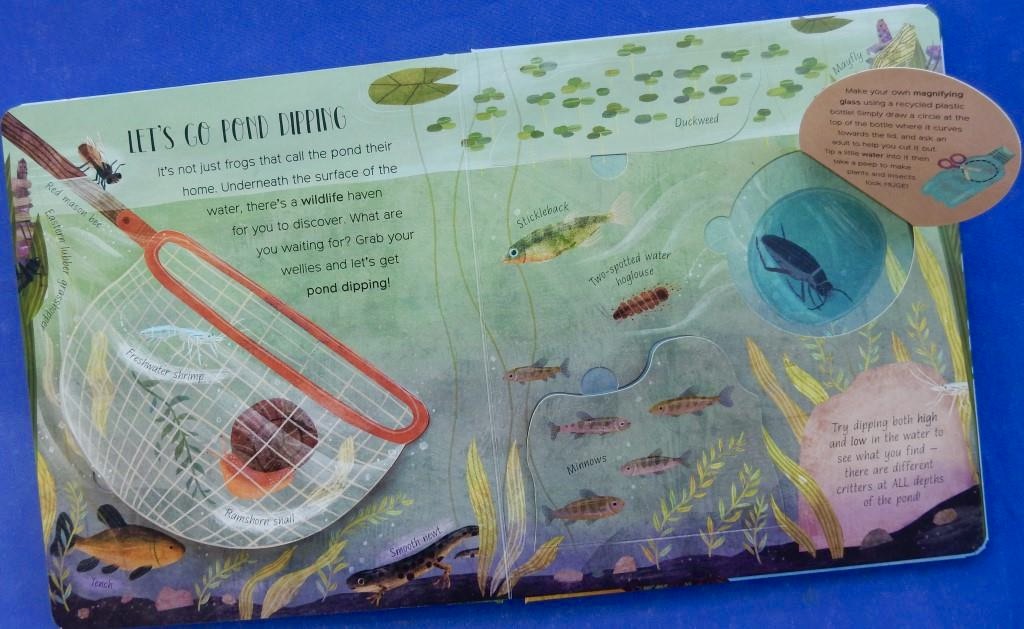
With more than thirty flaps there is plenty of exploring to be done between the covers of this large board book. Besides the life cycle of the frog there is information about the birds, insects, fish, mammals and the flora likely to be encountered in or around a pond. However, not all the creatures – for instance the two frog species illustrated on ‘The Circle of Life’ spread’ – are ones that UK readers would come across. Nonetheless this is a book that encourages children to use all their senses when exploring in the real world and to this end includes a spread on pond dipping.

It’s also good to see, on the final spread, the suggestion that readers create a miniature pond of their own as a way of helping nature to thrive.

Some of the illustrations give only an impression of the animal rather than an accurate means of identification so, having sparked a child’s interest, one would need to refer to a field guide rather than rely on this book’s visuals.

Clever Crow

Who would have thought that crows would have the power to captivate but that is just what they do in this unusual non fiction nature book.

In a text that flows along, encompassing everything from feathers to flight techniques and feeding, and more besides, readers will discover that despite not having a melodic song or flashy plumage crows are very clever creatures.

For example these problem solving, tool users are able to extract delicious bugs from between cracks and crevices in the ground using their feet and tough beaks. Moreover, should they have spare food, they dig holes and are able to remember some while later, where it’s hidden.

These birds are playful too and in a manner similar to humans, use play to learn new things. You never know, perhaps you might look out one snowy day and see one or two sliding down a snowy roof.

Unassuming they might be, but these amazing avians can, just like humans, greet one another, tell each other where to find food and warn their fellow crows of danger.

Olivia Lomenech Gill’s mixed media illustrations are realistic yet have something of a magical quality about them and in combination with the words, offer young readers a wonderful and wondrous introduction to crows.

Seven Days / Dread Wood: Fright Bite

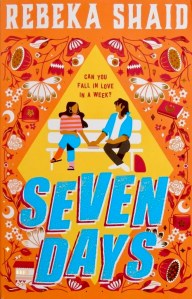
The author’s debut young adult novel about families and grief is set in Bristol and takes place over seven days ((apart from an epilogue one year on). The book is told from the viewpoints of Noori and Aamir, both of whom have recently lost those closest to them. Noori’s older cousin and best friend died while in Lahore and Aamir’s mother has died eight months ago and he has fallen out with his father. In a few days despite her own father’s disapproval, Noori plans to fly off to spend some time in Pakistan, staying with her aunt in the hope of getting some kind of closure .The seemingly more troubled Aamir has just been beaten up and robbed while on a train from Cardiff to see his older brother Bilal.

Their first encounter is on a park bench and Noori mistakes the boy for a university student as he’s holding a book of Rumi’s poems. The following day, she heads to the park and there lying on the bench is Aamir. Is he homeless after all, she wonders. They start talking and Noori offers him chai. He accepts her offer and rather than taking him to a cafe, Noori takes him to her home. She also calls her disapproving friend and neighbour, Mai, to join them and tells her mother that Aamir is a cousin of Mai’s.

Strangely, Noori feels drawn to him and their meetings continue. Aamir, meanwhile keeps going to his brother’s home but nobody ever answers the door so he is forced to sleep on the bench. Gradually the two reveal things to one another that they won’t share with anybody else.

But then the day before Noori is due to fly off to Lahore, an ailing Aamir has a fall and is rushed to hospital and into intensive care and may well not survive.

I won’t reveal how the book ends but I was swept up in the story of these two teenagers – a story of first love – as I’m sure many readers of around Noori’s age will be. I look forward to more from Rebeka Shaid; this is an intensely moving debut novel.

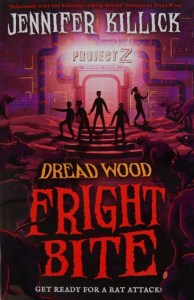
When Club Loser members learn of the plan Colette’s mum and Mr C have set in motion for the gang to celebrate Colette’s thirteenth birthday, which includes a kitty for ‘noms and spends’ it seems that they’re about to experience the best night ever. Neon Perch, here they come. Nothing can possibly go wrong, can it? After all the dastardly Latchitts are in prison so it’s safe to say the friends can enjoy Battle Karts, pizzas at Uccellino’s and, highlight of the excursion, the Project Z escape room experience.

Highlight it definitely isn’t however. With such things as scritchy scratchy, slime dripping creatures on the prowl, and the reappearance of their arch enemies, it would appear that the escape room knows the greatest fear of each player. Assuredly this is one birthday Colette won’t forget in a hurry.

At once scary and funny, older readers will find themselves gripped by Jennifer Killick’s fast-paced, twisting narrative, ticking clock, gigantic poisonous rats and all.

Bunny vs Monkey: Bunny Bonanza / Groosham Grange: the graphic novel

This image has an empty alt attribute; its file name is dscn9935-1.jpg

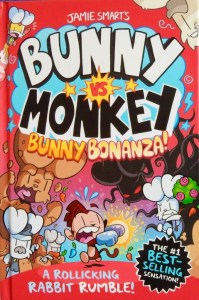
If you’ve yet to make the acquaintance of Bunny et al. these wacky short stories (‘strips’) of the woodland dwelling creatures including the megolomaniac Monkey first appeared in The Phoenix comic. David Fickling Books published several compilation books of these and then bind-ups of which this is the latest.


As the new year begins down in the woods, all is well except that Bunny is inexplicably missing. We join the gang on their search for their floppy-eared pal. As they hunt high and low they encounter several imposters: there’s Robot Bunny, Neanderbunny, Old Bunny aka Algernon Withersnap the Third, Bunny Law, Shadow Bunny and even weirder, Not Bunny: Maybe Bunny is merely suffering from acute amnesia or are these other leporine forms due to some other phenomenon. Most important, having gone right through the year, will the real Bunny return to take possession of his residence?


Anarchic, brim full of high jinks (and some decidedly low ones), frenetic and with a plethora of giggle-inducing surreal happenings, this bumper volume left this reviewer’s head spinning.

This image has an empty alt attribute; its file name is dscn9934-1.jpg

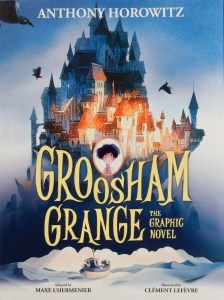
One of Horowitz’s classics is transformed into a hilarious graphic novel version.
We follow David Eliot from the time his parents, despairing over the fact that their son has been expelled from his school Beton College, decide to send him to Groosham Grange, an establishment in a gothic castle on Skull Island with a reputation for sorting out rebellious pupils.


Not long after his arrival David overhears a conversation taking place in the headmaster’s study to the effect that something very nasty is going to happen to him and possibly the new friends Jill and Jeffery whom he met on the train..


They discover that every night the other pupils go to the library and then disappear. The three really must make an escape plan though it may not be possible for anyone to escape Groosham Grange.


Full of thrills and spooky chills, this is weird and strangely gripping.

Stitch / Jane Eyre

This image has an empty alt attribute; its file name is dscn9913-1.jpg

Stitch, a boy made from bits and pieces stitched together, and his friend, Henry Oaf, live in a castle with the Professor who brought them into being from dead things, so they discover from the Professor’s notes – ‘a mishmash of parts of other people’ is what Henry later reads about himself.


Unexpectedly the Professor’s wicked nephew, Giles Hardacre, arrives and takes over his laboratory. Not long after, Alice, the nephew’s ‘adopted’ assistant tells Stitch that his uncle has gone for ever; he’s died. It soon becomes evident that the professor’s nephew wants to use Henry as the subject for his next experiment: clearly to him lives such as that of Stitch and Henry, who are ‘different’ are worth far less that those of ‘normal’ people. Alice however disapproves of her master’s ideas.

Henry sabotages the experiment and the three of them in turn make a break for it. Inevitably, troubles lie ahead, however Stitch’s innate goodness keeps him going, intent on doing the right thing no matter what or to whom.


Finally, having always wanted to be an explorer, Stitch now has the opportunity to be one. But will he go alone?


Exploring difference, prejudice, acceptance and what it means to be human, this is such a powerful, highly accessible fable with gothic chills running through it; especially moving is the friendship between Stitch and Henry. It would make a terrific, thought-provoking read aloud for older KS2 classes as well as a gripping book for individuals whether or not they pick up any echoes of Frankenstein.

This image has an empty alt attribute; its file name is dscn9928-1.jpg

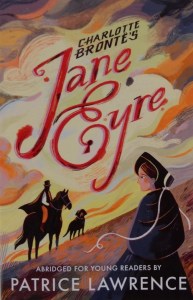
Expertly abridged, yet staying true to Charlotte Bronte’s classic novel, this skilfully written first person narrative, is a splendid introduction to the original. Patrice Lawrence’s fresh prose maintains Bronte’s powerful atmosphere and key themes while considerably shortening the length of her book making it a highly accessible way of introducing older primary readers (or older students for whom English is an additional language) to ten year old Jane’s journey from that ‘haunted’ room in Gateshead Hall to finally becoming a wife.

Taxi, Go! / Oops! Rabbit

These are both new titles from Walker Books: thank you to the publishers for sending them for review.

Courtesy of Patricia Toot’s rhyming text and Maria Karipidou’s vibrant illustrations, we join a smiley red taxi for a busy working day in town, driving through all kinds of weather, as it stops to pick up fare-paying passengers – in turn a business woman, shoppers and children going to play football, a couple going to a dance,

theatre visitors and finally our busy cab heads for the airport to collect a family returning from their travels abroad. With them safely home, it’s back to the depot for a well-deserved night’s rest.

There is so much to see in the child-friendly scenes, you will likely need to share this several times to allow your young audience to enjoy the action and linger over all the details including the town’s diverse residents.

Parents/carers might choose to read this at bedtime to encourage their little one(s) to join Taxi as it dims the light and slips off into the land of slumbers.

This is another striking succession of playful misadventures in the life of Jo Ham’s silhouette leporine character. Herein, Rabbit wields a paintbrush creating a mural until ‘Oops!’ the chair Rabbit is standing on topples and it’s then ‘Rabbit off’ and paint splashing all around. A large wave destroys the sandcastle in the second misadventure. Then comes bath-time with further mishaps due to an excess of bubblebath and finally, tempted by the sight of a cake atop the table, Rabbit finds a creative use for an umbrella.
Small humans will enjoy following the four sequences and joining in with the repeated, ‘Rabbit on … Oops! … Rabbit off’ text.

Ice Journey of the Polar Bear

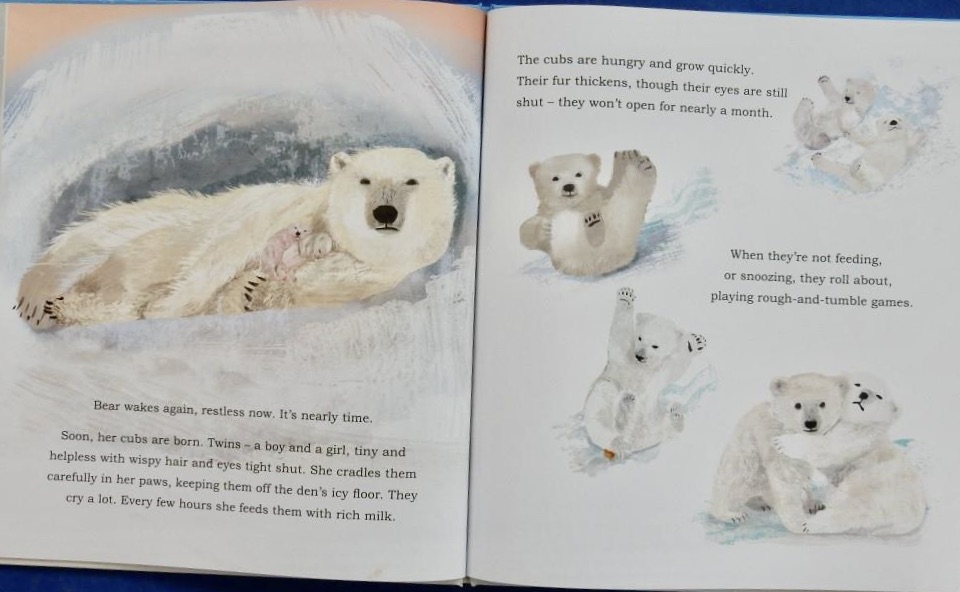
This addition to the excellent Protecting the Planet series is written by conservation biologist, Martin Jenkins. In this book, the author has deftly woven into his narrative the crucial importance of conservation: like those written by Nicola Davies, as well as a story, this is a rallying cry to youngsters to act as stewards for our precious plant and its wildlife now and for future generations.

Here we follow an adult polar bear as she undertakes an arduous and challenging journey

through a stunningly illustrated Arctic landscape during which she gives birth to twin cubs, one male, one female.

During her travels it becomes alarmingly evident to us, the readers, how climate change has negatively impacted, not only upon the polar bears but upon the Arctic environment. This means that the future for these cubs, which we hope will survive to become awesome animals like their mother, is an uncertain one.

As the author says in a note at the end of the story, ‘as the climate warms the bears are now spending more time on land than before. So far they seem to be coping and polar bear numbers are keeping quite steady, but as things get worse the population will probably start to decrease.’ This underscores the vital importance of our role as individuals and communities.

An important book to add to KS1/2 classroom collections and family bookshelves.

Casander Darkbloom and the Threads of Power

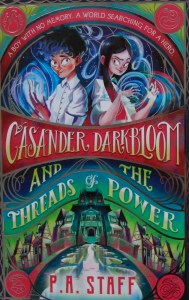
P.A. Staff certainly had me enmeshed in her authorial threads of power from the book’s opening chapters.
When first we meet him, Casander wakes every morning outside Crane’s Curiosities shop in London. He has no memory and like the author, experiences random surges of uncontrollable energy in his limbs (a movement condition known as Paroxysmal Kinesigenic Choreoathetosis.) Nobody takes much notice of him until one rainy morning he’s invited into the shop where unaccountably, he brings a stuffed raven to life.

Almost the next thing he knows, Casander is running for his life along with the girl from the shop; her name is Warrior. She leads Casander into the Balance Lands – a world that mirrors the normal one – and to Wayward School, the place that Warrior calls home. Once safely inside away from the Heretics, she takes him to one, Dr Bane, and informs him that Cas is “The One we’ve been looking for.” In short he’s the Foretold, who it’s prophesised will defeat the malevolent Master of All.

Under the school’s protection, where for the first time, Cas feels a sense of belonging, he must learn to master his magical abilities. However it’s not long before he discovers that not all may be quite as it seems. Indeed the boy will need to take control of his destiny if he’s to find the strength to fight and overcome the powers of evil. In so doing he has an ally in Mrs Crane, the librarian and makes some wonderful friends in the Abnormies. As well as Warrior: there’s Paws who uses a wheelchair, Fenix, and a few others who accept him for who he is and are willing to help him learn about this new world

This is an enormously exciting, wonderfully imagined fantasy that celebrates difference, be that a physical disability, neurodivergence or whatever, showing how what makes each person unique is their greatest strength. With its brilliant final twist, readers will be left eagerly awaiting what comes next for Cas et al.

Unseen Jungle

This book is all about microbes, microbes of all kinds. Microbes as defined herein are ‘any living creature that’s too small to see’, many of which live either in or on our bodies, in our homes, on pets and in the food we eat, in our toothbrushes even; pretty much anywhere you can think of. Some however, you would probably not want to think of at all; but rest assured, the majority are beneficial. No matter, the entomologist author introduces them in such a chatty, humorous manner that you are most likely to become fascinated before you finish House, the first of four parts into which the book is divided.

For example, most of us find houseflies annoying and so might be particularly interested in learning of a fungus (Entomorphthora muscae, if you want to impress your friends) that could land on an unsuspecting fly, makes a tube through the fly’s body, grows roots (hyphae) and starts digesting its organs, eventually reaching its brain and from there is able to control the fly’s behaviour, eventually causing its death. The cycle though begins all over again thanks to a multitude of spores that spill out of the zombified fly’s body.

Also included in this section is an interview with a public health vet that will allay the fears of anyone pregnant that has a dog: apparently one microbe found in dogs and other pets is linked to lower rates of allergies in children. Interviews with other scientists with different specialities are scattered throughout the book.


Also scattered through the book are Rob Wilson’s small, comical illustrations that further add to the joys found between its covers.

Did you know that without termites and their power farts we would not have rainforests? This is just one of the mind-blowing things I discovered as I read part one.


I will leave you to discover the delights of the book’s other parts – Yard, Food and You. With its extensive bibliography and even a drawing lesson (a comic style E. coli), it’s definitely worth adding to KS2 collections and family bookshelves.

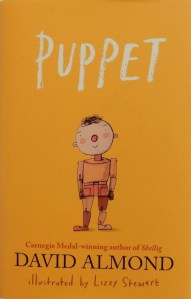
The Puppets of Spelhorst

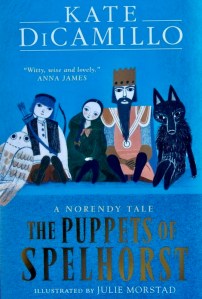
This story has three acts. It begins with a lonely old sea captain, Spelhorst by name. One day when walking in the city, he comes upon a toy shop. Hanging on display in the window are five puppets: there’s a king, a wolf, a girl, a boy and an owl. Immediately the man is drawn to the girl puppet for it reminds him very much of someone he loved and lost long ago. The shopkeeper however, refuses to sell him just one puppet: they’re in a story and must be bought together he insists and so Spelhorst takes them all. That night, thinking sadly of his lost love, he writes for a long time, folds the letter and tosses it in the trunk with the puppets. He then dies in his sleep.

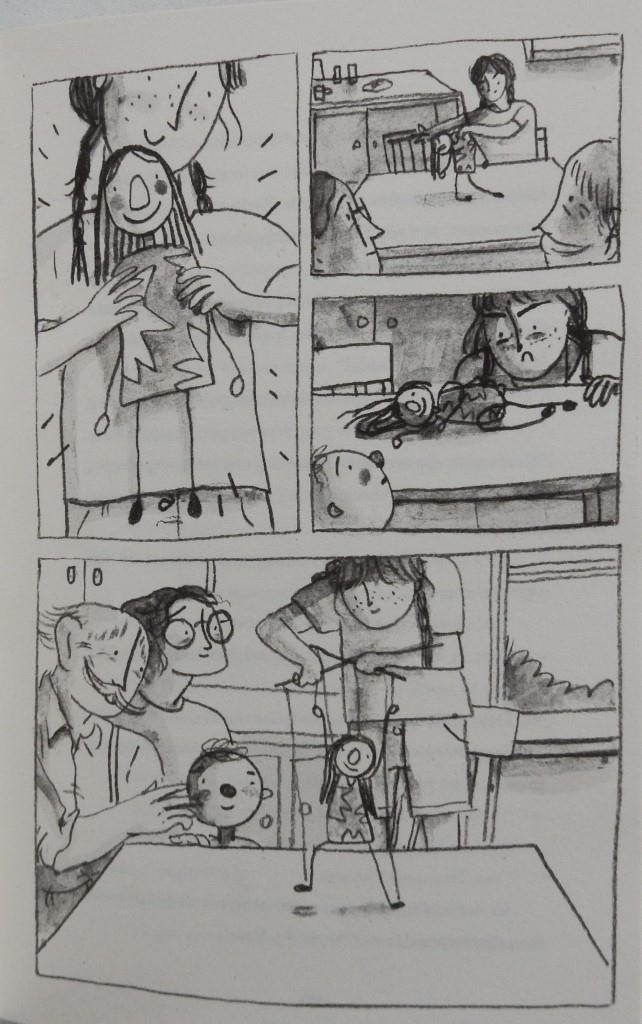
The trunk containing the puppets is sold to a musical rag and bone man, who sells it to a young man and it eventually ends up in the home of his two nieces, Emma and Martha. Emma, the elder of the sisters ranges them on the mantlepiece and later starts writing a play about them. Meanwhile significant misadventures happen to each of the puppets: two of the wolf’s teeth are wrenched out by Martha; later the maid flings the puppet out the window and she’s taken by a fox running to its den in the woods (running through the woods fulfils her greatest wish).The boy that longs to ‘do a great deed’ is seized by a hawk and dropped in the branches of a tree …

Tension mounts as we join the puppets in wondering if they will ever be together again. Eventually they are reunited and Emma’s play is performed. “We did something wondrous, important,” says the boy afterwards.

Wondrous and wonderful too, is this hauntingly illustrated novella of desires, belonging and identity that demonstrates the power of stories and their role in living one’s life and fulfilling one’s dreams.
The author’s ending elegantly puts all the pieces together, and I found myself reaching for tissues.

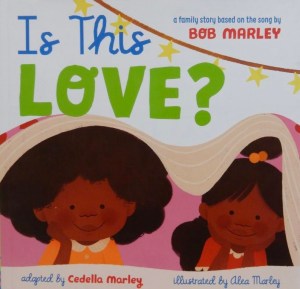
We Could Fly / Is This Love?

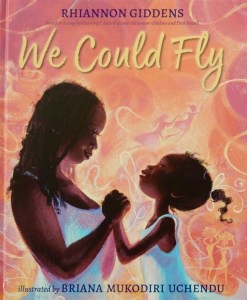
As a mother and daughter sit together outside on the edge of a wood, the child looks up and points out a sparrow that she sees. Why can’t I fly like the sparrow, she wants to know. Her mother then speaks of Granny Liza and how she used to fly every night, searching for the promised land.

The trembling that the child feels through her arms, her mother tells her is like a connection to her grandmother. The two continue talking until the child says that she feels it’s time for them both to
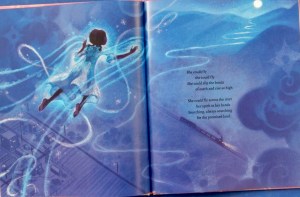
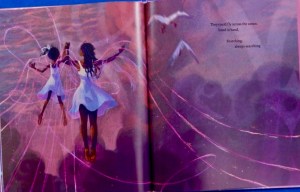
join the journey and together they take flight, searching for the promised land far away across the ocean.

After the lyrical verses and stunningly beautiful skyscapes and landscapes, we read the author’s note wherein she reveals her inspiration came from the final story in the classic folktale collection, The People Could Fly, retold by Virginia Lee Hamilton, illustrated by Leo and Diane Dillon.

A mesmerising book, wonderfully warm that deserves to be shared widely.

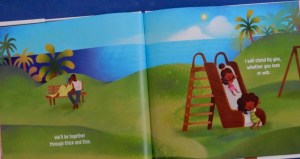
This new title in the series based on the lyrics of iconic reggae musician, Bob Marley, is again adapted by his eldest daughter, Cedilla. Here, she uses the repeat refrain of his song “Is This Love” to tell a story of sibling love.

We meet the siblings when the younger one is not long born and follow their loving relationship as they grow and engage in all kinds of shared activities. Big sister acts as a supportive teacher and playmate. Together they enjoy block building, bike riding, building a blanket den and visiting the playground to use the equipment.

Alea Marley’s bold, richly hued scenes have a tropical setting, with both daytime and evening activities being shown, some of which include the entire family, whereas in others we see just the two sisters.

The unique relationship shared by siblings is the key theme, but abiding warm, loving family bonds are also a vital element of this book. A book that can serve as an introduction to Marley’s music for young children, while also making adult sharers feel uplifted and nostalgic. It would make a smashing book to give a family as a welcome to a new arrival.

Always Never Always

All these are sage recommendations; I particularly like, ‘Never follow all the rules, / for some are surely made by fools.’

Through both words and pictures it comes through loud and clear that during life’s journey, like the protagonist, we should look for the positives and possibilities in things,

be mindful of the needs of others, be open to as yet undiscovered wonders, put aside negativity and remain open to joy.

An inspiring celebration of what the world has to offer, with Leila Rudge’s gorgeously coloured pencil and watercolour illustrations adding the potential for a wealth of stories large and small emerging along the way as you share the rhythmic text with young children, be that at home or in the classroom.

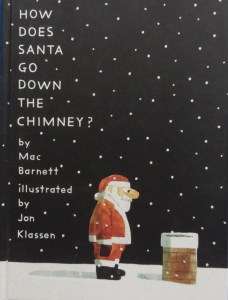
How Does Santa Go Down the Chimney?

If you’ve ever pondered upon the mystery of how Santa manages to go down the chimney, then this might well be the book for you. Countless young children have been spun that yarn over the years and now, frequent collaborators Mac Barnett using an unidentified narrator and artist Jon Klassen, put forward a series of hypotheses concerning his chimney descent, as well as looking at the possible means of entry should the house not have a chimney at all.

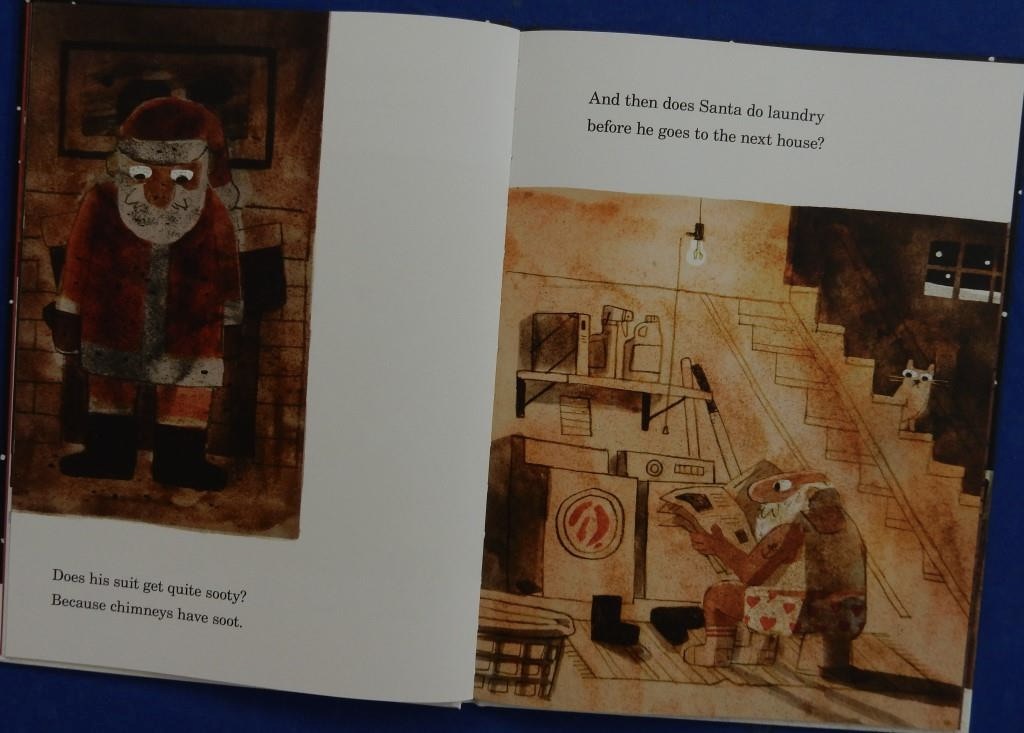
Klassen starts with Santa atop a roof, making adjustments: he pulls his belt tight in at the waist while a reindeer holds his jacket. Turn over and we see a mouse-size shrunken figure contemplating entering the chimney’s large opening. However, he might change shape in a different way. becoming super-stretchy so as to enable him to step in one leg after the other.

But supposing he should get stuck? Then what? A hefty kick from one of the reindeer maybe.. And what about all the soot that’s likely to get on his suit? A quick bit of laundry before moving on to his next house, perhaps.

For houses that lack chimneys there’s that well guarded (not) secret regarding the key under the flower pot; alternatively he can transform his shape so he can slide beneath the door or pass through the pipes and out of the tap into the sink. Having gained access things get even sillier. Does he possess the ability to get along with every household dog he meets: that would require a stash of doggy treats secreted about himself, as well as becoming the recipient of a succession of slobbery canine kisses. And what about night vision goggles if the lights are off?

Nothing is certain except that, as we read, ‘Santa goes up the chimney the same way he comes down.’ No conjectures about that though, merely the final assertion, “But I’m so glad he can.’

A splendidly silly seasonal comedy from the partnership that are best known for their droll delights delivered through dead pan words and idiosyncratic illustrations.

Dasher Can’t Wait for Christmas / ’Tis The Season

Dasher (the reindeer we met previously in the book named after her) is so impatient she just cannot wait for the big night when she’ll help pull Santa’s sleigh. With just one sleep remaining before Christmas Eve, she’s wide awake with excitement and taking a run, she leaps skyward to investigate the music she’s heard.

Enjoying herself thoroughly, as the music dies away she spies bright lights on the horizon. In her joy, she fails to pay heed to the falling snow and is unable to find the North Star to guide her, so again she takes to the sky, hoping to find something familiar. At last she sees something bright way ahead.

Flying towards the light, she discovers a wonderful Christmas tree in a garden and decides to land to take a rest. There she encounters a small girl. Having admitted to being lost and hungry, she receives, thanks to the child Charlie’s kindness, both food and a means of finding the way back home. This Dasher does, just in time to reach the North Pole where a worried Mama and Santa await.

Then off they go, the reindeer team pulling Santa along on his delivery round, during which Dasher ensures that they stop to leave a special thank you to Charlie.

A gentle story with some tense moments and a happy ending, dramatically illustrated by the author.

Constructed of thick card, this fold out book will work well with children from around four, right through KS1. Of the twenty four shortish poems included some have a distinct Christmas feel, others are wintry and the whole thing opens into a gorgeous advent calendar zigzag frieze that can be brought out yearly on the first of December.

There are flaps to open on each of Richard Jones’ beautifully illustrated snowy spreads, the first five of which have four poems each, the next has three and the final page has Philip Waddell’s clever What Christmas Is For, the last two lines of which are the hugely pertinent, ‘Christmas is a time for peace – / Forgiving and forgetting.’

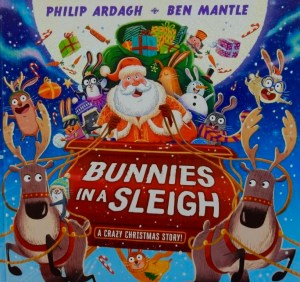
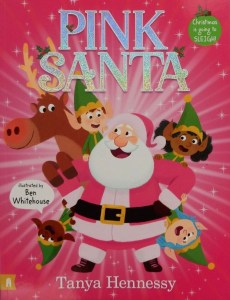
Bunnies In A Sleigh / Pink Santa

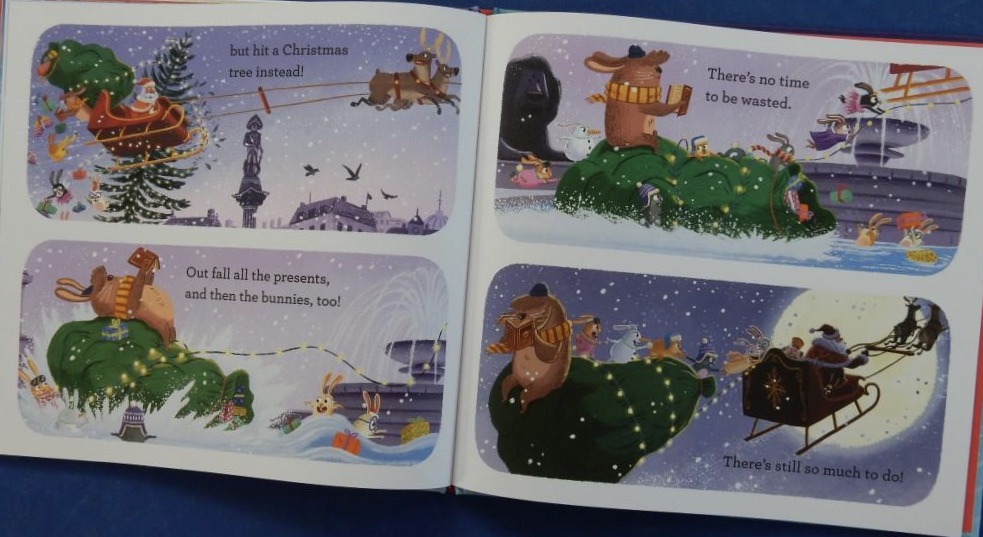
‘A crazy Christmas story’ announces the cover and , this rhyming tale of disaster averted thanks to the Sunnytown bunny brigade is definitely that. The story begins in Santa’s workshop where the elves have over-indulged on candy canes and consequently are unfit for further duties. It’s Christmas Eve so the Chief Elf is in a real panic for it seems Santa will be sans his little helpers.
Happily though, who should be heading to the rescue on a sleigh pulled by dogs but those bunnies. Just as Santa’s reindeer are preparing to depart on the delivery round, they appear with a leap and a bound right into Santa’s sleigh. Full of the Christmas spirit they surely are.

With a safe landing duly made on a rooftop, the deliveries begin in earnest and a considerable amount of soot is scattered by exuberant leporine leaps and bounds. Then it’s back aboard the sleigh but not for long thanks to a mistimed present sort by Santa that results in a scattering of the bunnies.

Nonetheless, never say never: those bunnies are there to save another sticky situation and the work continues apace as the end of the night draws ever nearer.
How will it all end? Let’s say, Santa is happy with the way things work out. And the bunnies? It’s a case of munching and crunching with the reindeers.

Ben Mantle’s portrayal of the bunnies is full of the Christmas spirit; readers will love perusing each spread and discovering all the small dramas that are unfolding alongside the main storyline.
Anybody for a carrot?

Tanya Hennessy has used as her starting point the classic Clement Clarke Moore poem that begins, ’Twas the night before Christmas’ and with rhyming stanzas, created something inclusive and alternative.
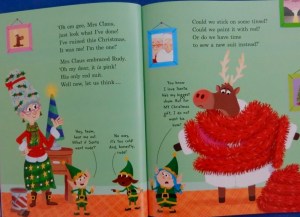
It begins in Santa’s workshop where the work is complete and Santa is ready for the off. Not quite though, for his suit, which is decidedly whiffy, is badly in need of a wash. Rudolph tosses it in the machine, along with some socks, turns the heat up high and … It turns out that the red colour wasn’t fast, for the suit comes out a vivid pink.

Rudolph turns to Mrs Claus for advice but as she and the elves are pondering the pink hue, in comes Santa. However, he’s not in the slightest bit bothered. Let’s do Christmas pink!’ he declares, adding that pink is for girls, boys, elves, toys, Rudolph, tree and of course, himself.

Having ‘pinkified’ everything, off goes Santa and his team, sprinkling pink cheer wherever they go. An exciting change from the traditional red and green hues and one from which Santa learns so he tells his pals back at the Pole after the deliveries are complete, an important lesson: “the best things in life sometimes come from mistakes.” So true. And as for the following year, who knows …

A warm-hearted tale celebrating being flexible in your thinking and being ready to embrace change.
Full of fun details, Ben Whitehouse’s vibrant illustrations match the upbeat mood of the rhythmic telling.

Molly, Olive & Dexter: The Guessing Game / Tiny Owl’s Scary Day

In the second of this delightful series featuring residents of a garden oak tree, Molly the hare, Olive the owl and fox, Dexter, the friends are playing a guessing game. Dexter thinks of something and it’s immediately guessed by Molly. Her thought is equally easily guessed by her friends and that leaves Olive to be the thinker. “I’m thinking about TWO things at the same time!” she announces.

Young listeners may well have guessed her ‘think’ at this stage but will enjoy following the fun as Molly and Dexter endeavour to work out the answer prompted by Olive’s clues. Even when she practically tells them, the others can’t get the answer right and consequently they get grumpy until at last … the penny drops. Now everyone is happy and it’s time for the three best pals to enjoy a snooze.

Gentle humour and outstanding illustrations make this a gorgeous book to share with the very young.

As dawn approaches, Mummy Owl tells Tiny Owl it’s time for sleep. She though pays no heed to this and despite the possibility of encountering scary things, off she ventures to explore what the day has to offer.

Soon other birds start to chase her; she enjoys the fun but feeling tired, she takes rest by some flowers. It’s there that the first scary thing happens, so away she flies.

The river is her next stop but as she stands on a large stone, Tiny Owl is unaware of being watched. ‘Creep Crack Click Clack’, scary moment number two. Time to take to the air again, in search now of a quiet place.

Resting on a branch along with several other birds feels safe but before long comes scary moment number three.

Accepting that her mother was right about the scariness of the day,Tiny Owl decides to head for home but when she reaches her tree, there is no Mummy Owl waiting to welcome her. Yet another scary moment but this time there is no need to worry; it’s Mummy returning. Where has she been to make her so tired? Having recovered from breathlessness, the two owls snuggle up together until the moon comes up, calling them out into the night sky.

Young children will love following Tiny Owl’s adventure with its alarming encounters, dramatically illustrated in Petr Horáček’s striking illustrations.

King Lion

Being ruler of a kingdom is a lonely task so King Lion decides a friend would relieve his loneliness. His roaring however, only serves to send any potential companions running. So he tries paw waving, smiling and cracking jokes but nobody understands his message. Then feeling lonelier than ever, he climbs right up to the very top of a clocktower – the tallest place in his kingdom – and asks once more if anyone will be his friend. Again all that happens is that his roars, jaws and claws cause terror and misunderstanding. “The King is dreadful,” say his subjects as they rush away to hide leaving their ruler growing ever wilder with sadness, which he expressed as always by roaring.

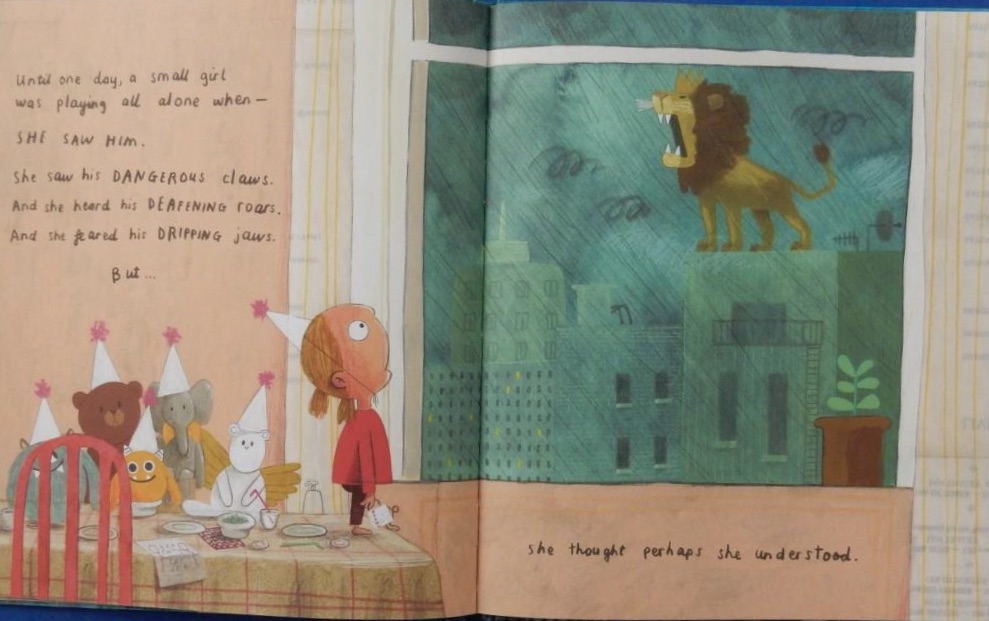
Then one day, a little girl sees the lion with his alarming characteristics. She though has a feeling that perhaps she understands the creature.

That night she comes up with a very, very brave plan. This she enacts the following morning … There’s no better way to communicate than this child’s way, which is based on experience and understanding, both of which lead to a lesson for the lion and the start of a happy friendship between the two.

Funny, joyful and dramatically illustrated.

Do You Remember?

As a mother and child lie in bed in the dark, they take turns to share fond memories. The voices are printed in different colours to enable readers to know who is speaking. “Do you remember …” the mother begins, “when we had a picnic in the field?” What we see are dreamlike watercolour scenes wherein Smith brings to life this treasured time when the child was excited about finding and sharing sweet berries when he and his parents were on a picnic.

The child then recalls the trials and tribulations of learning to ride a bike. We can almost feel the tension of the darkness caused by the loss of power relieved somewhat by Grandpa’s old oil lamp.
The boy now asks, “Do you remember . . . leaving our home behind? We packed up everything we own in our pick-up truck and drove down the motorway, farther than we’d ever been … We were lost.” “Of course I remember,” his mother replies.

A change of landscape is called to mind as the two drive through the city … to where they now are. Changed also is the number of family members for having handed his son a teddybear, the father has stayed behind.

There follow two beautiful wordless spreads and we realise that the move has only just happened for what we see next are partly unpacked belongings about which the mother and son have been reminiscing.

The boy then moves to the window asking, “Can we make this a memory, too?’ As the sun rises he savours the smells and sounds of this new city street and reassures himself that all will be well. “Yes, I will remember this,” he says returning to his mother’s side.

We know not why the father isn’t with them: that is for us to surmise.
A truly touching tale, awesomely told through the fusion of lyrical text and tender illustrations.

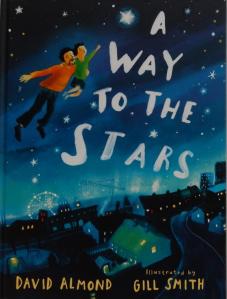
A Way to the Stars

Young Joe wants to find a way to the stars but when he tells his friends they just laugh at him. Not so his Dad though: noticing the responses from those friends, he intervenes offering help.

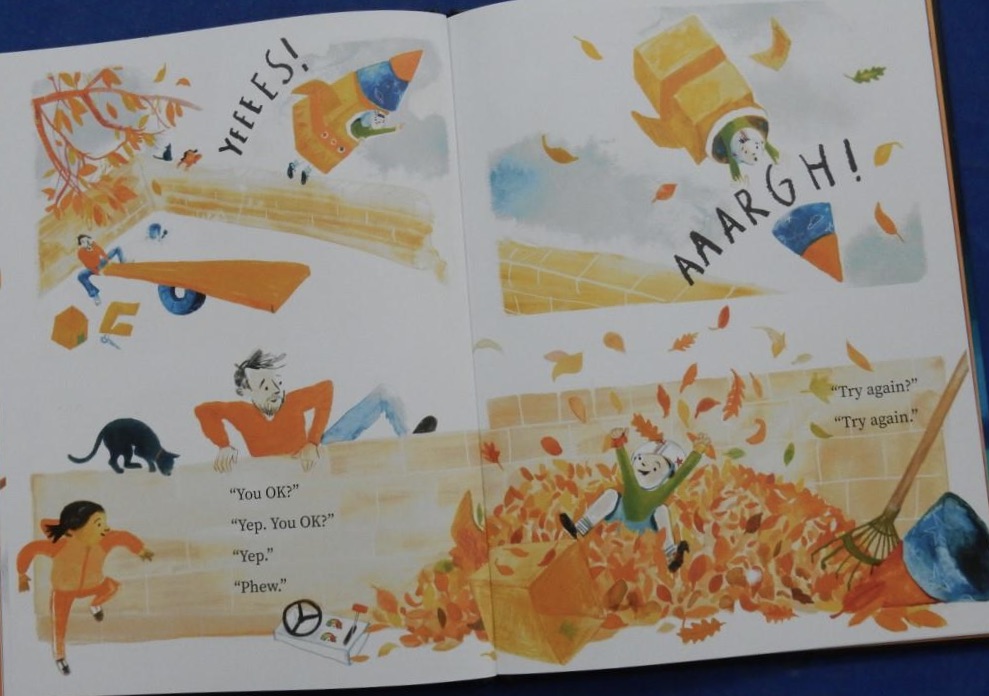
Together they try all manner of ways to reach the stars, some pretty risky, but with his supportive parent always there to catch him, no harm comes to Joe. Instead they have lots of fun being inventive as they try constructing among other ideas, a tower to climb, building a rocket and fashioning a seesaw.


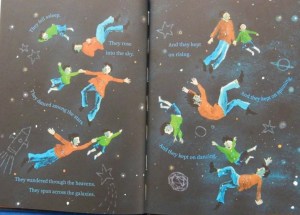
Refusing to give up – “in your dreams” Joe says as they laugh over their efforts – father and son build a shed, paint the inside with a gorgeous skyscape and fall fast asleep. We share in their thrilling dream as they rise skywards and “danced among the stars … wandered through the heavens,. They spun across the galaxies … and they kept on dancing.” …

All the way to the stars.


I love the way in which Gill Smith’s colour palette moves from the warm autumnal hues of the opening spreads to the midnight blues of the skyscapes towards the end of the story. A truly uplifting tale of resilience from the minute we meet Joe in his bedroom with its planet mobiles and other evidence of his passion and his ambitions.

The Incredible Adventures of Gaston Le Dog

This image has an empty alt attribute; its file name is dscn9794-1.jpg


This story is based on tales the author was telling his son on holiday in France where the book is set. When Michael was ill with COVID-19, one of his aims was to get better and finish this book. I found myself smiling all the way through as I followed Gaston’s journey with its multitude of adventures and challenges where danger lurks at every turn.

Determined to return to the wonderful beach he remembers from long ago, Gaston leaves his close friend Hirondelle and has to navigate a world of fairy tale, magic and myth. In so doing he encounters all kinds of intriguing, mostly animal, characters willing to offer help on his journey.

This image has an empty alt attribute; its file name is dscn9798-1.jpg

Readers may well recognise characters from classic stories including Puss in Boots. Which ones can Gaston truly trust and will his adventure finally lead to all that he’s hoping for?


It’s captivating, playful, thought-provoking and multi-layered: a special treasure of a book – made even more so by Viviane Schwartz’s splendid illustrations. Perfect for solo readers but equally an absolute delight to read aloud: it will appeal to a wide age range and is a tale to return to over and over. It’s likely new understandings will emerge at each re-reading.


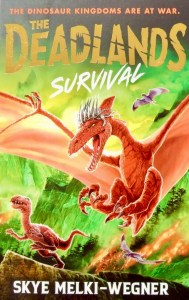
The Deadlands: Trapped / Press Start: Super Rabbit Boy vs Super Rabbit Boss!

In this the second of the series the last surviving dinosaurs continue to do battle for territory and a cabal of the carnivorous kind are aiming to provide a killing field of plant eaters on which to feed.
But with the predators drawing ever closer, Eleri and the other members of the Grotto herd decide to go on the attack. Out on a scouting exercise, Zyre is spotted and with their whereabouts now known to the enemy they need to find a hiding place. But what is the Feast of Flames that Zyre has heard the enemies speaking of?
As night turns to day it seems that the only choice for Eleri et al, so Zyre suggests, is to head towards the Salted Scorch, a secret path across the Deadland. Perilous, yes but they might be able to enlist some help and anyway they are out of options.
So, on they go, only to discover a general and her squad of raptors are hot on their trail, not safe at all but in the magma-heated tunnels of the Fire Peak, headquarters of the Carrion Kingdom. Surely not? But it is so and they’re trapped right at its heart.
Now, not only are they facing the likelihood of being captured and the horror of being consumed at any time, the exiles then come upon a captive herd of herbivores urgently requiring rescuing. Moreover the carnivores have a stash of weapons. This means that the continuing overarching carnivores vs herbivores war will henceforward be devastatingly different.
As things become ever more perilous, can Zyre and the others free the prisoners? It will need a ruthless plan but if successful it might just secure their release.

With nail-biting happenings coming thick and fast, this twisting, turning fantasy adventure will have readers on the edge of their seats right through to the end, an end that doesn’t mean the war is finally over.
For younger readers is

An addition to Thomas Flintham’s series based on video gaming, this fourth story begins with Super Rabbit Boy setting out on a rescue mission, destination Boom Boom Factory, home of his enemy King Viking. On arrival he enters a room he thinks is the King’s workshop and there he ignores a ‘Do Not Push Button’, warning sign. Big mistake! He finds himself in a back-to-front world where everyone good is now bad and everyone bad is now good including King Viking – confusing indeed.
How will Super Rabbit Boy extricate himself from all weirdness and find his way back to his proper world?

Great for building reading confidence, this is brimming over with brightly coloured comic style illustrations. It will appeal especially to young readers who are partial to video games.

Alice Eclair Spy Extraordinaire: A Sprinkling of Danger / Montgomery Bonbon: Death at the Lighthouse

This image has an empty alt attribute; its file name is dscn9678-4.jpg


Gifted young baker and spy, Alice is back for a third adventure, set in and around the grand Palace of Versailles which is being used as a film set for a team of American movie makers.


Arriving at Claude’s flat, she learns that he thinks the film director, Glen Carmine, could be a spy and wants Alice to get herself onto the film set and discover what is going on. In addition she is to take on a new agent recruit, Pierre, whom she soon finds out, resents her ‘nannying’ as he calls it. He gets himself a role on the set as hairdresser to star, Catrine Bell, but thanks to her patisserie skills, Alice gets herself hired on set too, to the chagrin of Pierre, who appears to have his own agenda. She does though make an ally of Milton, nephew of the director.


The weather becomes increasingly worse and so too does Alice’s feeling that somebody is trying to get rid of her, perhaps even kill her. Then due to heavy snow, the cast, crew and staff are forced to stay overnight in the palace, giving Alice opportunities to snoop around for clues. In addition she is beginning to suspect that Pierre isn’t to be trusted.


As more alarming things happen to Alice, she starts to think that maybe she’s not up to this case; does she even want to continue being a spy? But then things happen to make her change her mind; she just has to get to the bottom of this, her hardest mission yet.


Sarah Taylor-Todd’s crafting of the setting for this tale is superb, as are the details of the splendid sweet treats that Alice herself crafts. Readers will find their mouths alternately watering over the descriptions of Alice’s confections, and going dry at the life-threatening events that happen to her.
Definitely as tasty as the previous books in the series, though also, I think, the most perilous.

This image has an empty alt attribute; its file name is dscn9682-4.jpg


Ten year old Bonnie and Grandpa Banks head to Odde Island for a much needed holiday, but when you’re a private detective, it’s unlikely that a quiet rest without mystery, intrigue or murder is what will transpire even if you have deliberately left your sleuthing gear safely at home in your bedroom.
They’ve barely set foot in the place when they learn of the death of lighthouse keeper, Maude Cragge who had supposedly been blown by the storm and fallen from the top of the lighthouse.
Fortuitously, so it would seem, Grandpa just happens to have packed Bonnie’s yellow bag of equipment after all. It’s time to investigate. And it looks as though the two holiday hopefuls have a murder mystery to solve.


It’s not long before Bonnie decides it isn’t just the one mystery relating to this strange island that she needs to get to the bottom of.

This image has an empty alt attribute; its file name is dscn9683-4.jpg

She can however call on the assistance of friend Dana, who is also staying on the island.


Wit and humour abound, there’s a plethora of puns, and at the same time, intrigue and high drama, and I love the Poirot speak. All this accompanied by Claire Powell’s delightful illustrations which help elucidate some of the clues. A terrific sequel with more to come.

Cosmic Wonder: Halley’s Comet and Humankind

The author/illustrator personifies the comet in her third person telling, which follows the comet, portrayed as a shiny sphere with a long flowing tail, on its recurring visits to planet Earth, chronicling its visitations which occur ‘about every seventy-six Earth years’ beginning millennia ago and ending with a mention of 2061 when the comet is next due to return to an Earth, shaped largely by the actions of humans alive today. This reminded me of T.S. Eliot’s lines ‘Time present and time past / Are both perhaps present in time future,/And time future contained in time past.’

We’re told that ‘one kind of creature began to live differently.’ and scenes show humans of various races changing over time, but all, having looked skywards, telling one another tales of the ‘broom star’ up above. These visits, they recorded in various ways using ink, clay and words.

From afar, the comet witnesses times of war and times of peace, and notices a multiplicity of human feelings, the most powerful being that of ‘boundless love’.

After many hundreds of visits, humans name the comet Halley’s Comet after an astronomer, Edmond Halley. Earth continues to fill with ever more humans and what the comet sees in 1986 are two children walking along a beach below a neon lighted industrial city, belching out filthy smoke.

What the comet sees too are space probes surrounding it; they leave it to continue orbiting around an earth described as ‘small and vast all at once / holding so much life and such great promise’, with dreams of what the next visit might show. One only hopes that what it discovers on its 2061 visit is not an Earth ruined by our failure to address the environmental damage we are causing.

At every turn of the page, Ashley Benham-Yazdani’s luminescent, mixed media illustrations show the soft-edged comet shooting across an inky wash sky and gorgeous scenes of the happenings on Earth through the ages.

This is a truly thought-provoking precis of human history from an unusual perspective that makes it all the more powerful. Back matter includes further historical details and an author’s note that speaks to every reader.

Three Tasks for a Dragon

Prince Lir is heir to the throne of the Kingdom of Lagin. However as his stepmother tells him in no uncertain terms, he can’t ride a horse, lift a sword, or summon the wolfhounds. Consequently she deems him unworthy to become king; instead her biological son, Prince Delbayne, will inherit the crown. Moreover she banishes her stepson from the kingdom but at Prince Delbayne’s suggestion, he is given a seemingly impossible quest that will likely end in his death: to rescue a maiden Cethlenn, who had once worked in the palace kitchens, from the once fearsome dragon Lasvarg.

Having arrived at the dragon’s island cave, he discovers that the dragon is well past his prime, unable now to fly or breathe fire, and drunk on cherry wine made from cherries stomped upon by Cethlenn, who has become his servant. The prince insists that the dragon, honour tradition by setting him three tasks to perform. First, cure the dragon’s mould-induced ailments, second, fix his broken wing, and lastly restore his fire-breathing power. Little by little while doing these tasks, Prince Lir grows closer to Cethlenn and she to him.

However he turns down her request to stay with her on the island at that time. Instead he sets forth to return and confront his stepbrother in the hope of preventing him receiving the wolfhound crown. Could it be that Cethlenn is the wolfhound queen? How will it all end?

Lyrically written with a fair few thrills and awesome illustrations of the dragon, this is a magical fairy tale that will assuredly keep readers turning the pages, albeit slowly so they can savour P.J. Lynch’s magnificent artistry.

Bear and Bird: The Stars and other stories

This image has an empty alt attribute; its file name is dscn0056-1.jpg


Four more tales starring two best friends who have a tendency to misunderstand one another.
The first, The Spoon, tells what happens when the pair fall out over a spoon and as a result, each of them decides a new best friend is needed. Bear writes a letter advertising his need, folds it into a paper boat and sends it out onto the lake. Bird finds it and responds and so it goes on each saying something about themself. Thirteen boat letters later, a breakfast meeting is arranged at Badger’s cafe.

This image has an empty alt attribute; its file name is dscn0057-1.jpg

Both arrive at the venue, seat themselves at separate tables and wait … and wait … What will be the outcome? Could a spoon (or two) lead to a reconciliation?


The Cake refers to one made by Bear after he’s scoffed the one he finds on the way to Bird’s abode. Unsure who the original cake was intended for, Bear tosses ingredients into the mix that could please more than one recipient and the result is, let’s say, revolting. Nevertheless he hides it and when Bird comes along, Bear draws her attention to the ‘surprise’. A surprise it surely is, but not a pleasant one. Will either of the two dare to sample said cake?


The Rock also involves a cake, or rather the desire for one. It begins at the market. where Bear tells Bird to wait while he goes and buys the cake.

This image has an empty alt attribute; its file name is dscn0058-1.jpg

Bird decides to sit on a ‘rock’ so her friend will know where she is. However, the rock isn’t what it seems.


Finally, The Stars is all about dreaming and wishing and the friends decide so doing is pretty close to perfection.


Jarvis has the kind of wry, gentle humour that appeals both to young children and adults. These stories are as seductive as the first four, full of charm, warmth and genuine affection. Perfect for new solo readers or for sharing.


Lily the Pond Mermaid / I Really Want To Be A Cat

These are two new titles from Walker Books – thanks to the publisher for sending them for review

Ponds are lush and green and teaming with life, the occasional one even holds a secret. One such is that which Lily the mermaid calls home. She takes care of all the flora and fauna around that make up her world – the damselflies and dragonflies, butterflies, water snails, fish and frogs, the aquatic plants too. Lily’s very best friend is Bobble, one of the tadpole family and she takes great pains to keep the pond safe for all those living in and around it. However, aware that ponds can all too easily be spoiled, Lily lies awake worrying about what might happen. She keeps herself busy by day in attempts to keep her worries at bay but they keep on growing bigger.

When a storm hits the pond, the result the following morning is debris everywhere she looks. Lily’s worries grow even larger – supposing further devastation happens?

Feeling almost totally overwhelmed, the little mermaid senses a tiny flicker of courage within herself. Can she finally reach out to her friends, tell them of her fears and ask for their help?

It’s amazing what teamwork can do in times of need, and so it is with Lily and her pond community.
So it can be too with young human listeners and readers, for Lucy Fleming’s story shows the power of camaraderie and of finding your inner strength to reveal how you feel to your friends.

Have you ever wondered what it would like to be a cat? The little girl narrator does just that as she addresses her own moggy, focusing on all the positive aspects of life as a feline such as her grey companion. Time is never an issue, you can play with your body shape, steal around ninja style, hide away so no-one can find you, and your eyes give you great nocturnal vision. Moreover you are free to go here, there and anywhere without being asked about your movements. You are fearless, adventurous and almost independent.

There is however, one downside to a cat’s life, from a young human’s viewpoint, that is: do you know how cats get themselves clean.? Err, no thank you.

Playful, gently humorous and sure to appeal to cat lovers, young and not so young.

Madame Badobedah and the Old Bones

If you’ve not read the first book, Madame Badobedah, she is a long term resident of the Mermaid Hotel, a seaside establishment managed by young Mabel’s parents. Mabel has taken it upon herself to keep an eye on what the guests are up to and has become firm friends with the wonderfully eccentric Madame Badobedah.

In this adventure the two spend their Saturday on the beach, foraging for interesting things. Mabel discovers a golden coin,

her companion suggests she should make a wish; Mabel wishes for ‘a big adventure.’

The following night the two friends are rummaging through Madame B’s dressing table drawers and come upon something that prompts the owner to tell Mabel about leading an expedition in North America and encountering a Triceratops with terrible toothache. She also talks of another item, which Madame B. has yet to return to its rightful place.

After dinner, the two friends, Mabel holding her coin, set off to the Natural History Museum, Madame B’s pocket containing a precious jewel. There Mabel’s wished for adventure looks set to happen for suddenly there comes a voice. Could it possibly be a dinosaur addressing them? …

Another timeless tale, told in four parts, that celebrates adventure, friendship and the power of the imagination. Lauren O’Hara’s illustrations are full of charm and whimsy – just perfect for portraying the exploits of eccentric teller of tall tales Madame Badobedah and her young friend.

The Singing Bear / Dance With Oti: The Penguin Waltz

It’s always a huge pleasure to visit the Repair Shop and see Jay Blades and his team of expert repairers in these picture books that are based on the real life events of those who visit the workshop. This one featuring Kwai, Anne and young niece Lucy who bring along Singing Ted, for the team to work their magic on, being the third.

Kwai’s elder sister, Anne recounts part of her back story, explaining how as an eight-year old, she learned that her parents were going to adopt a baby girl, Kwai, from Hong Kong. When the little girl arrives, she’s quiet and sad and to try and cheer her up, the family visits the toy shop where they buy a teddy that plays a lullaby at the turn of a key.

On seeing the bear, little Kwai’s eyes light up for the first time

and from then on, Singing Bear as she names her teddy and Kwai go everywhere together. Inevitably over the years, the bear has been loved so much that it now needs Jay and his fellow workers to use their skills on Ted. Can they make the bear sing again as well as fixing the other things that need restoring?

Happily when, the three return, Jay greets them with a big smile and wonderful news.

Amy Sparkes’ telling is a delight but Katie Hickey’s superbly expressive illustrations, endpapers included, really bring the events to life making the book even more special. Back matter recounts the true story of the Singing Bear and introduces Jay and his expert team.
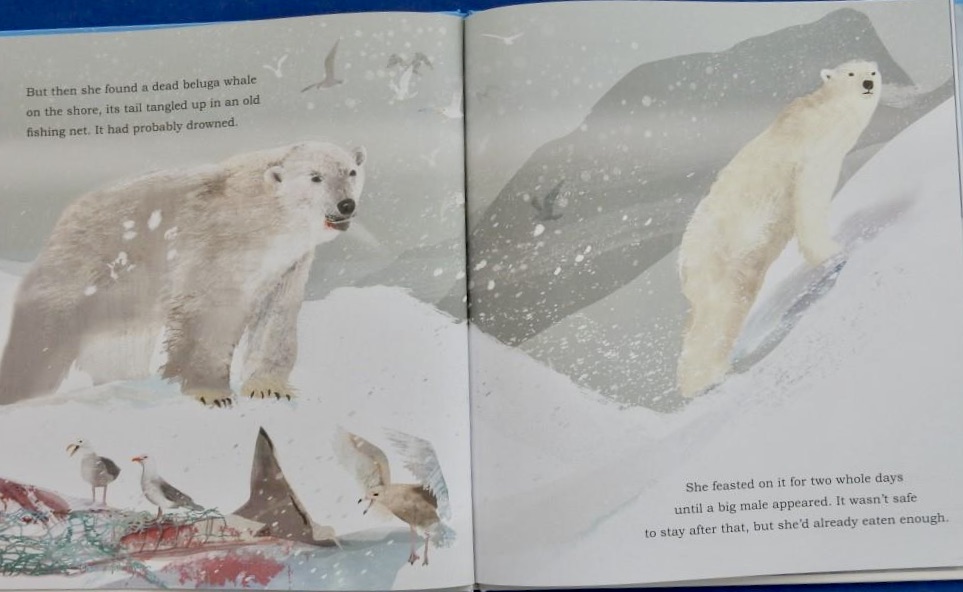
Mrs Oti and her dance class are preparing for a special wintry themed show when the snow falling outside prompts one of the children to ask if they can go out and play. Wrapped up warm, off they go and straightway as Mrs Oti teaches them how to balance on snowy ground, penguins are mentioned. This leads one of the pupils to initiate a penguin waddle and after a snowball fight, and further talk of penguins , Mrs Oti tells them she has an idea for the final dance in the show: the Penguin Waltz.
Back indoors, re-energised by hot chocolate, the practising begins in earnest.
Come the day of the show, what a performance the children give until it’s time for the finale. A mishap occurs but Gan’s quick thinking and sense of teamwork save the situation and the dance finishes perfectly, to the delight of watchers and performers.

A delightful addition to the Dance with Oti series: Samara Hardy’s bright, lively illustrations showcase Mrs Oti and her class beautifully: their camaraderie really shines through.
Read the book with your KS1 class, then get up and try the moves: you and your listeners can learn the penguin waltz by following the step by step instructions on the final spread.

AlphaBot / The Secret Mountain / Albert Puzzles and Colouring

This interactive, non-fiction book published under Walker Books mitKidsPress imprint is sure to be a winner with children. On the first page comes the invitation: ‘Mix and match the AlphaBot parts! / What kind of robot will you build?’ Subsequent pages are split into three parts with scientific terms in alphabetical order defined on the verso sections and robot related illustrations are on each recto section.

The split pages make the book huge fun allowing the reader to design numerous different robots.. Its sturdy construction with a spiral binding will enable it to stand up to the heavy handling it is sure to get in a classroom or at home, as eager youngsters delightedly flip the sections back and forth, playfully learning a considerable amount while so doing. I met a couple of terms I’d not encountered before.

This book takes children on a long, long journey from Mount Everest all the way to Iceland. They will travel via Scotland’s Ben Nevis, then in turn the highest peak in the Andes, the Rocky Mountains, the Urals dividing Europe and Asia, Mount Broken in Germany, the Dolomites, the Heavenly Mountains of central Asia’s Tian Shan, California’s Mount Whitney, Mount Fuji and finally as night falls, Iceland’s Kirkjufell mountain.

As the sun rises over the Himalayas youngsters will see in the foreground of the illustration, a young snow leopard and her cubs heading off to hunt for food. Also out hunting is a bear and readers are asked, ‘What might he be searching for?’

In each of the following illustrations, every one of which is bursting with wildlife, there’s a mother animal of some kind and her young. So across the day you’ll also spot golden eagles, llamas, moose, brown bears, lynx

and more; some are foraging, others in flight or perhaps playing.

Each spread has a search and find element, another of the interactive elements of this immersive, creature-filled compilation for adults and children to share. Additional facts about eleven animals – one per stopping place – are provided in the three final spreads.

Albert the Tortoise loves to play games with his garden dwelling pals and now in this book he invites young readers to join him and participate in some playful activities at home. There are pages of silhouettes to identity, mazes to negotiate, a search and find, as well as several spreads to colour, others for playing spot the difference, and young children can hone their fine motor skills with dot to dots (those can be coloured in too).

Vlad the Fabulous Vampire

Meet Vladislav Varnaby Roland Dragul aka Vlad. Vlad has a passion for fashion and consequently he is a stylish vampire. However he has a secret of the colourful sort: behind his black cape he hides rosy pink cheeks that make him look all too alive. Vlad longs to feel and look like any other vampire; he feels insecure with his rosiness and uncomfortable about concealing his real self. However, he starts designing and making his own gear, always covering his cheeks; but having strutted his stuff for a while, he realises that he’ll never be able to hide who he truly is. 

Off goes Vlad to be by himself but after a short time he is alerted to the fact that his vampire pal Shelley is in trouble. What he sees is that she too has a shockingly bright physical trait. This makes Vlad reveal his own secret and with their friendship firmly established and Shelley leading the way, the two venture beyond the Dark Woods for Shelley to share another secret, a sight never before seen by another vampire. 

It’s in this new place that Vlad starts to overcome his insecurity about who he is 

and that’s when his fashion passion really comes into its own. From then on, whenever insecurity raises its troublesome head, Vlad knows he has somebody to help him cope with his self-doubt.

Drawing on her Mexican heritage, Flavia Drago mixes folk art with cartoon style in her illustrations, adding brighter hues to her colour palette as Shelley leads Vlad towards self-affirmation.
Yes you might share this one at Halloween time, but its vital message is for all times.

A First Book of Dinosaurs

It surely is a case of ‘eat or be eaten’ in Simon Mole’s poetic presentation of dinosaurs in all shapes and sizes. The large format book dramatically illustrated in collage style by Matt Hunt is divided into four sections: ‘Meet the Dinosaurs’, ‘Eat or Be Eaten’, ‘Dinosaur Families’ and ‘The End. Or Is It?’ Readers/listeners will encounter some already established favourites such as Triceratops, Tyrannosaurus Rex (the first two featured), Stegosaurus and Diplodocus called herein Planet On Legs on account of the numerous small creatures that live on its back. There are many less well known creatures too including the dog-sized Eoraptor (new to this reviewer as is Baryonyx). I love Simon’s description of that one: ‘Swift-sprinter / Tail-flicker / River-watcher / Quick- dasher / Fish-grabber / Flesh-ripper // Best hunter / Gets dinner!’ together with Matt Hunt’s dynamic visual interpretation. A wealth of kennings in that.

Readers are introduced to a variety of poetic forms: Ankylosaurus, Sauropelta and Euoplocephalis are all described in a single acrostic entitled Tough! Tough! Tough!.

There’s a wealth of onomatopoeia, some similes and metaphors, a recipe and even a dialogue with a present-day chicken. To find out what said chicken is doing in a book about dinosaurs, you’ll need to get your own copy; so doing will make you popular with youngsters for sure.

After a look at the downfall of dinos and some fossil evidence, the book ends with a somewhat truncated dinosaur timeline.

A large-format, romping, stomping treasure, beautifully produced and one hopes, likely to turn a fair number of dinosaur-fanatic children into poetry enthusiasts too.