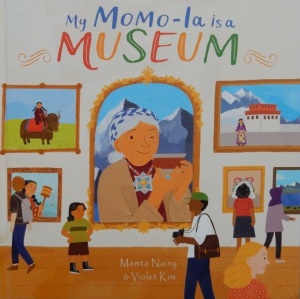
My Momo-la is a Museum

When Momo-la comes to visit every summer, she shares her precious mementoes and her life stories, one every night, with her granddaughter, the narrator of the book. When she asks Momo-la where all her stories come from, she responds, “Stories are everywhere,” and offers to show her granddaughter.


The following morning they head out into the city noticing such things as wildflowers and wormholes, things the child mostly misses. They visit first the Museum of Ancient History, which is full of artefacts, followed by the Museum of Art. There the girl points out that a painting depicts a woman wearing a jacket with a design like the one on Momo-la’s chuba (a traditional Tibetan apron).

In fact wherever they visit, the girl sees something that reminds her of Momo-la, who has a special story from her own experiences to tell about each one.

After a tiring but wonderful day the two return to the child’s home, where she stands her grandmother before a mirror and makes an announcement: the most important museum of all is there right before her eyes. …”A museum that will always feel like home.” And what a wonderful storyteller she is.

A memorable, heartwarming story of intergenerational love, family, culture, memories, treasures and most importantly, stories. It’s a powerful reminder that grandparents, parents and other family members are treasure chests of stories, stories that they love to share if we give them time to do so.
Indeed each of our lives is a story, or perhaps stories within a story. At the back of the book, the author, Mamta Nainy, has written a letter telling how her grandmother had a wooden box full of special objects that went everywhere with her; objects that told stories about her family and their migration to India after partition. She also talks of ways Tibetan refugees in a settlement in New Delhi try to keep stories of their home alive.

The book is beautifully illustrated by Violet Kim who brings the story of the girl and her Momo-la to life in densely coloured, detailed scenes. If you share this with a primary class, perhaps some of the children might ask their own grandparents in to share objects and associated stories from their lives.

Little People, Big Dreams: Pelé / If You’re Going to a March!

Little People, Big Dreams: Pelé
Maria Isabel Sánchez Vegara, illustrated by Camila Rosa
Frances Lincoln Children’s Books

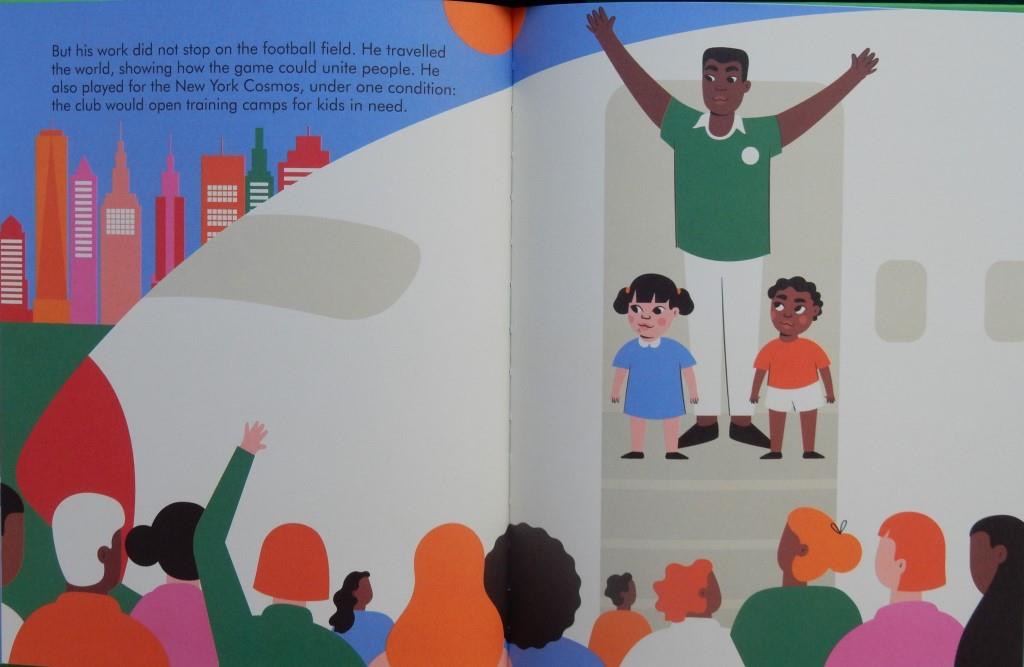
This new addition to the best-selling series stars one of the world’s greatest ever soccer players, telling of both his awesome skills on the field and his sterling work off the pitch in helping children in need, not only in his home country Brazil, but the world over.

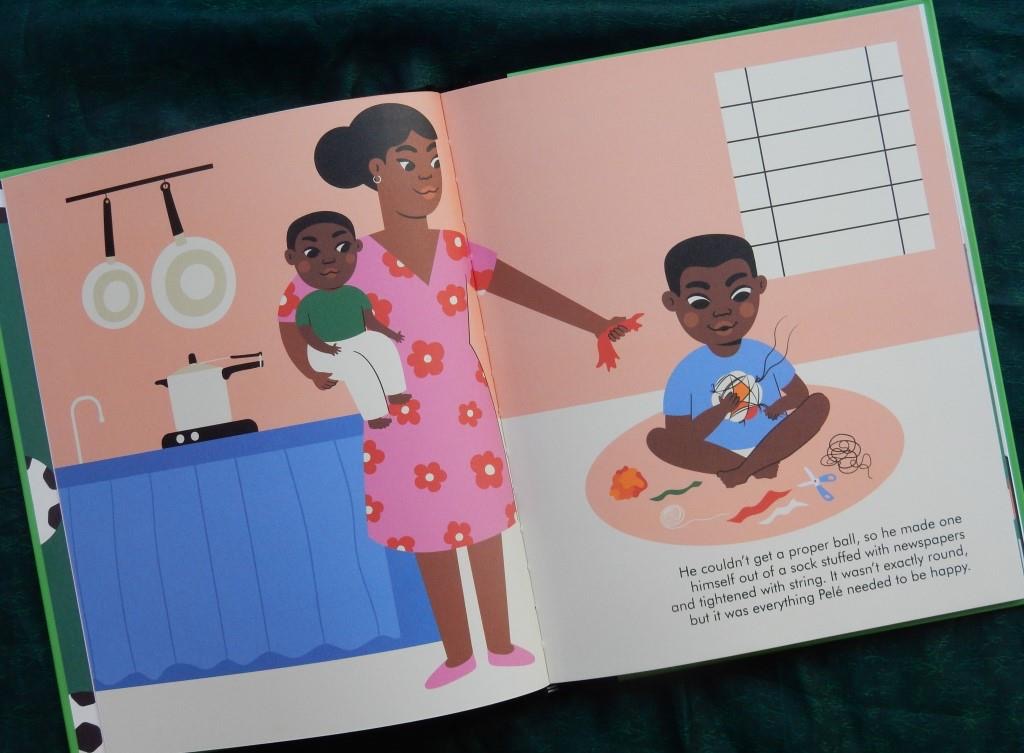
From modest beginnings in a poor neighbourhood in Brazil, young Edson aka, Pelé fashioned a ball from a sock stuffed with paper and tied with string and used it to work on his footie skills.

Fuelled with a determination to lead his country to a World Cup victory, he was selected at age sixteen to play for the national team in Sweden where he became known as the player of ‘Jogo Bonito’ (‘beautiful game’)

Pele went on to take his country to another two World Cup victories. He’s now recognised as the top footballer who ever lived as well as a voice for unity and for the most needy.

With additional facts at the back of the book, set out along a timeline, and Camila Rosa’s striking illustrations, this is a book to inform and inspire young sports enthusiasts especially.

If You’re Going to a March
Martha Freeman and Violet Kim
Sterling Children’s Books

Although this book originated in the USA, there are plenty of young activists and would-be activists in the UK and in many other countries too; this book with its reader-friendly advice and instructions, will speak to them all, whether their cause is civil rights, the environment, women’s rights, gay rights, peace or whatever. And, children start very young: during my participation in pro EU marches I encountered babes in slings accompanied by parents and young siblings.

There’s advice on such practicalities as making your own sign,

appropriate clothing (check the weather forecast), transport to starting point; plus warnings about such possibilities as getting a bit bored if lots of people want to make speeches; feeling free to let go and dance should the opportunity arise; how to interact with the media; even visiting the loo is covered; (perhaps the spread with the smiling police officers ‘their job is to keep people safe’ is probably more apt for the UK than that of the book’s origins).

The author and illustrator also present the ‘why’ behind marches, rallies and protesting – ‘they are showing they care about their country and want to make things better’, as well as pointing out the possibility of seeing people who disagree with your cause – ‘sometimes democracy looks like disagreement’ and advising politeness. With its focus on the practical and positive elements of activism, this book is a good starting point for adults wanting to introduce the possibilities of political involvement, peaceful protest and community action to youngsters.

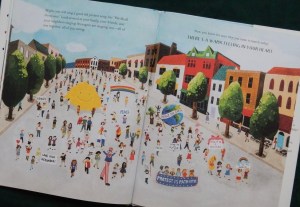
I love the way Violet Kim conveys a community feel to her scenes throughout.