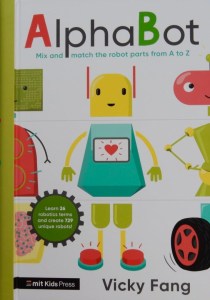
AlphaBot
Vicky Fang
Walker Books
This interactive, non-fiction book published under Walker Books mitKidsPress imprint is sure to be a winner with children. On the first page comes the invitation: ‘Mix and match the AlphaBot parts! / What kind of robot will you build?’ Subsequent pages are split into three parts with scientific terms in alphabetical order defined on the verso sections and robot related illustrations are on each recto section.
The split pages make the book huge fun allowing the reader to design numerous different robots.. Its sturdy construction with a spiral binding will enable it to stand up to the heavy handling it is sure to get in a classroom or at home, as eager youngsters delightedly flip the sections back and forth, playfully learning a considerable amount while so doing. I met a couple of terms I’d not encountered before.
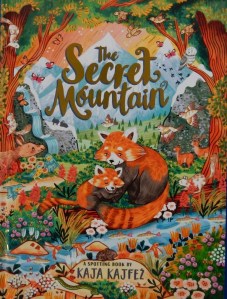
The Secret Mountain
Kaja Kajfež
Scholastic
This book takes children on a long, long journey from Mount Everest all the way to Iceland. They will travel via Scotland’s Ben Nevis, then in turn the highest peak in the Andes, the Rocky Mountains, the Urals dividing Europe and Asia, Mount Broken in Germany, the Dolomites, the Heavenly Mountains of central Asia’s Tian Shan, California’s Mount Whitney, Mount Fuji and finally as night falls, Iceland’s Kirkjufell mountain.
As the sun rises over the Himalayas youngsters will see in the foreground of the illustration, a young snow leopard and her cubs heading off to hunt for food. Also out hunting is a bear and readers are asked, ‘What might he be searching for?’
In each of the following illustrations, every one of which is bursting with wildlife, there’s a mother animal of some kind and her young. So across the day you’ll also spot golden eagles, llamas, moose, brown bears, lynx
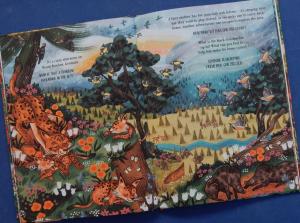
and more; some are foraging, others in flight or perhaps playing.
Each spread has a search and find element, another of the interactive elements of this immersive, creature-filled compilation for adults and children to share. Additional facts about eleven animals – one per stopping place – are provided in the three final spreads.
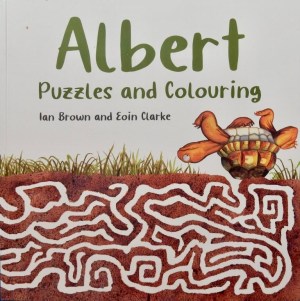
Albert Puzzles and Colouring
Ian Brown and Eoin Clarke
Graffeg
Albert the Tortoise loves to play games with his garden dwelling pals and now in this book he invites young readers to join him and participate in some playful activities at home. There are pages of silhouettes to identity, mazes to negotiate, a search and find, as well as several spreads to colour, others for playing spot the difference, and young children can hone their fine motor skills with dot to dots (those can be coloured in too).


 Red Reading Hub - Jillrbennett's Reviews of Children's Books