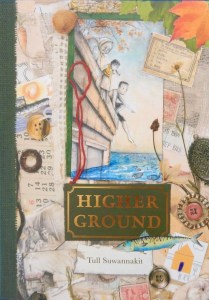
Higher Ground
Tull Suwannakit
New Frontier Publishing
In this highly visual story we follow the lives of a grandmother, a brother (the narrator) and sister and their pet rabbit who are stranded in their city apartment as a result of what Grandma calls The Great Flood. Everybody else left before the water came and so there was nobody to see their rooftop message pleading for help. Thus this space becomes their entire world but Grandma tells the children they must never lose hope.
Day by day she teaches them everything she knows: things about sowing and planting, making repairs, fishing, reusing and recycling, observing their changing surroundings and more. The children seize upon her teachings with enthusiasm, optimism and creativity. The seasons change but so too does Grandma: little by little her strength diminishes. With the waters continuing to rise, the children start building a raft and loading it with produce.
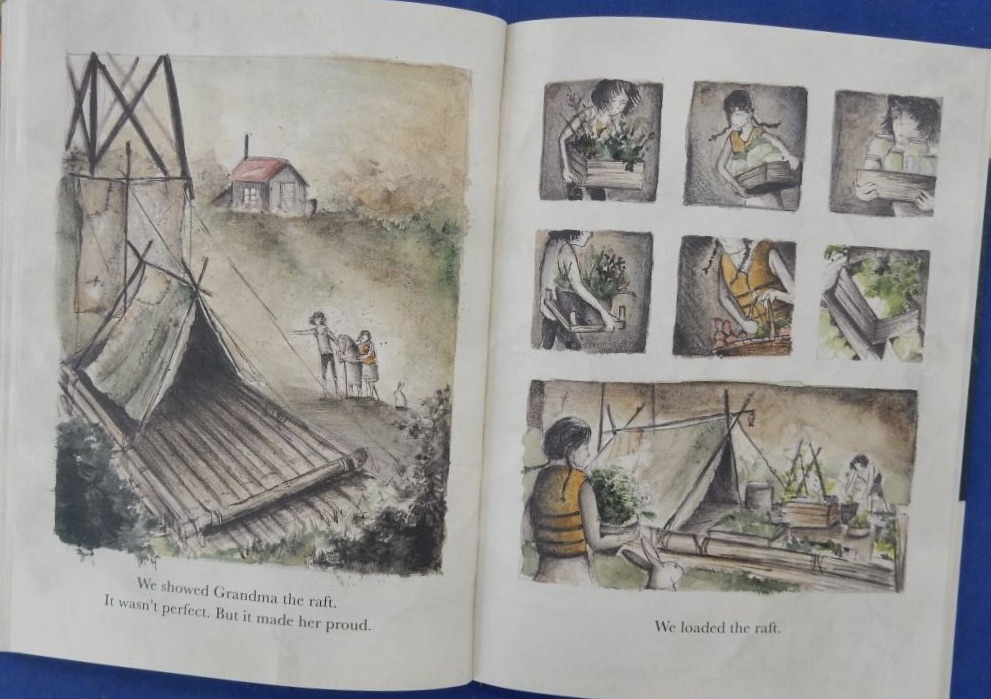
Grandma knows she has little time left so she encourages the children to sail away leaving her to protect their garden: ‘with each ending a new beginning unfolds’, she tells them giving her necklace to her granddaughter and saying that she’ll always be with them.
Weeks later, having been completely lost, battered by fierce stormy waters and on the point of despair, a seabird flying overhead reminds the siblings of Grandma and with lifted spirits they struggle on, eventually finding dry land and a new home among other people. Using their experiences they then show compassion towards other people who also find themselves lost, stranded.
Tull Suwannakit uses predominantly mixed media visual imagery to convey the story, skilfully blending wordless graphic novel sequences, some in black and white, beautiful softly hued landscapes
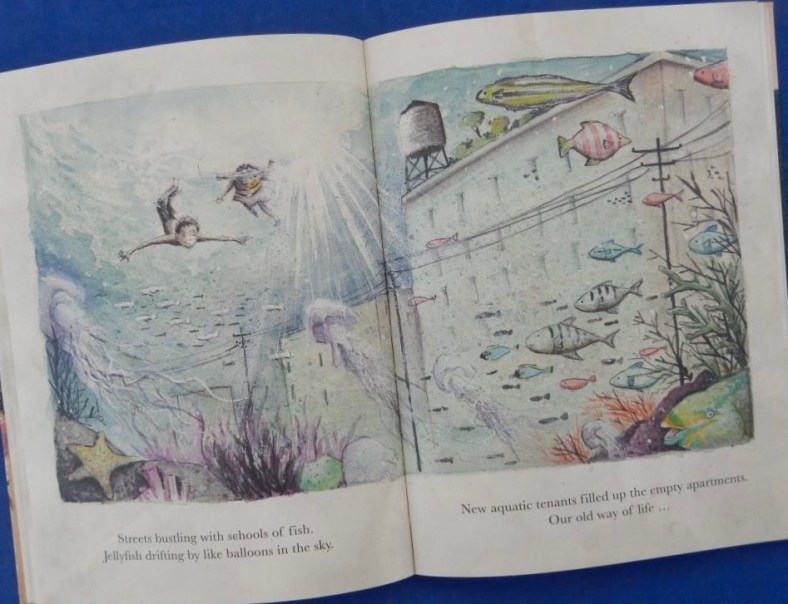
and double spread diagrams of instructions for such things as catching a fish. The result is a hugely moving account of how even under the very worst of circumstances, like those two protagonists, we should never give up on life.
Embracing such themes as home, belonging, loss, grief, refugees, self-sufficiency and the consequences of climate change, this is a book that deserves to be widely read at home and in classrooms.




 Red Reading Hub - Jillrbennett's Reviews of Children's Books