A Boy Called Book / Reading Together

When a mother and father decide to call their newborn baby Book, it bothers a variety of people and puzzles the little boy he becomes. One day he asks his mum, “Why am I Book?” “Because your life is a story … You can write it however you want,” comes the reply.

First Book decides to become an adventure story, full of exciting chapters. When he turns four, Book starts school but for him, this feels like being part of a scary story. Until that is, his mum’s mention of heroes and being brave leads to Book making his very first friend.
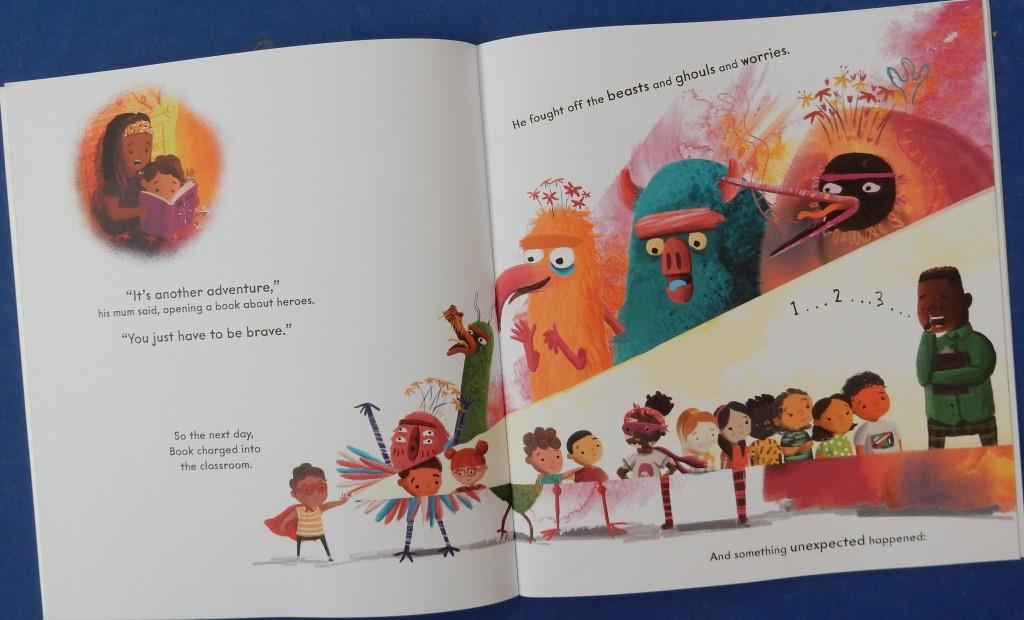
A friend who loves to have fun and laugh a lot – a joke book.

Gradually Book learns such a lot that he aspires to become an encyclopaedia but not all his book types bring him happiness; he also faces sadness, loss (an emptiness inside) but then he receives a special something in the post that makes him forget his sad feelings for a while. So too do pictures of different kinds and gradually back come Book’s smiles. Eventually Book sees that his life is much more than a book; it’s an entire library and one that will keep on growing and growing …
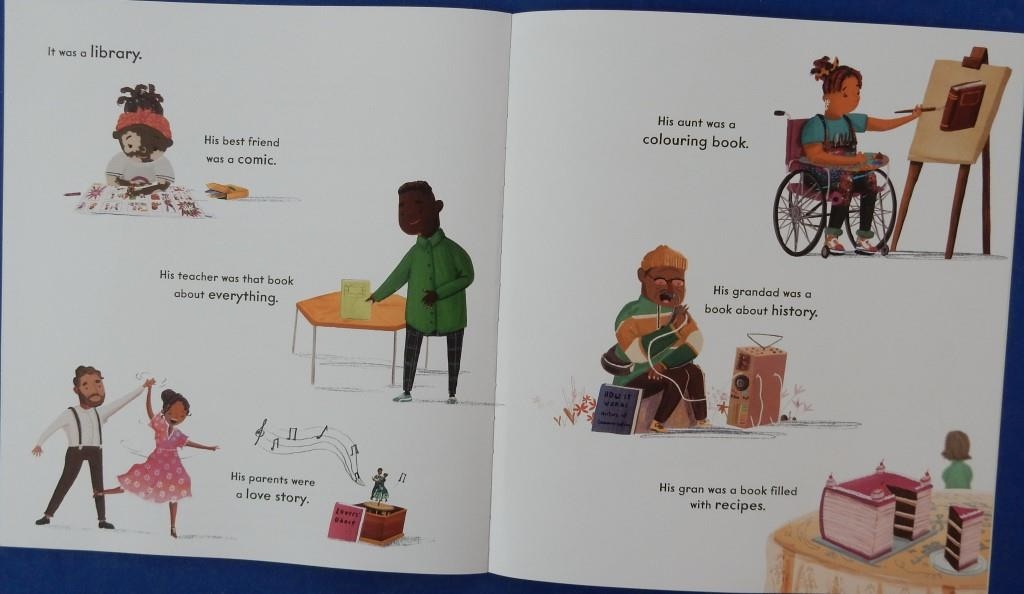
Vincent Ralph’s picture book author debut is an unusual and powerful one that shows the power of story to shape us, inspire us and also to heal us. Powerful too are Aaron Cushley’s scenes of the boy’s developing competences and supportive family life.
On a similar theme is

Having an adult or two in your life who are passionate about reading and share books with their baby from the outset, will likely set that infant on the road to becoming a reader and lover of books and stories too. So it is for the mother and father narrators of this book who read to their little one from birth. We are party to various developmental stages such as sitting up and eating solid food, alongside various kinds of books – an abc, flap books the child can manipulate independently, books of nursery rhymes. We see how stories come to life on the page with their elements seemingly becoming a part of the home environment too.

We see too the joys of visiting a bookshop and coming out with arms full of new picture books to enjoy together at every opportunity, so much so that after reading and loving them so much they needed to be mended; books such as wordless ones, rhyming ones and fairy tales. Sometimes no book at all was needed, instead a story would be co-created using family members’ imaginations.

Such was the power of all this book/story experience that eventually two readers in the family become three as the child grows up to be an independent reader herself. Job done, you might say; hopefully not, for confident solo readers too should have stories read to them and I suspect it was so in this family.

Melissa Larson’s portrayal of family life in this household certainly shows how memories are created and emphasises the importance of sharing books together right from the start. What a wealth of connections are created by so doing.

I Love Books

On the last day of term, the girl narrator along with her classmates receives this parting comment from her teacher, “Enjoy your holidays, and don’t forget to read a book!” This girl, we then learn is a total bibliophobe. Nonetheless she’s duly taken to the library but nothing there appeals in the slightest

so it’s left to mum to make the choice for her.

Back home, the girl makes herself comfortable and reluctantly, opens the book. To her surprise, she’s almost immediately drawn into the story, a wonderful adventure story wherein she meets a furry guide

who leads her on a search for special ingredients. And what are these ingredients for? The most powerful of all spells …

If ever a child needs convincing of the magical power of books and stories – give them this, Mariajo’s new picture book that has everything you could want – adventure, magic, a demonstration of the power of the imagination and terrific illustrations with clever colour changes. I love the sneaky insertion of the author’s previous two picture books on the class bookshelf on the first spread, as well as a certain polar bear who, along with several other book characters, appears on the final page. Don’t miss out on the endpapers either. As a life-long bibliophile, I love everything about this story.

That Bear Can’t Babysit / Brobot Bedtime

That Bear Can’t Babysit
Ruth Quayle and Alison Friend
Nosy Crow
Little did Mr and Mrs Burrow know when they had to resort to hiring Bear as babysitter for their night out, leaving their seven bunny offspring in his charge while they went off to a party, what those young rabbits or indeed Bear, might get up to.
The junior Burrows certainly seem to have Bear wrapped around their little paws from the start – or some of them do at least. They choose inappropriate reading material; cause chaos, and worse when it comes to supper;

create mayhem with the hosepipe and then embark on a moonlit adventure with Bear at the helm.

Finally our ursine child-minder seems to have the upper paw, all the more so when out comes the perfect bedtime storybook.

Which is just as well because before you can say ‘goodnight little bunnies’ back come Mr and Mrs B to find a scene of serenity and shut-eye; accompanied by some rather surprising words from their babysitter. Shame that counting isn’t one of his better skills.
Author, Ruth Quayle’s debut picture book is a charmer through and through. It’s full of lively, tongue-in-cheek dialogue, scattered throughout with join-in-able repeat phrases, not the least of which is the title of this book, and there’s a lovely final twist in its tail.
Alison Friend’s scenes fizzle with fun. Her portrayal of frolicsome mischief, furry friend style, is full of amusing detail and her characters are adorably impish.

Brobot Bedtime
Sudipta Bardhan-Quallen and Scott Campbell
Abrams
The only words of this pre bedtime story are speech bubbles – one colour per character – and encased within outlines that approximately correspond with different shapes of the speakers’ heads. The dialogue, which is liberally sprinkled with wordplay, opens with the mother robot sending her three offspring to bed. A seemingly straightforward “time to enter sleep mode” instruction however, is anything but that. Beep can’t possibly sleep; he has “the flick-ups” and needs help. His brothers Crash and Buzz offer assistance in the form of a “nice cup of oil”,

to no avail. Then Buzz leaps into action with a spot of diverting impersonation …

And so it goes on with all manner of supposedly helpful shenanigans until, with Beep on the point of insomniac self-destruction, mum robot calls out, expressing extreme displeasure demanding to know “Why are there still gears turning up there?” and threatening “a hard reboot”.
A plan is hatched but will those little bots ever settle down and drop off to sleep? Well, um yes – and no!
The crazy, occasionally slightly confusing, visuals of the romp, in tandem with those colour-coded speech bubbles, offer a wonderful opportunity for readers aloud (and young listeners), to engage in robot-speak. A word of warning though: if you share this as a bedtime book, it might well lead to rather too much child-robot talk and as a result, insufficient infant wind-down.

I’ve signed the charter