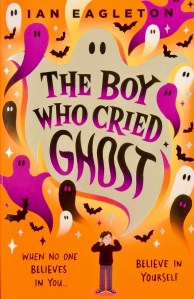
The Boy Who Cried Ghost
Ian Eagleton
Scholastic
This story of Richard Barnes is a very personal one for author Ian Eagleton: Richard has OCD, with which Ian was diagnosed in his late teens.
Richard and his mother move into what was Grandma’s house just before the beginning of Year 6 and the likelihood that this is permanent, taking him away from his friends, troubles the boy greatly. Everything about his new room troubles him too: he lies awake on his first night thinking about starting at a new school and listening out for the strange sounds that seem to be coming from the old wardrobe in the corner. He resolves to keep it locked to prevent anything hiding inside from escaping. He checks it many more times before leaving for school, which makes him late but Richard believes it’s the only way to keep him and his mother safe.
One day his mum’s friend, Tony, who has been doing some painting in their house, collects Richard from school, accompanies him home and reveals that the boy’s mum has already told him about there being something in the wardrobe. Moreover, he’s also found its key and insists on unlocking the door. Richard is horrified at his thoughtless attempt to show the boy that his anxieties are unjustified: he fears that the ghost has now been released into the room with the result that he experiences a massive panic attack.
However when he tries explaining, both Tony and then his mother tell him that his anxieties about the released ghost are down to his over-active mind.
Scared and very angry he decides to enlist the support of his new school friends. They are willing and together settle on calling it ‘The Whisperer’. Meanwhile Mum reveals something about his Grandma and Richard wonders, could she be the Whisperer?
Richard’s friends come to a sleepover with the aim of banishing the spirit once and for all. They reveal lots about themselves during the night but they don’t see the ghost. Then things go disastrously wrong, Mei is hurt and Richard ends up falling out with them, albeit temporarily. Now he feels totally isolated and desperately in need of help. Can Richard finally admit he needs to find somebody to talk to about what is going on and the debilitating voices in his head? Only then might he be able to live comfortably with himself.
Written from the heart, with themes of acceptance, confronting fear, family, friendship and mental health, this powerful story needs to be read widely by older KS2 and KS3 readers as well as adults, many of whom have little or no understanding of OCD. It made me feel I should have been far more empathetic towards a teacher I once worked with who has OCD and frequently turned up late for school. There’s humour and laughter in this book too and in the author’s notes at the end of the book, he pays tribute to his dad who loved jokes, using humour to help him and others deal with their worries.
 Red Reading Hub - Jillrbennett's Reviews of Children's Books