The Dolls’ House

When Mia finds an abandoned dolls’ house in the street near to her new home, she immediately decides to take it back to her house. Once there she straightway begins operation renovation by giving it a coat of bright yellow paint and because the paint hasn’t dried by bedtime, Mia has to leave it outside overnight.

Next morning to her surprise she sees a boy looking at the dolls’ house and he asks to play with her. Mia agrees and she and Aaron spend the day making things for the dolls’ house. The following day Aaron appears again, accompanied by his sister who has an offering for the house and also wants to play.
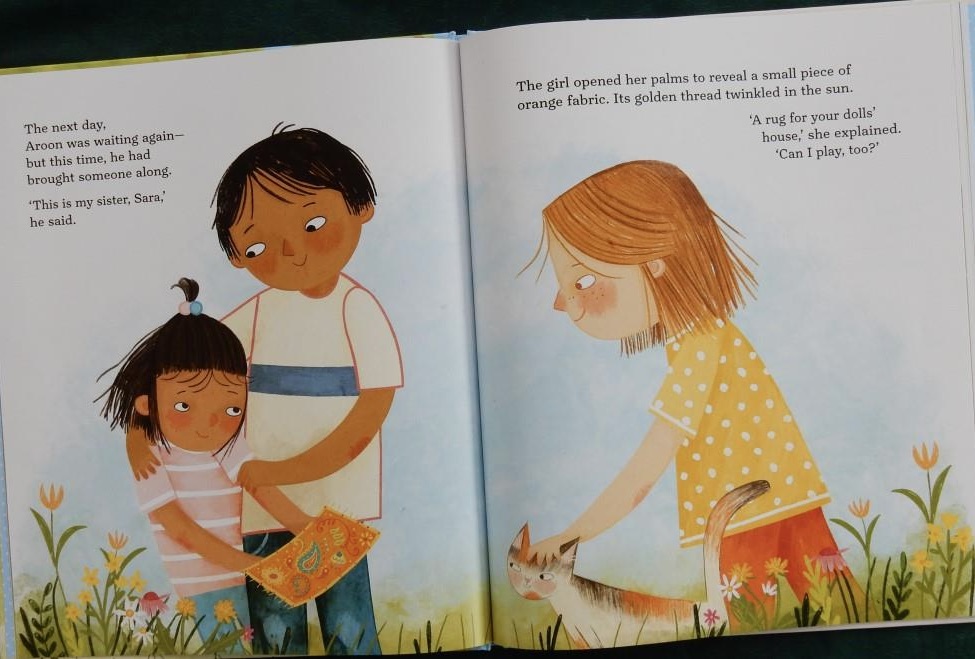
Gradually that dolls’ house becomes a meeting place where lots of children enjoy playing together – the whole summer long.

Then one evening Mia notices a face briefly staring out from behind the curtains of the house opposite and during the rainy autumn days she waves at the boy who merely smiles. As winter approaches Mia’s mum suggests bringing the dolls’ house indoors but although Mia agrees, she asks to leave it outside for just one more night. She carefully positions an umbrella over the house – just in case – and the following morning the precious dolls’ house is in rather a state. Then she hears a sound and there is the boy from behind the curtain offering shyly to help her fix the house. In his outstretched hands he holds something special.
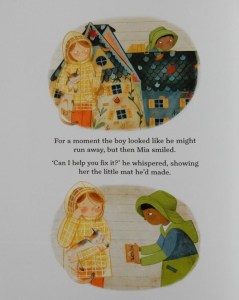
But Mia too does something special …

With themes of friendship, sharing and empathy, this is a wonderfully heart-warming story to share. If you read it aloud to a class, make sure you have plenty of time for your listeners to explore the details in Claudia Ravalli’s illustrations, large and small. The final fold-out spread of the house interior shows the fully furnished dollhouse with its diverse residents – a visual treat – and a reminder of the enduring fascination of small world play for children.
Grandpa is Here

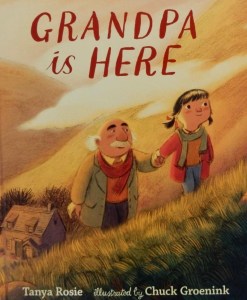
Grandpa is Here
Tanya Rosie and Chuck Groenink
Walker Books

Meeting her Grandpa at the airport with her parents, the little child narrator quickly overcomes her initial shyness when he gives her an enormous hug, and on the drive back home she anticipates all the things she wants to share with Grandpa.

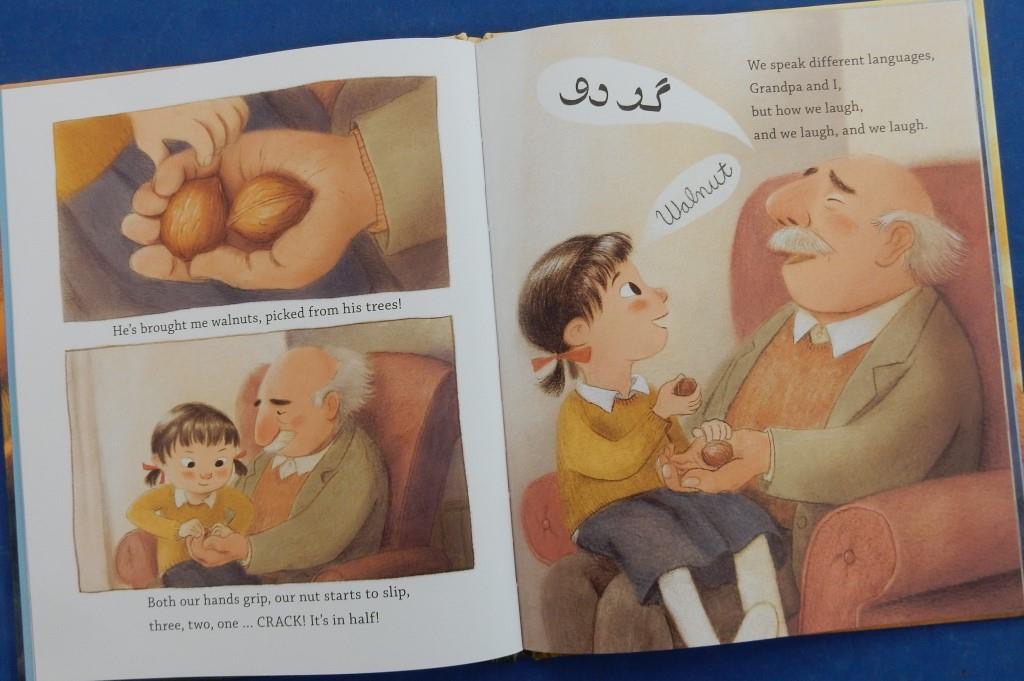
When he opens up his case, out comes the aroma of Persian spice and other culinary delights, including walnuts from his very own trees. The little girl doesn’t speak any Farsi and Grandpa seemingly doesn’t speak English but they laugh in the same language.

After he’s had a nap, our protagonist takes the opportunity to show Grandpa various places she loves as they take ‘the darkest path in the world’, wandering downhill and up tall hills. She introduces him to a horse named Santiago and Malou the frog and hills she calls Mount Sledge-Top and Rabbit View. As they sit looking at the view, the child wishes Grandpa could stay to share the coming of spring. “Grandpa is like snow, I never want him to go, never want his magic to leave,’ she thinks to herself.

As the sun goes down the two make their way back to the family home and there everyone sits and shares a celebratory meal

until they can’t stay awake any longer. Somebody does though and she creeps in to see her Grandpa fast asleep; gently she reaches out her hand and touches his and ‘hope that these days go slowly’ – just like the falling snow flakes she sees through the window.

Tenderly told through Tanya Rosie’s lyrical rhyming narrative in which the loving connection between grandpa and granddaughter is implicit; so it is too in Chuck Groenink’s illustrations which radiate the warmth and tenderness of the intergenerational bond. Like that tight hug at the start of the story, this will surely evoke strong emotions in adult readers who share this with children.

Memories are made like this.

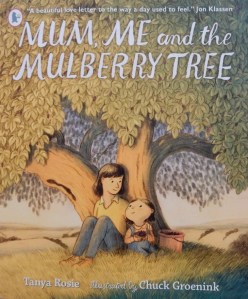
Mum, Me and the Mulberry Tree

Mum, Me and the Mulberry Tree
Tanya Rosie and Chuck Groenink
Walker Books

Rituals are important and this lovely gentle book evokes the joys of simple childhood rituals as shared between a mother and child one day; rituals that will become cherished memories as well as giving pleasure in the here and now.

We follow the two from sunrise to sunset as they relish a day trip to the countryside, a special journey that takes them by bus to visit a large mulberry tree that stands on a hill in a field – ‘our tree’. Once there, the mother lifts her child high into the canopy of the tree and together they gather its abundant mulberries, eating some and getting juice all over themselves.

When they stop for a picnic lunch, down comes the rain so the two hurry back to sit sheltered beneath their tree. After lunch Mum cannot resist climbing the tree to search for more berries till as the sun sets, the two, tired but very happy, travel home together.

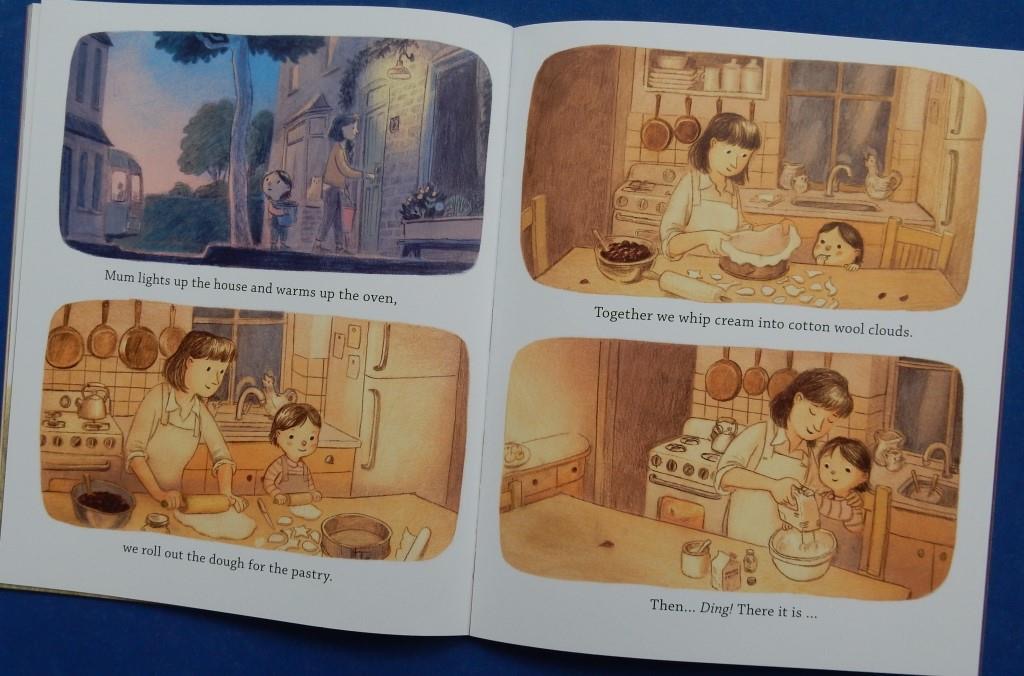
Back indoors Mum assisted by her daughter, gets to work preparing and baking a pie

which they sample together before the sleepy, pie-filled child is taken to bed ready to dream of her happy mulberry day.

Tanya Rosie’s lyrical text is a delight to read aloud and the calming nature of her writing makes the book an ideal bedtime share. Equally though, this would be a lovely story to share with a class of young children. Warmth radiates from Chuck Groenink’s illustrations, be they double spreads, single images or smaller framed scenes, they show so well the close relationship of mother and child and are the ideal complement for the words.