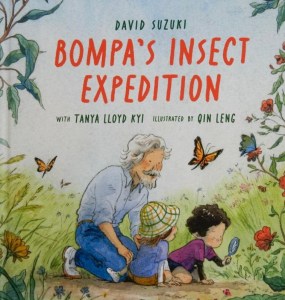
Bompa’s Insect Expedition

This book was inspired by author David Suzuki’s adventures with his own grandchildren and features twins Nakina and Kaoru who love having adventures with their grandpa. This adventure is a nature expedition and by the time Bompa arrives, the two have amassed everything they might need including Kaoru’s field journal.

As time is short on this particular day, their expedition is an insect search in the area right close to their home. Initially Kaoru is somewhat sceptical about discovering anything new, but there are plenty of surprises and new learning in store.

The two children are both inquisitive and imaginative in their approach as they encounter in turn, a bumblebee, dragonflies, caterpillars of the monarch butterfly, an ants’ nest,
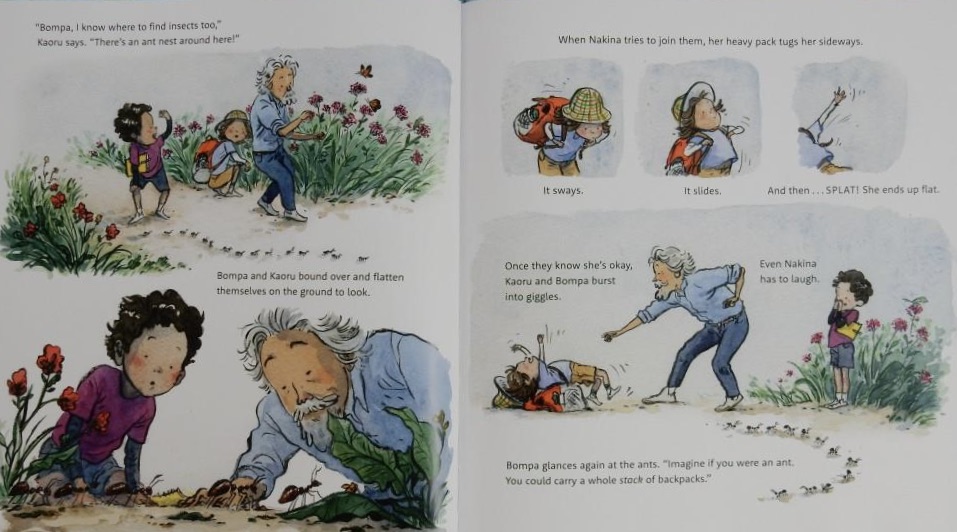
mosquitoes and a lacewing. During their exploration, Bompa imparts a wealth of scientific information, much of it in response to what the twins say, taking every opportunity to encourage and deepen their thinking.
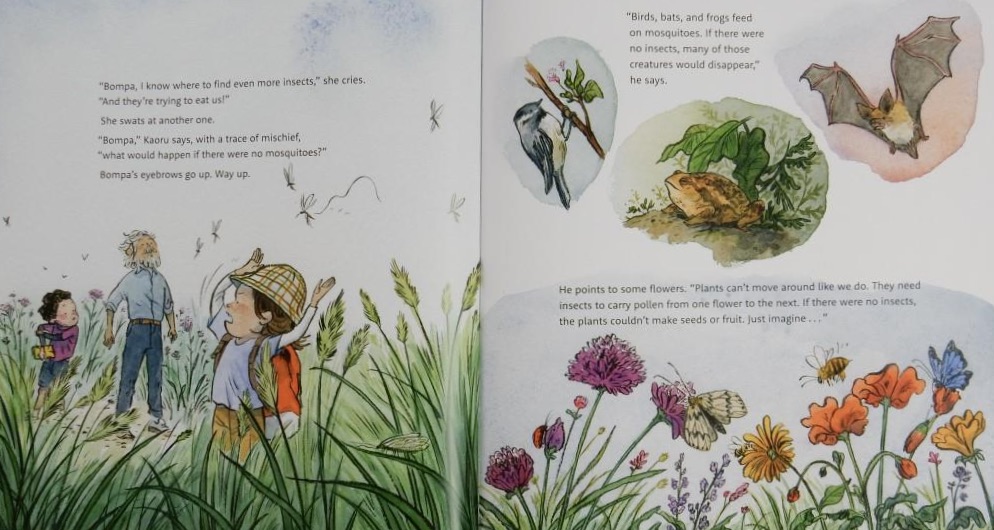
The story ends with the three enjoying a picnic and is followed by a page from Kaoru’s field journal, a peek at the contents of Sakina’s backpack and a final spread with some additional insect facts.

David Suzuki is a renowned scientist/environmentalist and this engaging book is published in partnership with the David Suzuki Institute; his co-author, Tanya Lloyd Kyi, has written numerous books for children. Qin Leng’s watercolour illustrations are a delight, bringing out the intergenerational love between the characters as well as showing details of the fauna and flora of the environment the three explore.
What Will I Discover? / The Stars

These are both Greystone Kids titles – thanks to the publisher for sending them for review

What Will I Discover?
Tanya Lloyd Kyi and Rachel Qiuqi

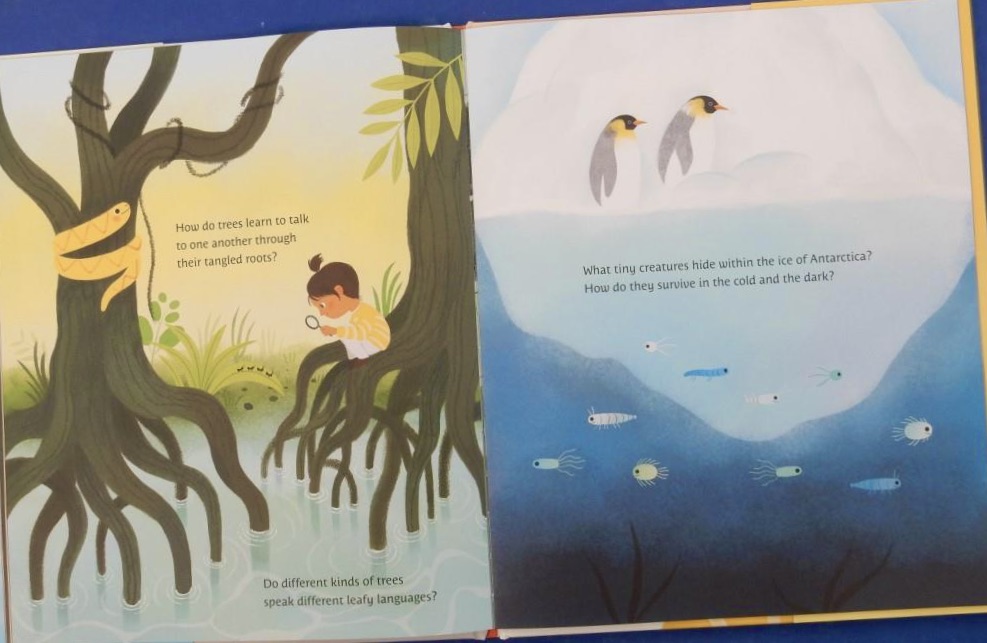
‘Sometimes I think scientists know everything about the world’ muses the girl narrator of this book. She goes on to mention several examples of some of what they have discovered: that otters tie themselves to kelp to prevent them floating off during sleep, that the feet of sea stars are tubular; that macaws have bony tongues to help crack hard shells and glass frogs have see through skin to help them hide. She also talks of fossil evidence, looks afar out into space and within the human brain where nerve cells communicate with one another. But even so, our narrator has some yet unanswered questions: why does every humpback whale sing a different song? How many bits of rock bounce and collide in a sandstorm? How do trees learn to communicate through their roots; what tiny creatures hide in the ice of Antarctica and how do they manage to survive?

Then closer to home, ‘How do ideas pop into my head?’ and finally her biggest question of all – that of the title, which is one only she can answer.

The last page asks readers to search back through the book’s pages for 10 tiny images and, enthusiastically underwrites ‘investigating, inventing, or creating’ as necessary qualities for scientists, concluding that despite extensive research in all STEAM areas, we humans still have so much to learn.
Tanya Lloyd Kyi offers an open invitation for young readers be they at home or in the classroom: always be curious and look for answers. This is underscored through Rachel Qiuqi’s alluring scenes including those of seascapes, the jungle, the desert, flora and fauna, dinosaurs, outer space and neurons within the brain.
Narrative non-fiction recommended for KS1 learners.

Also likely to appeal to readers with inquiring minds is

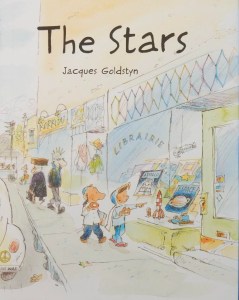
The Stars
Jacques Goldstyn (translated by Helen Mister)

Set in Montreal, this story introduces Yakov who acts as the book’s narrator. he’s the older brother of three sisters who he has to take to the park every day when he’d much prefer to be reading about space. Into space is somewhere he aspires to go one day in the future; meanwhile he constructs rocket ships from empty packaging, His father is against his aspirations but his mother is more encouraging. 

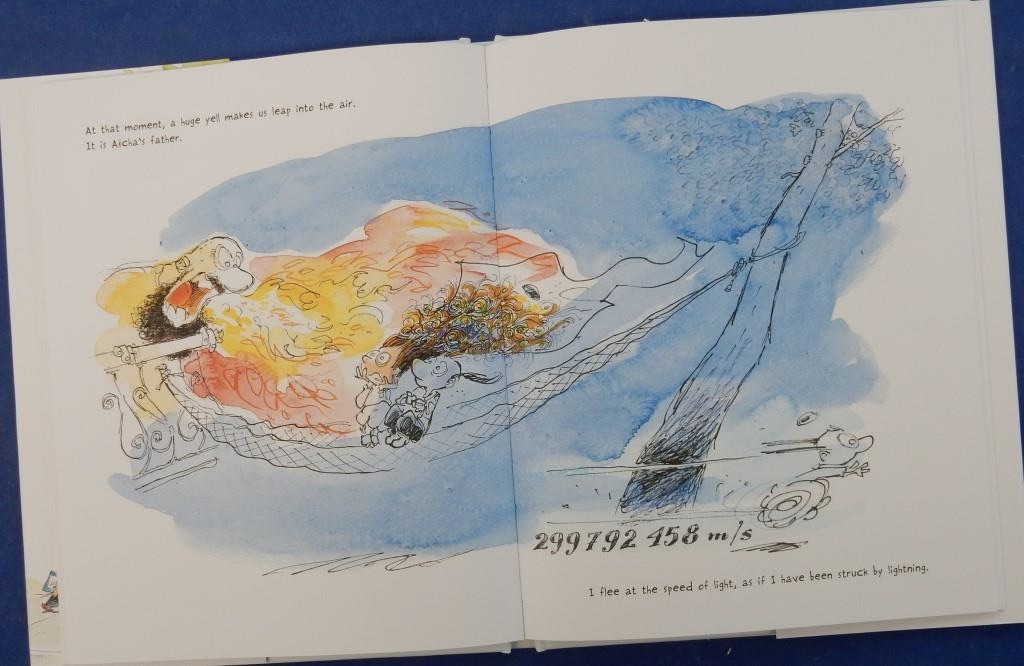
One day at the park Yakov meets a girl, Aisha, reading about space while supposedly minding her siblings. It turns out that she and her family have just moved close to where Yakov’s family live. With a shared interest the two become great friends and spend time star gazing together. Both fathers are far from happy and even erect a wall between their two homes to prevent Yakov and Aisha from meeting.

Years pass and Yakov becomes a scientist working at NASA. One day he attends a big international astronomy conference and guess who is also attending. Since then they’ve not been apart.

Author/illustrator Jacques Goldstyn presents a fair amount of information in telling this story of two young people who, against the odds, pursue their passionate interest in the stars and the universe.