Made for Each Other

Made for Each Other
Joanna McInerney, illustrated by Georgina Taylor
Big Picture Press

Joanna McInerney explores the symbiotic relationships – evolved interactions – that exist between different organisms living close together often for their mutual benefit. Using examples between animal and plant, and between two kinds of animal, she takes readers to various forest locations, beneath the waves, onto the plains and to tropical jungles and rainforests presenting different kinds of symbiotic relationships.

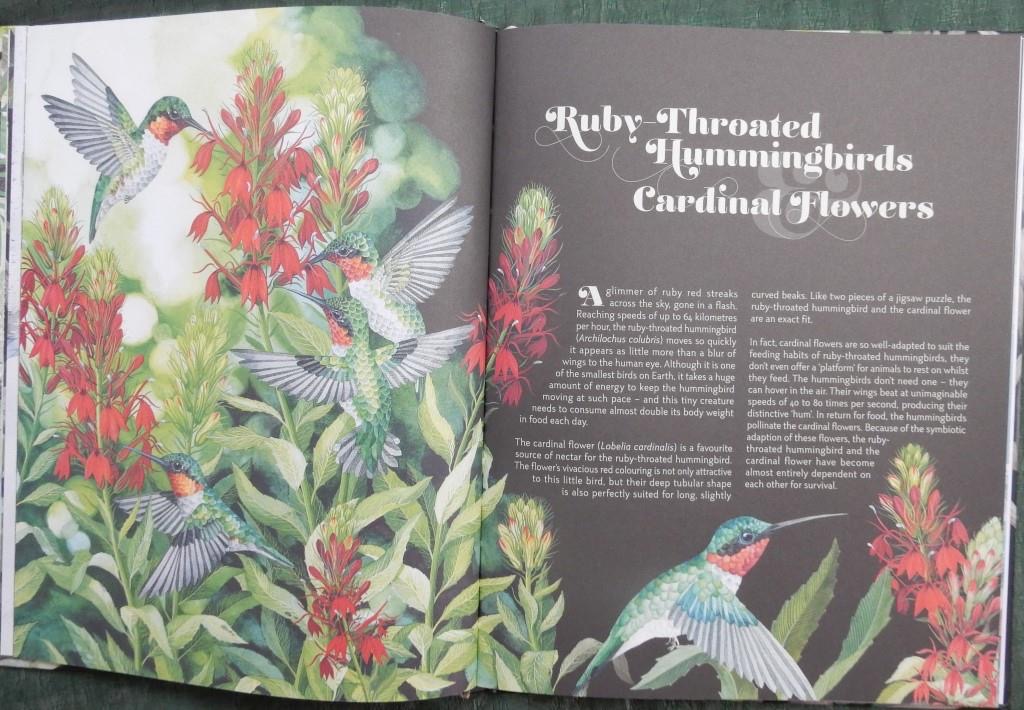
One instance of mutualistic symbiosis is that between the tiny Ruby-throated Hummingbirds and cardinal flowers. These red flowers are one of the birds’ favourite sources of nectar, while their tubular shape is well-suited to accommodate the birds’ beaks. A hummingbird hovers in the air, wings beating and as well as feeding on their nectar, the birds collect pollen from the cardinal flowers, transferring it to another on the next feeding stop. Over time these two species have become almost entirely dependent on one another for survival.

Another example of non-insect pollination is that of the balsa tree flowers carried out by the white-headed capuchin monkeys living in the Ecuadorian rainforest treetops. The process of evolution has ensured that as much pollen dust as possible is transferred when the monkeys feed from flower to flower.

Moving under water, we learn that remora fish have a specially adapted dorsal fin that functions as a sucker by which the fish attach themselves to sharks and thus conserve energy while at the same time feeding on the leftovers of their carrier sharks. In return the hosts receive what the author terms ‘a type of exclusive spa treatment’ with the remoras nibbling at dead skin and shark parasites.

On the Serengeti plains of Eastern Africa can be found one of the most well-known symbiotic relationships: that between the little oxpecker birds and giraffes. The former tend to spend much of their time close to their hosts and use their curved beaks to remove giraffe parasites. Using their two backward-facing toes to cling even to moving giraffes they also keep a watch for predatory animals. The oxpeckers make use of giraffe hair that which they pluck from their hosts to line their nests.

Each of these examples, as well as the other seventeen, are strikingly illustrated by Georgina Taylor. Every one of her artful watercolour compositions of her subjects are reminiscent of Audobon, the 19th century ornithologist and painter.
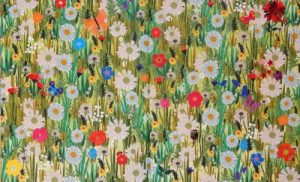
Bee: Nature’s Tiny Miracle

%0A

Bee: Nature’s Tiny Miracle
Britta Teckentrup and Patricia Hegarty
Little Tiger Kids
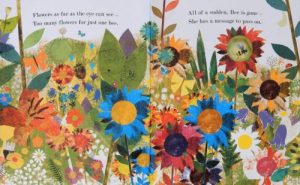
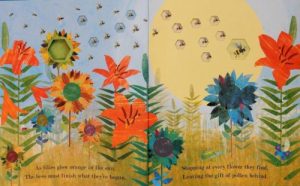
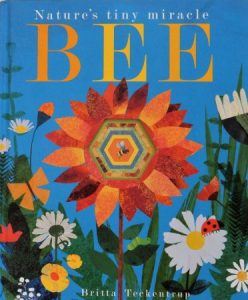
Buzzing with bee-u-ty, this sent shivers all through me; right from that arresting die-cut front cover with its centrally placed sunflower, through spread after spread of exquisite collage-style scenes linked by strategically-placed, die-cut hexagons, to the glowing endpapers: it’s just SOO breath-takingly gorgeous.

%0A

Stunningly beautiful endpapers

With each new book from the inimitable Britta Teckentrup, I think, she won’t better this; but, she’s done it again here in this glorious collaboration with Patricia Hegarty whose rhythmic rhyming text transports readers and listeners, accompanying a single bee as she travels here and there, flitting from flower to flower on a vital, life-giving journey –

%0A
    Gathering nectar as she goes,
From every foxglove, every rose.
Dusty with pollen, the little bee
Buzzes, buzzes, busily.

It’s almost as though you can smell the sweet-scented flowers …

%0A

and hear the sounds of that bee and of those back at the hive. For they in turn hear bee’s crucial message – with the vast numbers of flowers, it’s too huge a job for a solo bee- and join her in that all-important role of pollination …

%0A

until:
‘ … A tiny miracle occurs.
For every plant and flower you see
Was given life by one small bee.

What a testament to one crucially important little insect and its symbiotic relationship with plants. The author gently imparts nuggets of scientific information into her poetic text as she tells of pollen harvesting and transporting; that bees use the sun to navigate by; that bees communicate one to another and crucially, that the life of most flowering plants is dependent upon them.
Bees have become almost an endangered species, yet not everyone is aware of either the contribution they make to our precious planet, or the magnitude of the crisis of their dwindling numbers. I’m currently living in Stroud, which claims to be ‘Britain’s First Bee Friendly Town‘. May there soon be many others that follow suit. There is a snag though, this ‘bee friendliness’ seems to give my partner tacit license to allow bees to build a nest right above my front door; and to let a large area of our front garden become a wild ie ‘bee welcoming’ space!
This book may well start a small revolution. It’s certainly a MUST have for every family bookshelf, early years establishment and primary school.
Now try this: Sit comfortably, close your eyes, and imagine yourself into one of those stunning scenes from the book; place your lips close together, inhale through your nostrils, place your finger tips gently just inside your ears, then slowly exhale, also through the nostrils, making a deep buzzing sound in your throat like a bee: you will hear a ‘swarm’ of bees in your throat. That’s brahmari or bee breath and it has a wonderfully calming effect. Just like this book, although that’s exciting too.

WNDB_Button localbookshops_NameImage-2