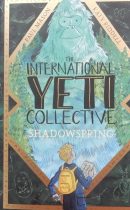
The International Yeti Collective: Shadowspring
Paul Mason, illustrated by Katy Riddell
Little Tiger
The Yeti Collective is a worldwide organisation with each of its strands having responsibility for an element of conservation while simultaneously aiming to avoid human detection.
Shadowspring (underground water upon which all wildlife and the humans depend) is under the protection of the Greybeards (the British group) but now somebody or something is interfering with the water levels and things are looking bad for the inhabitants of Tadpole’s community.
Tadpole (she of unripe character), daughter of the sett’s leader, Shipshape (she in perfect order), is next in line to become the Greybeards’ leader, a role for which she feels anything but fit.
Despite the precedent for avoiding humans contact, like her grandfather before her, Tadpole meets a human; his name is Henry, a boy just adapting to boarding school life.
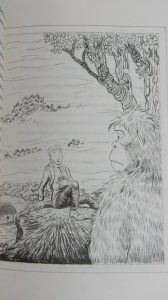
Now, on account of the danger the Greybeards are facing, Tadpole and Henry (aka Hen-ree) must work together: an extremely dangerous undertaking ensues.
It’s a delight to enter and share in this world with its highly pertinent environmental messages, that’s populated by wonderful characters such as the two main ones in this story.
I missed the first book in the series, but I intend getting hold of it forthwith; I’m sure it too will be a superb read.

Astronuts Mission Two: The Water Planet
Jon Scieszka and Steven Weinberg
Chronicle Books
AstroWolf, LaserShark, SmartHawk, and StinkBug, the four NNASA agents, return having previously failed to find the perfect Goldilocks Planet, with a new mission, to find a planet fit for human habitation.
Having splash-landed on Water Planet, they discover it is awash with clams, a power-hungry, sub-aquatic force led by their president, P.T.Clam . Said creature is absolutely gushing with praise about his home planet and more than a little keen to swap his planet of residence for Earth. the polluted waters of which he claims to filter. Now why might he be so eager for that exchange?
It appears that he’s willing to do a special deal on the quiet with AlphaWolf (the mission’s leader) but another clam, Susan B. Clamthony tells a rather different story
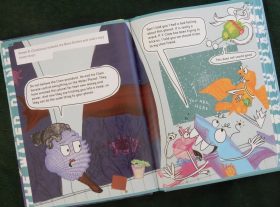
and it’s one that the Astronuts really need to hear. It sounds as though not all the residents of Water Planet are as dastardly as their leader.

Packing the adventure with punny humour, hilarious interchanges and with a bounteous brio, Jon Scieszka, via his Earth narrator, cleverly knits together environmental information and facts about climate change. Combined with Steven Weinberg’s equally zany collage illustrations, every one of which is as immersive as the watery environment of the story’s setting, (love the spread on how they were created) this is a terrific second instalment.
More please! I hear youngsters, (especially fans of graphic novels) cry. (And this reviewer.)


 Red Reading Hub - Jillrbennett's Reviews of Children's Books