
The Most Famous Rhinoceros
Dianne Hofmeyr and Simona Mulazzani
Otter-Barry Books
The inspiration for this moving story reimagined by Dianne Hofmeyr, was Albrecht Durer’s celebrated woodcut print of the rhinoceros sent from India to Portugal in 1515, the woodcut now being housed in the National Gallery of Art, Washington.
We read how Princess Beatrix and her sister receive a one-horned animal as a gift from the Sultan of Gujarat, a creature Beatrix hopes will be a unicorn. However she’s disappointed to see standing on the sea shore straight off the ship, a very large bulky beast with a small stubby horn on the tip of its nose. Genda, is what she names the gift. Her father informs her it is a rhinoceros and mounting his stallion, he leads the animal, along with a host of other creatures, the queen and her entourage through the crowds to the palace.
Beatrix has already formed a bond with the rhino and is horrified to hear the following day, the king announcing a fight between the rhino and an elephant to settle a squabble between her two brothers.
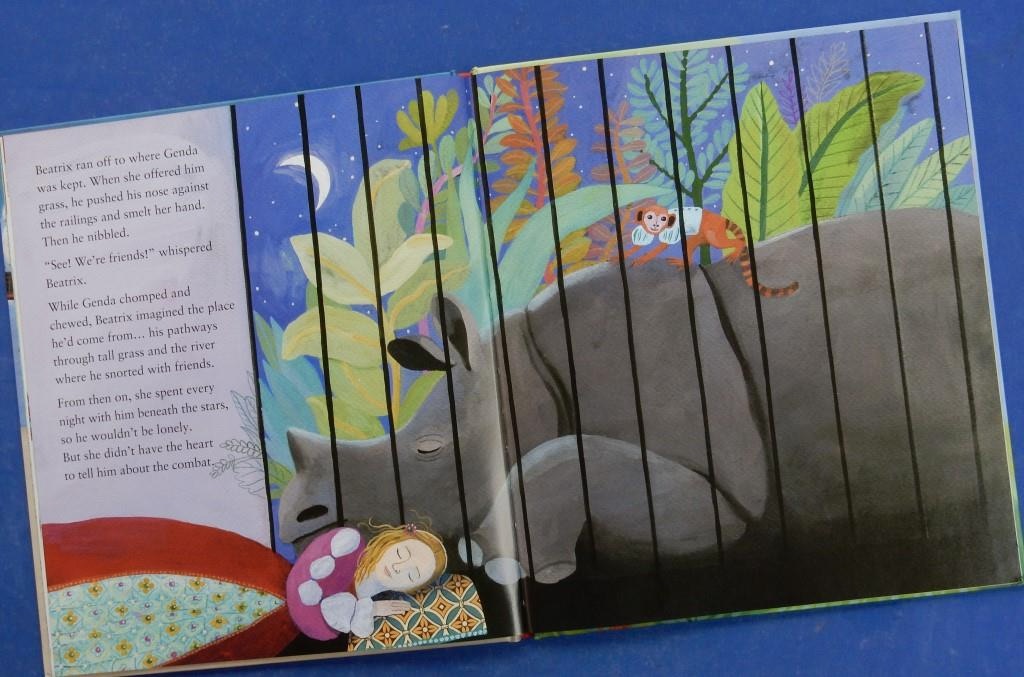
From then on she sleeps alongside Genda’s enclosure every night leading up to the combat, a matter she doesn’t tell her new friend about.
However, come the day of the contest, the two animals face one another but no fight ensues, no matter how much enticement the creatures receive.

What will be the fate of Genda? Her brother João demands he be sent away but Beatrix begs that the rhino is returned to India and given his freedom. Not long after a ship sets sail with Genda on board and Beatrix bids her friend a fond farewell but …
Animal lovers horrified at the treatment of creatures such as Genda in this story, sent over vast distances in return for favours from their recipients, will applaud Beatrix’s caring attitude and desire to get this gift sent back from whence he came. Simona Mulazzani’s richly ornate illustrations capture beautifully the period in which the events are set, making the telling even more poignant. They show the contrasting natural beauty of the rhino with the elaborate finery of the human characters and the adornments placed upon Genda for the parade and the fight.



 Red Reading Hub - Jillrbennett's Reviews of Children's Books