Wild Magic: Legend of the Black Lion Abiola Bello, illustrated by Emma McCann Simon & Schuster
Meet twins Misha and Ziggy. They each have a secret superpower: Misha can talk to animals and Ziggy can transform into animals of all kinds. As the story opens the summer holidays have just started when their Dad, a wildlife photographer, receives a phone call from his producer. He’s off to Ethiopia the following week to film the Black Lion recently spotted there. However when he rings Grandma Joy to ask her to look after the twins, he discovers she’s somehow got the dates mixed up and is on a Caribbean cruise. Consequently Dad has no option but to take the twins with him to Ethiopia. Needless to say they’re absolutely thrilled: maybe they will see a Black Lion.
However, soon after arriving Dad receives bad news; the Black Lion hasn’t been seen for several days. Moreover poachers have been sighted in the area. While Dad and the crew work on a new plan to find the lion, the twins start finding ways of their own to communicate with the local animals.
Before long they learn that the Black Lion has been hurt when poachers tried to steal him
and now he’s in great danger.. The twins are determined to save him but can they?
Abiola Bello’s pacy tale is just right for younger KS2 readers. Emma McCann’s black and white illustrations add gentle humour to the telling and in addition to the story there are some facts about both Ethiopia and black lions.
Red Reading Hub is delighted to be a part of the blog tour for Dragons Love Underpants
Dragons Love Underpants Claire Freedman and Ben Cort Simon & Schuster
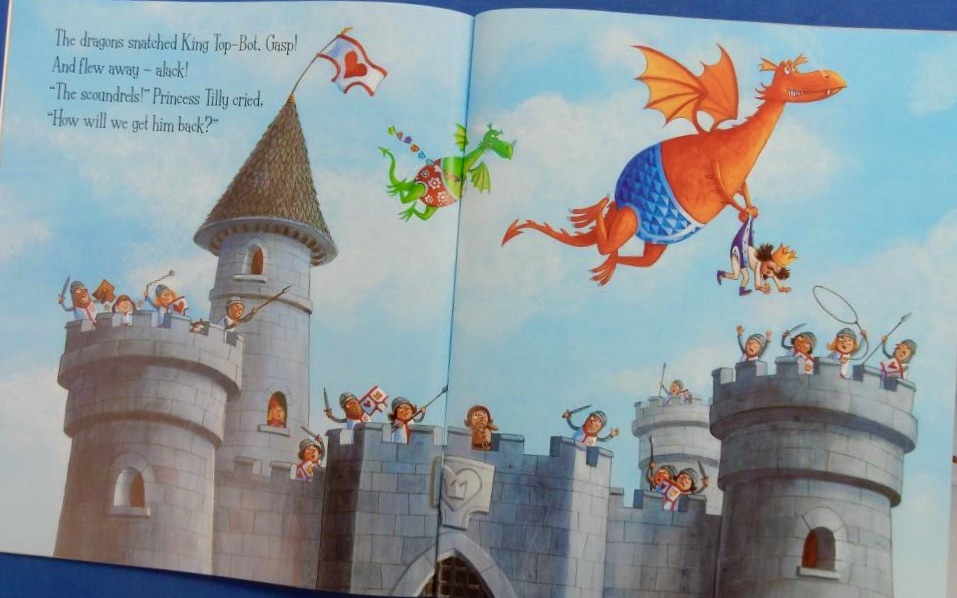
The latest in the pant-loving series features a group of monstrous marauders that flew around the countryside in bygone days sporting pants pinched from anyone and everyone. However being such fiery beasties, the dragons had a problem of the blazing kind, for no sooner had they donned their new undies, they accidentally set them on fire. OUCH! More pants very soon, was the order of the day and where better to find replacements than the Kingdom of Pantasia ruled over by pants aficionado King Top-Bot. Off they set at top speed. At this point Faith (4½) with whom I was sharing the story commented, “I have an assortment of pants. They’d better not come and take any from my bedroom.” Once aware of the winged invaders, the king sent out his most loyal knight to do battle with the dragons, but the knight merely made a rapid dash for it. Meanwhile the poor king was airborne, gripped firmly by the seat of his pants by one of the dragons.
Soon after, a ransom note arrived at the palace demanding piles of pants in exchange for the monarch who otherwise would get his bum badly burnt. Young Princess Tilly cooked up a clever plan. She headed over to the forge, grabbed her hammer and fashioned some very special undergarments of the fireproof kind. (Faith wondered how the dragons managed to stay up in the air with such heavy pants. “They’d need to flap their wings really really hard,” she said. Having received their new garments, the dragons stuck to their side of the deal, they set free the King and in true fairy tale fashion, everyone lived happily ever after. Claire Freedman has woven a new and splendidly silly rhyming narrative for her seventh underwear yarn for which Ben Cort has conjured hilarious scenes of fearsome fliers, fearful fugitives and one smart young princess.
Now here are Claire Freedman’s Top 5 Tips for Writing in Rhyme
1) Get Used to Rhyme If you are a total beginner at writing in rhyme, keep things simple to start with. Nursery rhymes can be a quick and useful resource. Maybe try a couplet rhyme – two lines that rhyme together – such as ‘Humpty Dumpty sat on the wall, Humpty Dumpty had a great fall’. ‘Mary had a Little Lamb’ is a good example of a four-line verse where the second and last lines rhyme. Nursery rhymes generally have simple metres and memorable rhythms for a child to read. Plus, nursery rhymes are also easy to run through in your own head.
2)Let Your Mind Drift Once you have your chosen rhyme metre in your head, try and take it with you as you go through your day. I often find the best rhymes come to me whilst having a shower or walking to the shops. I find it helps to continually count the syllables of each word, so they fit. If one word doesn’t fit the rhythm of your rhyme, play around with other words in your head, perhaps with fewer or more syllables. Sometimes you can get it right by just changing the order of the words. Keep repeating the lines until you feel satisfied that they flow well.
3) Use a Rhyming Dictionary This might feel a bit like cheating, but a lot of writers use them – including me! Sometimes just flicking through the pages can give me an idea for a different rhyme that might work better. My personal rhyming dictionary is also full of other rhymes of my own that I’ve scribbled down, so it has become a brilliant reference book for when I’m stuck! A thesaurus is useful too. If I’m trying to convey a particular feeling or atmosphere to my story, and I can’t get my chosen descriptive words to rhyme or fit the metre, sometimes I’ll find an alternative (or better) word in my thesaurus.
4) Map Out Your Story I love writing in rhyme, but it is a challenge. I have to think – not only about the rhyme, rhythm and metre, but also the pace of the story. Picture books usually have twelve spreads and, ideally, each spread will be illustrated differently, to help the book move forward as much as the words do. Sometimes it can help to map out your story in your head first, or write it down. Then you know what you have to fit into each spread. Of course, write with manoeuvrability – your map is a helpful guide, but you dictate the story!
5) Read Out Loud Picture books are perfect for reading out loud, and for enjoying as a shared experience between parent and child, family and friends, and also teachers and pupils. So, they MUST read well. It’s important to read your own work out loud to yourself. Listen out for any clunky rhymes and words that don’t flow as they should. When working on a rhyme, I can read it countless times, and it seems fine to me. But when I pick it up a few days later and read it out loud, I’m disappointed to find areas where the rhyme or rhythm clearly doesn’t work. Read out loud to friends and family too. It really helps to identify areas that need more attention.
Enjoy a sublime time with rhyme!
Please visit the posts of the other blog tour participants too.
With parents so busy they seldom have time to play with her, Mia feels alone, so much so that it feels as though she lives far out to sea on a small island empty save for her.
One day an unexpected parcel arrives; it contains a book and it’s for Mia. Because she’s never had a book of her own before, this one feels extremely important and that’s before she’s even looked inside the covers. As she begins to read, Mia notices that something amazing is happening: with every word, Mia’s island becomes less empty. Gradually it fills with plants and creatures, and the air is perfumed with what to Mia feels like hope. As she continues reading a bridge starts to appear, growing gradually stronger all the while.
She leaves the island behind and a world of connections opens up with friendships and amazing possibilities in abundance.
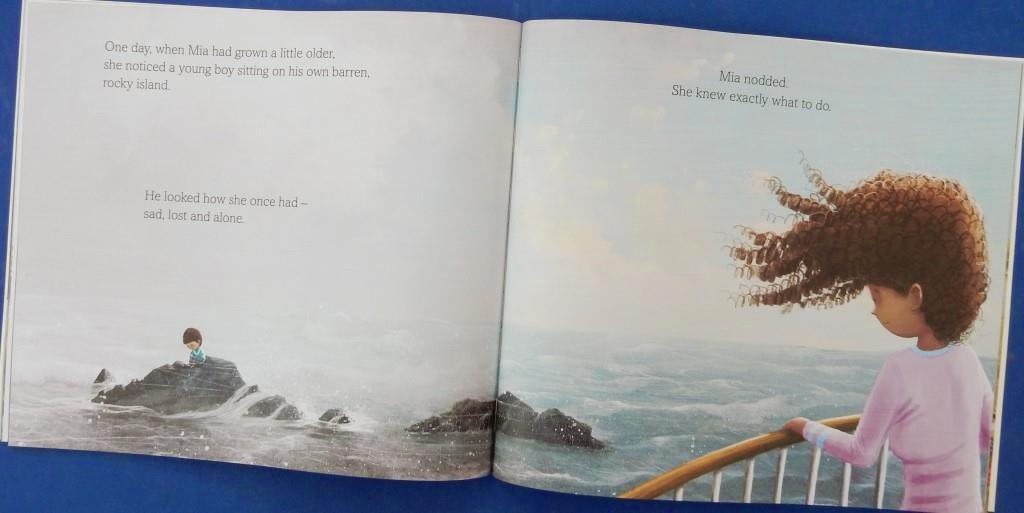
Tom’s use of the bridges metaphor is SO well done for the target age of readers: for instance ‘Soon it was solid arches of dependable stone, easily spanning the distance between her and the small island she had now left behind.’ It’s wonderful to see how a slightly older Mia sees a lonely boy and immediately knows what to do.
Leaving her very first book on his doorstep, she passes on the love of reading to him, knowing that before long, his world too is going to be ‘full of bridges, connections, life and laughter’.
Promulgating the power of story and reading, this is a truly beautiful book both verbally and visually. A must have for primary classroom shelves and home collections to share, to give, to inspire and to cherish.
These are new stories about favourite characters – thanks to Graffeg and Simon & Schuster for sending them for review.
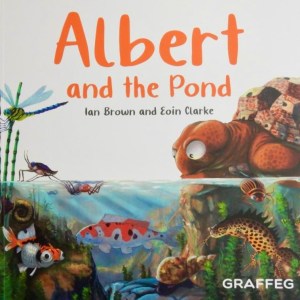
Albert and the Pond Ian Brown and Eoin Clarke Graffeg
There’s a new pond in the garden where Albert tortoise lives, quite a deep one, so he knows not to venture in. Suddenly as he stares into the water, he notices a pair of eyes staring straight at him, but they blink and disappear. Albert tells all his friends, who take a look too, but the creature merely blinks and swims away.
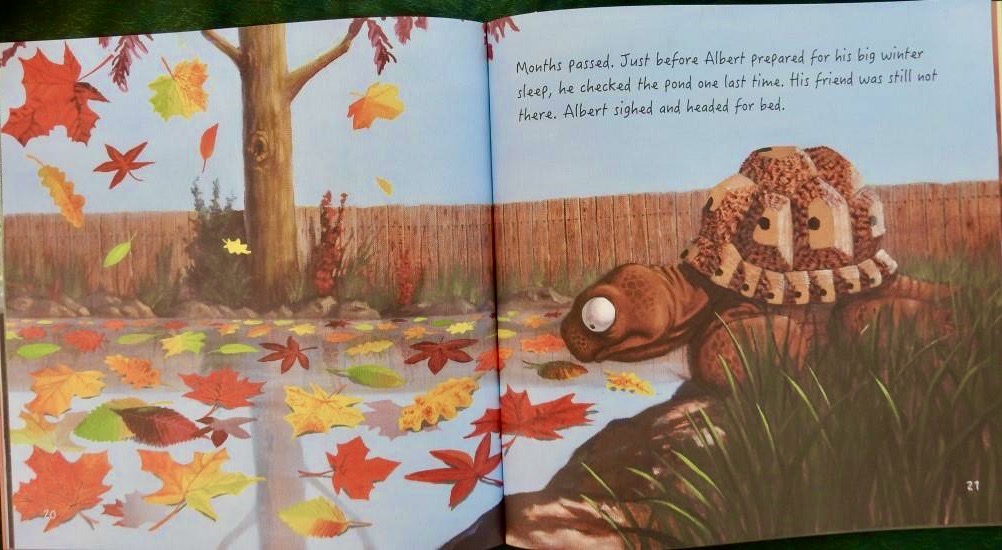
No matter the weather, Albert visits the pond to check on his new pal every day but one day there’s no sign of the little creature and even though his garden friends try to cheer him up, Albert still misses his newest friend. Autumn arrives and Albert makes a final visit to the pond before hibernating but of his friend there is no sign, not even a bubble.
The following spring you can guess where Albert heads when he emerges from his sleep and he gets the surprise of his life. Not one pair of eyes but many, many similar pairs are now staring straight up through the water at the tortoise.
Suddenly Albert hears a voice and is astonished to learn that he already knows its owner. How could that possibly be? Appearances can be deceptive …
Young children will love being in the know before Albert and be highly amused to see the efforts of the garden creatures as they attempt to play a game altogether with their amphibian friend.
With Eoin’s wonderful stand out, almost realistic illustrations, so brilliantly expressive and beautifully textured and Ian’s gently humorous and educative text, Albert’s numerous fans will delight in this latest tale. (Those new to this particular character can find out about the real Albert in the back matter after the story.
Supertato: Mean Green Time Machine Sue Hendra and Paul Linnett Simon & Schuster
One night in the supermarket Supertato and the veggies are holding in their giggles as they look at Supertato’s baby photos. Carrot’s comment that Supertato looks ‘super cute’ in one picture prompts the spud to say that he hasn’t always been super. Guess who is listening in: of course it’s Evil Pea, who wishes he’d eliminated Supertato before he’d acquired those super powers.
A pineapple’s remark about a Time Machine prompts Evil Pea to start building exactly that. Having collected all the ingredients from various shelves plus some snippings from Supertato’s slippers, he stirs the mixture and hey presto! Three time crystals: one for the backward journey, one to come back and a spare – just in case.
Then with the clock set, wheee!
Baby Carrot is somewhat confused when the pea demands to be taken to see Supertato but she does know a potato and before long right there in front of the pea are all the veggie babies eager to play his game. Having dealt, so he thinks, with all except Baby Potato, Evil Pea approaches him threateningly. The little spud retreats
and you’ll never believe what happened next, although it really, really did.
Super silly and super fun, but that’s what readers have come to expect when they’re in the company of Supertato et al. This one is super exciting too, especially when the revelation about Evil Pea is shared with all the veggies.
A Dancer’s Dream Katherine Woodfine and Lizzy Stewart Simon & Schuster
Recently out in paperback is this lovely story that combines history and fiction to present the story of The Nutcracker ballet from the viewpoint of Stana, a young dancer at the Imperial Ballet School, St Petersburg. In the run up to Christmas, Stana auditions and on account of her feeling for the music, and her imaginative expression, is selected for the leading role, Clara, in a brand new ballet, The Nutcracker.
Stana’s reaction to her selection is tempered with other concerns. She loves the chance rehearsals (overseen by the composer, Tchaikovsky, himself) bring to escape from worries about her older sister who is in hospital, but the worries are still there especially the cost of her treatment. She worries too about the reaction of her best friend who wanted to play the lead; and of course, is she up to the part? However, she also feels that if she dances well enough, her sister will recover, which is a powerful motivator as well as a huge responsibility.
Although she receives kindness and approval from Tchaikovsky, the first reviews for the ballet are disappointingly negative. ‘Stana’s magic chance to shine melted away’ we read. However, just when she’s feeling that nothing is working out as she hoped, she receives good news and a wonderful, surprising gift. Christmas will after all be brighter than any dream she might have had.
This magical book of kindness, friendship, determination and self-belief would make a smashing Christmas present for readers who already love the world of ballet or are yet to discover it.
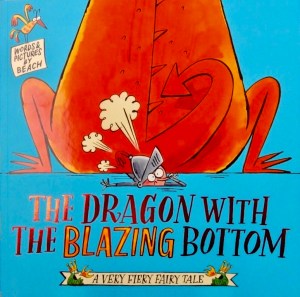
The Dragon With the Blazing Bottom Beach Simon & Schuster Children’s Books
Back in the days of yore, disaster has struck: Sir Wayne’s dragon has lost his fearsome flame. Not a flash or a flicker can he raise no matter how hard he huffs and puffs. Sir Wayne’s alternative ideas go down like a damp squib;
only a flaming breath will do.
So what is causing this lack of fire? Could it be those spotless teeth or is his tongue too pink? The trouble must be down to diet, the knight suggests, but no need to worry. Sir Wayne has a dietary plan so sizzlingly hot it just can’t fail.
A single hot dinner comprising electric eels, half a dozen sacks of coal, an unspecified amount of oil, a couple hundred fireflies, a blazing log fire, a barbed wire-wrapped cactus, a heat-seeking rocket, a burning bush, sparklers and fireworks so long as they ‘WHOOSH!’ and finally and most disgustingly, a small piece of cheese – “Almost as green as the snot from a sneeze.”
It most definitely looks astonishing. Foolproof surely? Erm … The proof of the dinner is in the eating …
Beach has certainly created a sure fire winner of the whiffy kind with this, which apparently is the start of a series. The rhyming text reads aloud splendidly and with comical incidents aplenty, the illustrations are suitably hilarious. I can’t imagine a single child failing to respond with spluttering delight. Bring on the next episode say I.








 Red Reading Hub - Jillrbennett's Reviews of Children's Books