Squirrel Shady: The Golden Acorn / The Elementals: Peo Saves the Trees

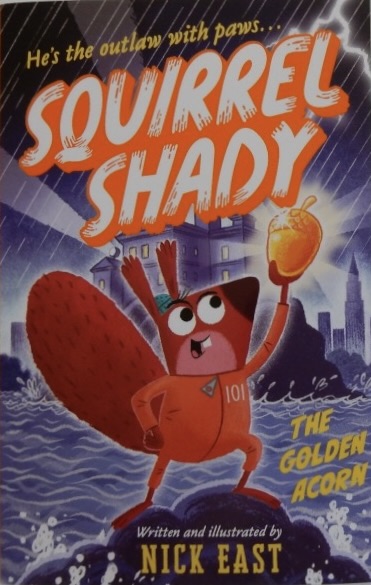
If ever there was a zany story full of twists and turns and ups and downs both physical and mental, then this tale of Shady Squirrel’s attempt to steal the Golden Acorn of Destiny is it.
Meet Shady a crook who’s found himself back in Badun Island Prison, cell 101, the worst of all cells, with only a gang of beetles for company until that is, he gets a snake as cell mate, one Nadia Scales and she has an escape plan in her mind. And escape is what both Shady and Nadia manage to do.

Pretty soon Shady is back in his hidey-hole in an oak tree. However his freedom is very short lived for suddenly he’s seized by the neck and dragged before tortoise crime boss, Naughty Tortie, who wants Shady to rob the Big City Bank and steal the Golden Acorn from Mayor Vixford Slick’s vault. Trouble is there’s no refusing Tortie and so begins the mega-heist of Shady’s career.

Almost immediately he becomes reunited with Roxy ‘the Paws’ racoon, his old pal cum partner in crime. Enter Tina Two Hoots, Shady’s erstwhile hero, who has taken up knitting. She is just one of the criminal creatures – rivals or otherwise – that he encounters. Will Shady manage to get his paws on the loot or will it slip from his grasp?

With a wealth of Nick’s amusing black and white illustrations adding to the fun, this is a book for readers who enjoy a tale full of crazy shenanigans. I read it in a single sitting.

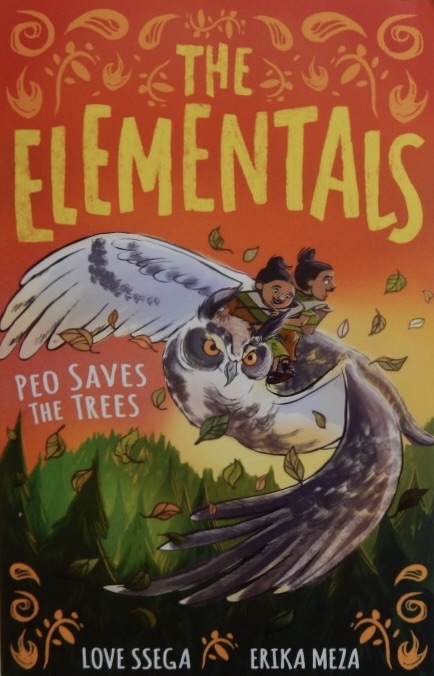
The Elementals are an adventure loving group of friends who are learning to use their superpowers to care for our world. Like the other children on their island home of Sealand, each has a power that connects them to nature. Peo and her twin brother Elu are children of the soil and Wanzu is connected to the wind.

As the story starts Peo asks Wanzu for his help before taking her friend to meet her and Elu’s grandparents. Then the following morning Peo tells the others that to her surprise, it seems as though the trees are trying to talk to her. There’s a message calling for help from an island close by. Using Elder Oak as their raft, off they sail – the twins, plus Maali and Kikay, with Wanzu playing his harp to speed them on their mission, towards what they think is an island of trees. When they arrive though, all the trees have gone. Now it’s up to the friends to work together, solve the mystery and save the trees. But where and how have they gone and why?

With its combination of friendship, adventure, co-operation and the outdoors, plus Erika Meza’s black and white illustrations. this is a great story for new solo readers or for sharing with a class.

Medusa Gorgon’s Deadly Side Eye

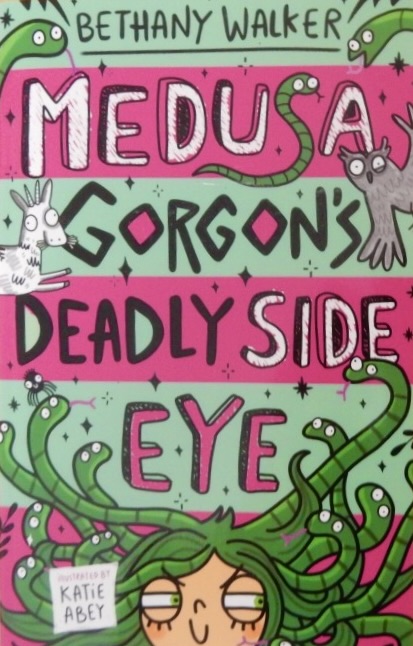
For me this was even funnier than Medusa Gorgon’s Bad Hair Day: I found myself laughing at almost every turn of the page. Again it’s written in diary form with lots of amusing illustrations by Katie Abey.

After six weeks spent holidaying with her friends it’s early September and Meddy G has returned for a new term at Shadewell Academy where she’s now entering year eight and her intention is to be the best Year 8 she can. She is, she tells us, fully committed to 21st century life and her snake friends Mr Car and Ian have seemingly, disappeared.
Things start pretty well, other than her being chastised by headteacher Ms Williams about her uniform style. However, it’s hardly any time before Meddy’s stress levels start rising. It’s during the first whole school assembly when she’s called up onto the stage by the head and is asked to speak about the final day of the summer term. What she announces is … “I … like … performing … magic tricks.” This satisfies Ms Williams who then proceeds to ask her to perform more magic in assembly the following week.

Before that though, she enjoys a weekend shopping trip to Shadwell Mall. ‘Does shopping count as a hobby in the twenty first century,’ she wonders. I loved her comment re Boots, which she’s bemused to learn does not sell footwear.
Suddenly Meddy’s stress levels start going through the roof, to the extent that she accidentally turns Ms Williams to stone. All this by the end of Act 1.

Highly amusing too is the H.E.A.T (Hermes Express Air Tortoise) correspondence between Hades and Athena interspersed between the diary entries.

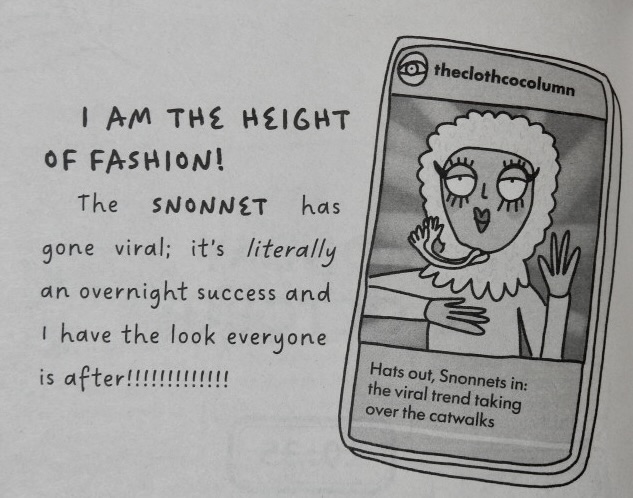
I’ll leave readers to discover what unfolds in the 2nd and 3rd acts apart from saying that there’s a sudden new trend in ‘snonnets’

with Meddy becoming a fashionista. Enough said! That and the appearance of new boy Percy who makes Meddy get all hot and bothered when he’s around. (What she isn’t aware of is that Percy is actually none other than Perseus, sent on a mission to take down Meddy G.) Oh and further incidents of turning people to stone.

Medusa Gorgon is based (very loosely) on the Medusa Greek myth, making it a great choice for young Greek mythology enthusiasts especially. However, other readers who enjoy a good laugh should try it too.

Wilomina: Land of Dreams and Nightmares

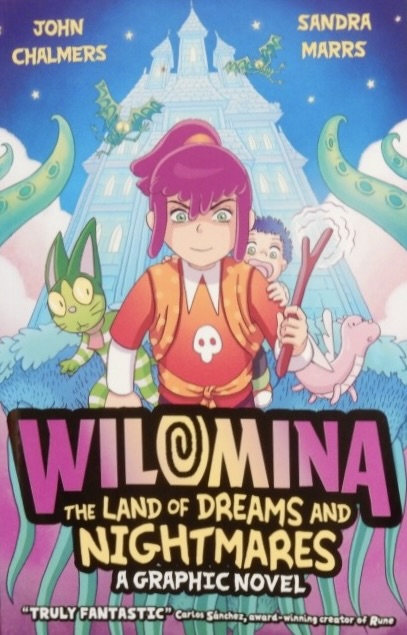
Wilomina, her father, and baby brother Kes, are on their way to visit Mum in hospital when a creature dashes across the road causing their car to get stuck. They’re in the middle of nowhere but Wilomina insists she’s seen a station, dashes ahead and followed by Dad and baby, jumps aboard a train, destination unknown. While Dad is changing Kes, Wilomina meets a talking cat, who introduces itself as Mephisto. The cat tells her that they must leave the train immediately and Wilomina takes a leap and finds herself separated from her dad and brother, in a weird place called Nocturna, where, so Mephisto says, dreams and nightmares come from. It seems though, as if the nightmares are taking over: can Wilomina trust the shape-shifting cat to help her return to the real world and find her family? Seemingly it’s her only chance so they set off together.

On their travels they encounter snakes, spectres, spider-witches, dragons; they have to cross monster-infected waters on a raft before reaching the Premonition Library where mazes and monsters abound. In the library they encounter the librarian who leads them to a massive book-filled room, the maps and gateways section filled with millions of books. ‘Good luck! And remember: inner calm’ she tells them leaving them to search. Wilomina discovers a book that invites them to ‘solve this puzzle to find your gate to the Waking Hours’ with two small envelopes and the words, ‘choose carefully or perish!’

What next? The worst thing is that Wilomina is slowly but surely transforming into a fierce werepire. Will this nightmare ever end? Can Wilomina overcome her inner monster, find her dad and brother and get to the hospital to see Mum?

With a courageous protagonist, this spooky (but never too scary) magical adventure, vibrantly illustrated in graphic novel format will be devoured by readers who prefer their stories told mainly through visuals. This surreal story continues in book 2 coming next year.

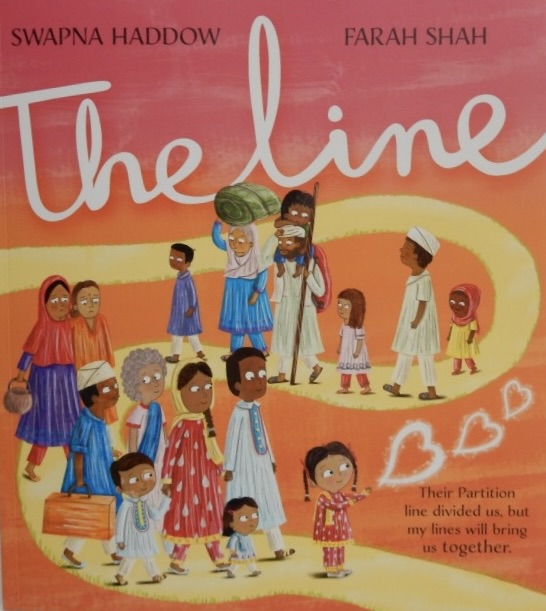
The Line

The Partition of India that was drawn up by the British almost eighty years ago remains a contentious issue. Yes the country became free from imperialism but political tension and rivalry continues between India and Pakistan to this day. The battle for the disputed Kashmir, the violent formation of Bangladesh and Islamic radicalism’s roots are indicative that the 1947 legacy is not truly over.

Sadly, as a frequent visitor to India I see first hand that the lines that divide still exist. I have Hindu, Sikh, Muslim and Jain friends but almost everywhere different communities live separately – a legacy of the British divide and rule policy. Would that a child such as the girl protagonist in Swapna’s story – The Line – been in charge rather than a politician. This girl was familiar with various kinds of lines from early in her life but then one day on her return from school she found that a new line had appeared, one that cut her father’s farm in half, tore her village in two and took her friends from her. Seemingly unnecessary fighting and having to join this new line meant that she and her family had to walk for many days, becoming progressively hungry, exhausted and afraid.

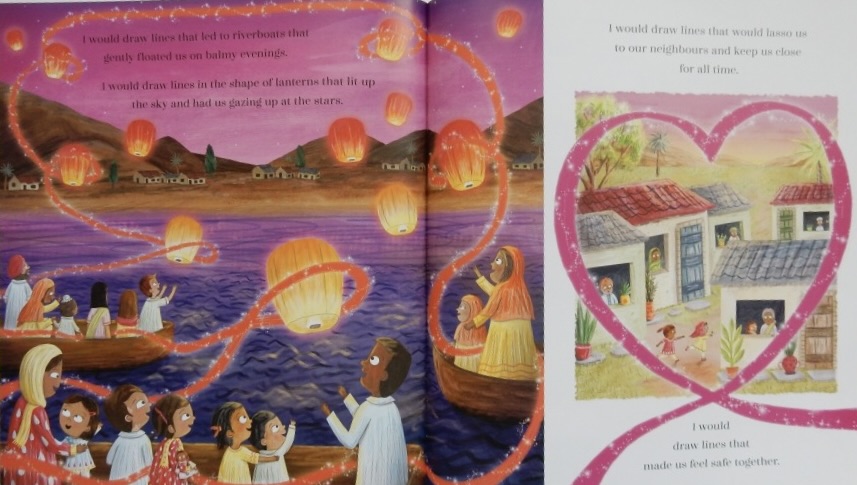
As she walked so the narrator tells us, she imagined what she would do, had she been in charge of a line with so much power. Any line of hers would be full of beauty and gentleness, drawing people together, feeling safe

and wanting to learn more about one another. her line was all embracing and made everyone friends.

Farah Shah’s vibrant colours immediately catch the eye and draw you in to the wealth of details in her illustrations of this powerful and ultimately hopeful story about Partition that everybody – young and not so young – should read and discuss.

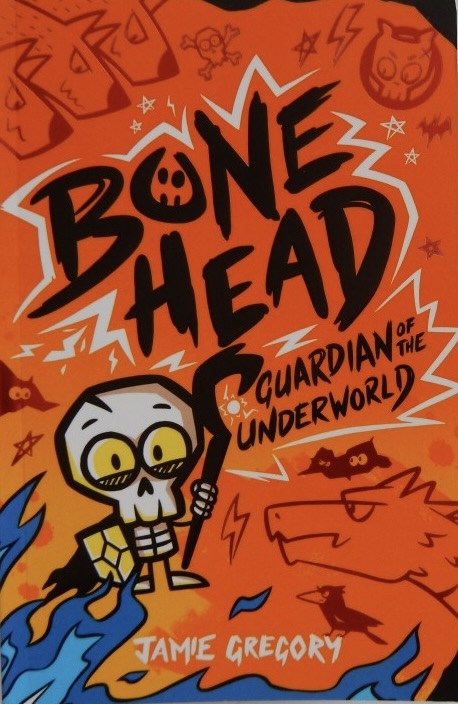
Bone Head: Guardian of the Underworld

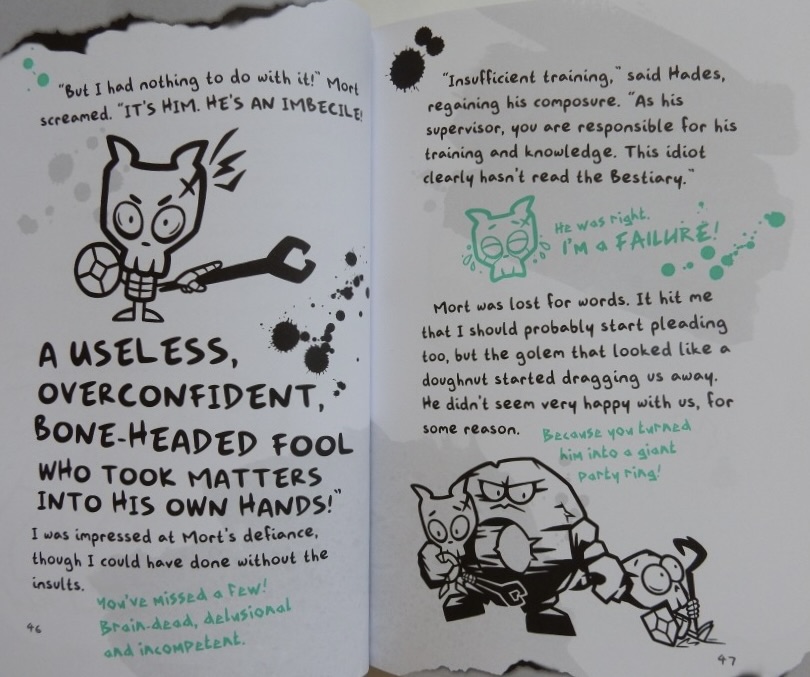
Jamie Gregory’s debut book is an absolute hoot. It takes the form of a diary written by Bone Head aka Demise, skeleton guardian whose days are spent guarding the gates to Hades’ fortress. (with amendments by supervisor Mort who tampers with the text on every page – shown in green).

Bone Head is convinced he is THE BEST and is desperate to get his hero Hades to notice him: the trouble is Hades is hardly aware that he exists.

Then Bone Head makes a terrible mistake: he zaps a ‘little blobby demon’ that retaliates fiercely with a massive blob of smouldering goo, followed by many more, right at Bone Head. The gates of the Underworld are destroyed: Bone Head and Mort are summoned to the fortress by Hades and demoted to the kennels where they will dog-sit Cerberus, his famous ferocious three-headed hell hound. This, Bone Head decides, presents an opportunity to get themselves back into Hades’ good books but Mort quickly points out that both he and Bone Head are made of bones and dogs eat bones. Can the latter keep the two of them away from Cerberus’s jaws.

Of course the hound needs to be taken for walks. Bone Head has a great idea – to use one of Mort’s arms as a fetch stick. Five days later the hound walkers decide their charge needs a change of scenery. Another great idea… resulting in two dogless exercisers. All this in just a few days and still to come are air vermin – they that peck, flap, poop, fly and CAW! dragons and all manner of other beasties.

How will this all end? I’ll guarantee there are plenty more laughs to come but story spoiler I won’t be, just in case that Cerberus gets me in his jaws; instead I urge you to get yourself a copy of this hilarious, chaotic tale as soon as possible.

Nora Nightsky Double the Drama / Mirabelle and the Enchanted Sea Globe

For slightly younger readers:

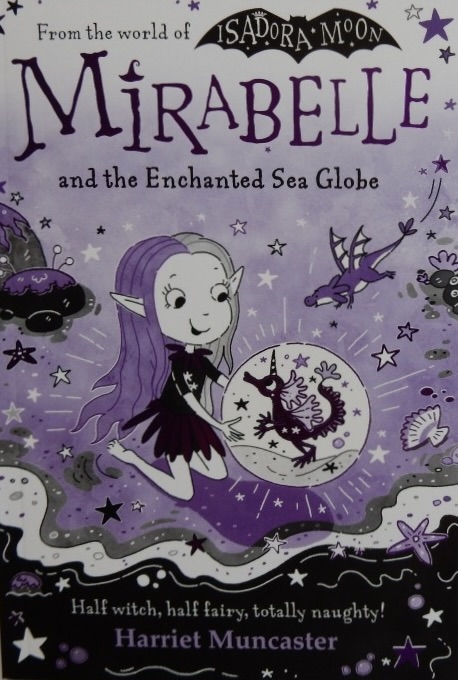
I can hardly believe this is the fifteenth book in the series about the mischievous Mirabelle Starspell half witch, half fairy. It’s half term and Dad tells her that they’re all going to spend the holiday in a cottage by the sea. There they can all immerse themselves in nature and even do some cold-water dipping: a perfect spring break.”We are going to do things the HUMAN way,” Dad says.

However after a day without magic, come the night Mirabelle succumbs to temptation. What will be the outcome? Find out in this latest adventure. Fans will love to immerse themselves in the seaside doings of Mirabelle, Wilbur, and their parents.

Kamizen: Fortress of Lost Memories

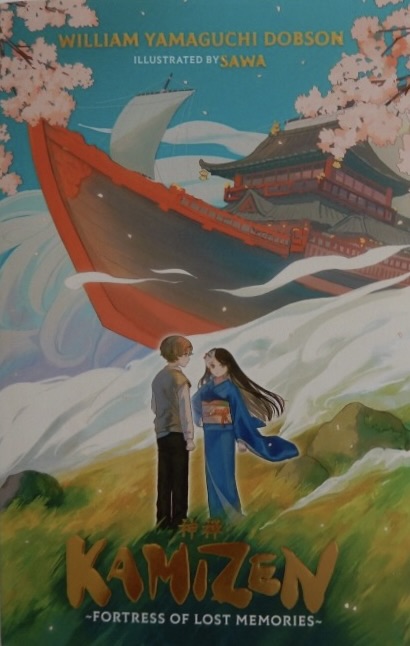
Stuck at home for the summer, twelve year old Jonty is more than ready for adventure when one Friday afternoon he encounters a bonobo in the woods near his Grandpa’s house. She asks him to give her a massage and introduces herself as Koku. She goes on to tell Jonty that she’s a satori and can read human’s minds; therefore she knows that his grandfather has dementia. “Your grandfather has forgotten many memories. You want to recover them, and help him finish his memoir before the sun sets on his life. Therefore gird your loins, fall seven times and get up eight.” she says. ‘I am here to escort you to the realm of lost memories. You have the chance to explore your grandfather’s memories from inside him mind. That’s if you so choose.” In other words he will enter a magical world behind a Japanese Memory gate. It’s there, Jonty must collect lost memories from the time when Gramps was a famous primatologist. Thus begins the boy’s adventure.

Along with Jonty, readers are introduced to a fascinating cast of magical creatures, some eerie, others evil, some cute and all memorable to encounter,

especially for those like myself who know very little about Japanese mythology.

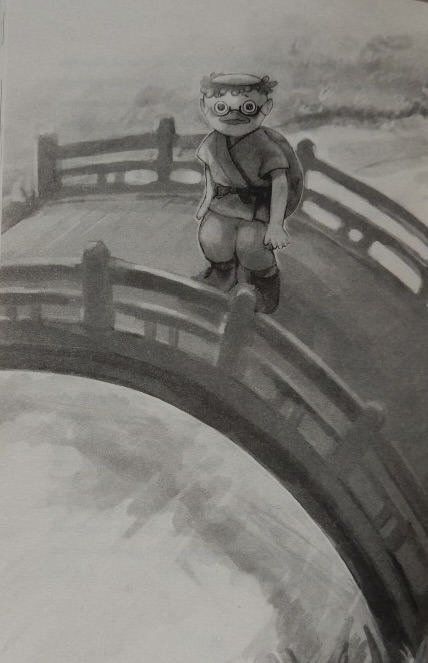
With themes of family, love and courage, this unforgettable, pacy tale is poignant and superbly imagined, with the subject of dementia in older people well presented. Also splendid are Sawa’s black and white illustrations; they really help bring the mythological characters to life. I couldn’t put the book down, reading the longish first part in a sitting and saving the rest as something to look forward to the following day.

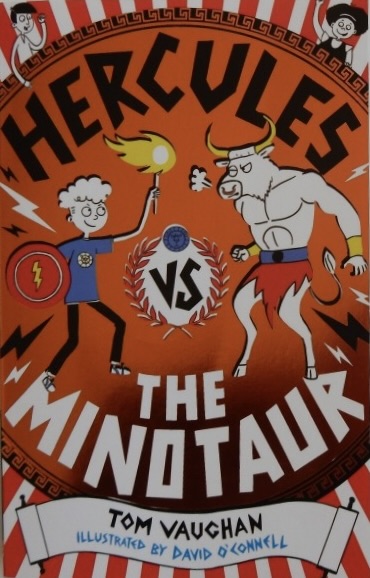
Hercules vs the Minotaur

Written in his usual diary style, Hercules Braver shares what happens at the start of his second year in secondary school. The very first day of term is not good – Hercules soon finds himself in trouble and then back home his mum greets him with, “We’ve got a surprise that I think you’ll like!” Cousin Theseus, son of Poseidon, from Greece is going to spend the next couple of months with them. Shock horror for Hercules but demigod and son of Poseidon, anticipates otherwise – “It’s going to be so much fun, cuz!” Instead, rather than the role model Herc is anxious to be (at last), Theseus causes him to get into trouble at every turn both at school and at home.

Then an opportunity arises for him to perform the perfect good deed: Mr Geras tells the class about how the school will be involved in the town festival and there’s to be a competition to design and build the school’s float which must be shaped like the school mascot – a bull. Later the same day he spies a poster in town announcing a design a maze competition – something Ken would absolutely love to do. Back home Herc gets to work thinking of designs for the float and guess who starts interfering. Ken meanwhile starts thinking of maze designing.

The town float parade is a disaster and Mum tells Herc what he did was his worst thing ever and grounds him and Theo till her book launch party almost two weeks away. Soon after Herc begins to see his cousin in a new light which is just as well because it’s not long before the two boys are forced to work together. Zeus has been focussed on writing the book that the universe is in jeopardy as one of the most terrifying monsters has planned an escape from the Underworld and with both dads now pre-occupied, it’s up to Herc and Theo to track down and stop the Minotaur.

31st October, Hallowe’en is the day of Operation Minotaur. It’s also the day Herc learns something very unexpected about said Minotaur. But can order be restored to the cosmos? … And what will happen at the end of Theo’s two months with Herc? …
With lots of David O’Connell’s amusing illustrations, this is a terrific read that fans of the series will rapidly devour. KALAMATA!

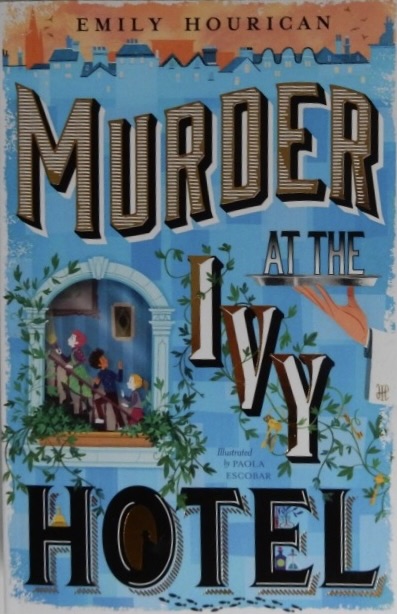
Murder at the Ivy Hotel

Sisters Macy (ten) and Meredith (twelve) love living in Dublin’s Ivy Hotel where their mother is the General Manager and the hotel staff feel like their extended family. The girls’ mother has been feeling very stressed because the new owners are business people who want to make a lot of changes – it’s a case of profit over keeping the hotel’s friendly character – and that puts her job at risk. Clearly it would impact on their family’s lives if they lost their home.

Then one night an unknown elderly man books in and is found dead in his room the following morning. Nobody knows who he is, from where he’s come or how he died. However a post-mortem shows that there’s been foul play and everybody is a suspect. Meredith and Macy with their intimate knowledge of the hotel, and their new friend, Colin (the note-taker) who also lives at the hotel, decide it’s up them to take the lead and solve the mystery as well as discover the truth about some of the peculiar things happening in and around the hotel. No easy task as they’re supposed to keep a low profile.

A pacy, thoroughly intriguing, twisting, turning story with red herrings, suspense, danger and a cleverly constructed plot. Cosy crime for KS2 readers to lose themselves in.

Ten Tiny Squirrels

A zany counting book wherein readers, along with the bear narrator, are supposed to count back from ten to zero one joining in with the rhyme. That isn’t quite what happens however. It starts off thus: ‘Ten tiny squirrels sitting in a line, / One ran away, / and then there were … ‘ but it’s not just one squirrel that runs away – it’s all of them.

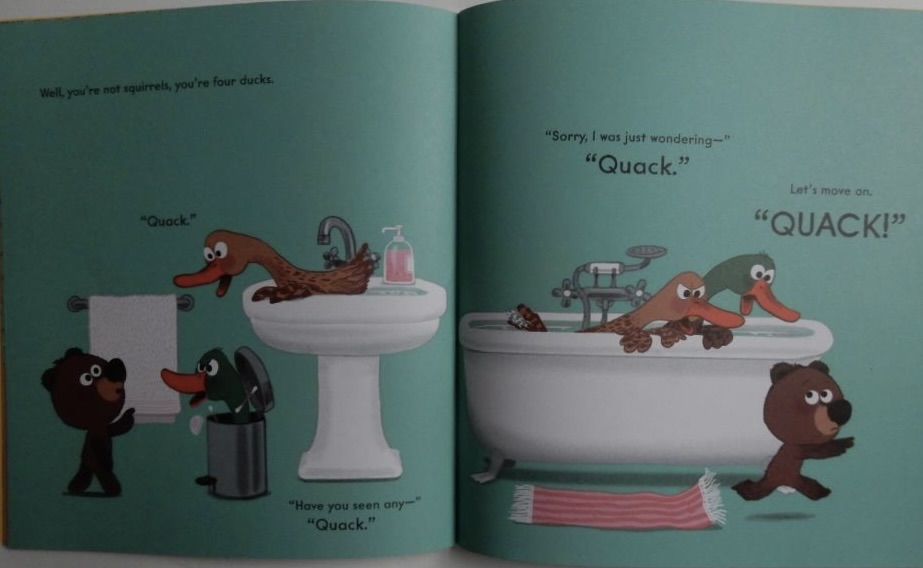
A squirrel hunt ensues during which we encounter a diminishing number of other creatures – nine budgies, eight geese, seven polar bears, six chameleons (particular hard to spot), five mice, four very belligerent ducks,

three rocks – oops! make that tortoises, a couple of budgies AGAIN! and one very large tiger snacking on – phew! not squirrels. At journey’s end sitting atop a park bench are the runaways, all ten of them. Let the counting game begin. Err …

There are plenty of counting opportunities in this tale but so much more. I thought- I saw some of the squirrels hiding in plain sight among the other animals but were they?

With Bear’s various different expressions and those of the other animals engaged in all manner of unlikely occupations, Marc Boutavant’s illustrations give readers and listeners so much more to enjoy.

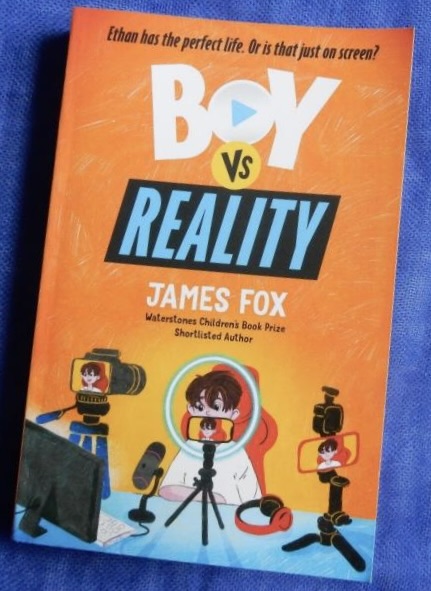
Boy vs Reality

Ethan Lacey’s family – mum, dad and elder brother Mason – are influencers. They film pretty much everything they do and upload it onto their vlog, Meet the Laceys. However Ethan detests the performative nature of his life at home and doesn’t even consider them a proper family, let alone a perfect one, any longer. All they’re obsessed with is ‘likes’ and pleasing their million subscribers, not real life. Real life is not just about freebies and having fun. Ethan has Fidget, a toy monster with a zipped mouth that he keeps in his pocket. He writes all his worries on paper and feeds them to Fidget and it’s no surprise that Fidget is nearly full.

Then Mason posts his first video on his own channel showing Ethan reacting to a ridiculous prank he’d set up concerning news of an alien invasion. Some days later Mason posts another video entitled Secrets From My Brother’s Anxiety Toy’. It’s time for Ethan to retaliate.

Add to all this the fact that Mum and Dad Lacey have been arguing a lot for some while and have decided to get divorced. That’s an awful lot for anybody to cope with and that’s without visits to Grandad at Sycamore Village when it’s likely as not he won’t even remember who Ethan is.

With cracks appearing all the time Ethan is set on persuading his family to focus on fixing the real world and not so obsessively on the online one. Can he do it?

Funny and full of heart, this is a hugely moving story about the importance of making the most of real, everyday life and its highs and lows. With children becoming ever more screen obsessed, it’s a timely book showing the adverse effects social media can have on people, whatever their age.

Ribbit Rabbit

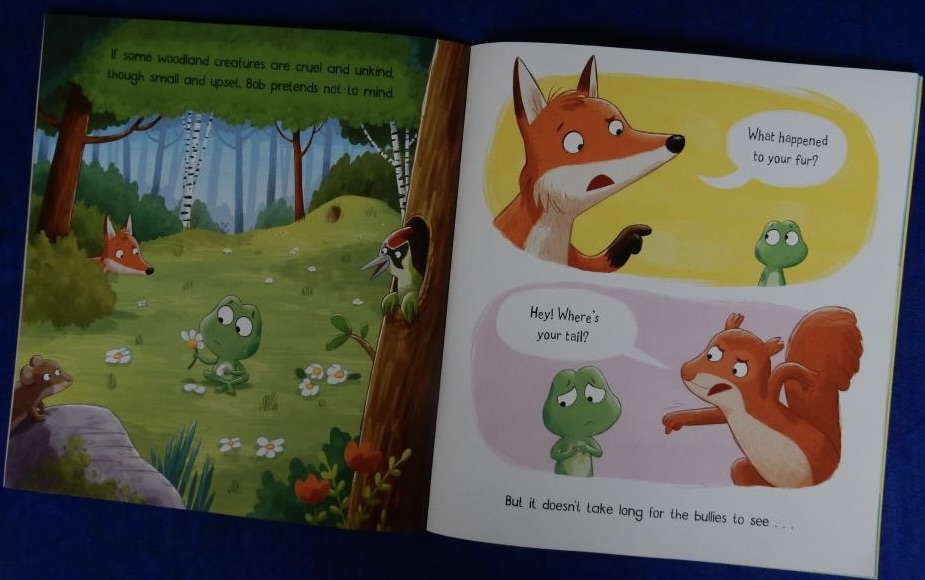
Bob is a frog and the rest of his family are rabbits so Bob does things rather differently from the others.

He’s smaller than the others, far greener, his manner of eating is slurping whereas the rabbits chew, and his diet is insects – carrots bring him out in spots. When it comes to hopping, they’re all good but Bob out hops all the rest; he also out swims them and at lily pad leaping the rabbits are no competition at all.
However, if any of the woodland creatures bully Bob, they have to face up to his entire family.

Certainly not something to be recommended.

The combination of Philip Ardagh’s bouncy rhyming text, which is the perfect fit for the movements of his characters and Gareth Conway’s splendidly expressive illustrations make a thought-provoking, funny, heart-warming story of family, difference, acceptance and love. It’s a book that is rich in potential for Foundation stage/ KS1 discussion after a class read aloud. 
Definitely one to add to your collection be it family bookshelves or a class library.

Grandad’s World

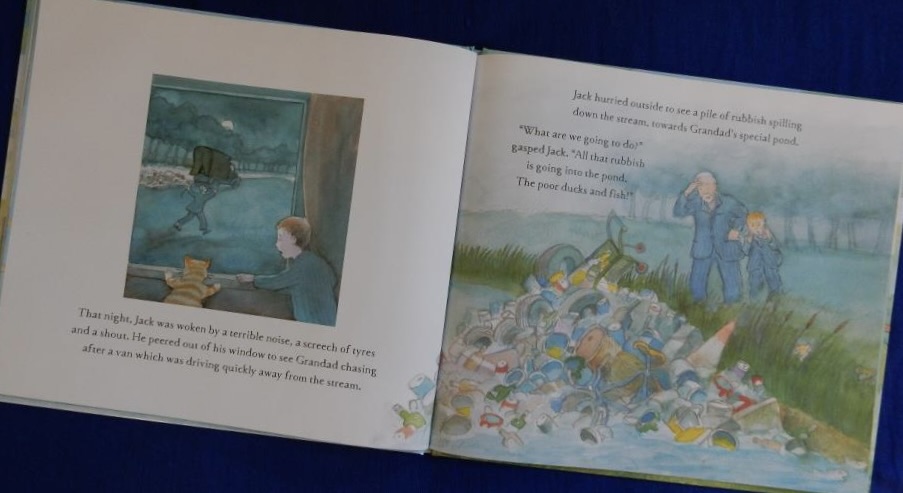
It’s the beginning of the summer holidays and city dweller, Jack is off to stay with his Grandad in the countryside. Jack’s favourite thing is to walk in the woods with Grandad who points out all kinds of interesting wild life. Grandad’s favourite place is the stream running through the woods to a pond on the village green and he reminisces about taking a similar walk when he was a boy.

Having watched the otters building a den, Jack is eager to build one too and so they do, staying inside it watching the animals until darkness creeps upon them. The following day is stormy so Grandad and Jack spend their time in the shed where there are lots of exciting model boats about which Grandad tells stories and they construct a nesting box for blue tits. Once the storm has passed the two venture out to the stream, which looks very peaceful.

However that night the screech of tyres and shouting wake Jake and through the window he sees Grandad chasing a van that’s driving from the stream. He’s horrified to discover a large pile of rubbish heading down towards Grandad’s special pond. Immediately the two fetch a wheelbarrow, buckets and a torch and return to start clearing the rubbish the fly-tippers have dumped

and come morning lots of other villagers join them in their task. Can they clear it all before it’s too late?
A lovely portrait of the special intergenerational bond between Jack and Grandad with a powerful message about caring for the environment.

Goldilocs

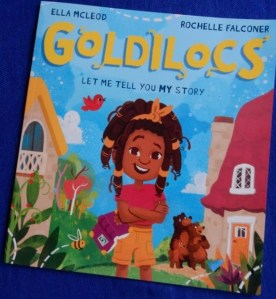
Readers of this blog will know that I’m a fractured fairytales enthusiast and this one certainly fits the bill. It’s Goldilocs narrating her own story and as you’ll notice from the cover, her hair is black. Her name comes from other golden attributes – her style, her beads and her smile. She’s a resident of fairyland and being a girl, she has only three options: she can be a wicked witch, an evil power mad queen or a royal princess. The last Goldilocs considers the worst as a prince’s kiss is needed to break an evil curse. What to do?

First she concocts a spell to make her hair grow, with disastrous results. So Goldilocs resorts to cooking her Grandad’s cornmeal porridge. As she stirs the pot there comes a growly sound – time to hide from the three ursine characters that have appeared. However, no need to panic: they consume the porridge with relish.
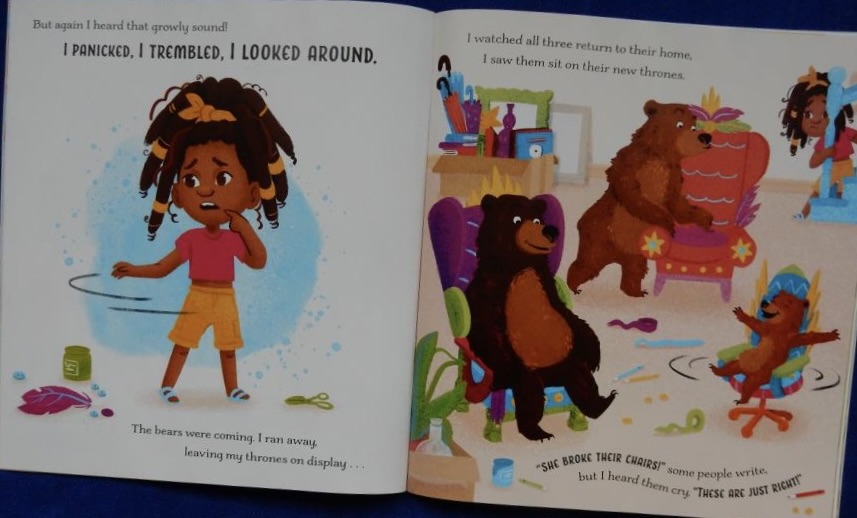
Next Goldilocs tries being an evil queen and using all manner of bits and pieces she creates three thrones for royal sitters.

It’ s not royal sitters that try them but the three bears and they deem them just right.

Finally Goldilocs switches to princess mode but soon falls asleep. Back come the bears and terrified of being their next meal Goldilocs declares herself a total failure and tries to run away. To her surprise Baby Bear’s carefully considered words of encouragement make her feel empowered. Her decision? “ … the only rule is that I just be ME. As long as I’m kind and try my best, I don’t need to worry about the rest.” The most important thing to remember is that despite being an imperfect person, she has made three new and very supportive friends.

Told in rhyme with just the occasional glitch in the rhythm, this feminist version of the classic story with Rochelle Falconer’s vibrant, expressive illustrations makes for a tasty story time treat.

The Terrible Trio: The Day the Mac ’n’ Cheese Ran Out

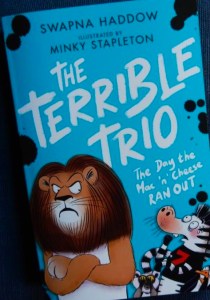
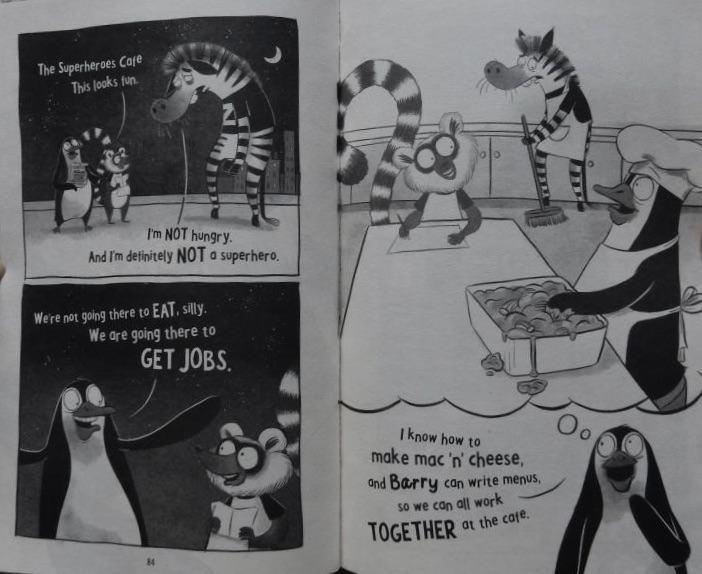
When Zeb the zebra, Barry the lemur and Margarine the penguin first discovered they had the worst superpowers in the world, Zeb was sure they would never ever have another day as terrible. Now though, disaster has struck the Terrible Trio, one of them in particular. On arriving for his shift at the Superhero Cafe, Zeb finds that it’s closed. Nothing is wrong with the cafe but Margarine has lost her power of making mac’n’cheese. Surely that isn’t so terrible? It may not have been, had Zeb not upset a lion and rashly promised that if he came to the cafe bringing his pride of sixteen plus twenty eight cubs along too, they could all have mac’n’cheese. The Trio realise they must do everything they can to fix Margarine’s problem before the Lion and his family arrive for one of the cub’s cheesy birthday party, if not they may be barbecued instead …
A deliciously silly and madly melodramatic combination of words and pictures presented graphic novel style that younger readers will likely gobble up.
For slightly older readers

Cameron’s confections return for another round of crazy shenanigans. Now, the Donuts are off on a camping expedition, hiding from bears no less. However those bagels are lurking with a dastardly plan – to kick the Donut Squad right out of their own book. Will they succeed? That would be telling and I’m sure you’re eager to know, so head off to a bookshop and treat yourself to a copy. Mine’s already been appropriated by a young fan of the series.

Refuge: The Graphic Novel

This graphic novel version of the excellent Refuge book that was published in 2017 will bring the stories to a whole new audience particularly those who prefer to read predominantly visual tellings.

Set in 1938, 1994 and 2015 respectively, we follow three characters, Josef, a Jewish boy who is escaping Nazi Germany aboard a passenger ship full of German Jews in 1938-9, Isabel, a Cuban girl who in 1994 is fleeing from Havana together with a group of other Cubans on a leaky boat and Mahmoud, a Syrian boy escaping from Aleppo in 2015 hoping to reach the EU.

Although my reading preference is for textual stories, I can see how Syd Fini’s illustrations showing the expressions and body language of the characters really help bring the stories to life and the sounds such as the ‘SCREECH! RUSTLE RUSTLE of the forest trees and a boat signalling ‘BWEEP-BWEEP! add additional atmosphere to the settings of various parts of the stories.

The author cleverly weaves together the three story endings and then goes on to talk about and ponder upon their themes, inviting readers to do the same, for the themes are equally or even more pertinent today.

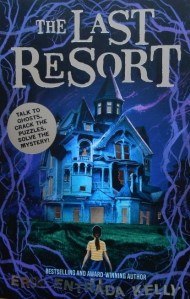
The Last Resort

It’s the start of the summer break. Lila Clement goes into one of her panics when she’s told she and her brother, Caleb, have to accompany her parents on a long drive to Ohio for a fortnight’s stay for her paternal grandfather’s funeral. She’s never even met this grandfather, so why bother. They’ll stay for a while in the creepy old Victorian Castle Hill Inn that Grandpa Clement owned. Moreover her two best friends seem to have become rather distant and she’d far rather remain in her home town and try to work things out. Instead it’s her grandfather’s affairs that have to be sorted out. He was an eccentric by all accounts.

Her grandfather’s neighbour is Teddy who was close to him and when she’s sure she’s seen Grandpa Clement’s ghost who said he was murdered and in need of her help. Lila tells the boy. He in turn reveals that on the fourth floor of Castle Hill Inn is a portal through which spirits of the dead pass to the afterlife. Lila, Teddy and Caleb are determined to solve the mystery of Grandpa’s murder; in so doing they find themselves involved with victims of a tragedy from over a century and a half ago.

A book with some really creepy scenes with ghosts after revenge as well as malevolent forces that prey on the children’s fear. Older readers will be gripped by this pacy spectral story.

I Definitely Don’t Like the Dark

The two delightful squirrel best friends, Hank and Hoog, return in another of the I Definitely Don’t Like stories.

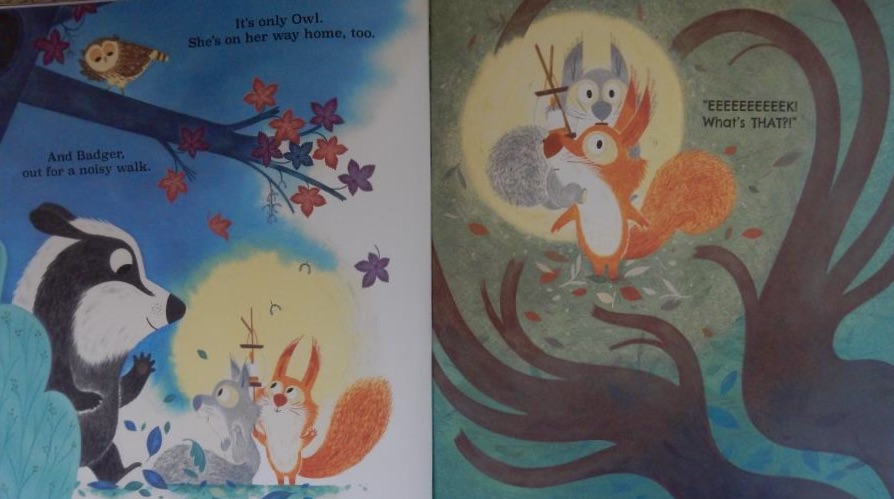
After an enjoyable day together, as the sun sets the friends start to head for home when Hoog remarks on the long length of his shadow. Hank speeds up eager to get home before dark. “I d… don’t like the d… dark,” he whispers to his pal. An understanding Hoog offers to accompany him all the way back but as the sun disappears completely, Hank is alarmed by noises, noises made by other creatures

and the creaking of a tree. Once all is quiet, Hank starts worrying again, this time about what could be hiding, waiting in the dark.

After some reassurance from Hoog, they continue their way, Hank still not fully sure about the surrounding darkness. However Hoog still has something tucked in his fur to share with him. Together they sit on a branch gazing at the stars shining bright all around them and a realisation comes to Hank: ‘… despite having fear, with a good friend … there will always be light in the darkness.’

Fiona’s reassuring story is perfect to share with young children who, like Hank , are scared of the dark. Christine Pym uses a variety of viewpoints from which to present the events and this further adds to the power of the telling.

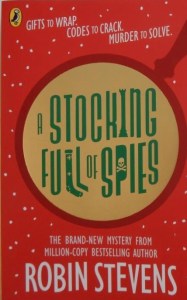
The Skeleton Puzzle / A Stocking Full of Spies

The young detectives of Chestnut Close – Matthew, Melody and Jake – return to try and solve another mystery. A skeleton is discovered buried in the garden of their neighbour, Old Nina and the three are determined to find out who it is, how it got there and who was responsible. Jake has also found what looks like a wedding ring.

Then Nina’s long-lost son turns up, with a young son of his own. The boy is obsessed with a shape-shifting puzzle that he manipulates all the time. Are the two really who they claim to be? The three friends are suspicious and think they could well be imposters. The deeper they dig, the more they suspect the father, who calls himself Michael, almost certainly is.

Meanwhile Jake is struggling at home with his sick mother and is trying to keep this to himself; and Matthew is acting somewhat mysteriously.

With priceless jewels possibly hidden somewhere on the Close, this twisting-turning mystery will keep you on tenterhooks, right through to the final page, which sets things up for the next in the series.

It’s almost Christmas in 1941 and a bomb has fallen on Deepen School for Girls : May and Nuala have been removed from the chaos there and sent to join May’s and Eric’s elder sister, Hazel Wong, who is working at Bletchley Park. Almost immediately they find themselves working on their most dangerous case thus far. One of the codebreakers has been shot and in his pocket is discovered a top-secret message.

Was he in fact a spy, was the message planted on him; was this just a tragic accident or murder?: Whatever it was Daisy’s brother, Bertie has been blamed; even Bertie himself is unsure whether he was actually responsible for the death. Hazel and Daisy set Nuala, May and Eric the task of finding out what actually did happen and thus proving Bertie’s innocence. The three of them are acting as messengers between the huts but Bletchley Park is a secretive place wherein a number of Britain’s most brilliant minds are at work, they will have to listen, watch and they hope, unearth the truth. They are very different characters: May is impulsive and Nuala and Eric more considered in their actions, so they’re an interesting team.

Then a second murder takes place – are they linked? Was it the same murderer again? What a challenge the three face.

A clever cracker of a story for confident readers from Y4 onwards: it works was a standalone but it would be better to read the previous two books first.
(In her author’s note, Robin Stevens suggests that many of the Bletchley Park staff were neurodivergent though in the story we’re never told if this applies to any of the characters featured.)

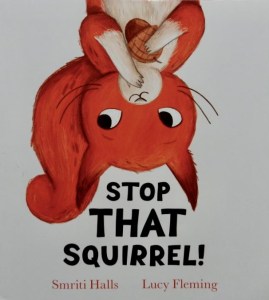
Sharing & Caring – Stop That Squirrel! / A Dinosaur Lives In Our Shed

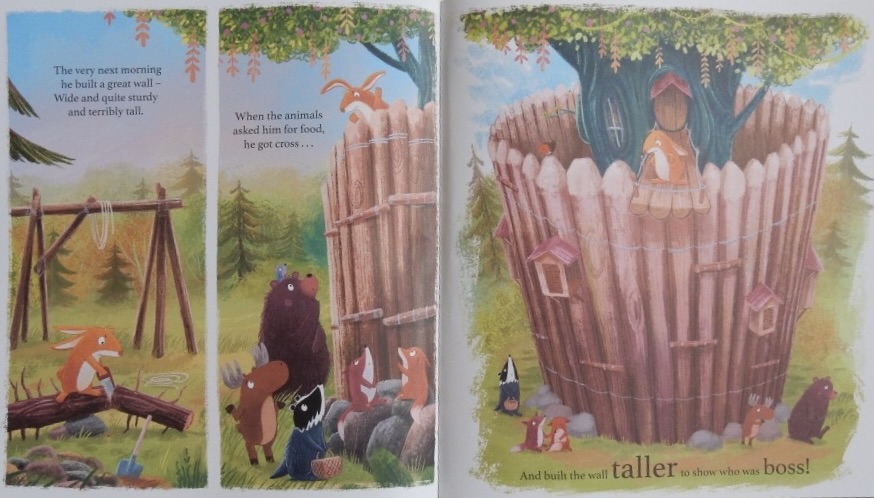
Scout the squirrel is an obsessive nut hunter and with autumn in the air she decides it’s time to prepare for winter. Off she goes, sack on her back, to collect as many nuts as possible.

Having filled her larder with her first haul, she sets out again, beating all the other creatures to each and every nut.

They decide to try and halt her greed so they put up a sign ‘STOP THAT SQUIRREL!’
When snow starts to fall, badger and the rest of the animals search desperately for nuts but to no avail.
Meanwhile Scout is busy baking and being delighted with her delicious-looking cake, she calls out, offering some to her friends. Suddenly she sees the sign and a horrible realisation dawns. Time to show the others what being a friend really means …

Lucy’s illustrations and Smriti’s rhyming tale show and the final line says, ‘… nuts taste the best when you share them around.’ That applies to so many other things too, something one hopes that young listeners will take from the book.

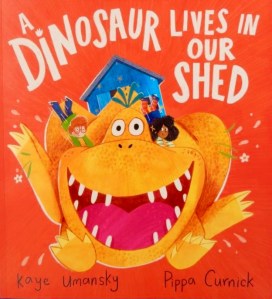
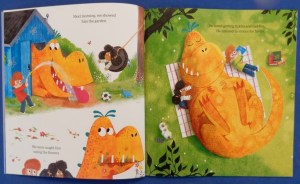
Supposing a little dinosaur unexpectedly followed you home from the park, what would you do? The children in this story fed him and put him in the shed overnight. Thereafter they gave him cuddles, read him stories

and took him on excursions to the seaside and into the woods.

Then one day the dinosaur gave an almighty ROOOOAAAAR!!! and became so sad he didn’t want to go out with the children. What could be wrong. they wondered and then light bulb moment: he was missing his mum. But where was she? The concerned humans put up posters around the locality – not lost ones but found. After waiting a day and a night the children heard noises outside, so they thought. Could it possibly be …
The following morning when they look in the shed, what do they discover …

Kaye Umansky’s rhyming text in combination with Pippa Curnick’s uproarious illustrations full of fun details make this a book that will amuse young children and adult sharers alike.

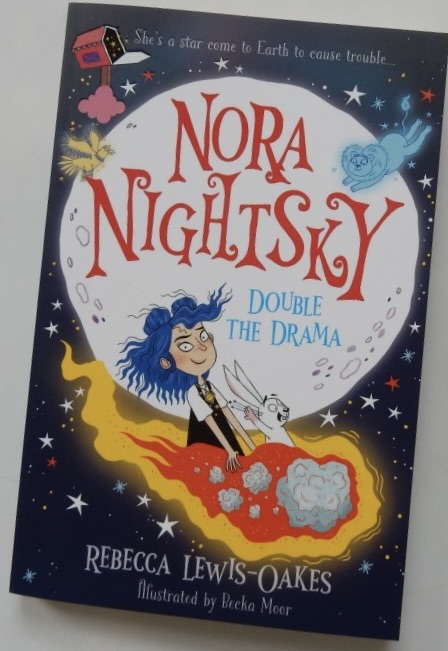
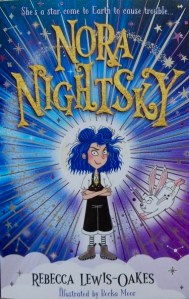
Nora Nightsky

When I say Nora Nightsky is a star, I don’t mean a celebrity but an actual star in the sky. All her family members are part of the constellation Ursa Minor and they love to grant humans, wishes from afar. Not so Nora; all she wants to do is stay in the shadows: after all humans ought to solve their own problems.
However having received several letters from a girl named Olivia wishing for a pet, she decides to take action and sets out to Earth accompanied by Leap her best friend, a hare-shaped constellation, eventually crash-landing in a muddy field.

Her intention is to give Olivia a ‘piece of her mind’ but that’s not what happens. She does though have a plan to obtain a pet for the girl, destination the zoo where a surprise awaits and it’s not a good surprise. Nora’s time on Earth is limited though and she must return from whence she came before her stardust is all used up and her magic fades. Can she obtain the pet for Olivia or will she be stuck forever as a mortal on Earth?

Nora’s character is a delightful mix of rebelliousness and determination that results in her getting into some hugely funny situations with the cheery Olivia, making this a really fun story. It’s made even more so thanks to Becka Moor’s black-and-white illustrations that portray the protagonist brilliantly. Readers will assuredly have their fingers crossed that Nora achieves her goals and can appear in a new adventure soon.

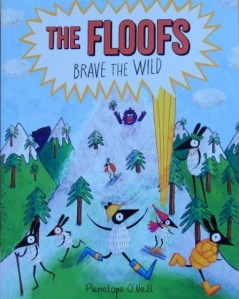
The Floofs Brave the Wild / The Terrible Trio: The (Not-So) Superheroes

The Floofs return in three new stories wherein they venture into the wild. Challenges await.

In the first, Floof and the Avalanche, Dill persuades Teazle to step out of his comfort zone by leaving his volcano abode for a skiing holiday in the mountains. En route they meet Bean and Wizard who join them. and then on arrival at the cabin where they’ll be staying, they see a light on. Inside is Clementine sitting on a sofa drinking hot chocolate. (There’s a lot of hot chocolate in this story.) Some of the friends do go skiing, even having a race, when they encounter a monster and an avalanche starts. All ends happily though.

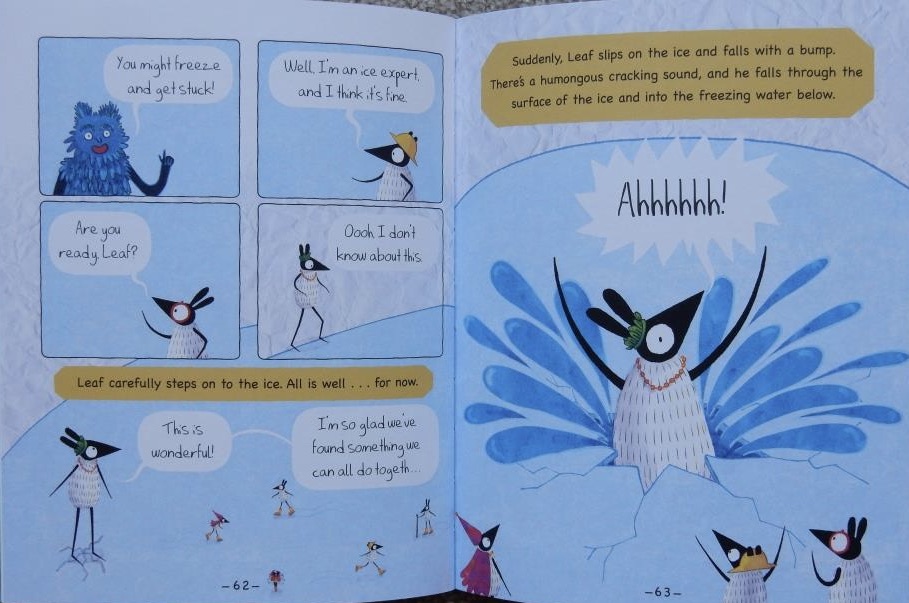
It’s ice-skates rather than skis that the Floofs try out in A Different Kind of Floof. Almost inevitably though, one of their number, Leaf, bumps down hard on the ice, falling through

and becoming frozen solid. Fortunately, Dill has something useful with her that she uses to melt the ice and release her friend. Leaf then spends some of the day in the Giant Forest comparing himself with the other Floofs and again all ends happily.

Floof and the Giant begins with Dill longing for a new adventure somewhere she’s never been before. Maybe a wave of Wizard’s wand will help them find a secret location. Secret it might be, but then a duck warns them of a giant … a hungry giant it turns out …

Just right for readers gaining confidence, especially those who like their stories presented comic style and sprinkled with humour and magic.

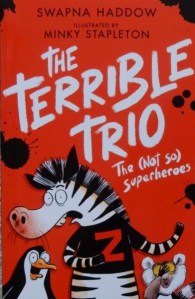
The terrible trio comprises Margarine the Penguin, Zeb the Zebra and Barry the Lemur. We meet them as they stand in line eagerly waiting to reach the front as it’s the day when a superpower will be bestowed on each and every animal. The line is a very, very long one and is moving very slowly so there’s plenty of time for them to ponder upon the power they’ll be given. Zeb wonders about speed, strength or the ability to see the future. When the buffalo bum in front of them eventually moves off, he’s let’s say, disappointed to hear from the Ministry Superpower Manager that he’s “all out of powers”. However they manage to persuade the power giver-outer squirrel that they must take priority over his favourite tv show and finally Penguin receives ‘the power to make mac, n’cheese’, Barry receives the power of nice handwriting, but what about Zeb. To him, his superpower feels pointless.

Barry and Marge soon come up with a plan – gain employment at the new cafe in town with the former writing menus and the latter making the mac’n’cheese meals.

Having thrown a tantrum, Zeb goes along too and all three start that very day; Zeb though is still determined to prove he’s a superhero. Will he have to go it alone or will his best mates help?

The laugh-out-loud silliness from Swapna Haddow combined with Minky Stapleton’s wacky portrayal of the cast of characters is great fun and has at its heart a vital message about being there for friends when things go wrong.

Beastie Bros: Dungeons and Dragonflies

Set in Bugtown, this second adventure of best friends Dribble the snail and Dash the firefly sees the two attempt to recover a priceless treasure.

It’s festival time in Bugtown and after an embarrassing moment, or several, with Dribble’s Tummy Tickler invention, they come upon their friend Tilda the earthworm. She suggests they join her on a tour to see the display of the queen ant’s crown jewels. Dribble and Dash are somewhat suspicious of the bus driver and tour guide but they climb aboard nonetheless and the bad feeling Dash has worsens at the sight of the dung beetle passengers already seated.

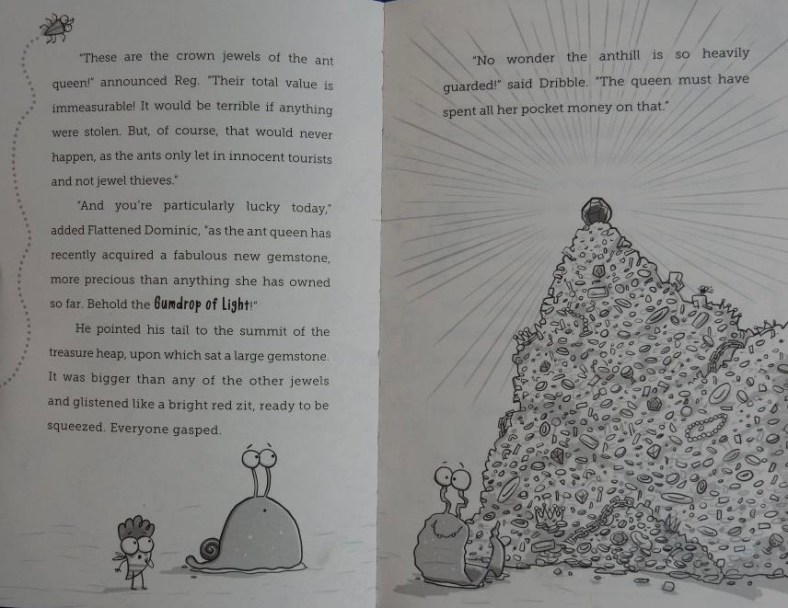
Having arrived at the displays the friends are taken o a huge room wherein they are shown a fabulous addition to the queen’s collection of gemstones, the Gumdrop of Light.

As they gaze at it some fireworks are thrown, the Gumdrop of Light disappears and so it’s announced, some visitors have been kidnapped.

Realising that his bad feeling about some of those dung beetles was justified, Dash tells Dribble that they are actually master criminals, the Dung Heap Gang. Almost immediately Dash and Dribble are hot on the trail. They pursue the thieves into the maze of dark tunnels. where they soon find themselves confronting gigantic dragonflies; moreover the two friends get separated.

Can the heroic pair find a way to get past the menacing beasties, and can they locate the criminals, retrieve the precious gemstone and restore it to the rightful owner?

Full of zany drawings, a choose your own adventure chapter, a poem about custard and much more including a smashing supporting cast, the entire story is absolutely bonkers and enormous fun. On the serious side, the author aka Professor Crispin T. Earthworm has provided some fascinating bug facts and there are ideas for readers to create their own fantasy stories and a game.

Newly confident solo readers and those sharing the book will relish this.

Medusa Gorgon’s Bad Hair Day

Meet Medusa Gorgon age twelve. She works as a guardian in the temple of the goddess Athena. Medusa is rather hot-tempered and her best friend, Arachne has suggested that writing a diary to release and channel her feelings would help her. A good idea indeed but then Medusa upsets Athena who banishes her to the twenty-first century to retrieve the goddesses’ shield, the very shield and prized possession that Medusa might have disposed of into Hades’ well in a fit of anger over her friend, Arachne, being turned into a spider.

The outcome is that Medusa’s life becomes a series of very bad days. For starters, thanks to Athena, she’s had her hair changed into snakes, ‘vile, ugly, angry, slithering snakes’ that constantly hiss atop her head. There’s an awful lot to learn in this place of banishment including things relating to human homes in England. She certainly can’t let her ‘carers’ do such things as drink from the toilet

and as for life at Shadwell Academy secondary school, bewilderment doesn’t come into it. Then comes the language issue: yes she is able to understand and speak the language of the twenty-first century but ‘actually knowing what they’re talking about’ is a very different matter (so true). And who should Medusa try to make friends with – another tricky thing to try and get right.

With friendship at the heart of the whole story, this is a great read – funny, pacy and splendidly illustrated by Katie Abey. The book draws quite heavily on the Greek myths but it matters not if readers are familiar with Medusa, Arachne, Athena, Hades et al. (I should mention that there’s an on-going correspondence between Athena and Hades via Hermes Express Air Tortoise aka H.E.A.T.) And as for the shield – is it ever returned to Athena? Then what about the fate of Arachne? To find out, you must get a copy of this hilarious book for yourself.

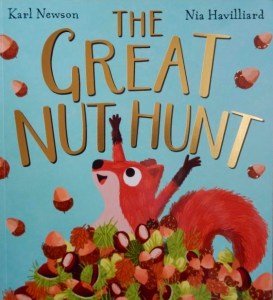
The Great Nut Hunt

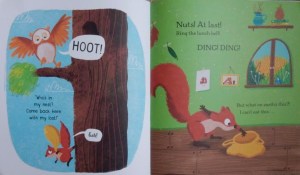
Squirrel has spent a lot of time and energy collecting nuts, so much so that his home is full and he has to stash lots of them around in the woods. But then he realises that he’s completely forgotten where they are. Off he goes to Bear’s cave; maybe he’s left them there. Bear is fast asleep but is disturbed by Squirrel’s intrusion as he grabs a case in his paws and beats a hasty retreat. Anticipating a breakfast of nuts, Squirrel opens the case only to discover a sock.

Off he goes again on his nut search, next stop Owl’s. Owl seems to be out so up the tree goes Squirrel, ‘Sneakily, Sneakily, Snoopily …’ Squirrel makes off with a sack of … nuts, he expects. But …

Beaver’s dam is his third possibility but there are no nuts there either. Squirrel is by now looking so down in the dumps, his friends ask if he’s OK. Squirrel apologies for being a bad friend but the other animals respond by offering to join the nut hunt. They look in lots of possible places but of a nut there’s no sign. Suddenly Owl realises what has happened to all the nuts Squirrel buried. Can you guess what is revealed?

Karl’s rhyming text bounces along in dialogue form and in combination with Nia Havilliard’s dramatic scenes of the search and animal interactions, makes for a fun read aloud, one I’d suggest saving for the autumn to share with young children.

Funnily enough my partner pointed out three saplings growing in the front garden our home yesterday. “Those are black walnuts buried by squirrels and unfortunately are totally unsuitable to grow where they’ve been planted, less than a metre from the front wall of the house,” he said.

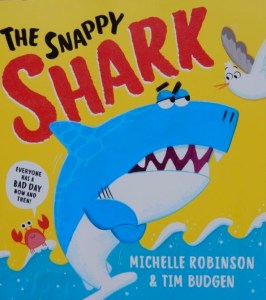
The Snappy Shark

It’s not a good day for Mark the shark.When he plays with his friends nothing goes right be it during the hide-and-seek game,

the painting session or the shell hunting. Eventually he swims off in a big huff and goes into a cave, overwhelmed by his feelings.

Alone now, Mark has time to think and he recalls how his inability to keep his temper in check has upset his pals. Several slow, deep breaths later, Mark feels a lot better and ready to apologise to his playmates for his snappiness. “I’ll NEVER snap again,” he promises but suddenly a large fishing net entraps them all. Now Mark has a dilemma: to snap or not to snap …
Fortunately for all, he makes the right decision and henceforward he’s a ‘brand-new fish’ safe in the knowledge that he has a strategy to use whenever he starts feeling stressed and tempted to snap. Moreover his friends know the perfect game they can all enjoy together.

All children feel overwhelmed by their feelings from time to time and the calming strategy Mark used in Michelle’s fun rhyming narrative is one that any youngster should learn to do.

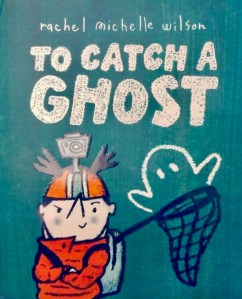
To Catch A Ghost

Young Sam has recently started at a new school and now must contend with her first Friday show-and-tell. Anxious to make a good impression, she decides to bring a ghost. Gumption is what’s needed for the task, Sam tells readers and plans the entire operation out in three easy steps: find the ghost, observe and get to know it and finally, catch it.
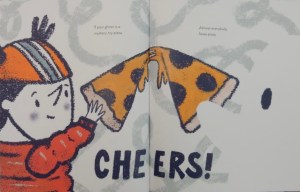
Having donned a hat with attached camera, Sam hunts everywhere in the playground until whoppee! A ghost. Time to get to know the presence. This Sam does by playing hide-and-seek, watering plants and sharing a pizza.

Then comes cage building (done while the ghost is having forty winks) and when complete Sam baits the trap.

By now though Sam has come to think of the spectre as a friend and so trapping it feels all wrong. Off comes the padlock and the ghost is free. Sam sits and weeps briefly but what will happen at show-and-tell? A disaster or a rewarding experience? That you must find out by getting your own copy of this deliciously quirky book. It’s penned in the second person and the interplay between the words and the wonderfully expressive chalky illustrations exudes a gentle humour that will delight both young readers and adult sharers.

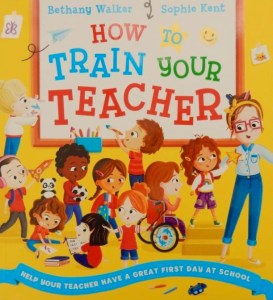
How To Train Your Teacher

From its title you anticipate this will be a fun story and so it is. Having taught both nursery children and reception classes for a considerable time I found it particularly amusing.

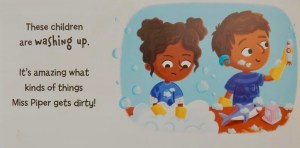
Our narrator is a member of a class of lively reception pupils and she is very welcoming and reassuring from the outset, for the teacher, Miss Piper, is in need of a lot of help. First she’ll struggle to remember names so needs to use a special list – the register and that’s before activities begin – activities such as ‘washing up’

and ‘make and build’. Alternatively you can opt to work outdoors and perhaps serve Miss Piper with her favourite snack.

As the day progresses she’ll definitely need help with her maths (numerical sequencing) as well as her favourite thing – really! – ‘making funny sounds’ aka phonics. No wonder she needs a ‘play’ at lunchtime while the children get their well-deserved rest from their jobs, especially as she’s likely to have to contend with some ‘difficult situations’

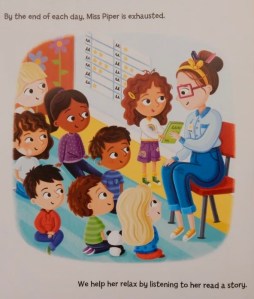
Come the end of the day, the children help an exhausted Miss Piper relax by listening intently to her as she reads a story.

This is vital as she’ll need lots more assistance the following day by which time, more than likely, she’ll have forgotten what she’s learned.

Bethany Walker’s carefully chosen words in combination with Sophie Kent’s scenes of young children clearly having a great time make this a highly reassuring book to share with young children, especially those transitioning from a nursery setting to a reception class.

Millie Fleur Saves The Night

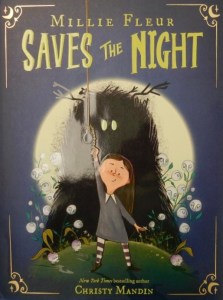
Those living in Garden Glen fear the dark and come nightfall, everybody switches on their lights and keeps them on until daybreak. Everybody that is except Millie Fleur La Fae; she loves the dark and since moving to the locality has missed all the nocturnal creatures that stay away from all the lights. To try and bring them closer, she plants a moon garden. Her mum removes the bulb from the streetlamp outside their home and this displeases the local committee whose members claim that’s dangerous and scary. Millie assures them that dark isn’t scary, “You just need to get to know her.” she says.

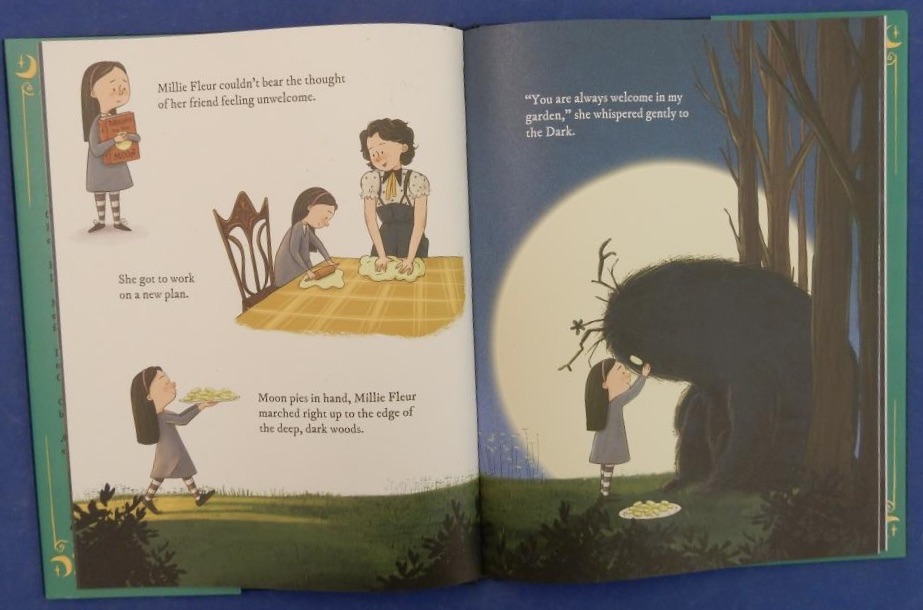
The girl embarks on a new plan: she makes moon pies and takes them out to the edge of the woods where she meets the Dark

and then the two of them lead the night creatures to her garden. There plants spring to life, their delicious aromas wafting towards the homes of her neighbours who decide to follow their noses and are drawn to Millie’s garden eager to see what lies therein.

Millie Fleur tells them all to be brave, extinguish their lanterns and leave them behind, which they do; their path being lit by glowworms, fireflies and plants with delightful names such as ‘snoozing sugarplum’ and ‘forty-winks fern’. In the sparkling light the visiting children soon discover that the Dark offers amazing new experiences not found in the light.
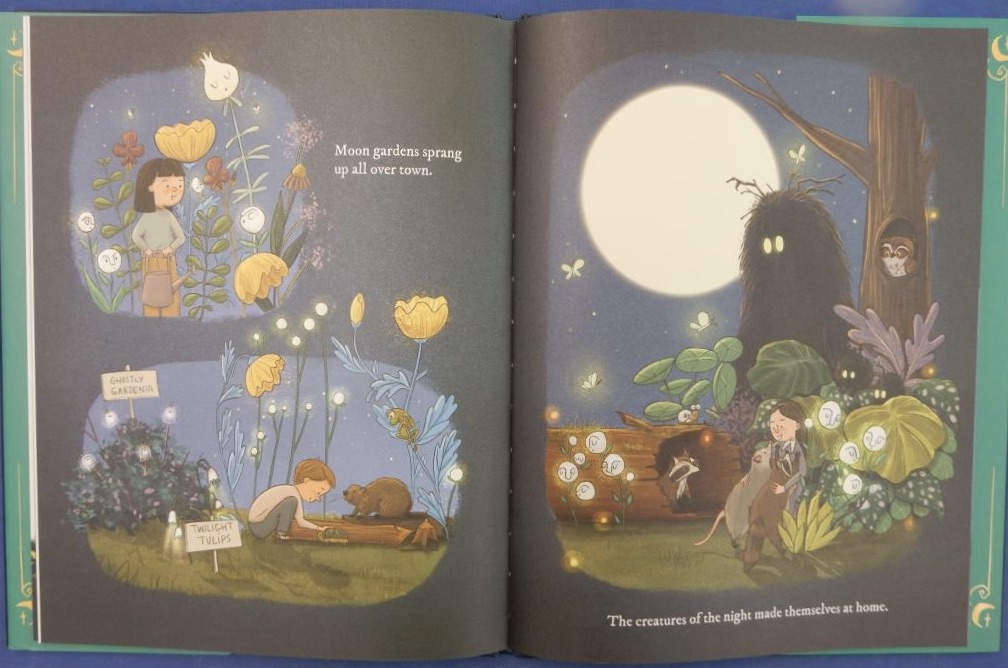
Consequently, the lights around Garden Glen are switched off, magical moon gardens spring up and start to flourish as the nocturnal creatures settle in.

Finally, thanks to Millie Fleur the townsfolk have embraced the dark.

A magical bedtime tale that should help reassure children who are frightened of the dark. Christy Mandin’s illustrations of flora and fauna of the darkness evoke a sense of wonder that will enchant both young listeners and adult readers aloud.

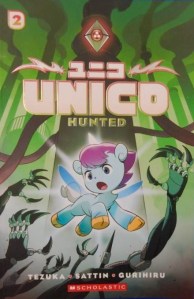
UNICO Hunted

In the second episode based on the work of Japanese cartoonist and animator Tezuka, the little unicorn finds himself in a grim abandoned city with no memory of how he got there. He’s rescued by a kindly mouse, Garapachi that takes him home to meet his wife and family. There he learns of Chiko, a blue-eyed little girl living in the house who is desperately ill; she and her grandfather, Yoji, are the last two remaining humans in the city and Garapachi takes the unicorn to see them. He also shows him the massive factory that is dominating and polluting the entire town while armed drones patrol the streets. In the factory lives Mother, a controlling robot and when Unico is summoned to meet her, he learns of her origins and real albeit, now warped, purpose: what a sad story it is.

Underground, where Unico finds himself after a tumble. he finds Garapachi again and they discover the beautiful home of the fey and soon after, the prince of the underground fey. He with the other fey have been driven underground by Mother but can Unico persuade Prince Halian to help them despite his misgivings?

In the meantime, Venus, the evil goddess, coveter of Unico’s horn summons from the ‘deathly garden’ Iver, an interstellar hunter of the reptilian kind, with instructions to find Unicorn and cause suffering to him and those around him.

Ending once again on a cliff-hanger, this exciting story, with lots of weird settings is another winner that will delight fans.

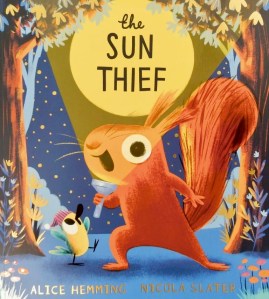
The Sun Thief

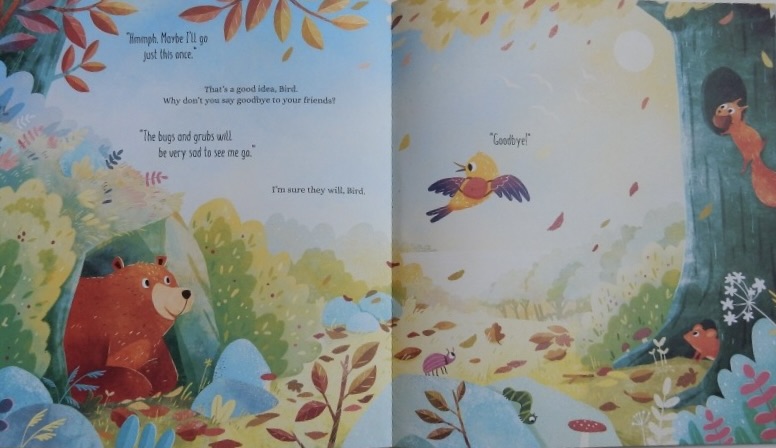
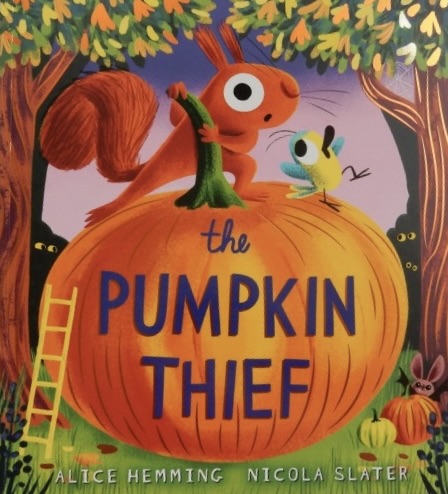
Team Hemming and Slater’s Squirrel is back and as the season is changing he’s once again confused about what is happening. When his friend Bird declares that it’s bedtime Squirrel disagrees, professing that he could never fall asleep when it’s still light. What he says and what he does though are two different things.

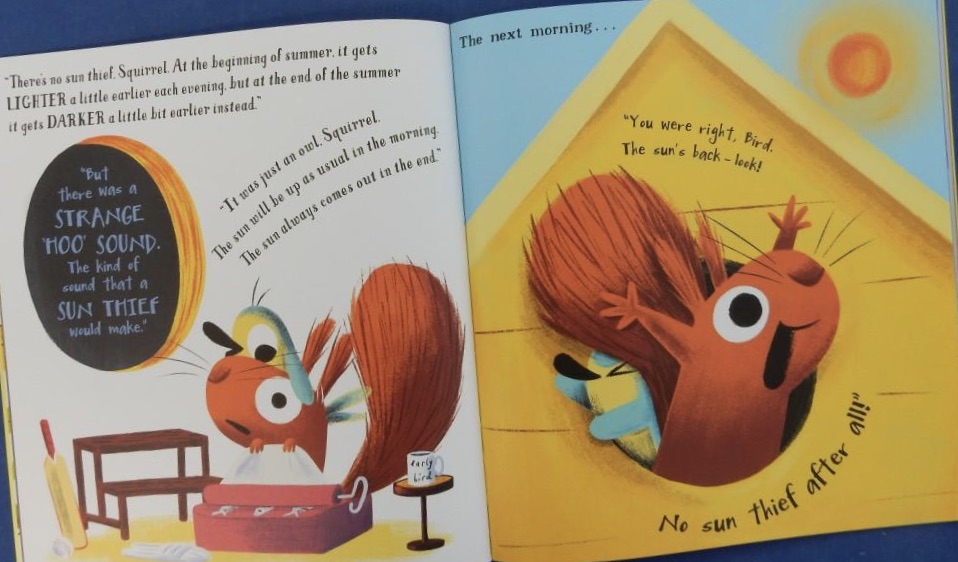
Then come bedtime a few weeks later there’s further confusion when he brushes his teeth as it’s dark when he expected it to be light. Squirrel insists to Bird that the dark is due to there being a sun thief, especially as he heard a peculiar “Hoo’ sound. This he’s told was merely an owl and the following morning just as Bird explained to him, joy of joys, the sun is back shining.

A similar thing happens as Squirrel is languishing in his bath the next evening but he tells himself it cannot be the sun thief. Venturing outside onto a branch with a torch he gives Bat a bit of a fright. “The sun thief just crashed into my tree” he shouts to Bird who explains about Bat being nocturnal.
Still unconvinced that a sun thief isn’t lurking somewhere Squirrel sets an early alarm that only serves to further convince the rodent that there IS a thief,. he wakes his friend before sunrise
and the ever patient Bird explains yet again. At last, Squirrel understands.

The final spread takes elements of the story – why the hours of darkness change throughout the year and the difference between diurnal animals including Squirrel and Bird, and nocturnal ones such as Bat.

Funny and gently educative,. Young children will thoroughly enjoy Squirrel’s over-reacting to a seasonal happening and delight in Nicola Slater’s close-ups that serve to enhance his verbal histrionics.

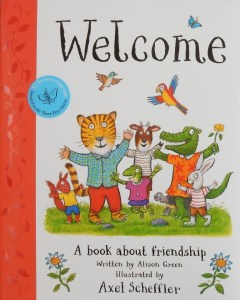
Welcome

Try to imagine what it would be like if you’d had to flee your home and look for another country to live in.

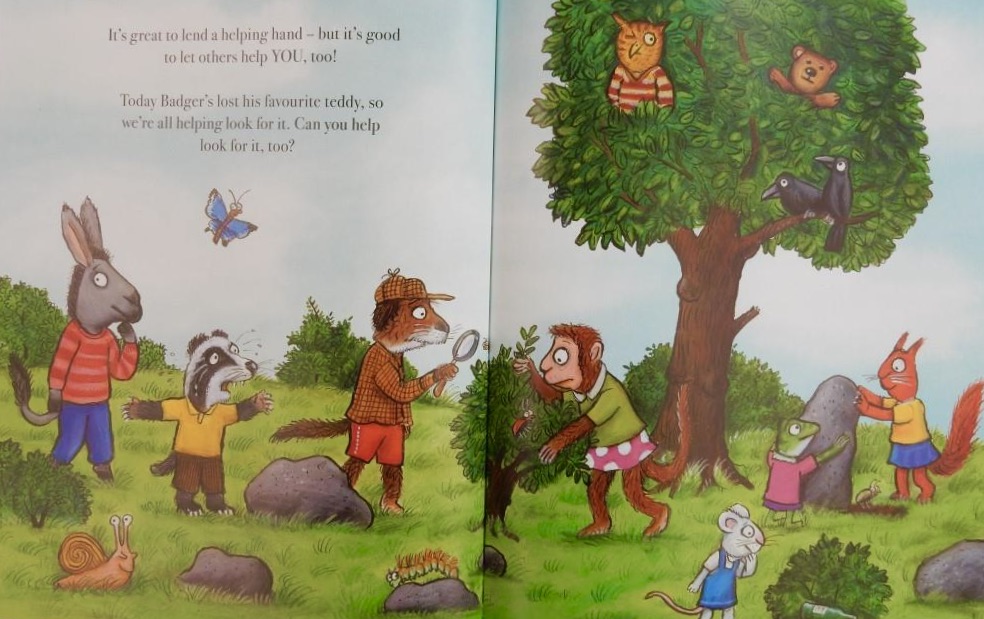
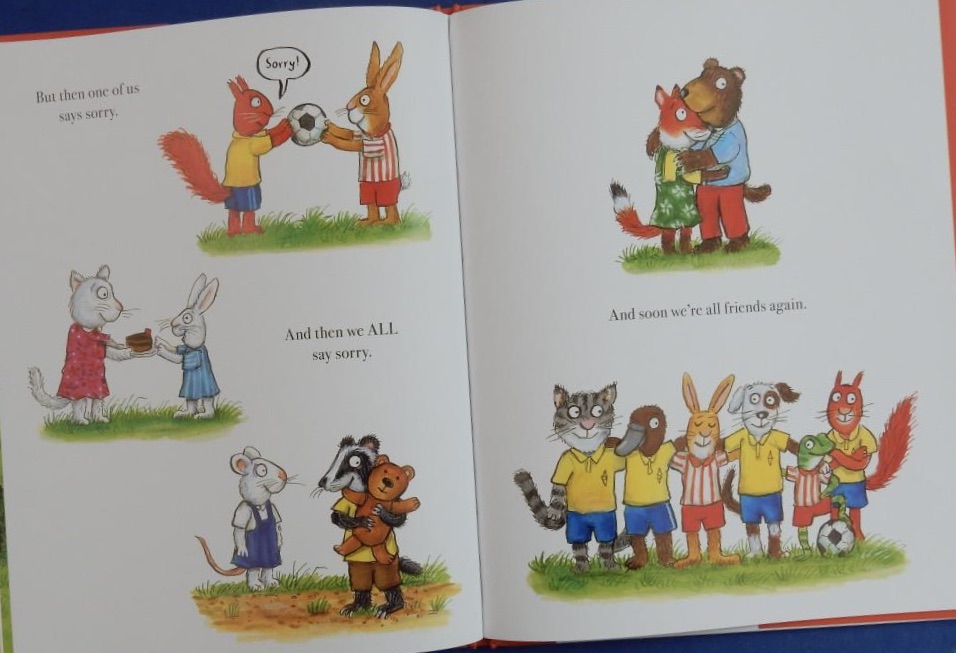
The animal characters in this book do their utmost make the three new arrivals feel welcome and wanted. Their intention is to make sure that nobody is left out because everyone helps to make a happy world. Axel’s illustrations show very different characters playing together, painting together, strolling together hand in hand, having tea together and much more. They communicate visually with the newcomers who speak a different language and allow them to choose games to play.

Equally, allowing the newcomers to be the helpers makes them feel part of the community,

as are shared games and stories. Of course there will be occasions when somebody gets upset and cross but if everybody apologises, these friendships become stronger.

‘Now, imagine if the whole world was like this book – if everyone was kind and helpful and welcomed everyone else. Doesn’t that sound good? “

It most certainly does but sadly it isn’t the case for all humans yet: would that they could all feel like that animal community – kind, open-hearted and ready to make a difference.

An uplifting celebration of empathy, kindness and togetherness. Anyone who buys a copy of this book is helping to make a difference because a donation is made to Three Peas charity (www.threepeas.org.uk) for every copy sold. Teachers and parents, get a copy for your class or family, enjoy sharing it and then talk about possible ways to be as open-hearted as Axel and Alison’s characters.

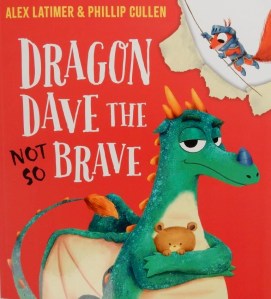
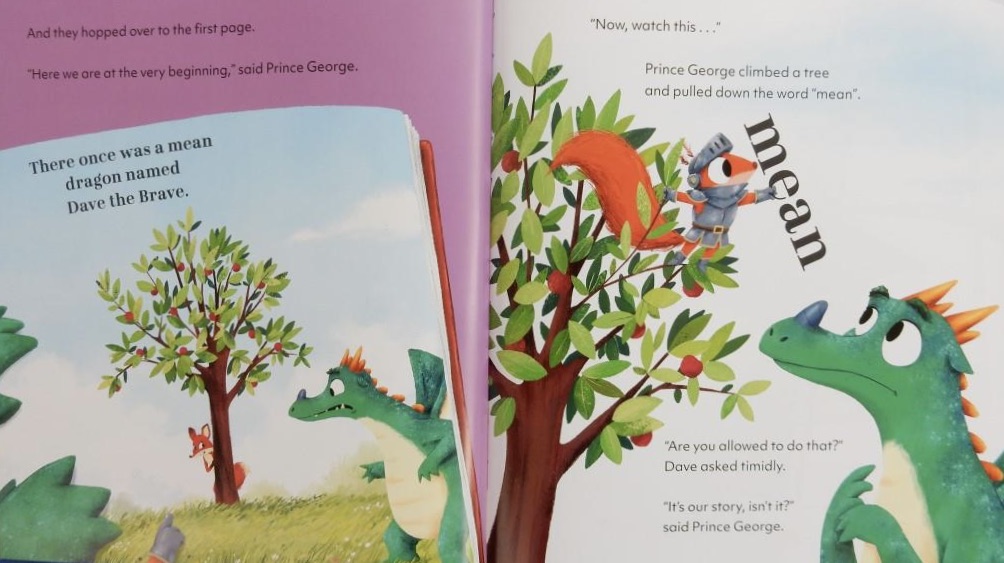
Dragon Dave The Not So Brave

Stuck in a storybook with an ending he really dislikes, dragon Dave the Brave desperately wants to get out.

One day as he sits beneath a bridge tinkering with some of the letters from the title page, along comes Prince George. The prince notices that Dave looks sad and on learning the reason, he shows Dave that his story words can be rewritten. Starting from the first page, they identity the unsatisfactory parts

and proceed to make substitutes till they reach the end.

Then back to the start they hurry

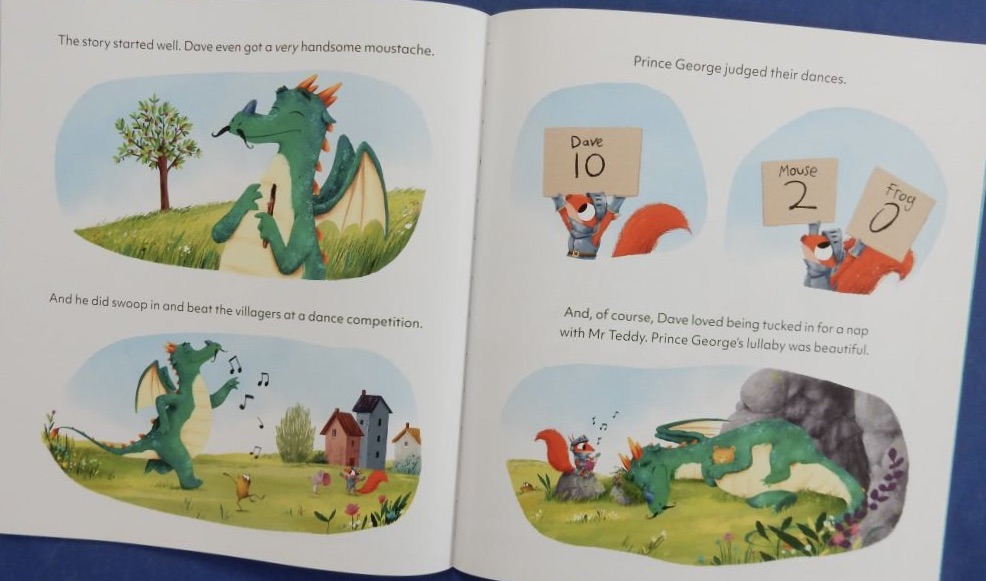
and the dragon in particular is thrilled with “the Best ending Dave had ever had.’ As you might expect, Dragon Dave is hugely thankful to the prince. He offers him a turn with the writing stick but it’s already in use …

An empowering story that shows we can all rewrite our own stories and that it’s fine to ask for and accept help – Dave and Prince George are both endearing characters and the witty final twist is great fun.
Captivating too are Philip Cullen’s bold, bright scenes and the expressions on Dave’s face especially show so much about his changing feelings.

Daring to be different is the way to go: let these two protagonists show young children the way.

The Unicorn Who Came to School

Like many young children, the little girl narrator of this story has first day nerves when she starts school. On arriving at the gate though, what should she see but a unicorn who introduces himself as Sparkle and asks politely if he can come to school. The girl agrees and they go in together, talking of things they might do and they sit beside one another when the teacher tells everyone to “Find a friend.” The register is called and all goes well until the class has to line up for assembly. Guess who takes the lead.

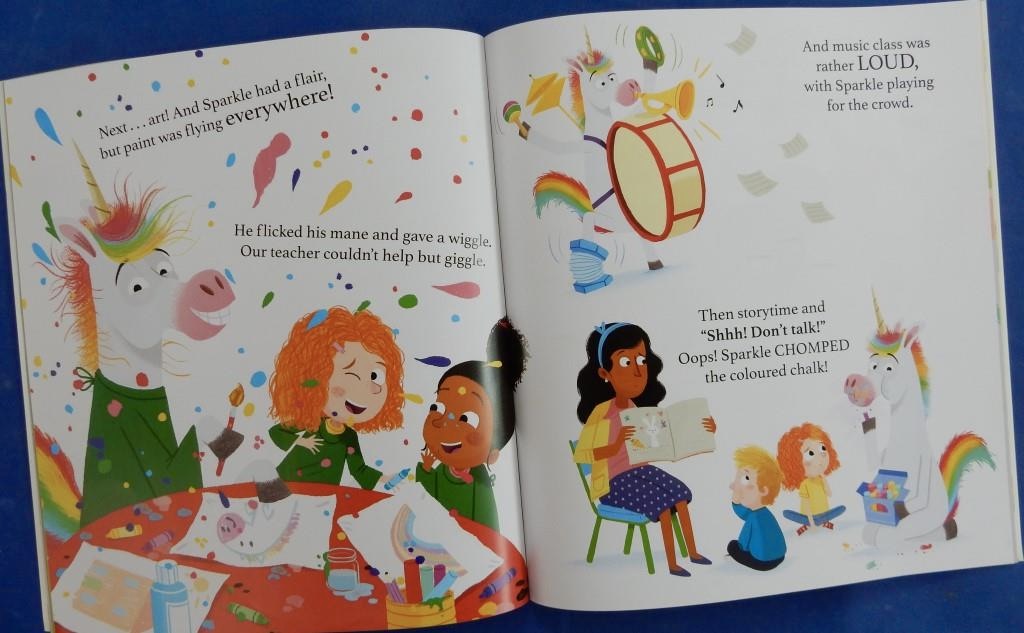
During the art session paint flies every which way, music is very noisy and story an opportunity for Sparkle to do some chomping.

When it’s time for outside play Sparkle assists the narrator in making some new friends, but at lunch time his manners really let him down.

At hometime Sparkle waves goodbye to everyone but as he nears the gate, the teacher has a suggestion that might just make him change his mind …

Assuredly Sparkle has given the children their best possible first day at school and I’m sure young listeners, especially those moving from playgroup to a school setting, having heard Lucy Rowland’s rhyming narrative and giggled at Sparkle’s antics shown in Mike Byrne’s bright, zany scenes, will agree.

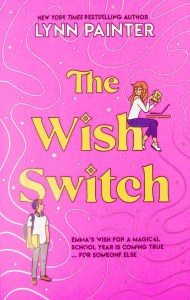
The Wish Switch

Emma Rockford’s beloved Nana Marie had instilled in her granddaughter a belief in a magical faerie portal that supposedly grants wishes. Now Emma and her classmates are on a class field trip on the very day the magic portal is giving out wishes, its location being less than a mile from the portal. The plan is to steal away with her best friends Allie and Kennedy, find the magic spot in the forest and each make four secret wishes, wishes that would start coming true in four months time. While they’re so doing, Emma’s brother Noah and new boy, Jackson appear on the scene, seemingly for the very same reason.

Exactly four months later wishes have come true, one each for both Allie and Kennedy but not for Emma. Instead it appears that Jackson has received her first wish. And so it continues, leaving Emma endeavouring to cope with intense disappointment.

Could it be that in order to make her wishes come true she’ll need to team up with Jackson …

For older readers, this is an amusing tale of friendship, family and self-discovery laced with magic.

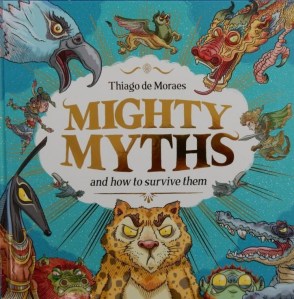
Mighty Myths

Readers are under the wing of two ravens that act as guides and safe keepers introducing us to a richness of detail relating to the stories, their characters and settings presented in an engaging and entertaining manner.

First off is a spread about places to avoid for fear of scary beasties and this is followed by a Mythological Height Chart with a line up of ‘legendary creatures great and small’ including our two ravens. Here you will find details of where you might encounter such creatures and what they look like.

There are also spreads about dragons, creatures with a predilection for dining on humans and a ‘god food guide’. You’ll get an opportunity to spend a day in Kur – the underworld of ancient Mesopotamia and another in Xibalab – the ancient Mayan underworld.

Inevitably there will be giants – both horrible and fairly friendly and some pretty alarming. The tiny folk aren’t overlooked and get a spread too – watch out for the mischief makers though. There’s a spread about objects of power including Odin’s spear and Ganesha’s tusk (not so alarming that one).

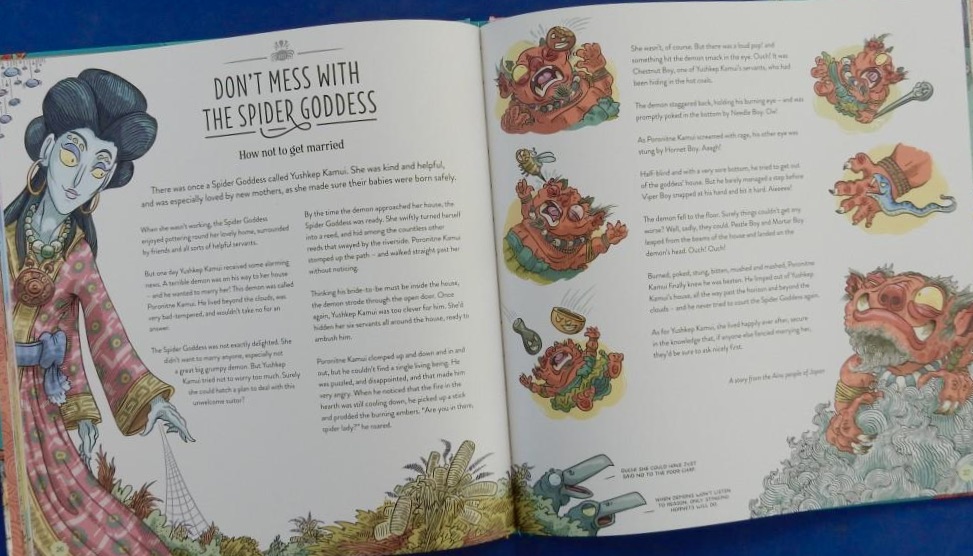
My favourite part though is the retellings of myths from various cultures and I especially enjoyed finding some that were new to me. One such is Don’t Mess with the Spider Goddess, a story from the Aiu people of Japan telling how Yushkep Kamui got the better of a large grumpy demon intent on marrying her.

Should you wish to know why bats sleep during the day then there’s a story from Sierra Leone told as an explanation.

With fantastical, mock scary, occasionally disturbing illustrations, this is a thoroughly engaging, fun book for school collections and family bookshelves. (A publisher’s note at the beginning of the book states that although this book presents myths in a fun way, many are of great significance to some societies and religions, something to remember when sharing them.)

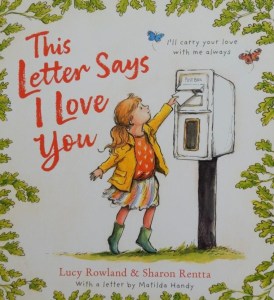
This Letter Says I Love You

This book was inspired by the true story of ten year old Matilda Handy who, when thinking of ways to connect with her grandma and grandpa, had the idea to set up a memorial post box to send letters to loved ones who have died.

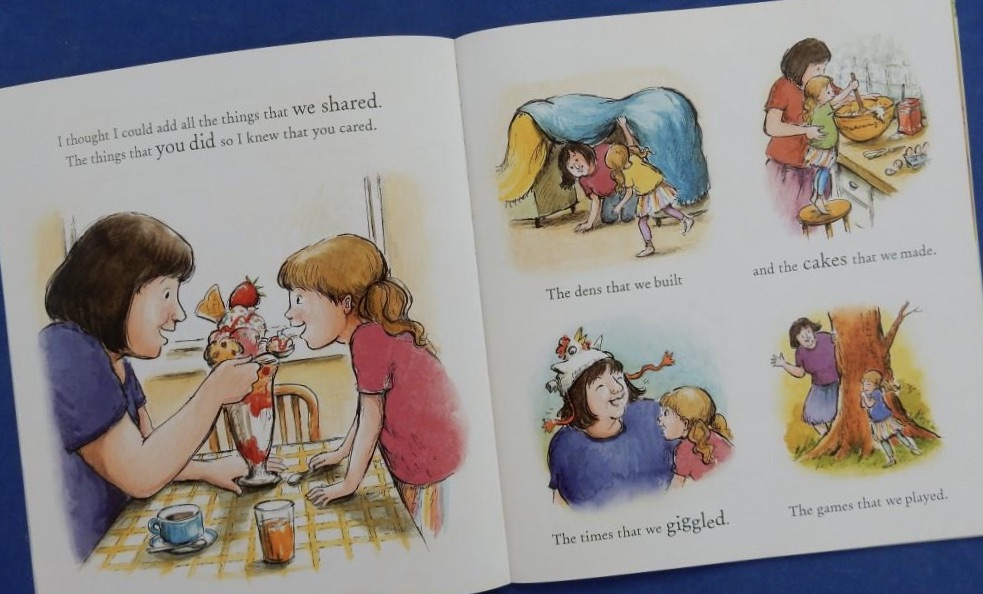
In the story, a little girl misses her grandmother and wants to be able to talk to her so she decides to write her a letter. Somewhat stuck for a beginning, Mum suggests she should, “Try to fill it with what’s in your heart.” And so she does, drawing things that she herself has done as well as those she and her gran shared, things such as baking cakes together, den building and games they played together.

Included too are some of the sad and angry occasions and how her Mum helped her cope with them.

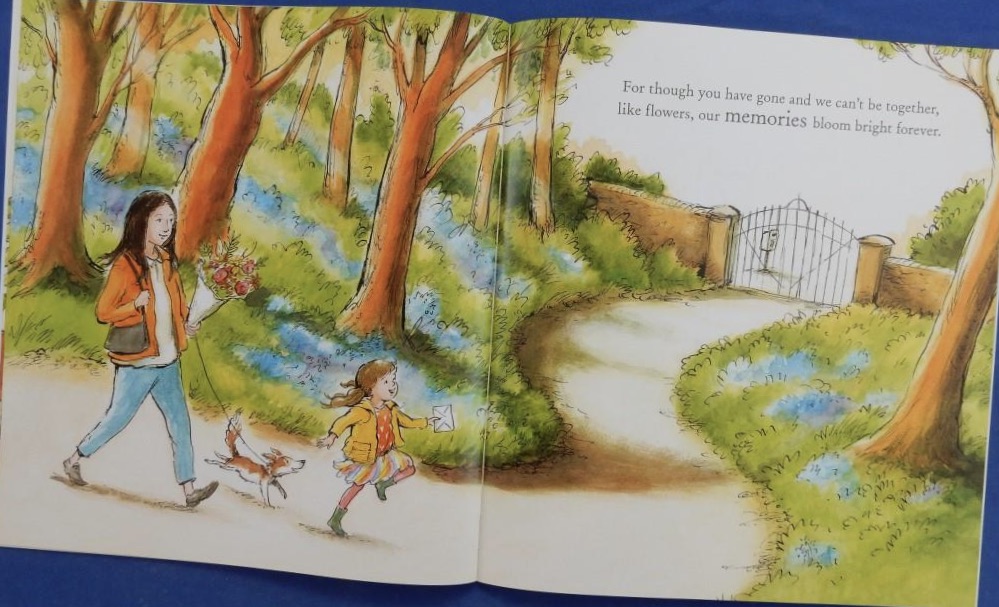
When the letter’s done, the girl narrator and her Mum set off to post it, the former wondering how Gran will know what’s been said and how she’ll reply.

When they reach the white post box, the narrator feels a little better so she tells us, and her mum reminds her that “We’re always connected to those people we love.” and suggests the girl continues to share things. By the time they walk back home the stars are shining above and they seem to have a special message for the letter writer.

Lyrically told in Lucy Rowland’s rhyming narrative and beautifully illustrated by Sharon Rentta whose scenes of everyday events and fond memories exude warmth, tenderness and love.
(The postboxes like the one in the story are to be set up at 36 other sites across the country after Matilda’s moving tribute to her grandparents proved so popular.)

Afia in the Land of Wonders

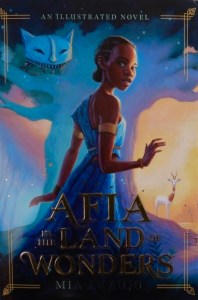
In the remote desert village of Dafra, sixteen year old twins Afia and Aya are about to become crystal merchants like their parents. On the eve of their ewende ceremony (coming of age) Afia encounters a mysterious young carver at the monthly market and he makes her an offer. Unlike her dutiful sister, Afia does not want to follow in her parents’ footsteps; instead she wants to see the world. Consequently she flees from the initiation ceremony and heads to the forest. where she joins Bakame, the carver on a journey that takes her far from her familiar homeland community. She’s intrigued by what he tells her of Queen Ukiwa and her palace in Ijábù. What he doesn’t tell her however, is that the Queen’s palace and her entire kingdom are built on the cruel, cunning ensnarment of the lives and dreams of her courtiers.

Eventually though, Afia witnesses her awful cruelty, which changes her initial impression of the Queen and she realises that she’s made a terrible mistake. Determined to leave Ijábù. she agrees to a bargain proposed by Ojike, a spirit of a boy who’s wearing a carved cat mask: He’ll help her find her way back home if she helps him overthrow the evil Queen. But is she sufficiently brave and resilient to free not only herself but those trapped by the queen’s controlling power? She’ll certainly face terrific danger, but she will discover allies willing to assist in her mission to return and make amends to her precious twin.

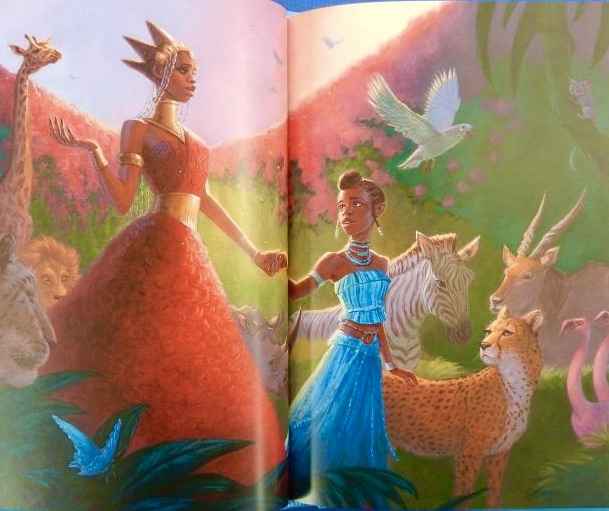
Celebrating curiosity, family bonds, independent thinking, friendship and compassion, this fantasy with its stunningly beautiful colour illustrations, draws both on African folklore and on elements of Alice’s Adventures in Wonderland. Older readers who have read the Lewis Carroll classic and have an interest in folklore from around the world will get the most from this fascinating story.

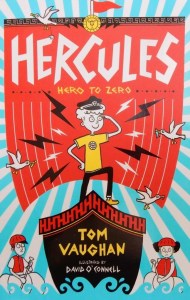
Hercules Hero to Zero

Hercules Braver returns for a third set of adventures presented in the usual diary form and taking place during the school summer holidays. With his stepdad Ken having set off on an expedition to Canada, and his pals all going for holidays abroad, Hercules is sure he and his mum are going to have a great time, but then he hears his mum say that her job as a translator is now precarious, though he’s not really sure what this means. Could it be something exciting maybe? Not so, when Mum says she’s selling the family car.: Hercules decides he must make some money to help the situation, after all it can’t be that difficult to become mega-rich.

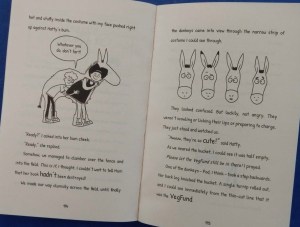
First, aided and abetted by Hatty, Pav and Natthew, he tries a genius invention he calls VegFund, a safe for valuables but he ends up making a loss and owing money. He then ‘borrows’ the money from the sale of Mum’s car, the intention being to buy raffle tickets and win a super-duper car.

Then comes a phone call from Zooey aka Zeus; he’s furious about people writing bad things about him on the internet, Natthew in particular who is unaware of the true identity of Herc’s Dad. There follow surprise news about the raffle winner; the next money-making project (Toybay website), Mum’s announcement about the Young Explorers Camp where she’s to be a camp leader and Herc. a participant, a discovery that others besides Natthew are writing about Zeus on the internet and shock horror! Mum has been busy writing a book, one that Hercules wants to get rid of pronto.

Once at the camp Herc decides it seems ‘kind of all right’ but that’s before he and Pav cascade over a waterfall and find themselves face to face with a a prankster saying he’s been sent by Zeus. It’s Hermes and he’s looking for the self-same hard-drive that has on it both a special book and the toybay website.
All this and we’re less than halfway through August. There’s still the camp play – A Midsummer Night’s Dream, more donkey dramas than the one in the play

and lots more.
Will Mum find out that Hercules.took her £400 and what of her book? 


Loosely based on the next three labours of Hercules, this is exceedingly funny, made even more so by David O’Connell’s liberal sprinklings of illustrations.


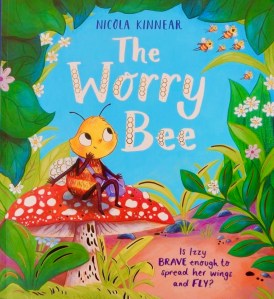
The Worry Bee

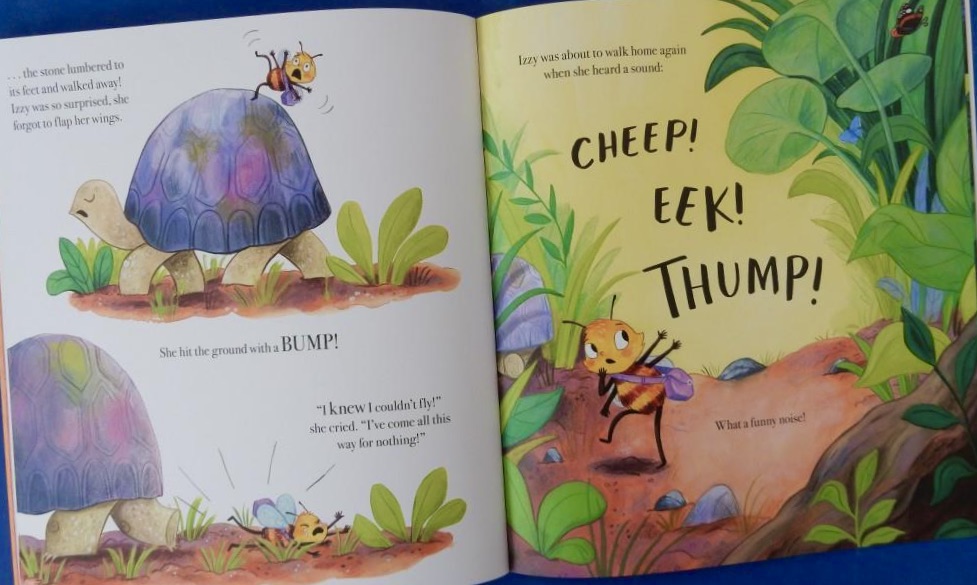
Little Izzy the bee longs to fly to the flowers with the other bees in her hive but she’s beset by ‘what if?’ worries: What if her wings aren’t strong enough ? What if she fell?’ So rather than trying to get airborne, she stays behind for a while and then starts walking, This gives her the opportunity to see interesting things on her journey. But there are disadvantages too including getting tangled in spider webs and even worse, a huge river to cross. She definitely can’t walk over that. Time to try flying, thinks Izzy but soon meets with an accident that sends her crashing to the ground.

She’s on the point of walking back to her hive but there comes a strange noise nearby. A baby bird lies flat on its back at the base of a tree. When it asks Izzy to demonstrate her flying prowess, she doesn’t know what to say, but suddenly the baby bird mentions a big fluffy thing coming towards them. Izzy realises what it is and that they need to take to the air to escape it’s clutches .After a lot of flapping … they’re flying, first stop the baby bird’s nest and then Izzy flies to join the other bees in the field of flowers..

There’s gentle humour buzzing right through Nicola’s latest story both in the words and illustrations. Young listeners will love the dramatic scenes of Izzy and how she finally overcomes her fear of flying.

There’s No Such Thing As … Fairies / One Goose Two Moose Three Raccoon Four Baboon

These are both additions to popular series: thanks to Scholastic for sending them for review.

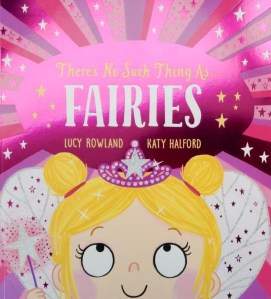
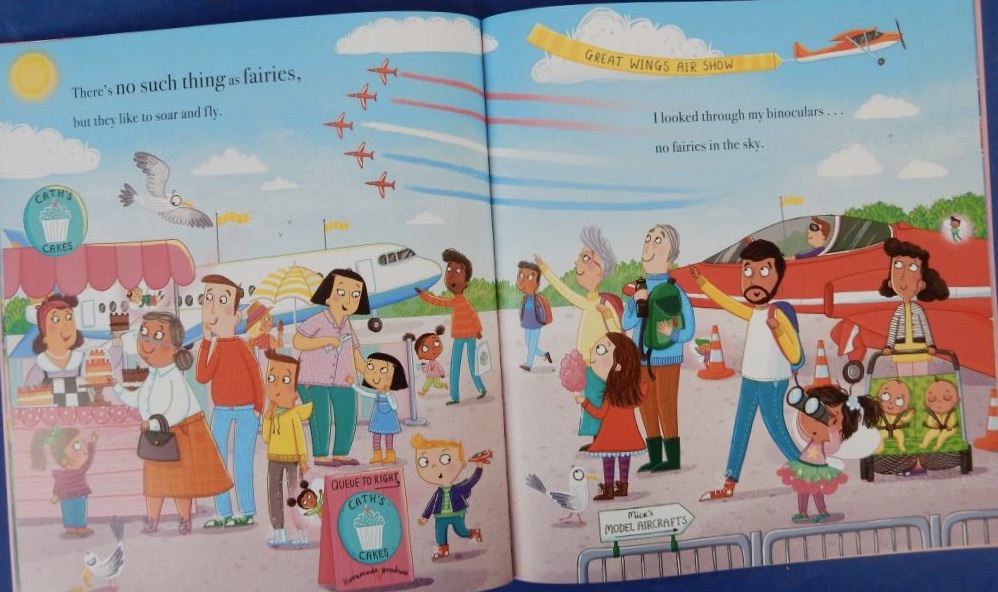
Having explored the possibilities of there being unicorns, elves, mermaids, dragons and ghosts, team Rowland and Halford turn their attention to Fairies in their latest search and find story. The young girl narrator has been told by her daddy that fairies don’t exist and she sets out to check the veracity of his assertion the very next day. First in the meadow where the family have a picnic, then the woodland stream, followed by the park, the beauty salon, the aircraft show

and the hothouse. She even checks out the dentist, the library and the theatre, after which she’s ready to agree with her dad, “There’s no such thing as fairies,” she confidently tells him, “It’s really TRUE.” Realising his little girl is upset dad lifts her up onto his shoulders and they start walking home. Suddenly a rainbow appears and …

Katy Halford’s vibrant, playful, detailed scenes wherein fairies hide in plain sight complement Lucy Rowland’s expressive, patterned rhyming narrative with its repeat refrain, making this a book that young children will find great fun and likely want to hear several times: oh how they love being in the know with the author.

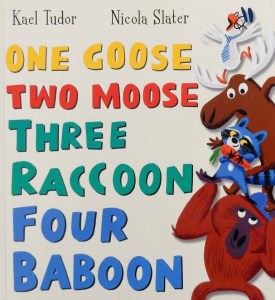
Rule stickler Simon is back and once again he’s having trouble getting the animals into their proper lines. Then there’s Moose who is as eager to help as ever..
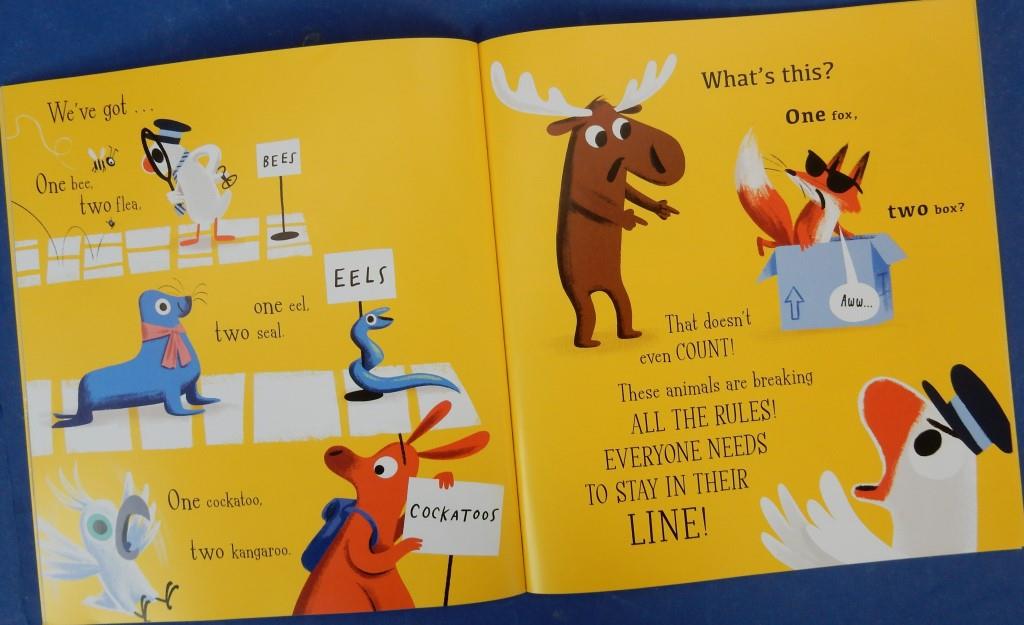
In this instance help is definitely required during an animal outing to the park for which there are three vehicles, one for the raccoons, one for the geese and the third bearing the sign Magical Moose Tours. When it’s time to reboard their respective buses is when the problem starts. There are mix-ups of raccoons and baboons, hares and bears, bees and fleas, eels and seals, a cockatoo and kangaroos; even a fox and a box – hmm!

Poor goose is going crazy with frustration and confusion. Forward steps Moose hoping to give some assistance. Can he persuade Goose that there is more than one way to do things and allow the tour to continue?

Another gigglesome delight with a wealth of possibilities for preschoolers and beyond, from author Kael and illustrator Nicola.

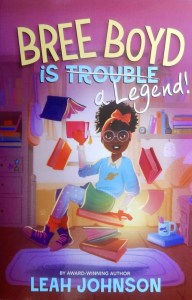
Bree Boyd is a Legend!

Thirteen year old Bree Boyd spends her life trying to live up to her father’s high expectations and the shining examples set by her older sisters Lex (state debating champion) and Christian (at law school); Boyd Black Excellence is what it’s called. Dad a college professor is currently campaigning to become the next state senator. Her mother has left the family home. Bree, an ace speller and winner of spelling bees, studies with her tutor leaving little time to spend with her closest friends, Sammy, Abby and Ellie.

Having reached the next level in the spelling competition she starts feeling distracted and when a lightening strike knocks out the power to her home, she flips a switch on the breaker and gets an electric shock that gives her telekinetic powers. With this new-found ability Bree is able to help her friends and have some fun but with the approach of the district spelling bee, Dad ups the pressure and she’s completely torn between loyalty to her Dad or her friends with whom she’s agreed to perform. Even worse, the final spelling bee and the talent show are on the same day. It feels like her life is spinning out of control. However she has to decide whether to stick to her father’s plan or follow her own path.

Infused with humour, this is a very credible portrayal of the inner turmoil suffered by youngsters who have huge adult pressure put upon them and it’s wonderful to see the protagonist working out the true meaning of ‘being best’. There are many poignant moments and it’s great the way the Boyd siblings support one another; how each of them continues to grow despite everything and how they eventually work out how to communicate with their dad.

Recommended for readers from around eleven.

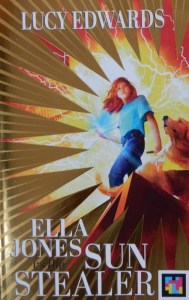
Ella Jones vs the Sun Stealer

This is the first in a new series written by Lucy Edwards, presenter and disability activist, in collaboration with well-known author, Katy Birchall.
Meet twelve year old Ella Jones, who like the author, is blind. Ella lost her sight two years ago and has worked extremely hard to adjust to the challenges of being differently abled. Vital to her endeavours is her guide dog Maisie; so too are best friend Finn and her elder sister Poppy, though Ella still has to cope with battles, both internal and external, which she tries her best to face patiently and kindly.

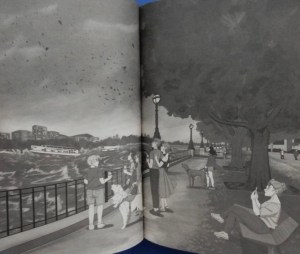
One day when visiting central London with her family and Finn,

the world is suddenly plunged into darkness, but the pitch black seems not to affect animals, it’s only humans who panic when near chaos ensues. Both of Ella’s parents head back to their places of work, Mum to the hospital and Dad to Croft Tower belonging to the inventor Everett Croft.

Ella and Finn begin to think the darkness might be connected with the legend of Celtic god of light, Lugh, who Ailynn, owner of the Mythos Library they’d visited the previous day, had spoken about. The two friends plus Poppy manage to visit Ailynn who is in the hospital and she tells Ella that she believes she’s the one meant to defeat Lugh and return light to the world. That though would mean that Ellie faces something of a dilemma because its presence is the very thing that makes her different.

However, fuelled by the knowledge that someone else believes in her, Ella and the others return to the museum and start their quest. With clues to follow and a set of rainbow hued stones to find and position in the handle of the slingshot that belonged to Lugh, this is some enormous challenge.

Empathy is key in this moving, twisting, turning fantasy with its young blind narrator. It’s rare to have a character with a vision impairment represented in a children’s novel and the manner of its telling allows we readers to get some idea of how a sightless person might experience the world, Bring on the next story.

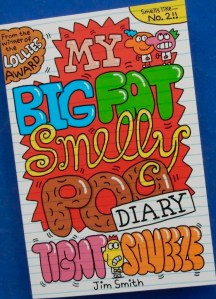
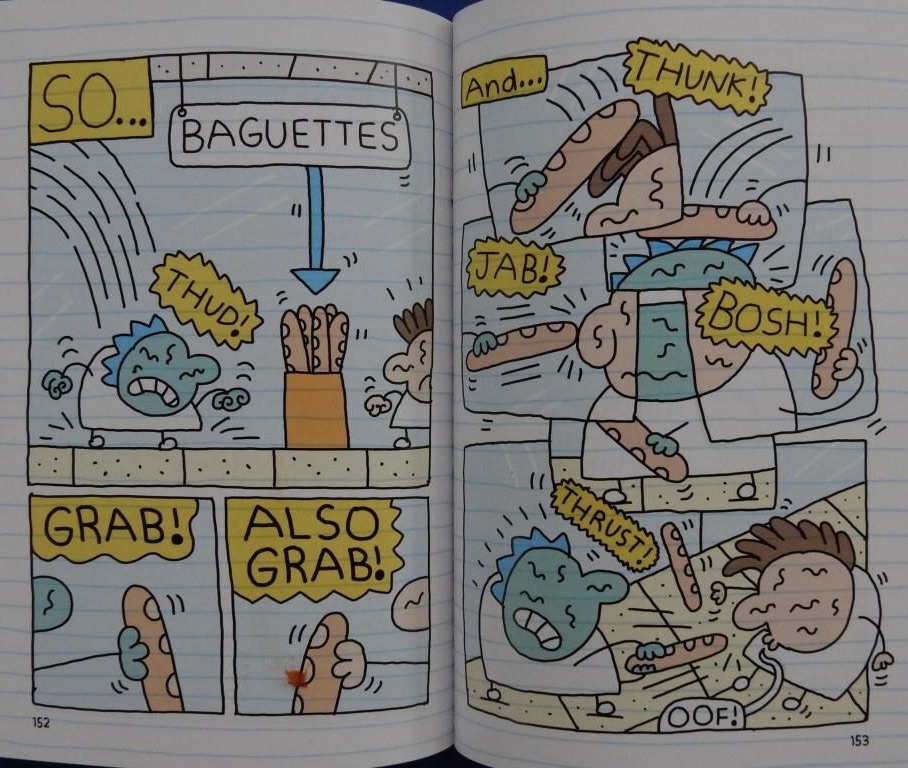
My Big Fat Smelly Poo Diary: Tight Squeeze

Writer of the titular diary is Pedro. He has two friends named Olga and Ozzy: arranged as a acrostic, this spells – well you work it out. They’re actually known as the Poopies.

Pedro’s first ‘story’ is entitled My Invention and was prompted by a total absence of toilet rolls in the supermarket due to stockpiling. The tale begins on a Monday morning with their teacher announcing that the local supermarket is running a poster competition showing a product invented by the poster’s creator. Said product will then be manufactured and sold at the supermarket. Some interesting things become the subject of posters including Pedro’s pooh shooz. Pedro is convinced he will be announced as the winner. Not so!

As they walk home together after school the friends see a huge billboard advertising the winning invention which sparks an idea; – a LOO roll business venture. There follows a family supermarket visit that includes Granny, which doesn’t quite go to plan as she gets herself involved in a showdown: who’d have thought she had it in her.

Then there’s toilet roll monster trouble (to keep or not to keep), the coming of Storm Pedro when home-made fart masks come in very useful despite being a tad on the tight side, a sleepover of the pals, a final resolution of the toilet roll monster disagreement, and more.

Overflowing with feelings of friendship, aromas of the whiffy kind, and toilet humour, these crazy wipe-size stories are certain to go down well with Pedro’s human followers and other fans of stinkingly funny
graphic style dramas.

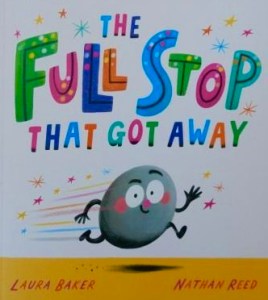
The Full Stop That Got Away

Meet Frank, he’s a full stop who loves to make up stories. One day he decides to make up a ‘nice, short, sensible’ one about a dragon. Here’s how it goes: ‘Once upon a time there was a dragon called Dee.’ End of story, so Frank tells us.

However the dragon thinks otherwise and decides to take over the story telling. Dee’s story is a about a tea party to which he invites his dragon pals. A veritable feast it proves to be with goodies galore, a never ending supply of them and that is because Frank has decided to quit.

When fire breaks out you can guess who the dragons call for to come and help. Having been sidelined, the small round entity steps up and cleverly produces some fire-extinguishing precipitation. Finally Frank has proved his point and Dee cannot help but agree.

Our external narrator makes an important comment concerning fun and sometimes allowing it to carry you away just before the book concludes.

With one larger than life main character and another of the fire-breathing kind that he brings into being, this is a very funny rhyming tale about imagination unbounded and knowing when to rein it in. Nathan Reed’s illustrations make this introduction to punctuation into deliciously dramatic dottiness.

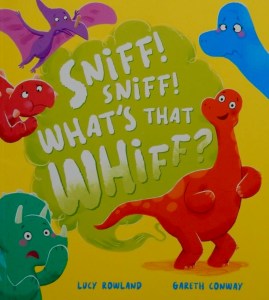
Sniff! Sniff! What’s That Whiff?

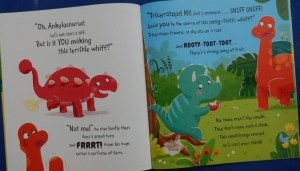
This story is told in rhyme by a dinosaur that has feasted on a large portion of berries for lunch and soon detects a terrible whiff in the air around. Determined to discover the perpetrator of the bottom-burp aroma , off it goes inviting young humans to join in the search. The first to be interrogated is Pterodactyl. She proffers proof that her toot is not the horrid one that offended our dino. narrator. Nor are those made by Dippy diplodocus, Ankylosaurus,
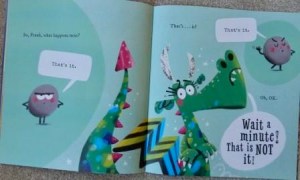
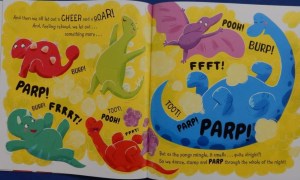
Triceratops, the Megalodon Shark (his is exceedingly fishy) and Steggy Stegosaurus. Then comes a very strong, meaty smell: Yikes! It’s T-Rex. T-Rex gives chase but unexpectedly stops, apparently feeling exceedingly poorly on account of the stench. Our narrator empathises but a realisation suddenly dawns. That rear end purple parp cloud eruption is coming from our very own narrator’s bum and has been responsible for saving the others from becoming T-Rex’s supper.

Time for a party when feeling de-stressed, the other dinosaurs dance, stomp and relax their bum muscles releasing …


I suspect that along with unicorns and dinosaurs, poohs and pongs are young children’s favourite topic for picture books so this one of Lucy’s and Gareth’s will be a winner on two counts.

The Book is Full of Poop

Having given readers a book full of unicorns and a book full of elves, team Gareth and Nathan now offer a much more whiffy one. I suggest a clothes peg on the nose as you accompany the two child narrators on a poo hunt around town; it promises to be a ‘super-duper-poop-athon’ during which you will encounter creatures of all shapes and sizes, some imaginary, some extinct and others feathered, furry, thick and fibrous, or scaly. Of all shapes and sizes too, are the poos they deposit.

Did you know for instance that hippos poo while on the move

and sharks produce poo of a green colour?

Gareth’s rhyming narrative ends with a warning to beware of hidden poop piles and of course, whenever you conclude a walk around outside it’s wise to check the soles of your shoes.

Young humans will love the poo depositing shenanigans of the animals depicted in Mike’s amusing scenes; adult readers aloud might wish to have an air freshener close by as they share this offering with one or several children.

When Fish Finger Froze

Fish Finger has a happy family life and plenty of friends at school; but then one day there appears on his classroom wall an announcement about a school disco to be held that very night. His classmates are excited but Fish Finger starts to worry straightaway. His worries increase after Miss Bag O’Spinach tells the class that they can spend the rest of the school day working on their dance moves and everything Fish Finger attempts ends in disaster.

At home after school, his siblings, Patty and Fillet, are eagerly getting ready for the evening, rummaging in Grans trunk and doing their hair. Mum notices Fish Finger looks upset and when he tells her about his bad dancing, she encourages him with some wise words about doing his own thing. The twins too are supportive and set to work giving him some tonsorial treatment before they leave.

At school, the hall is full of lights and lively movers but Fish Finger remains frozen to the spot, his feelings all tangled in his tummy as the contest is announced. Then suddenly something amazing happens: Fish Finger thaws as he shimmers and shakes across the floor, full of zest and showing surprising confidence as he follows mum’s advice and does his own thing. He’s clearly delighted and so are his friends.
When the parents arrive, Miss Bag O’Spinach realises she’s yet to present the prizes. There are a fair few including one for ‘Best Attitude’. Can you guess who gets this award?

Hearing his name called, the winner suffers a brief re-freeze but quickly warms up, thanks to his helpful classmates and a celebratory dance concludes the proceedings. Hurrah for camaraderie, empathy and especially for the character who overcame fear and bravely did his own thing.

With Michelle Robinson’s spirited rhyming text and Tom Knight’s funny illustrations that capture so well the feelings of the protagonist, this picture book is full of heart and offers a great way to get young children talking about their own feelings and emotions.

UNICO: Awakening

Created in Osamu Tezuka’s Japanese manga style, this is in part an exploration of good vs evil. Herein a little unicorn, Unico has been banished by the evil goddess Venus whom he has angered. (The prologue tells how Venus, threatened by Unico’s power, which was born of his friendship with the goddess Psyche, dispatches the Zephyrus, the West Wind, to get rid of him. Instead Zephryus decides to save the little unicorn, repeatedly transporting him through space and time.) The disorientated Unico is befriended by a watch-cat, Chloe. Unico cannot recall events from his past or what his real purpose was. Chloe pleads with the little unicorn to enable her to become human and he agrees to turn her into a girl once a day provided she helps their witchy Granny friend.


It’s not long before Byron, an affluent, very sinister trophy hunter has eyes on Chloe in her human form and Venus, sensing that Unico has reappeared on Earth, decides to use Byron to destroy him. When Chloe accepts Byron’s invitation to visit his abode, she soon feels uncomfortable especially with his talk of predator and prey.


The action and excitement ramp up with the book ending on a cliff-hanger as this book is to be followed by a second volume, UNICO Hunted.

Sattin was clearly inspired by Tezuka’s original manga from some fifty years ago and with Gurihiru’s jewel-coloured art, this book will appeal most strongly to those readers who prefer their stories presented mainly through high quality visuals. Backmatter includes information about Tezuka, Sattin and Gurihuri as well as some history of the Unico story.

All the Ways I Love You

Herein are presented a dozen scenarios where mums, dads and small children are imagined having a great time together. Some scenes are of the familiar kind – a garden, exploring in the park during the autumn,

watching through the window a bird sitting on eggs in a nest, for instance. Others – floating through the sky on a little white cloud, swinging on a vine in the jungle – are more fantastical. What they all have in common though, is the love that the adult is showing to the little child in his or her care.

Helen Docherty’s soothing rhyming text with its wealth of ‘what ifs’ and Daniela Sosa’s joyous, richly coloured illustrations, make this both reassuring and an invitation to small children to use and develop their imagination – an essential part of learning.

A book to share, ponder upon and enjoy with a young child or perhaps, to give as a gift to a family with a new baby.