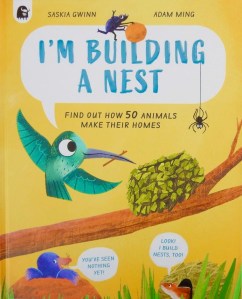
I’m Building A Nest

Author Saskia Gwinn entrusts Bird to act as our guide in this journey to discover how other creatures build their homes.. We meet more than fifty large and small : can any of them surprise Bird and show that their home is best?

First Bird visits other nest builders including a stork that reuses its stick nest year after year, a trumpeter swan that builds a nest on a beaver’s floating lodge and a red-headed woodpecker that pecks a hole in a tree trunk.

Next to be investigated are spiders. these eight-legged arachnids make webs for a variety of purposes. The garden web spider’s web is an insect trap; the golden diving bell spider weaves a web under water to trap air then uses it as a submarine and the crab spider makes a balloon of silken threads that float on the wind, enabling it to find a new home. Is Bird impressed by these? Well yes, but not persuaded.

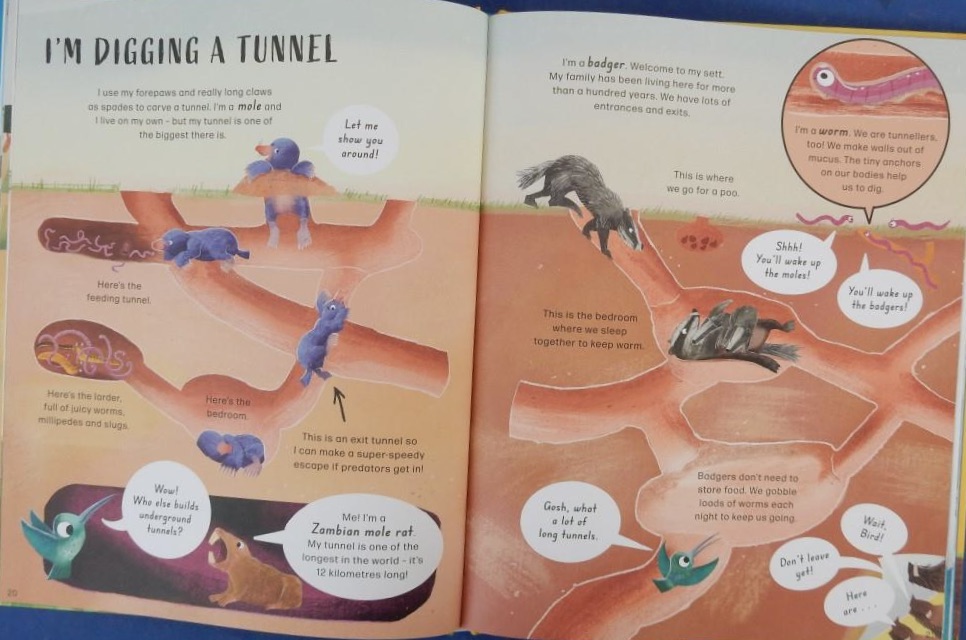
Do you know which animal’s home has a feeding tunnel, a larder and a bedroom as well as a super-speedy escape tunnel? It’s a mole, one of the tunnellers we meet.

These are just some of the places of residence Bird discovers, but at the end of a long learning journey, there’s been a change of heart in our feathered escort. It concludes, ’Every home is best for the clever creature that made it.’

Curious young readers will enjoy discovering the wealth of animal homes on our planet and be amused by the speech bubbles and Adam Ming’s playful illustrations.
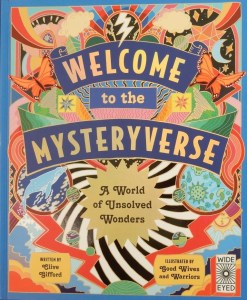
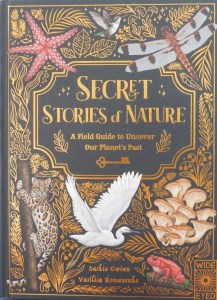
Welcome to the Mysteryverse / Secret Stories of Nature

These are both Wide Eyed Editions: thanks to Quarto Kids for sending them for review

Contained within the covers of this large format book are some of the as yet, unsolved mysteries about the workings of Earth, its human inhabitants and the universe. It’s divided into five parts each given an alliterative title: People Puzzlers, Earth Enigmas, Natural Niggles, Cosmic Conundrums and Miscellaneous Mysteries, concluding with a couple of spreads telling of some mysteries that science has helped to solve.

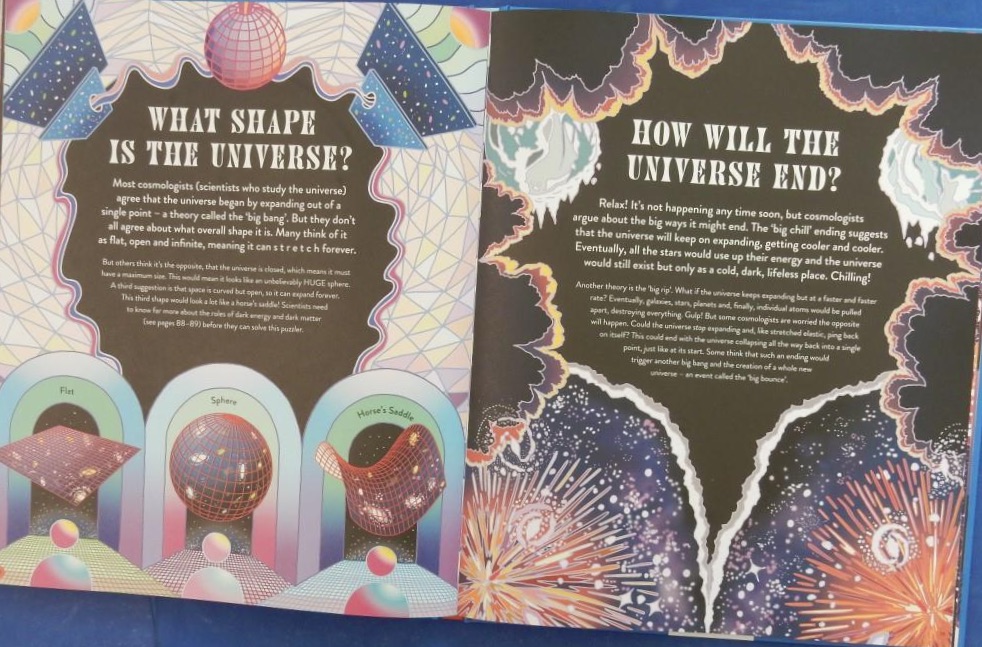
Clive Gifford explores in a straightforward manner everything from yawning and the appendix to optical illusions, from what makes tornados and causes earthquakes to where has all Earth’s water come from, why millipedes and centipedes have so many legs to why cats purr, and what is the overall shape of the universe, and, how will it end.

For each mystery readers are encouraged to think both scientifically and creatively as they peruse the spreads and ponder the questions posed.

An absolutely fascinating compendium of scientific puzzles, made all the more exciting by the detailed, sometimes psychedelic illustrations by Good Wives and Warriors, whose work I’ve not encountered before.
A book for KS2 classrooms and families where there are curious-minded children.

Presenting the biological information in this book as secret stories that nature wants to share with readers is an engaging means of sharing the facts relating to the flora and fauna featured. The sea, the ice, forests, jungles and mountains all have secrets, as do the sky, the night and the ground beneath our feet.

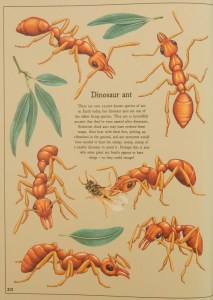
Did you know for instance that there are more than 12,000 known species of ants on Earth today? Or that ants hear with their feet, or rather, they sense the vibrations in the ground around them.

I was fascinated to read that horned tree frogs have bony spikes hidden inside their skulls for defence purposes and that dragonfly ancestors had a wingspan of around seventy centimetres rather than the maximum of twenty in some of those of today.

You may well be surprised to read that rodents including rats and mice share their DNA with humans – now there’s a thought. It might also come as a surprise the fur of polar bears is not white. Rather it’s translucent and appears white because it reflects visible light.

Towards the end of the book is a ‘searching for secrets’ section encouraging readers to stop and look closely at the nature around them to find the hidden treasures that are all around.

With superb illustrations by Vasilisa Romanenko, this is a treasure trove of ‘secrets’ relating to the natural world.

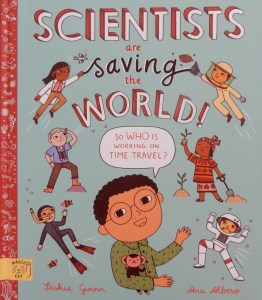
Scientists are Saving the World!

Scientists are Saving the World!
Saskia Gwinn and Ana Albero
Magic Cat

In this comic strip format book a little boy (with special interests in time travel and dinosaurs) and his mum spend time together talking about scientists and some of their amazing work.

First come the palaeontologists, one of whom was Mary Anning who inspired many others to search for dinosaur remains; another was Louis R. Purnell, an ex-fighter pilot who looked after fossils in, among others, the Smithsonian museum in the USA.

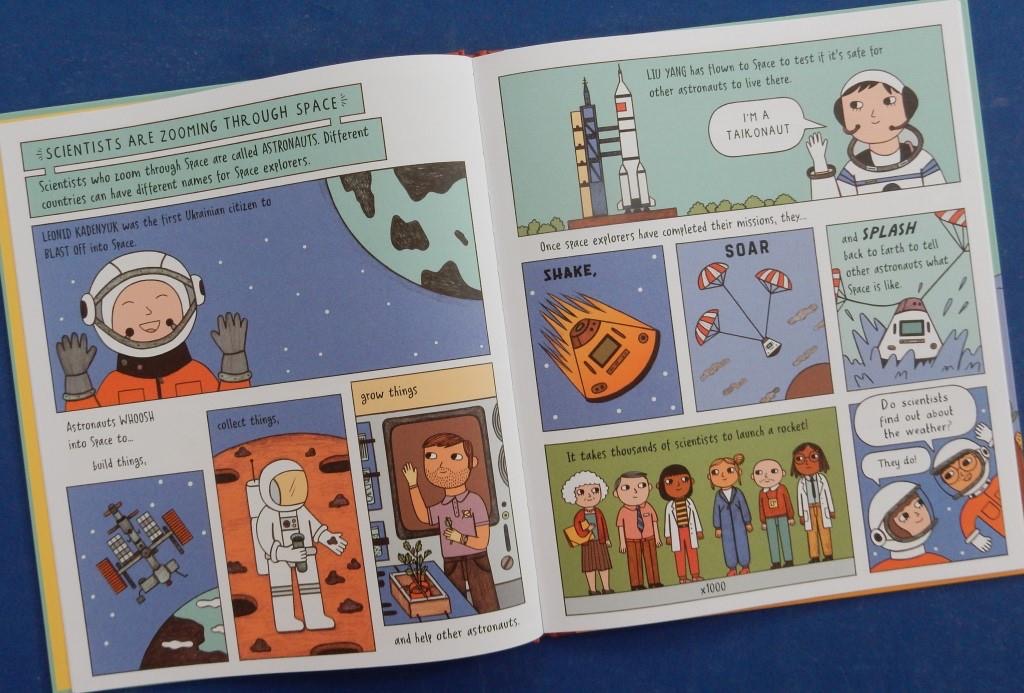
Their discussion then moves on to astronauts; it’s great to see Leonid Kadenyuk, the first Ukranian citizen to blast off into space, as well as Liu Yang who flew to a space station to undertake experiments to find out if it was safe for other astronauts to live there. Did you know though, that it takes thousands of scientists to launch a rocket?

Next up are the meteorologists and we’re introduced to two women, Joanna Simpson who discovered how hurricanes work and June Bacon-Bercey whose knowledge of Earth’s atmosphere meant she could predict when very hot weather was on its way.

The talk then focuses on acoustic biologists. It’s clever how this entire discussion is advanced by the boy’s question and his mum’s response at the end of the previous topic. In this instance the two biologists we meet are new to me: Deepal Warakagoda, an expert in bird sounds who, when walking in the Sri Lankan rainforest, heard an owl noise never before recorded. The other is Katy Payne, recorder of elephant sounds but not only that, for when out on the ocean with her husband, she discovered that humpback whales sing songs.

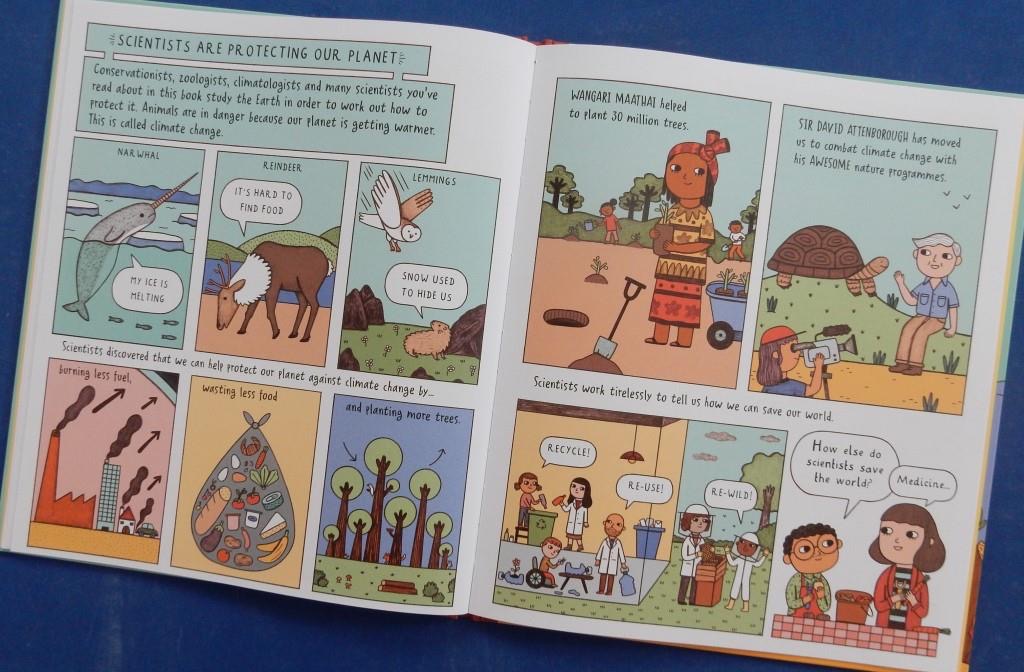
They move on first to robotic engineers, then in turn marine biologists, geologists, botanists, arthropodologists (scientists who study many-legged bugs), conservationists working tirelessly on save the world: Sir David Attenborough being one, another is Wangari Maathai who started a famous campaign to help more women plant trees in Africa.

Unsurprisingly there’s a spread devoted to those life saving inventors of vaccines including Ugur Sahin and Özlem Türeci two of those behind the Pfizer-BioNTech vaccine that protects against COVID-19.

We return to the boy’s thoughts about time travel: Mum talks of astrophysicists, introduces Neta Bahcall who studies dark matter, and the bedtime part of this awesome exploration brings the focus right back to the child who falls asleep thinking of the idea that all those incredible people were once small children like him who asked lots of questions, had big dreams and followed them.

What a wonderful way to inspire the next generation of scientists: this collaboration between author Saskia Gwinn and illustrator Ana Albero works really well, making this a book that can either be read right through, or with pauses at the end of whichever spread one chooses, so cleverly is it put together.