You Are Nature, Too!
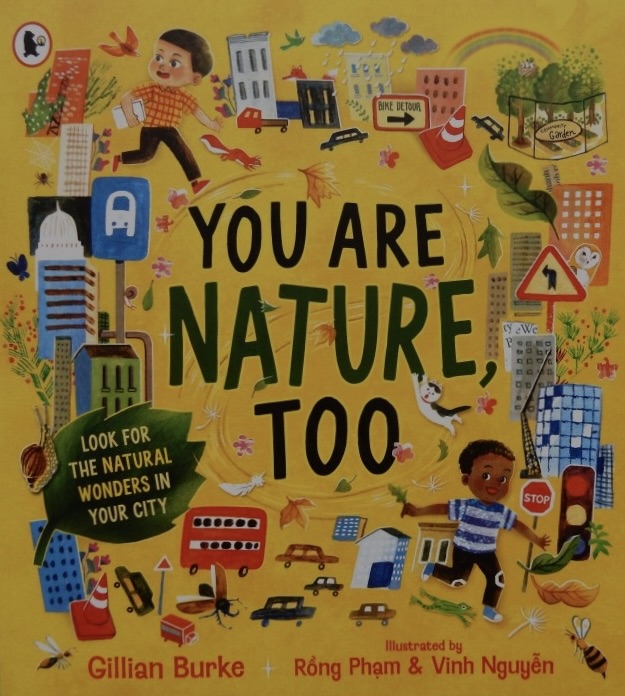
Gillian Burke, illustrated by Rong Pham and Nguyen
Walker Books
Even in the busy towns and cities many of us live in there’s a wealth of nature just waiting to be discovered and that is exactly what this book encourages, indeed challenges, youngsters to do.
Author, Gillian Burke (a Springwatch co-presenter and biologist) reminds readers/listeners that rather than being separate from the natural world, we humans are a part of it, no matter where our home is. We join two young boys as they explore their city and discover the wonderful natural world, its sights and sounds – all around them – up in the sky, among the trees, between the paving stones and in other unlikely places.
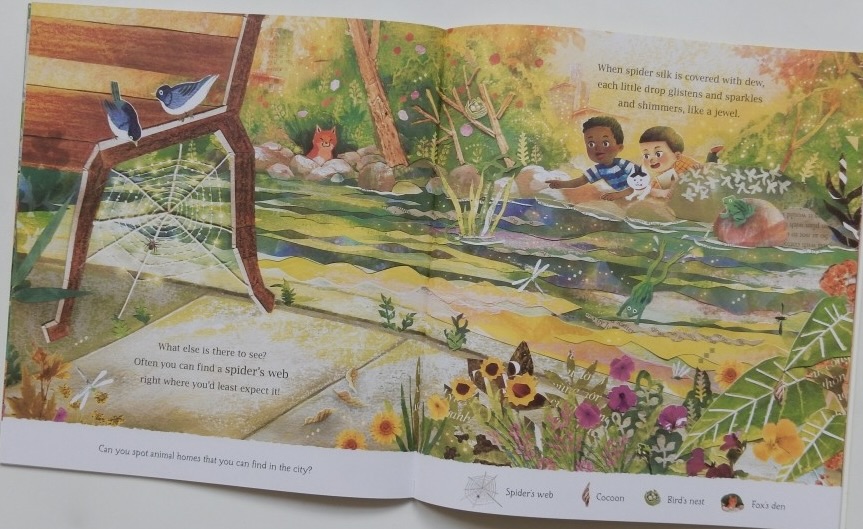
There’s a wealth of new life, a plethora of animal homes, a multitude of natural patterns and a change in what is visible as the sun goes down and night descends.
The mindful text is calming and really does encourage youngsters to slow down, or perhaps stop and observe what surrounds them. The illustrations are a perfect complement to the verbal message, the seek and find challenge beneath each location spread encourages deeper engagement and the book ends with a spread of activities to try.
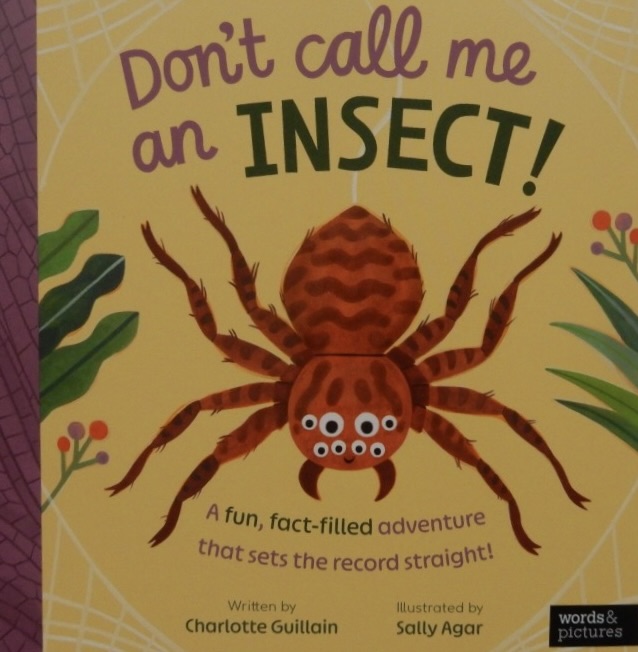
Don’t Call Me An INSECT!
Charlotte Guillain and Sally Agar
Words & Pictures
We join young Charlie and Bumble (a bee) as they set out on an insect search hoping to find a creature they’ve not seen before. Pretty soon they make their first discovery Charlie learns her first lesson: the minibeast with eight legs sitting on a web is not an insect but an arachnid (the factual explanation is given). Leaving the shed and moving outside they encounter another new creature – again not an insect. This one is a centipede. Further hunting leads to finding several other creepy crawlies – a woodlouse, a millipede and a scorpion but not one insect until at last among the trees they spot several. But how should they classify the caterpillar? It doesn’t quite fit the bill of having ‘three body parts, six legs, a tough exoskeleton’ and maybe wings; it’s time to find out about the life cycle of a butterfly.
With its rhyming narrative and straightforward information pages, this story cum fact book is just right for very young children who will enjoy Sally Agar’s gently humorous illustrations as well as participating in the learning process along with Charlie and Bumble.