Whisper to the Rescue

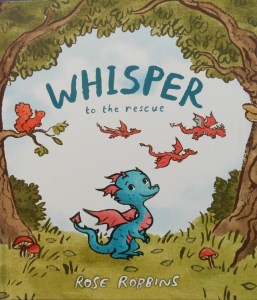
Meet Whisper; he’s the smallest, quietest dragon on the mountainside. He’s also the most observant, and extremely considerate; but his family members appear not to notice him. What they do spend much of their time doing is building huge bonfires and to that end, they damage the environment by tearing down trees and burning their branches. Now as you would expect Whisper has noticed the effects, not only on the trees, but on the birds and other creatures.
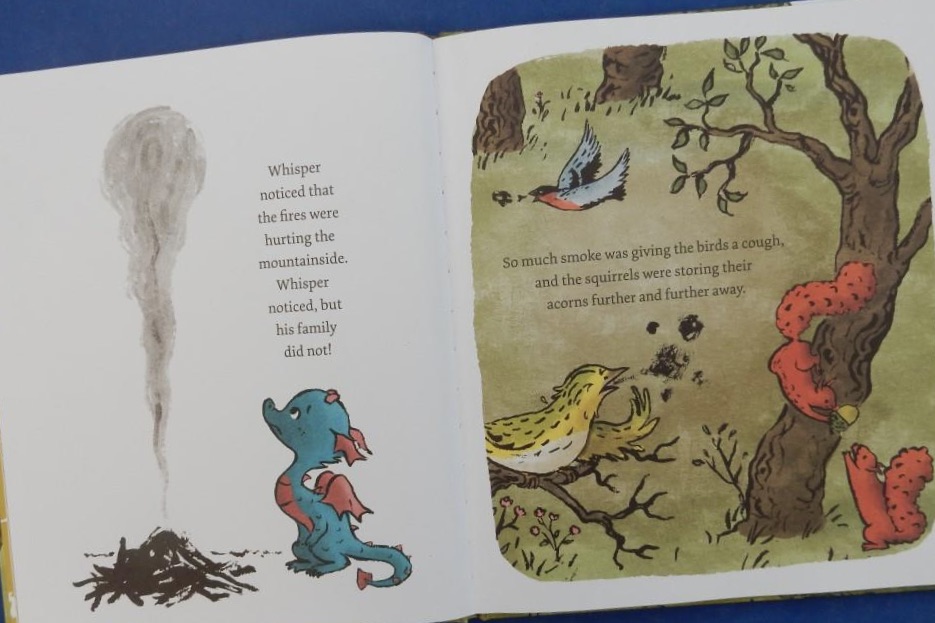
How though can he make the other dragons pay attention to the consequences of what they’re doing, especially when they pay no heed to his efforts?

Fortunately Whisper has two good friends, Bear and Owl. So he pays them a visit. Owl in her wisdom explains that there are times when showing, not telling is what is needed and together the friends devise a plan. Then, thanks to some help from one bird in particular, using perfectly timed creativity
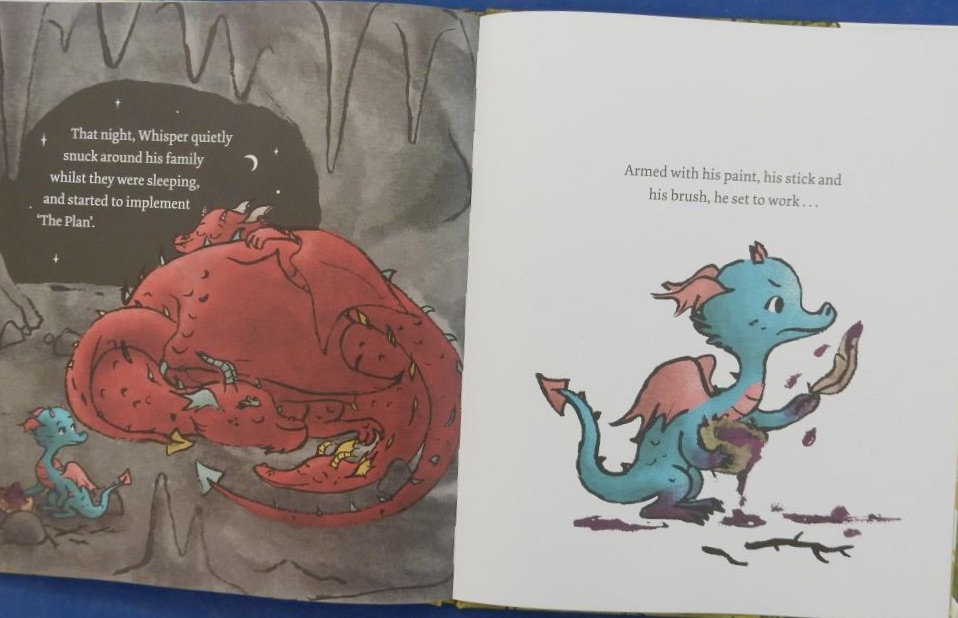
Whisper finally succeeds in getting his vital message across to the rest of his family. Their reaction and future actions demonstrate their contrition and the mountain home of the animals becomes a safe place at last.

Rose Robbins portrays Whisper and his pals as such appealing campaigning characters, so one hopes they will succeed in galvanising young children into using their own voices – vocally and visually – to stand up for environmental and other important issues they believe in.
Loud!

Loud!
Rose Robbins
Scallywag Press

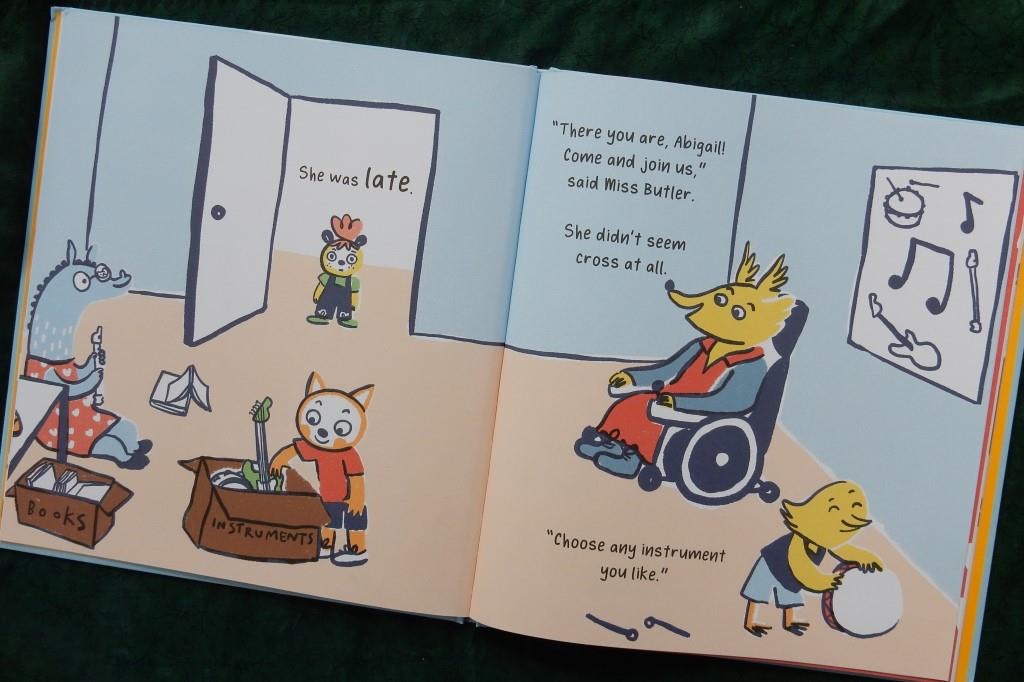
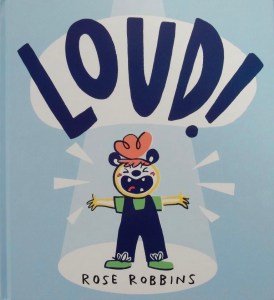
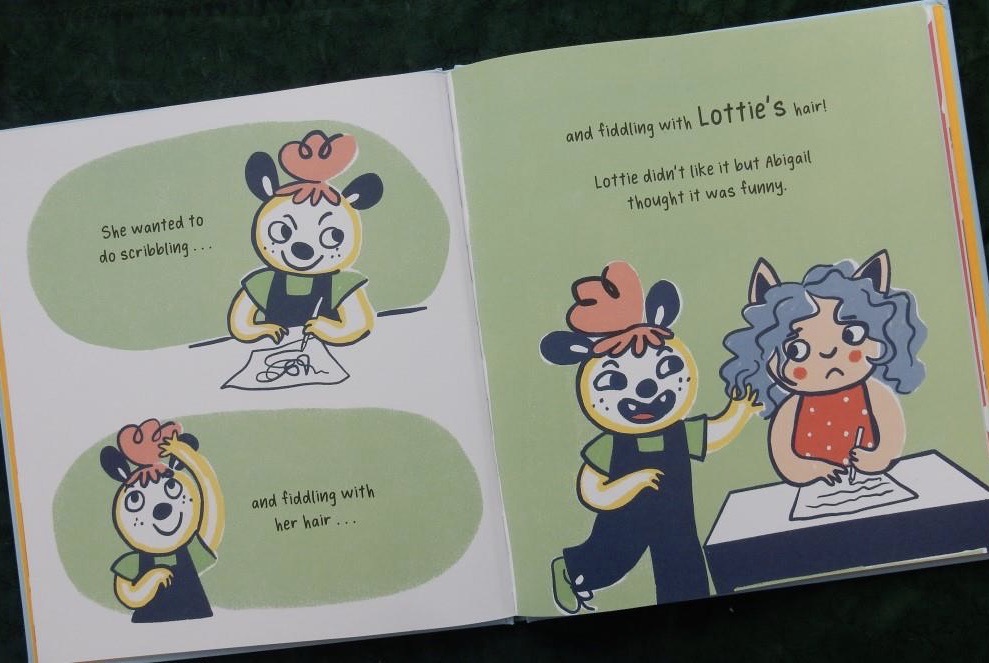
Rose Robbins’ latest picture book celebrates another cognitive difference that comes under the neurodiversity umbrella. Abigail has ADHD and she’s having one of those tricky days in class where her restless frustration leads her to do things that displease and disrupt others.

As a result she’s taken to the ‘calming down’ room for a while which makes her late for her next lesson. It’s music – a new activity for Abigail and despite her lateness, she receives a friendly welcome from the teacher, Miss Butler.

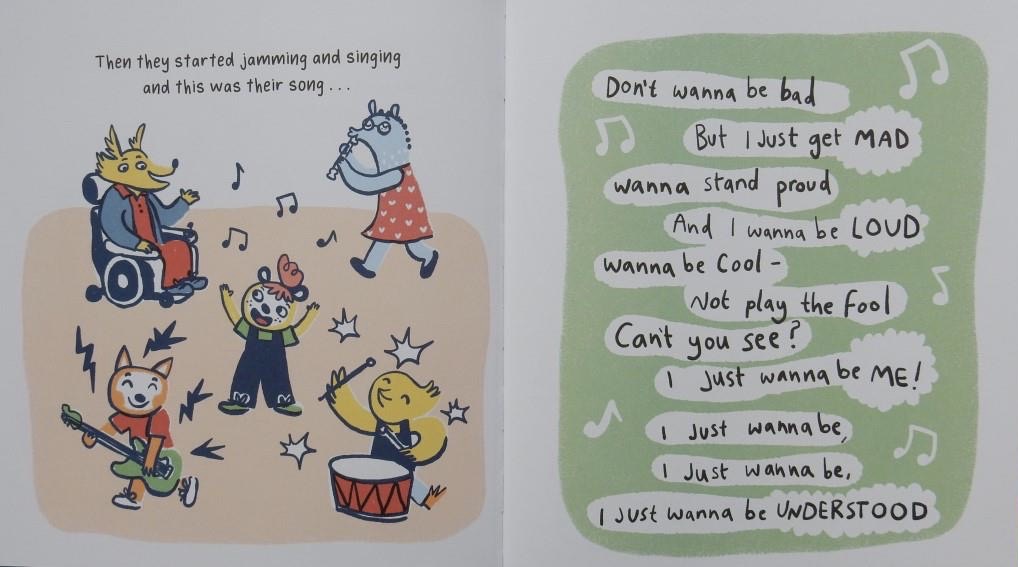
The other class members all seem to have a musical talent of one kind or another but Abigail struggles to find a way to join in successfully. Out of sheer frustration she lets out an enormous SCREAM! that causes cool, calm Miss Butler to approach her. Abigail expects to be sent back to the ‘calming down room’ but instead, her accepting teacher praises her voice, speaking of its singing potential. A transformation begins and with support Abigail finds a role, becoming the group’s totally cool singer-songwriter …

Sometimes a serious topic is best approached through humour: it’s certainly very successful here with Rose Robbins’ quirky illustrative style.

An important inclusive book for all youngsters and their teachers in early years and KS1 classes, as well as for sharing at home.

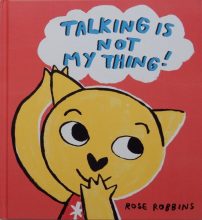
Talking Is Not My Thing

Talking Is Not My Thing
Rose Robbins
Scallywag Press

Having a neurodiverse member of the family can be challenging for everyone as Rose Robbins, the author/illustrator of this, her second book knows so well for she has a brother on the autism spectrum and she also teaches young people who have autism.

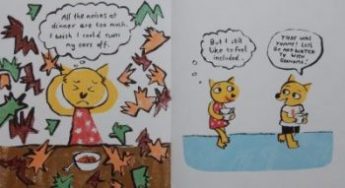
Much of this story is conveyed through the female narrator’s thought bubbles; the rest through her brother’s words in speech bubbles and Rose’s dramatic illustrations. The narrator’s opening thought is ‘I don’t speak. But my brother finds it easy.’

Having followed her brother’s call to come indoors as dinner is almost ready, we learn how she does sometimes attempt to speak using her voice but the words come out wrong. Furthermore as the narrator is sound sensitive the noises of dinnertime cause her some distress, but she likes to feel included.

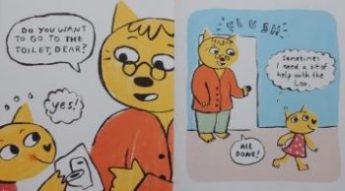
She also on occasion needs to convey how she feels or what she needs by means of one of her flashcards ( PECS symbol cards perhaps),

It’s great that brother and sister are able to play games together and that sometimes little sister acts as teacher.

Clearly understanding is not a problem, for shared story sessions with her brother reading aloud from a book, give his sister much pleasure.

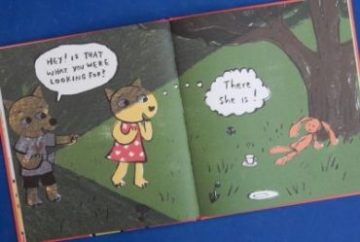
At other times, such as when things go missing, mutual assistance is enormously beneficial. First a beloved soft toy bunny is located

and then once his sister is safely in bed, she finds her brother’s lost car. A highly satisfactory ending to their shared day.

Once again, Rose has created an enormously empathetic story that she conveys with subtle humour and a sense of respect for the siblings she portrays in Talking Is Not My Thing.

That sense of respect and understanding is what I saw yet again very recently while walking in the grounds of Ruskin Mill College, a specialist education establishment near my home that caters for neurodiverse students of between 16 and 25. A fairly newly admitted boy whom I’ve never seen stand still before, stood transfixed watching a heron that had perched atop a tree in the grounds. At least three members of staff stood fairly close keeping a watch on his wellbeing, allowing the boy to take as long as he wanted to observe, what was for all of us an awe-inspiring sight.

Me and My Sister

Me and My Sister
Rose Robbins
Scallyway Press

Readers are not told that the sister referred to in this book’s title is differently abled or has an autism spectrum condition, in this account of the life shared by the narrator and his sibling: it’s left for us to infer through Rose Robbins’ verbal and visual narrative.

Therein we witness the highs and lows of having a much loved but differently abled younger sister who communicates through sounds and actions rather than words, actions that might be challenging or unsettling although not to understanding older family members.

The siblings attend different schools where the activities are different, although they both do a lot of learning.

There are plenty of fun times, as well as some embarrassing ones especially where strangers are concerned; and it’s frustrating to get chastised for things that aren’t your fault when it seems as though others are getting away with things.

Big bro. reassures us that no matter what, despite their obvious differences he’s an understanding and very loving brother

who is loved back by his little sister.

Told and illustrated with great sensitivity and gentle humour, in no small part because debut author/illustrator Rose Robbins teaches young people who have autism and also has a brother with autism, this is a book that should help foster empathy and understanding to share and talk about in school and at home.
Almost every class I’ve taught has included one or more children with autism and I know that their behaviour can sometimes be challenging; but more importantly, what they need is a loving, stable, structure within which to learn. That is what’s shown in Rose’s story.

(I’m writing this review having spent time today having coffee at Ruskin Mill organic café near where I live. Ruskin Mill is an educational establishment for learners with complex needs; it’s evident from observing those who work with the 16-25 year old students that sensitivity, humour, respect and understanding are part and parcel of their philosophy and approach to everything that happens there.)