Science School / Out and About Minibeast Explorer

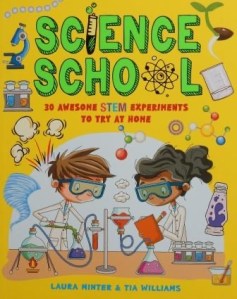
Science School
Laura Minter & Tia Williams
Button Books

Covering such topics as magnetism, gravity, change of state, oxidation, the growth of fungus and much more – all relating to basic scientific principles, the latest collaboration from Laura Minter and Tia Williams offers thirty STEM experiments, some crafty, for youngsters to try at home.

None of the activities require sophisticated equipment; rather they can be done at home with everyday materials you’re already likely to have knocking around somewhere. A list of what’s needed is given at the start of each project and there are photographs showing what to do, beneath each of which are step-by-step instructions, and, the science behind the experiment is concisely explained in the final ‘Science Made Simple’ paragraph(s) that often takes the science a bit further too.

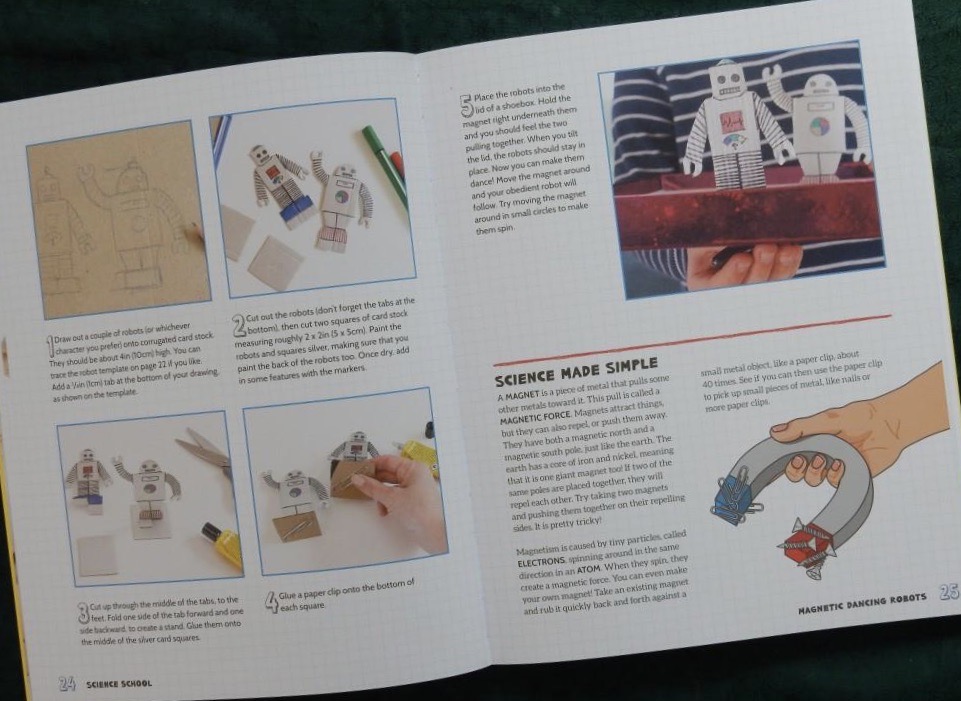
My experimenters especially enjoyed making the “Magnetic Dancing Robots’ and other characters. 
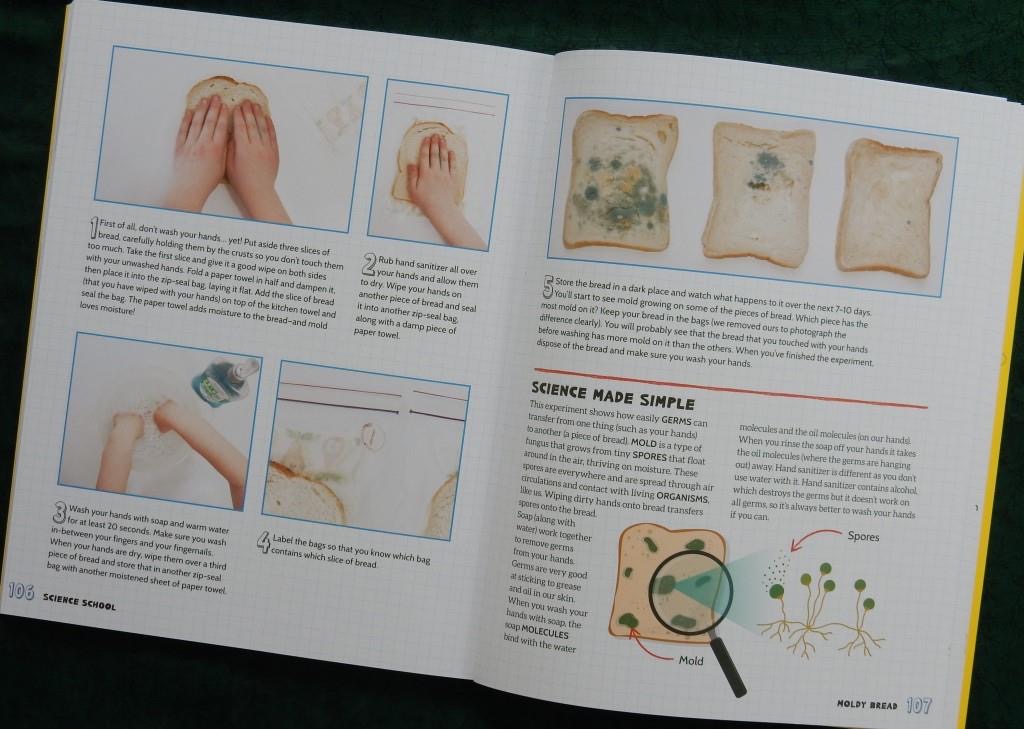
Important at all times, but even more so as COVID is still with us, is the experiment showing the difference after around 10 days to three slices of bread: the first wiped all over with unwashed hands; the second wiped with sanitised hands and the third with hands that have been thoroughly washed with warm soapy water for 20+ seconds, completely dried and then wiped on slice number 3 (make sure the bag into which each is placed is labelled before putting it in a dark place.)
Providing hours of fun learning, this book is particularly useful for homeschooling.
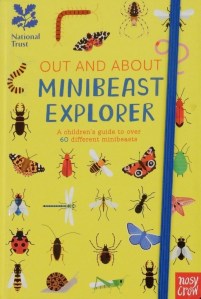
Out and About Minibeast Explorer
Robyn Swift, illustrated by Hannah Alice
Nosy Crow

Published in collaboration with the National Trust, this handy guide for youngsters features more than sixty minibeasts about which Robyn Swift presents a wealth of information related to identification, lifecycles, habitats, anatomy and more. Did you know that a decapitated cockroach is able to live for up to nine days; that the blood of slugs is green, or that seagull sized dragonflies lived before dinosaurs roamed the earth?

The importance of minibeasts is explained and also included are some pages of activities, a classification chart and a quiz.

Hannah Alice’s illustrations of the creatures are clear and easily recognisable making this a super little book to tuck into a backpack when you go out and about no matter if it be in town, countryside or the garden.
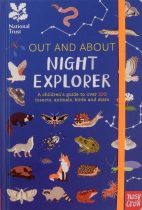
Out and About: Night Explorer / Animal Homes

Out and About: Night Explorer
Robyn Swift, illustrated by Sara Lynn Cramb
Nosy Crow

Created in collaboration with the National Trust, this is an excellent little book if you’re planning on doing some exploring after dark with youngsters or are off camping somewhere.

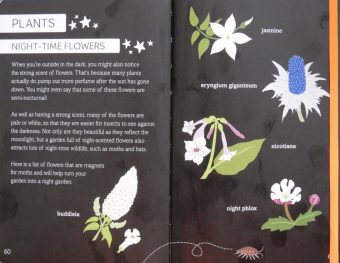
It’s packed with information about such things as suitable clothing, creating a night-time den, star gazing, nocturnal creatures – from minibeasts to moths and mammals including bats, plus owls and amphibians; and, it’s good to see several spreads on night-time flowers.

There are lots of helpful hints on such things as tracking animals by means of footprints and poo deposits.

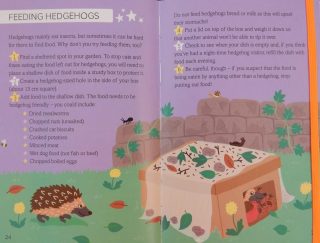
No matter the season there’ll be ideas herein: how about creating a house for creepy-crawlies in your garden during winter; or setting up a hedgehog feeding station?

I especially like the idea of making a sensory map at night, particularly focusing on sounds and smells as you walk and then repeating the same route in the light and comparing what you notice.

There are even suggestions for games, a quiz and a glossary.
All in all, with its plethora of very attractive labelled, coloured illustrations by Sara Lynn Cramb, this is ideal for encouraging young explorers (with an adult or older sibling) to get closer to nature at night.

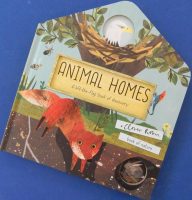
Animal Homes
Clover Robin and Libby Walden
Caterpillar Books

Wherever we walk there are likely to be animals living either in the earth beneath our feet, at eye level, or high up above our heads. We currently have a bees’ nest in our chimney.

Illustrator Clover Robin and author Libby Walden offer us an insight into six different animal homes, in various parts of the world.

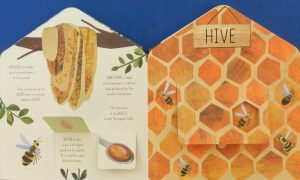
After a general introductory page, we visit a beehive;

a beaver lodge; the nest (eyrie) of a North American Bald Eagle; a rabbit warren; a termite mound and the earth of a Red Fox.

As well as the habitats themselves, each spread (one per home) provides factual snippets about each of the inhabitants and their habits, some of which is hidden beneath flaps.

It’s unlikely that young children will encounter these particular habitats but nevertheless this little book, with its attractive collage style illustrations will encourage them to keep their eyes open for animal homes in the environment. Should they find any it’s important to remember Libby’s final rules: ‘Find, Look, Leave’.

Seashore Watcher / Complete Minibeast Explorer’s Kit

Seashore Watcher
Maya Plass
QED

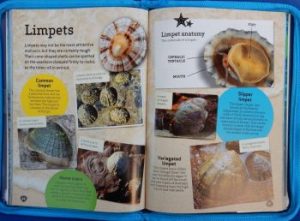
If you are heading to the coast and in particular the seashore, then here’s a handy information book, cleverly enclosed within a zipped waterproof plastic folder.

From pebbles to plankton, corals to crabs and starfish to sharks, the seashore comes to life through photographs,

facts, tips, safety recommendations and more.

Whether you want to be a seashore watcher observing seals, seabirds or dolphins and porpoises, try your hand as a sand sculptor, get creative using things you’ve collected on the beach, help with beach cleaning, or even collect seaweed and try the recipe for jelly, you’re bound to find something to make your seaside visit exciting and worthwhile.

The back matter includes notes for adults, a glossary and index.

You’ll certainly get more out of your seaside foray if you tuck a copy of this informative and engaging book, compiled by marine and coastal ecologist Maya Plass, in your bag.

National Trust: Complete Minibeast Explorer’s Kit
Robyn Swift and Hannah Alice
Nosy Crow

Here’s the ideal thing to encourage children to get out and discovering about the wealth of minibeasts that are all around us.

Enclosed within the backpack are a guide book for explorers featuring more than 60 creatures and containing a wealth of information about identification, habitats, lifecycles and more; a small blank notebook in which to record observations, and a magnifying minibeast collector for enthusiasts to look closely at beetles, caterpillars, spiders, slugs, worms and anything else of interest.

I’ve just returned from a walk along the canal not far from where I live and was able on my return, (I hadn’t taken the book) to identify the small red beetle I saw on cow parsley as a Soldier Beetle using the illustration from the guide book. Hannah Alice’s clear illustrations are somewhat stylised but easily recognisable.

In addition to the fascinating facts provided by Robyn Swift – did you know that even if a cockroach has its head cut off, it can live for up to nine days? I certainly didn’t before reading it here -at the back of the book there’s an index, a glossary, a quiz, a scale guide and a classification chart.

Just the kind of kit to whet the appetites of potential young naturalists.