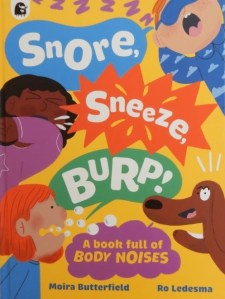
Snore, Sneeze, Burp!

Body emanations, be they sounds or smells often feature in books; this one focuses on the former. In the company of some children and Charlie, a ‘brainy’ dog, readers will discover why we humans (and other animals) are sometimes noisy by accident.

In addition to the titular burps, snores and sneezes, several other sounds are discussed. I had to laugh when I read that the scientific term for the gurgling noises caused by muscles moving food and liquid through the stomach and intestines is borborygmi.

As well as those snorty snores lots of people make when they’re asleep, sometimes a person might talk in their sleep. Children, we read, sleep talk more often than adults.
Hiccups are particularly annoying especially when they seem to start for no apparent reason and none of the cures suggested work for me. Apparently hundreds of years ago elves were blamed for hiccups in England.

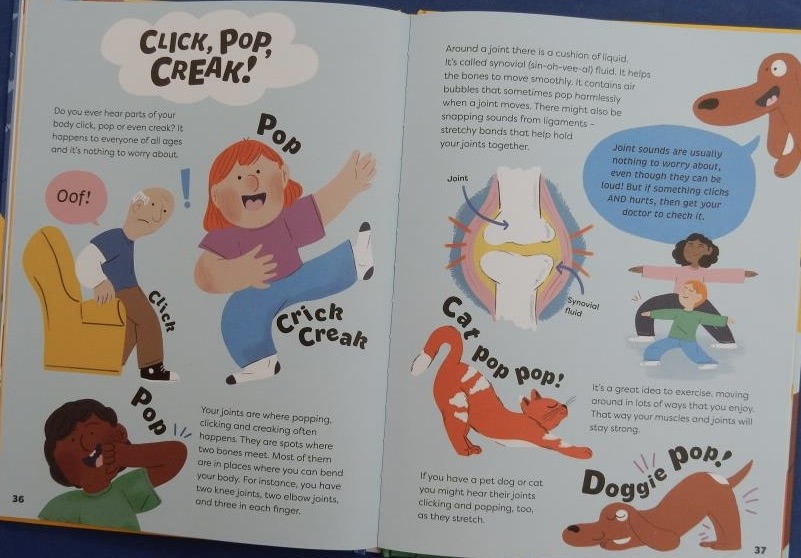
Other spreads explore those clicks, creaks and pops that various joints in our bodies might make;

sounds a doctor may explore with a stethoscope; deliberate noises we make to convey a message such as clapping to show appreciation; ‘shushing’ to indicate to ‘be quiet’ and finally comes what is deemed the best sound of all – laughing. The book ends with some suggestions about how to be a ‘body noise hero’.

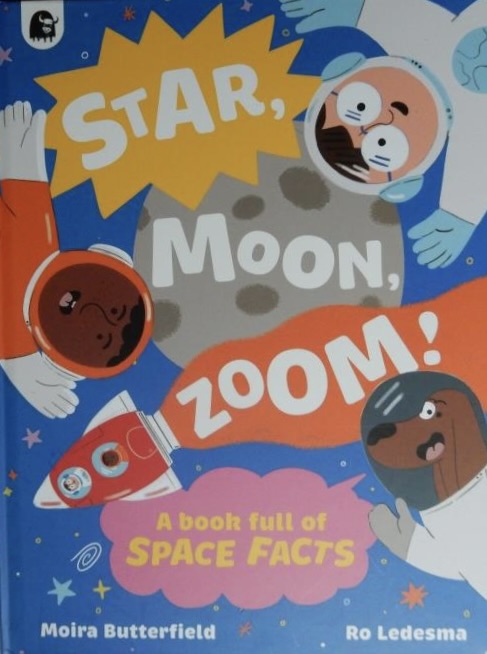
Moira Butterfield has a special skill: when writing for primary age children, especially those in KS1, she includes lots of facts but the style she adopts makes it seem as though she is talking directly to readers. There’s often a gentle humour that engages children from the outset and Ro Ledesma captures that gentle humour in her bright, colourful illustrations.

Little People, Big Dreams: Rafa Nadal / Little People, Big Dreams: Usain Bolt

These sporting heroes are great additions to the series of mini biographies. Both are legends who have gone beyond their sporting successes and helped other people,.providing great role models for younger readers.

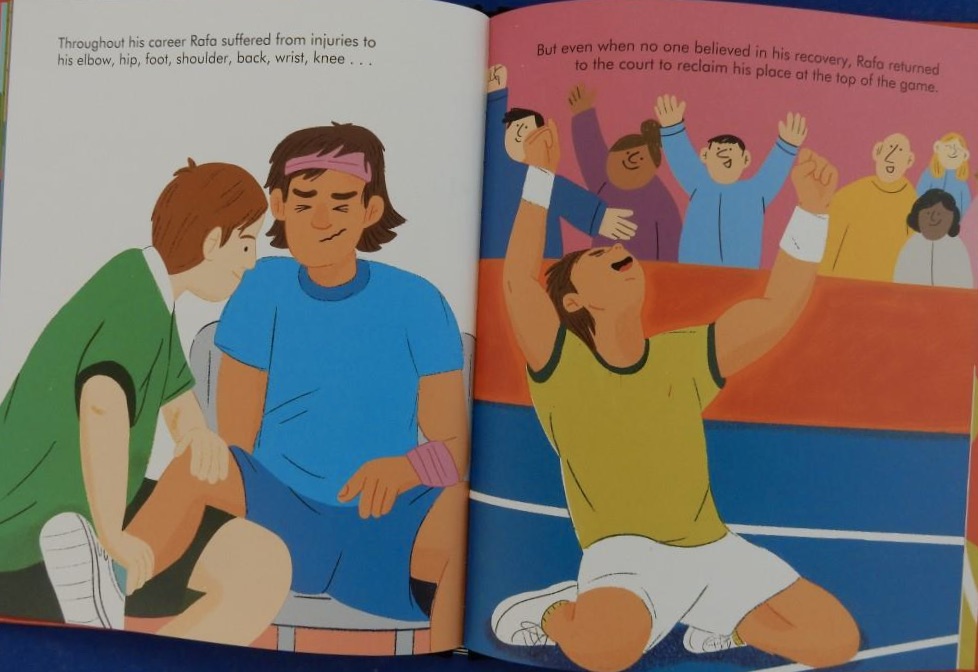
Rafa Nadal was born into a sporting family: one of his uncles passed on to the boy his love of football; another uncle gave him his first tennis lesson when the lad was just four years old. When he started winning tennis tournaments it wan’t only his innate ability but also his humility and determination to do well that made him such an outstanding player. How many others I wonder would turn up early to train and stay after everyone else to sweep the court and collect all the tennis balls. And how many others could continue playing with a very painful broken finger and win a tournament? That was just one of the many injuries Rafa sustained during his career and he never let them hold him back,

rather he increased his efforts determinedly wherever, whenever he played. His resolve also came to the fore again when Mallorca, his home, suffered devastating floods; Rafa was among the first people to help with the clean-up. Moreover through his charitable work he used sport and education to help future generations.
The book’s final timeline focuses on key highlights of his life and has further details of his story.

Usain Bolt’s first sporting interest was cricket; indeed it was his cricket coach who convinced the boy to join the track team and before long, having won a silver medal was offered the opportunity to move to Kingston and practice alongside other promising young athletes. At only fifteen, despite suffering pre-race nerves, he become the youngest ever World Junior champion. He learned an important lesson about dedication and discipline a few years later though: preferring to hang out with his friends rather than focus on running technique, he suffered an injury during the Athens Olympics and was eliminated. However a new coach made all the difference to what happened thereafter. Despite his scoliosis, his height and determination, Usain won two gold medals at the 2008 Beijing Olympics (one with a shoelace undone)

and earned the name ‘Lightning Bolt’. He went on to be the only sprinter to win Olympic 100 m and 200 m titles at three consecutive Olympics (2008, 2012, and 2016). In so doing he found himself a place in the heart of every Jamaican. Even more so by starting a foundation to help other children follow their dreams.
Both books deserve a place in primary school collections.