Don’t Squish A Slug

Following his general introduction, author, zoologist and wildlife presenter, Yussef Rafik, divides his bug information under five headings, Masters of Disguise, Amazing Evolution, Daring Defence, Record Breakers and All Sorts of Relationships (some of which are parasitic). The world of minibeasts is truly amazing, albeit on occasion pretty gruesome, so get ready to dive in.

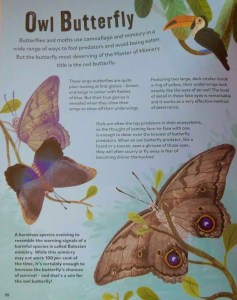
Have you ever wondered why the owl butterfly is so called; indeed were you aware there was such creature? It has earned itself the title ‘Master of Mimicry’ on account of the way the detailed fake eyes on the underwings look so like an owl’s eyes they act as a superb deterrent for potential predators.
I was fascinated to learn that millipedes have special glands called ozogpores from which they secrete poisonous substances. The yellow-spotted kind secrete the highly toxic chemical cyanide in sufficient quantity to kill rodents or birds. Other kinds use the malodorous benzoquinone, which warns attackers not to eat them. Under certain circumstances though, these chemicals can be of help to other animals, an example being the lemurs in Madagascar. They’ve found out that if they bite a benzoquinone-secreting millipede sufficiently hard, then rub it over their bodies, the chemical acts as a mosquito repellent.
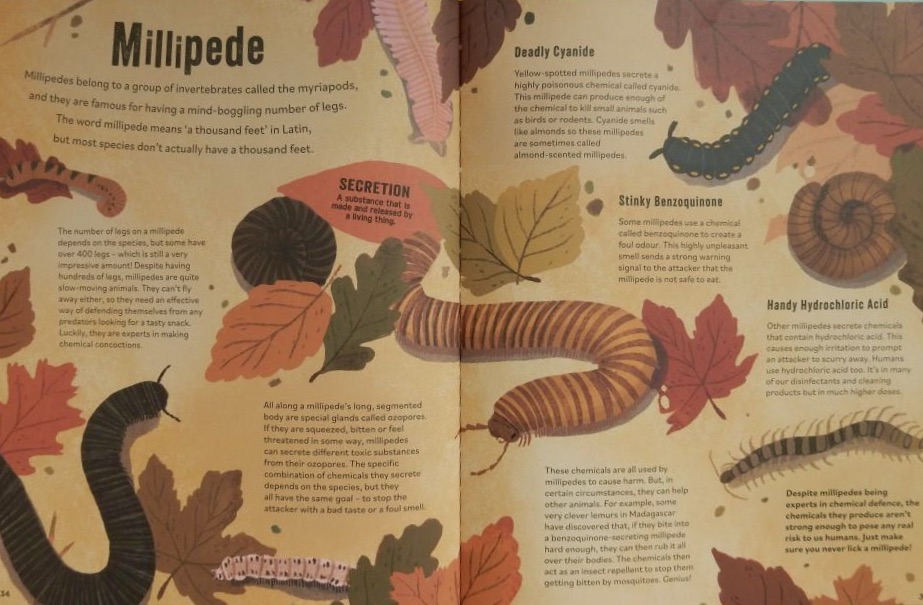
Every bug is either allocated a double spread or single page that includes a superbly detailed illustration the creature in its natural habitat along with the information that is just the right amount for KS2 readers. The author’s knowledge and enthusiasm shine through his text, indeed in his introduction he writes, ’It’s really important that we have empathy for bugs. We should appreciate what they do for our planet and learn to love living alongside them.’

Riley Samels’ illustrations are an ideal complement for the text, detailed but not overly so, and there’s a final glossary and index. Thoroughly recommended for school collections and for budding minibeast zoologists.
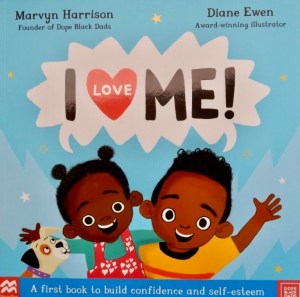
I Love Me! / We Are the Rainbow!

I Love Me!
Marvyn Harrison and Diane Ewen
Macmillan Children’s Books

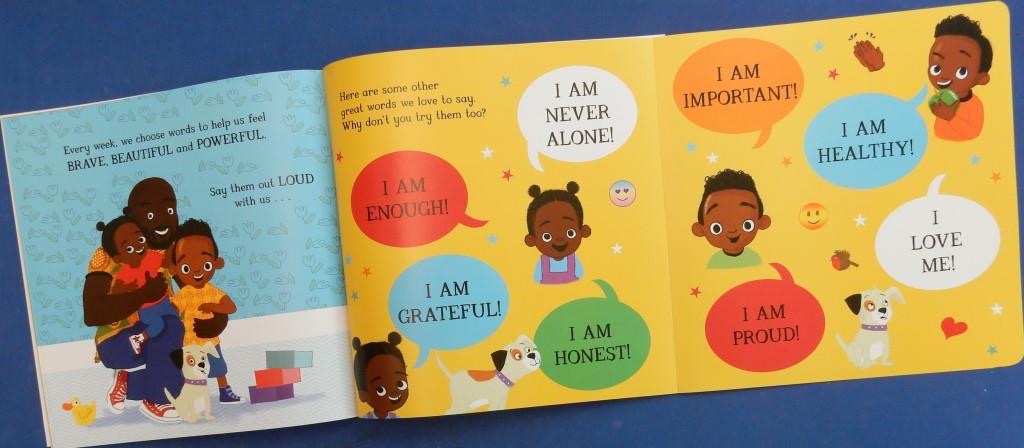
Narrated by two small children, this enormously empowering book of positive affirmations came about as a result of the author Marvyn’s own child-rearing experience.

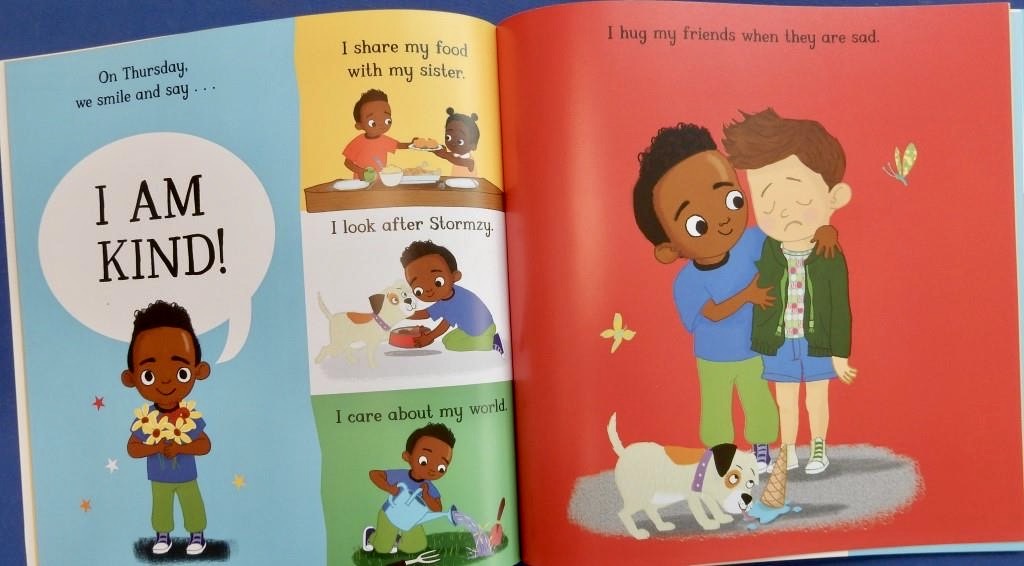
Starting on a Monday, it takes us through the week giving examples to back up the powerful statement. So, Monday’s declaration, ‘I am brave’ is demonstrated by using the big slide, superhero play, facing up to monsters and showing courage in new situations.

Tuesday is brain boosting day with showing one’s skill at maths, reading, dressing and potion brewing. And so it continues through the week as in turn the focus word is brave, kind, 

happy, loving and on Sunday, ‘We are beautiful!’ Those though aren’t the only uplifting statements the book contains, as is revealed beneath the fold-out page that comes before the author’s notes for parents and carers.

This book, with Diane Ewen’s bold, eye-catching mixed media illustrations of the affirmations in practice might have originated with black parents/carers and their offspring in mind, but the powerful feelings of self-worth it will engender in children are crucial to developing confidence in every single youngster no matter who they are, making it an important book for all family and classroom collections.

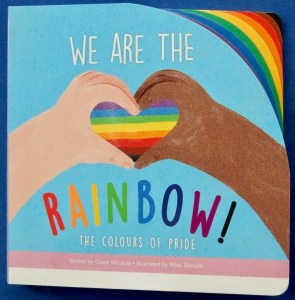
We Are the Rainbow!
Claire Winslow and Riley Samels
Sunbird Books

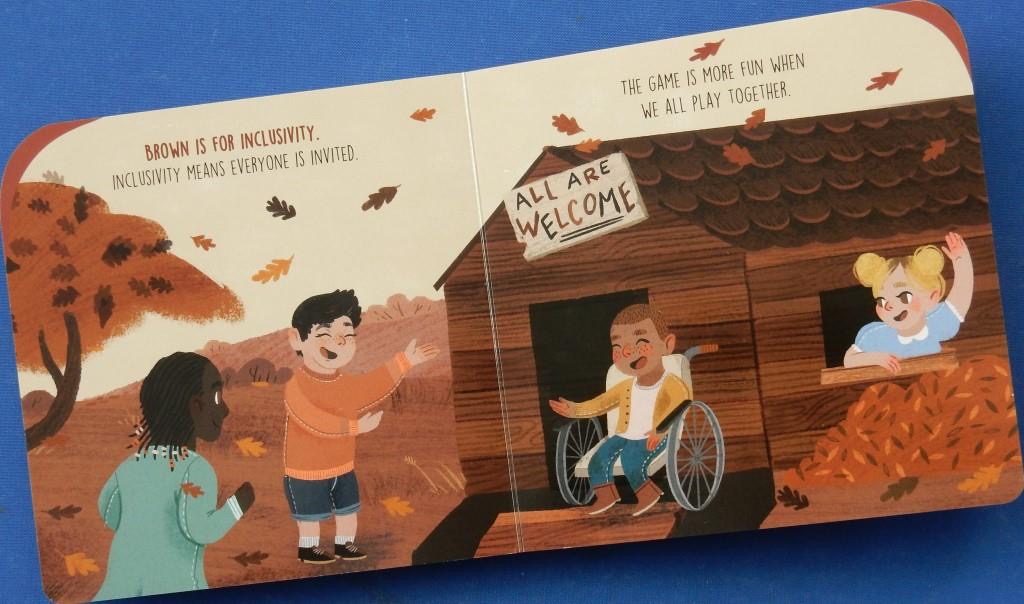
One colour at a time, this lovely little rainbow of a board book explores the LGBTQIA+ flag, its symbolism and history. The first eight spreads each use a colour to highlight a particular attribute: purple is for spirit, a reminder to listen to your heart, you are unique. Blue is for harmony, ‘Together our voices can change the world.’ Yellow is sunlight – ‘Happiness grows when you let your light shine.’ These important heartfelt messages are for everyone so the next colour, brown, is for inclusivity and this is followed by black for diversity.

Having presented each of the colours of the rainbow plus black and brown, 

we see a joyful rainbow spread: ‘The rainbow is for PRIDE. Pride means being glad to be who you are’. The final spread is devoted to a short history of how the Pride flag developed since it was first created in 1973.

Yes, this is a board book but its messages of acceptance, empathy, kindness, inclusivity and celebrating who you are, are vital for everyone; it can easily be used with older children, perhaps in a circle time or assembly.