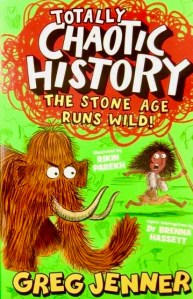
Totally Chaotic History: The Stone Age Runs Wild!

In this third book of the series, author Greg Jenner is aided and abetted by Dr Brenna Hassett, archaeologist and biological anthropologist whose voice is a great complement for Jenner’s chatty style.

Almost immediately many readers will find that what they thought they knew about the Stone Age is actually wrong. For starters scientists don’t use the term ‘Stone Age’, rather they divide it into eras and so we read, ‘there were loads of different species of hominids appearing, dying out, exploring new lands, inventing new technologies and experimenting with new ways to live.’

You’ll discover amazing buildings such as Gôbekli Tepe – the world’s first stone temple, and visit the Catalhôyûk,

neither of which I’d heard of before.

My head was spinning long before I finished this, which is no surprise because as the author tells us near the end, things were constantly changing during the time they were writing the book and they had to rewrite things on five occasions as new discoveries were made.

Bursting with facts, the whole thing is hugely amusing from cover to cover, made all the more so by Rikin Parekh whose illustrations are splendid. If this fails to engage children, then I’ll spend a night on that luxurious-looking stone bed. Ouch!

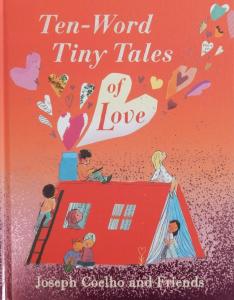
Ten-Word Tiny Tales of Love

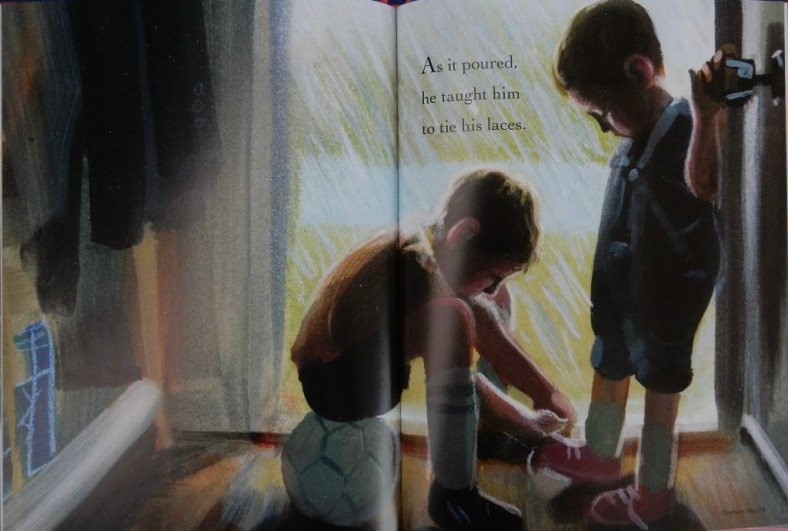
This is former children’s laureate Joseph Coelho’s second Ten-Word Tiny Tales offering, this one having a unifying theme – love – and in an introduction, Joseph tells readers how the tiny tales came about.
Each of the tales is moving in its own special way; you will find great sadness, tender parental and sibling love, spookiness, the fantastical, the humorous and more.

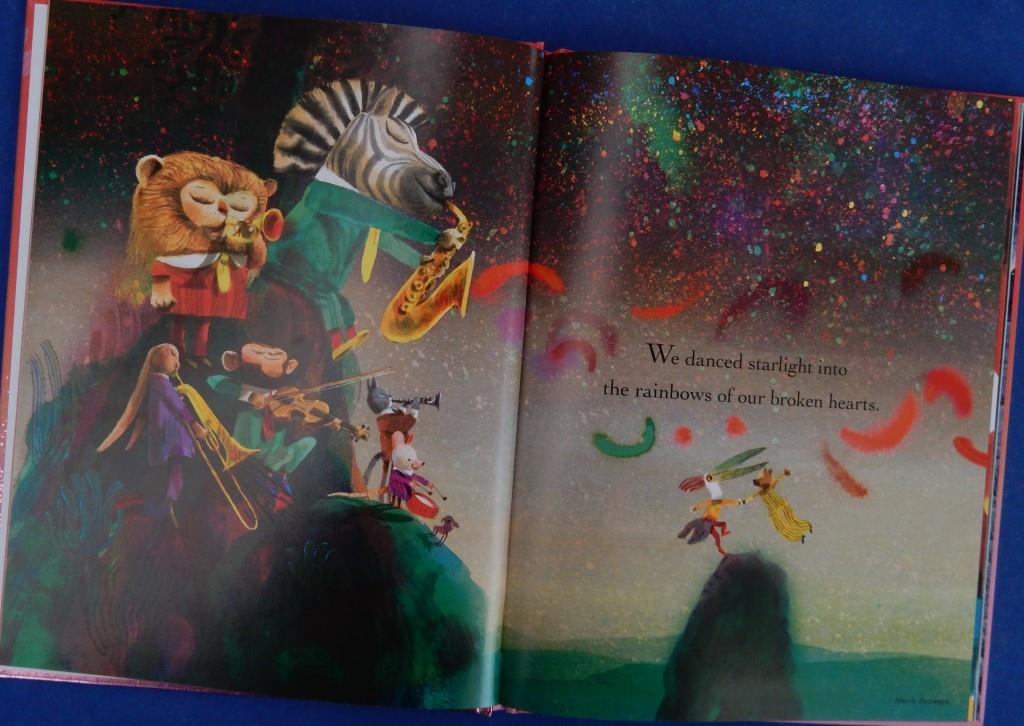
Coming from all over the world, each one of the talented artists has created an equally special, very different scene, thus making every turn of the page a verbal and a visual delight.

We see enigmatic and literal interpretations as well as ambiguity: there is love for such diverse things as a bike, baby birds and a brother,

but in every case the intention is to create a world – a space of awareness – that will spark the reader’s imagination.

To facilitate this, Joseph offers some story writing prompts in the final two spreads.
Altogether a treasure trove that holds within, a wealth of possibilities for creativity both in the classroom and at home.

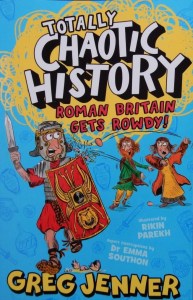
Totally Chaotic History: Roman Britain Gets Rowdy

Greg Jennings is a sure winner when it comes to bringing historical information to primary age children. Here, as with the previous book in this series, he is joined by an expert in the period, in this instance Dr Emma Southon whose discussions with the author, their banter and especially the Accuracy Alarm interjections add to the entertainment value for readers. These alarms introduce the important idea that information relating to history cannot be assumed to be fully accurate, certainty and historical accounts are often open for debate.

Now most people know that Gaius Julius Caesar was the first ever Roman to land on the shores of Britain (Britannia as the Romans called it). However, less know that he came and went, then returned a year later in 54 BCE and even that wasn’t a great success as invasions go. Indeed it wasn’t until the arrival on the scene of Emperor Claudius (who took just sixteen days to out perform Caesar), that despite the valiant efforts of Caractacus, Britain was largely conquered, though that took a few years.

The whistle stop ride through Roman Britain continues with the murder of Emperor Claudius by his wife, the rebellion of Queen Boudica who is eventually defeated in the Battle of Watling Street, the construction of Hadrian’s Hall (122CE),

the crowning of Constantine the Great, who then in 313CE makes Christianity legal in the Roman Empire, all the way through to 409CE when the Romans left Britain for ever.

Your brain will probably be in a spin by the time you reach the end of this book but you’ll have had a great deal of fun along the way and learned (or in my case re-learned) a fair bit of ancient history too. Rikin Parekh makes the book even more enjoyable with his zany cartoon-style illustrations.

One that KS2 readers will battle over I suspect.

Rabbit On the Rampage

Like many young humans, Rabbit has a favourite object that accompanies her to lots of different places and like adults, young children get very annoyed when they can’t find that special thing.
Rabbit’s favourite thing is a carrot; this she takes to swimming with her every Sunday but rather than plunge said carrot into the pool, Rabbit deposits it in her coat before entering the water. One Sunday though, shock horror! When she goes to retrieve Carrot it’s not there. A search of the pool and changing room prove carrotless and Rabbit is convinced it’s been stolen.

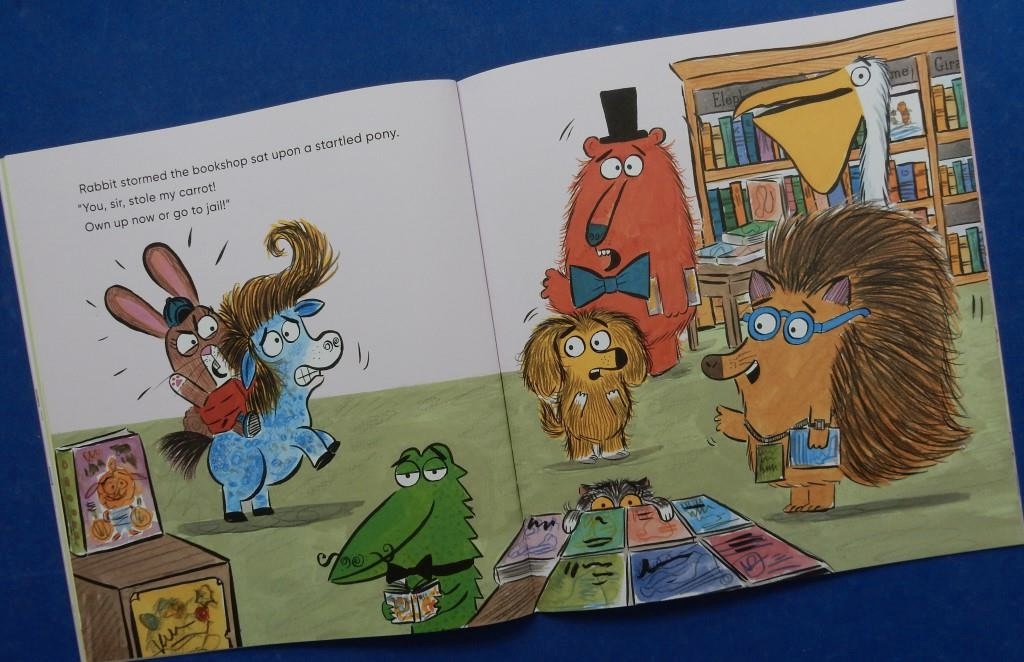
Following the suggestion of the swim coach, she retraces her steps; first stop Badger’s home where she’d had lunch. In storms Rabbit accusing her friend of Curly Carrot theft. Badger’s response is to remind her he doesn’t like carrots and instead offers one of his garden peas. This infuriates Rabbit and wow does she let Badger know.

Next Rabbit returns to the dance school where she’d had a lesson with Madame Mouse. Once again she makes a dramatic entry and accusation. This is met by the offer of a cauliflower from the dance teacher, which again infuriates Rabbit causing her to hurl the crunchy crucifer out the window.

A further revisit results in an awful outcome,

though now Rabbit is starting to feel just a tad bothered about the way she’s treated her pals. Off home to bed she goes and there garment by garment she removes her outdoor attire …

Time for Rabbit to make amends to her innocent friends …

Hilarious! Lorna Watson’s debut as picture book author is definitely destined to be a big hit with young children. Her rhyming text is brilliantly complemented by Rikin Parekh’s wonderfully dramatic scenes of Rabbit and her outrageous behaviour as she storms around on her search.

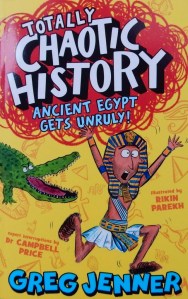
Totally Chaotic History: Ancient Egypt Gets Unruly! / Be A Scribe!

Speaking directly to his audience using a chatty present tense style, writer, Horrible Histories consultant and presenter of the hit BBC history podcast ‘You’re dead to me’, takes readers on an action-packed, chaotic romp through the whole of Ancient Egyptian history. In this enterprise as he navigates this messy world, he’s aided and abetted by Egyptologist, Dr Campbell Price, curator of Egypt and Sudan at Manchester Museum with interjections in the margin, myth busters and ‘accuracy alarms’ that sometimes challenge Greg’s ‘facts’. Adding to the humour of the text and the reader’s enjoyment and perhaps understanding, are Rikin Parekh’s comical illustrations on every spread.

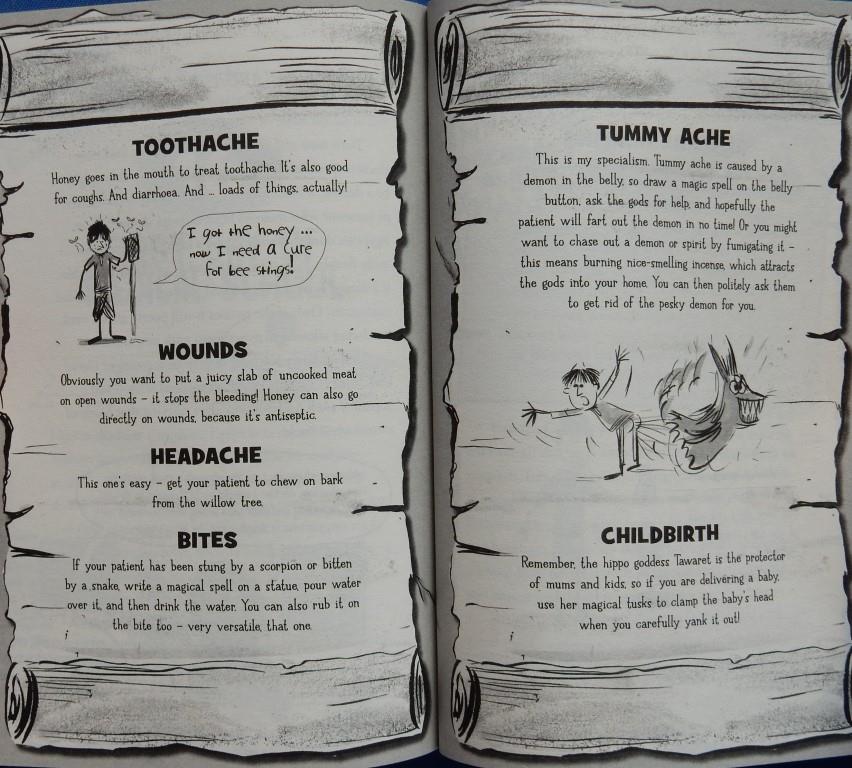
There’s a brief introduction and timeline, after which we are taken on a whistle-stop chronological tour of the key events in Ancient Egyptian history. Then follow short chapters devoted to important figures such as pharaohs and Alexander the Great (he with a mega ego), as well as other topics you would expect such as mummification and hieroglyphics; we also pay a visit to “Doctor Peseshet’s medical school to see how they treated such problems as toothache, headaches and tummy troubles.

This cracker of a book will be of huge appeal to children who are interested in history in general and Ancient Egypt especially. For KS2 readers I recommend adding it to home, classroom and library bookshelves. With Roman Britain Gets Rowdy! coming in October, this promises to be a brilliant series.

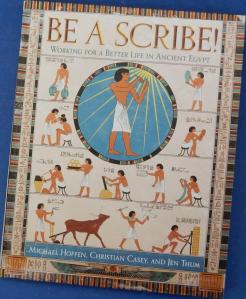
With nothing much to do during the covid-19 pandemic, Michael Hoffen, a teenager in New York spent his time learning about Ancient Egypt and with valuable help from Dr Jen Thum, an Egyptologist and curator at the Harvard Art Museums, and teacher and mentor Dr Christian Casey, a postdoc at the Freie Universität Berlin. During regular meetings over the course of three and a half years, under the guidance of Dr Casey, Michael translated a work of ancient Egyptian literature, called ‘The Satire of the Trades’ and inspired by all he learned, he wrote the book, together with Dr Jen Thum.

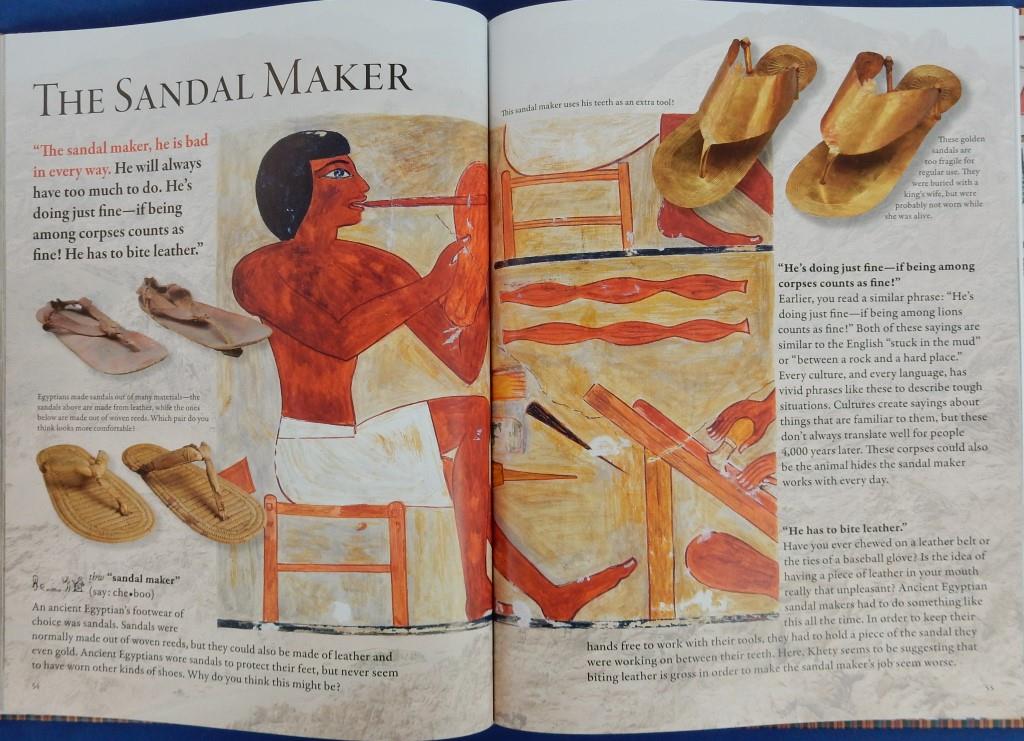
The narrative tells how a father, Khety, takes his son, Pepe, up the river Nile to a distant school so he can learn to read and write with the possibility of then being hired as a scribe in the royal court. The author uses photos of over a hundred real ancient Egyptian artefacts to help with the telling, giving readers fascinating information on such topics as the kinds of work people did and how this affects their lives – eighteen jobs are each given a detailed double spread.

In addition there’s a wealth of wisdom including such advice as ‘If you leave school at lunchtime and wander about in the street’s someone will punish you.’ The physical punishment of children was common in ancient Egyptian society.

Superbly produced, this is a book to add to primary collections and with the connection made to modern life throughout, it should appeal to history lovers as well as those studying ancient Egypt as a class history topic.

The Story Shop Anchors Away! / There’s a Dog in my Brain: Dog Show Disaster

The Story Shop Anchors Away!
Tracey Corderoy, illustrated by Tony Neal
Little Tiger

I loved the idea of The Story Shop, the place selling real adventures that its customers can actually be in, when it blasted off during the spring this year. So it’s a delight to be back in the company of shopkeeper Wilbur and Fred Ferret his assistant, with their plethora of props and plot possibilities for three more episodes.

The first begins when explorer Pearl practically tumbles in just when Wilbur and Fred are about to shut for the day demanding they find her an adventure she’s not experienced before. Thus this fearless woman becomes Captain Pearl and after a bit of persuasion, she agrees to take Fred aboard her ship as her pirate assistant, along with pirate, Edie. But what are scarf knitting pirates and other crafters doing already below deck when she wants a PROPER piratical adventure? Yo Ho Ho! Let operation retrieve their priceless black pearl commence.

Having bobbed about in barrels for ages after their successful mission, Pearl and Fred wash up on shore only to be confronted by a bunch of scary-looking pirates led by Long Jane Silver who is convinced the two are spies sent by Blunderbuss Bob, her rival in the up-coming annual raft race.
Stinky Socks!

Can the two come up with a placatory plan to help their captor win the entire event?

The third episode finds Pearl and Fred sans ship, knocking on the door of a guesthouse belonging to Meg O’Cuttlefish. Once within, they accept an attic room and soon find themselves swapping pirating stories with Meg before bedtime. However something decidedly ghostly disturbs their slumbers; what could be the cause of that mysterious wailing sound?

Full of swashbuckling fun, a scattering of puns and Tony Neal’s comical illustrations, this is a treat for story lovers of the land-lubbing kind taking their early voyages as independent readers.

There’s a Dog in my Brain: Dog Show Disaster
Caroline Green, illustrated by Rikin Parekh
Walker Books

Here’s a crazy chaotic canine caper if ever there was one: actually it’s the second canine body switch episode. It all begins when Dudley the dog consumes almost every single one of the cakes Danny’s dad has so lovingly baked and Mum decides there’s no other choice but to send the pooch to Doggy Boot Camp. Needless to say ten-year old Danny is horrified but shortly after he realises that he’s swapped bodies with Dudley, something his parents fail to notice even though the ill-fated creature is absolutely useless at being a human.

However after the incident at the fancy farm shop that ends up costing in excess of four hundred pounds, the hose escapade

and Danny’s feats at canine classes, there’s no option but to reveal to the parents that a body swap has taken place again. But that means Danny as his alter-ego Dudley has to perform at the dog show and take on dog trainer Rex Power’s perfect pooch, Princess Fenella. nothing can possibly go wrong, surely.

Those with a penchant for pooches, slapstick and perhaps cake will relish Caroline Green’s romp, that’s if it doesn’t render them barking mad. Rikin Parekh’s black and white illustrations add to
the hilarity

The Worst Class in the World Dares You! / Aven Green Sleuthing Machine / Aven Green Baking Machine

The Worst Class in the World Dares You!
Joanna Nadin, illustrated by Rikin Parekh
Bloomsbury Children’s Books

Nits and Dares are the topics of the two riotous episodes contained in this third volume of the exploits of Class 4B taught by the long-suffering Mr Nidgett; yes that’s the one headteacher of St. Regina’s Primary, Mrs Bottomley-Blunt, has decided are “LITERALLY the worst class in the world.” I’ve no idea how she managed to land the job as she thinks learning should absolutely NOT be fun.
However as always, Manjit and Stanley (our narrator) have imaginative fool-proof plans at the ready and as is ever the case, they never intend to cause the mayhem that seems to ensue; it’s just that their foolproof plans do not always work quite as anticipated.
So, when there’s a possibility that an epidemic of Nits could cancel Maths Test Tuesday, the class plot to make certain this does actually happen: they definitely don’t want to have to forgo watching War of the Wizards on TV to revise. Perhaps they might even have to be off school on the day in question. Little do they know what chaos their plans will unleash. After all, those containers full of mini-beasts of various kinds are perfectly safe with Class 4B- surely; err …

The second story sees the arrival of new girl, Bridget Pickersgill and she’s a person who likes dares – of the mad variety; the reward for doing one of her dares is to become an Overlord of the Universe. Anybody fancy eating that ‘Very Dead Fly’ that’s been lying beside the ‘Abandoned Plimsoll’ for over a week? Or indeed accepting any of the other dares the girl dreams up on subsequent days …

Great fun for solo reading as well as a class read-aloud.

Aven Green Sleuthing Machine
Dusti Rowling, illustrated by Gina Perry
Sterling

Despite being differently abled, eight year old Aven Green (born without arms) is still an ace sleuth (a private investigator is what her mum and dad have dubbed their daughter.) Her take on the matter is that all those extra arm cells went instead to her brain.
When someone starts stealing food – her teacher’s lunch and items from the school cafeteria – she’s on the case. But food is just the first thing to go missing. Next it’s her great grandmother’s dog, more food disappears – are these things connected perhaps?
Then a sad-looking new girl joins Aven’s class. Why is she sad? Yet another mystery. That seems rather a lot for one girl however super-powered her brain. Perhaps some help from family members and some of her classmates might be needed to discover what is going on.

With plentiful illustrations by Gina Perry , this is just right for new solo readers especially those who like strong, self-willed protagonists. Moreover, those that do will be delighted to discover that before this story ends, Aven decides to set aside her P.I. business and instead concentrate on baking. Hence she becomes known as:

Aven Green Baking Machine

As this tale opens Aven has already honed her baking skills at home – she uses her feet to crack eggs and measure out ingredients and now, along with her three friends, she wants to enter the baking competition at the upcoming county fair. The first task is to decide which of their recipes to use and the way to do that is to try out each one and decide upon the yummiest.
That’s when the problems begin and after Aven has found fault with each of her friend’s choices, it’s decided that they don’t want to work with her. This offers an opportunity for the sometimes over-opinionated girl to see the error of her ways, learn to forgive and become more open-minded.
There’s a great opportunity for readers who like to cook too: at the end of the narrative, the author provides the six recipes mentioned in the story.

Fearless Fairy Tales

Fearless Fairy Tales
Konnie Huq & James Kay, illustrated by Rikin Parekh
Piccadilly Press

If like me you’re fond of fractured fairy tales, then this subversive collection of seventeen is a must have. Even the titles made this reviewer splutter with giggles and as for the important note before the contents page, I’ll say no more.

On closer reading it’s probably true to say the stories have been not so much fractured as entirely pulverised, pounded and then reconstituted adding new magic to the mangled mores of old, replacing them with modern reinventions for a more demanding, “I can change the world” generation.

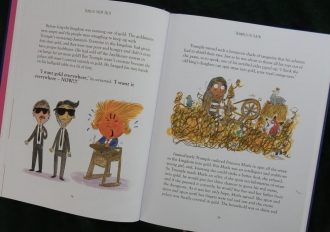
I couldn’t resist turning first to Trumplestiltskin and sure enough there is the easily identifiable ‘Trumple’ hailing from the United States of Kraziness. Said little man is obsessed with gold and power mad. No need for me to regale the whole sorry story – it had me in stitches throughout – but having thrown the king and his daughter, Princess Marla into a dark dungeon, an aide lets slip that Marla can spin straw into gold.

Needless to say, Trumple cannot resist making the girl an offer and the princess being a pretty savvy person, eventually manages to out-trumple the Trumple. (Love the postscript.)
Rumplestiltskin has been my favourite fairy tale since as a youngster, I heard the late Sara Corrin tell it at a book event. She’s in my head narrating this new one even now.

There’s also Sleeping Brainy (‘a flipping genius!’) who aspires to become Chancellor of the Exchequer and does so – against all the odds.

Absolutely cracking is Mouldysocks and the Three Bears in which he of the stinky foot attire is computer crazy. This almost causes his complete undoing when Mummy Bear, Other Mummy Bear and the little baby bear return from their forest foray –

that and the disgusting pong emanating from a certain pair of socks bad enough to put Baby Bear off his porridge. All ends happily however with everyone, including Mouldysocks (newly named) living spotlessly ever after.

It’s impossible to talk about every story in this review but I must  mention that The Princess and the Snog is written entirely in verse. Herein we meet pink-haired Pandora and the frog that catches her punchball when it lands in his boggy residence. Does she want to grant him a kiss – err … not quite and the outcome is, ‘A very wise rule for a mister or miss: / You choose who you / hug and you choose / who you kiss.” No coercive control for this wily young miss.

Finally, another princess – Zareen by name – is only a princess because that’s what her stepmother Tania (a goodie rather than the usual kind) calls her. Actually she’s a normal girl residing in the ‘magical suburb of Crystal Palace and dead keen to follow the latest school playground craze and get a Zoom Peashooter (basically just an overpriced paper straw). Hence the title The Princess and the Peashooter.

She ends up having got her mitts on one, with a rather funky eyepatch due to an errant flying shot – not hers – and being the leader of the anti-peashooter side for the next school debate. Bring on the Zoom Bands, say I. Much less dangerous, or maybe not …

Make sure you read this corker of a book right past THE END, including the small print. I’m wondering who would score higher on the enjoyment scale, team Konnie and James and illustrator Rikin, or readers who guffaw their way through its pages, relishing every satirical story,
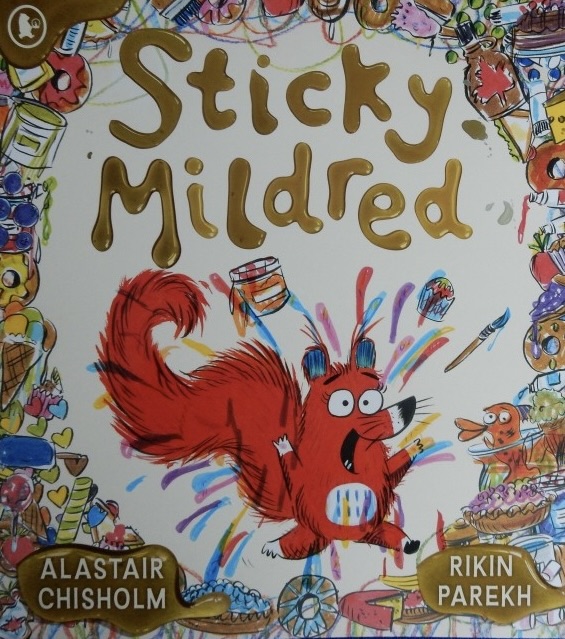
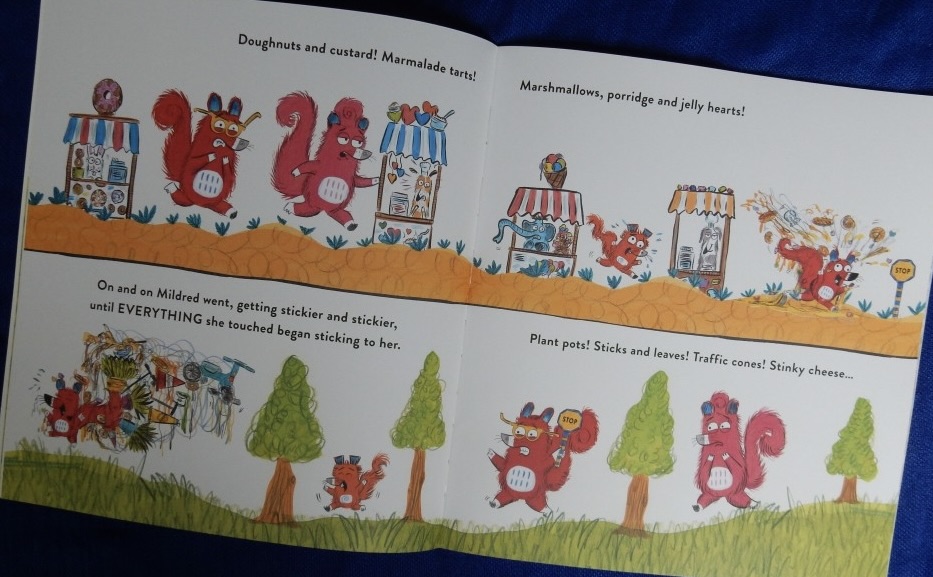
The Worst Class in the World

The Worst Class in the World
Joanna Nadin, illustrated by Rikin Parekh
Bloomsbury Children’s Books

It’s official : class 4B belonging to Mr Nidgett is LITERALLY the Worst Class in the world . It must be so because that’s what rule-fanatic Mrs Bottomley-Blunt, headmistress of St. Regina’s Primary has declared and she ought to know.

She has plenty of examples of their outrageous behaviour to quote such as when Marvey Barlow smuggled a penguin back on the bus after the class trip to Grimley Zoo; or the Show and Tell session when Manjit’s dog, Killer sated its hunger on gel pens, not to mention a pair of Mr Nidgett’s shoes (luckily not those on his feet at the time).

And there was that playground-tunnelling incident too.

One can hardly blame Mr Nidgett threatening on more than one occasion to leave teaching and become a lion tamer instead. Funnily enough it was a challenging Y4 class that brought me close to the edge too, but by the final term I ended up absolutely loving them despite everything and wouldn’t have swapped them for anything. A bit like pupil Stanley Bradshaw, who introduces us to 4B and acts as narrator of the two episodes The Biscuit King (with its FOOLPROOF PLAN) and the aforementioned Show and Tell in which those shoes and pens are not the only things that get eaten, but on that topic I’ll say no more.

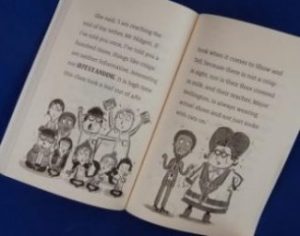
Instead let me suggest you get hold of a copy of this splutter-inducing book with its crazy chaotic classroom atmosphere superbly portrayed through Joanna’s gigglesome narrative and Rikin Parekh’s illustrations that are equally entertaining. How long, one wonders did it take for Mrs B-B to compile her list of 50 rules.

That’s rule no. 9 duly broken

Not that long, I suspect, and I bet not a single one was on account of a transgression by a member of class 4A.

Finally, a FOOLPROOF PLAN, if you happen to be a primary teacher, buy several copies – one to keep for cheering you up when you feel down, or to share with your class, others as solo reads for youngsters around the age of Mr Nidgett’s pupils and thus likely to have similar preoccupations as Stanley, Manjit, Lacey Braithwaite, Bruce Bingley et al

and declare it OUTSTANDING.