Two Ants Puzzled

In this charming interpretation of Rumi’s classic tale with its theme of looking at the bigger picture, Elizabeth Laird sets her tale, told from the ants’ perspective, in the house of a little girl. The title page shows the two ants out exploring, walking in through an open front door and turning the page we see them starting to explore by climbing up the table leg onto a large white sheet of paper whereon the child is drawing. They walk right along her pencil and what they focus on is the tip and the movement of that pencil in her fingers. 

So intently are they looking at the shapes and colours that they slither and slip hither and thither.
When the girl pauses and looks up, the ants start to retreat, ending up on the floor safe and sound – just! 
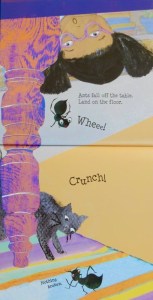
Unhurt they begin ascending the table leg once again. This time what they see before them is the entire finished picture and included in it are … two ants. Guess who is inspired to be creative now.

Jenny Duke chooses a variety of perspectives for her scenes making them especially effective and intensifying the small drama as it unfolds, and she cleverly imbues the ants with real personalities. Young listeners will also notice that there is a playful black cat watching the action throughout the story.

Grobblechops

Grobblechops
Elizabeth Laird and Jenny Lancaster
Tiny Owl

Many young children imagine monsters under the bed and sometimes use their fear of same as a tactic to delay bedtime.

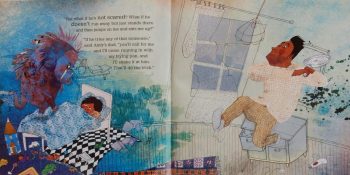
In this story based on a Rumi tale it appears that young Amir is genuinely scared in case there’s something lurking in the darkness of his bedroom – a terrible huge-toothed, hungry something that growls like a lion.

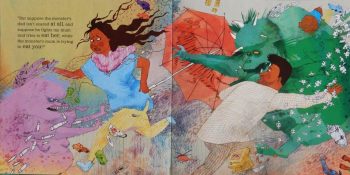
Dad’s advice is to reciprocate but be even more alarming This precipitates even more fears: suppose the monster’s dad has an even bigger frying pan for whacking than his own dad;

suppose his mum’s umbrella isn’t sufficiently scary and the end result is that the entire family become targets for monster consumption …

Perhaps it’s time for a different approach: Dad suggests he leaves the hostilities to the parents (human and monster) while Amir and the little monster play with toy cars together. It might even lead to a peaceable discussion between the grown ups.

Now that sounds like a very good idea; but there’s one thing Amir is determined not to share with any little monster and that is his precious Teddy.

Finally, having safely tucked the boy into bed with ted, there’s something Dad wants to know and that’s the name of Amir’s monster: the clue is in the title of this smashing book.

Elizabeth Laird puts just the right amount of scariness into her gently humorous telling. Her perceptive observations of the parent/child relationship underscore the entire tale and her dialogue is spot on, ensuring that adult sharers as well as their little ones will relish the story.

Jenny Lucander employs a fine line in her richly coloured, textured illustrations. Their wonderful quirkiness, especially in the portrayal of the monsters makes them endearing rather than frightening while her human figures give the book a contemporary look.