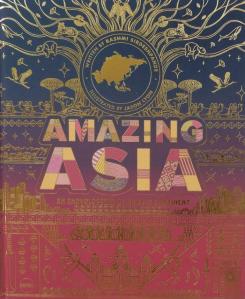
Amazing Asia

In this large format book, author Rashmi Sirdeshpande explores the world’s largest and with over 4.7 billion people, most populated continent, Asia.

With its powerful illustrations, excellent design and engaging and informative text, the book begins with an introduction to the continent, its countries, a map and a list of fascinating facts for each Asian country.
The massive continent is then split into five geographic regions: West Asia, South Asia, North and Central Asia, East Asia and Southeast Asia though within these each country has its own distinct identity.
For each region there is a time line, a spotlight on some change makers , superstars and other historical tidbits, a look at people and cultures, wildlife and landscapes,
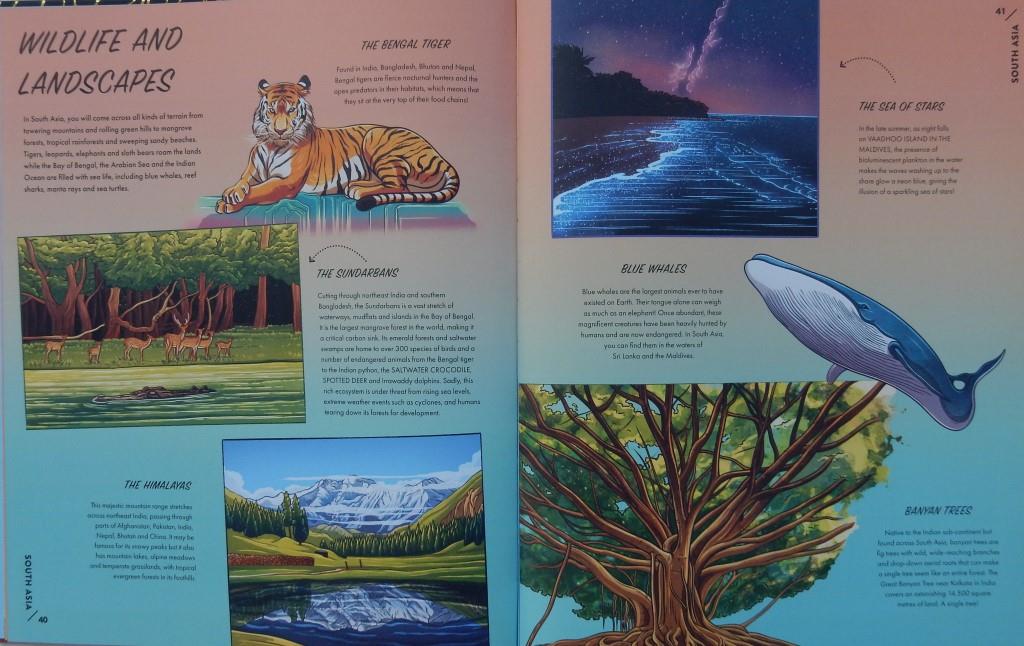
spectacular sights and at the present and future possibilities.

After the regions comes a section with a large map, entitled Global Asia with a focus on indentured labour, causes of migration and the contribution of Asian immigrants to their new homelands such as Australia.
Two final spreads present ways in which Asia has influenced the world
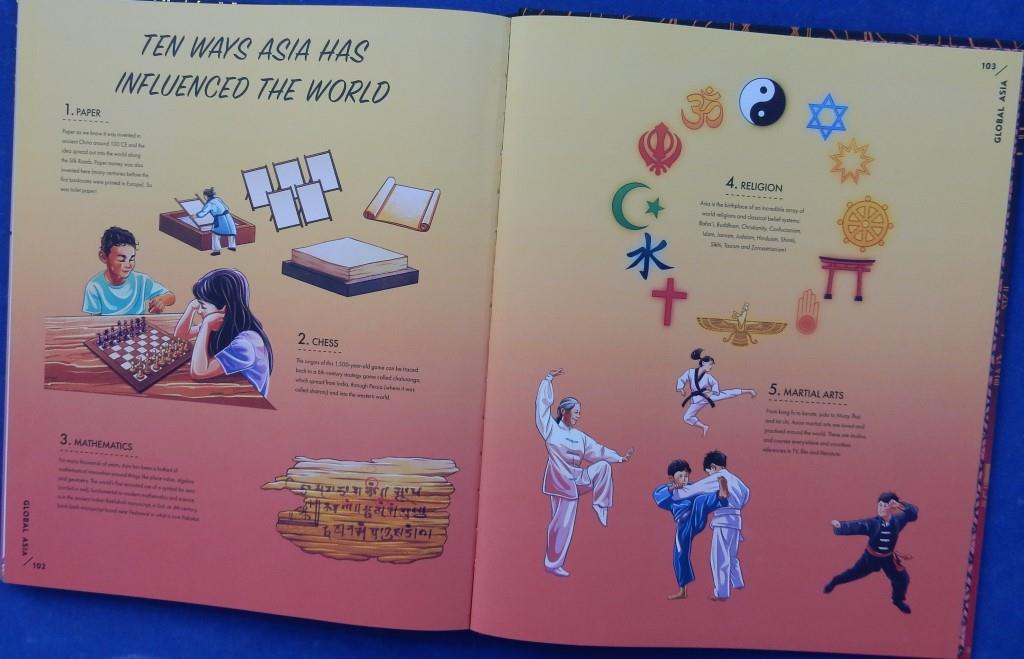
and backmatter comprises a glossary and index.

Rashmi’s writing is sure to keep young readers interested as she includes such topics as K-pop, manga and martial arts as well as mentioning colonialism, Tibet and Taiwan as disputed territories, the Israel/Palestine and Russia/Ukraine conflicts with sensitivity. She certainly presents with aplomb the rich tapestry that is Asia. Jason Lyon’s illustrations really help bring the written content to life and with its wealth of starting points for further exploration, I’d thoroughly recommend this book both for home browsing and classroom use.
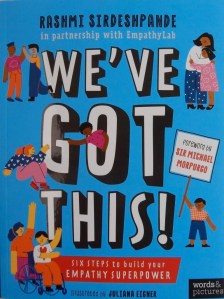
We’ve Got This!

We’ve Got This!
Rashmi Sirdeshpande with EmpathyLab, illustrated by Juliana Eigner
Words & Pictures

One of the most important life skills children need to develop is empathy and this book is intended to help them do that. How exciting it is to have a book emphasising the power of reading to boost empathy and to read this in Sir Michael Morpurgo’s foreword: ‘ Books and stories to me are the key to empathy and understanding everyone. They are the pathway to understanding people as individuals. Read books. Enjoy books. And, most of all, learn from books.’

Readers of this particular book will assuredly do so. Empathy, we read at the outset is a ’real superpower’ and herein youngsters are offered a six-step process that uses case studies, empathy exercises and activities, to supercharge their empathy. Participating along with readers on this exciting journey are members of the Sharma family – mum Shivaji and her children, Isha and Rahul.

There are pieces by a number of well-known authors – Cressida Cowell, Malorie Blackman, Jacqueline Wilson, Sue Cheung (aka Sue Pickford), Jen Carney, Manon Steffan Ros, Ben Davis, Patrice Lawrence, Nadia Shireen,

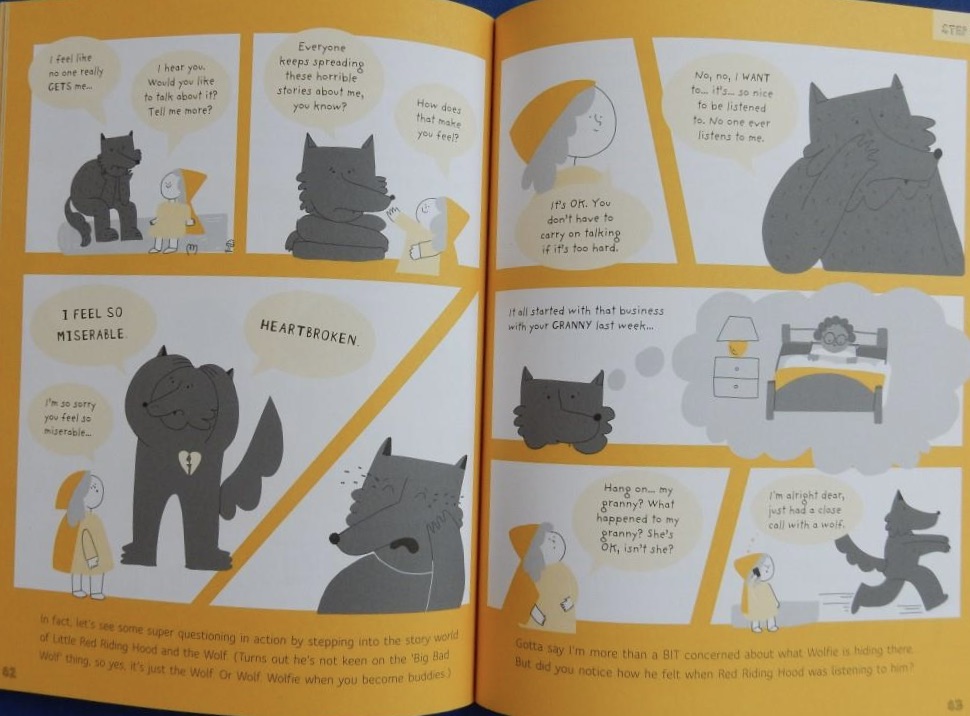
Abigail Balfe, Dom Conlon, SF Said and Joseph Coelho, all of whom are affiliated with EmpathyLab. And there are examples from books by other writers in the fourth step Learn to Recognise Emotions, where one of the ideas is to be an emotions detective as you read. From the next section, I love this example of ‘super questioning between Little Red Riding Hood and the Wolf.

The text is chatty and child-friendly, and Juliana Eigner’s inclusive, often gently humorous illustrations are engaging. (Further resources are listed at the back of the book.)

A must for all KS2 school children, classroom collections and I think lots of adults would do well to read it too.

How to Change the World / Climate Rebels

How to Change the World
Rashmi Sirdeshpande, illustrated by Annabel Tempest
Puffin Books

In her follow up to How to be Extraordinary, Rashmi Sirdeshpande presents a companion book in which she shows what a large impact can be made by people working together. There are fifteen stories of teamwork that start way back in sixth century BCE Athens with the origins of the very first democracy and is followed by a look at the incredible human engineering collaboration involved in the building of the Great Pyramid in the desert of ancient Egypt.

Then come the campaigns for change – well known and less so – in various parts of the world. Thus among environmental campaigners we have not only the universally known Greenpeace and the Montreal Protocol banning CFCs, but also the Treeplanters of Piplantri that I know of only because a friend took me to visit the village in Rajasthan a few years back. (Every time a girl is born 111 trees are planted in honour of the chief’s daughter who died during a drought around fifteen years ago).

Then, as well as the Montgomery Bus Boycott triggered by Rosa Parks’ action, there is the Singing Revolution in Estonia where people used song to tell the world that this small country had always been a free nation.

Following the spread about the abolition of slavery campaign in the British Empire is one about the 1965 Freedom Ride campaigning for justice for the indigenous people of Australia.

Alluringly illustrated by Annabel Tempest and attractively laid out, each spread with its well-written text offers an example of high quality narrative non-fiction for primary readers.

The same is true of

Climate Rebels
Ben Lerwill
Puffin Books

‘The greatest threat to our planet is the belief that someone else will save it’. Robert Swan’s quote at the beginning of this book is a powerful reminder that the terrible effects of climate change can only be arrested through our individual and collective actions.

Award winning writer Ben Lerwill presents twenty five inspiring and fascinating stories of individuals (and some groups) who have worked tirelessly and continue to do so for the causes in which they believe so passionately.

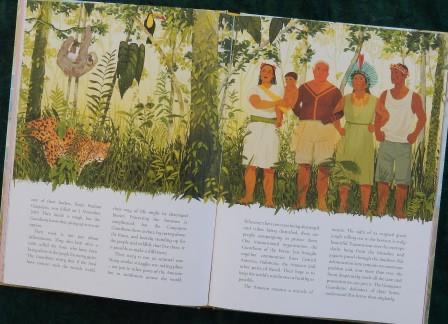
Among those featured are Dr Jane Goodall (who wrote the book’s introduction), Sir David Attenborough, the Greenpeace founders, Rachel Carson and Greta Thunberg. Alongside those are accounts of less famous names – The Guajajara Guardians –

who often risk their lives while working to protect the Amazon Rainforest; and William Kamkwamba who built a windmill in a small village in Malawi and went on to build more that pump water to the crops in the fields, thus improving the life of his entire community through renewable energy.

Not only is this book a powerful call to action; it’s also a reminder that we need to stand together – there might just be time to make those crucial changes to the climate change story.

Compellingly written in a lively style and illustrated by Masha Ukhova, Stephanie Son, Chellie Carroll, Hannah Peck and Iratxe Lopez de Munain, this book is strongly recommended for home and school reading.

How To Be Extraordinary

How To Be Extraordinary
Rashmi Sirdeshpande and Annabel Tempest
Puffin Books

What an inspirational selection of people Rashmi Sirdeshpande has chosen for her look at the lives of fifteen men and women from around the world, each of whom has made a truly impressive contribution to humanity. The balance of male and female inspirers is as equal as an odd number allows with one more male. I think if I were asked to compile a book like this, I’d want to include every one of these, who come from all walks of life.

There’s my all time hero, freedom fighter, Nelson Mandela, Britain’s first female spy, Polish born Krystyna Skarbek who once faced off German officers while in possession of a top-secret silk map, which she rolled and used as a headscarf. (Sadly, the extent of her bravery wasn’t recognised until after she died).

I’ve followed the career of Sir “Mo” Farah” from his early days in a secondary school just up the road from the primary one I taught at, through the time he trained at St Mary’s University, becoming elated as he won those Olympic gold medals, until now; his athletic skills and versatility are undoubtedly ‘superstordinary’.

It’s great to see the author/illustrator of much-loved children’s books, Judith Kerr, who with her parents fled Nazi Germany, arriving in London in 1936; and the unstoppable environmentalist, Sir David Attenborough, who continues to be an inspiration in his 90s as well as another environmentalist, Wangari Maathai from Kenya.

Readers (even adult ones) will be less likely to know more than the names of particle physics phenomenon, San Lan Wu; Aeham Ahmad, Syrian musician and ‘peace-builder’; and I must mention the phenomenal war surgeon David Nott who for more than 25 years has been taking unpaid leave to volunteer in places of conflict and natural disaster including Afghanistan, Sierra Leone and Syria.

The potted biographies are each allocated a double spread, which is packed but not overwhelmingly so, with information, quotes, and illustrations by Annabel Tempest.

One of the messages young readers will take from this book is that there’s a multitude of ways to be extraordinary. I watched two young children on TV the other night with their campaign against free throwaway plastic toys. I’m sure there are countless other youngsters out there whose imaginations these fifteen inspirational role models might ignite.

Add this one to family bookshelves and primary school class collections.