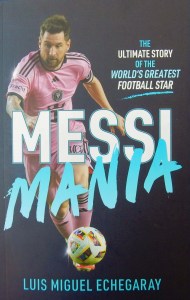
Messi Mania

Lionel Messi is a soccer superstar, of that there is no doubt. I was astonished to hear that one of my young relations had spend £12 of his pocket money to buy a single card about him. He certainly is infected with Messi Mania.

In this book sports presenter/journalist, Luis Miguel Echegaray, pays tribute to the player many consider the greatest of all time. Rather than presenting a chronological account he weaves into a kind of patchwork tale, significant elements of Massi’s life.

Starting with his arrival in the USA, he then goes back in time to his birth and early life in Rosario, Argentina, and forward to October 2024 when he was playing for Inter Miami and the team were knocked out in the first round of the MLS playoffs. In relation to this Echegaray writes this ‘And here’s the biggest message of all that we have learned from Messi’s entire journey. When you fall, that’s when you’re at your strongest because you have the chance to get up and try again. And that’s the true meaning of character.’ A powerful message to everyone, no matter what their walk of life. Moreover it’s not merely Messi’s hard work and soccer prowess that make him so special; it’s also his friendships and what he’s done and continues to do for others, all of which are included herein.
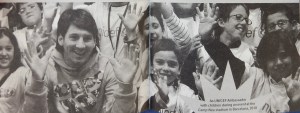
We hear what other soccer stars think of him, his style of play, there’s an interview between the author and Messi and more.

A legend indeed who, thanks in no small way to his devoted grandmother and father, overcame challenges in his boyhood including a growth hormone deficiency.

The penultimate paragraph in the book contains vital messages for all young people and he ends thus: ‘Little Leo is actually in all of us, just waiting for the glorious moment to shine,’
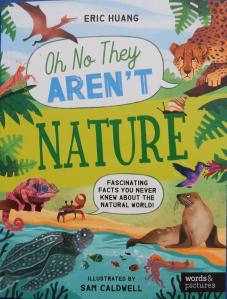
Oh No They Aren’t: Nature

Playful in approach it may be, but there’s a wealth of information about the natural world to be found in this book.

Following his introduction the author adopts his tongue-in-cheek question and answer style replete with pantomime-like ‘Oh no they aren’t!,’ ‘Oh no they weren’t!’ ‘Oh no they don’t’ interjections, in the book’s six thematic sections. These are in order, Prehistoric Life, Green Planet, Under the Sea, Creepy-Crawlies, Predator and Prey and High Fliers.

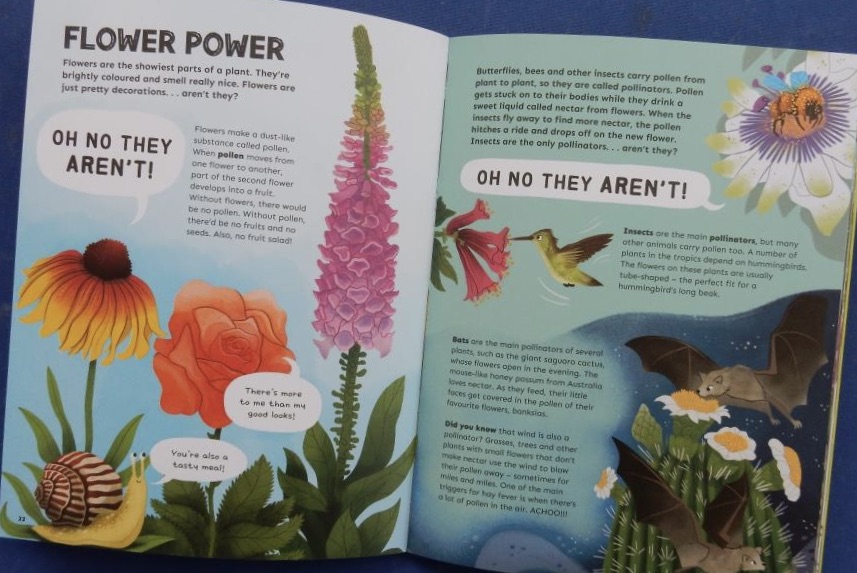
In Green Planet we read, ‘Flowers are just pretty decorations … aren’t they?’ followed by the rejoinder ‘OH NO THEY AREN’T!’ and an explanation of pollination and its importance.

Then in Predator and Prey we meet several sharks – all of which are fearsome predators aren’t they? Actually no: the whale shark – the largest shark in the world – is a gentle giant. Moreover, if you thought all sharks are very big, that’s wrong too: dwarf lantern sharks are only about the size of a mobile phone. Now that I didn’t know.

Sam Caldwell’s humorous illustrations match the jaunty style of the writing and the book concludes with a useful illustrated geological timeline and a glossary.
A thoroughly engaging addition to the Oh No’ series that will be lapped up by those with a preference for reading factual books rather than fiction.

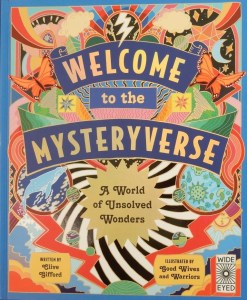
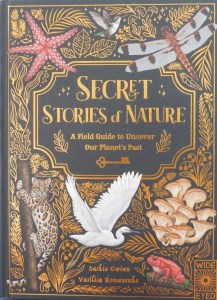
Welcome to the Mysteryverse / Secret Stories of Nature

These are both Wide Eyed Editions: thanks to Quarto Kids for sending them for review

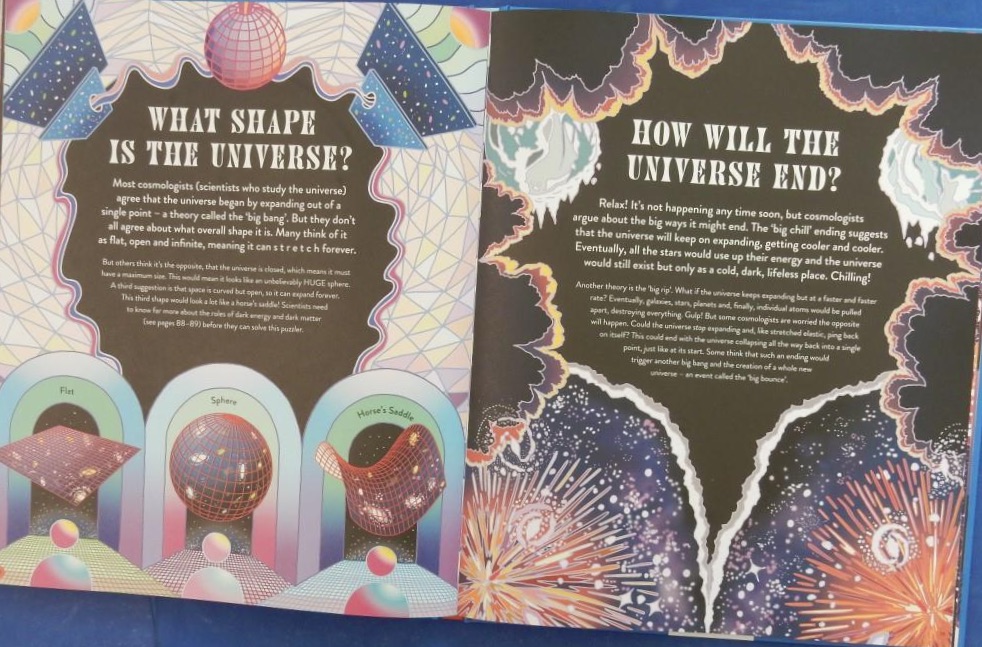
Contained within the covers of this large format book are some of the as yet, unsolved mysteries about the workings of Earth, its human inhabitants and the universe. It’s divided into five parts each given an alliterative title: People Puzzlers, Earth Enigmas, Natural Niggles, Cosmic Conundrums and Miscellaneous Mysteries, concluding with a couple of spreads telling of some mysteries that science has helped to solve.

Clive Gifford explores in a straightforward manner everything from yawning and the appendix to optical illusions, from what makes tornados and causes earthquakes to where has all Earth’s water come from, why millipedes and centipedes have so many legs to why cats purr, and what is the overall shape of the universe, and, how will it end.

For each mystery readers are encouraged to think both scientifically and creatively as they peruse the spreads and ponder the questions posed.

An absolutely fascinating compendium of scientific puzzles, made all the more exciting by the detailed, sometimes psychedelic illustrations by Good Wives and Warriors, whose work I’ve not encountered before.
A book for KS2 classrooms and families where there are curious-minded children.

Presenting the biological information in this book as secret stories that nature wants to share with readers is an engaging means of sharing the facts relating to the flora and fauna featured. The sea, the ice, forests, jungles and mountains all have secrets, as do the sky, the night and the ground beneath our feet.

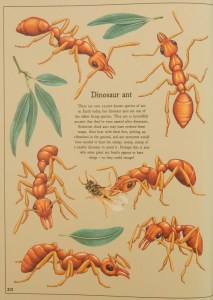
Did you know for instance that there are more than 12,000 known species of ants on Earth today? Or that ants hear with their feet, or rather, they sense the vibrations in the ground around them.

I was fascinated to read that horned tree frogs have bony spikes hidden inside their skulls for defence purposes and that dragonfly ancestors had a wingspan of around seventy centimetres rather than the maximum of twenty in some of those of today.

You may well be surprised to read that rodents including rats and mice share their DNA with humans – now there’s a thought. It might also come as a surprise the fur of polar bears is not white. Rather it’s translucent and appears white because it reflects visible light.

Towards the end of the book is a ‘searching for secrets’ section encouraging readers to stop and look closely at the nature around them to find the hidden treasures that are all around.

With superb illustrations by Vasilisa Romanenko, this is a treasure trove of ‘secrets’ relating to the natural world.

A Whole World of Art

In this book readers are accompanied by two young friends, Alzena and Miles, who take them on a time-travel journey through the world of art wherein sculptors, architects and artists. are introduced. Encompassing nearly thirty works in all including a stained glass window, the journey begins in 1350 BCE in Giza where stands the bust of Nefertiti and finishes in Prague with the work of Ai Weiwei and his huge 2018 sculpture Law of the Journey.

At each stopping point there is a considerable amount of engagingly written information about the artist featured, their art, and some historical facts such as what inspired the work and where that artwork is currently on display. These take the form of short paragraphs strategically placed on the spread. One such explains that at 469 talents, the cost of building the Parthenon in Athens was more than that of an entire fleet of ships.

On some spreads there are also prompts for readers to look closer or go beyond the page; and there are occasional suggestions for art work, inspired by a particular work of art. One such relates to the Benin City spread and asks, “Can you design a shield that celebrates the ideas you think are important today’ perhaps, like the artists of Benin, including symbols and pattern to add to its effect. On the Tokyo spread where the key artist is Yahoo Kusama, we read: ‘If you like playful works like this, have a look at Akashi Murakami’s art. … See if you can spot the links to Anime (comics) and Magna (animated films) in his work.’

With such a variety of works being shown and discussed, this is a very useful book for older school primary children who will appreciate Dion Mehaga Bangun Djayasaputra’s lively images of the art and artists presented, integrated into which are small photos of the art being discussed.

(Backmatter includes a glossary and suggestions for further reading.)

One Little Word

This image has an empty alt attribute; its file name is dscn9676-3.jpg


Two friends are playing in the park when suddenly an unspecified incident happens between them. There’s face pulling, shouting and a monster appears – The Argument – that keeps on growing as the quarrel escalates and the two children separate. Still the beast grows involving all the other children and making the most of the situation to keep on getting bigger and bigger

This image has an empty alt attribute; its file name is dscn9677-3.jpg

until the two that triggered things stand face to face and the girl who is narrating gives the other one a nasty push, immediately resulting in her feeling ‘sad and angry, mixed-up and confused’. He retaliates with a push too and both children end up in floods of tears. Those tears prove cathartic and the two are able to exchange just one tiny but crucial word. The effect on The Argument is dramatic: it gradually shrinks

This image has an empty alt attribute; its file name is dscn9678-3.jpg

until it disappears completely and very soon the park is full of happy, laughing children once more.


This is absolutely brilliant, both verbally and visually. Allison Colpoy’s attention to detail is superb, capturing the changing expressions of the two protagonists and their concerned, supportive pals. Her colour palette is hugely effective in highlighting the emotional journey and accompanying physical changes of the engaging adversaries especially : what a superb complement for Joseph’s lyrical telling.

This terrific book needs to be in every primary classroom to be shared over and over, carefully considered and discussed. The potential of its impact is tremendous – like that of The Argument at its most monstrous.

The World’s Most Atrocious Animals

The World’s Most Atrocious Animals
Philip Bunting
Happy Yak

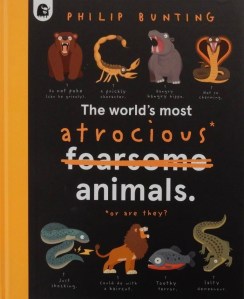
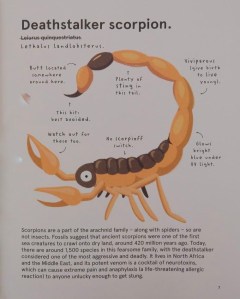
In the third of this fact-filled series Philip Bunting introduces readers to over fifty of the scariest creatures in the natural world, each of which is given both its Latin name and amusing Bunting tag. Thus the death stalker scorpion or Leiurus quinquestriatus is also Lethalus landlobstrous – very appropriate since a sting from this North African nasty can be excruciatingly painful and can cause anaphylaxis.

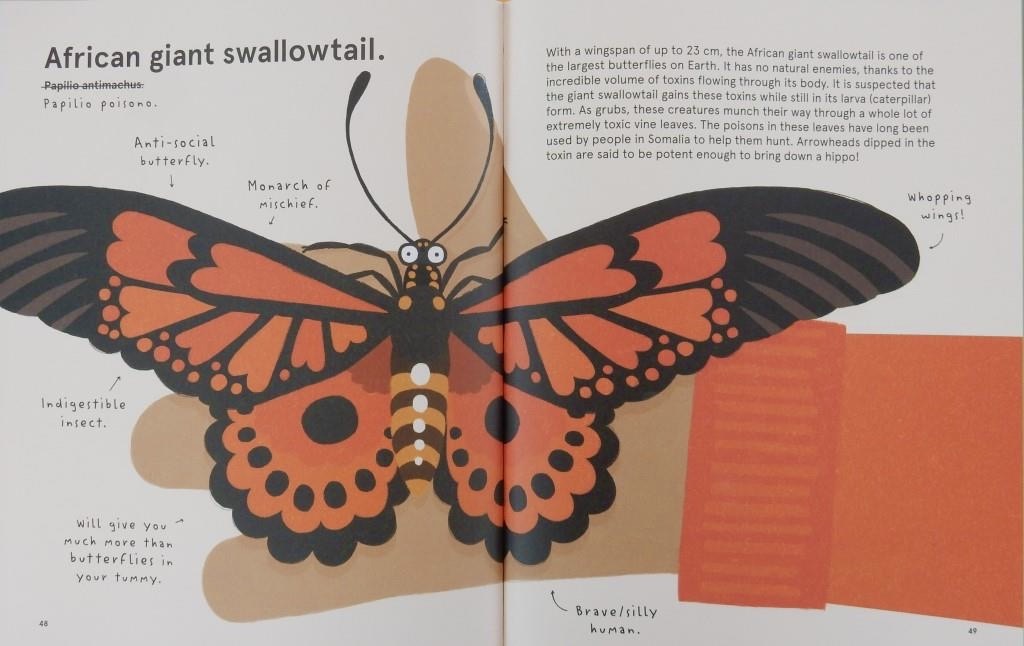
In similar fashion to the previous titles, the author uses a plethora of puns, some of which will really make you laugh (or groan depending on your mood): a group of orcas ‘sing together to form an orcastra’ and the African amphibian Trichobatrachus robustus – hairy frog to you and me – is ‘known to kermit hideous crimes’ and an encounter with an African giant swallowtail ‘will give you more than butterflies in your tummy’ – that is on account of the vast volume of toxins that flow through its body.

Moreover, should you find yourself paddling on the shores around Madagascar, Mauritius or other countries located in the Indian Ocean, be very sure not to set foot near a geography cone snail; the potent venom of this predatory mollusc could, if the nasty creature chose to inject you, finish you for good since there’s no known antivenom. No wonder that so we read, the beast has ‘shelled out extra for. a fancy pattern’.

Maintaining a good balance between humour and straightforward information, along with large, striking illustrations, Philip Bunting covers a wide range of animals of the truly scary sort. Anyone with an interest in animals, especially of the atrocious or fearsome kind, will love this book; it’s a great addition to The World’s Most …. Animals’ series.

A Hero Like Me

A Hero Like Me
Angela Joy, Jen Reid and Leire Salaberria
Frances Lincoln Children’s Books

‘They call him ‘HERO’, but he’s no HERO – not to me.’
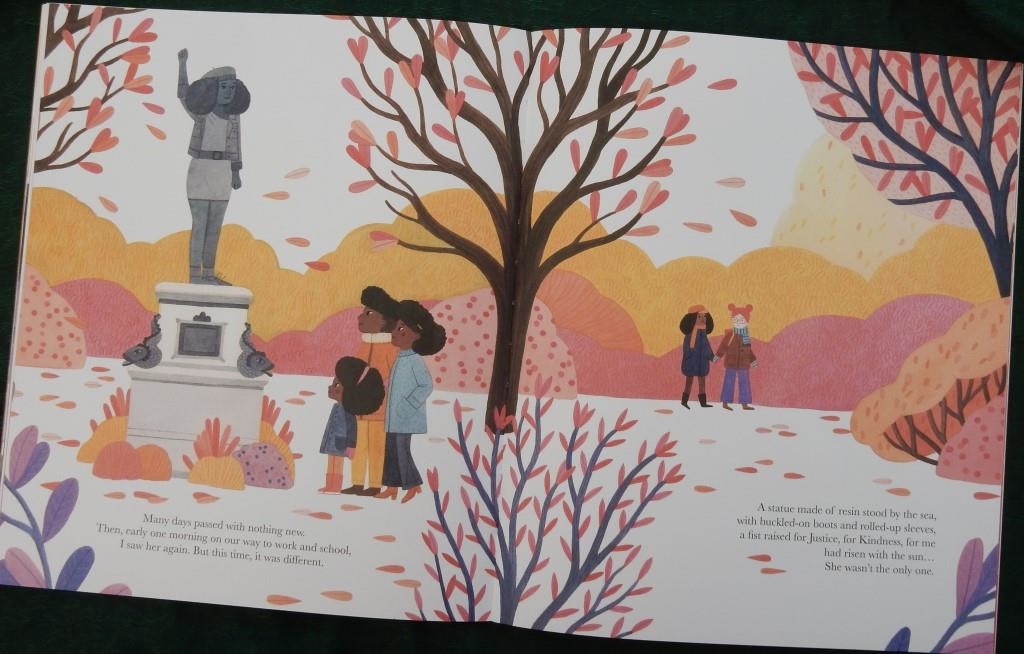
So it says on the first spread of this picture book – a fictional account – inspired by the events of 7 June 2020, when, during an anti-racism protest, prompted by the killing of George Floyd by police in the USA, a statue of seventeenth-century slave trader Edward Colston was pulled down and thrown into Bristol Harbour.

Co-author Jen Reid was among the protesters that day, and despite being afraid of heights, she felt compelled to climb onto the empty plinth and raise her fist above her head in a black power salute  – a moment that was captured on camera and shared all round the world.

Written together with Angela Joy, this wonderfully inspiring story relating the events of that memorable day are retold through the eyes of a girl who every day on her way to school sees the huge statue of the so-called hero, in reality a man who sold freedom for cotton and tea. She knows this man is not a hero.
However, it’s not easy to find real heroes: people who stand up for Justice, Peace and Kindness so our young narrator takes things into her own hands. She, her family and friends create placards and march, shouting out for what they believe in.

They march towards that bronze statue of Colston and eventually that towering statue becomes a toppling one that is dragged by many pairs of hands to the harbour’s edge and thrown into the water. Then in it’s place stands a real hero, a young woman with fist held up for Black Peace and Black Power

A few weeks later, (15th July) on her walk to school, the narrator sees a statue of Jen Reid by artist Marc Quinn had been added to the empty plinth. Called A Surge of Power, it was only in place for 24 hours.

Adding even more impact to Angela Joy and Jen Reid’s empowering words are Leire Salaberria’s distinctive, bold, stylish illustrations. Together they have created an important book for young readers; one that shows them a hero can be just like themselves, as well as offering them hope in humanity, in particular in those who stand up for what is right: activism can lead to change. It’s a must for primary classrooms and family bookshelves.

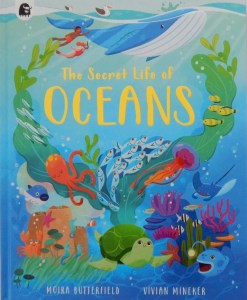
The Secret Life of Oceans

The Secret Life of Oceans
Moira Butterfield and Vivian Lineker
Happy Yak

In this book, which is a mix of science and traditional stories from various parts of the world, we’re in the company of Tia the green turtle, famous for her swimming prowess and beautiful shell. Having introduced herself and told the story of how she was born, Tia takes readers on an exploration of some of the secrets of marine flora and fauna starting with those relating to sea turtles like herself and other turtles that live in the world’s various oceans (there’s a map showing these).

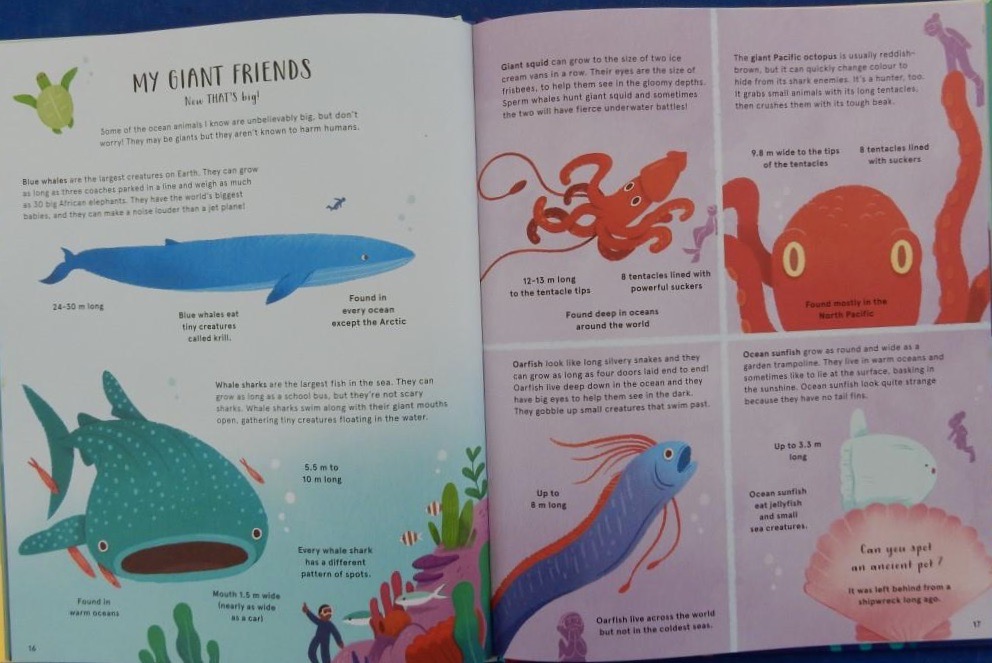
Diving down through the zones of the ocean all the way to the abyss, we encounter marine inhabitants large and small from giant squids and blue whales

to microscopic zooplankton and phytoplankton and sea-horses, to mention just a few.

Other topics are included such as ways of communicating – did you know that bottlenose dolphins each have their own unique whistle sound or that blue whales make low rumbling sounds that can travel as far as 3200 km through the water? There’s a look at the ocean’s gardens, the chilly, slippery stormy spots formed of ice and snow, an encounter with fearsome creatures with ferocious-looking teeth. And, we find out something about ocean currents, some special coastal features, what it’s like living and working by, and with, the sea.

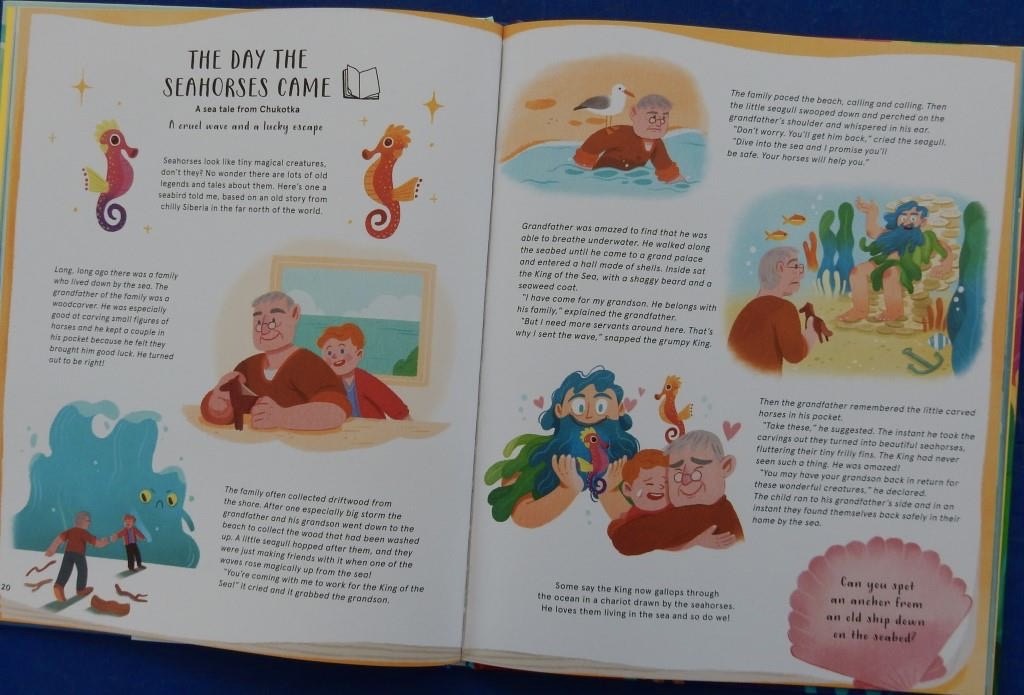
Many of the spreads have a ‘can you spot’ feature to encourage younger readers to use their powers of observation. The two final spreads are devoted to the endangerment of turtles and what we humans can do to help them. There are also five traditional stories from various parts of the world.

With bright, bold illustrations infused with humour, and a thoughtfully presented, engaging text, this is enjoyable learning for primary children.

A Damsel Not in Distress

A Damsel Not in Distress
Bethan Stevens
Frances Lincoln Children’s Books First Editions

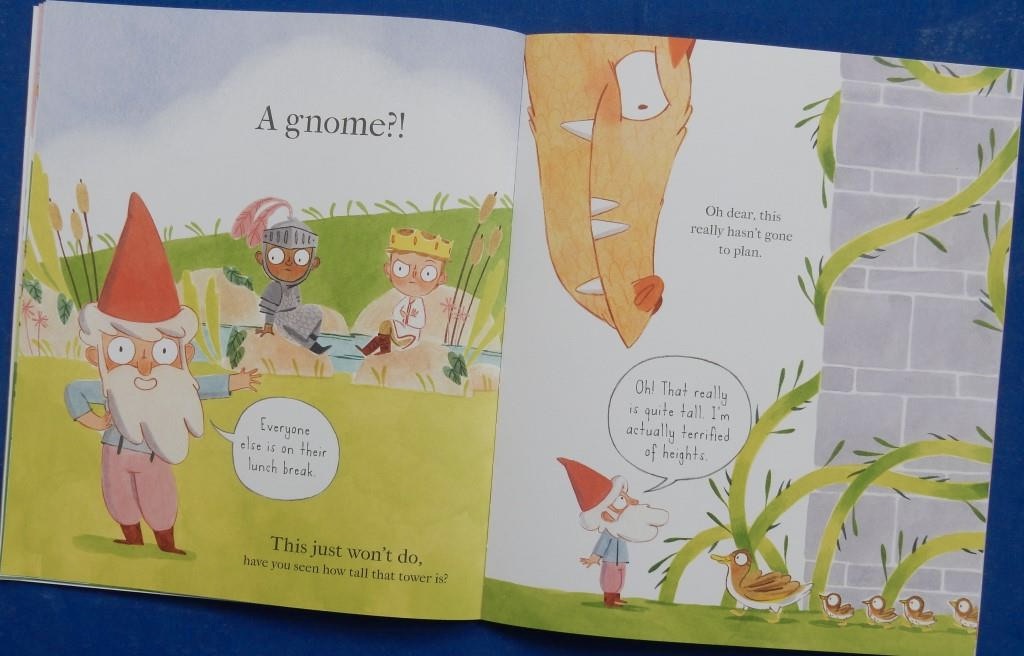
Regular readers of this blog may already know that I’m a fractured fairytales enthusiast and Bethan Stevens has chosen to turn the traditional Rapunzel story inside out, throwing the stereotypical helpless princess trope right out of the window. Our damsel states from the outset – or tries to – that she certainly is not distressed, nor is she trapped in her tower by a curse. Indeed she lives with her grandma and the castle moat is full not of horrific monsters, but ducks and frogs. In fact she seems pretty satisfied with her lot, except for the fact that her story is being spoiled at every turn of the page.

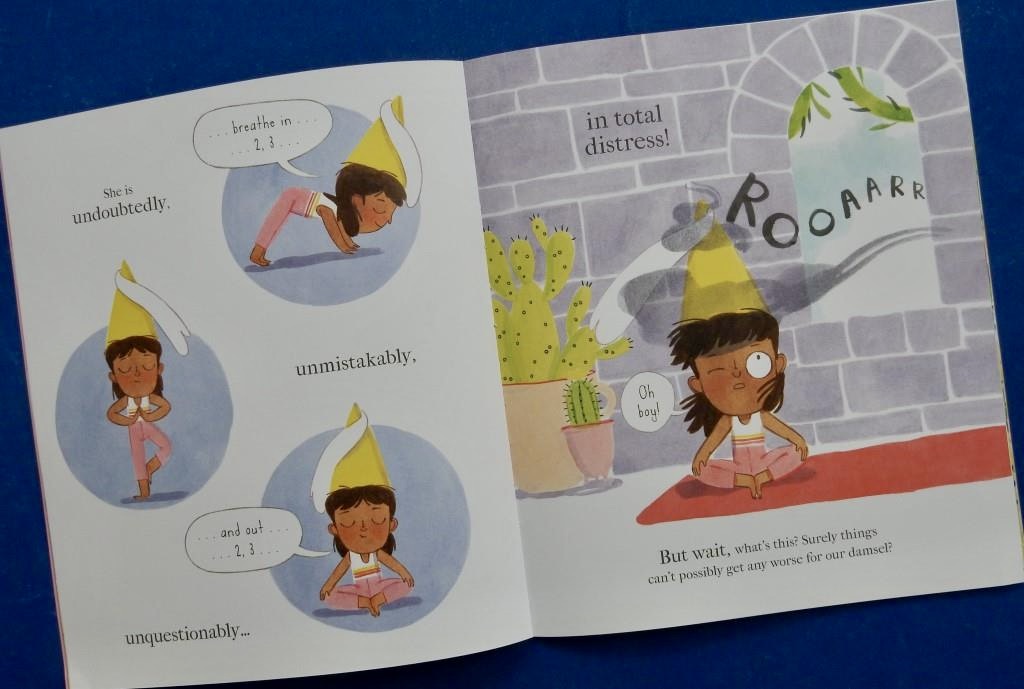
When her peaceful yoga session is interrupted, 

she cleverly predicts the fate of the first gallant knight that comes to rescue her from the massive dragon that has appeared. The brave Prince Charming is equally unhelpful but who’s this? A gnome with acrophobia supposed to scramble up the brambles to the top of a tall tower – really?

Our protagonist has had enough and is determined to turn the story around so its finale is to her liking? Can she do so and how? Hot chocolate anyone?

This is huge fun with Bethan’s text and illustrations working really well together, and the expressions on the faces of the characters are hilarious be they human or animal.

Our Beach / Walter the Wonder Snail

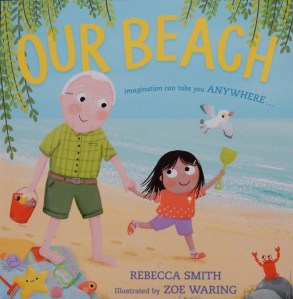
Our Beach
Rebecca Smith and Zoe Waring
Harper Collins Children’s Books

It’s wonderful what a collection of bits and pieces can lead to and that’s what we discover in this story of a little girl and her granddad who spend the day together.

As the book opens we see the two hand in hand, grandad carrying a large bag, making their way towards the sea shore.

They enjoy exploring rock pools, collecting seashells and pebbles and most important each other’s company.

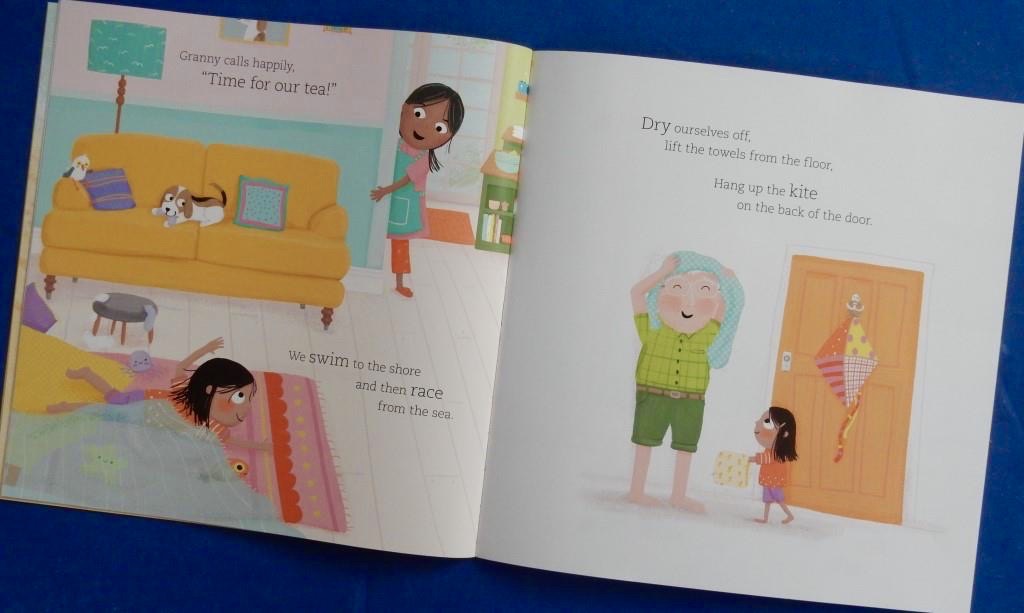
Then comes a sudden change and a spread shows what is really happening before the flights of fancy recommence, and with them, the resurfacing of precious memories. It’s Gran’s “Time for our tea!” announcement that brings the two back to reality,

somewhat reluctantly perhaps as they eek out their imaginative experience for as long as they can before sitting down to share the tasty meal set out on the table.
A delightful celebration of the power of the imagination and a special intergenerational bond.

Walter the Wonder Snail
Neil Clark
Happy Yak

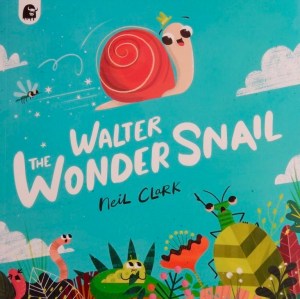
Tired of the tedium of leaves, Walter the Snail believes there must be more to life; he longs to escape the confines of his leafy existence and discover what the wider world offers. With hat atop his horns and shell packed, off he slides into the great unknown.

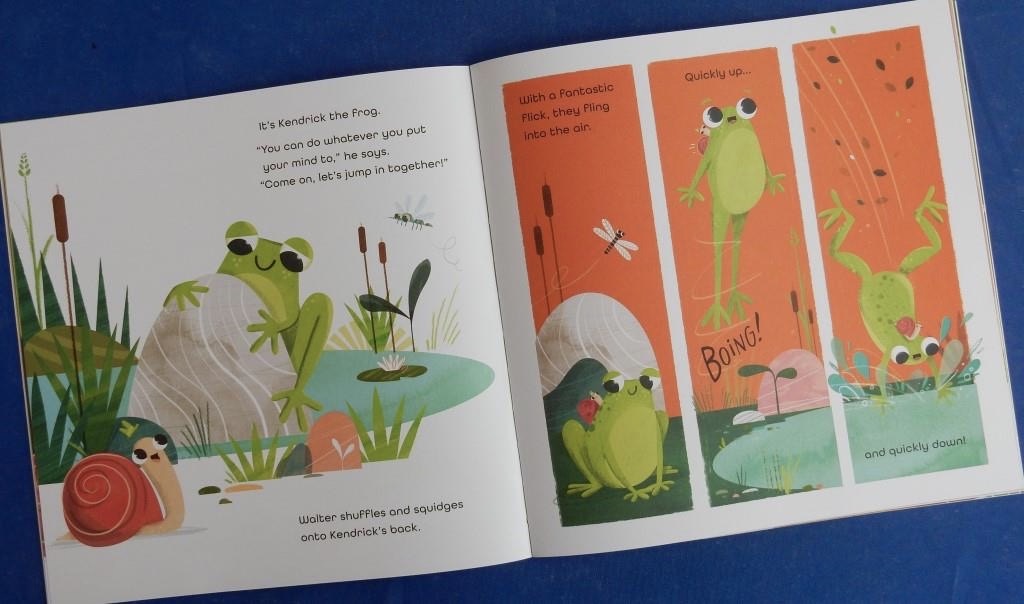
Our intrepid traveller faces challenges aplenty on his journey, but there are plenty of other creatures ready and willing to offer encouragement and help.

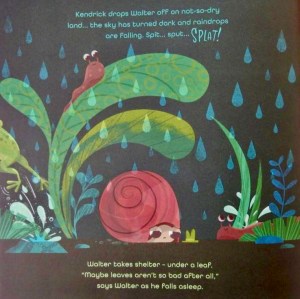
Nonetheless Walter is also able to adapt to a variety of terrains and weather conditions,

and to think outside the box, especially when it comes to making his way back home.

On his return Walter imparts some wise words to his fellow snails: “I know that anyone can do anything they put their mind to.You’ve just got to think big!” That’s a vital life lesson for young humans too and one they’ll learn subconsciously through Neil Clark’s wise words and his diverting, richly coloured, scenes of Walter’s travels. I love the variety of viewpoints and page layouts.

Rich in classroom potential but above all, a thoroughly enjoyable story.

When Plants Took Over the Planet

When Plants Took Over the Planet
Chris Thorogood, illustrated by Amy Grimes
QED

Reputed botanist and field guide writer, Chris Thorogood presents a clear, concise evolutionary history of plants from the very earliest green alga called a charophyte that first appeared around 500 million years ago.

From those minute algae, plants moved onto land some 30 million years later, the first being mosses, liverworts and hornworts.Readers can then follow that land journey through various historic periods (a time line is given).

It’s amazing to think that some of the plants found millions of years ago in prehistoric forests are still found today some equisetum species for instance, one of which I frequently see on walks in the part of Gloucestershire where I currently live. Who’d have thought they’re now what’s termed ‘living fossils’.

Every spread is full of fascinating information on various plant groups and species; we discover when seed plants emerged – those that forever transformed the planet – and again some of these gymnosperms are still around today, the ginkgo (or maidenhair tree) being one. I was astonished to read that such forms existed well before dinosaurs roamed the earth.

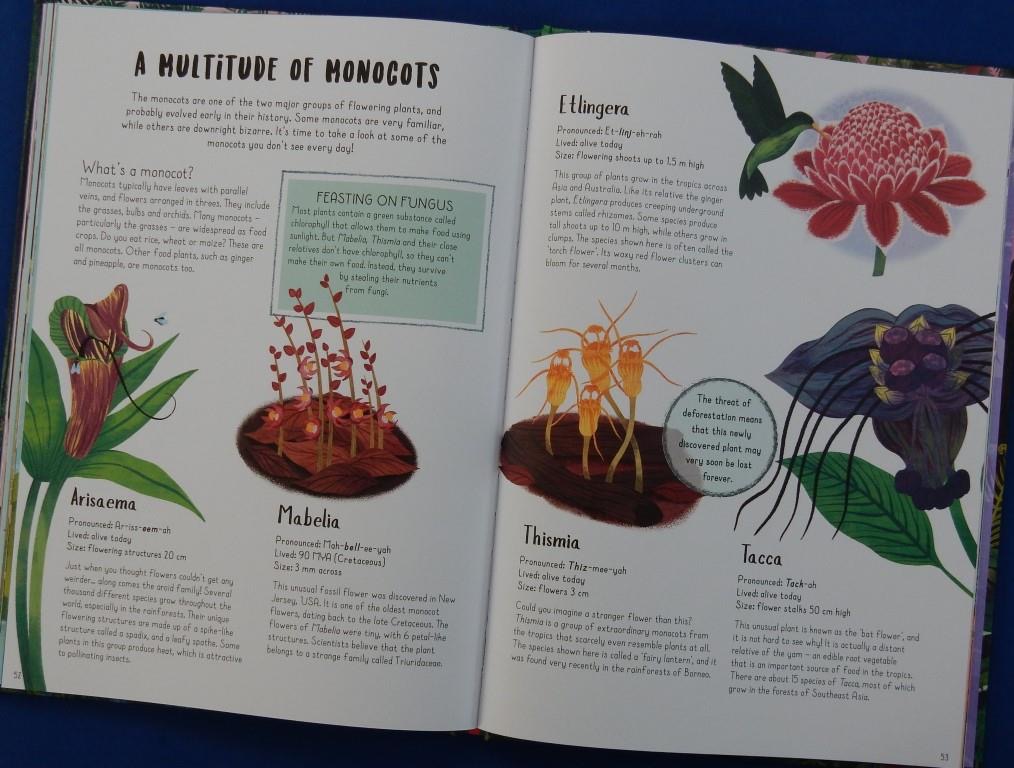
There’s an explanation of the difference between moncots

and dicots (as I was taught to call them) but now referred to as eudicots; a look at powerful medicinal plants that can heal ailments, boost health and flavour food and drinks, and some examples of carnivorous plants.

Most people know that plants are crucial to our existence but nonetheless many species are in danger of extinction and the author gives a timely warning about the effects of human damage. It’s still not too late and the final spread offers some ways everybody can play a part in preserving the rich diversity of plant life.

With Amy Grimes’ bold, bright illustrations thoughtfully arranged around the detailed factual information, this is a superbly presented book as well as a fascinating and exciting one for individuals or class collections.