50 Words About Nature: Animals, 50 Words About Nature: Bugs / I Want To Be A Lion, I Want To Be A Monkey

These are all books for very young children, – thanks to the publisher Oxford Children’s Books for sending them for review.

50 Words About Nature: Animals
50 Words About Nature: Bugs

Lily Holland and Debbie Powell

As an advocate for using the correct scientific terminology with young children I was excited to see this pair of books – the first two in the new series 50 Words About Nature – doing just that.
Animals takes a look at the whole of the animal kingdom – mammals, fish, reptiles, amphibians, birds, insects and molluscs giving examples of each including a tiger, alligator, dolphin, frog, beetle and octopus, in the process defining such words as carnivoreherbivore, vertebrates, invertebrates, primates, habitat, zoologists and extinct.

In similar fashion Bugs explores first insects, then arachnids and next returning to insects, focuses on several different beetles, including some like fireflies that are nocturnal. There’s a spread featuring nocturnal moths, another looking at pollinatorsand the final one introduces entomologists. Terms used include exoskeleton, antennae, proboscis, metamorphosis, arthropods,

elytra, carapace and telson. I don’t think I met those last three until I started studying biology at secondary school. However in my experience, small children love big words, will assimilate these in context herein and enjoy impressing adults by using such terms as bioluminescence and pollinators.

Integrated into the text, Debbie Powell’s illustrations are both arresting and realistic.
I Want To Be A Lion
I Want To Be A Monkey

Pintachan and Katie Woolley

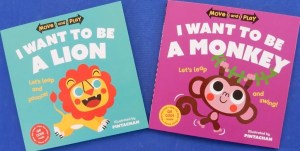
It’s time to move with two additions to Pintachan and Katie Woolley’s Move and Play series for the very young. Get your little ones, be they at home or in an early years setting, pouncing, 
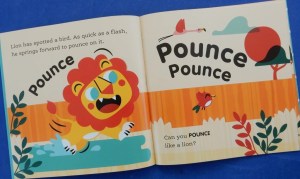
creeping, rolling, running, hiding away and yawning like a lion. If you’re at home cut out the mask, add string and your child will be even more lion-like especially if they also start with a few very loud roars.

Alternatively they might prefer to emulate a monkey; in which case the starting sound is ‘Ooo-ooo-ah! after which comes the more active scampering, rolling scratching, munching (bananas of course), climbing , swinging, leaping all of which can be combined into a lively monkey dance. What are you waiting for? …

Stuck for ideas? Scan the QR code inside the front covers. Pintachan’s bright art work and the engaging texts support the development of children’s imagination and their physical development, but above all they are fun.

Kind Crocodile / Who’s Hiding? On The Farm

Kind Crocodile
Leo Timmers
Gecko Press

Little does Crocodile know when he decides to leave his watery abode and go for a stroll that he’ll end up as an animal rescue service. First comes a mouse fleeing from a scary snake, closely followed by a warthog hotly pursued by a hyena; next is an impala chased by a cheetah and then a rhinoceros with a lion in pursuit. Crocodile sees off the chasers with some strategic and menacing GRRRRs and offers a safe haven to what becomes, with the addition of the heaviest animal, a surprised heap comprising rhino, impala, warthog and mouse each precariously balanced in a tower upon the kind croc’s back. This makes him let’s say, somewhat flattened, physically at least, as well as voiceless.

How will they see off that hungry lion now?

Happily teamwork comes to their rescue; but the last word (make that almost the last) is definitely that of Crocodile, which creates a moment of suspense before his final utterance. Then off they all go, the animal tower somewhat differently arranged.

With Timmers’ humorously expressive mixed media illustrations, simple patterned text and that fun plot twist, this a funny large-format board book to share with little ones.

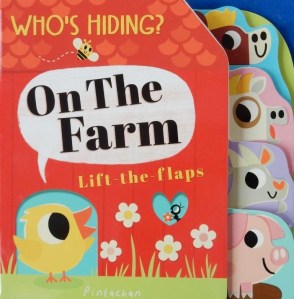
Who’s Hiding? On The Farm
Pintachan
Little Tiger

When a little chick loses his mummy, he asks Pig to help him find her but they can’t do so without little readers’ assistance. Following Pig’s instructions, they can explore what’s hidden behind the flap on each spread. They will also discover several other little chicks that have tucked themselves away cheeping, and once located those too can help in the search.

With bright jolly art by Pintachan and cutaway pages of farm scenes with minibeasts too, a simple text that includes animal speech bubbles to join in with and a happy ending, there’s plenty to entertain little humans in this fun board book.

I Want To Be A Duck / I Want To Be A Bunny

I Want To Be A Duck
I Want To Be A Bunny

illustrated by Pintachan
Oxford Children’s Books

These are the first titles in the publisher’s Move and Play series. Each comes with a mask to cut out from a flap inside the front cover and has a QR code which enables users to see and hear the movements of the featured characters.

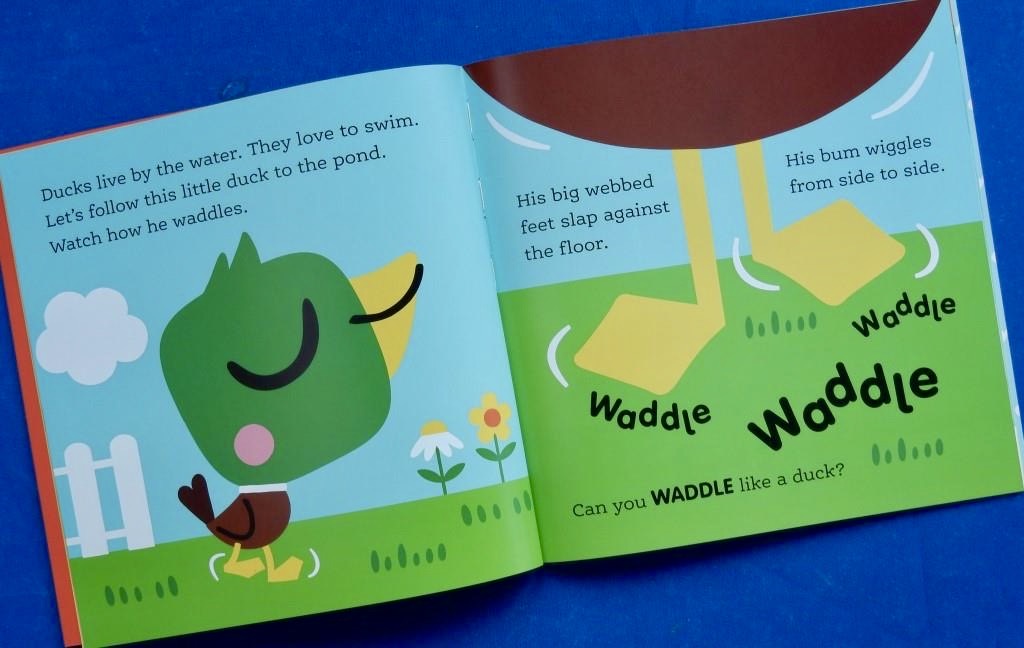
The little duck starts by demonstrating his quacking and then invites little humans to emulate him. We then follow the duck as he waddles to the pond wiggling his bum and slapping his webbed feet against the ground.

Splash, he goes into the water and starts paddling those webbed feet. Feeling somewhat hungry, duck nibbles at various small water dwelling creatures. This he does by sticking his bottom up and bobbing his head beneath the surface. Along comes a dragonfly: paddle paddle goes duck in pursuit , duck flaps his wings and takes to the air, missing his prey and landing splash, back in the pond only to discover that the farmer has come to feed him. Gobble, gobble goes duck. Little humans are asked to try doing each action and making each sound during the simple story.

The Bunny story follows a similar pattern and this time there’s hopping, nose twitching, nibbling, digging , stretching up,

running, tail bobbing, hopping and snuggling down to sleep for youngsters to copy.

Both books end by putting the entire sequence together on a spread and asking ‘Do the …. Dance’.
Pintachan’s bright, dynamic illustrations are alluring and engaging and Kate Woolly’s words are pitched at just the right level to encourage the very young to get active.

Natural History Board Books

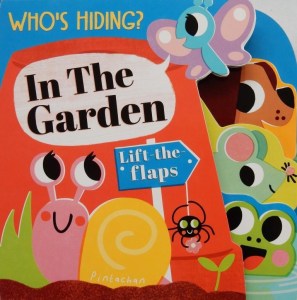
Who’s Hiding: In the Garden?
Pintachan and Amelia Hepworth
Little Tiger

Having lost her five babies, Mummy Snail needs help to find them. First she asks Frog and thanks to him, locates the first of her missing offspring. Following Mouse’s suggestion, she discovers baby number two and Puppy’s advice enables her to find the third. With two still in hiding along comes Butterfly as she approaches the strawberry plant. You can guess what’s beneath one of the juicy fruits … and that leaves just one. Now where can it be? …
With flaps for little fingers to manipulate in Pintachan’s bold, bright cut away spreads of the search, a simple narrative with speech bubbles and sounds coming from the baby snails to join in with, Amelia Hepworth’s countdown narrative provides plenty to engage little ones who participate in Mummy Snail’s hunt.

One Little Seed
Becky Davies and Charlotte Pepper
Little Tiger

It never ceases to amaze this adult reviewer how from one tiny seed, a lovely flower can grow, often indeed many, many beautiful flowers. It all depends on what kind of seed whether you get a single bloom or a multitude all blooming on one plant and we see both examples in Charlotte Pepper’s bright, alluring illustrations.
In her text for this biggish board book, Becky Davies’s engaging narrative certainly encourages young children to go outdoors with an adult, involve themselves in nature and use all their senses to investigate the flora, (along with the fauna and natural environment in general) around them,

preferably with the book to hand.
There’s a spread with information about how to grow your own flower from seed, and/or a bulb; another showing some of the delicious fruits and vegetables flowering plants produce; we visit a community garden and finally are reminded of the cycle of life in which every one of us, young and not so young can play a part. With a wealth of flaps to explore – several per spread – with further information – visual and verbal – beneath each, this book will one hopes, motivate little ones to be outdoor explorers.

The Tree Book
Hannah Alice
Nosy Crow

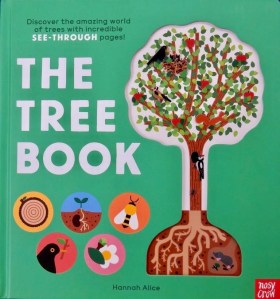
Illustrated by Hannah Alice, this large format book was produced in consultation with Simon Toomer, recently appointed Curator of Living Collections at the Royal Botanic Gardens, Kew. The sturdy, see-through pages contain a considerable amount of information written in a young child-friendly style. Interesting, fun and interactive, it introduces users to the inner workings of a tree.
The cut out, see-through pages allow you to ‘look inside’ each part of the tree – roots, trunk, branches and leaves – and see how it functions and grows. Each page presents a different tree-related topic such as new leaves, flowers and pollen, leaves and photosynthesis,

fruits and seeds, mighty minibeasts, underground roots of different types of trees.
The written narrative, with corresponding stylised but clear pictures, takes us through the four seasons and concludes with a look at the importance of caring for and perhaps planting new trees. Without these wonderful plants, none of us would have fresh oxygen to breath.
Walking in a place that has lots of trees is one of my favourite things to do, and I’d certainly suggest it’s never too early to start fostering a love of trees in children; this book could be a good place to start.

Have Fun With Boardbooks

Splish, Splash!
Sophie Ledesma and Isobel Otter
Little Tiger
What will Little Fish discover as it swims around beneath the ocean? By manipulating the various sliding mechanisms little ones will discover sea creatures large and small before bidding goodnight to the sleepy Little Fish that has splashed its way right through to the penultimate spread where there’s a convenient place to hide itself behind. ZZZZZ … 

On the final spread all the other creatures that were encountered on the previous pages are labelled. Huge fun and great for developing fine motor skills. Sophie Ledesma’s playful illustrations are full of patterns that add to the visual impact throughout this ‘slide and seek’ book.

Ladybird Ladybird What Can You See?
Pintachan
Little Tiger
This is the latest addition to Pintachan’s brightly illustrated lift-the-flap series wherein Amelia Hepworth introduces positional words – in, behind, inside and under during the game with Ladybird and Ant wherein various other partially hidden minibeasts depicted on the flaps are revealed by lifting the flaps. Ant too is revealed saying in turn ‘It’s Butterfly!’, ‘It’s Spider!’, ‘It’s Bee!’ ‘It’s Worm!’ while the final spread has a mirror hidden under its flap. 

With its simple, repeat refrain rhyming text this is huge fun to share with the very young as well as for beginning readers to read to their younger brothers or sisters. Ant has a different fruit or portion of one on each spread so this offers lots of talk potential – what is it? Who will eat it etc.

Where’s My Puppy?
Becky Davies, illustrated by Kate McLelland
Little Tiger
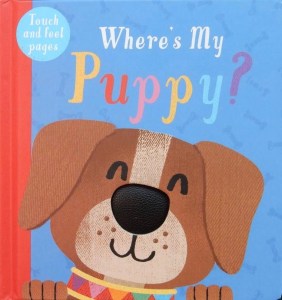
The mischievous looking puppy shown on the cover of this book has almost disappeared by the first spread and little ones can enjoy following the colourful footprints through the rest of the spreads to discover his whereabouts on the final page. Before that though they encounter in turn Guinea Pig, Kitten, and Pony each of which shares a feature in common with the pup. Guinea Pig has soft fur, Kitten a fluffy tail and Pony’s tongue is rough giving youngsters a variety of tactile experiences as they join in the game to find Puppy. 

With a repeat question on each spread this offers a joining in opportunity too.

Go Go Apple
Claire Philip and Steven Wood
Sunbird Books
I’ve never really considered what happens to apple cores collected in food waste as I always throw mine into a bin that’s emptied straight onto our own compost heap. So, it was interesting to see this title in the ‘My first recycling series’ and be able to follow the journey of one core from collection by a truck to the recycling plant and thence into a large machine where it’s mixed with leaves and other waste food and shredded. Some then goes off to become compost, the rest being liquified for farm manure or made into a gas that can be used for the heat and electricity of homes and cars.

With plenty of accompanying onomatopoeic sounds to join in with, a simple narrative description and fun illustrations, this is an interactive book to share with the very young be that at home or in an early years setting.

Peekaboo Sun
Camilla Reid and Ingela P Arrhenius
Nosy Crow
Babies and toddlers love to play peekaboo especially when there’s a mirror involved so they’ll thoroughly enjoy this addition to the sliders series with its fishes, sunshine, ice cream boat, crab and other things with a seaside theme. Rhyming couplets introduce the items in Ingela P Arrhenius’s jolly, patterned illustrations.

Great fun and an opportunity for little ones to develop their fine motor skills.

A Celebration of Board Books

Here’s a handful of recent Little Tiger Board Books – thanks to the publishers for sending them for review

First Nature: Ladybird
Harriet Evans and Bryony Clarkson

Following on from Caterpillar in this ‘first nature’ flap-book series is the equally playful Ladybird. Very young children will love Bryony Clarkson’s bright alluring, textured art and Harriet’s brief, sometimes alliterative rhyming text as Ladybird scuttles and scurries, hastens and hurries across the cleverly cut-away pages, slowing to feed, feel fear, fall and fly to the nest, finally ready to hibernate.

Elephant Elephant What Can You See?
Pintachan

Accompanied by a questioning chirpy bird friend, Elephant takes a wander in this lift-the-flap book, and the two play a kind of hide-and-seek game with the animals that are tucked away in turn, beneath the lily pad, in the tall grass, under water and behind a tree. Then, on the final spread, when the final flap is lifted, there’s a surprise mirror so tinies will come face to face with their own image.
With Pintachan’s simple, bright images and the repeat patterned rhyming narrative, this is likely to be a winner with little ones.

Beep Beep! Builders
Becky Davies and Gareth Lucas

Be ready for a noisy time when you share this with your little one. Set on a building site, we meet the boss Little B and his five co-workers. There’s Digger, Mixer, Crane, all of which are somewhat over-enthusiastic, as well as a roller and a tip-up truck. Having dug, mixed, built and lifted all day long, come sundown the boss praises their teamwork and suggests it’s time for play.
Tinies will love pressing the squishy bodies of the jolly diggers as they follow their actions and join in the rumbling, tooting, whirring and other sounds.

For a slightly older audience is

Your Body
Harriet Evans and Lirios Bou

Another of the cleverly designed ‘switch-a-picture’ books with Harriet’s rhyming presentation of in turn, the skeleton, breathing, eating, thinking and the circulatory system accompanied by Lirios Bou’s subtly coloured images of children’s bodies, first clad and then, when the central tab on each page edge is pulled, the related internal working are revealed along with additional relevant information.

A to Z: An Alphabet of Animals
illustrated by Linda Tordoff

Published under the Caterpillar Books imprint this lift-the-flap board book presents animals large and small; but where are they? They’re all hiding, just waiting to be discovered by eager fingers opening their respective initial letter flaps. Little ones can meet creatures feathered, furry, scaly and smooth all stylishly illustrated in subtle colours.

First Nature: Caterpillar / Little Hen Little Hen What Can You See? / When Mummy Goes to Work

First Nature: Caterpillar
Harriet Evans and Bryony Clarkson
Caterpillar Books (Little Tiger)

By means of a lovely playful, descriptive rhyming text – ‘Caterpillar chomps and caterpillar crunches. // Caterpillar chews / and caterpillar munches.’ and clever cutaway pages with flaps, author Harriet and illustrator Bryony present the life cycle of an eponymous butterfly.
Additional information snippets are hidden beneath the flaps making this fun for little fingers to explore, as well as little ears to enjoy.

Little Hen Little Hen What Can You See?
Amelia Hepworth and Pintachan
Little Tiger

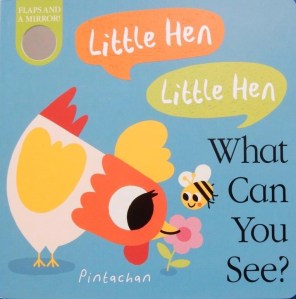
Little humans will love accompanying the little hen as it wanders around the farmyard and in response to the titular question posed on each spread by the friendly little bee, discovers the various creatures hiding in plain sight and named when the flap is lifted to reveal in turn Mouse, Cow, Horse, Sheep. Beneath the final flap is a mirror so tinies will come face to face with their own image.
The simple, repeat pattern text and Pintachan’s bold bright images of the animal characters offer a hide-and-seek game for toddlers and adults to enjoy together, probably over and over again.

When Mummy Goes to Work
Paul Schofield and Anna Terreros-Martin
Templar Publishing

This is a cleverly crafted little book, the first in a new series and it’s ideal for a parent just returning to work after the birth of a child, to share with a little one.

Having breakfasted together, Mum dons her paramedic’s uniform and bids farewell to her child, leaving Nan and Grandad in charge.

Events from her working day are then chronicled in a first person rhyming narrative illustrated with small images on each verso – driving the ambulance,

tending a patient in bed, pushing a wheel chair, examining someone’s ears.

These are mirrored in full page, detailed scenes on the recto, showing the child playing out similar scenarios.

As if speaking directly to the little one, author Paul Schofield uses the mother’s reassuring voice for the sequence of verses; illustrator Anna Terreros-Martin’s visual interpretations are an absolute delight and full of wonderful details to pore over.

Eco Craft Book / The Extraordinary Book That Eats Itself

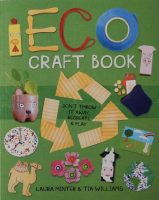
Eco Craft Book
Laura Minter and Tia Williams
GMC Publications

In their latest book, Laura and Tia offer some cool ideas for using bits and pieces that might otherwise end up being thrown away.

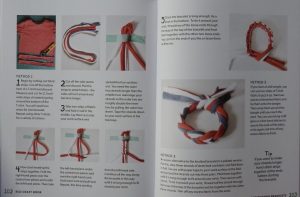
Instead of consigning that old T-shirt or other no longer worn garments to the rubbish or recycling bin, why not suggest your children try a project like the T-shirt friendship bracelets here.

Alternatively, if the T-shirt is white, it can be dyed using a natural plant dye and refashioned into a ‘no-sew tie-dye bag’. Those are just two of the fabric projects.

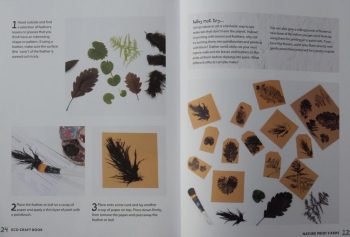
Getting even closer to nature, youngsters can make a collection of interesting shaped leaves, grasses or perhaps feathers and use them to make some printed cards (or perhaps wrapping paper)

and if you want to attract more wildlife into your garden, there are instructions for creating a bug hotel using for example, old tin cans.

Each mini project is succinctly explained with step-by-step guidance and clearly illustrated with colour photos. In addition there are spreads that talk about climate change, what youngsters can do to help protect the environment and why it is important to immerse children in nature.

This book would be a boon to parents who are coping with home schooling, but all of us who work with children have a duty to nurture their creativity and to encourage them to think about the impact on the environment of all they do.

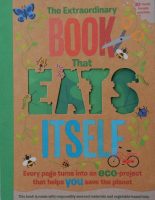
The Extraordinary Book That Eats Itself
Susan Hayes & Penny Arlon, illustrated by Pintachan
Red Shed ((Egmont)

If you’re looking to engage a child or children in some environmental projects here’s a book to try. It’s packed with eco-projects – thirty in all – and each page (as well as the cover) is cleverly designed to be used in an activity – hence the title.

It’s amazing just how much difference simple everyday actions such as turning off the lights when you leave a room, and at night can make, not only for the safety of animals but to reduce electricity consumption. Ditto, saving water by turning off the tap while brushing your teeth or using your bath water to ‘feed’ your plants (of course that takes a bit of effort but every drip and drop counts). There’s a Make a Difference in your home’ page with additional suggestions .

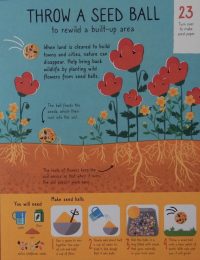
One of my favourite projects is Throw a seed ball to rewild a built-up area, something I’ve never tried, although I have scattered plenty of packets of wild flower seeds. This is really clever though and all that’s needed in addition to wild flower seeds are water, flour and soil to make your mixture. Can’t wait to have a go at this.

(The reverse side suggests making seed paper for writing a message on – another clever idea.)

Whether or not home schooling continues, this is certainly worth getting hold of.

Board Book Christmas

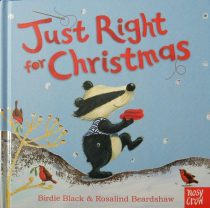
Just Right for Christmas
Birdie Black and Rosalind Beardshaw
Nosy Crow

A board book version of a Christmas favourite from a few years ago unfolods over two days.

It begins on a snowy Christmas Eve with the king walking around the market. His purchase of a roll of beautiful red cloth to make a cloak for his daughter results in the left-over scraps of fabric being placed outside the back door.  Jenny the kitchen maid finds them and makes  a jacket for her ma. The remaining scraps are turned into a hat for Bertie Badger’s pa, then gloves for Samuel Squirrel’s wife and a scarf for Milly Mouse’s little one, and all just in time for Christmas Day.

A warm, feel-good story ‘… just how Christmas should feel’ celebrating the pleasures of giving, made all the more so with Rosalind Beardshaw’s, mixed media illustrations that help stitch the narrative together beautifully.

The Twelve Days of Christmas
Illustrated by Britta Teckentrup
Little Tiger

In this board book, using two enchanting elf characters and her trademark die-cut collage style illustrations, Britta Teckentrup presents a favourite seasonal song aimed at the very youngest listeners. As the song progresses, one verse per spread, the gift is revealed through the cut out. Then on the fourth day additional die-cuts are used to accommodate the 4 colly birds and so on until the eleventh day. On day twelve all the gifts are revealed around the tree on the recto while in the bottom corner on the verso the elves give each other a Christmas kiss.

Just right for tiny hands and there’s plenty of counting fun to be had too.

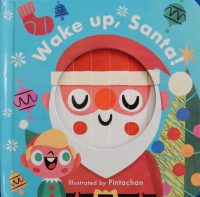
Wake up, Santa!
illustrated by Pintachan
Words & Pictures

With cleverly designed paper engineering and digital illustrations, this bright, jolly interactive board book will get little ones and their sharers in festive mood as they waken in turn Santa, the elves, Rudolph and a teddy bear.

There are things to find, name, count and talk about all in a tiny, fun-filled ‘Little Faces’ package.

Christmas is Awesome!
Sabrina Moyle and Eunice Moyle
Abrams Appleseed

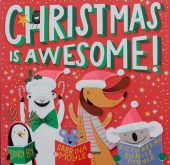
The Moyle sisters go to town to demonstrate the veracity of their latest board book’s title.

Popping with neon pink, Eunice provides lively scenes of assorted animals getting into the festive spirit with ‘twinkling lights, silent nights, being nice ‘(of course) and much more.

Humorous touches abound with ‘ugly sweaters’, a dachshund sporting one such takes the opportunity to get beneath the mistletoe and bestow a long-tongued lick upon the cat’s beaming countenance; and don’t miss the lump of coal getting in on the act by knitting itself a sweater from ‘darkest black abyss’ yarn. And the nativity scene is priceless: Mary and Joseph are two birds looking benevolently upon their newborn baby Jesus – a haloed egg.

Sabrina’s rhyming narrative orchestrates the celebrations concluding thus: ‘Joy and kindness, love and fun, Christmas is for everyone!’ Their portrayal is certainly a whole lot of fun.
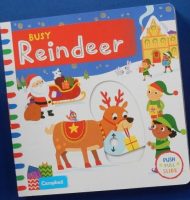
Busy Reindeer
illustrated by Samantha Meredith
Campbell Books

As an adult reads the rhyming couplets, little fingers can manipulate the sliders to activate Santa’s reindeer Ruby, then watch the sleigh take flight over a snowy landscape, help Santa down the chimney and finally, open the stable door for him to thank and bid goodnight to his number one helper. All of this is illustrated in Samantha Meredith’s bright, jolly scenes of a busy Christmas delivery round.