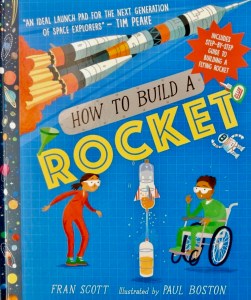
How To Build a Rocket
Fran Scott, illustrated by Paul Boston
Walker Books
Following How to Build a Racing Car comes another step-by-step guide, to building a rocket, this time. However, this book is much more than a series of instructions; there’s a wealth of information about space-related topics such as an introduction to Isaac Newton and his laws of motion. This is followed by spreads wherein readers meet the various people who work on a rocket and at its launch base. These people then have a related chapter, the first being The Rocket Body wherein both the science behind a real rocket and the making of the model’s body are clearly presented in prose and graphics. Included too is an ’ask an adult’ directive.
Chapter two entitled The Launch Pad is similarly structured and includes some helpful tips.
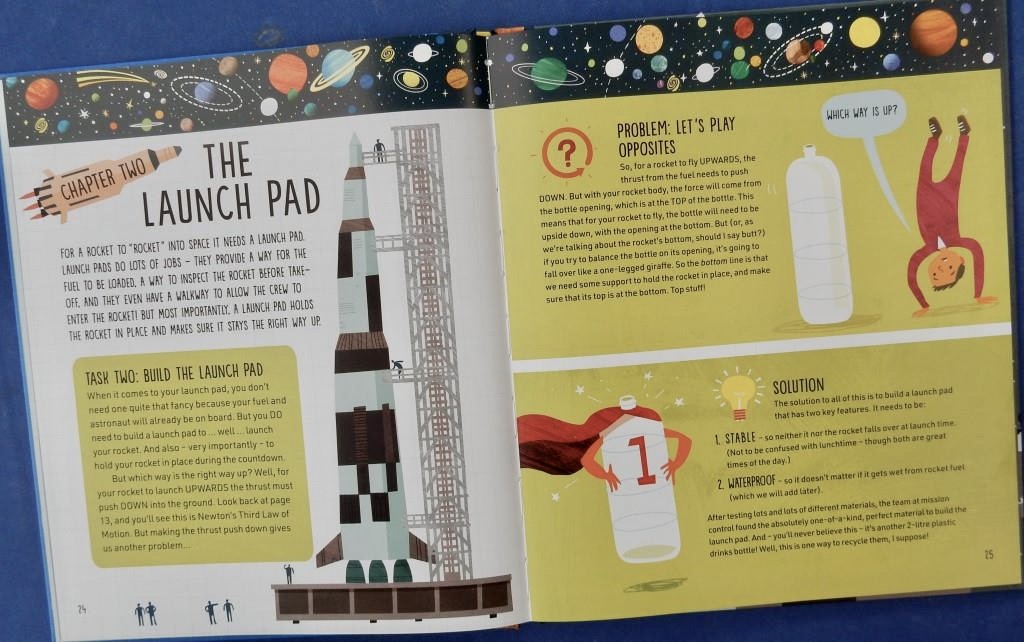
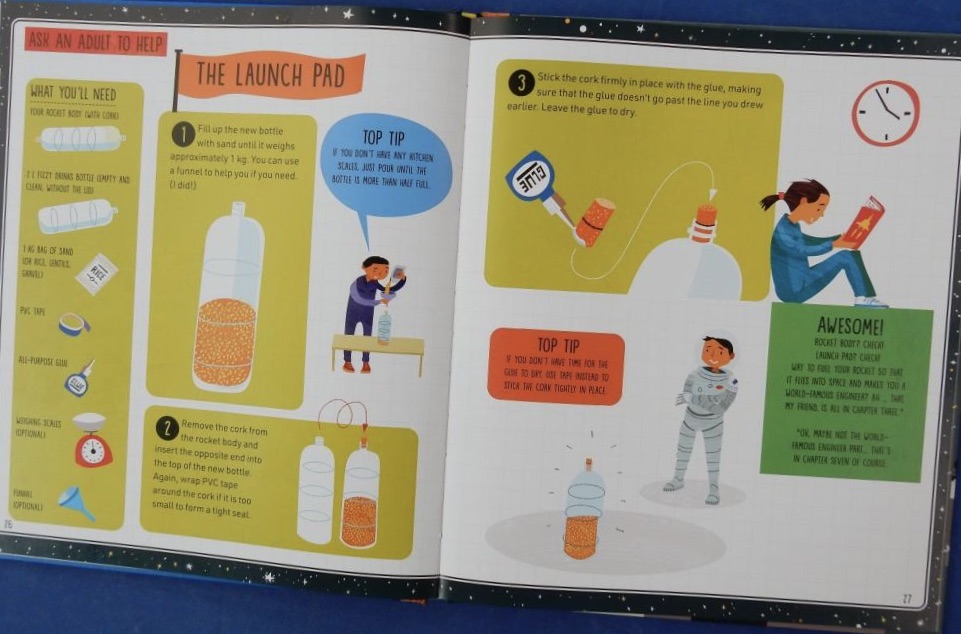
The next stage is choosing The Fuel (that needed for the model is a mixture of bicarbonate of soda and vinegar). Once the fuel is prepared, it’s time to don your gear, including eye protection, grab an adult head outside to a clear space and prepare for Countdown to launch. Hopefully this is a success but as an integral part of any engineering process, it’s now the Testing and Tweaking should be done. Maybe the addition of fins would make for a better launch; or could an alteration to the weight of your machine improve its flight? Then of course, Personalisation will ensure your rocket is unique. Some designs are offered but why not try creating your own. After all this get ready for the final Blast Off1
What a terrific way to spend time during the summer break and what an amazing amount children who embark on this project will learn.

 Red Reading Hub - Jillrbennett's Reviews of Children's Books