
Cinder & Ella
Barbara Slade and Lucia Soto
Owlet Press
Kind, clever and beautiful, Cinder lives a life of drudgery with her mean stepmother and idle stepbrothers. Nothing she does seems to please them, but what pleases Cinder herself is dreaming, not of a handsome prince, but a gorgeous, long-haired girl with blue eyes, who happens to be a princess.
Princess Ella too has dreams but as yet she can’t quite imagine what they might lead to. What she does know though, is the reason why her royal parents are hosting a ball to honour her eighteenth birthday. It’s a celebration to which everyone in the land is invited and one that thrills Cinder’s stepmother, who imagines either of her son’s as the perfect partner for the princess. In their separate abodes both Cinder and Ella are distraught.
Come the night of the ball. Cinder is left with countless chores to do while her stepmother and stepbrothers go off in their carriage. As she sits thinking of all those desirous of winning the heart of Ella, she hears a deep whisper, “Make a wish,” coming from Midnight, her horse. Surprised, she does so and magic happens. Her old ragged clothes become a fine outfit and a pumpkin becomes a gold carriage, pulled of course, by Midnight. On arrival he gives the twelve o’clock warning about the magic expiring and off goes Cinder into the palace ballroom.
So enraptured with one another, are they that Princess Ella and Cinder dance the night away
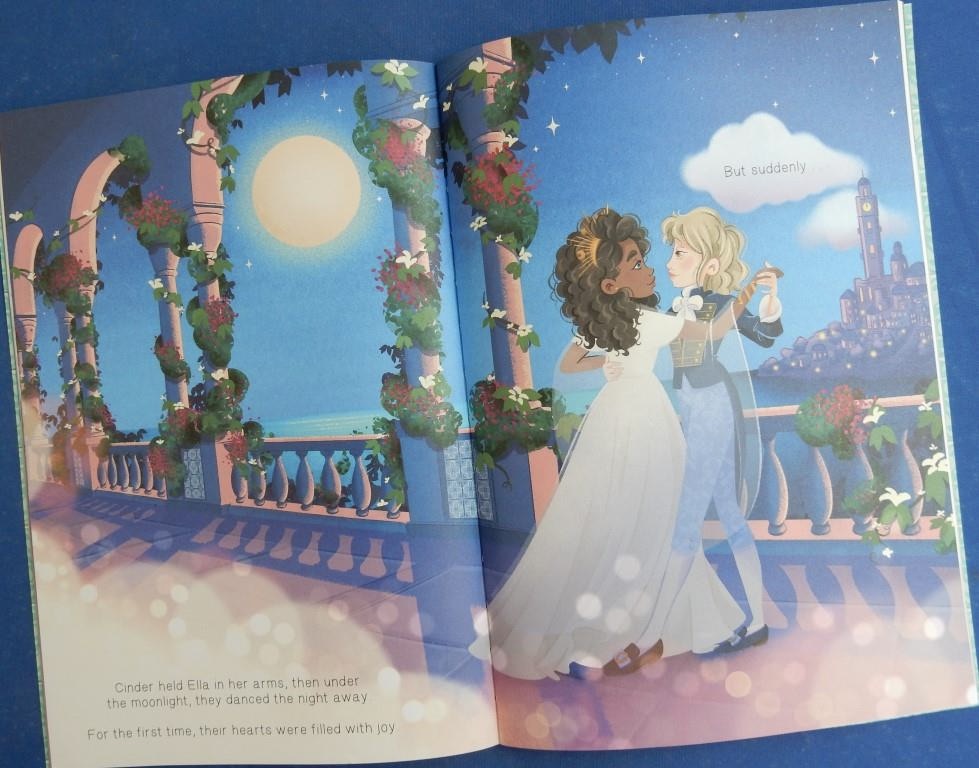
until that fateful midnight chiming begins and off dashes Cinder. Can the two overcome the odds and get their happy ever after? Let’s say that in this instance, thanks to hope, a special horse

and determination, love’s power prevails.
Just right for celebrating Pride Month, this is an enchanting reworking of a favourite fairy tale.

The Selfish Giant
Oscar Wilde, illustrated by Rita Voutila
Allen And Unwin
Richly coloured, finely detailed oil paintings grace every spread of this classic Oscar Wilde story of the self centred giant who returns from a seven year absence spent staying with his Cornish ogre friend to discover children playing in his garden. Children he immediately bans by erecting a high wall and putting up a ‘trespassers will be prosecuted’ sign. The only visitors that enjoy the garden for a whole year are the winter elements, Snow, Frost, the North Wind and Hail;
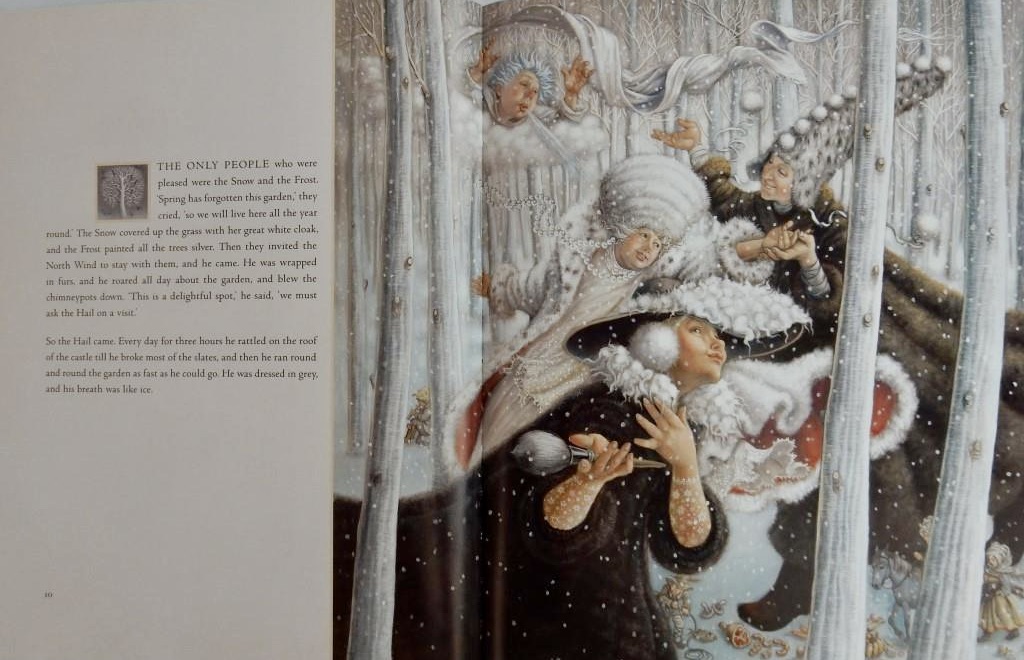
the children are forced to play outside in the road.
As many adult readers will already be aware though, those children eventually creep back in, the giant sees the error of his ways and even helps a small boy trying to climb a tree. The remainder of the tale, which takes place over years, is told in the text of the book.
With lots of Christian symbolism for those who want to look for it, the story is a powerful lesson in selfishness and its consequences; Rita Voutila’s Northern Renaissance style art has a power of its own.













 Red Reading Hub - Jillrbennett's Reviews of Children's Books