Murder At Christmas

Having been at boarding school in England while her mother (a diplomat), father and younger brother, Billy, have been living in Australia, Grace is excited to be spending Christmas in Bath, staying in her Aunt Mollie’s hotel with Mum and Billy. (Aunt Mollie is mum’s twin sister.)

Mum goes to visit their Gran who lives nearby in a residential care home but after several hours she hasn’t returned so Grace and Billy start worrying and their aunt isn’t around either so the siblings are left on their own. To add to their worries, a body is found on the hotel stairs: something is definitely wrong.
On the positive side, Grace and Billy make two new friends, Olive and Doug; but with each passing day, Grace suspects something terrible has happened to their mum, especially as Aunt Mollie is acting strangely.

Determined to find their mum as well as solving the murder before Christmas, the siblings, working with new friends,Doug and Olive, start searching for clues.

Eventually they discover where their mum is but getting her free safe and sound, plus finding out the truth behind her disappearance is a real challenge.

Superbly plotted with lots of twists and turns, several red herrings, suspense and two young protagonists who really prove themselves, this is a compelling seasonal adventure at the heart of which is family and its importance.

Snuggle up and read this as you drink a cup of hot chocolate in the run up to Christmas.


Ice Dancer

Dina and her younger brothers have bid a temporary farewell to the hills of Wales to stay with their Aunt JJ in Sheffield. However, they receive what Dina finds a very cool welcome by JJ who seems nothing like she’d remembered. Already struggling to cope with losing her older sister, Sasha, as well as her parents splitting up, Dina is feeling very edgy and isolated.

Soon after arriving at their aunt’s, Dina spies an old pair of ice skates that she recognises as belonging to her Great-Gran Kendra. After some harsh words between her and JJ, Dina feels the need to skate. She takes the skates and heads to the local rink. Skating gives her a sense of freedom and she feels passionate about it; however she has difficulty when it comes to mixing with other people, especially strangers, so Dina feels torn in this new situation but skate she must and soon her inside knots begin to loosen. She does though, pick up on the hostility among the other skaters but one girl, Rosie, a talented skater befriends her.

Rosie is not happy with the partner she has for the upcoming Winter Wonderland Showcase. Could Dina perhaps take his place? She’d dearly love to but that would mean staying with JJ another three weeks and attending a local school. Another skate with Rosie confirms that it would be worth it and despite coach Helena’s antagonism based on something from her mum’s past, Dina knows she must dig deep and find the courage to follow her dreams.

With things from her family’s past starting to emerge and true feelings not being discussed, family members must start to listen properly to one another; that will enable them to emerge stronger than before. Indeed family is central to the whole story, that and the power of friendship, not forgetting the satisfaction, Dina’s pursuit of skating brings.

The way the author captures Dina’s passion is superb, bringing out the joy of creativity and her willingness, (along with Rosie) to challenge skating’s long-held rules concerning appropriate roles for male and female skaters.

A terrific story for older readers – thought-provoking and full of adventure and mystery. You’ll find it had to put it down till you reach the final page.

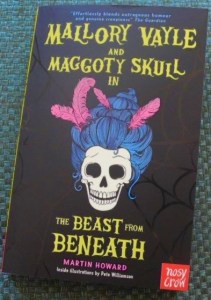
Mallory Vayle and Maggoty Skull in The Beast from Beneath

This story is the sequel to Mallory Vayle and the Curse of Maggoty Skull. Mallory is now becoming accustomed to her recently discovered powers as a necromancer and this 2nd book is full of dark humour.

It begins with Mallory and Maggoty out together; Maggoty walks past the Les Wigs shop, the result being that Maggoty, who has a particular penchant for wigs, demands that she finds the money to purchase Eleganza, the hairpiece with ostrich feathers on display in the window. The problem is it’s way too expensive and he doesn’t want to take her ‘no’ for a answer.

Aunt Lilith (the fake medium) with whom Mallory now lives, suggests that they hold a Grand Séance and charge those attending to receive messages from the spirit world. Said aunt decides to try and boost her invented psychic powers beforehand and things go disastrously wrong. By accident, she summons an evil Nightmare that refuses to leave Carrion Castle; in addition it intends to terrorise humanity in its entirety. It’s going to take a lot of effort on Mallory’s part to sort that out.

With Pete Williamson’s dark creepy illustrations, this is a very funny book overflowing with gothic gruesomeness that older readers will relish.

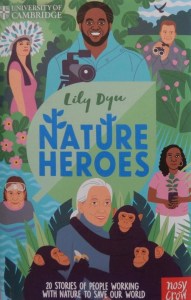
Nature Heroes

The author’s follow-up to Earth Heroes, published in collaboration with the University of Cambridge, is an inspiring collection of twenty short stories that celebrate pioneers who are working with nature to save the world.

‘Biodiversity – the rich variety of living things on earth – is being eaten away by habitat destruction, climate change and pollution. ‘ So says Lily Dyson in her introduction wherein she issues a challenge ‘Together we can rewild the world.’ But is this an impossible task?

Not so think lots of individuals, men and women, from all over the world who have dared to stand up for nature; their amazing efforts related herein show that change definitely is possible. A photograph/illustration and an inspiring quote introduce each of them.

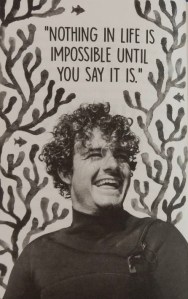
Heroes new to me include Titouan Bernicot

who at sixteen years old, when out with his brother, was so horrified by the ghostly whiteness of the coral in his favourite surf spot in the Pacific Ocean near the island of Mo’orea in French Polynesia that he was unable to ignore what was happening. Having been introduced by his father to a marine biologist who had started coral gardening, Titouan offered to help, eventually launching ‘Coral Gardeners’ an organisation he hoped would save their island’s reefs. Today they have seven coral nurseries across French Polynesia and their team of fifty, many of whom are his childhood friends, have planted tens of thousands of corals.

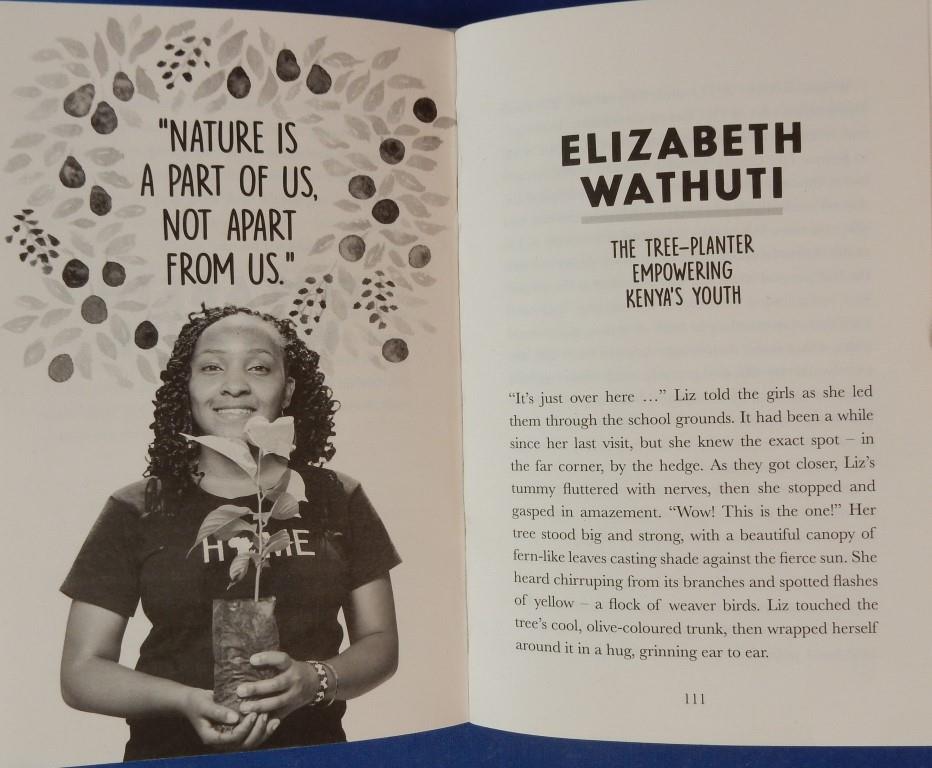
It was great to learn of Elizabeth Wathuti. Liz, as she prefers, was shocked to see that after several years, the trees she and her seven year old classmates had planted had been cut down.

Her mum told her that sections of the forest were felled for timber and new tea plantations. Devastated, she had to do something and ended up with an award, the money from which she founded the Green Generation Initiative aiming to give every child in Kenya the opportunity to plant and care for a tree.This and much more resulted in her appointment as a United Nations Water Commissioner.

These are just two examples of ways in which when we stand together, we can start changing the world. What can you do?

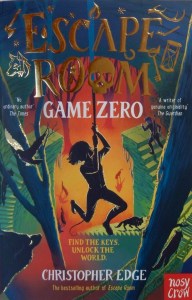
Escape Room: Game Zero

Absolutely overflowing with thought provoking ideas, this seems to be more complex than the author’s previous Escape Room books. It begins with Eden who has received an invitation through an online gaming forum from someone with the username AMI, setting off excitedly to play a new game, The Escape. Making her way to where she thinks the creating tech company is situated, and followed by her cat, she’s suddenly distracted by a bird entangled in a football net. Having freed the bird and watched it join others flying in a murmuration, things become weird as she’s swept upwards and transported to what she realises is the game landscape and that she’s now entered the game. Looking around there’s no sign of cat, Molly, but she sees almost immediately, a boy, Ted.

It transpires that he’s the son of the CEO of Escape Systems and is playing the game through a virtual headset from the safety of his own home and therefore doesn’t fear facing a wolf or falling off a cliff. Moreover, he refuses to believe that Eden is anything other than an element of the games, (an NPC) rather than a participant.

To get through the game it’s necessary to solve three tricky clues and find three keys. Despite finding it progressively hard to remember anything that went before the game, it’s down to Eden’s determination, competence in puzzle solving and ability to reman calm that they are able to work in tandem through the levels of the game even when things go wrong.

And go wrong they certainly do leaving Eden to complete the game. But will she remain trapped forever or will she be able to return to reality?

A terrific, thrilling read,

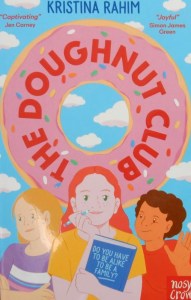
The Doughnut Club

There are a fair few children’s stories about blended families these days but this is the first I’ve read about donor parents.

Ollie and Quinn have always known that they were born to their mums by sperm donation and are both comfortable with this fact.

As the book opens the family is travelling to their annual holiday destination, a hotel at the seaside and the children learn from Mum and Mama as they call their parents, about a website giving more information about their sperm donor and that they have additional siblings, something neither has thought about before. Ollie doesn’t seem especially interested whereas Quinn, who is twelve and has always felt a bit different from the rest of her action-loving family, is eager to find out more. Maybe she can find a sibling who likes to take things more slowly and enjoys arty pursuits, as she does.

Mama in particular is adamant that Quinn is too young to make contact but she quickly becomes obsessed: perhaps there will be another red head with green eyes. She’s aware that tracking them down in secret involves doing things that are wrong, taking and using Mum’s bank card to pay for website access for instance, but she’s completely driven and unable to stop herself sneaking opportunities to do more research on the website without her mums knowing. Also staying in the same holiday hotel complex is Quinn’s arch enemy, Monika who starts getting rather too close to Ollie. When Quinn hears that she too had a donor, she begins to worry that Monika might turn out to be one of her donor siblings.

Before long Quinn’s focus is not on the family she loves so much and consequently she’s late to meet Olly, who ends up getting hurt. It’s pretty clear she’s out of her depth and needs to put things right with her mums but is she brave enough to talk with them before it’s too late?
Inclusive, humorous and tender, this thought provoking book will be enjoyed by children from year 4 up and should, I think, be in every primary school collection.

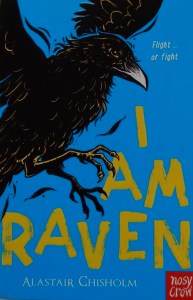
I Am Raven

You really need to have read I Am Wolf before embarking on this sequel. Herein the main protagonist is Brann, once a member of the Raven crew but with the destruction of her construct by Dragon, she is now searching for any members of her tribe that may have survived and for answers. Desperately determined, she and members of the atypical Cub crew are intending to head northwards both to look for clues as to what happened to Raven and to find the source of the strange signal, Rieka one of the crew has been tracking. However there are more besides Reika, Brann and others aboard looking for answers and it’s not long before Cub’s crew find they’re on a mission that is of importance to other Constructs as well as themselves.
From a tiny Construct steps a stranger informing them that Brann (or Leondra) as the woman calls her) is ordered by the High Constructs to attend an interview.

Following this meeting during which they learn more about the realm wherein they all live, Cub is invited to travel with the enormous Bear and they continue moving until they reach Puma territory and there they come upon Dragon: dead. At least it looks to be Dragon but Brann insists it isn’t. The closer they get to where they believe the information they seek can be found, they will find that truths much darker than they envisioned hidden there. Brann, a very complex character not supposed to feel fear, is convinced that Raven’s fate is due to her actions and this makes her committed to track down this construct and atone for what she did.

With its themes of loyalty and friendship, readers are quickly drawn into the terrifying world of Cub and crew. I read late into the night to finish this brilliant book. It ends on an enormous cliff-hanger leaving us desperate to know what happens next.

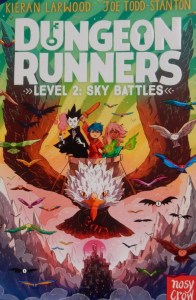
Dungeon Runners: Sky Battles

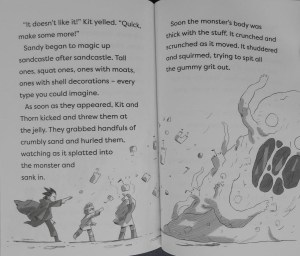
This is the powerful sequel to Hero Trial featuring team Triple Trouble: Kit, (not the most optimistic character), Sandy – the mage and more upbeat, and Thorn the vegan vampire healer. In this story they’re off to Cloudroost, a city in the clouds to participate in a competition as real Dungeon Runners.
Shortly after arriving at their destination, they’re surprised to find someone offering them sponsorship. Her name is Gilda Grubfoot and she’s the owner of a product called Troll Bogeys. (It actually makes excellent glue.) As well as the possibility of any amount this (yuck), she gives them an old steel shield on which has been sprayed the name of her product. Surprisingly Kit is quite pleased to receive this despite the words thereon.

During the introductions by commentators Jenna the Giant and Dirk the Ork, team Triple Trouble are made to feel objects of derision, but thanks to words of support from the captain of one of the other teams Kit feels slightly more positive. Then it’s time to head to the actual dungeon deep inside the mountain.

What will be their fate, a downfall thanks to ghastly threats and cheating by other teams, or, with a little help from kindly gobrots and a touch of magic from a staff courtesy of Grandpa Klot, can Triple Trouble prove they’re worthy of a place at the next level? They’ll definitely need to keep their wits about them all the time.

There’s a gripping storyline with excitement aplenty, characters familiar and new, humour and Joe Todd-Stanton’s terrific illustrations that are full of atmosphere, sprinkled with humour too, all of which make this a book that older KS1 / younger KS2 readers will love.

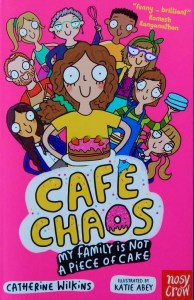
Cafe Chaos

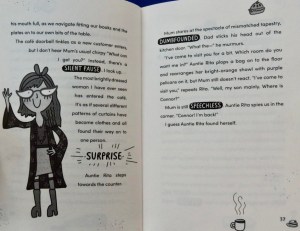
On Hope’s first day at secondary school, she and her best friend Leila are shocked to find that Skyla, the bully from primary school has not moved abroad as she’d told everyone but is also there. As if Hope doesn’t already have a great deal to contend with: her family’s cafe, Cafe Crumble, needs to start making a profit and then her Auntie Rita turns up, announcing that she’s come to visit for a while.

Moreover, she’s to share Hope’s bedroom. Rita’s son Connor is already living with them and thinks he knows all there is to know about running a business. Then there’s her elder sister who is only interested in acting. Hope’s life is descending into chaos and nobody at home, especially her mum, has time to listen to her.

Thank goodness for Leila who is ready and willing to help her deal with bullying Skyla and her cronies. As for the cafe, could it be possible that dressing up as a giant ice-cream can help make sufficient money to pay off the bank loan and finally become solvent. That and Grandma Margery’s skills in baking pastries perhaps.

A heart-warming story engagingly written, delivered with a large slice of humour thanks in no small part to Kate Abey’s sprinklings of amusing drawings. With a cast that includes several quirky characters, this book will definitely tickle the taste buds of readers around Hope’s age, especially those who have a penchant for cake.

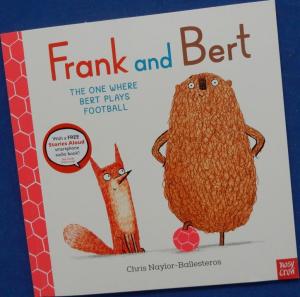
Frank and Burt: The One Where Bert Plays Football

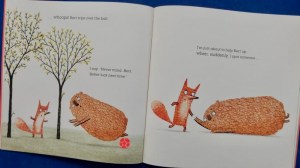
In this 4th tale telling of the ups and downs of the friendship between Frank (fox, who narrates) and Bert (bear) we’re treated to a soccer saga set in the park. Both characters are lovers of the game and Frank has taken it upon himself to teach his pal how to play – sometimes with disastrous results.such as the cake squishing and prickly spikes episode. However, today Bert has a new football and is anticipating scoring lots of goals. He starts with a complete miss, not only of the goal but the ball itself and lands flat on his belly.

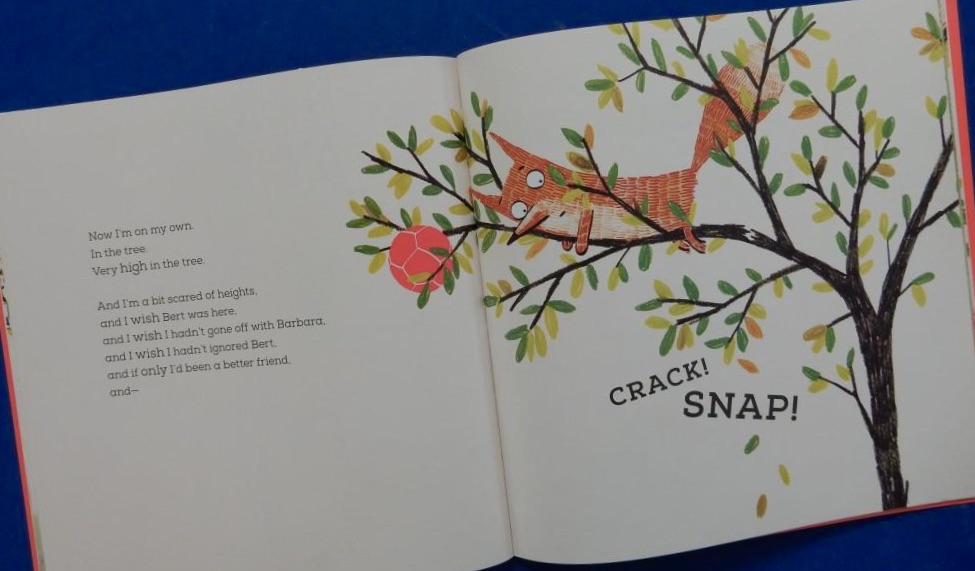
Then just before going to assist Bert, Frank spies ace soccer player, Barbara, and the two of them have a kick about. Barbara’s showing off sends Bert’s ball high up into a tree but does she stay and assist in its recovery. No she doesn’t; that’s left to Frank. He however, having scrambled up to within a paw’s distance, gets an attack of vertigo

and also does some some quick self reflection.

Suddenly the branch bearing Frank snaps pitching him earthward, but he’s fortunate in having a best friend ready and willing to come to his rescue by providing a soft landing surface to cushion the blow. Trust Bert to save the day.

Chris’s superb colour pencil scenes exude energy, humour and pathos, perfectly capturing the changing emotions of his larger than life characters. With vital messages about friendship and decision making, this is another gem of a story featuring the utterly endearing friends.

My Path

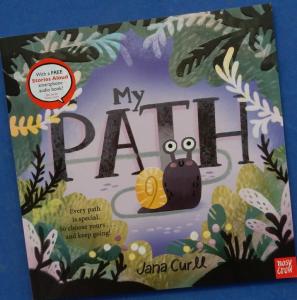
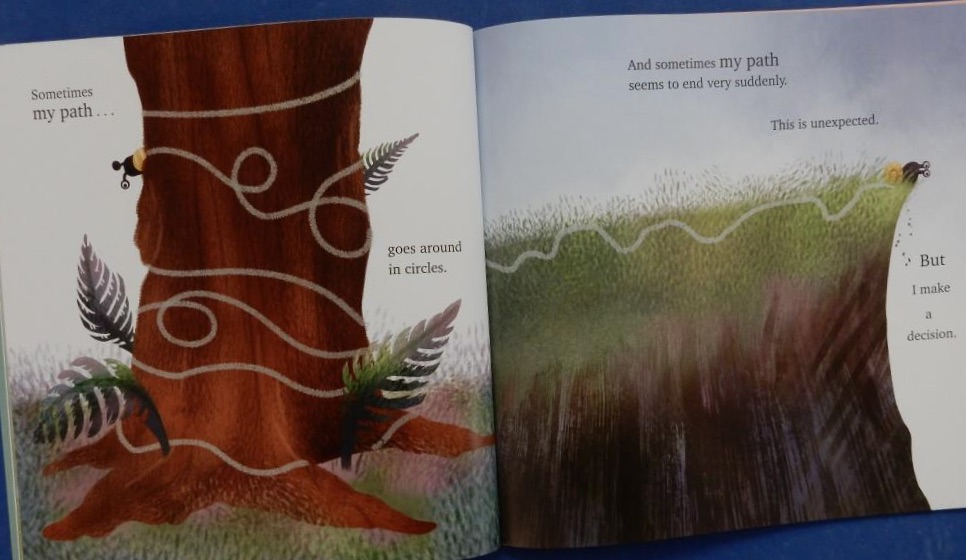
We join a little snail as it follows its path (leaving a slivery trail across the pages,) from sunrise right through to nightfall. Sometimes the little mollusc is alone, sometimes with the company of others and there are obstacles to negotiate, sometimes by going over, sometimes around or even round and round.

The journey may be smooth or rough and when it comes to a very sudden, unexpected end, if it feels like the right path, it’s the way to go. If met by another that challenges a decision, after due consideration, the snail’s decision belongs to the snail, not the challenger. However, when faced with enormous challenges, it’s okay to ask for help. Even with determination and conviction there may be what feel like dead ends but what’s important is to keep going.

Important life lessons are embedded in this story told as a recitation along with expressive illustrations that show so well the snail’s changing emotions as it responds to the variety of experiences encountered on its journey.

This is a book offering much to think about and discuss in a class circle time session with KS1 children, not least that every person’s path is special, a unique learning journey.

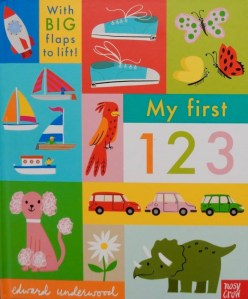
My First 1 2 3 / Upside Down Opposites / Love

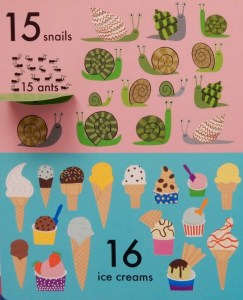
This is a new addition to the excellent My First series illustrated by Edward Underwood. With flaps to lift – one per page – toddlers will engage in the basic counting element and enjoy guessing what is hiding under each flap, quickly working out that the number of hidden items each time is the same as the visible item depicted and clearly labelled.. For instance beneath one of the 3 flowers, are 3 bees, and beneath one of the 18 birds are 18 worms.

A thoroughly engaging way of developing basic numeracy skills – number recognition and one to one correspondence.

The large format of this sturdy book make it ideal for sharing with a toddler and in addition to the mathematical aspects, there’s a wealth of potential for language development. Each of the images depicted on every single one of the coloured background panels is richly patterned and also provides talking/ storying opportunities aplenty.
Definitely one to add to family bookshelves and preschool collections.

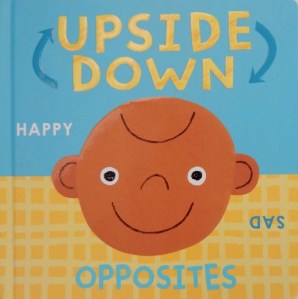
This is a rhyming and visual demonstration of eight pairs of opposites for an adult and young child to share. Each spread uses a different object – a bird in flight, a hand-held ball, a face, a snail, a drinking glass, a squirrel, a hand and a dolphin. The adult reads the sentence on the first verso, the book is then rotated and with the change of perspective, its opposite is seen on the recto and its respective sentence is then read.
Its clever construction means that the book can be read from either end.

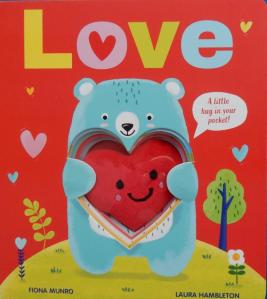
Herein we meet a group of ursine characters and their animal friends as one little bear finds out how the love of family members endures, even when they are separated by long distances and you cannot see your loved ones. Should you feel tired, angry or sad you can take hold of the heart in the centre of the die-cut and cuddle it close to you: that should help you feel that love flowing right to you.
A reassuring narrative by Fiona Munro and sweet, but not sickly illustrations by Laura Hambleton, remind us all, especially small children, that love is inside us and all around.

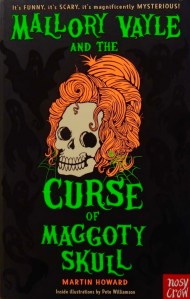
Mallory Vayle and the Curse of Maggoty Skull

After the death of her parents in a strange accident Mallory Vayle has moved in with her Aunt Lilith who lives in the ruined Carrion Castle and by masquerading as a psychic manages to scrape together just enough to get by.. Hitherto Mallory has kept her own psychic talents under wraps, preferring to read pony stories than think about dead people. Making matters worse, her aunt’s house is haunted by the evil spirit of an old hag, Hellysh Spatzl; said spirit snatches Mallory’s parents and threatens to bestow on them endless torture if Mallory doesn’t use her talents to bring the hag back to life.

Enter Maggoty, a haunted skull with a penchant for wigs of the dashing sort who blithely reveals that Mallory is not only a psychic but a necromancer. Moreover the skull is, to Mallory’s despair, the only being able to teach her how to make use of her necromancer’s skills. This is only on condition Mallory gets him the wonderful wig he so desires and promises to break the curse he’s under.
As Mallory embraces her powers, she’s troubled by the possibility of doing harm

but she and her aunt plan a Halloween spectacular. Can she defeat Hellysh and save her parents?

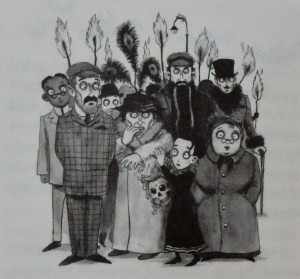
This atmospheric and chilling tale is infused with humour thanks in no small part, to Maggoty’s frequent use of such words as ‘Mallsy-Ballsy-Boooo-di-Buttcrack’, ‘bumcrack’ and ‘Wee-Wee Pants’. Enormously exciting it’s way too much fun to be read only around Halloween Readers will be eagerly awaiting further spine-tingling adventures of Mallory and Maggoty – such terrific characters these wonderfully portrayed in Pete Williamson’s stylish illustrations.

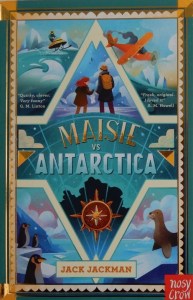
Maisie vs Antarctica

When eleven-year-old Maisie Macleod talks herself onto her eccentric self-help book writing father’s research trip to Antarctica, she has absolutely no idea of the amazing adventure that is to unfold. Dad’s next book, How to Survive in Antarctica, sounds absorbing but Maisie, who narrates this story doesn’t envisage needing to test the survival part. Almost immediately though after she and her dad have taken off in a tiny, old, propellor plane piloted by Spanish-speaking, Guillermo, he’s slumped over the controls and her Dad (who has never piloted a plane despite having written a book on aspects of the topic) is frantically pressing controls as the aircraft plunges to certain disaster and the death of those aboard.

What happens next though is that Maisie finds herself alive on the ice, her Dad seems fine but Guillermo is wounded. Before long, the girl starts wondering if there is something seriously weird about her dad. There are unanswered questions aplenty too: how, without any flying experience could he crash land that plane on the ice? Moreover how’s it possible to send a mayday message on a non-existent radio? How could Dad build an igloo in under half an hour? Most pressing though is, if nobody knows they are there, how can they be rescued? All these keep readers gripped, eagerly turning the pages as Maisie endeavours to uncover her Dad’s secret.

Packed with action and jeopardy, there’s lots of humour, a wonderful bond between Maisie and her dad, a secret emerges (two actually) and the author has drawn on his own time working in Antarctica to include plenty of authentic detail. A cracker of a book.

Where next for Maisie and Dad? I can’t wait …

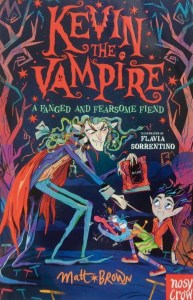
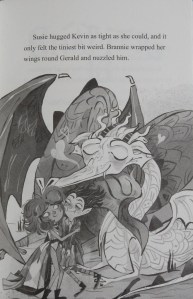
Kevin the Vampire: A Fanged and Fearsome Fiend

As the story opens Kevin receives a notice concerning his Gloaming,. This is an ancient test that eleven year olds have to pass to demonstrate they have the skills required to be a vampire. There are three skills, the first being Transformation when Kevin must turn into a bat. The second is Mind-Speaking which requires speaking in someone else’s mind and third is a Melt. (into the darkness). The first two shouldn’t prove any trouble for Kevin, however the third is something he isn’t able to do. But if he doesn’t pass all three he will be cast out forever. Kevin needs help and support but the one who could provide these cannot attend the event as it’s only for vampires, no matter she is regarded as part of Kevin’s family; to do so would be a violation of vampire rule number ninety three. What about a werewolf vampire though?

Before the tests begin Kevin’s Dad presents him with a special good luck surprise – the Aurelius Hat of Good Fortune and it certainly works for the Transformation though not all participants are quite so successful.

After this part Kevin and his vampire werewolf buddy take a walk and there follows an unexpected encounter first with dragons and then the Creature Keeper who is impressed with Kevin’s skills.

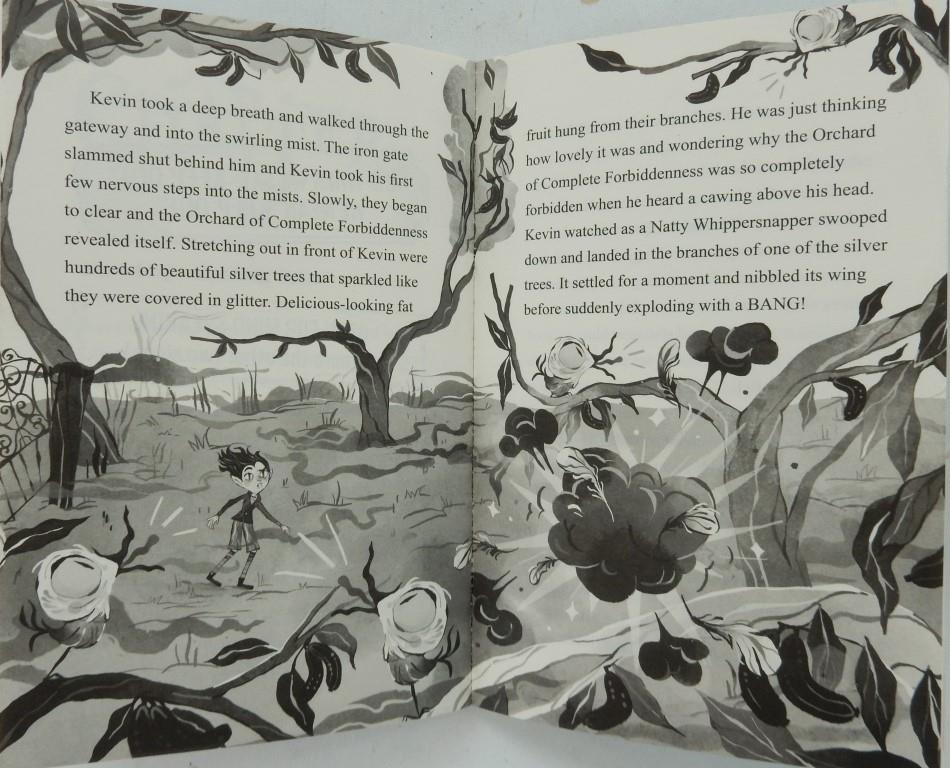
The MInd-Speaking set in the Orchard of Complete Forbiddenness

proves problematic for Kevin and he almost fails but due to unforeseen circumstances, eventually manages to succeed. That only leaves the next day’s Melt: can Kevin complete it in the allocated time? If not then what …

A terrific adventure with a satisfying finale, a cast of characters that includes some pretty nasty beings and Flavia Sorrentino’s weird and wacky illustrations: younger readers will be eager to get their fangs into this one for sure.

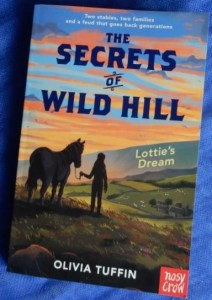
The Horse Who Danced

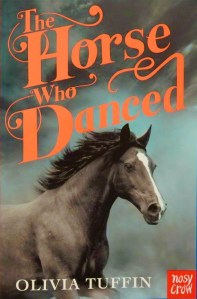
Iona lives with her mum and stepdad on the Kestrel estate. Iona helps her mum run the pony trekking centre and despite money being tight their life is a happy one. However, when the owner of the estate dies, Iona’s family are pressurised to sell their cottage and stables to the new owners – stables that have long been in her family’s care and which Iona’s mum has no wish to sell.

Horse loving Iona has a connection with her dressage horse, Jinks, and longs for stardom but money has always prevented her from participating in the big competitions. But then local dressage star, Jessica Jefferies, asks that her own injured horse be kept at her mum’s livery while he recovers and goes on to offer to train Iona. What more could she want? However, as she becomes part of a new, much more exciting world, Iona starts feeling resentful of her family’s struggles but not everything is as it appears in this new friendship. We also meet Oscar, a good friend to Iona and another rider, April, from a well-to-do family, Iona’s rival at events whom it’s clear Iona doesn’t get along with.

All the while pressure is being increased on Iona’s mum to sell the stables and as Iona’s successes mount some unexpected and upsetting incidents take place.:Are these all connected? Iona and Oscar are determined to discover who is behind the troubles that upset the girl’s very security.
The story draws to a life-threatening climax, followed by a confession and we leave Iona feeling differently about her own family set-up and about April. Finally both Iona and Jess are full of hope about the future.

With themes of friendship, family loyalty, fame and betrayal, a fascinating cast of characters and a powerful narrative, Olivia Tuffin’s latest book will be enjoyed by older KS2 readers, horse mad or not.

Be Normal! / How To Bath A Giraffe

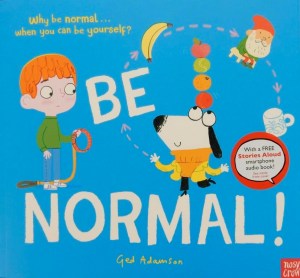
Theo, the story’s narrator, is hugely excited at the prospect of the arrival of a dog of his own and has prepared well. However one thing he hasn’t prepared for is a dog like Geoff Thorndike; he’s a dog like no other. Geoff arrives clad in trousers and jacket and pulling a wheelie case, turns down the offer of water and makes smoothies – delicious ones at that. Come bedtime he turns his nose up at the special doggy bed and usurps Theo’s bed instead. Time passes and it’s evident to Theo that Geoff is anything but keen on the normal doggy things though he does accept a walk in the park

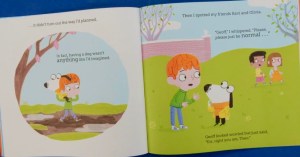
His response to ‘sit’ is well let’s say, something of a surprise.
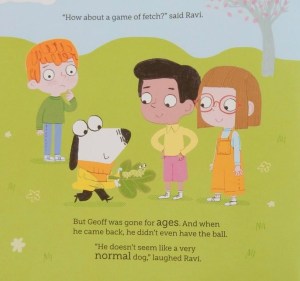
Then Theo’s pal Ravi suggests a game of fetch; this Geoff participates in – kind of –

and after the squirrel incident Theo has had enough. Embarrassed, he tells his friends that his pooch just doesn’t do many normal doggy things but he’s kind and funny and that’s perfectly fine with him. ‘I’m lucky to have you,” he tells Geoff. Having now come to appreciate his dog,Theo accompanied by his friends go home and have smoothies – you can guess who makes those and then Geoff offers to perform his one silly trick …

It’s great to have a story for young children wherein being different is valued. It’s a vital life lesson and Ged Adamson’s fun book conveys this message brilliantly.

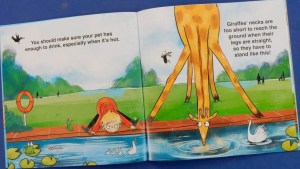
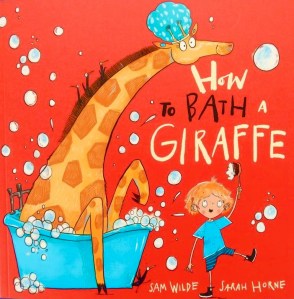
The latest in team Wilde and Horne’s How To series features another pet of the peculiar kind – a giraffe. This one appears in response to the poster displayed in the neighbourhood and astounds the boy narrator’s family with its stature. Clearly there are likely to be issues when caring for such a creature – drinking might be one;

but the most challenging of all is giving the giraffe a bath. The whole story is pretty ridiculous but it’s lots of fun, gently informative and it’s also inclusive (the child narrator has a hearing aid).

Sarah Horne’s illustrations are a hoot and Sam Wilde’s narrative includes lots of interesting facts about giraffes as well as a ‘Top giraffe facts’ final spread. Astonishingly, giraffes and humans have the same number of neck bones (seven).

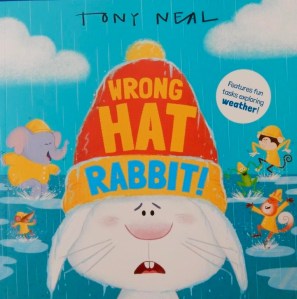
When a Dragon Isn’t Well / Wrong Hat Rabbit!

These are both additions to popular series for very young children:

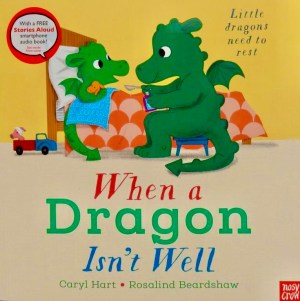
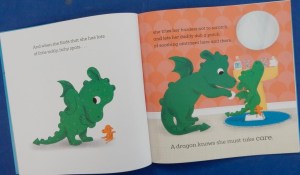
When Little Dragon is poorly and aching all over, she doesn’t stamp and stomp or cry so loudly she wakes the baby. No of course not. Rather she gently calls Daddy dragon who manages to get her off to sleep. Come the morning though, she’s covered all over with itchy spots and instead of scratching frantically, she allows Daddy dragon to apply some soothing ointment.

She accepts being told she cannot go and join her friends who call inviting her to play. She also accepts that she needs to stay indoors and do some more restful activities like drawing and sharing a book with Mummy dragon. Indeed Little Dragon complies with whatever her parents want her to do, – eating lunch, snoozing and enjoying some imaginative play of the gentle kind. Of course, once she’s recovered from her spotty sickness it’s a different matter and Little Dragon resumes her lively activities with gusto: what about her tiny sibling though? …
A delightful addition to team Hart and Beardshaw’s When a Dragon series that young humans will relate to and enjoy whether or not they have had lots of itchy spots that make them feel poorly like Little Dragon.

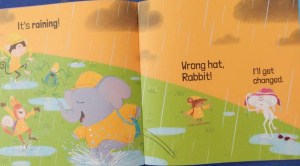
Rabbit wants to spend a day playing at the park with his friends so he dresses in what he hopes is the right gear. However, the weather proves to be very changeable and so no matter how many changes he makes to his attire, he seems to be wearing the wrong outfit. After in turn, being too hot, getting a soaking

and feeling too chilly, his pals decide to step in and help until all appears to be well; but then they start having a snowball fight …
An entertaining, simple introduction to some of the vocabulary associated with weather for very young children. The final spread offers activities for a child and adult to do together.
Altogether an enjoyable way to support learning at home or perhaps in an early years setting.

The Little Worried Caterpillar / Dig Dig Dinosaur

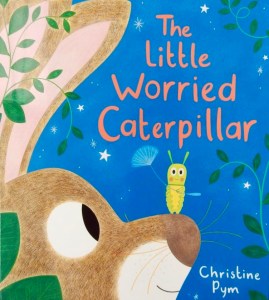
Little Green is on the brink of change. However she’s not aware of this when she wakes early one morning ready to play with her caterpillar pals, but she can’t find them anywhere on the ground. Then a call tells her that they have morphed into butterflies and are way up above her. “You’ll be next, there’s no doubt!” they tell her. However rather than sprouting wings, she sprouts fear, a fear of change that brings with it worries about the unknown. Her friends reassure Little Green that change is what they were born to do and it’s exciting but this makes her feel even worse.

Along comes bee with what is meant to be some helpful advice; she gets momentary relief but that’s all.

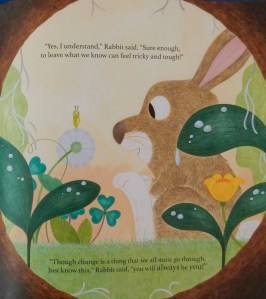
Other creatures also offer suggestions but nothing works until Rabbit appears on the scene. Rabbit listens and what her new friend tells Little Green enables her to feel ready to embrace and prepare for that transformational change

and become … Butterfly Green.

Some young children take change in their stride, others needs considerable support from empathetic friends and understanding adults. A book such as this one is particularly valuable for sharing with the second kind. Christine Pym’s illustrations capture so well Little Green’s fearfulness and eventual delight.

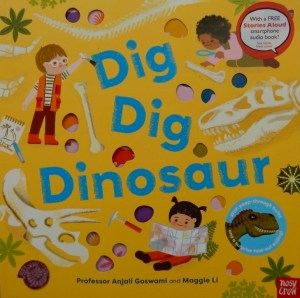
Three intrepid little explorers with their kit at the ready are on an expedition in the hope of finding something, something ‘REALLY big’. Dig! Dig! Dig! they go till one person discovers some remains of a sharp clawed dinosaur. These claws make the finder conclude that they belonged to a Velociraptor.

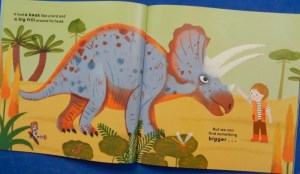
A second child’s Dig! Dig! Dig! digging unearths three large horns: young readers can perhaps guess from which dinosaur these came..

Still intent on finding something even bigger, they continue hunting till the third explorer tells of a dinosaur with a very long tail. and a tiny head supported by an extra long neck.

Little ones can have fun guessing what this might be before the big reveal fold out … They will also enjoy the peep hole pages showing the skeletal remains the young explorers find during the dig.

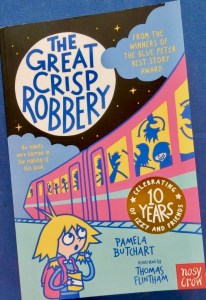
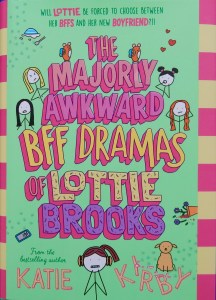
The Great Crisp Robbery / The Majorly Awkward BFF Dramas of Lottie Brooks

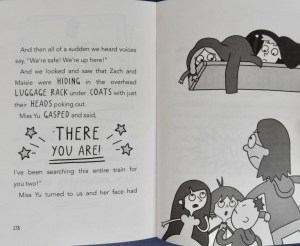
The latest story narrated by Izzy unfolds on a night train from Aberdeen to London. None of the young travellers has been on a sleeper train before and the realisation that it means bunk beds adds to the excitement. A BIG ADVENTURE indeed: Gary Petrie even has his silky dressing gown and judging from the enormity of her suitcase it would appear that Maisie thinks she’s going to be away for ages. Why though has Miss Yu and not Miss Jones been designated ‘teacher in charge’ when the children have only known her for a few days? Surprising to Izzy is that Jodi suddenly appears on the train having escaped early from the wedding she’s been at and she’s still wearing a floaty pink bridesmaid dress.

As the journey is about to get under way Izzy looks out the window and gasps in horror: on the platform stands a hooded figure watching them: surely it has to be a train robber. Those familiar with Pamela Butchart’s child characters know that it doesn’t take much for imaginations to run wild and their misunderstandings to become suspicions that lead to them being way off beam as they become certainties. Here we have a group of hysterical youngsters on account of Gary’s sixteen missing packets of crisps, albeit Tesco Finest varieties, not to mention all the spending money.

How on earth – make that on railway lines – is this all going to end? Actually it doesn’t exactly do so for puffing and panting and puzzling over what Miss Yu will say in her ‘quick chat’ readers leave the train about an hour from its destination.

Primary readers will devour this faster than Gary’s crisps and the sandwiches from the refreshments trolley and then want more. With its multitude of twists and turns, this adult reviewer was left decidedly dizzy especially at the impending BIG TROUBLE facing Izzy and her pals.

Presented in diary form as usual, with plenty of Lottie’s amusing doodles, this one relates the events from New Year’s Day to the day after Valentine’s day.

January 1st sees Lottie in high spirits about her new boyfriend, Daniel, but as readers might expect, Amber is jealous and makes plenty of mean remarks about the relationship. She even starts giving out application forms at school for the role of Amber’s boyfriend, and then holds auditions.

With regard to Lottie however, she has an abundance of hugely embarrassing moments due to eyebrow alterations and style icon attempts with over-size earmuffs, just to name a couple. Then comes brother Toby’s announcement of his new year’s resolution: to get a dog and for once in her life, Lottie is in agreement with him, even going so far as to aid and abet his plan for mum persuasion. Eventually there comes a new member of the household: enter five-month old golden cockapoo, named Snookers, though that soon gets changed to Pot Noodle, thanks to a remark by Mum. Said pooch is adorable but there’s a major snag, he’s full of mischief, destructive and definitely, despite what Dad was led to believe, NOT toilet trained. How on earth is Lottie meant to cope with a new boyfriend and a new dog that insists on leaving deposits of poo all over the carpet and in other extremely annoying places.

Assuredly she has a whole lot less time to spend on other people – her gang especially, one of whom, Jess, shares the news that she might be gay.

My goodness all that and more in just a few weeks. It’s easy to see why the Lottie Brooks books have become so popular with’tweenage’ girls. I have no doubt fans of the series will eagerly devour this and readers new to Lottie will be equally enthusiastic after reading this one.

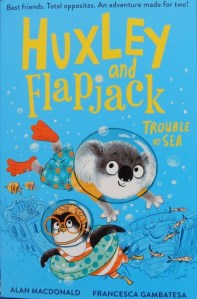
Huxley and Flapjack: Trouble At Sea / Wigglesbottom Primary: The Pirate Cat

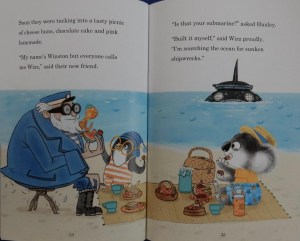
This is the second story of best friends, Huxley, an outgoing koala and Flapjack, of a somewhat nervous disposition who prefers staying at home whereas his bestie likes to seize every opportunity for a new adventure.

It’s a hot summer’s day and the two are spending the day on the beach, Flapjack hoping to be able to finish reading his book. It seems unlikely this will happen as the rescue of a wildly thrown ball (you can guess by whom) results in a meeting with underwater explorer, Winston, or Wizz for short.

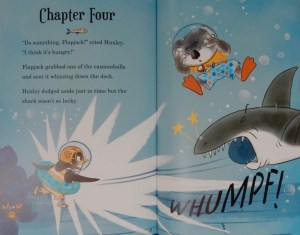
Wizz invites the two to join him aboard his submarine to search for the shipwreck of the Isabella on board which he suggests they might find some treasure. Needless to say Huxley immediately starts imagining the possibilities whereas Flapjack is rather worried, especially when his friend takes over steering the craft. This almost inevitably leads to a troublesome situation but also a discovery; make that several, not to mention a shark encounter

when the two friends try to untangle the submarine’s propellor from the seaweed. Do they find treasure though? That rather depends on what you call treasure.

Full of drama and with one of Francesca Gambatesa’s illustrations on every spread reflecting the humour of each situation, this is ideal summer reading for new solo readers.

As is:

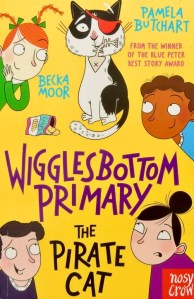
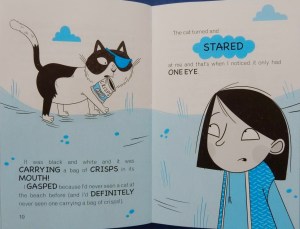
It isn’t, but it certainly ensures that the litter grabbers are put to good, if unexpected, use; moreover the moggy – Carlos – is actually a regular passenger on the bus used for the class trip.
Episode two, The Tallest Pupil in the World is so called because Miles suddenly has a growth spurt that gets rather out of control. Can this really be so or is there another reason that his trousers are way, way too short when he puts them back on after PE?
The Halloween Disco concludes the book and inevitably its announcement causes MEGA excitement but ends up with one of Class 2 in a decidedly sticky mess thanks to ‘ghost slime’ no less.

Brilliantly funny, laugh out loud silliness conjured up by an author with a wonderful imagination, abetted by an illustrator who accentuates the drama in every situation.

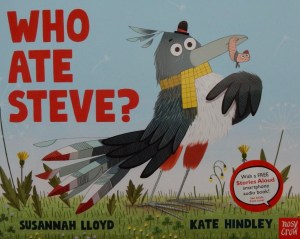
Who Ate Steve?

Here’s a deliciously tongue-in-cheek tale wherein, in best teacherly voice, the narrator embarks on a lesson about size and to that end has enlisted the services of Marcel, a corvid of some sort, as an exemplar of big and earthworm Steve, to represent small, and like Marcel, sports a hat.
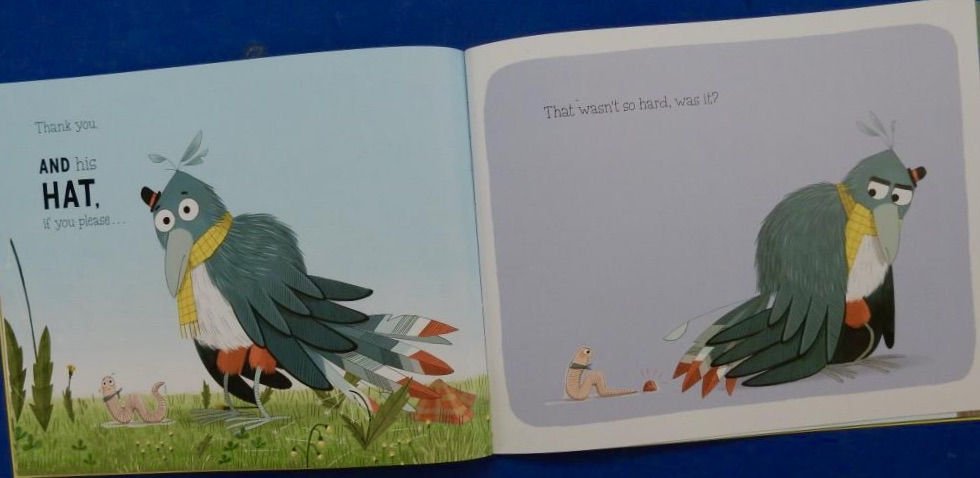
However Marcel’s undesirable behaviour soon annoys the teacher/narrator. The teacher part of myself was greatly amused by the words and different type used to show this: ‘I’m waiting, Marcel. We are ALL waiting. … Thank you. AND his HAT, if you please … That wasn’t so hard, was it?’

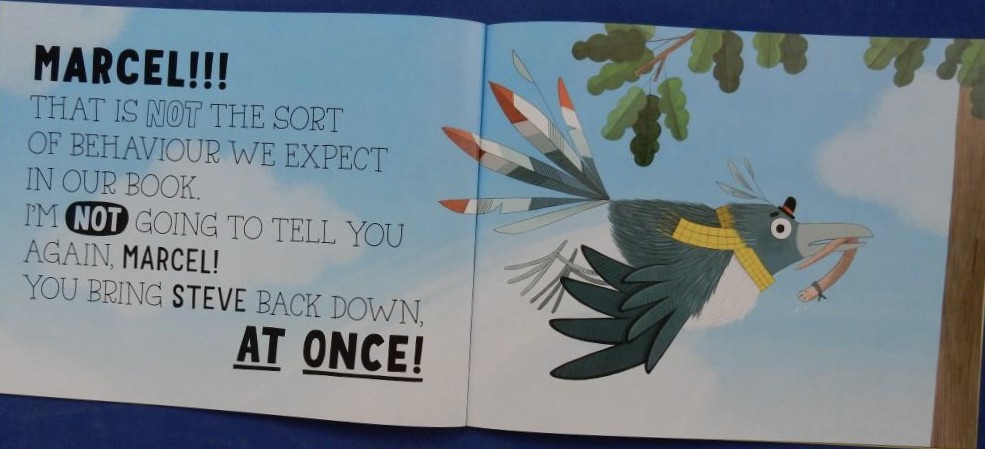
As you would expect Marcel’s natural instinct is to consume his fellow helper and his continuing efforts so to do – each of which is thwarted – increase the narrator’s frustration at being unable to deliver the lesson in its entirety as the end of the book draws nigh.

You are probably wondering if we do learn about size before the final page; the answer is in the affirmative and there’s a superbly satisfying twist on the last spread.

With the combination of that memorable voice created by Susannah Lloyd and Kate Hindley’s brilliant comical illustrations, in particular those showing Marcel’s facial expressions, this has to be the funniest picture book I’ve read for many months. Share it wherever and whenever you can.

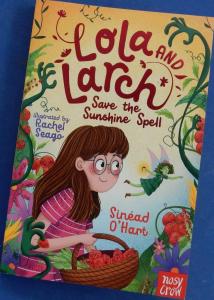
Lola and Larch Save the Sunshine Spell / Mirabelle and the Picnic Pranks

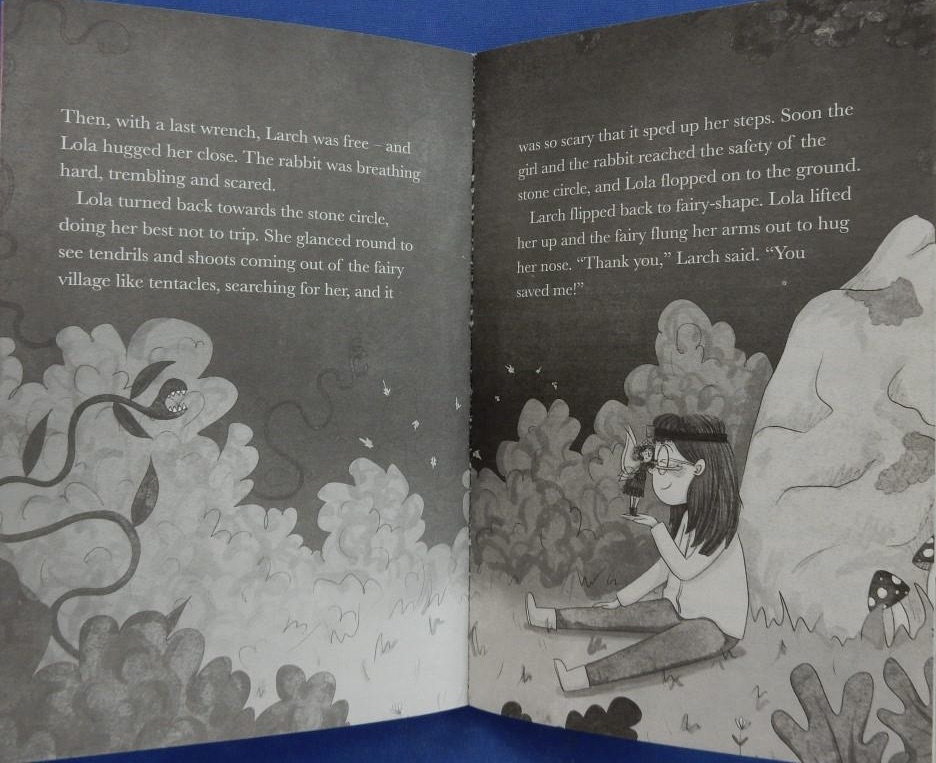
Despite her grandma’s excitement about the size her marrows have grown to overnight, Lola suspects something isn’t right and then Larch is sure she’s seen a plant from the wheelbarrow waving at her. Lola’s convinced something weird is afoot, especially when Grandma’s polytunnel smells decidedly odd, tomatoes grow so much they explode and the veggies start leaping about.

Lola and Larch decide to make a foray into the forest to investigate. Shock horror: the fairy kingdom is almost completely overgrown; Their encounter with King Ash (the fairy king) leads to a suggestion that the dastardly Euphorbia Spurge is behind what’s happened; furthermore he insists that Larch remains rather than return to the human world with Lola.
It’s a tearful Lola who sets off back to her Grandma’s but on the way a tiny fairy, Con, gives her a special leaf that will enable her to talk to Larch without being able to see her so long as Larch too is holding a similar leaf.

That night Lola is awoken by Larch’s voice coming from the special linden leaf and before you can say ‘Sunshine Spell’ she’s up and out to a forest rendezvous with Larch.

Then with Euphorbia’s purple magic swirling around them, the two friends head for her house. A difficult journey for Lola, but they must get there and retrieve the distilled sunlight that’s a vital ingredient for the all important Sunshine Spell that will break Euphorbia’s magic. Can they save the day once more?

Another mix of enchantment and friendship that will delight fans of the first story in the series, again with Rachel Seago’s black and white illustrations that bring out the humour throughout this second adventure.

Mirabelle has promised her Mum that she’ll be on her best behaviour when their new neighbours, Fredrick, Felice and their son Oswald come for a barbecue. So how come her brother Wilbur discovers frogspawn in his drink when they all sit down for the feast? Not only that but the kitchen floor is awash after Mirabelle’s mopping.

When Mum comes in with a pile of dirty crockery she goes flying, dropping what she’s carrying and smashing it to smithereens. The result is that Mirabelle is sent up to her bedroom. From there she watches as her brother and Oswald head for the sprinkler. Longing to join them but realising she’d be spotted, Mirabelle finds a sneaky plan has come into her mind; one she just can’t ignore. Out comes her potion bottle necklace, her swimming costume and her special fairy wings, off comes the lid of her shrinking potion bottle and …

Having eventually succeeded in descending to the garden, Mirabelle starts to wish she’d stayed in her bedroom. Indeed before long she realises that the whole escapade is a big mistake. Then she hears her distressed-sounding mum shouting that her daughter isn’t in her bedroom. Can Mirabelle restore herself to her normal size and if so, what will her parents and the visitors have to say? Let’s just say that one of the latter surprises everyone at her reaction.

This sixth story starring the mischievous Mirabelle will delight her countless young fans who will be rooting for her throughout. Anyone for trifle?

Destiny Ink: Sleepover Surprise

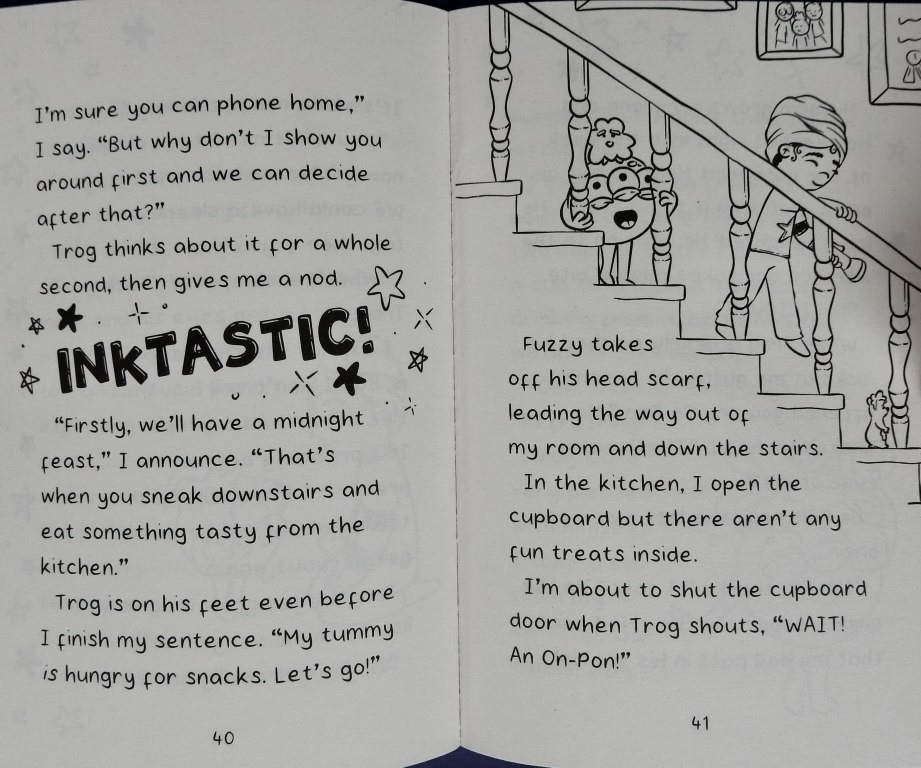
Destiny is one of life’s enthusiasts who finds every day an adventure. As the book opens she is excited to be going to the park to meet her best friend, Olivia. On the swings Olivia reminds her of tomorrow night’s sleepover when the two will be spending the night in a tent under the stars in Olivia’s back garden. Destiny’s tummy starts to feel a bit funny though she assures readers that it’s not because of the sleepover or the possibility of scary monsters. Her mum’s reassuring words “It’s going to be INKTASTIC” followed soon after by “It’s OK if you feel a bit nervous,” don’t completely allay her fears.

Back at home Destiny creates her own tent in her bedroom for a practice sleepover to prepare both herself and Fuzzy, her hamster. She plays in the tent but come bedtime, despite Dad’s brainwave of lending her his torch, she’s still wide awake at 01:28. Suddenly she becomes aware of something strange and the torch reveals an actual monster. A monster – Trog by name – that is clearly scared too and is accompanied by a pet named Furbs. Trog, she learns, is scared of being away from home so Destiny sets about showing her new friend that there’s nothing to be frightened of.

Come the morning with her own fears dissipated, she feels somewhat different. Is she now ready to enjoy her own sleepover at Olivia’s?

It’s great to see how Destiny uses her creativity in overcoming her apprehension and fearfulness.
Adele Sokunbi’s description of how, helped at one point by her Dad, Destiny uses a silk scarf to protect her hair in bed is a detail that will be new to many young readers/listeners, but equally important for those familiar with the practice to see themselves reflected in the story.

Look out for Talent Show Magic, the next sensitively written episode in the life of the delightful Destiny Ink coming this autumn.

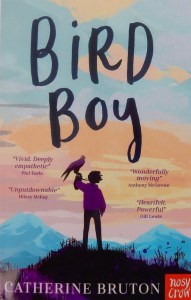
Bird Boy

Following the death of his mother, Will is sent to live with his Uncle Ian in a wild part of the Lake District. Will blames himself for the tragic accident that resulted in his mother’s death, but staying with her estranged brother is his only option while he waits for documents to be processed, after which he will move to Australia and live with his paternal grandparents. This new life couldn’t be more different from his enclosed, homeschooled life in a city tower-block where his mother had kept him cut off to ‘keep him safe’ so she said. Together they would spend time watching the birds and his mother had passed on her love of birds to her son, frequently telling him, “We will all come back as birds “.

Will feels overwhelmed as he battles with his grief and then two things happen: he meets Omar at a nature camp he attends during the day when his uncle is at work; and the boys discover an osprey nest with two tiny chicks in the mountains. It’s an amazing find as ospreys are one of the most endangered species in the country and haven’t been seen in this area.

The boys form a strong bond; Omar (a refugee from Afghanistan) shares Will’s passion for birds, while battling his own issues. Then Will rescues the chick that’s injured, unknowingly breaking the law and the friends devote themselves to caring for the little bird they name Whitecap, ‘the little one with the snow-tipped wings and forget-me-not blue eyes’, that reminds Will of his mum. However before long the boys realise that they have embarked upon way more than they can cope with; but dare they risk seeking help from someone else?

Little by little as the bird heals, so too does Will. Gradually he finds solace and even joy in his new life and his love for his well-meaning uncle grows. It’s hugely moving to see Will now able to support Omar in his grief, as Omar supported him, and with the help of the community both boys gradually face up to their loss.

This magnificent, profoundly moving story explores big themes including death, mental health, grief, depression and the lives of asylum seekers with huge sensitivity and optimism. showing how nature’s healing power, friendship, a sense of belonging and finding a family can provide the strength to rise above tragedy. Have a box of tissues to hand as you read.

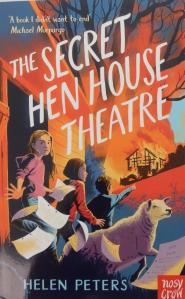
The Secret Hen House Theatre

The author has drawn on her own childhood memories of life on a farm to create this exciting family story.
Since her mum died some ten years ago, eleven year old Hannah’s life has been pretty chaotic. Her dad is working as hard as he can to keep the family farm going but things get worse day by day and she and her siblings are called upon to do all they can to help. Hannah isn’t worried about having to search jumble sales for clothing or cook the family meals, finding refuge in her love of theatre and passion for acting although she has little time for so doing, especially as her Dad thinks it’s a waste of time. But then the landlord doubles the rent charged for the farm putting it in jeopardy and Dad’s money raising plans (he’s only a tenant farmer) are never going to raise enough, even those that work.

So, Hannah decides to enter a play competition with a first prize of £500 which she will give to her dad, should her play win. Her best friend Lottie and other family members (unbeknown to Dad) all help and together they set about turning an old disused hen house into a theatre and Hannah gets to work writing the play. Thus the secret theatre begins to flourish but things don’t go quite to plan. Friendships are tested to their limits; Hannah however is a determined character and she’s not prepared to give up without a fight. Raise money she must; but what will Dad say when he finds out what has been going on?

With a powerful plot, a splendid cast of characters and a setting that feels timeless, this story (first published over a decade ago) is totally absorbing and you won’t want to put it down till you reach the final page.

The same farm is under threat again in The Great Farm Rescue, to be published in August.

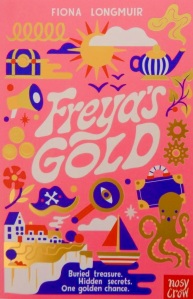
Freya’s Gold

This cracking adventure is set in Edge, the same sleepy seaside town as the author’s debut novel Looking for Emily.

Twelve year old Freya lives with her Granny Kate and together they run the popular B&B on the old boardwalk. This B&B is also their home and during the summer when the town is alive with activity, their home is full of happy holidaymakers. Now though it’s February and things feel totally different with sleety rain and sea mist replacing the crowds of people and Freya has much more time to spend with her best friend, Lin. The B&B is empty until a strange woman with a false smile and heavy suitcase arrives at reception and asks for a room. Something about her makes Freya feel ill at ease although her gran is only too happy to have Ms Oleander as a guest in the off-season.

One morning Freya and Lin are on the otherwise deserted beach using their jointly owned metal detector and hoping to find some treasure to help Granny Kate and they come upon a gold coin. Later that day Freya sees Ms Oleander talking to the mayor outside the town hall and almost immediately Freya senses someone else close at hand: it’s a boy but he disappears in a flash. It transpires that on account of Ms Oleander, the town is under serious threat; but why is the boy seemingly following this woman?

A few days later, determined not to let this unpleasant woman ruin their town, Freya and Lin head for the beach again with the metal detector and make for the caves, Freya’s courage rapidly evaporating as they enter the dark However, things don’t go to plan; the two girls have a row and part company. Meanwhile the clock is ticking. It’s time for Freya to face her fears, summon her inner strength and search the tunnels properly for the legendary pirates’ treasure. Can she do it? Perhaps, with the assistance of her bestie and Teddy, the boy she has now befriended, since that first fleeting sighting.

With its twisting, turning plot this fast-paced tale is full of suspense and mystery and will engulf readers like the sticky salt off the sea that coats the town in winter.

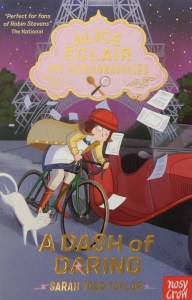
Alice Éclair Spy Extraordinaire: A Dash of Daring / The Summer Dolphin

This is the fourth and sadly, final story in the delicious series starring creative, kind, resourceful Alice Eclair.
Alice and her mum are anticipating a relaxing week in the mountains when they arrive at Hotel Anise. It’s not long though before Alice starts feeling disappointed: the atmosphere is far from exciting and she isn’t getting the opportunity to enjoy the hotel’s facilities. However Claude’s appearance on the scene, talking of a complex, ingenious cipher machine that can convert messages into unreadable code in seconds soon dispels her frustration. The problem is the machine has gone missing, along with its maker, Claude’s inventor friend, Jan.

Before long Alice is drawn into a mystery. Then her dastardly Uncle Robert appears on the scene: what is he doing in the hotel? Meanwhile, iJan’s daughter who is staying at the Olympic training camp on the outskirts of the city with her brother, has been receiving unpleasant messages as she prepares to compete in the cycling events to be held in Berlin.
Having persuaded her mother to let her go to the training camp, Alice begins working undercover while at the same time tackling the tricky issue of creating healthy but tasty desserts in the Olympic kitchens. Then to her surprise and delight, her friend Sophie, France’s most talented engineer appears and she offers to introduce Alice to the cyclist Adele and her brother, Hugo. Hugo in turn introduces her to his carrier pigeon. Determined to solve this case, Alice faces many challenges as she follows the numerous clues, some of which as you might expect, are red herrings, sets about working out who she can trust and cracking lots of codes along the way.
A tasty conclusion to the tale and the series: Alice emerges with some new friends including Hugo who happens to use a wheelchair. The author took advice from a fellow author and friend in her sensitive portrayal of this character.
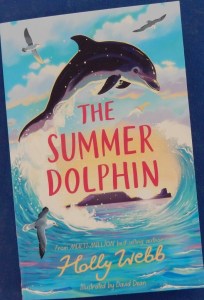
Lillie and her family are having a fortnight’s holiday in the Gower, Wales, staying in Gran and Grandpa’s new home. Things get off to a disappointing start for Lillie who discovers that she’ll have to sleep on the attic floor between the beds of her older sister, Frankie and their cousin Lara.
Almost immediately the older girls gang up and Lillie is made to feel a baby, excluded from their activities but no one else appears to notice she’s lonely and upset.

Then during a boat trip around the harbour, the crew mate Alice, mentions a tidal island that’s a wild bird reserve during the summer months where they might see dolphins as well as seals and birds. Suddenly there in the water they spy a flicking tail, then more; it’s dolphins swimming alongside the boat. One of them in particular, it seems to Lillie, is happy and this makes her feel happy too. Surely that dolphin smiled at me, she thinks to herself.

Later, Frankie and Lara flatly refuse to let Lillie accompany them on a rock-pooling expedition. Instead she decides to go off by herself in the hopes of seeing the dolphins, especially the calf, again, something that when her parents discover where she is, troubles them considerably. However it doesn’t stop Lillie going off exploring alone again after Lara is particularly horrible to her. There’s a problem though, for Lillie doesn’t understand the tide at all and she’s lost track of time. Worse, is that with water up to her chest, she can’t remember any of the special ways to keep safe she’d been told of in school. Then she catches sight of a dolphin; could it be trying to help her?

Whether read by newly confident solo readers or aloud to a class, this mix of sister dynamics and adventure is a story that will be enjoyed by animal lovers especially. David Dean’s black and white illustrations underscore the characters’ feelings throughout the book.

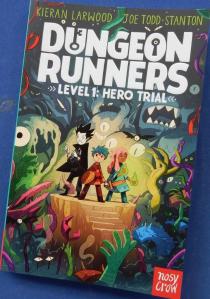
Dungeon Runners: Hero Trial

Set in the land of Zerb, as the story begins, Kit a gnorf – part gnome, part dwarf- is sitting in the local inn glued to a screen showing the finals of the Dungeon Runners, the favourites being Ultima Squad, winners for the four previous years. Commentator, Jenna the Giant, thinks it will be a close thing between them and the Night Beasts; all the latter need to do is defeat tonight’s monster or find the hidden treasure, either of which would mean extra points. Suddenly the other commentator, Dirk the Orc makes an unexpected announcement: one of the teams has had an accident with a frost dragon and that means there’s space for a brand-new Dungeon Runner team. The trials will be held in just two weeks.

Kit is excited but knows he stands little chance; but when Breg, the bullying troggle, kicks him out of the inn and then challenges him to enter the trials, he finds himself accepting. This he quickly regrets for he has no team, no skills and no weapon. Pretty much no chance at all of succeeding or worse still, getting through the trial alive. What does Grandfather Klot, an erstwhile Dungeon Rum champion, have to say other than he was much older than Kit when he won.

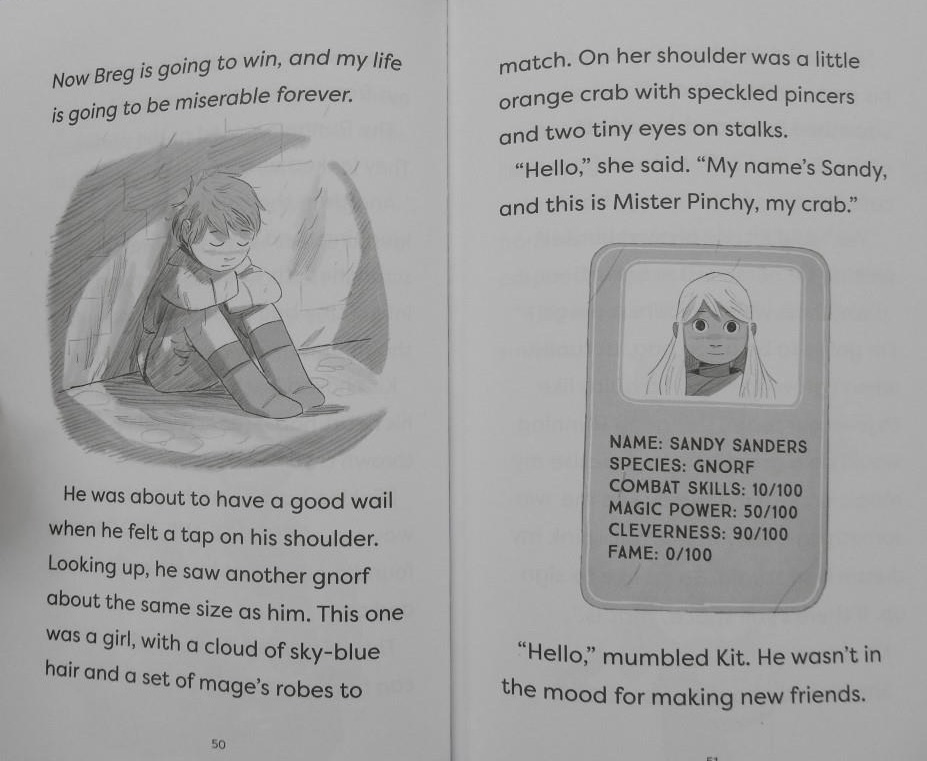
Feeling pretty down, Kit then meets another gnorf – Sandy Sanders – a mage in training.

Now with Kit as the ‘fighter’ and Sandy the ‘mage’, all that’s needed is a ‘healer’. Fortunately Sandy knows Thorn Darkblood, a vegan vampire, can you believe? These three form team Triple Trouble. By working together can they possibly overcome all the odds. Assuredly they face trials that test their problem-solving skills, resilience and nerves

but their positivity and teamwork might just be the key to success.

Team Kieran Larwood and Joe Todd-Stanton have co-created an exciting fantasy that is just right for newly independent readers who will delight in the weird and wonderful characters, be rooting for the underdogs throughout their adventure and be thrilled to learn that this is the first of a new series.

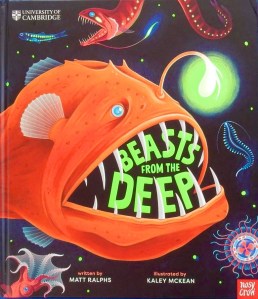
Beasts From the Deep

Many of the marine creatures featured in this large format book look like the stuff of nightmares, as you turn the pages that take readers through the five ocean layers. So take the plunge if you dare, down, down first into the twilight zone – a bright and busy area that gives a home to all manner of weird and wonderful creatures – some of the scariest of all. There’s the Atlantic Wolffish, possibly the size of a bath if fully grown, with sharp protruding teeth (hence the name) and a clever natural ‘antifreeze’ protein that allows the blood to flow even in the chilly waters of its North Atlantic home.

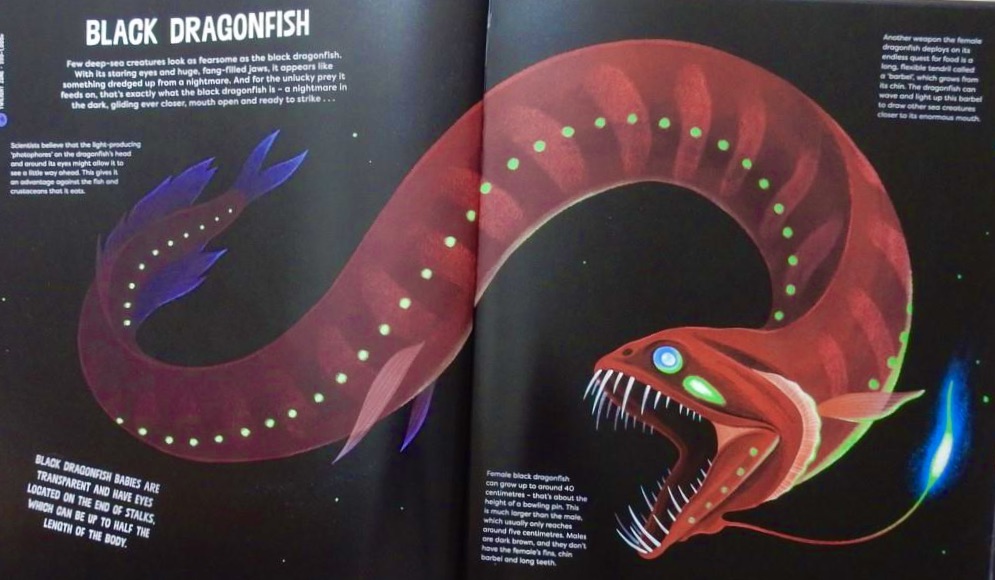
Equally alarming, perhaps even more so, is the black dragonfish. In addition to those horrific teeth, the female beasties use a barbel – long flexible tendril that protrudes from the chin and when lit up can attract potential prey towards its mouth.

With no sunlight penetrating, the midnight zone (1,000 – 4,000 metres) is one of constant dark save for the flashes from bioluminescent creatures. This zone is rich in different species of sharks including Greenland sharks that can live to be 500 years old; as well as some of the weirdest-looking monsters you could imagine, or rather couldn’t. There’s a fish – the Fangtooth -with teeth so long it cannot close its mouth.
I think I’d rather face some of those jellies that pulse, flash and glow in show-stopping colours like the Bloody-Belly Comb Jelly or the Halitrephes Jellyfish, both of which inhabit the midnight zone.

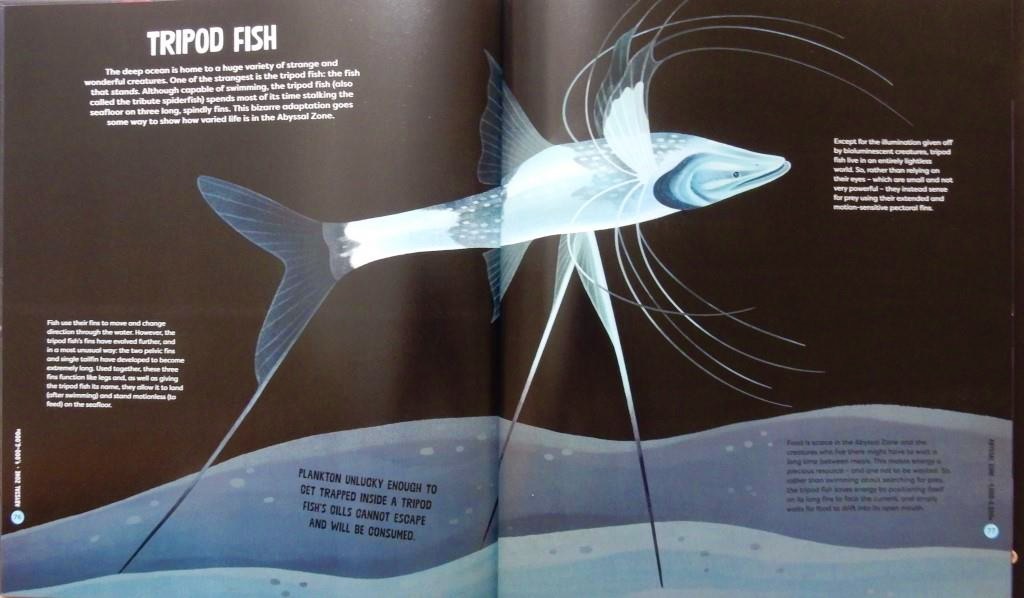
Dive even deeper and there’s the aptly named abyssal zone where the complete absence of light means it has no plant life. There are thought to be various creatures that have adapted themselves to survive, so we read ‘crushing pressure and near-freezing darkness.’ One is the Tripod fish that is able to stand on the seafloor using its specially evolved fins.

A monstrous menagerie indeed exists in our ocean waters, with new kinds of creatures being discovered all the time.

Kaley McKean’s awesome artwork and Matt Ralphs’ captivating text, created with input from biologists from the University of Cambridge, will certainly astonish and inspire young would-be marine biologists and other people fascinated by a largely unexplored world.

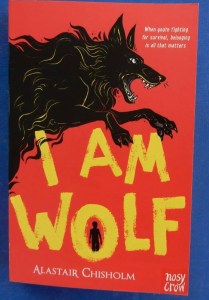
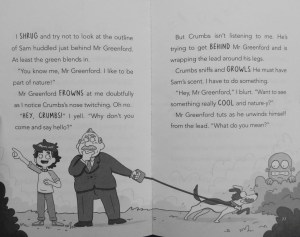
I Am Wolf

I read this thrilling dystopian story in proof form but liked it so much that when a finished copy arrived I couldn’t resist reading it again.

Coll, the main character has two prosthetic limbs – a leg and an arm – more advanced that those currently available, as the author discovered when researching limb differences for the book. Like many of the people he met through the Limbo Foundation and Finding Your Feet, Coll’s limb difference is part of him, but does not define him.

When first we meet twelve year old Coll, having been used to living aboard Wolf, the gigantic construct that is almost always moving, he is finding standing on still ground weird. However he joins crewmate, Luna to salvage whatever useful bits and pieces they can, mostly lost by Hyena after the previous evening’s battle between the two massive machines, when their rival was defeated.
But shortly after the two have delivered their sacks of salvaged pieces Coll learns that senior crew member Alpha, who had promised him he could go on a mission he really wanted to, now won’t let him; Coll puts this down to his limb differences. Instead she, who is not proud of being his mother, suggests he accompany her into Scatter to speak to the Mayor.

While Alpha and Mayor Ruprecht talk, Coll wanders off and comes upon a child being attacked by a group of others. He intervenes and horrified by what he’s told, takes responsibility for the boy who had once been a member of Boar. “That child is your problem now”, Alpha insists. Coll renames the terrified child Fillan (little Wolf) so he can fit in aboard Wolf.

Then the others of Wolf crew return with a cache that had been hidden and it’s time to move on, but almost immediately there is an attack from an enemy construct. After rounds of fierce fighting and an accident that involved Rieka, she, Coll and Fillan find themselves left behind by Wolf. Not long after they come upon another stranded girl, named Brann.

Coll is Wolf, but he starts to question everything he believes himself to be and wants to be. Does his original family really have his best interests at heart? It’s time to confront uncomfortable truths, shed his preconceptions and learn that trust and new relationships are possible. Is Rieka right when she says, ‘perhaps I’ll find a better way to live.’ Maybe, as Brann suggests, ‘A Cub way’.

With awesome world building, perils aplenty, sack loads of suspense, some quiet contemplative moments and several terrific characters, this is a read that grips you tight. Moreover the ending leaves you dangling, eagerly awaiting the sequel, I Am Raven.

Lenny Lemmon and the Alien Invasion / Cluedle: The Case of the Dumpleton Diamond

This is the third in the laugh-out-loud series starring Lenny whose daft doings delight younger solo readers. As this book begins, Lenny is complaining of boredom: it’s the school holidays and his two best mates, Sam and Jess are, so he believes, both away enjoying life in distant parts. His Dad meanwhile is busy inventing crazy contraptions that are doomed to fail. Lenny is sent to return something to his Grandma’s ice-cream shop but unexpectedly, he finds that she’s not her usual cheerful self when he arrives. Due to lack of customers, she realises it’s either do something to boost sales or close down the shop for good.

On his way home, Lenny discovers that Sam and his family are not away, indeed they too are worried about lack of customers, to their bookshop in the town. The boys determine not to let these once much loved shops close forever. On go their thinking caps for project SAVE THE TOWN. To boost sales at the local establishments, Sam reluctantly agrees to don a alien costume and participate in a pretend alien invasion; that will surely attract attention.

Inevitably, things don’t go quite to plan. Yes the town is constantly full of tourists but it becomes under intense scrutiny from the media. With business booming who should return to the scene but their other friend. If Sam and Lenny reveal their doings, will it be a case of game over? Sir Percival Hickenbottom representing the Enormomall, certainly wants it so. Time to take him on: the chaos is only just beginning but friendship is key.

Bursting with James Lancett’s’ crazy illustrations, this riotous romp is great for newly confident solo readers or as a class read aloud.

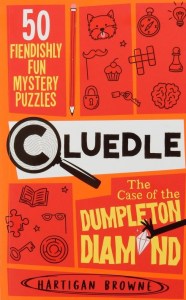
Murdle has already established itself as hugely popular with adults and now younger readers have the opportunity to get cracking on a case courtesy of the Hartigan Browne Detective Agency. Herein Dave the dog has been pup-napped and it is up to you, the reader as a newly recruited agent, to find out why and who the culprit is. This is the first of many puzzles that will, hopefully, lead you to the discovery of the Dumpleton Diamond.
To get those little grey cells all a-buzz, there’s a variety of puzzling tasks from codes to logic problems, picture puzzles to anagrams – probably something for everyone, including adults who want to stick their noses into the book. You might even want to make solving this case a joint family enterprise. Better that than cheat and look up the answers, which are given at the back of the book.

Shadow Fox

Set in the harsh environment of secret islands of the Great Lakes in Minnesota, this story is told from the viewpoint of a female fox mysteriously calling herself YAAAARRRRAAAWWWAAAARRR.
Pitifully thin, extremely hungry and cold in the snow, said fox is looking for Nan, only Nan; all other humans she hates but gentle fingered Nan, provider of tasty trout has gone missing. Suddenly a voice calls out, it’s not Nan but a girl wearing one of Nan’s jumpers, who appears to be missing someone too.

Feeling let down by the only human she trusts, the fox teams up with the girl, Beatrice or Bee for short and together they set out to search for Nan and put the world to rights once again. An adventure unfolds, which takes them to a mysterious island and unbeknownst to the fox, she possesses magical powers which the islanders are hoping to tap into. They find themselves battling to preserve the beauty and natural integrity of their surroundings. But can they together work to restore natural harmony; it’s either that or the magic of the place will be forever lost.

Slightly surreal, this is a wondrous fantasy story, at the heart of which is the power of friendship, that will draw you in from the start. It’s beautifully written with quirky details of the intelligent, intuitive fox and a potent sense of place that will ensure that readers pick up the subtle message about the vital need for us all to stop abusing our planet and look after it.

Words, Words and More Words

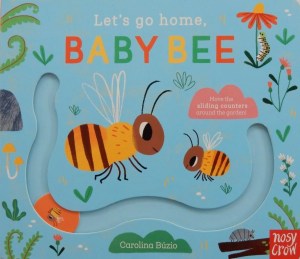
Baby Bee has to get safely to the hive and needs the help of little humans to do so. The same is true of some other baby minibeasts: baby ladybird wants help getting to a home log,; baby snail resides in a flower pot; and baby worm also needs guidance back home. There are plenty of things relating to the natural world to spot on each journey and each can only be completed with the help of a small human hand to guide the moving disc that depicts the named baby. Interactive fun that gives little children a sense of autonomy as well as delight at the brightly coloured spreads, each of which has the route on the recto and small, labelled images on the verso.

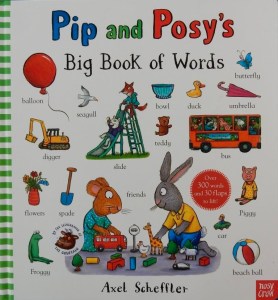
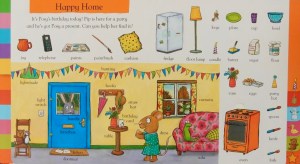
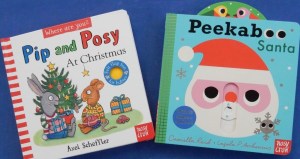
Little ones can learn and read more than three hundred words with friends Pip and Posy in this large format book. Its ten spreads have different themes each with flaps to lift and a multitude of labelled images both in and surrounding the scenes, the first being Garden Games. Here we see Pip busy planting seeds and Posy ready to entertain visitors by playing some musical instruments.
Next comes At the Shops where we find customer Posy, clutching a coin to buy a new toy. Sunny Seaside is the third destination and the two friends are enjoying a beach visit. Back at Posy’s Happy Home, Pip arrives bringing her a birthday present.

Christmas, Snow, Bubbles, Night Night follow and the final spread Learn with Pip and Posy presents colours, seasons, numbers (to 10)basic 2D shapes, and four examples of opposites.
Offering lots of potential for discussion, as well as vocabulary building and honing their visual skills, there’s a wealth of toddler learning possibilities between the sturdy covers of this book.

Also helping to enhance young children’s vocabulary are recent titles in a popular series:

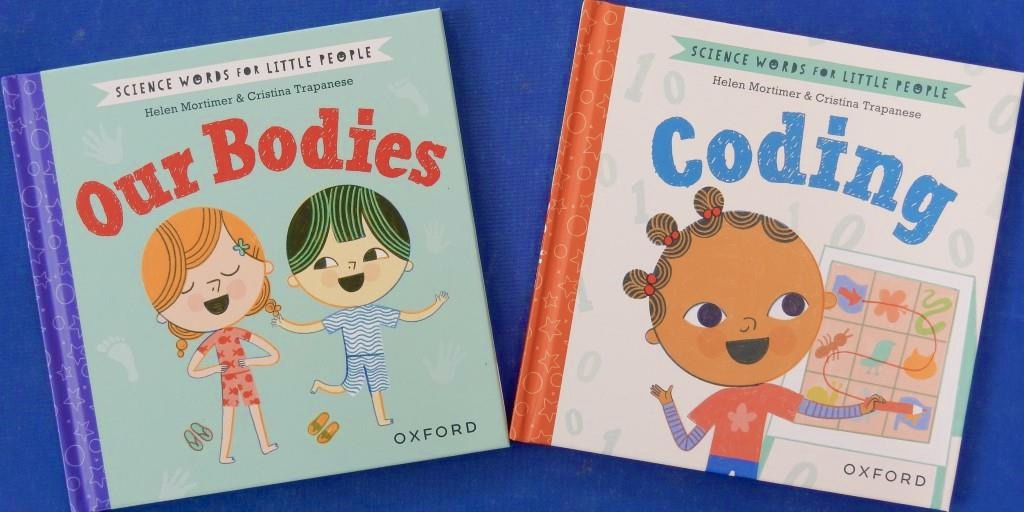
In Our Bodies children can take the plunge and have a day at the swimming pool where they can learn a wealth of body-related words from the brain to bones and senses to growing.
Coding presents basic language such as commands, sequencing, chain reaction and inputs and outputs. Both books feature a diverse cast of child characters, are engaging both visually and verbally and are worth adding to home shelves or collections in early years settings.

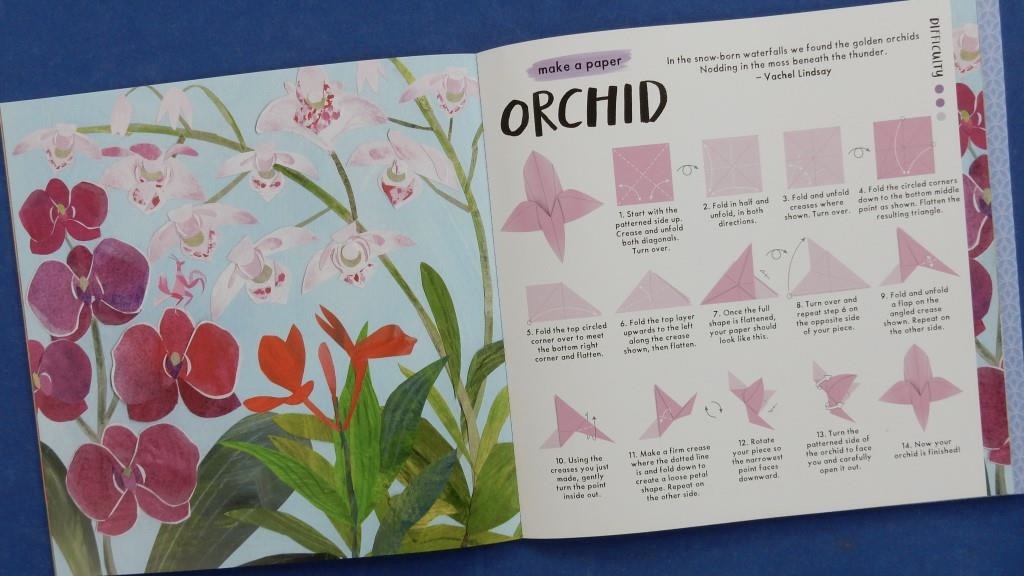
Blossom Origami

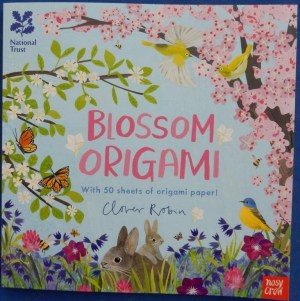
Clover Robin, surface pattern designer, illustrator and nature lover has created thirteen stunningly beautiful cut paper illustrations to accompany step-by-step instructions on how to use origami to make paper flowers, trees or parts thereof, and there’s also a cactus and a clover leaf. Each whole page illustration includes fauna as well as the flora that is to be made. So for instance, on one of the lily flowers is a hummingbird; a deer and a squirrel are visible in the bluebell filled beech wood and if you look carefully you’ll spot the insect atop one of the orchid flowers.

Alongside the instructions to make each of the origami flora is a related short poem, one or two being haiku and some well known poets including Christina Rossetti, Rachel Lindsay, W.H. Davies and William Shakespeare are there too.

There are 3 difficulty levels, so the book will suit complete beginners as well as more experienced origami enthusiasts, and on the index page is a QR code link to ‘how-to’ videos that beginners will find especially useful. Clover also designed the gorgeously coloured tear-out sheets of origami paper, one side of each being patterned, the other plain.

Published in collaboration with the National Trust, this would make a smashing present for a patient child, or an older craft enthusiast with an interest in the natural world.

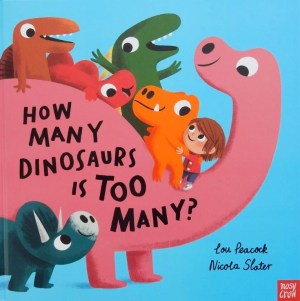
How Many Dinosaurs Is Too Many?


One day a child, (our narrator) gets a dinosaur and what fun the two have. However another dinosaur would surely mean more fun and so right on cue, a second one appears. And so it goes on until the blissfully happy child has amassed ten different dinosaurs, a veritable soccer team.

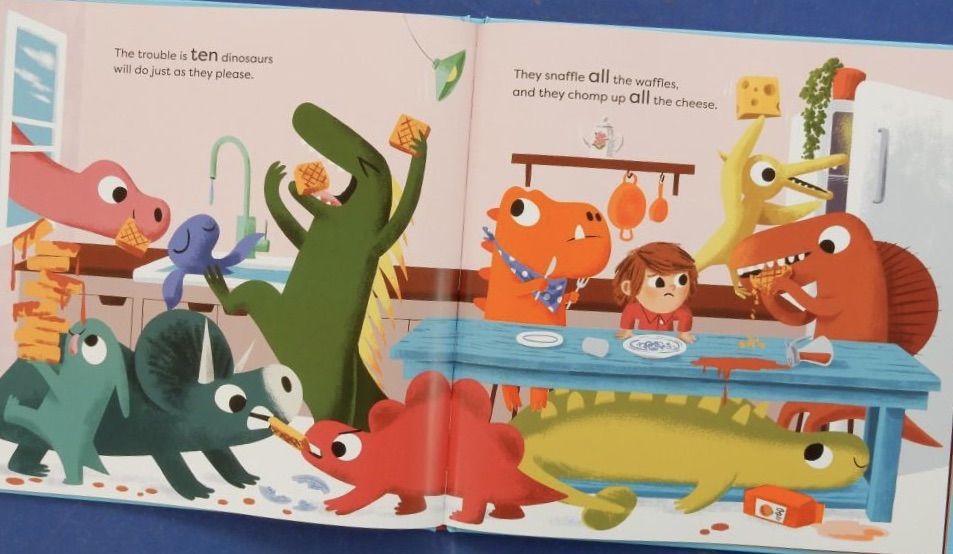
Of course, there is a price to pay for all these new, very energetic and hungry companions that do pretty much whatever they want, causing chaos at mealtimes,

bath times and bedtimes too. Enough is enough, indeed way too many and out goes the entire dino. crew. But is our young narrator happy now? No, despondency rules (we have a scene of sadness on the see-saw) but only briefly for a singular surprise awaits offering the ideal solution.

Nicola Slater’s vibrant illustrations tracking the growing dinosaur contingent and the child’s reactions to same, capture the energy and humour of the events as the narrator begins to see that it’s actually a case of ‘be careful what you wish for’.
Highly engaging, Lou Peacock’s interactive rhyming story offers so much more than just counting fun. Little ones can play ‘spot the latest addition to the dinosaur entourage’ as each page is turned until all ten have assembled. They’ll also love Nicola’s funny details, especially in the meal scene. Share at home or in an educational setting: youngsters can never so it seems, have too many dinosaur tales.

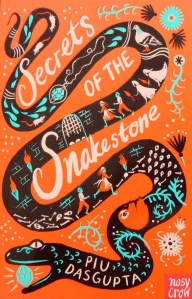
Secrets of the Snakestone


Set above and below the Parisian streets towards the end of the nineteenth century, this utterly compelling story forced me to set aside my recently purchased adult novel in order to finish reading Snakestone in bed.

A cursed gemstone, a dark secret society – the Brotherhood of Blood, a circus full of vibrant characters, and a baby sloth, all this in a city where Zélie Dutta, a young girl from Calcutta, hopes to find her missing father and solve the mystery of why she was so suddenly taken out of school and sent to Paris. (The story of owing the Malaises money somehow doesn’t ring true, she knows there is more to it than that). Providing the lens through which we see the city – a place of innovation, decadence, and also great poverty – Zélie, our intrepid narrator, works as a lady’s maid with the formidable Madame Malaise. Because the girl’s eyes don’t match, the other servants in the house see her as a witch and are ready to blame whatever goes wrong in the household on her.

The second key character is Jules, a young boy working in the sewers, who has found a golden locket belonging to Zélie’s father. Suddenly emerging from a sewer, unaware of the way his life is about to turn, Jules – unwillingly to begin with – is drawn into Zélie’s adventures and plays an invaluable part henceforward. They make a brilliant team with the girl’s resourcefulness, determination and willingness to go to any lengths to help those she loves, not to mention her affirming pep talks that she sometimes gives herself, combined with the boy’s careful and considered attitude to things.

Full of mystery and adventure with themes of family, friendship and trust, along with the important lesson of not making hasty judgements about people, and the weaving into her story, real historical elements and allusions to colonisation, this is a great and unforgettable read for older primary children and beyond.

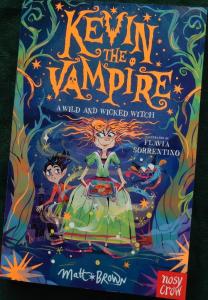
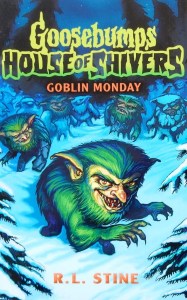
Kevin the Vampire: A Wild and Wicked Witch / Goosebumps House of Shivers: Goblin Monday

In this sequel to A Most Mysterious Monster Kevin (almost eleven) and his family, plus human best friend Susie Cabbage who now lives with them, and the Carnival Monstromo carriages are heading to Monstro City to take part in the Dragon Parade. Reluctantly, Susie is clad in an exceedingly itchy, scratchy dress.

As they are running late, Kevin’s family take a shortcut through the perilous Wild Woods, a place nobody ever goes on account of the dastardly witch who lives there. Everything should be fine as long as no one gets out and no one eats anything … err? Kevin will be at the Festival before you can say incredible (which Susie does) After all, nothing goes wrong for the Carnival Monstromo, never ever …
With the performing of awesome tricks including the Danger Dive of Death, revelations relating to Uncle Drax’s falling out with Lazarus Vandross, the disappearance of Dog, some serious sadness for Susie,

and aided and abetted by The Sphinx, the fizzling out of Grayvon Fury, the most evil witch in Grackelser Odd, this is a real humdinger of an adventure. Those familiar with the first book will recognise some of the magical monstrous creatures from that, but Matt Brown has invented some additional characters, mostly of the humorous, even slightly bonkers variety. All this plus Flavia Sorrentino’s weird and wonderful illustrations: primary age readers could ask for nothing more.

This story is narrated by Mario who has recently moved with his family from Florida to Philadelphia. He’s been invited to join his new friends Todd and Jewel on their winter holiday at their grandparents’ home in Vermont and is thrilled at the prospect of seeing snow for the first time.

Pretty soon after they arrive, Mario starts to suspect that something really weird is going on inside this house. Todd and Jewel’s grandparents are more than a little odd: Grandpa Tweety really loves his birds and in the evenings tells tales about goblins, gremlins and imps; he’s also written books about them. MomMom loves to make stews and she knits strange green outfits. However, the real terrors begin when Mario finds that the fairy tales may not be made up stories after all. He’s attacked by a creature in the garden and his friends’ parents disappear.

Full of twists and turns, it’s all a bit creepy and anyone prone to nightmares is advised not to read this just before bedtime.

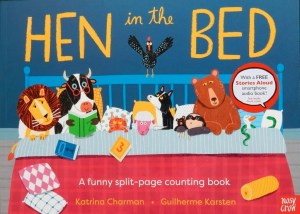
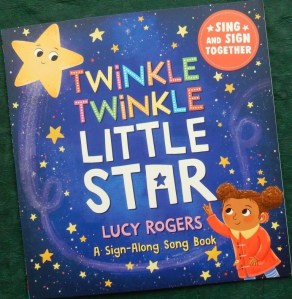
Hen in the Bed / Twinkle Twinkle Little Star

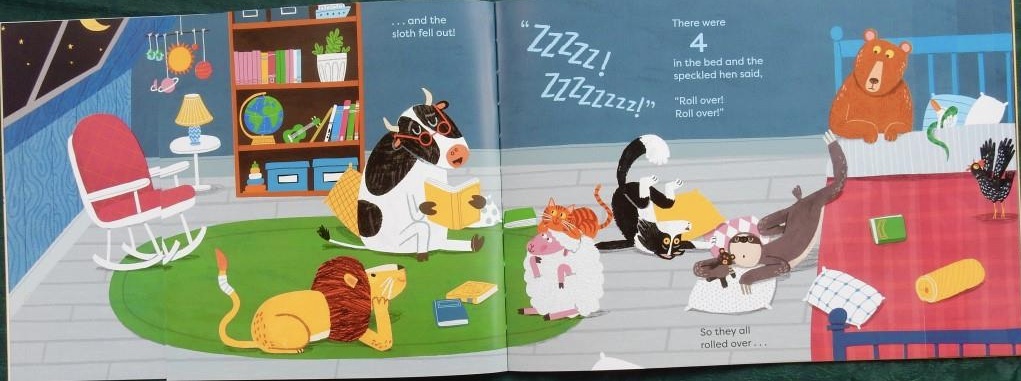
In this version of the popular nursery counting song it’s Hen who orchestrates the rolling over as in turn various animals roll, tumble and fall from bed to floor. Each one makes its characteristic sound : lion roars, cow moos, cat meows, sheep baas, dog woofs, bear growls and so on,

until the speckled hen realises that she misses cosying up with the other creatures and begs them to return, which they do. Once they’re all snuggled up together, it’s a “Cluck! Cluck” from Hen and some shut-eye time for everyone.

Its opening sequence of progressively cut down pages cleverly shows the entire animal entourage in bed. Each turn of the page tumbles one animal after another onto the mat or thereabouts.

Playful counting down practice made into an entertaining pre slumber time tale for young children, or alternatively a fun picture book to share with little ones in a nursery setting.

It’s good to see this favourite nursery rhyme in an inclusive sign-along songbook version by Lucy Rogers, herself deaf, who grew up not seeing any deaf characters in the books she read.
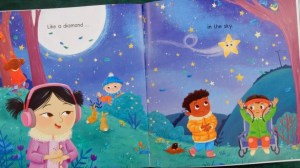
The song is introduced with two double spreads whereon characters using British sign language (BSL) demonstrate how to do the sign for each phrase, thus enabling everyone to join in with signing the entire song.

Many children come to school or nursery knowing no other nursery rhymes so this vibrantly illustrated picture book is one I’d strongly recommend putting in all early years settings as it should enable any child to participate in a visual, gestural rendition. Twinkle, twinkle was always the first song my nursery classes sang accompanied by the appropriate Makaton signs and they loved so doing.

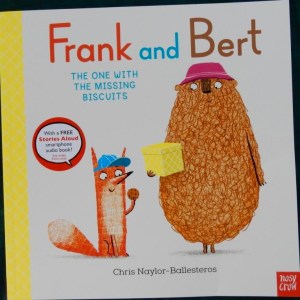
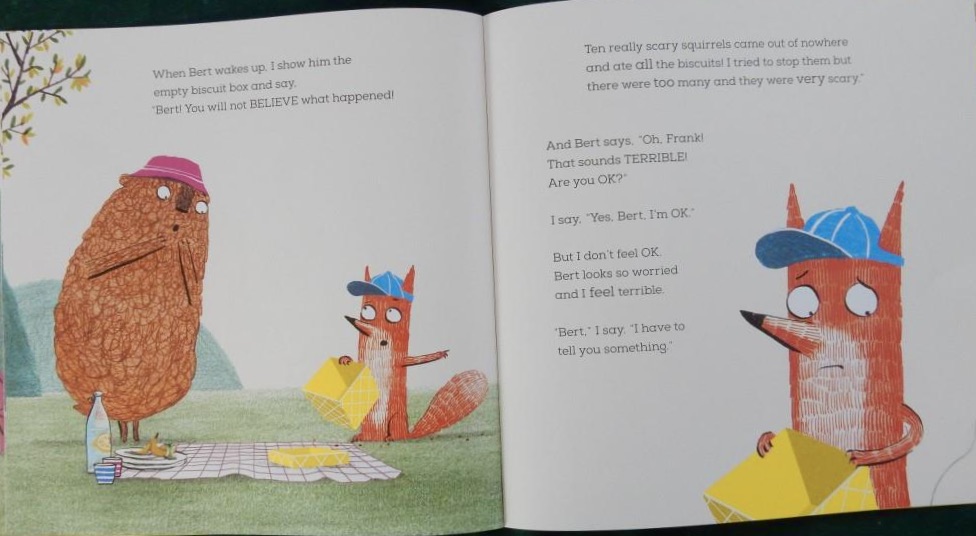
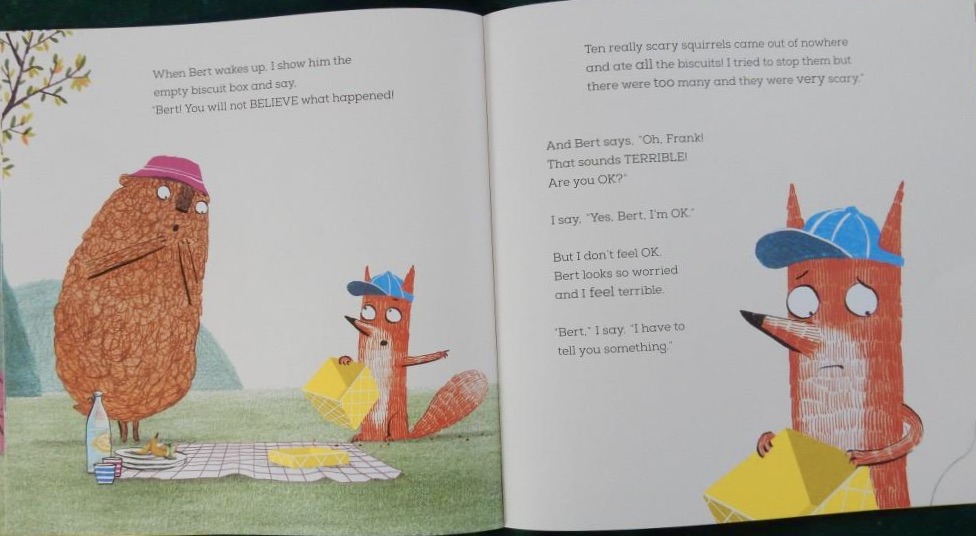
Frank and Bert: The One With the Missing Biscuits

Best friends Bert the bear and his foxy pal Frank (our narrator) are off for a picnic in the countryside, something they love to do but all too frequently something goes wrong. On this occasion Bert has brought a special tasty surprise and Frank is eager to find out what it is but his friend tells him he must wait a while.
Having consumed their picnic, Bert settles down for a postprandial nap. Frank decides that there’s no harm in taking a quick peep inside the box and whopee!

Bert has cooked his friend’s very favourite biscuits. It won’t matter if I eat just one, Frank tells himself; but they are so yummy that – well you can guess what he does. What will Bert’s reaction be when he wakes up? Frank thinks up a less than honest explanation for the empty box; but having lied he feels guilty, especially when Bert is so concerned for him.

There’s only one way to sort out this mess: Frank owns up and promises that the next time they go on a picnic he will make up for his wrongdoing; but the best laid plans …

This double act is a deliciously diverting delight and this tale of friendship and forgiveness is sure to make young listeners ask for more.

Lola and Larch : Fix a Fairy Forest

Lola’s mum is a forest ranger and during the working day she and her little brother Noah are often looked after my Grandma. One stormy night on the way home from Gran’s in Mum’s car, something causes Mum to brake suddenly, something that looks like a rabbit but has a kind of shine to it. They take the little thing home to care for it overnight and the following morning the rabbit isn’t in the cage, instead there’s a tiny fairy wearing a rainbow pendant … a tree fairy, albeit with mixed up magic, and she urgently wants to get back home. This sometimes rabbit, sometimes fairy tells Lola that she’s called Larch Mugwort, she’s lost and must protect the other fairies from Euphorbia Spurge, the “baddest fairy in the forest”. Larch is also a bit of a rebel and having seen a strange dark thing the previous night in the forest, suspects it’s something malevolent to do with Euphorbia. Meanwhile Lola’s mum has started putting up ‘FOUND’ posters of a rabbit in the hope of finding Larch’s owner.

Next day Lola takes Larch to school in her bag and it will come as no surprise that at her teacher’s behest, Lola’s Gran comes and collects the creature; the problem is she arrives with a strange woman who claims that Larch belongs to her.

Lola has to think quickly to avoid having to give up Larch and once they’re back at Gran’s, Larch tells Lola that the stranger was in fact Euphorbia Spurge.

There follows a lot of shape changing, the marching of a beetle army, a pitting of wits, a coming together of fairies, a confrontation between Euphorbia and King Ash (Larch’s father) and more. However all ends satisfyingly with a declaration by Larch about being different and a final picnic.

With friendship and magic aplenty, this is funny, sweet and a great start to a new series for younger readers. Rachel Seago’s plentiful black and white illustrations are a quirky delight and help break up the text for the less confident. Anyone for pancakes?

Wanna See A Llama? / We’re Going on an Egg Hunt

In this equally entertaining sequel to Wanna See A Penguin? the same young animal expert, so she says, now includes llamas in her field of expertise. She invites her friend to accompany her on a llama-spotting expedition around the city. As they walk, they encounter all manner of creatures – humped, scaly, furry with spots, shelled,

very long-necked, soft and woolly, but a llama? Not around here declares our self-dubbed expert who evidently hasn’t noticed any of the posters advertising a parade as she leads her long suffering friend who identifies each animal, on a wild-llama chase.
Asserting on the penultimate spread, ‘There can’t be any llamas round here’ our leader heads homewards.

Young listeners will delight in the final spread whereon Ian shows a Llama Parade just behind the two children. Those same listeners will also have enjoyed spotting a llama (or two) in the background of every other double page illustration.

Unashamedly using the nursery favourite ‘We’re Going on a Bear Hunt’ as the basis, Goldie Hawk sends her three young child protagonists, springing into action in search of eggs, baskets in hand. As they walk, the children encounter pecking, clucking hens, munching-crunching bunny rabbits, hopping frogs,

rustling-swishing plants until eventually – yippee! They discover ten eggs. Having loaded their baskets, it’s time to make the return journey back the way they came, arriving just in time to take part in a joyful Easter parade.

Angie Rozelaar’s vibrant scenes with splashes of day-gio pink and luminous green convey the freshness and joy of springtime and of the search. Just right for sharing with very young children as spring and Easter approach. I suggest buying to give instead of an Easter egg; its pleasures will last SO much longer.

Rudy and the Ghastly Gathering / Press Start: Super Rabbit Boy Blasts Off!

When Rudy and Femi are invited to Edie’s birthday party they are warned that ghost parties are ‘a little different’. It’s in a haunted house after all, but why has Edie been keeping the event under wraps? Nevertheless the two are determined to make it her best birthday so far. Come Saturday the friends skate their way to Edie’s home taking with them her special present, a present they decide won’t compete with the super bike her dad conjures up. As expected Edie wants to try it out at the Skateway immediately, so off they go, with Edie’s little spirit-sister Holly tagging along.

Once there Holly straightway starts drawing attention to herself pretending to vanish and it becomes difficult to tell which disappearances are pretence and which real. It’s down to the friends to work out what’s what and find Holly before she’s washed away by raging river water. Can they do so and what about Edie’s birthday party? Will a spookily special celebration be shared by all?

This latest exciting adventure wherein friendship and teamwork are vital will be eagerly seized by fans of the series. Those who have yet to discover the joys of Paul Westmoreland’s gothic-inspired early readers, powerfully illustrated by George Ermos, would be better to read the first story Rudy and the Wolf Cub beforehand.

I know many Super Rabbit enthusiasts who will want to join Sunny and Super Rabbit Boy on another adventure. As the book opens a party is under way in Animal Town in celebration of the dastardly King Viking having gone away for ever, destination outer space. But suddenly in the middle of town a rocket lands from which disembarks a green alien calling itself Glob Glorp. The message is that King Viking and his army of robots is causing a lot of trouble in outer space. The alien lends Super Rabbit Boy his Level 1 rocket and off zooms the rabbit to deal with things.

Tasks entail overcoming mega Rocket Robots and their bosses and saving lots of aliens including Flobs and Roo-Roos, in order to upgrade his rocket to higher levels, till he has a Level 10 rocket, but he still hasn’t found the evil King Viking. Eventually with a Level 11 rocket, Super Rabbit Boy lands and comes face to face with the being he thinks is the one he seeks. But could it be somebody else? If so, then what?

This fifth episode moves at a rapid pace that will please young video game enthusiasts as well as fans of the series. It’s also a good one to offer older reluctant readers.

A Horse Called Now

This image has an empty alt attribute; its file name is dscn9956-1.jpg

Now, the white horse stands in a field enjoying the sights and sounds of the natural world: buds bursting forth, dragonflies dancing, the singing of the birds, the chattering of the crickets. Suddenly her peace is disturbed by a mother rabbit and her offspring, fearful of being chased by a fox. Then come Hen and her chicks, terrified by the possibility that the swooping bird is Magpie after her little ones. Sheep and her lambs are worried about New Dog, imagining him to be wild like a wolf.

This image has an empty alt attribute; its file name is dscn9952-1.jpg

In turn, Now allays each of their fears and then there comes a loud BANG! of thunder and down comes heavy rain.


Calmly, Now leads all the animals to shelter inside a barn but other creatures are already there so out they all dash leaving the horse to investigate. What she learns is then passed on to her fearful friends outside and having seen Fox, Magpie and New Dog for themselves

This image has an empty alt attribute; its file name is dscn9958-1.jpg

and listened to Now’s words of wisdom, ”When I am afraid, I breathe in … and out … and let the feelings come … and then let go.Nothing lasts forever”, they realise that the creatures they so feared are not as scary as they’d imagined.


Ruth Doyle’s sensitively written text is reassuring and full of warmth; she has clearly chosen every word with great care and Alexandra Finkeldey’s rustic illustrations portray the fearfulness and subsequent relief of the animals very effectively.


We’re all beset by fears from time to time but young children may find themselves unable to cope: reading this story with a supportive adult offers an opportunity for opening up about their own worries and a good starting point for talking about living in the moment.

I Love You More / Love is in the Little Things / I Turtley Love You

Parental love and the wonders and beauty of the natural world come together one bedtime when Rae’s Mum attempts to tell her daughter just how much she loves her. Clare’s lyrical text in combination with team Howdeshell, the illustrators, convey the heartfelt message effectively, showing that such love is unconditional and life long.

Herein we encounter among other creatures, waddling penguins and snoozy seal pups atop the ice, gliding eagles, desert dwelling camels and lizards, various marine creatures ,

majestic big cats and pandas as well as celestial bodies – ‘sparkly planets shining brightly in the night’ and more. As the two finish counting the stars in the sky, Rae realises the enormity of her Mum’s love, .
a love that even then Mum feels she’s not expressed sufficiently strongly- and we see the two snuggled lovingly together.

The mixed media illustrations of the animals in their home environs suggest that the way is left open for Rae to change as she too explores beyond her immediate home and surroundings.

Small – a human child and Big – a large bear love one another very much, but how do they show that love? Stella Jones’s first person text and Jane Massey’s heart-warming watercolour illustrations show that essentially as Big says, ‘ love is made from the little things’ – every day things such as holding hands, making and taking tea together, a goodnight kiss, hugs, saying sorry,

extending a helping paw or hand. As Little realises as they look skywards, “Love is made of ALL the little things. Just like the trillions of tiny twinkly stars make the forever of the deep blue sky.’
Gentle, reassuring, and sometimes exciting like those ‘tingletastic, tummy jumbling, giant-enormous glorious fireworks and starbursts.’

This board book takes readers beneath the ocean waves where, through Harriet’s gentle rhymes and Bryony’s engaging illustrations they will encounter several ocean creatures and their little ones. There are turtles, seahorses, clownfish, jellyfish and more either playing or snuggled up together. The emphasis on each spread is the love the adult gives to the little one.
With cut-outs and stand-outs on each spread, little humans will enjoy the tactile opportunities offered by interesting watery, collage style visuals. Some adults might find the words slightly too sugary.
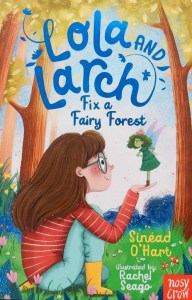
Board Books Treats

This image has an empty alt attribute; its file name is dscn9866-1.jpg

Jumana Rahman’s sweet , or rather savoury, debut board book introduces little ones to a favourite Bengali dish.
A baby sits in a high chair watching an adult dropping chopped potato into a cooking pot on the stove – the first task when making the dish. This is followed by the chop chop chopping of chillies which induces a coughing fit in the child. Next onions are sliced and dropped into a frying pan; this brings tears to the baby’s eyes. Turn the page and the infant’s hands are mashing and squishing in a mixing bowl; then in go oil and salt

This image has an empty alt attribute; its file name is dscn9867-1.jpg

as the little one’s tummy rumbles in anticipation. A taste soon comes as the adult whom we never fully see, pops a small piece into the little one’s mouth. Even teddy gets a taste of the treat. Yum, yum aloo bhorta is delicious.


With fun sounds to copy and Maryam Huq’s illustrations that include some details of Bangladeshi culture – books, a stool, poster on the wall, label on the oil bottle – this is a book to share at homes and in nurseries. To complete the experience, why not try making aloo bhorta with little ones.

This image has an empty alt attribute; its file name is dscn9751-1.jpg


Pals Posy and Pip are enjoying a game of hide and seek in the snow and it’s Pip’s turn to hide. Has he hidden himself behind a tree, a hill, the house, a fence perhaps? No, Posy will need to go back indoors to find the whereabouts of his best friend.


Little humans will love lifting the felt flaps to help Posy in her search: I suggest they snuggle up with an adult before they start. That will ensure they’re not too shivery to enjoy the fun details in Axel Scheffler’s snowy scenes.

Peekaboo Santa is essentially a rhyming game with a Christmassy theme and sliders for little fingers to manipulate. So doing will reveal in turn, a pair of birds, a star atop a Christmas tree, an elf, Santa on a sleigh, a candle flame, a playful mouse, a surprise present, children anticipating Santa’s coming and finally, a mirror. With its bright colour palette and festive images , this is just right for the very youngest.

This image has an empty alt attribute; its file name is dscn9783-1.jpg

Little ones will encounter, not just the little dinosaur responsible (with their help) for the stomping, roaring and other sounds in this book, but a number of other prehistoric creatures too. There’s Triceratops, Diplodocus, Stegosaurus, Ankylosaurus and Tyrannosaurus to name just some, as well as a tiny hatchling hiding in plain sight on every spread, waiting for keen-eyed little humans to find it.


A fun book for sharing and as an adult or older sibling reads, said little humans following the story will love pressing the main protagonist’s squishy buttons and in so doing, will be developing their own fine motor skills and powers of observation.

Dasher Can’t Wait for Christmas / ’Tis The Season

Dasher (the reindeer we met previously in the book named after her) is so impatient she just cannot wait for the big night when she’ll help pull Santa’s sleigh. With just one sleep remaining before Christmas Eve, she’s wide awake with excitement and taking a run, she leaps skyward to investigate the music she’s heard.

Enjoying herself thoroughly, as the music dies away she spies bright lights on the horizon. In her joy, she fails to pay heed to the falling snow and is unable to find the North Star to guide her, so again she takes to the sky, hoping to find something familiar. At last she sees something bright way ahead.

Flying towards the light, she discovers a wonderful Christmas tree in a garden and decides to land to take a rest. There she encounters a small girl. Having admitted to being lost and hungry, she receives, thanks to the child Charlie’s kindness, both food and a means of finding the way back home. This Dasher does, just in time to reach the North Pole where a worried Mama and Santa await.

Then off they go, the reindeer team pulling Santa along on his delivery round, during which Dasher ensures that they stop to leave a special thank you to Charlie.

A gentle story with some tense moments and a happy ending, dramatically illustrated by the author.

Constructed of thick card, this fold out book will work well with children from around four, right through KS1. Of the twenty four shortish poems included some have a distinct Christmas feel, others are wintry and the whole thing opens into a gorgeous advent calendar zigzag frieze that can be brought out yearly on the first of December.

There are flaps to open on each of Richard Jones’ beautifully illustrated snowy spreads, the first five of which have four poems each, the next has three and the final page has Philip Waddell’s clever What Christmas Is For, the last two lines of which are the hugely pertinent, ‘Christmas is a time for peace – / Forgiving and forgetting.’

This In Not Polar Bear / Ruffles and the cold, cold snow

Here are additions to favourite Nosy Crow picture book series – thank you to the publishers for sending them for review.

No matter what the ursine character looks like, readers are assured that the large white furry creature is NOT a polar bear. What is evident from the outset however – polar bear or not – is that he’s exceedingly versatile and can turn his paws to all manner of activities such as roller skating, violin playing , ski-jumping, high board diving, train driving,

disco dancing and more. Moreover when it comes to keeping a friend safe, helping with a spot of research,

tunnelling for treasure or even saving the world then it’s pretty clear who to turn to: that new and truly astonishing friend who sports a bobble hat and scarf. Should young listeners acquire such a friend, I wonder what name they would give it.

A splendid addition to team Timms and Adamson’s This is not a series which despite its chilly setting, bounces along apace when read aloud and is illustrated with panache in Ged’s vibrant scenes that contain a wealth of humorous details.

Playful Ruffles and his teeny tiny kitten pals return in a wintry tale that tests the pooch’s courage to its limits. Like this reviewer, Ruffles does not love the cold, cold, slippery slidey snow, in contrast to his feline friends. They absolutely delight in it until that is, they find themselves buried so deeply they can’t free themselves.

When Ruffles hears their desperate Miaow! Miaow-ings for help, he feels scared:

supposing he too sinks and gets stuck in that snow …
After some thinking, worrying and whimpering, he thinks some more. Can he find sufficient daring to attempt a rescue operation and get the kittens safely back home to the warm indoors?

BRRRR! Definitely one to share snuggled up in the warmth of a nursery or home, preferably with a hot drink.

Celebrate!

This image has an empty alt attribute; its file name is dscn9748-1.jpg


Wow! What a massive and challenging undertaking to research and present fifty festivals and celebrations from all over the world. This is what writer Laura and illustrator Hannah have done, in collaboration with the British Museum.


By bringing people together, festivals help create a sense of belonging – of being connected – be that to a country, a religion, a family or another group with a shared interest. The first nine festivals in this book are celebrated all over the world, so next time you participate in Diwali or Christmas festivities for example, think how many others all over the globe are doing so too.


Then come ten celebrated in different European countries, followed by in turn seven in parts of the African continent, six in countries of Asia, the same number in North America. We learn of nine celebrated in countries of South and Central America. Inti Raymi is when the Inca people of Peru, many with their faces painted yellow, honour Inti (their sun god) by making music and dancing.


This image has an empty alt attribute; its file name is dscn9750-1.jpg

The final three we’re introduced to are observed in countries of Oceania.


During my travels to India I’ve participated in quite a lot of festivals, mainly Hindu ones, at various times of the year, and have also enjoyed being an onlooker at secular and religious festivals there and in other parts of the world. However, I was fascinated to learn of a fair number that were new to me: it’s great to discover new rituals, celebratory dress, dance and music. One such is the Golden Stilt Festival that marks 30th September 1830 when Belgium officially became a country. Its highlight is the Fight for the Golden Stilt.
This image has an empty alt attribute; its file name is dscn9749-1.jpg


With her vibrant scenes, Hannah Tolson’s illustrations really help bring each celebration to life on the page. She does so in such a way that readers are likely to notice different details each time they revisit the book.

Princess Minna: The Wicked Wood / Mermaid Academy: Maya and Rainbow

These are additions to popular Nosy Crow series for younger readers: thanks to the publisher for sending them for review

There’s nothing multi-talented young Princess Minna likes better that sorting out problems in her kingdom but she wakes one morning to discover that not only are her parents, the King and Queen missing but so too is her best friend, Lorenzo the dragon. This requires help, she decides. She dashes into town where she learns from some woodcutters that the missing characters were heading for the Wicked Wood where resides the Wicked Witch and all manner of wicked creatures. Somebody needs to rescue them but those woods are so terribly creepy that Princess Minna hopes one of the townsfolk will offer to go instead of her. Up steps Little Betty Button and with a bag of breadcrumbs, she sets forth leaving a trail, through the Enchanted Forest towards Wicked Woods; but she doesn’t return. A similar thing happens with two more volunteers.

Eventually Minna realises there’s no option but to go herself. After a time she reaches a clearing and what she discovers there is a real surprise. A very unusual house. Yes all the missing characters are there but almost immediately, so too is the ‘Wicked Witch’. But is she really the wicked character she’s rumoured to be? And why are the Big, Queen and Lorenzo in the Wicked Woods? To reveal the reason would be to spoil the story so I’ll just say all ends happily with Minna et al safely back at Castle Tall-Towers.

Borrowing the occasional traditional fairy tale trope, team Applebaum and Hagoo has created another magical story for readers just starting to fly solo.

As the story opens lesson-loving, organised Maya wonders whether she and her fun loving dolphin, Rainbow will ever bond; could it be that they’re just too different to become real partners?
Then comes an announcement from Dr Oceania: to help them become good ocean guardians, all the first year students and their dolphins are to go on a team-building camping trip to the Northern Fjords to study the flora and fauna. Each dorm must complete a co-operative project. They’ll leave the very next day by Magical Globe, so the students must make sure they have the necessary equipment ready and Maya and her dorm friends are determined to come up with a very special, winning project.

Before leaving they decide on the focus of their project. Before leaving too, Maya realises that she’s not as good at making bubble tunnels as she is at everything else she’s tried and not being perfect is something that bothers her a lot. However she doesn’t ask her friends for help for fear of losing her star pupil image. But she’ll come to regret this decision during the three days camping expedition.

Will she change her mind and have the courage to seek assistance? Possibly, after some timely conversation with Rainbow …

Containing an important life lesson, this latest Mermaid Academy adventure has all the magical ingredients series followers enjoy including Lucy Truman’s black and white illustrations.