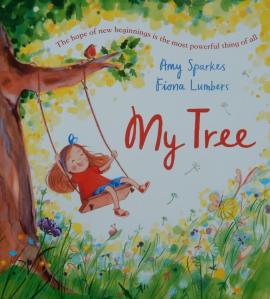
My Tree

My Tree
Amy Sparks and Fiona Lumbers
Scholastic

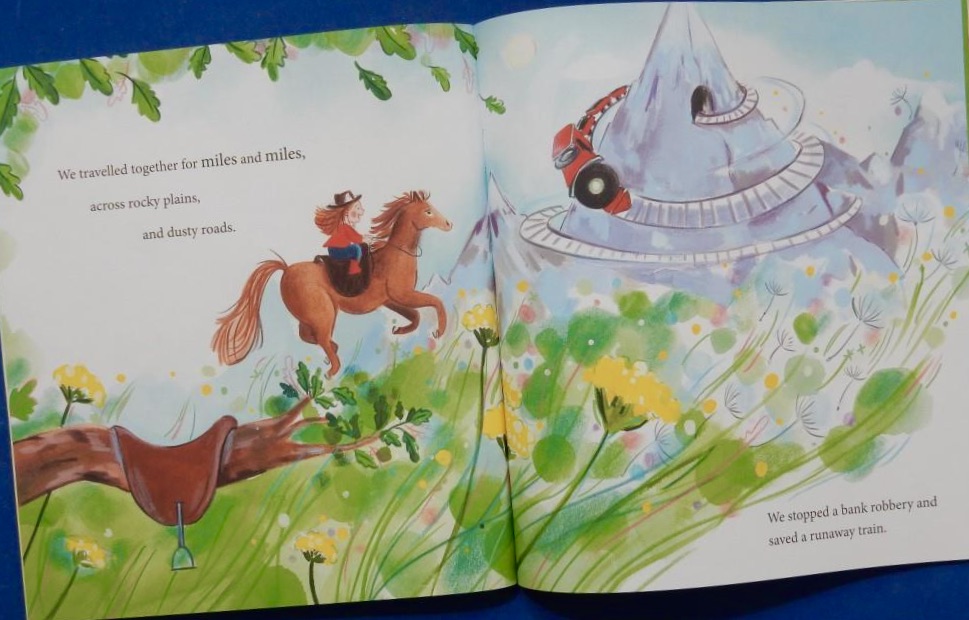
The small girl narrator of this story had a favourite place, her tree, which she loved dearly. It acted as a listener when she felt sad and a playmate when she needed an adventure. No matter what, the tree was always on her side; her family loved it too, no matter the weather. And what a wealth of nature relied on that tree: it provided food for squirrels, a nesting pace for birds, and of course it acted as the starting point for a multitude of exciting imaginary adventures.
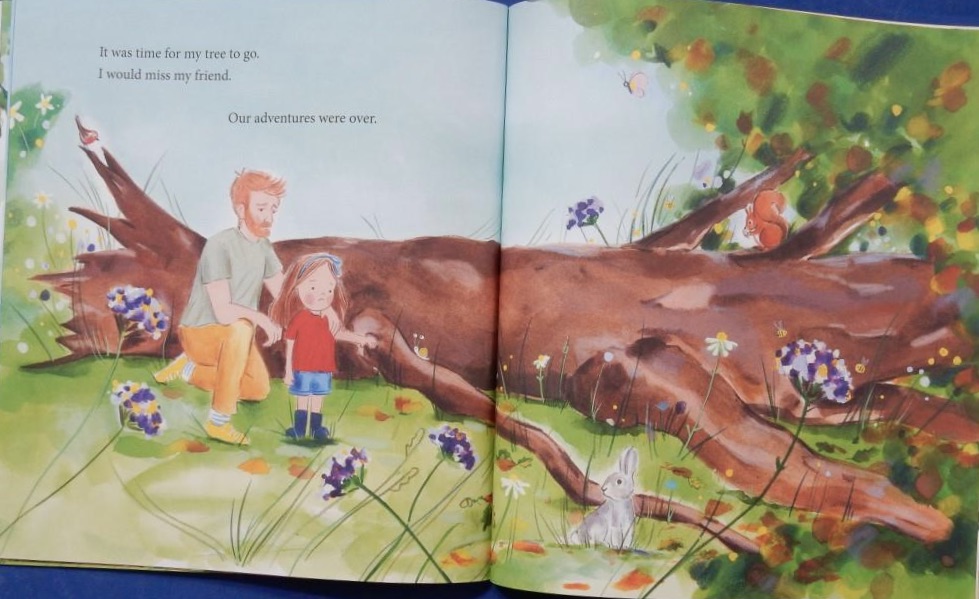
One night however, everything changes; incessant rain and wind result in the tree’s destruction. No more adventures: the little girl is distraught.
But then she notices something wonderful. The wind has scattered the tree’s fruits all over the ground; she knows what to do next. Having planted an acorn, the girl tends to it, giving it water and telling it exciting stories.

Gradually both child and tree grow … and grow … and grow … Now the girl has a special new best friend; one that will stay with her for ever, so she hopes.

Just as the narrator found joy in nature, so too do many of us, children and adults. It’s always there offering hope of renewal and the possibility of new beginnings. ‘In my end is my beginning’ – so said TS Eliot at the conclusion of East Coker. And so it is for the tree in Amy Sparks’ warm, reassuring story with Fiona Lumbers inspiriting illustrations.
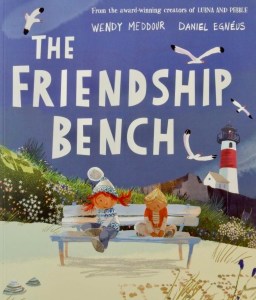
The Friendship Bench

The Friendship Bench
Wendy Meddour and Daniel Egnéus
Oxford Children’s Books

New beginnings is the theme of this beautiful story that celebrates young children’s creative play.

Tilly has just moved to a new home beside the sea: the setting looks gorgeous but she’s very disappointed when her mum tells her that her beloved dog Shadow can’t go into her new school on her first day. Nothing is the same without her canine friend.
At playtime, Tilly is alone and when her teacher notices this he suggests she try the Friendship Bench. However when she gets there, the bench is already occupied. Back to the teacher goes Tilly who tells her to have another try.

The little boy hasn’t vacated it however, so she joins him and after a bit they both decide the bench needs fixing to make it work. They set to work improving it until …

On the way back from school that afternoon Tilly tells her Mummy about how she and Flint transformed the Friendship Bench and about their future plans.

As always, there’s power in both Wendy’s straightforward, finely honed telling and Daniel Egnéus’ dreamlike illustrations. I love his warmth, the occasional gentle humour in the details and the way he puts readers right close to the action.

One to add to foundations stage/KS1 collections and family bookshelves.

Saving the Butterfly

Saving the Butterfly
Helen Cooper and Gill Smith
Walker Books

This is a timely and very moving story about trauma, the way different people respond to it, empathy and the possibility of recovery.

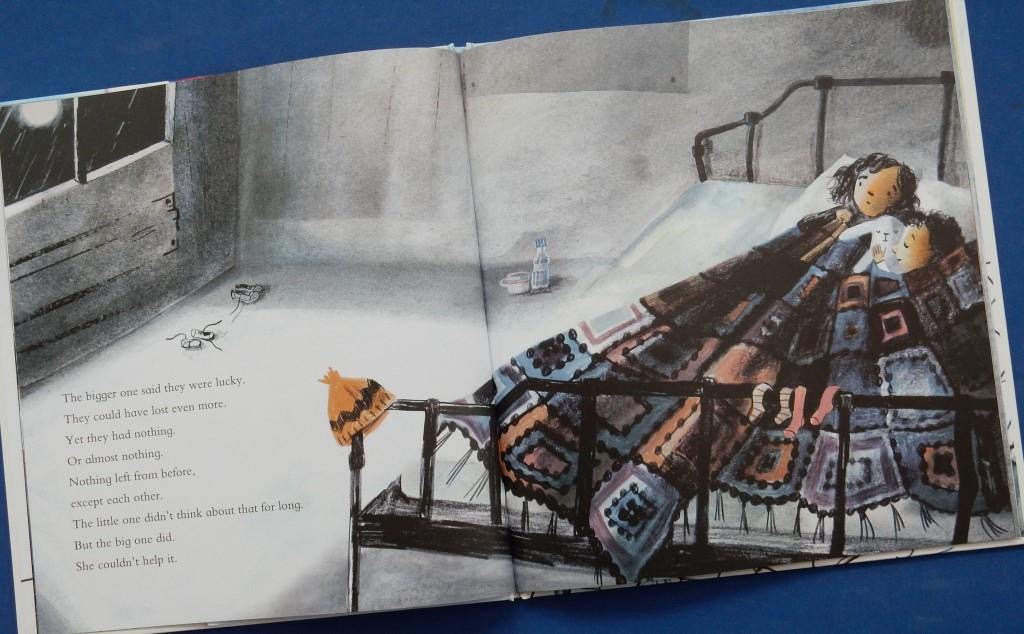
Two children, a big sister and her small brother are rescued from a boat adrift on the dark sea; they’ve lost everything. The younger one remembers little of his ordeal whereas his sister appears more resourceful, talking to rescuers and being instrumental in finding them shelter in a broken house.

However, while she remains inside dwelling on what’s gone before, her little brother ventures outdoors and begins to make friends.

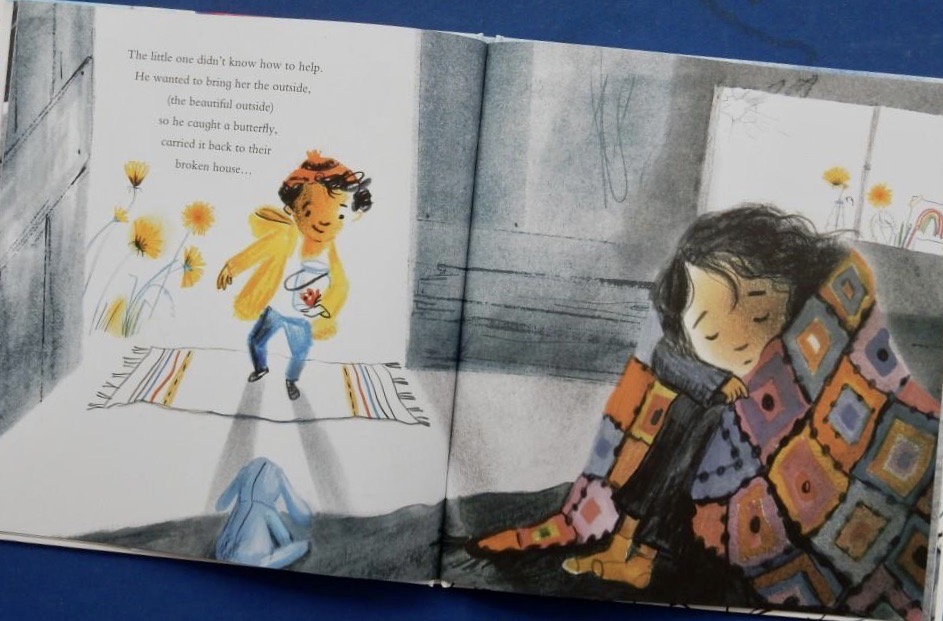
Feeling greatly concerned about what to do to help shift that ‘dark in her mind’ the boy, keen to coax his sister outside, catches a beautiful butterfly and brings in back to their refuge.

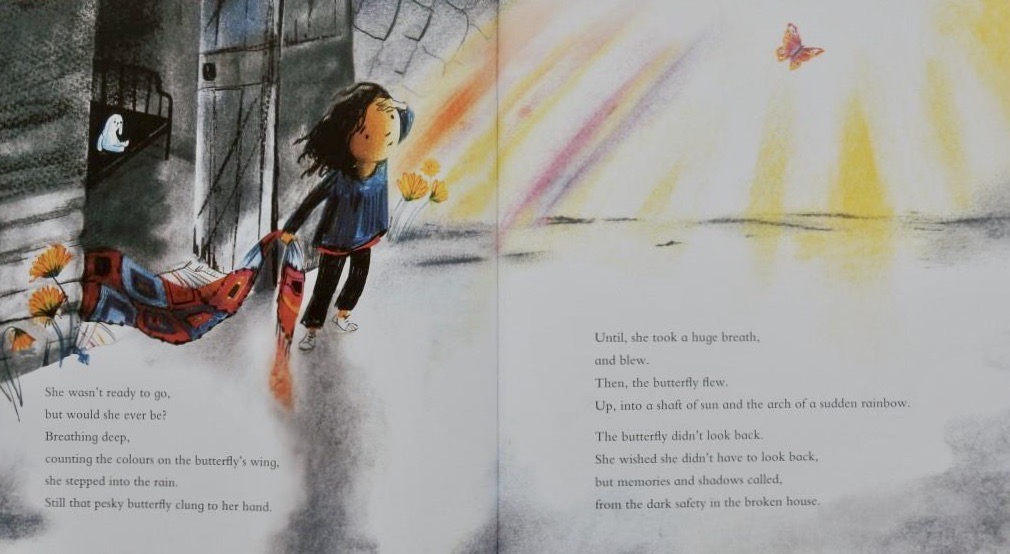
The girl upsets him by telling him to release the tiny thing that begins hitting its wings against the walls. It needs space and it needs time, she tells the boy. The boy goes out again; his sister counts the colours of the butterfly’s wings to calm her breathing. Eventually the girl opens the door; the butterfly settles on her hand. She steps out and blows the tiny thing. Can she now find the courage to follow the butterfly as it takes flight towards the sun where it belongs?

Helen Cooper’s heartfelt telling shows how, in their own ways, the siblings help one another to begin to move forward after such a life-changing ordeal. To me the blackness of the sea at the start represents their loss and the butterfly symbolises transcendence of that dark fearful state. Equally poignant, Gill Smith’s stunningly beautiful illustrations perfectly capture the feelings of the siblings in those early stages of rebuilding their lives.

Every primary school classroom needs a copy of this one.

Nop

Nop
Caroline Mageri
Walker Books

Meet Nop resident of Oddmint’s Dumporium, a dusty place piled high with assorted goods all in need of some mending, fixing or fancyfi-ing by those that work by candle light.

When it comes to Nop though, nothing, be it button, ribbon, or spangle quite fits the bill. Seemingly the bear is doomed to remain on the unwanted shelf instead of being placed in a splendidly crinkly paper bag and carried away in the arms of a happy customer.

But then he spies something red on the floor just waiting to be transformed into an exciting adornment and thus embellished with same, an idea floats into his mind.

Come morning, stitch by stitch

the idea becomes the means to start an exciting adventure in the big wide world where, who knows, perhaps a new friendship awaits.

Spendidly whimsical, Caroline Mageri’s Nop with its themes of hope, enterprise and new beginnings is an uplifting, lyrically written delight.