Baxter’s View

Herein we meet siblings, Rory the elder and his younger brother, Baxter. They see the world differently: ‘Baxter likes to bounce, and hum, and flap. Sometimes it can take a while to get wherever they’re going. Sometimes this makes Rory cross.’

We join Baxter and Rory as they visit the park with their mum. On the way Baxter enjoys some puddle paddling, and Rory notices how the leaves dance beneath his brother’s wellies before joining him in some splashy fun.

At the park gate Baxter stops to feel the long grass tickling him, and having watched him, Rory runs his fingers through the blades, which made him feel calmer. By the pond Baxter emulates the ducks and his brother is amused at his actions. Very eager to reach the playground, Rory is getting grumpy but he does as Mum suggests and lies beneath the tree branches and watches creatures above in the flickering sunlight, appreciating its beauty from Baxter’s viewpoint.

Of course they do eventually get to the playground and the brothers enjoy themselves.

The following week when it’s park visiting time again, it’s evident that Rory has learned that by slowing down, you can see exciting and wonderful things.

As well as celebrating neurodiversity, this sweet, earnest story gently encourages everyone to slow down and take time to see the beauty of the natural world. A book to share and discuss in EYFS and KS1 classrooms as well as with family members.

Cloud Boy

No matter how hard he tries, Bobby’s attention keeps wandering and he finds it hard to stay still. When he becomes distracted, he starts floating upwards and the more his imagination takes over, the higher he goes. His friends, his mum and his teacher try to help but there are so many things that draw his attention away from the everyday things – the colour of a bird’s song and the idea that the moon might get lonely – for instance. Bobby really does want to concentrate like his friends Jess and Nelson, to be organised like his Mum and focused like teacher, Mr Brian, but it only works very, very briefly and makes the boy very tired. His friends and family devise a plan.

However, this restraint makes him feel empty, devoid of imagination and so he cuts himself free. The result is immediately uplifting, leaving friends and family pondering upon how to get the boy down. Perhaps they should try looking at things from Bobby’s viewpoint …

This uplifting story shows the importance of understanding and valuing neurodivergence: it appears that Bobby has ADHD and author/illustrator Greg Stobbs, has drawn on his personal experience in creating the book. I love his use of pink neon to represent Bobby’s imagination.

An important story to share and discuss.

The Boy Who Loves To Lick The Wind

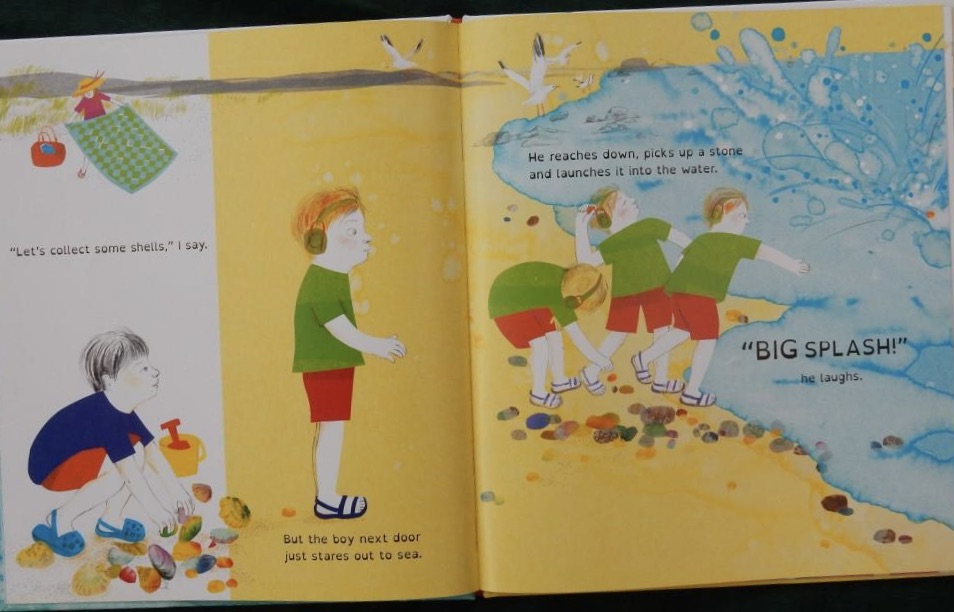
This story features two boys – the narrator who is dark haired, and his blonde neighbour. Puzzled by the blonde boy’s behaviour, the narrator speaks to the boy’s mother who responds thus, “He’s licking the wind. You should try it.” She goes on to invite the inquirer to join them on a visit to the beach, the place where the best winds can be found. Off they go with ‘the boy next door showing his excitement by his actions and the sounds he makes. Once at the beach he dashes onto the sand stands still and begins his licking ritual, ignoring an invitation to collect shells, Instead he picks up a stone and tosses it into the water.

The two boys then spend time throwing stones until mum calls them for lunch. The boy bites into his sandwich, tosses it away and shows distress, which his mum deals with calmly.

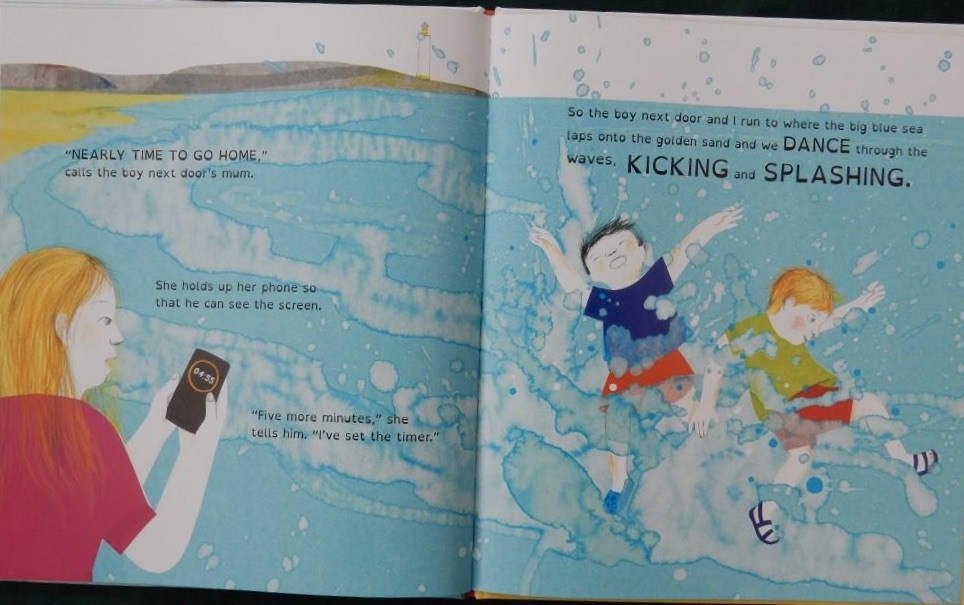
Meanwhile the narrator starts collecting smooth stones and using them to make a castle. Just as he finishes the boy next door runs up, grabs the top stone and hurls it into the sea. The boys then take turns dismantling the castle splash by splash till nothing remains. They jump, spin and yell into the wind till Mum calls to give her son a five minute warning before it’s time to return home. This prompts both boys to dash into the sea and dance around.

The beeper sounds indicating it’s time to leave, which causes the boy to cover his ears and cry. Again Mum is empathetic and they head towards the car but before they reach it, both boys give one final tongue swirling lick of the wind. How wonderful it feels.

The following day in school the narrator tells his class during a circle time session about their day at the beach; his friend demonstrates and then they all lick the wind together.

Some child listeners and adult readers aloud will understand from the outset that the narrator’s new friend is neurodivergent. That means that his brain works in such a way that he experiences and interacts with the world differently from neurotypical people. The story, related and illustrated with great empathy, is an ideal way to introduce neurodivergence to primary school children.

Thumbsucker / I am an Autistic Girl

Eliza Fricker is a neurodivergent author and illustrator who didn’t receive an autism diagnosis until she was an adult. In this moving book she writes about what it was like as a girl who grew up in the 1980s feeling different and constantly beset by worries.

She was called among other things, fussy, a hypochondriac, fickle, spoilt, contrary, gullible, a freak, a chatterbox, a wimp and a weirdo, some of these labels being given to her child self by other people, and some perhaps were self dubbed.

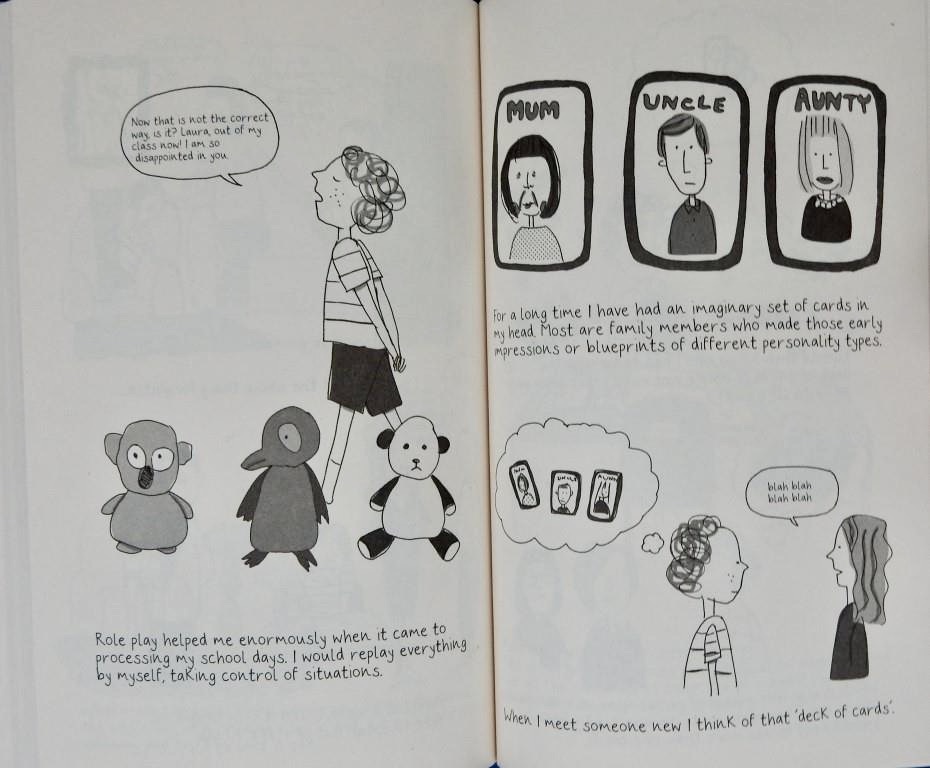
She takes each one and in graphic novel style presents a vignette exemplar.

Fiercely honest, humorous and affecting, it reinforces my feeling that all teachers and others who work with children or young adults should have training on how neurodivergence presents itself in childhood, especially in girls and how best they can support neurodivergent learners. This book is an excellent, albeit salutary starting point for anybody involved with the welfare of the young.
A copy should definitely be in every school staff collection.

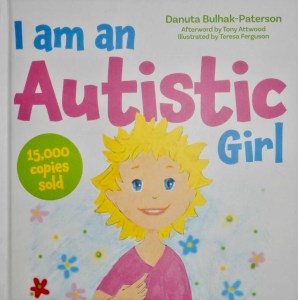
This is an updated edition of I am an Aspie Girl published several years ago, which was reviewed on this blog in 2016.