Minibeasts / What Can You See? In the Garden / We Love Fruit!

There are all new board books from Little Tiger – thanks to the publishers for sending them for review.
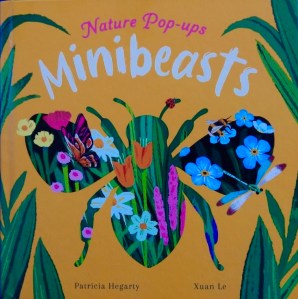
The first of a nature new series where the featured creatures almost leap out from among the plants growing in the flowerbeds. First comes a bumblebee that is busily collecting pollen from a composite flower; then there’s a ladybird that opens up its scarlet wing cases as though to take flight. Next not just one but – well maybe your little one can try counting them – the beautiful butterflies that, wings spread wide, take to the skies and flutter on the breeze. Meanwhile much closer to the ground, a shiny shelled snail climbs slowly, steadily amongst the grasses and ferns while, down by the pond darting among the lily pads, transparent wings shimmering is a dragonfly and finally, peeking from the foliage of blooming wisteria is a chirping grasshopper; but if you look very closely, there’s also one unnamed minibeast making its way along the branch.

Little ones will love watching all these small creatures as they peruse Xuan Le’s vibrant settings for Yoojin Kim’s cleverly engineered scenes.

More minibeasts appear in
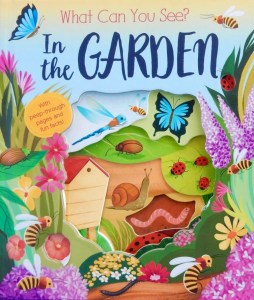
At Rosamund Lloyd’s suggestion, young children take a walk in the garden and discover minibeasts in flight, follow a butterfly through its various stages of metamorphosis, watch honey bees at work, see camouflage and other ways minibeasts keep themselves save from predators. If you take time to forage in the plant litter there are woodlice, millipedes and snails to discover whilst beneath the ground earthworms burrow and ants create colonies. Little humans will delight in such facts as “some millipedes eat their own poo’ and that unlike themselves who have a backbone, insects have a skeleton on the outside called an exoskeleton .
The cutaway pages are cleverly positioned to allow readers to peep through and see what awaits.

Spring is here so share the book and then see what awaits outside your front door.
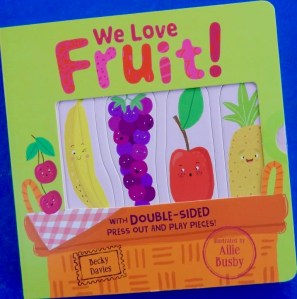
Don’t play with your tasty food. This is frequently said to little ones by parents or carers but now this book gives toddlers permission to do just that. Indeed they will love pulling out the double-sided fruit characters from the sliding tray inside the front cover and meeting the eight different fruity personalities. From these, little humans must follow the clues given on each page and choose the matching cardboard piece. Can they discover which fruit grows in bunches and when dried is called a raisin or which one might take as long as three years to grow?

A clever interactive guessing game, playfully illustrated by Ailie Busby with words by Becky Davies that offers opportunities for adult sharers of the book to talk about the importance of fruit in a healthy diet. I suspect several helpings will be desired by toddlers.

Don’t Squish A Slug

Following his general introduction, author, zoologist and wildlife presenter, Yussef Rafik, divides his bug information under five headings, Masters of Disguise, Amazing Evolution, Daring Defence, Record Breakers and All Sorts of Relationships (some of which are parasitic). The world of minibeasts is truly amazing, albeit on occasion pretty gruesome, so get ready to dive in.

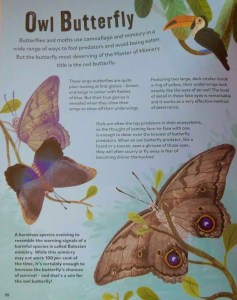
Have you ever wondered why the owl butterfly is so called; indeed were you aware there was such creature? It has earned itself the title ‘Master of Mimicry’ on account of the way the detailed fake eyes on the underwings look so like an owl’s eyes they act as a superb deterrent for potential predators.

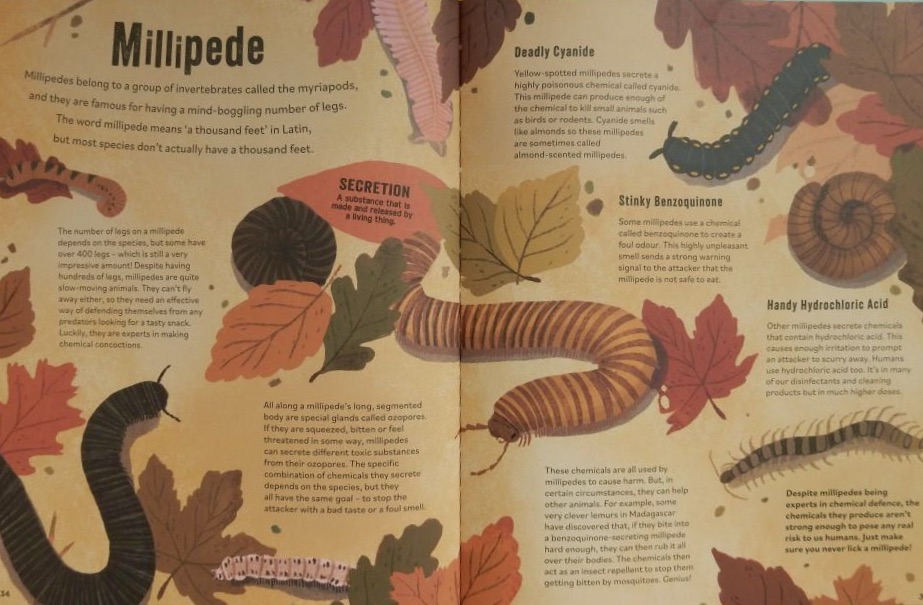
I was fascinated to learn that millipedes have special glands called ozogpores from which they secrete poisonous substances. The yellow-spotted kind secrete the highly toxic chemical cyanide in sufficient quantity to kill rodents or birds. Other kinds use the malodorous benzoquinone, which warns attackers not to eat them. Under certain circumstances though, these chemicals can be of help to other animals, an example being the lemurs in Madagascar. They’ve found out that if they bite a benzoquinone-secreting millipede sufficiently hard, then rub it over their bodies, the chemical acts as a mosquito repellent.

Every bug is either allocated a double spread or single page that includes a superbly detailed illustration the creature in its natural habitat along with the information that is just the right amount for KS2 readers. The author’s knowledge and enthusiasm shine through his text, indeed in his introduction he writes, ’It’s really important that we have empathy for bugs. We should appreciate what they do for our planet and learn to love living alongside them.’

Riley Samels’ illustrations are an ideal complement for the text, detailed but not overly so, and there’s a final glossary and index. Thoroughly recommended for school collections and for budding minibeast zoologists.

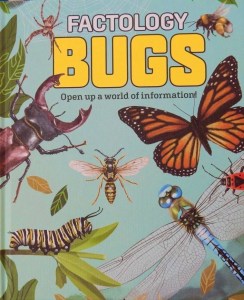
Factology: Bugs

Absolutely brimming over with minibeast-related information, photographs and diagrams: spend a few hours with this book and you’ll surely come away knowing a lot more about creepy crawlers, fliers, hoppers, wrigglers and jumpers than before. Did you know for instance that it’s thought that 90% of our planet’s life forms and the most diverse group are bugs? Or that bugs have existed on Earth for 470 million years and predate dinosaurs. Wow!

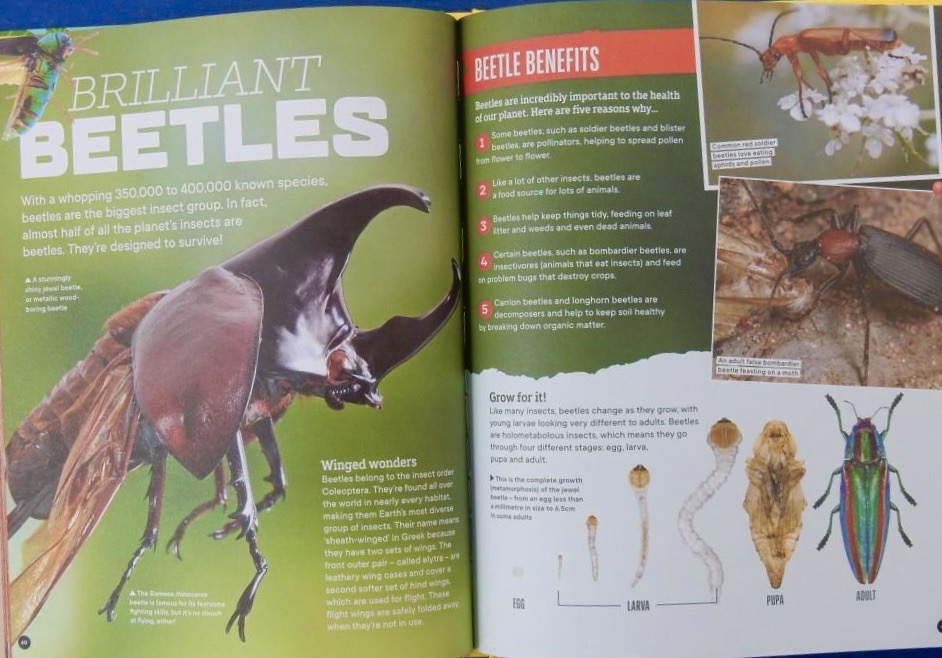
Insects with their chitinous exoskeletons and three-section bodies, form the largest group of arthropods. There are spreads presenting life cycles, habitats; you can dive into a bee hive as well as learn about how honey is made, meet all sorts of beetles and find out why some are so important to the health of the planet.

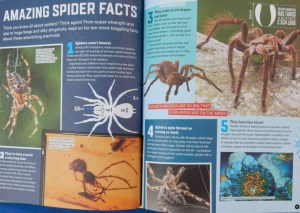
Not insects but included in this buggy extravaganza are spiders, comprising around half of the arachnid species. You might be surprised to learn that unlike we humans, spiders have blue blood; this is on account of the oxygen being transported around their bodies by haemocyanin, a copper-containing protein. 

Watch out for tarantulas, several varieties of which are presented on one of the spreads in this book. So too are ten highly dangerous bugs that can cause serious damage to unwary or unfortunate humans.

In the chapter ‘Bugs and Us’ is a spread detailing how to build a bug hotel and another offering ways to create an insect-friendly garden and there’s a final quiz, should you want to test your acquired knowledge. Back-matter includes a glossary and index. 

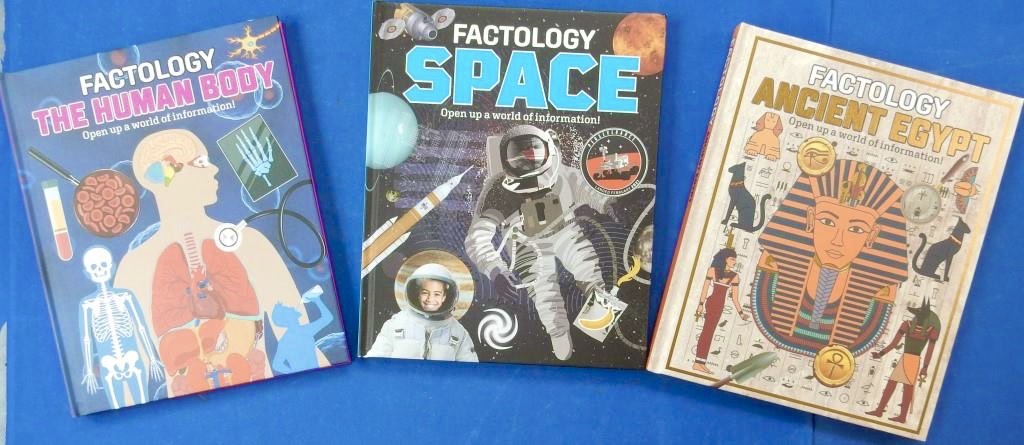
Also available in this new series are Factology: The Human BodyFactology: Space and Factology: Ancient Egypt, each of which provides a pacy, highly illustrated introduction to the subject, 

so if you know children with a budding interest in human biology, space science/astronomy or ancient history, these are a good place to start. They’re ideal for school libraries too.

The Big Book of Bugs/A Beetle Is Shy

DSCN7510

The Big Book of Bugs
Yuval Zommer and Barbara Taylor
Thames & Hudson
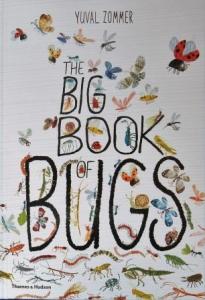
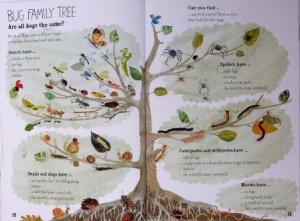
Now is the time of year to go in search of all things buggish and armed with inventive illustrator, Yuval Zommer’s and bug expert, Barbara Taylor’s fantastic book, you’ll be in a position to find out all about them. It’s absolutely packed full of fascinating facts and some figures relating to minibeasts of all kinds – insects, snails, spiders, centipedes and worms and indeed we are given a classification explaining how to tell what’s what …

DSCN7511

as well as some other general bug-related information, before moving on to look at particular species in greater detail. This, the author does by posing intriguing questions such as ‘Does a dragonfly breathe fire?’ or ‘Just how slow does a snail go?

DSCN7516

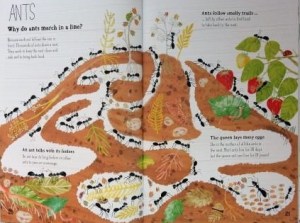
as leads in to double spreads on over twenty-five topics. Most spreads look at one kind of mini creature, say spiders, where among the facts we find that spiders have 48 knees (I’ve never thought of spiders having knees before, I have to say); or Ants ‘the queen ant can live for 15 years!

%0A

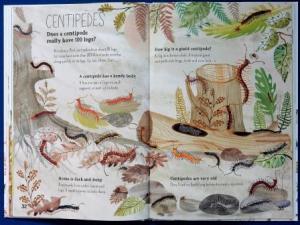
Or, Centipedes where we discover ‘most of these creatures have around 30 legs and can have over 300.

DSCN7515

And, in relation to Bugs on the Move, ‘A horsefly (my most unfavourite bug) can fly faster than a car on the motorway.’ That’s as maybe, but the one that bit me and caused an infected wound on my back that grew to the size of a duck’s egg and needed daily lancing for over a month, certainly wasn’t doing that!
Each spread is beautifully illustrated by Yuval Zommer, who adds touches of humour here and there, making bug discovery and factual learning a fun activity for all. Zommer even extends his creativity and readers’ enjoyment by including a ‘search and find’ element throughout, asking on the title page, ‘Can you find exactly the same fly 15 times in this book? Watch out for imposters.’ And he’s also hidden a couple of stripey wasps on the Bees spread …

%0A

This is exactly the kind of captivating, treasure trove of a book that will turn youngsters into bug lovers, effervescing with enthusiasm to go on a minibeast hunt. It’s a must have for all family bookshelves, primary schools and early years settings – most of the latter two include some kind of minibeast theme in the curriculum.

Also on the topic of minibeasts, focusing on one category of insects is:

DSCN7520

A Beetle Is Shy
Dianna Hutts Aston and Sylvia Long
Chronicle Books
This one is vibrantly illustrated in glowing watercolours by Sylvia Long, and the poetic text is provided by Diana Hutts Aston. Although originating in the US,(and so some of the species may be unfamiliar to say, UK readers) the book has plenty to offer everyone with an interest in the subject. And some species just have different names ‘Convergent Lady Beetle’ is a ladybird.
The author uses attention-catching phrases such as ‘A beetle is kaleidoscopic’ …

%0A

or ‘A beetle is telegraphic’ …

DSCN7508

to introduce particular characteristics that are then further explored on the spread in text that is perfectly pitched to engage and keep readers involved and wanting to know more.
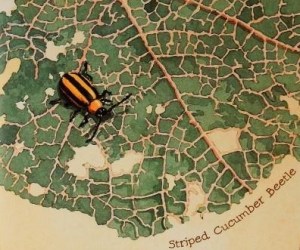
We learn of the helpful things some beetles do (ladybirds eat aphids for instance), others can be a food source (in India some people eat stag beetle chutney. I’ve never come across this despite frequent visits). But some kinds such as weevils devastate crops like cotton and lettuce.

%0A

A good one for individual reading or for sharing – it reads aloud so well.

localbookshops_NameImage-2

WNDB_Button