Live Like A Tudor

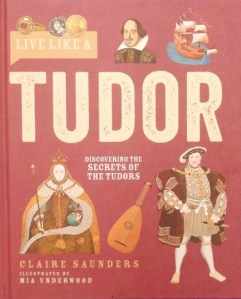
Primary age readers with an interest in history can step back in time, at the invitation of eleven year old Mary who lives with her family in an English manor house and has a sister who is a maid of honour to Queen Elizabeth 1st.

The latest in the ‘Live Like A … ‘ series covers a wealth of topics including the jobs people did, family life and childhood, education (the poorest children were not even taught at home but had to work instead), religion, trade and exploration when the seeds of the transatlantic slave trade were sewn.

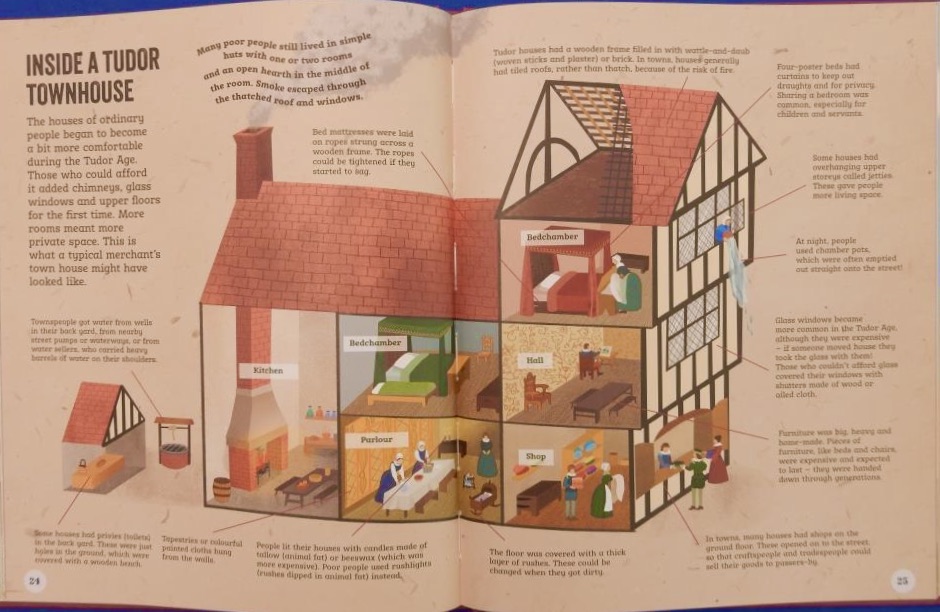
There are spreads on a typical Tudor village, a look at a townhouse both inside and out,
health and medicine, crime and punishment, games, sports and entertainment and fashion as worn by workers and nobles. In Elizabethan England, those who were able to a afford it wore a ruff and so doing was a sign that you were sewn sufficiently wealthy not to have to undertake any hard physical tasks and had servants to look after your ruffs, some of which were very elaborate. One of the craft activities in the book gives step by step instructions to make a ruff and matching cuffs.

Did you know that England’s first theatre was built in 1576 in London and was soon followed by others including the Globe Theatre where William Shakespeare’s play were performed?

Tudor Christmases were celebrated across twelve days and readers can join young Mary and her family and discover what they might have done.

The final spread asks “Could you have lived like a Tudor? and the author poses several questions to discuss. There’s also a glossary.

An engaging book that helps bring the era to life; it’s worth adding to to KS2 class collections, and to home bookshelves if you have a child interested in the past.
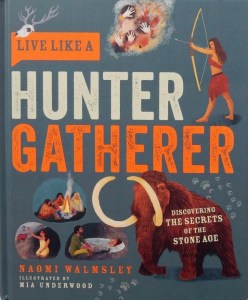
Live Like a Hunter Gatherer

Live Like a Hunter Gatherer
Naomi Walmsley, illustrated by Mia Underwood
Button Books

If you think that early humans were not very clever, or that they frequently said, ‘ugg’ and not much else, then this book will dispel those myths along with providing a considerable amount of fascinating information about how they lived, starting with a map of the Stone Age people’s movements and a timeline showing the three main periods of the Stone Age.

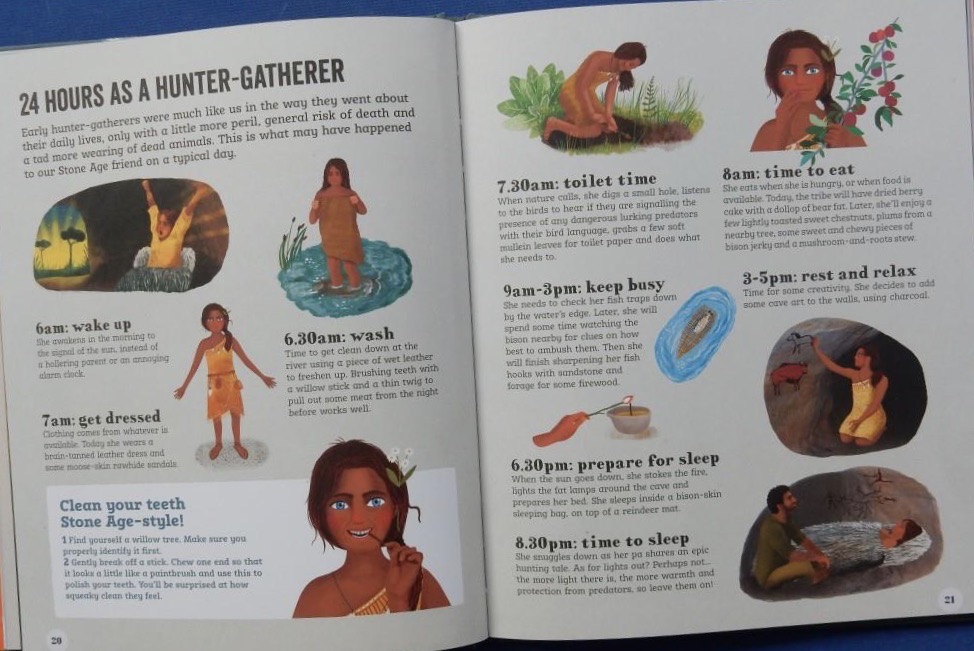
Readers are in the company of an eight-year old girl from a fictional tribe who at various times throughout the book, talks directly to us, sharing her feelings about such things as fishing trips and beginning to use her own bow and arrows. We also get a glimpse of how our stone age ‘friend’ might have passed her time during a typical day, sharing her feelings too,

and realise that the everyday needs of our Stone Age ancestors’ were quite similar to ours – how to keep warm, where to sleep safely and what to eat and drink.

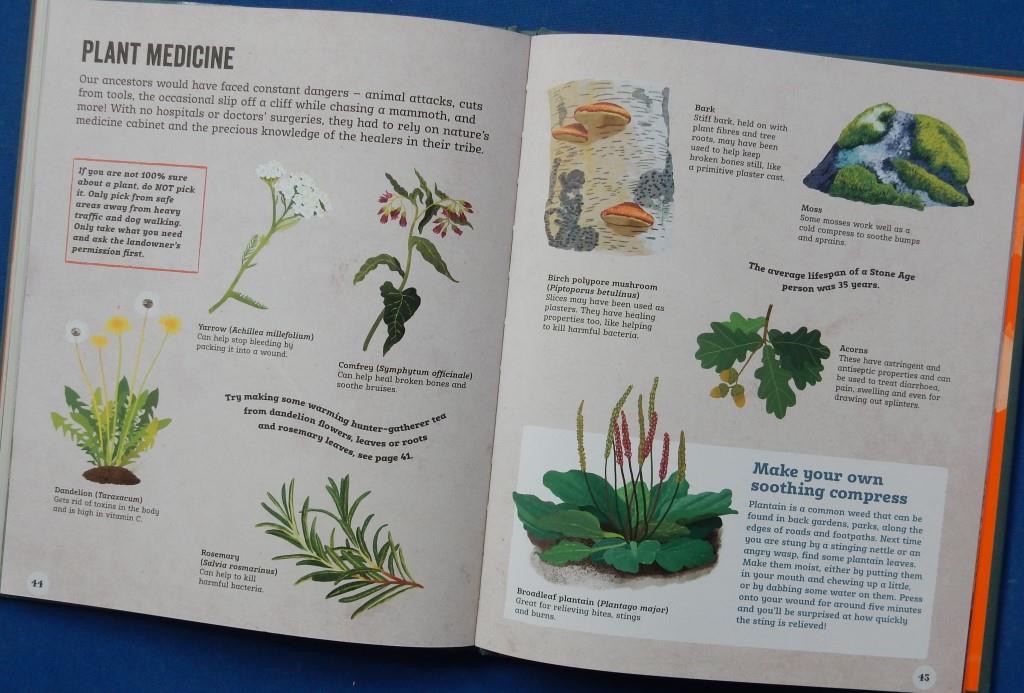
There are spreads on how those basic needs were met, and we learn how they made use of everything from an animal hunted; such a creature provided food yes, but also the means of making weapons, tools, jewellery, clothes and more. Constant danger surrounded these ancestors of ours and without doctors or hospitals, they had only the knowledge of healers in their particular tribe and the medicines nature provided; it’s hardly surprising that the average life of a typical Stone Age person was just thirty five years.

It wasn’t however a life without any fun: early humans made music, engaged in occasional celebrations and made art in the form of small sculptures and paintings especially on cave walls.

Mia Underwood brings all these activities and more to life in her detailed illustrations large and small; while in addition to providing a wealth of factual information, author Naomi Walmsley (who is a forest school and bushcraft instructor), also gives step-by-step craft activities and recipes offering readers first-hand experience of some vital Stone Age skills including making a Mesolithic shelter, some fat lamps, a digging stick and creating cave art.

An intriguing, gently educative resource for home and primary school users.

The Magical Underwater Activity Book / Roman Adventure Activity Book

The Magical Underwater Activity Book
Mia Underwood
Button Books

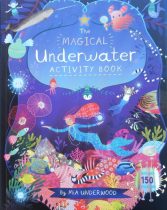
Following on from her Secret Woodland Activity Book, Mia Underwood has created another exciting volume that combines fantasy and reality – merpeople and microplastics. It starts with an invitation from the sea creatures to become an ‘ocean hero’ and help save the planet.

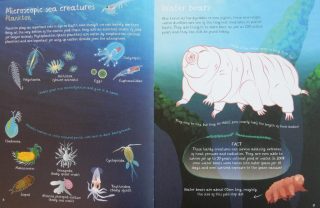
On the reality front, there are such diverse activities as meeting microscopic creatures like phytoplankton and zooplankton (their roles are explained),

and finding out some things to do that will help our planet.

There’s a challenge to design an ocean-cleaning gadget; maths and language challenges; ideas for lunch box snacks to prepare, crafty things to make, ideas for getting creative with pens or crayons and scissors, and much more.

There are also four pages of stickers to use in some of the scenes.

Guaranteed hours of engagement of the enjoyable and gently educational kind; just the thing for some screen free, dark evenings.

Roman Adventure Activity Book
illustrated by Jen Alliston
Button Books

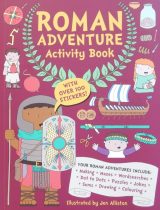
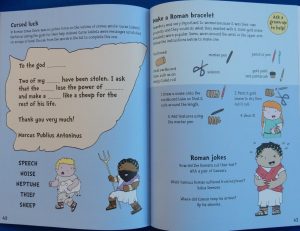
Youngsters can find out about the world of Ancient Rome as they engage in the wealth of fun activities between the covers of this book. There are such diverse ideas as making a Roman bracelet (not the solid gold kind popular in Roman times)

and discovering some of the remedies ancient Romans used for common ailments: I reckon consuming raw egg yolks would increase my digestive problems rather than curing an upset tummy; and imagine being told to kiss the nose of a mule to cure a cold. No way!

Puzzles – both word and maths, codes, mazes, spot the difference pages, colouring, search and find, and crafty things to make such as a gladiator shield. You can even, with adult help, bake some libum (a special bread made as an offering to the household gods).

Skills of several kinds are developed while engaging in these activities and there are pages of stickers to use along the way. Almost without exception, the Romans depicted in Jen Alliston’s illustrations look like children but I guess that’s part of the allure for young users.

The Secret Woodland Activity Book

The Secret Woodland Activity Book
Mia Underwood
Button Books

A wealth of activities await those who foray into the magical world created by Mia Underwood.

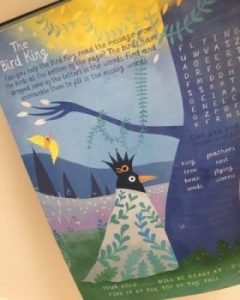
Creatures of all shapes and sizes inhabit this Scandinavian-style woodland: numbering among them are Stardust (snail), Hopper (a bird) and Nisse (a bearded sprite). There are also a forest spirit (an invisible magical being with a protective role), trolls, minibeasts, owls, bears, foxes, an occasional baby dragon; you might even come upon a unicorn or a yeti.

These feature in such activities as mazes, story writing, maths, word searches,

mobile making; there’s also a recipe to make bird feed balls and lots of opportunities for imaginative thinking.

Wonderfully quirky and engaging, this 64-page book includes a plethora of stickers to add to some of the woodland scenes.

With the darker nights upon us, and holidays fast approaching, it’s a super way to distract youngsters from their screens for a while.