How the Sea Came to Be

How the Sea Came to Be
Jennifer Berne and Amanda Hall
Eerdmans Books for Young Readers

Jennifer Berne divides her rich poetic account into three parts: The Birth of the Sea, The Birth of Life and All That the Sea Came To Be, covering geology, oceanography, biology and evolution over 4.5 billion years – an enthralling journey indeed, especially when set alongside Amanda Hall’s show-stopping mixed media illustrations. The layout of every spread is a joy to explore.

The verbal imagery grips from the outset: ‘Volcanoes exploded from inside the Earth. / They blazed and they blasted and boomed. / And comets and asteroids crashed out of the sky, icy and rocky they zoomed.’

Having presented nature’s violence in storms and volcanic eruptions, the author and artist present the emergence of microscopic life forms – ‘smaller than small, and adrift in the seas,’ that gradually combined and changed into new 
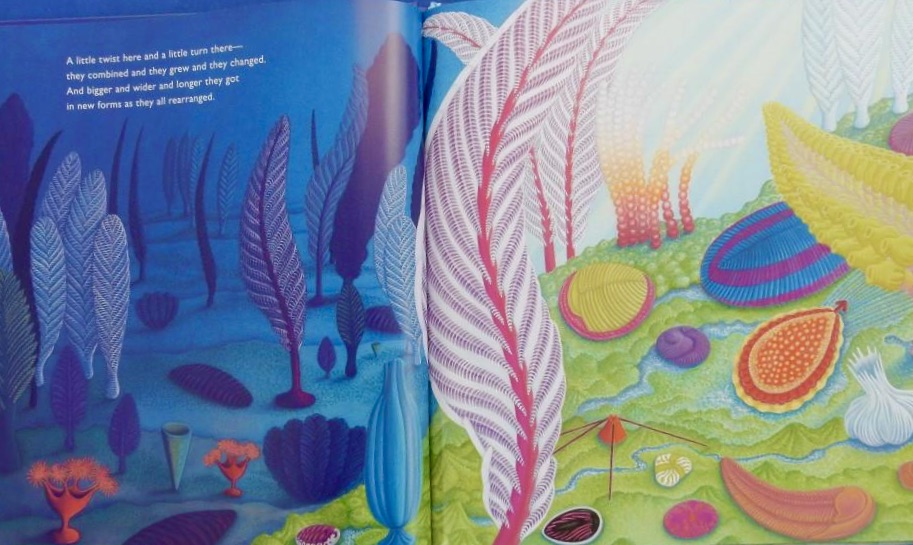
and larger forms: ‘frilled creatures that wiggled and crawled’ as well as drifting, squishing jellyfish with their thread-like tentacles and then came the worm – a creature that ‘points as it squirms’.

Eventually we reach the multi-layered aquatic zones of the present time 

and then slowly return to the surface encountering a wealth of amazing marine flora and fauna to land at last on the shores of now, where people are exploring the rock pools.

Scientifically accurate throughout and written in almost faultless rhyme, there are no labels but it’s not difficult to locate the creatures named if you look carefully. Moreover, those who want to dive deeper can use the additional resources at the end of the book.

Totally immersive and with a wide appeal, this is a book for any collection.

Everything You Know About Sharks Is Wrong

Everything You Know About Sharks Is Wrong
Dr Nick Crumpton, illustrated by Gavin Scott
Nosy Crow

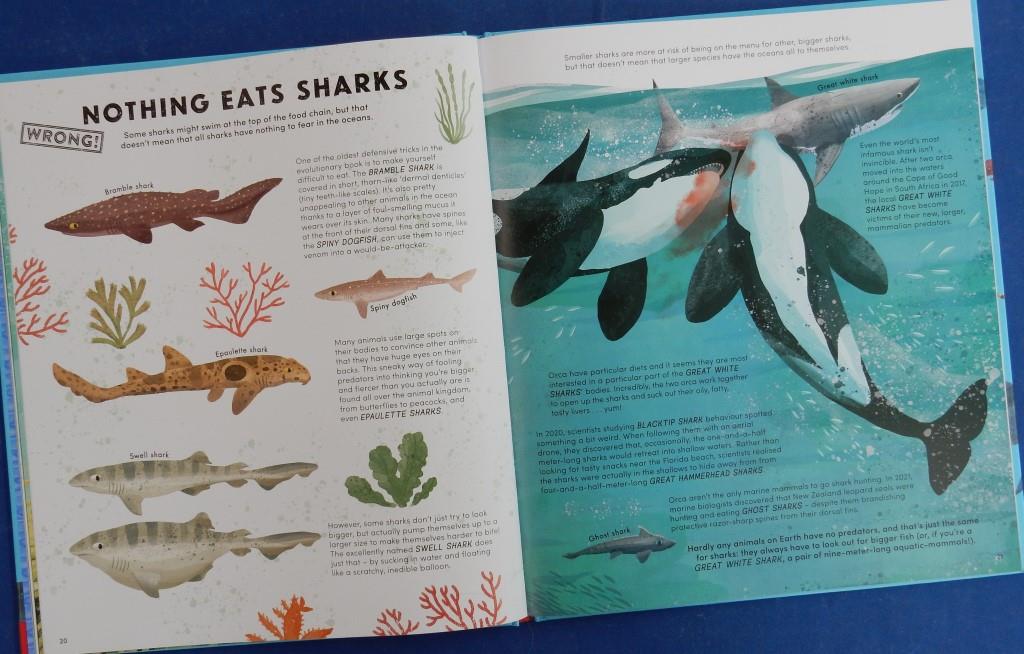
Having set the record straight about dinosaurs and minibeasts, Dr Nick Crumpton has (along with illustrator Gavin Scott) turned his attention to the oceans and in particular, sharks. Writing in an entertaining style he discredits many of the shark-related myths that have grown up over time and it’s likely they have the worst reputation of all living creatures. Remember those dogfish you studied in zoology at school back in the day? They are related to sharks, both being elasmobranchs.(cartilaginous fish).

Assuredly sharks are predatory creatures but do they kill lots of people? Worldwide sharks killed 11 people in 2021 but cows killed 22 people and that was just in the USA and snakes were responsible for the deaths of 50,000 people worldwide: the numbers speak for themselves. On the other hand, we read, humans kill 100 million sharks and rays each year and sharks are unable to replace those lost quickly enough, so actually a number of species are at risk.

What about those fearsome-looking sharp pointy teeth all sharks have. No they don’t, at least not all of them: different sharks have different sorts of teeth, which help them eat a wide range of food by piercing, slicing or crushing their prey. Did you know that all sharks’ skin is made from millions of tiny teeth and whale sharks even have teeth on their eyes. Moreover, these ‘dermal denticles’ each have elements – dentine, a pulp cavity containing blood and nerves and an enamel covering – similar to our own teeth. Knowledge about how these v-shaped denticles work has led scientists and technologists to develop swimsuits that enable swimmers who wear them to move faster through the water.

Amazingly the prey of Cookie Cutter Sharks are much larger than their predators; these sharks don’t hunt, rather they lure their fleshy prey to them. There’s a whole spread on how various sharks hunt: filter feeding whale sharks don’t bite, instead they open their mouths and swim straight into clouds of microscopic planktonic organisms. On the other hand, some of the smaller sharks might end up as food for other, much larger sharks, and recently there have been reports of orca whales eating sharks.

An absolute wealth of fascinating information is packed into the pages of this book and Gavin Scott has done a terrific job with the illustrations. The mystery, power and beauty of these amazing creatures and the underwater world they inhabit are spectacularly portrayed in his scientifically accurate paintings.

Primary readers (and beyond) with an interest in biology will find this absorbing.

Oceanarium

Oceanarium
Teagan White and Loveday Trinick
Big Picture Press

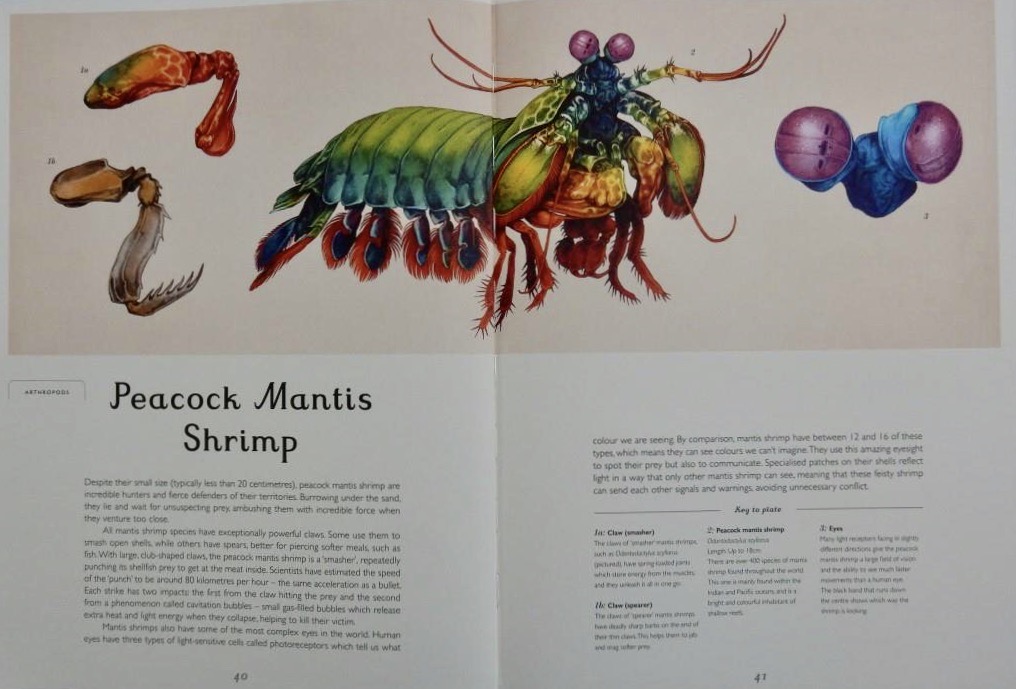
This outsize volume is part of the Welcome to the Museum series that uses the interactive gallery style of a museum, in this instance taking readers to meet the amazing life found in and around the seas. 

As always the presentation is superb: a large clear, well leaded font is used for the text, there are awesome full page illustrations by Teagan White opposite each page of text, and marine biologist Loveday Trinick’s explanations are fascinating, educative, and likely to encourage youngsters to wonder at ocean fauna and flora.

First we are given a general introduction to the historic oceanic divisions and the ocean zones before proceeding to the first gallery wherein the microscopic plankton – both phytoplankton and zooplankton – are to be found.

Gallery 2 exhibits fauna that inhabit coral reefs; there are examples of wandering jellyfish; the Portuguese Man o’War, (a venomous predator) actually a colony comprising four different kinds of polyps that all work together to act as one animal. and examples of some of the 1000 known anemone species. (I never knew before that there was a Venus flytrap anemone). The gallery also includes a full page illustration of a coral reef and some descriptive paragraphs, the last of which states that they ‘may also hold the key for the treatment of infections, heart disease and even cancer.’

Moving on, readers meet next inhabitants of the deep sea – molluscs and echinoderms, the outer shells of some of the bivalves shown may well be familiar to those who wander beaches at low tide.

No matter which of the nine galleries you wander through, the other habitats are: a rock pool, a mangrove forest, a kelp forest,

the Poles, the Galapagos islands you’ll encounter a wealth of stunning images of, and facts about the marvellous life inhabiting the deep. 

The final one draws attention to the human impact upon the ocean as a whole emphasising the vital importance of its contribution to many aspects of our lives, as well as highlighting the adverse impact we humans have already had on this watery world. However, with ever more people becoming aware of this damage, there is still time to make changes to our behaviour that can conserve, protect and restore this essential component of Earth’s ecosystem.

Marine biology isn’t just for specialists; this wonderful book can be enjoyed by anyone from primary school onwards (it might well encourage some observational drawing) and for those who want to learn even more, try the Ocean Conservation Trust and the other organisations listed on the final page.