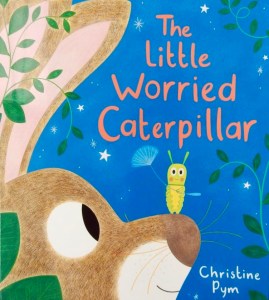
The Little Worried Caterpillar
Christine Pym
Scholastic
Little Green is on the brink of change. However she’s not aware of this when she wakes early one morning ready to play with her caterpillar pals, but she can’t find them anywhere on the ground. Then a call tells her that they have morphed into butterflies and are way up above her. “You’ll be next, there’s no doubt!” they tell her. However rather than sprouting wings, she sprouts fear, a fear of change that brings with it worries about the unknown. Her friends reassure Little Green that change is what they were born to do and it’s exciting but this makes her feel even worse.
Along comes bee with what is meant to be some helpful advice; she gets momentary relief but that’s all.
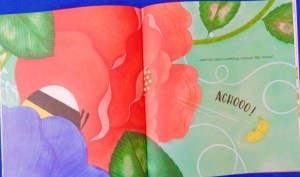
Other creatures also offer suggestions but nothing works until Rabbit appears on the scene. Rabbit listens and what her new friend tells Little Green enables her to feel ready to embrace and prepare for that transformational change
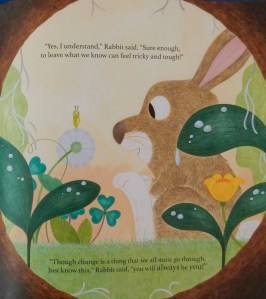
and become … Butterfly Green.
Some young children take change in their stride, others needs considerable support from empathetic friends and understanding adults. A book such as this one is particularly valuable for sharing with the second kind. Christine Pym’s illustrations capture so well Little Green’s fearfulness and eventual delight.
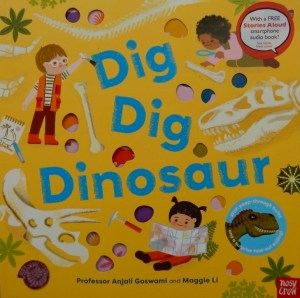
Dig Dig Dinosaur
Professor Anjali Goswami and Maggie Li
Nosy Crow
Three intrepid little explorers with their kit at the ready are on an expedition in the hope of finding something, something ‘REALLY big’. Dig! Dig! Dig! they go till one person discovers some remains of a sharp clawed dinosaur. These claws make the finder conclude that they belonged to a Velociraptor.
A second child’s Dig! Dig! Dig! digging unearths three large horns: young readers can perhaps guess from which dinosaur these came..
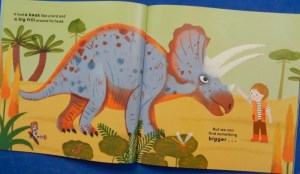
Still intent on finding something even bigger, they continue hunting till the third explorer tells of a dinosaur with a very long tail. and a tiny head supported by an extra long neck.
Little ones can have fun guessing what this might be before the big reveal fold out … They will also enjoy the peep hole pages showing the skeletal remains the young explorers find during the dig.


 Red Reading Hub - Jillrbennett's Reviews of Children's Books